Traveling is great, as is seeing all the extraordinary sites each city and each country has to offer, but in order to truly experience a culture, you really have to socialize with the people. I’ve found that the times spent conversing with locals are what really helped me get the most out of any trip I’ve made so far this semester. I may have been at awe at numerous sites I visited across Europe, but it was my conversations with various locals that helped me embrace the culture and ensure my travels were a memorable experience.
I remember being in Munich all the way back in September for my first visit to a country outside England. I had felt slightly overwhelmed at the notion of being in a foreign country and not knowing a single word of their language. Luckily I was with four of my friends from the Cambridge group, but I soon discovered there was not a whole lot to be apprehensive about if I accepted that sometimes things might go wrong and if I was willing to ask for help when I needed it. Without any clue of how to get around Munich, we approached the manager of our Bed and Breakfast. To our delight she gave us everything we needed: A map of the city, a train map and bus routes. Along with those items, she also gave us a friendly face to talk to when we needed it most. She was helpful and was willing to answer any questions we had about the city (which was a lot). I found the same to be true for most people I talked to that weekend and I really can’t count the number of people who I found myself conversing with over the weekend. Almost everyone was friendly and it was because of people like them that I was able to gain a greater understanding of German culture and be able to consider it a successful trip.
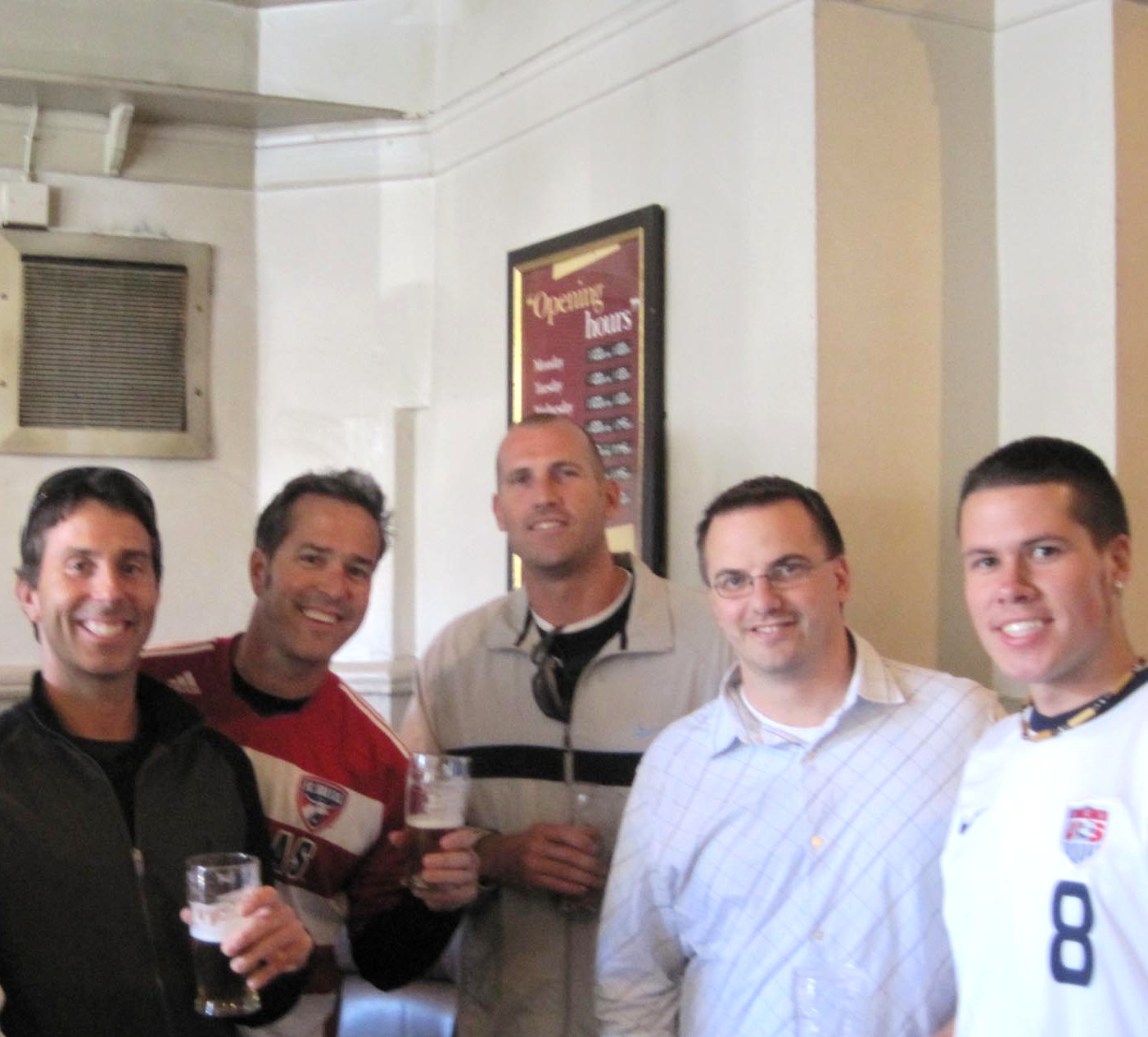
Hanging out with a group of Americans I met before a football match in London
The same has been true for every place I’ve visited. While at Gatwick Airport in London and waiting for a screen to announce which gate I needed to go to, I decided to strike up a conversation with a random man standing close by. As it turned out he was headed to Madrid on the same flight as me! Javier’s English was very limited, but I was still able to converse with my own limited knowledge of Spanish. Before even landing in Madrid I had learned so much about the city and received advice that only a local could possibly tell me. He even pulled out his iPhone and showed me how to use the Metro (subway) to get to every site I intended on seeing during my stay. When we landed he helped me buy train tickets and then gave me his number in case I needed any more help while I was in Madrid. Wow, what a huge help. It’s amazing how approaching a complete stranger can end up improving your visit so much.
To some this may not seem like important information, but in my opinion, it’s some of the best advice I can give anyone before they travel to a new place: Converse as often as you can with the locals. No matter where I went I found that my conversations with the local are what really helped me to not only appreciate but also learn the most about a city or country’s culture. It may be intimidating approaching strangers at times, but the truth is people in Europe are generally friendly almost anywhere you go. Of course you may meet a few people who aren’t, but it’s worth the risk when you bump into someone and are able to have a wonderful conversation with them about almost anything. Sometimes you have to remember that they are just as interested in your own culture as you might be in theirs!
Seeing all the beautiful sites and exploring the city is great, but in order to really get a feel for the place you really do have to talk with the people who actually live there. As strange as it may sound, some of my best memories are all the conversations I’ve had with strangers in the various places I visited across England and the rest of Europe. Although I may never see some of those people again in my life, they helped give me a good impression of their country and hopefully I was able to do the same for mine.