Valpo Voyager

Student Stories from Around the World

Date: January 25, 2012

Zaragoza Week 2 and Cultural Differences

Hello and welcome to my second post! I thought I’d do something a little different this time by breaking it up a little and including two sections. If you have any suggestions or post requests, send them my way as I’m always looking for interesting ideas!
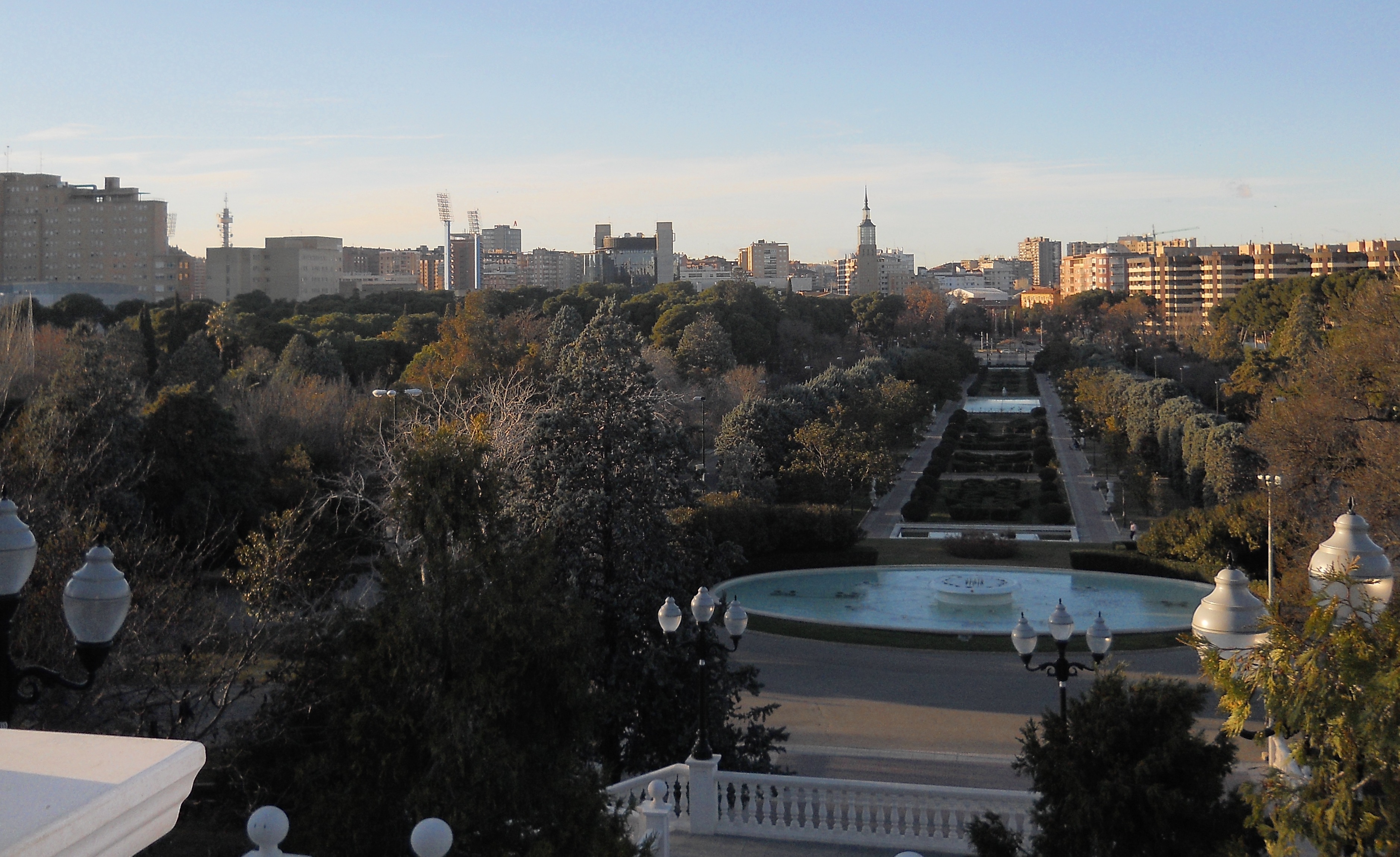
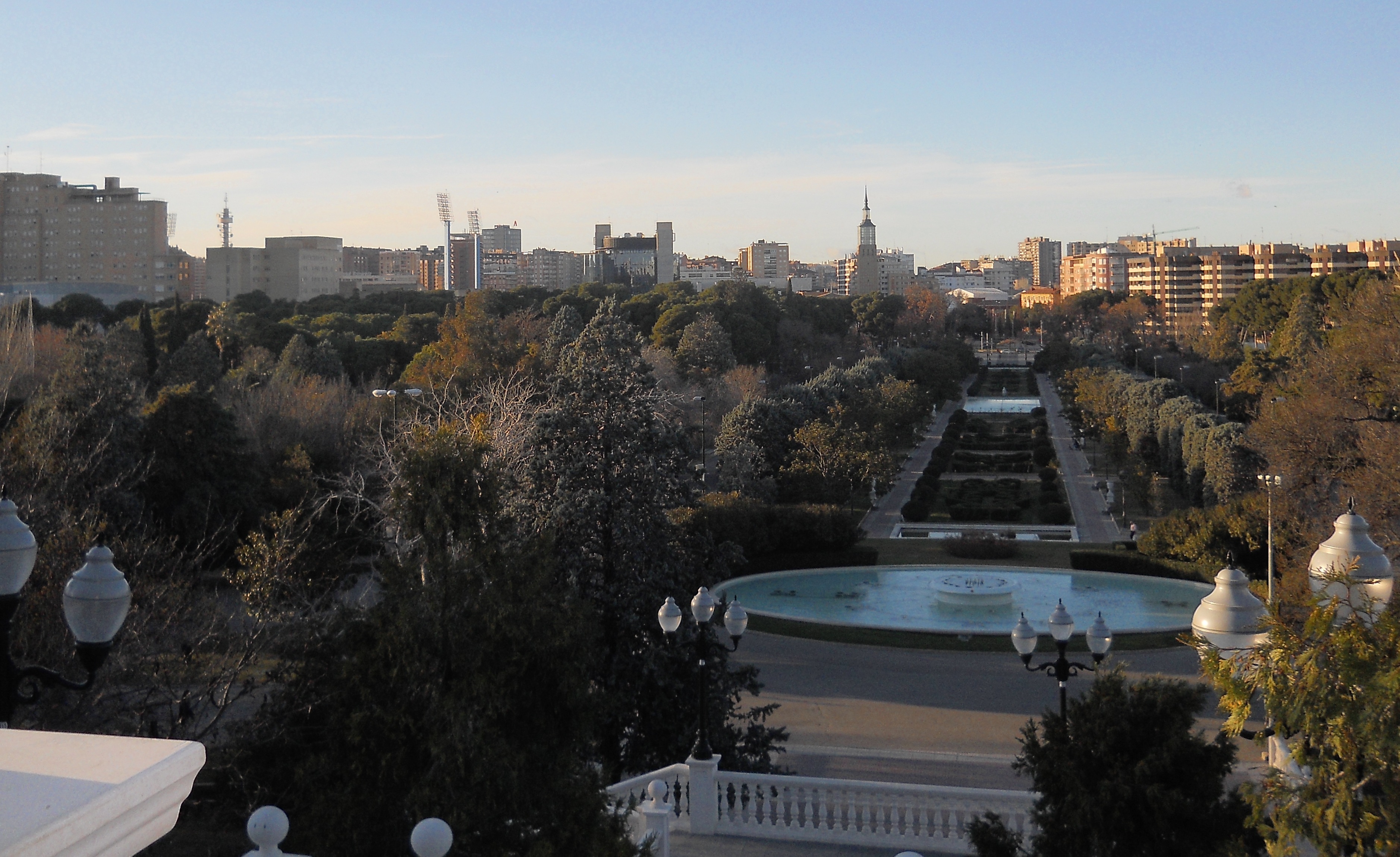
A view of Zaragoza and the park from Alfonso I statue

Cultural Differences Aside…

Having been here nearly 3 weeks now, I’ve noticed quite a few things that we might label “peculiar” or at least “interesting” in the US. Note that these are just my observations and are not in any way representative of everyone. There are many I could list but for length purposes, here are 3 I thought were a little amusing:

1. Dogs. The Spanish love their dogs and the fact that most people live in apartment buildings has not been a deterrent for owning them. I live near 2 parks and it’s not uncommon to see people of all ages, at every possible time of the day, walking every breed of dog. The downside to this is that many are not on leashes especially at the university where the leashed dogs are the minority. I’m still not certain if there are leash laws here but it would probably help with the, uh, sidewalk maintenance if not.

2. Late nights/Meal times. People here walk much more than in the US and a “short” walk is considered to be around 20 to 30 minutes. A “longer” walk is usually considered to be around 30-50 minutes. I know people that refuse to take public transportation even if it’s an hour walk in one direction. I say this because it’s not uncommon to see people just walking the streets as late as 10 or 11 p.m. depending on the day. It’s definitely a night culture as evidenced by the meal times. Breakfast is at a normal time but lunch is typically not eaten until the siesta which is between 2-4 or 5. Everything closes during this time with the exception of a few places and people go home to eat and then rest for a while before heading back to work. Dinner is normally eaten between 9 and 11 p.m.

3. ¿Qué hora es? (What time is it?). If you’re in Spain, it rarely matters. This is because, from what I’ve observed, most times are non-specific and include an unstated but understood “around” thrown in. For example, my morning class is supposed to begin at 9 but in reality, the earliest it ever starts is 9:15. This is not to say all given times are like this but if a student or teacher comes to class 15 minutes late, it’s not a problem at all and nothing is said. It’s a rare occasion if at least one person doesn’t arrive late to class 15 minutes or more. For me, this has been a little difficult to get accustomed to because I normally arrive 15 minutes early and then wait 30 minutes for class to actually begin.

Another Week and More Exploring 
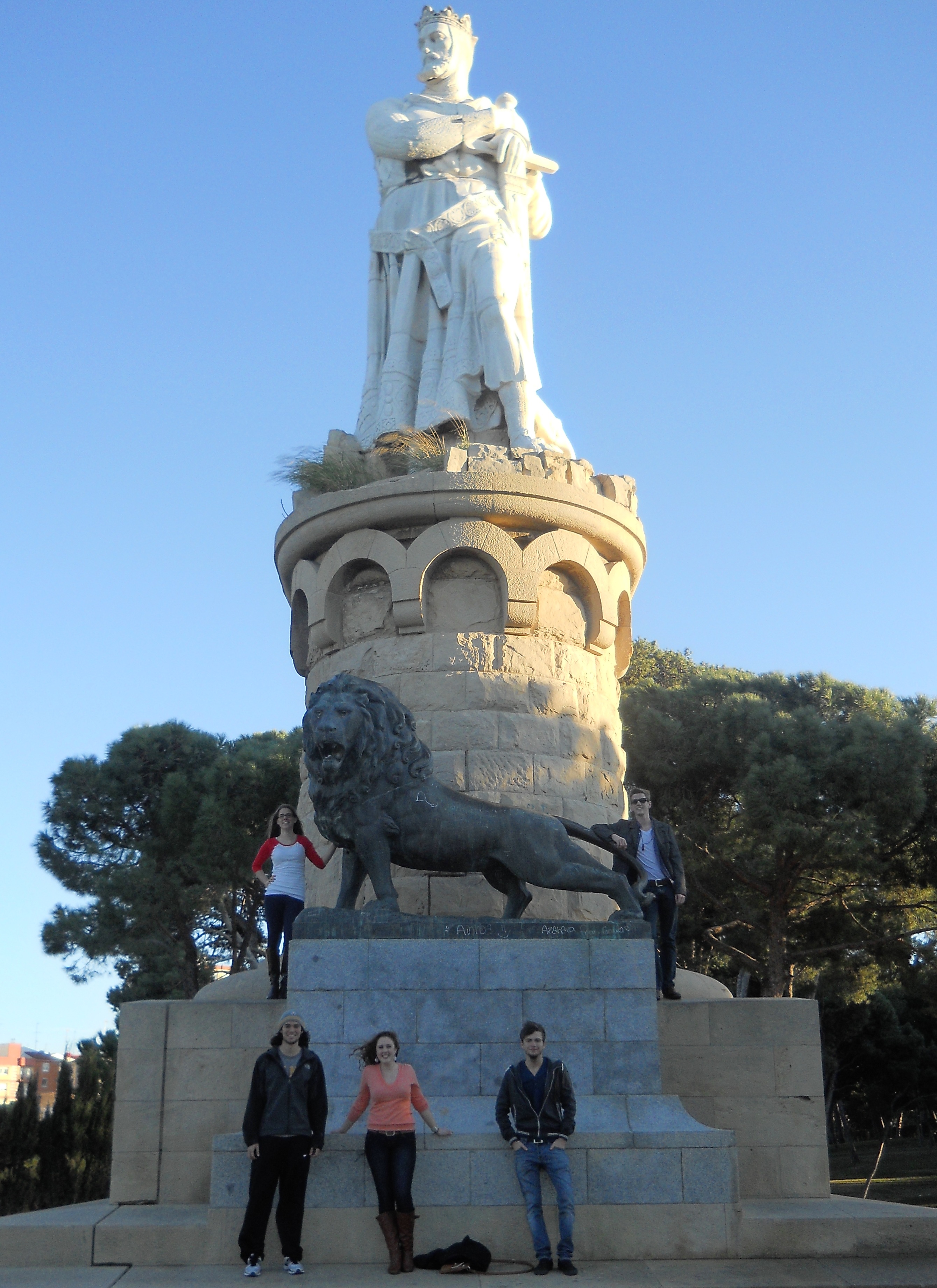
Alfonso I "El Batallador" King of Aragón between 1104 and 1134

Nothing has really changed since my last post other than a short trip to the biggest park in Zaragoza and bowling with a few of my friends. Even though it’s winter, the park we visited was beautiful and I saw more green than I have since I left Indiana. The whole area is actually very dry so it was somewhat of a shock to see a swathe of green grass in Zaragoza. The park was nice but full of political graffiti just like almost every other public area. My favorite was a protest against government surveillance that said something like “They’re watching you.” At the top of the hill that overlooks the park (where the large photo was taken from), there is a statue of Alfonso I “El Batallador.” He was the King of Aragón between 1104 and 1134.

A few nights ago, a few friends and I went to the second biggest mall in Zaragoza, Gran Casa (Big House), to shop and then bowl. It was a great night and we ate at our first McDonald’s in Europe. Since I’m vegetarian, I can’t say how good the sandwiches were but the fries tasted, unsurprisingly, the same as in the US.

I’m leaving for Paris Friday night and arriving early on Saturday so check back sometime next week for a Paris-themed blog! Until then, thanks for reading and you can follow me on Twitter for more updates here: twitter.com/#!/SpainJordan
and view my Picasa web albums here: picasaweb.google.com/102363422858711117798
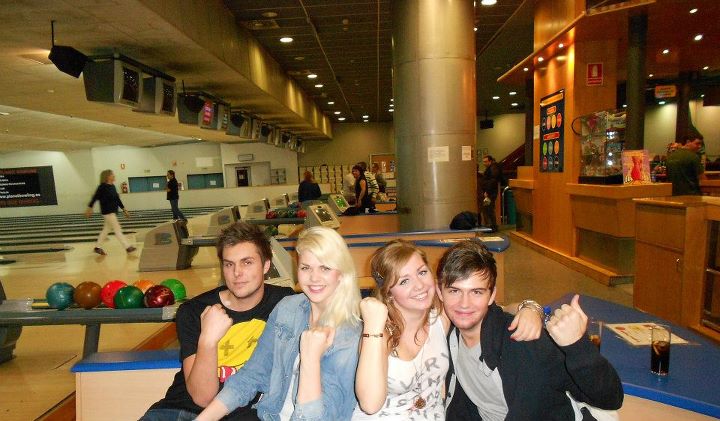
 

Bowling - My team. Jørgen, Christina, Lin, me.
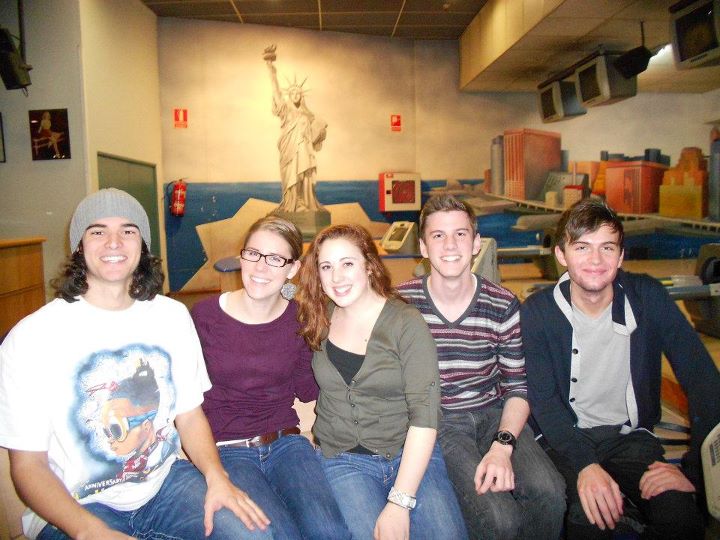
All 5 of us! Elliott, EB, Katie, Josh, me.
Settling Into Cambridge

Welcome back!  Now that I’ve been in Cambridge for nearly a week I thought I’d check back and update you with what has been going on.  Much of the week has been spent exploring the city and getting acquainted with living in it.  Luckily, the weather has been very abnormal so far.  Instead of the quintessential English wet, there have only been two or three days of rain so far.  Another thing to keep in mind when walking around the city:  daylight is limited in Cambridge.  The sun comes up around 8:00 and sets around 16:30.  While Cambridge is a very safe and nice place at night, the lack of sunlight was really a surprise for me.

The Student Centre: Our home in Cambridge

The city of Cambridge has an extremely rich history surrounding it.  Central to this history are the colleges, 34 in total.  Personally, my study abroad program is affiliated with Anglia Ruskin University.  Anglia is one of the newer colleges situated on the eastern side of Cambridge and away from the River Cam like many of the older establishments are.  The older and larger colleges have beautiful grounds adjacent to the river and are tourist attractions in themselves.  The history of Cambridge goes further back than the famous colleges though.  One of the few high points in town, Castle Hill, has history from long before America had even been discovered.  As the namesake castle is now long gone, today the hill is a popular spot for taking pictures of the town.

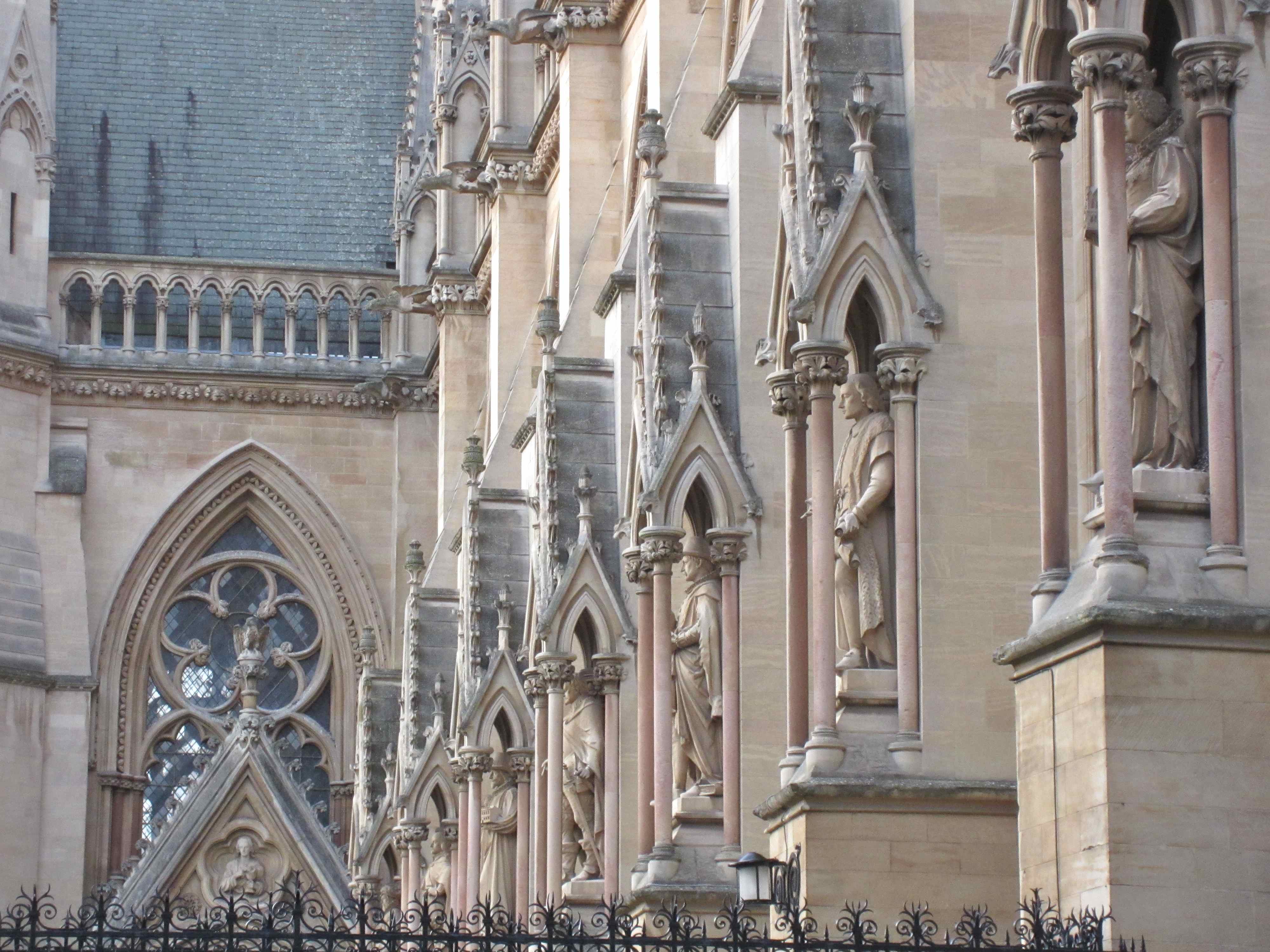
St. John's College

Getting to know the local stores and brands is a large part of moving into another location.  Some US things, like Zip-lock bags, are nonexistent in the UK.  On the other hand, some things are very comparable.  For example, Boots is a chain of stores very similar to Walgreens.  One of the more noticeable differences is the lack of a completely consumer-driven attitude.  Store employees here are happy to help you, but you have to approach them first.  No one will ask if you need assistance finding what you are looking for.  Generally I prefer this.  However, when you’re looking for something not common in Britain (like most things related to baking) it can be a pain (although there are entire isles of mushy peas).  Also, stores close very early.  The largest mall in the area completely shuts down at 17:30 – weekends included.  These differences can be difficult to straighten out occasionally:  it took 5 of us over an hour to choose a phone service for our time here.

Some of the most noticeable changes in culture are related to technology.  In an afternoon of walking around Cambridge you will only see 1 or 2 people at the most on their cell phones.  Internet service is generally slower than in the US (at the time of writing this the Student Centre has had no Internet for a day and a half).  However, this lack of persistent technology really adds to the relaxed atmosphere.  There are no people continually checking their phones for a text, no cacophony of yelling into phones, and a lot of simply hanging out and having a good time with friends.

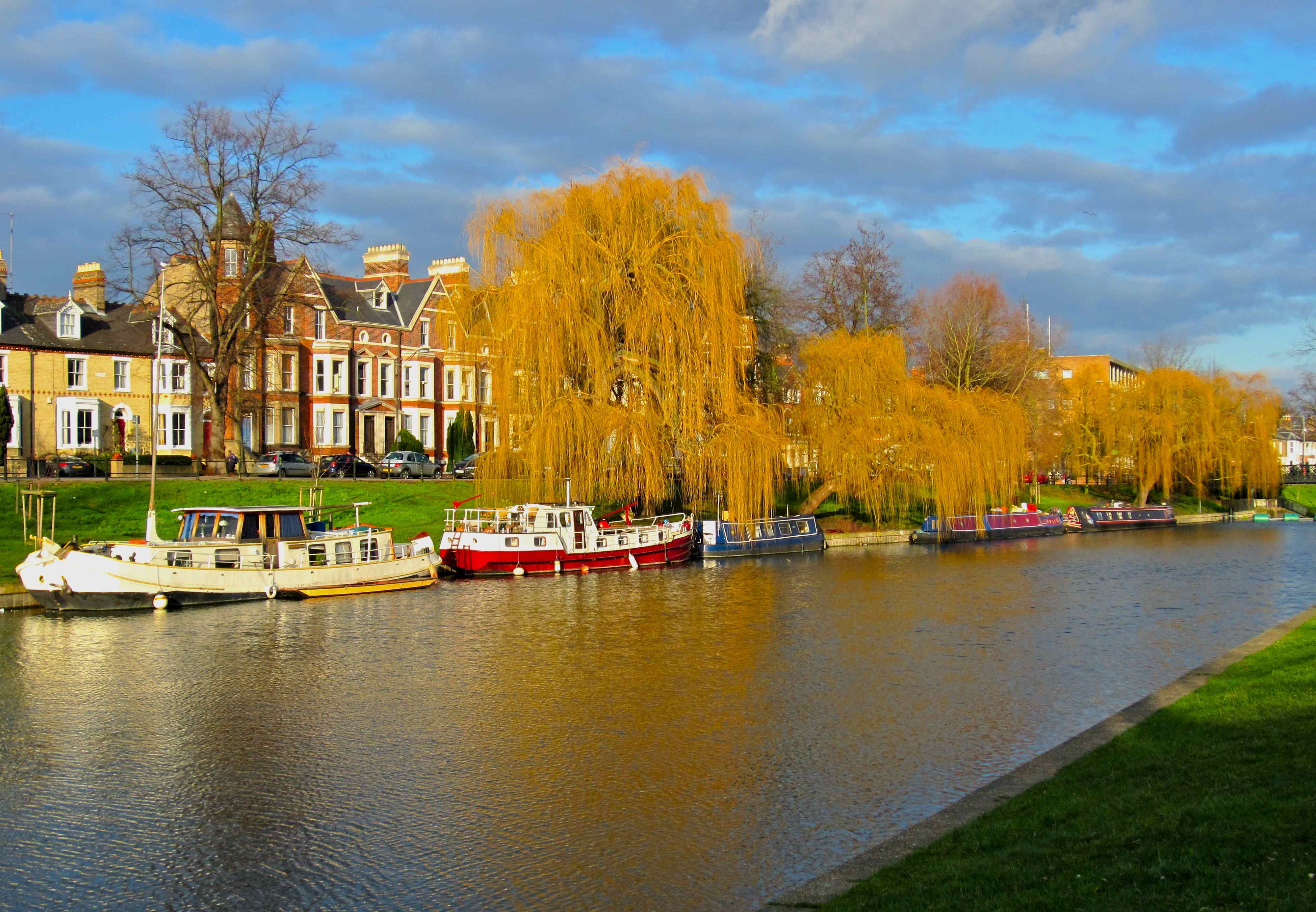
The River Cam near Jesus Green

Take a look at more photos on Picasa at:  https://picasaweb.google.com/112463823006344854498/London?authuser=0&feat=directlink

Follow what’s happening on Twitter at:  https://twitter.com/#!/CambridgeUKJohn


First Week in Joburg

Life is good.  After enduring the seventeen hour plane ride from Washington D.C., I finally arrived in Johannesburg, South Africa with the fifteen other students from around the country last Monday evening.  Since my arrival its has been a long week filled with touring and traveling Johannesburg and the surrounding areas but nevertheless I’ve been learning and experiencing so many new things and I am loving it.  Due to my lack of internet connection at the place we are staying, I haven’t been able to write yet, but here is the brief lowdown on what I did during our first week.

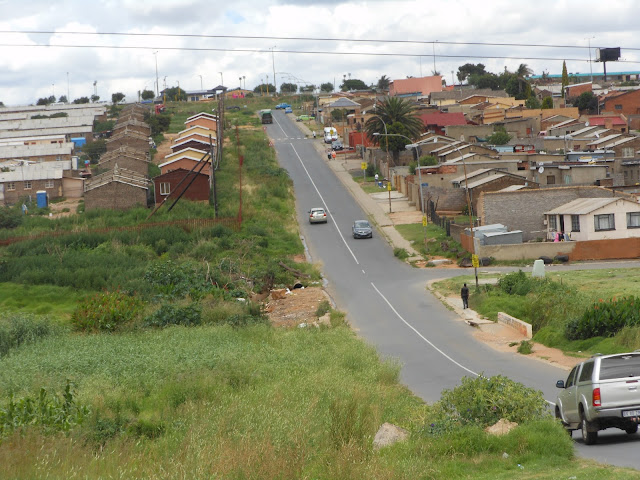
Our first two days were spent touring Soweto.   This stands for SOuth WEstern TOwnships and is most commonly known for the student uprisings that took place there in June of 1976 to fight against the apartheid regime.  The first day we visited the Hector Pieterson Museum.  This museum is named after one of the first students to be killed in the uprisings and is not only a tribute to him, but to the many, many other students who lost their lives.  We were able to meet Antoinette Sithole, Hector Pieterson’s sister, as she recalled the day her brother died and gave us a more personal, emotional, and real picture of what happened during the uprisings.

Later that day, we visited Nelson Mandela’s house and were given a brief history of his life, his philosophies, his rise to presidency in 1994, and his great influence in ending apartheid, which was very inspiring as well.

The next day in Soweto we visited the Regina Mundi Catholic Church.  Latin for “Queen of the World,” it is known as the “people’s church” and can seat 2000 worshipers while having space for an additional 3000 to stand! It is the biggest Catholic church in Soweto and played an important role in ending apartheid, especially during the Soweto uprisings.  Many people took refuge there, but there is still evidence of police storming in and chasing people out (bullet holes, broken altar, etc.) (Fun fact: after apartheid had been done away with, the Truth and Reconciliation Commission hosted their hearings at this church.)

After touring Soweto and learning about its history, I was so surprised how a township, though very large, can be so impacted and shaped by a single event in history.  The 1976 uprisings had such a huge effect on the places and people of the township that almost everything in someway can relate itself back to that time in history.

We also visited Kliptown, a town outside of Soweto.  We saw the Freedom Charter monument there, but the thing that was most impressionable to me was when we toured the slums.  The houses were basically shacks without toilets, showers, running water or anything like that.  Almost all of the people there were unemployed and after talking to the people and getting a little taste of their lives, I learned that the South African government has not really done anything positive to help them.  It is basically always trying to do what they think will help solve the people’s problems, but they fail to assist the people in what they really need or what would most benefit them and end up wasting a lot of money.

Later in the week we had sessions with the African National Party (ANC) as well as the Democratic Alliance (DA) and were introduced to the politics of South Africa and heard ideas of their plans to boost the economy and continue to positively rebuild the nation.  Though I’m not that into that sort of stuff too much, it was still interesting to see differing perspectives.  We also met with the South African Council of Churches and learned of their efforts in ending apartheid and trying to bring peace to South Africa.

I spent the weekend with my host family and that was quite the experience. (more to come on that later)

Finally, during our last two days we went to the U.S. Embassy where we learned about some of the workings of international relations, the Voortrekker Monument where we got a better understanding of the Dutch Afrikaaner history in South Africa, and the Apartheid Museum.  The apartheid museum was especially moving and took us from the very roots of the problem to the current state.  Pictures and videos played were graphic, but gave a better understanding of how truly horrible blacks were treated during that time.  They also had a special Nelson Mandela exhibit which highlighted his efforts as well.

Though the week was busy, it was lots of fun and I’m glad I got to experience the things I did.  I’m really enjoying spending time with the other students on the trip as well and I cannot wait to finally head to Namibia later this week!

See more pictures: https://picasaweb.google.com/114438203688193706278/Joburg#

Follow me on Twitter: www.twitter.com/AmyinNamibia

© 2026 Valpo Voyager

Theme by Anders NorenUp ↑