Over this past weekend we went on yet another excursion in the Reutlingen area. We hiked to Lichtenstein Castle. We invited a few of the other international students that live in our dorm to come with too. The castle is only about fifteen kilometers away from the University so we took a bus to the bottom of trail and began our journey up yet another hill to yet another amazing castle.
To get the full effect of this adventure, you should know what the weather was like. The trip adviser said that one should do this on a sunny day because you have to hike for about four kilometers through forest and meadows on narrow paths. So naturally, we would choose the day that it decided to have eighty percent chance of rain the entire day. So as we were slipping and sliding hoping not to fall of the cliffs, all while the weather kept changing from sunshine and warm to rain and wind (we thought we were back at Valpo).
We finally made it to Schloss Liechtenstein and took a tour of the interior of the castle. Our tour guide was very animated and made a lot of jokes in German which I have learned just to nod and smile to. Afterwards the sun decided to shine and we ate a late lunch on the castle grounds. Later we hiked back to the town of Lichtenstein in explored the city, even though it was a Sunday and everything was closed. Overall it was a great day just touring around the area and a nice relaxing day before finals began.
Check out more of my photos at https://plus.google.com/photos /113496106333285759017/albums?banner=pwa
As with any culture, there are a number of different cultural customs, traditions, and expectations. Spain is no different so since I hadn’t covered this topic in depth before, I thought at least one of my blogs should definitely cover this cultural aspect since it’s so important. This is just a brief mini-guide to what I’ve observed regarding how a conversation normally operates here.
The Kiss
Spanish people traditionally do a double kiss when meeting someone even for the first time. This differs depending on what area or country you’re visiting because it’s usually one kiss in France and in the southwestern part of Germany (where I visited), it’s normally three. Usually, it’s the right cheek followed by the left. It depends on the person but some will literally kiss your cheek while with others, you’ll simply touch cheeks. This happens with both sexes in all occasions except between two men. Men typically greet each other like in the US and the formality of the greeting depends on how familiar you are with the other person. Regardless of familiarity, the double kiss seems to be acceptable in every situation that I’ve observed.
Personal Space
Personal space doesn’t really exist to the extent it does in the US so some people might feel uncomfortable in Spain or other places in Europe. Along with the greeting kisses, the Spanish tend to stand or sit very close to other people when speaking and are not afraid to look directly into the other person’s eyes when speaking. I realize this can vary greatly depending on the person and that there are a number of “touchy” people even in the US that seem to break cultural stereotypes but there’s a clear cultural difference when watching a person’s body language while conversing. They also tend to have more physical contact while conversing and may occasionally lightly touch someone’s arm or shoulder, depending on the situation.
Opening Up
Some people might get the impression that the Spanish tend to be a bit more “cold” but this is not true. Many Americans will open up, talk, and think of a person they’ve only known a short while as a great friend. This is not the norm in Spain. People tend to keep each other at a metaphorical (not physical) distance and can take a little while to completely open up. Again, this entirely depends on the person but I’ve been told this before and I’ve observed it as well. It’s sort of a funny coincidence that Americans tend to value personal space as being more private than being open with others while the Spanish value openness as more private than someone’s personal space.
Thanks for reading and if you’d like to follow more of my daily musings, I have a Twitter account and if you’d like to check up on my photos I also have a Picasa account that has (finally) been completely updated!
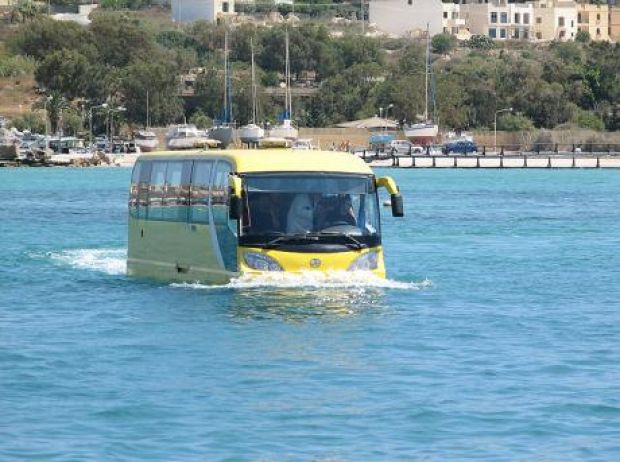
I feel like a modern day Roman. Despite following two weeks of deciphering Polish, Hungarian, Croatian, Slovenian, German, and Italian, being greeted with the English language was surprisingly underwhelming. Everywhere I travelled seemed to have, at minimum, one English speaking citizen every fifty feet. Ordering food in Poland is as simple as telling the waiter you speak English and waiting for her to bring the employee who does. Granted, many of the places I visited were tourist locations where English speakers make up the majority of visitors. Even still, I heard two French women use English to bridge the language gap between them and their Italian bus driver.
This is not the bus I rode - though, I wish it was.
Aside from exposing English’s status as the universal language, these past two weeks helped to give me a better understanding of the unappreciated privileges I have had as an American. The “American Dream” hardly exists outside of America. England has a population density of 397 people per/km compared to America’s 33, so most people live in apartments or small row homes. Many of these are old, and I’m sure home repair costs are through the roof. The same probably goes for Italy where every stereotypically beautiful, Italian apartment seemed to be in a state of disrepair. The Slovenian bed and breakfast I stayed in, situated directly next to the country’s beautiful national park, had to be rebuilt after it was occupied and destroyed eighteen years ago when the country was at war with the Yugoslav’s People’s Army. Dubrovnik, Croatia was bombed twenty-five years ago and had to be nearly entirely rebuilt. Aside from the civil war, America has not had to cope with fighting on its own soil; and its people have a lot of space to build their homes.
Believe it.
Capitalism originated in England, but it took a firmer hold in America where the economic system itself has become an export. In all the countries I visited, storefronts and advertisements seemed desperate to emulate the American way of doing things. Successful attempts were pleasing only in so far as advertising in America is, and unsuccessful attempts made clear the ways in which capitalism consumes culture, transforming tradition into no more than petty salesmanship. Thankfully, genuine Italian pizza still exists, and my Dubrovnik host gave me a free glass of homemade wine. Capitalism made my trip to Europe possible; I’m not about to start complaining. But, ever since I couch surfed in Budapest and my host explained to me how some of its people wish communism would return because then everyone had jobs, I have not stopped thinking about whether a complete laissez-faire attitude is the best way to treat people well.
A lot of good can and has come from the adoption of American value systems. But, I think it is important to keep in mind that responsibility for society as a whole is the modern day Roman’s double-edged sword. If dissent is similar to that in the following clip from Monty Python’s “The Life of Brian,” I think everything will turn out just fine.
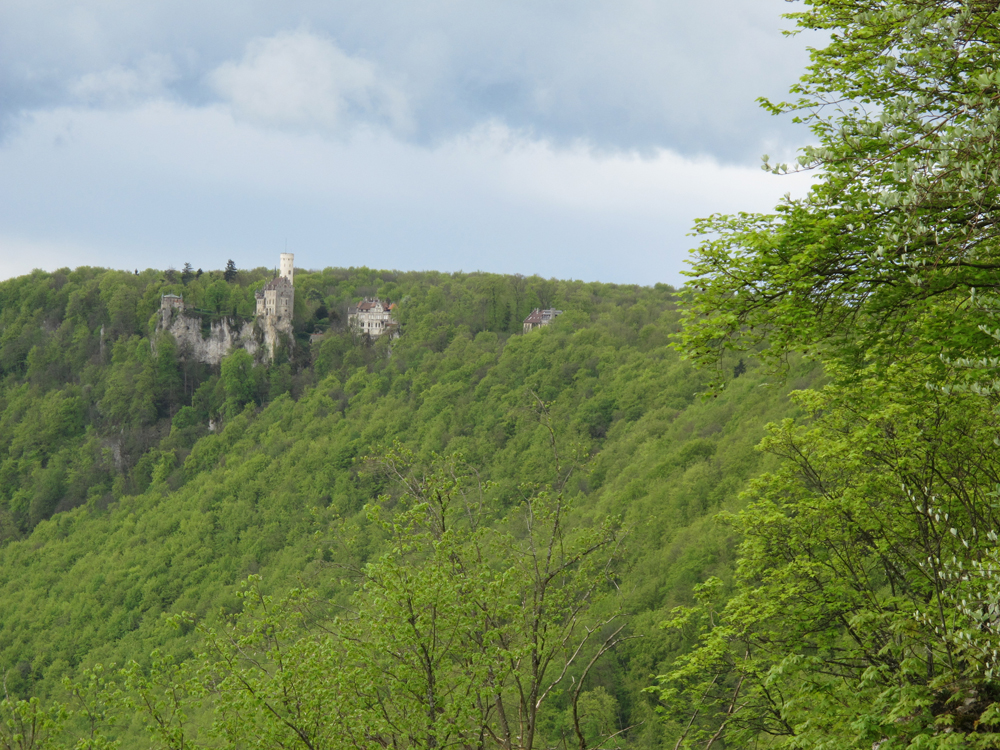
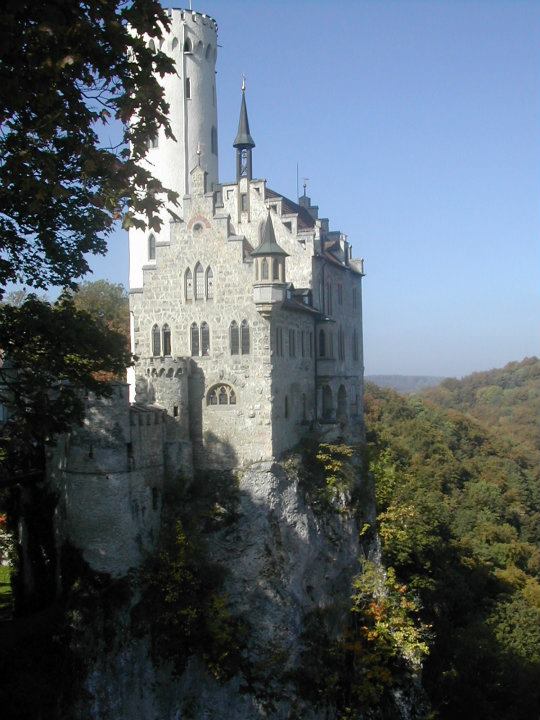 Over this past weekend we went on yet another excursion in the Reutlingen area. We hiked to Lichtenstein Castle. We invited a few of the other international students that live in our dorm to come with too. The castle is only about fifteen kilometers away from the University so we took a bus to the bottom of trail and began our journey up yet another hill to yet another amazing castle.
 said that one should do this on a sunny day because you have to hike for about four kilometers through forest and meadows on narrow paths. So naturally, we would choose the day that it decided to have eighty percent chance of rain the entire day. So as we were slipping and sliding hoping not to fall of the cliffs, all while the weather kept changing from sunshine and warm to rain and wind (we thought we were back at Valpo).
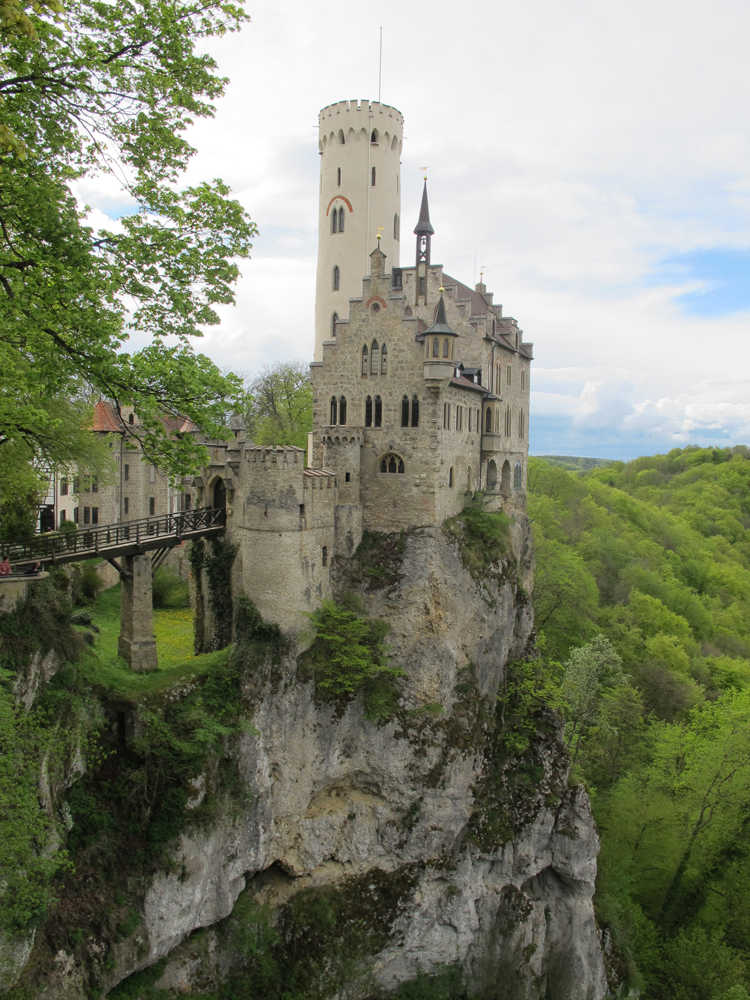 Check out more of my photos at https://plus.google.com/photos /113496106333285759017/albums?banner=pwa