Author Archives: leadserve

A Summer of Service

What a summer this has been! Now in the midst of my internship, my experiences have become more varied and often more consumed with meaning than before. Arguably my most impactful experience has been working with the local community through not only my position as a van assistant, but also and primarily through grant writing. In order to best serve the community, assuring proper funding for programming is critical, and as such, my grant writing work attains a level of spirituality to it that doesn’t necessarily apply to other applications; since I’ve been able to see firsthand the kind of work that Compass does, I’ve seen what I am writing for and why what I am doing is essential for the wellbeing of the community. Compass’ work isn’t and cannot be free, so as such, grant writing becomes a lifeline that is required for the continuation and propagation of the ideals of the founders. I am able to further the objectives of the nonprofit, the organization giving the grant, and ultimately, the Kingdom of Heaven by fulfilling the ideals of the Beatitudes of Matthew 5. Furthermore, my continued social media work also ties into this; I’ve been able to expand Compass’ outreach considerably, and as such, we will be able to reach more people and better administer Christ’s love to the Valparaiso community.
In addition, due to the location of my internship, I’ve been able to maintain my bonds with my
Church and community in town. I have been able to continue volunteering at Cafe Manna, the
community meal offered at the St. Teresa of Avila Catholic Student Center, in conjunction with
developing the young adult community at that same parish. Northwest Indiana is blessed to
have a thriving group of young Catholic adults, and because I’m located in Valpo, I’ve been able
to spend time with them while furthering my understanding of the needs of Valparaiso citizens.
Seeing what drives key aspects such as employment, food stability, as well as funding has
made a significant impact on how I view needs within the community. The lack of monolithicity (or diversity of perspectives) and the individual encounters I have had with so many people have shown me the multifaceted ways in which Christ is present in others, and because of this, I have come to better understand the necessity of organizations and events that build strong supportive communities.

I hope to utilize these skills in my professional life by applying the amount of knowledge I’ve
gained about organizational leadership and community building to the workplace. I believe doing so will empower both me and allow me to better fulfill my purpose of establishing Christ’s
kingdom on earth. I again would like to thank everyone who has helped me come this far;
without your support, I would not be where I am today. Thank you!

Matthew Landrum, Compass International Family Center

The Art of Being Present

At the time that my first blog post surfaces, I will have completed my first week of internship at Grunewald Guild. While being here I have surfaced a new passion for art, creativity, and have welcomed the idea of spirituality with a community. My experience the past week has already been unforgettable and though I have around five more weeks left, I haven’t had any doubts about feeling that my placement was right for me. When writing this, I have been here for three full days, in those three days I’ve flourished more than I ever thought was possible. I’ve been on a hike, swam in a river and lake, made block stamps, and practiced their mission statement of resonance. The Guild’s mission statement is all about resonance, “Community, at its truest, is a resonant body. Each person brings their own frequency—their grief, their joy, their curiosity, their questions—and somehow, when held with care, these differences do not cancel one another out. They create harmony. Not uniformity, but consonance. A shared field where no one voice dominates, and no one is lost.”
In my journey, I have recently grappled with issues of what my calling or service truly is to the community. While others around me focus on social and political affairs, helping children, environmental conservation, I found myself questioning if what I was doing had any point. Of course one could argue that self-working is service to yourself, but there was a voice in the back of my mind questioning if what I was doing was selfish. Everything feels so easy here, so am I really doing any social work?

As I grappled with my idea of “selfishness”, I had meals with some familiar and some new faces. After getting past the introduction stage of “Where are you from?” or “Is this your first time in Washington?” you uncover that these people in your community are here to be present. As you talk, you start to uncover the struggles in people’s lives slowly. You’ll hear people of all ages talking about loss, grief, guilt, and worry. Every person has a story of why they’re here, some are dealing with the death of someone close, others work a laboring job. Each and every individual here is not only just here for themselves, they’re here for others. Every meal spent a new conversation and a new fact surfaces. Every class period of art there’s the group talking casually or about the activity. Every morning Matin and nightly Vespers’ intentions we’re brought together to ground ourselves. The place is oozing with the intimacy of being present and feeling your inner and outer resonance while listening to each other.

Going into my internship, I was still dealing with the loss of my grandmother and the sense of community you feel is freeing. Each week there is a new group of people, some familiar and some new, that in itself creates more opportunity to show up. The people have writing workshops on their own, teachers create pop-up events for others who don’t get to experience their class, and every day we’re brought together. None of that would be possible without one’s presence. A quote from the Wednesday Matins by Mary Oliver read that “Attention without feeling, I began to learn, is only a report. An openness – an empathy – Dear pine cone, let me hold you as you open.” Which spoke to almost everyone in that room because it reminded us all of our presence. When we hold each other close and stay attentive, we are open and we feel all of the emotions being let out whether it be through art, writing, speaking, or our thoughts. In creating art, we express the true beauty of the world, but in being here we are creating art. Being present in itself is an art that many take for granted, you never know what will happen in the next few minutes, so be present now, not in your future or past. The mission statement of resonance resonates with where I am in my journey, leaving space for community and others to be present not only in my life but their lives.

While others deal with the social issues rapidly changing first hand, the guild serves as a quiet act of rebellion against them. It brings together a community of people, has them express themselves through art, and allows for opportunity to be present for ourselves. As I continue my internship, I look forward to serving the local community and practicing the art of being present.

Nickie Smar, Grunewald Guild

My Building Blocks – Nature, Connection, and Passion

My experience at Save the Dunes has been such a formative experience thus far, despite having only started with the organization a week ago. Before solidifying my decision to participate in the CAPS Fellows program, I knew that I wanted an internship that paired with my love for nature. I discovered Save the Dunes through the CAPS program process, and it perfectly aligned with that value. On top of that, it offered so much more. Save the Dunes mission targets three “buckets”: conservation, advocacy, and community engagement. These are things I am learning more and more about every day, and things that I can say that I now have a greater appreciation for.
Part of why my experience has been so formative and valuable is due to the people I have met, their dedication to Save the Dunes and its mission and work. Everyone at the organization has had a connection in some way or another with the wonders and beauties nature has to offer. They have that connection to it, and I believe they use that connection and passion to drive their work. It is inspiring to see. On top of this, they have all been welcoming and ready and willing to offer help to me as a newbie. Answering any questions I might have, providing me with background information on the organization and its work, and defining “new-fangled” terminology for me. I feel as though I have already learned so much, despite only just starting. This is exactly what I was hoping to gain from this summer experience, and I know I will discover much more throughout the rest of my time with the organization.

Save the Dunes mission focuses on serving to protect and advocate for the Indiana Dunes, Lake Michigan, and other natural areas, and the amazing thing…the organization has a longstanding history with this mission. Since 1952, when Save the Dunes was established, a rock was formed. This rock is one with purpose, one that is sturdy, reliable, and not easily eroded by whatever elements are blown its way.

Despite my present connection to such an organization, I have always had a love and appreciation for the dunes and what they have to offer. I grew up by Lake Michigan and spent many a beach day down by the shore. I remember racing down the dunes, building some questionable and probably not structurally sound sand castles with my sister, and long hikes with my family. I have so many memories from my childhood shaped by these things. These are things I hope that other families can continue to enjoy and appreciate going far into the future. This is possible through the worthy work of organizations like Save the Dunes.

Throughout the rest of the summer, I hope to continue to learn, grow, thrive, and make connections in the environment in which Save the Dunes fosters (which I am certain I will, especially since I get to work in the amazing historic house – Barker House). So far, I have learned that even the smallest of tasks have their own meaning and contribute to the larger picture. I am looking forward to continuing to help with whatever projects I can and assisting with the amazing work the organization is involved in.

Isabelle Byrt, Save the Dunes

Delving deep into Calling, Purpose, and Leadership

One of the biggest things I’ve learned so far is how much intentionality goes into youth development work. It’s not just about keeping students busy or supervised; it’s about building relationships, consistency, and trust. I’ve seen how small interactions like remembering a student’s name, asking about their day, and celebrating a small academic win can make a real difference in how students show up. At first, I underestimated how powerful those “small” moments could be, but now I see they are often the foundation of everything else.
Another part of my experience has been learning how teamwork operates in a structured youth organization.
I’ve had the chance to observe and work alongside staff members who are deeply committed to the mission. Whether it’s planning enrichment activities or managing the flow of a busy afternoon, I’ve noticed how communication and flexibility are key. There are moments when plans change quickly, and being able to adapt without losing focus on the students is something I’m actively learning.

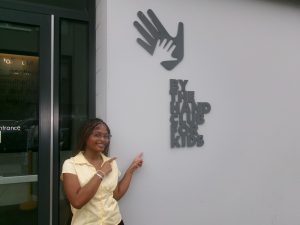
This internship has also made me think more seriously about purpose and calling. I’ve been asking myself what kind of long-term impact I want to have, and being at By The Hand has pushed me to think about service in a more consistent and relational way. I used to think leadership meant being in charge or making big decisions, but here I’ve seen leadership in quieter forms like encouraging a student who is struggling, or helping create a safe space where young people feel seen and supported. That has challenged and expanded my understanding of what it means to lead.

In many ways, this experience connects directly to my academic and personal journey. As a student interested in fields like social work, law, and public service, I’m beginning to understand how early intervention and mentorship can shape someone’s entire trajectory. The work I’m doing now may feel small day to day, but I can see how it contributes to something larger, helping students build confidence, discipline, and hope for their futures.

There have also been moments of challenge. Some days require a lot of patience, especially when students are dealing with frustration or energy is high in the room. I’ve had to learn how to stay calm, how to redirect situations positively, and how to support without taking things personally. These moments have helped me grow not just professionally, but personally as well. Overall, this internship has helped me better understand the kind of environment I want to be part of in the future, one where service, education, and community come together. I’m grateful for the opportunity to learn in real time and to contribute to something that is actively shaping young lives.

Angel Johnson, By The Hand Club for Kids

From Challenges to Growth: My Journey So Far

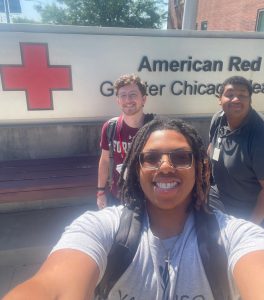
My first ever internship with the American Red Cross has been one of the most meaningful
learning experiences I have had so far as a college student and aspiring social worker. When I
first began my internship, I was excited about the opportunity, but I was also nervous. During my
first few days, everything seemed to move incredibly fast. There were countless acronyms to
learn, unfamiliar terminology, and an organizational structure that felt overwhelming at first. Early on during my training, I sometimes questioned whether I would be able to keep up with the pace of the work or fully understand the responsibilities that came with my role.

Fortunately, those feelings of uncertainty did not last long. What stood out to me almost
immediately was the support I received from my supervisor and coworkers. From my very first
day, they created an environment that was welcoming, patient, and encouraging. Instead of
expecting me to figure everything out on my own, they treated my internship as a genuine
learning experience. They consistently answered my questions, explained many acronyms, and
checked in to make sure I was adjusting well. Their support helped me become more comfortable in my role and reminded me that growth often comes from being willing to learn from others, rather than knowing all the answers.

As I became more familiar with Disaster Cycle Services and the mission of the American Red
Cross, I began to see the real impact this work has on individuals and families experiencing
crisis. In my role, I have had opportunities to assist with disaster response efforts, particularly
home fire cases throughout the Greater Chicago South area. One of my favorite aspects of the
internship has been interacting directly with clients and conducting damage assessments to
determine how the Red Cross can support them. These conversations are often taking place
during some of the most difficult moments in a person’s life, which makes empathy, active
listening, and effective communication especially important.

As a social work major, this experience has allowed me to practice many of the micro-level skills
I have learned in the classroom. Concepts that once existed only in textbooks now have
real-world applications. Whether I am listening to a client describe what they have lost, helping
them understand available resources, or connecting them with support services, I am gaining
practical experience that is helping me grow both professionally and personally. Seeing how
these skills can provide comfort and guidance during times of crisis has reinforced my desire to
pursue a career centered on helping others.

Beyond the direct service aspect of the internship, I have also learned a great deal about
professionalism and workplace dynamics. Every day presents opportunities to collaborate with
coworkers, communicate effectively, and adapt to changing situations. While there have certainly been challenges, such as missing a few calls when I was away from my Red Cross devices or navigating the realities of Chicago traffic, each obstacle has become an opportunity to learn and improve. These experiences have taught me the importance of responsibility, preparedness, and flexibility in professional settings.

One of the questions that many CAPS Fellows are encouraged to consider is how our
experiences connect to our sense of purpose and calling. This internship has helped me reflect
deeply on that question. Before beginning this role, I knew I wanted to become a social worker
because I wanted to help people. However, this experience has shown me that helping people
often happens in small but significant ways. Sometimes it means listening carefully. Sometimes
it means connecting someone with resources. Sometimes it simply means being present for a
person during a difficult moment. Through the Red Cross, I have seen how service can take
many forms, and each one has the potential to make a meaningful difference.

As I continue my internship, I hope to contribute to projects that create lasting benefits for the
organization, its volunteers, and the communities it serves. I want the work I complete this
summer to have an impact that extends beyond my time as an intern. Most importantly, I am
grateful for the opportunity to learn, grow, and serve alongside people who are deeply committed to helping others. This experience has strengthened my confidence, expanded my professional skills, and affirmed my belief that a career dedicated to service is the right path for me. I am excited to see where the rest of this journey leads and what additional lessons it will teach me about purpose, leadership, and serving others.

Tyrell Frieson, American Red Cross

Learning the True Meaning of Inclusion

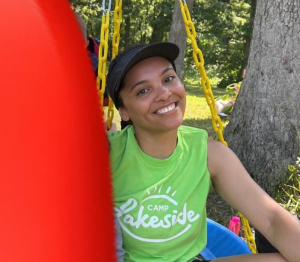
When I first learned about Camp Lakeside, I immediately knew it was somewhere I wanted to be involved. A summer camp created for kids of all abilities, with a mission focused on equity, inclusion, and belonging, aligned so closely with the values that are important to me. Throughout my experiences in healthcare and service, I have developed a strong passion for advocating for people whose voices are not always heard or whose abilities are sometimes underestimated. Being able to spend my summer in a place where every child is valued for exactly who they are has been incredibly meaningful.
Before starting my internship, I expected to learn about planning activities, supporting campers, and being part of a team. While I have gained all of those skills, I have also learned so much more from the campers themselves. Camp Lakeside has shown me that true inclusion is about much more than simply allowing someone to participate. It is about creating a space where every person feels welcomed, respected, and like they truly belong.

One of my favorite parts of this experience has been seeing how much joy comes from creating
opportunities for everyone to be involved. Many people with disabilities experience barriers because of inaccessible environments, misconceptions, or assumptions about what they can and cannot do. At Camp Lakeside, the focus is not on limitations. Instead, the focus is on finding creative ways to support each camper and make sure everyone has the opportunity to have fun, build friendships, and create memories.

This experience has changed the way I think about advocacy. Advocacy does not always have to be a major action or a public statement. Sometimes it looks like listening, being patient, learning what someone needs, and helping others see a person beyond their disability. Working at Camp Lakeside has reminded me that small actions can make a lasting impact. A welcoming attitude and a willingness to understand others can completely change someone’s experience.

As a Health Sciences student on the Pre-PA track, this internship has connected deeply with my future goals in healthcare. I have always wanted a career where I can support and advocate for others, especially individuals who may face challenges having their needs recognized. Camp Lakeside has reinforced that caring for people is not only about knowledge and skills; it is about compassion, empathy, and recognizing the value of every individual.

One thing that has stood out to me this summer is how often people with disabilities are judged based on misconceptions rather than who they truly are. Camp Lakeside challenges those ideas by creating a place where kids can simply be kids. They can laugh, make friends, try new things, and experience the same moments of growth and connection as anyone else.

I am so grateful to be part of a community that reflects the values I hope to carry throughout my future career. My time at Camp Lakeside has strengthened my passion for inclusion and advocacy while helping me better understand my purpose: creating spaces where everyone feels seen, supported, and valued. I look forward to continuing to learn from this experience and carrying these lessons with me long after the summer ends.

Grace Vaughn, Camp Lakeside

Small actions, big impacts

This summer, I have had the opportunity to serve as an intern with By The Hand Club for Kids, and it has already been one of the most meaningful experiences of my college journey. As someone who values service, leadership, and helping others reach their full potential, this internship has given me a chance to see firsthand how a caring community can make a lasting impact on young people and families. Each day has brought new opportunities to learn, grow, and reflect on my own purpose and calling.

Working at By The Hand has allowed me to contribute to an organization that is deeply
committed to supporting students academically, emotionally, and spiritually. Throughout the
summer, I have assisted with various activities, supported staff members, and helped create a
positive environment for students. Whether I am helping with programming, interacting with
students, preparing materials, or assisting with daily operations, I have learned that every task
plays an important role in the organization’s mission. Seeing the dedication of the staff and
volunteers has inspired me to approach my work with greater intention and care.

One of the most rewarding parts of this experience has been building relationships with the
students. Their energy, curiosity, and enthusiasm remind me why organizations like By The
Hand are so important. I have enjoyed getting to know the students and encouraging them as
they participate in activities and learn new skills. Even small interactions can make a difference.
A simple conversation, word of encouragement, or helping a student complete a task can help
build confidence and create a sense of belonging.

I often think about questions related to purpose and calling. This internship has encouraged me
to reflect on how my personal values connect with my future career goals. I have always been
passionate about helping others and creating positive change within my community. Through
this experience, I have seen how meaningful work can impact lives in ways that may not always
be immediately visible. It has reinforced my belief that success is not only measured by personal achievements but also by the ways we support and uplift others.

My experience at By The Hand has connected to many of the lessons I have learned through
my classes and leadership experiences. In school, I have studied the importance of community
engagement, service, and leadership. This internship has allowed me to put those concepts into
practice. Rather than simply reading about the importance of supporting others, I have had the
opportunity to witness it every day through the work being done at By The Hand. One thing that has surprised me is how much growth can happen in a relatively short period of time.

As the summer continues, I am excited to keep learning from my supervisors, coworkers, and
the students I serve. I am grateful for the opportunity to be part of an organization that is making a real difference in the lives of young people. This experience has reminded me that purpose is often discovered through service, relationships, and a willingness to invest in others. I look forward to continuing this journey and carrying these lessons with me throughout my future career and leadership experiences.

Angel Johnson, By The Hand Club for Kids

Capture the moments that matter

It’s been just two weeks since I stepped into Jacob’s Ladder, in Chesterton, as a CAPS Fellow, and this experience is already shaping me in ways I didn’t expect. Walking through the doors, I’m reminded why I chose a path rooted in service, learning, and community. There’s something special about this place, something you can feel before you can fully explain it.

Jacob’s Ladder has a mission that resonates deeply with me: helping children reach their fullest potential through compassionate, evidence‑based therapy. Seeing that mission lived out in real time, in the patience of the therapists, the joy of the kids, and the trust of the families has been one of the most grounding parts of my fellowship so far.

My role here blends observation, creativity, and connection. I’m learning how to capture the moments that matter: the small victories, the breakthroughs, the smiles through photography and videography. It’s a privilege to document stories that reflect resilience and growth. Every image feels like a reminder that progress doesn’t always look big or loud; sometimes it’s a child trying something new, or a parent exhaling with relief.

What I appreciate most is the environment. The team is welcoming, collaborative, and genuinely invested in each child’s journey. They’ve made space for me to learn, ask questions, and contribute in meaningful ways. I feel supported, challenged, and inspired.

As I continue this fellowship, I’m excited to keep growing as a nurse, as a storyteller, and as someone committed to serving families with dignity and compassion. If the first two weeks are any indication, this experience will leave a lasting mark on how I show up in my future practice.

And honestly, I’m grateful. Grateful for the opportunity, the people, the mission, and the chance to be part of something that truly matters.

Armelle S. Ndemanou Dongmo, Jacob’s Ladder

Embracing a meaningful mission

This morning, the first thing I did after waking up was go outside, let some chickens out of their coop, throw a cup of corn into their enclosure, refill their oats and water, and then get started with my actual work for the day. My work with Compass International [Family Center], as of now, has largely been virtual; the nonprofit’s needs primarily relate to social media and data collection, which I have taken joy in fulfilling. Some of my prior work with the university, such as my role as volunteer coordinator of St. Teresa of Avila’s Cafe Manna, has exposed me firsthand to many of the most vulnerable living within Valparaiso; however, my role at Compass has exposed me to a new angle by which I can approach caring for a population in need. My role is more administrative in character, at least as of now, and as such, it deals more directly with addressing issues that Compass faces as opposed to immediate care. I believe this is a good path for me to explore because it allows for the professionals who do volunteer work with us to do their job more easily and effectively.
From my economics and math background, I’ve had a lot of experience with research and problem solving, especially in terms of efficiency and complex language and terms. I believe that my time at Compass has given me a unique opportunity to implement that into a setting that actively benefits and assists those on the front lines of care that is needed in Valpo. I’m looking forward to work that I will be doing in the future, particularly both the work I’ll be doing on the ground with Compass participants, but also other ways I can assist the nonprofit administratively. Furthermore, I also appreciate the mission driven and Christian character of Compass International; as a Peer Minister at the St. Teresa of Avila Catholic Student Center, faith is important to me personally, and I view the work that I do as an extension of it. Being able to work for such an important mission as helping international families and individuals grow accustomed to life in the United States is, to me, a textbook example of Matthew 25:35 (“For I was hungry and you gave me food, I was thirsty and you gave me drink, I was a stranger and you welcomed me”) being applied in modern life. Working for a mission based cause such as this excites me, and spiritually prepares me for what the rest of adulthood will eventually provide.

I would like to end by stating my gratitude toward everyone who has allowed me to thrive at this stage in my life. I would like to thank my family, friends, housemates, and faculty at Valparaiso University for giving me the opportunity to be a positive force within the greater Valparaiso community. Without your support, I surely would not have been able to make it as far as I have. May we all be inspired to live out the Gospel message and see Christ in each and every one of our neighbors.

Matthew Landum, Compass International Family Center

A Summer of Creative Discovery

It’s hard to believe my summer at the Grunewald Guild is already coming to an end. These ten or so weeks have been so incredibly fulfilling, and I’m forever grateful for the vibrant and colourful community that the Guild fosters for all who visit. I’ve grown to appreciate the regular Matins and Vespers gatherings each day. It’s been cool to see how helpful that small bit of routine makes such a difference in my motivation. Taking that time at the opening and closing of each day to focus intentionally on grounding, appreciation, and reflection has helped me to better understand and learn from my time spent here.
I’ve had the opportunity to explore so many new forms of creative expression, and I can tell that both my skills and my understanding have developed significantly from when I arrived two months ago. I was able to take part in the stained glass class a couple weeks ago, and it was an amazing experience being able to experiment and try out this new art form that would otherwise be rather daunting, expensive, and relatively inaccessible to beginners. After spending the week finishing a small introductory project to learn the basic skills and process, I’ve continued to make use of my access to the studio and equipment in working on a larger piece. I also got to participate in an incredibly wide variety of pop-up activities that various faculty led throughout the summer, which allowed me to explore a plethora of new media in a guided, low-stakes environment that encouraged playful creativity and experimentation. These spontaneous afternoon events had more diverse forms of art than I could have come up with, including turmeric sunprinting, clay sculpture, silk painting, linocut stamp carving & printmaking, celtic knot drawing, sacred geometry & iconography, jewelry making, collage, and hand-making natural watercolour paints from materials foraged from right here on campus.

One of the biggest gifts this summer internship has offered me is the encouragement, support, and motivation to follow the call of creative inspiration and curiosity. Learning to give myself space and time to play with creativity has helped me find ways to flourish and thrive in this great big world I’m entering post-graduation. I know my memories and community here will follow me no matter where I go, and I’m excited to see the lessons I’ve gleaned this summer
blossom into my future.

Bianca Olfert, Grunewald Guild

End of a route, beginning of a journey

Friday, August 8, 2025, was my last day at Camp Lakeside, and I am going to miss it terribly. There were so many lessons learned, rewarding moments, bonds created, that it became painful to let the summer end. As part of Camp Lakeside’s group of counselors, I spent the summer supportingthe children’s leadership in their activities and providing personal support to each of the campers’ different needs, I bonded with my coworkers and with the campers. I had a wonderful time.

Despite all the joy and appreciation that I experienced during this internship, there were also challenging and exhausting moments, especially during my first contacts with new children. All typical and atypical children have different views of the world and different needs, and learning how to deal with each different type of crisis is an arduous but achievable process. Learning the right approach for a child and being able to overcome challenges with it is rewarding.

As human beings we are constantly evolving, but as a child, small growths become evident in a short space of time. Creating a bond with a child and seeing them develop so quickly fills my heart with pride and makes me wish I could live that summer all over again. In addition, being able to recognize the different needs of different people made me feel that I was in the right place.

The CAPS program not only gave me the opportunity to experience an incredible summer alongside amazing people, but it also opened my eyes to what makes me happy and gives me pleasure. Through the reflections made during the summer I deepened my knowledge of a world I had never been part of – that of people with disabilities, and I realized that working with people is not just about communication, it is about empathy and the desire to transmit joy. My heart filled with joy every time one of the campers, diagnosed with Down’s Syndrome, gave me a smiling “Hi” and opened his arms to hug me. He did this several times a day, and I loved every one of them. It would be a privilege to be able to call this a profession.

CAPS is designed to offer us an experience of leadership and service, but for me it was more than that, it was an opportunity of personal and professional growth. I learned skills of care and affection, I empathized with children and parents, I avoided knowing which children had a diagnosis and which didn’t, giving me the chance to use my perception to notice the different behaviors and needs. I enjoyed the experience 100%, and if I had the chance, I would do it all over again. 

This fall is my last semester, and this summer has served as a compass for me, directing me towards the path I want to pursue after graduation. This summer was the end of a route guided by CAPS, but graduation will be the beginning of a beautiful journey of dedication and work. My calling is to serve people in need, and I will follow it.

Larissa Pina, Camp Lakeside

Adaptation and Service

After my first week at Heartland Human Care Services, I had already picked up on a trend of adaptation within the organization in the face of federal policy change. After a month, I have learned that the term “adaptable” fits no one more than the immigrants and refugees we serve. They come from countries all across the globe, fleeing war, persecution, and denial of human rights. Many of them do not speak English and are completely unfamiliar with American culture and infrastructure. I have met participants who are highly educated and professionally trained in their home countries, but unable to secure employment in the United States due to language barriers and lack of accepted credentials. All of them struggle through complicated bureaucratic processes to secure clothing, housing, and food for themselves and their families.

As I work with participants who are constantly adapting, I have had to adapt too. My first week on the job, my supervisor and I met up with a participant and her mother to address some of their concerns. The participants spoke Spanish, but my supervisor, despite being fluent in several other languages, does not speak much. Instead, she turned to me and asked, “Do you speak Spanish?” I responded that I speak some, and she was quick to have me help translate their interaction. Since then, I have used Spanish almost every day on the job, stretching and growing my language skills with every interaction. I remember being horribly nervous the first few times I had to rely on Spanish alone for communication, afraid I might say the wrong thing or forget every Spanish word I’d ever learned. Sometimes I did forget words I should have known or grammar that should have been obvious, but in the end, I found that pushing through the struggle was what counted. Taking the time to fumble with my words is what has helped me to learn and improve, even over the course of one short month. There is also something truly meaningful about meeting someone halfway by speaking their language, even if you don’t always have the right words. Adapting to the communication needs of the participants I work with has been deeply rewarding, allowing me to not only better meet their needs, but also to build real rapport and trust.

All of these experiences have me thinking about the relationship between adaptability and service. If I were not able to learn to communicate properly with participants, I would not have been able to address their issues and concerns properly either. Service requires a commitment to the people being served—including a willingness to develop yourself to be able to offer them the service they deserve. Looking back, this would be far from the first time I have done so. As a Resident Assistant, I had to access the rarely-used creative corner of my brain to come up with decorations and events for my residents. As a server, I had to learn to be socially flexible, turning every positive and negative interaction into an opportunity to connect with the guests at my table. In the military, I had to figure out how to balance being a leader with following the orders of my superiors.
Some might wonder why we should have to change ourselves to serve—shouldn’t we be able to make a positive impact just as we are? But I don’t think we have to change: we get to. Adapting to fit a serving role allows us to learn, not just from our job, but from the people we are helping. Allowing our service to enrich our experiences and our perspectives of the world in this way prepares us for a life of service, and a life of growth.
Dani Schulz, Heartland Alliance

Finding Purpose in the Small Hungers and Gladness

Calling and Purpose in Society, CAPS, this is what the fellowship is all about and how we, as individuals, find it within non-profit work. Over the course of the summer we have had some very thought provoking readings and discussions, in particular over Frederick Buechner’s idea that calling lies “where your deep gladness and the world’s deep hunger meet”. And now as I am wrapping up the final two weeks of this internship I turn back to it. Finding the world’s deep hunger is a very daunting task; in the current state of the world there are many hungers that need our attention. Erie Neighborhood House’s focuses on the hunger involving immigration and supporting the Latinx community and within Erie House, the READS program helps engage students in literacy work over the summer. To some this may seem like we are getting further and further away from the truly deep hunger but in reality this program is helping many families receive support and resources that they need. This theme is at the core of most of the world’s hunger and one could consider those supports and resources the small hungers of the world creating the deep.

As I reflect back, I sometimes struggle to see how the work I did has contributed to this bigger picture, deeper hunger. When I come in everyday and fill up 24 water bottles, make four trips to the copy machine in an hour, and play legos with the students, or the day I had to swap out pencils for pens in 24 compasses I ask myself how this is contributing to making society better. The tasks seem so small and sometimes a little silly but it really does take all these small pieces to make the program run and be successful. On top of these smaller tasks, several lesson planning projects have been given to me. Some take more time than others depending on what resources were already created and if the activities need to be developed from scratch. These lesson plans span from ones being used in the summer program to the comprehension units during the school year. It is work like this that is much easier to relate to the bigger picture of being a part of this program, knowing that it will be used beyond my time with Erie House.

This certainly peaks my deep gladness for helping others. Getting to see the students engage with the lessons I was a part of creating fills me with deep gratitude for where I am in life. When I get to engage with the students especially in Spanish, It is incredibly rewarding to both get the experience of teaching children but also knowing that I am helping them grow their knowledge and become more confident readers and individuals.

As I enter the last two weeks I will carry this quote with me, not to question whether or not I have done enough or found the deepest hunger but, as a reminder that the small hungers and small gladnesses are the meeting points of their deeper counterparts.

Amelia Tandy, Erie Neighborhood House

A Turtle in a Rocky River: Floating to Find Purpose

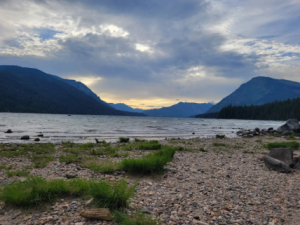
Recently, I had the opportunity to go floating on the Wenatchee river with some other staff from the Guild. While I’d floated before, I underestimated how different this river would b —louder, faster, and full of rocks. I wondered why we brought paddles for what I assumed would be a lazy float—until I found myself clinging to the raft as the current tossed us around. Three hours later, I got home exhausted but happy to have a great memory. 
Reflecting back on the experience, I realized I had a certain narrative in my mind about what the trip was going to be like. I hadn’t really considered the possibility that it might not be exactly what I was used to and expecting. Ultimately, I had a lot more fun with the exciting new adventure. It made me think about how I often apply a linear way of thinking in different aspects of my life; particularly, when it comes to school and a career. Throughout my childhood, I was always told what was next: you finish first grade, you go on to second grade. You finish second grade, you go on to third grade and so forth. When I got to college, I had more freedom than ever. I could pick my own course of study; and I had no idea what to do. I had been so focused on getting to college that I hadn’t considered what I actually wanted to do once I got there. 
For the past three years at Valpo, I’ve taken countless career tests, talked with mentors, and taken courses trying to figure out a career path. Finding my life’s purpose and calling has become almost an obsessive endeavor for my perfectionist mind. Being at the Guild has reminded me how important it is to embrace flexibility and trust the process. Over the past few weeks, several of our guests and resident artists have voiced a desire to welcome more “playfulness” into their work, letting go of the urge to over-direct it. As a result of this undertaking, I’ve found the common experience is learning and contentment.
I’ve come across this theme of flexibility and open-mindedness in my conversations with mentors and coworkers here at the Guild as well. A particular talk with one of our Spiritual Directors really resonated with me. She shared the idea that a calling is less about what you do and more about the spirit you bring to your work. In other words, any work can be purposeful if it’s approached with integrity and intention. That perspective felt incredibly freeing for me—it suggests that a calling might not be a single, fixed path, but something that can evolve as you do. The key is being willing to surrender control and create space for growth and discovery.
As I contemplated the implications of this for my life, Hilal Isler’s metaphor for Baldwin’s sense of belonging came to mind. She recognizes “those of us who move between nations, between homes. Those of us who grow identities, like skins, only to shed them, expand into new ones. Those of us who carry our sense of belonging like belongings, turtles and shells” (Isler 2019). Amid change and uncertainty, I’m learning that clarity isn’t always immediate but the journey can reveal what I couldn’t have planned for and teach me as I go. There may be rocks in the river, but the experience is shaped by how I move through it. Maybe, for now, that’s my calling: to be the turtle in the rocky river of life, going wherever the flow takes me.
Kayla Walker, Grunewald Guild

Stewarding the Gifts

This summer, I am deeply grateful for all the growth and beauty I’ve been able to experience in the natural world. Cowles Bog, a trail in the Indiana Dunes National Park, was lovely the first time I hiked it in January, but now it gives a magical feeling filled in by green plants and dotted with yellow and purple flowers. I’m glad this summer that I am able to appreciate the beauty in moments of slowness. The garden I am helping with provides a different landscape of learning compared to hiking in the park with campers. But all of this growth, around me and in me, is a gift.
My gratitude increases as I read Robin Wall Kimmerer’s book Braiding Sweetgrass because her thoughts lead me to find awe in the intricacies of the natural world. In this book, Kimmerer weaves Indigenous wisdom with scientific knowledge through her gift of storytelling, and proposes an alternate way to be in relationship with the earth. Her chapter “The Gift of Strawberries” has especially attuned me to notice the gifts and abundance around me. Through the poetic nature of her writing, Kimmerer draws on wild strawberries to describe the workings of a gift economy. She highlights how a gift creates an ongoing relationship between the giver and the receiver, and further, she articulates how the more something is shared, the greater its value becomes. In our economy of commodities, relationships are transactional, and positioned toward taking what one deserves. In a gift economy, action is based in the recognition of enoughness, and in abundance.
Looking at our world, I find it easy to see where economies of commodities rule relationships between people, objects, and our natural world. Instead of recognizing where there is abundance, I see systems of scarcity that grab hold of people and how they live. I see this economy of commodities run through what belongs to us, or what we think we deserve. I see it in the threats, cuts, and fears that tear apart relationships and build distrust. It is important to notice these spaces, to grieve where grief is necessary, to take action where action is needed. But also, I’m learning that recognizing the gifts and abundance is necessary to challenge this mindset of scarcity and fear. Kimmerer described a process of giving, receiving, reciprocating, that is essential to cultivating relationships and finding the enoughness through gifts.
This summer, I’m reminded of the gifts around me each and every day. These gifts are present in the striking color of wild flowers wading among the green lining a trail. The fragrance of flowers are a gift, along with the bee I hear buzz past me to continue pollinating. I hold the gifts in the abundance of harvest—zuchinni, cucumber, tomatoes, snap peas, green beans, and fresh raspberries—nestled in my arms and my hands. The gifts are also in environmental education, the teaching and practicing preservation. I hear these gifts in patient interactions with campers, where intentional affirmations build others up. I feel these gifts through the lovely people I am so grateful to know in the northwest corner of Indiana this summer.
As I think through calling and purpose, I have often circled back to themes of stewardship this summer. The more I notice the giving, receiving, and reciprocating in a gift economy, the more I see the call to steward these gifts. If gifts are a form of building relationships, there is a responsibility we are called to through stewardship. When stewardship is out of mind, gifts become fought for resources that promote mindsets of scarcity. But when we steward what we have been given, there is a deeper understanding of enoughness in the abundance for everyone to participate in the gift.
I’m grateful for my fellow staff members, housemates, friends, and this corner of Indiana as a whole for all the gifts that have been given so abundantly to me, and to each of us. May we be stewards of all this, the gifts we have been given.
Emma Johnson, Dunes Learning Cente

Meditating on Change

I’ve been working at Heartland Human Care Services’ Refugee and Immigrant Community Services (RICS) team for a little over a week, but it feels like I’ve gained at least two months of experience. I already have a well-established commute, taking the red line north through Old Town, Lincoln Park, and finally arriving at Uptown. I admire the artwork decorating the walls and street throughout the neighborhood as I walk the three blocks from the train station to Heartland. So far, I’ve had a habit of showing up early—when you’re taking the “L,” arriving just on time is a gamble against train delays and track repairs.

Once I arrive, I meet up with my supervisor, and I follow her along to whatever meetings or training we have scheduled for the day. She has a practical teaching style, showing me how to complete a task, and then assigning me that task in a more official capacity. By now, she’s walked me through how to call participants (the clients we work with) with a translator app, conduct follow-up interviews, apply for financial assistance, and write case notes to update a participant’s file. I’ve also now taken on a caseload of my own to fill in for a case manager who is out of town for a couple months, allowing me to put my skills and training to the test. It has already been really rewarding to be able to support immigrants and refugees in whatever small ways I can.

One of the largest themes during my time at Heartland so far has been change—or perhaps more aptly, accommodation. With so much federal policy change taking place that directly affects the population we’re working with, Heartland has had to adapt. There have been very few new participants since January, meaning that one of RICS’ major tasks, intake, is often no longer applicable. Instead, my team is working more closely with participants who have already been in the country for at least a few months. This is just one of many large changes that is happening, as teams are absorbed or expanded and as caseloads change hands. I am inspired not only by the organization’s flexibility, but also by their stalwart determination to continue to serve this community in every way they can, despite the ever growing pile of roadblocks they face.

Another—and more personal—pattern I’ve encountered occurs when my coworkers ask me about my college major. When I tell them I did my undergrad in criminology, I often get a polite yet confused variation of, “Why did you decide to work here then?” I understand the question; at surface level, criminology doesn’t appear to have much to do with immigrant and refugee services. Despite my explanation that there is quite a bit of overlap between criminological theory and immigration—see the way some politicians choose to label those who enter the United States without documentation as criminals, even though many flee to our country out of fear for their lives—there is some part of me that wonders about my end goal. Though I am passionate about immigrant and refugee rights and eager to help out the community, it’s too early to be certain whether this kind of work is my calling. I have had perhaps an unusually diverse amount of experiences and jobs for someone my age. I’ve worked at restaurants and coffee shops. I’ve been a tutor and a Resident Assistant. I’m in the National Guard. I’ve taken a class inside a prison and one in Norway. I’ve conducted a year-long research project, interned with the State Police, and am now interning with a non-profit to support immigrants and refugees. All of these experiences have expanded my perspective in their own unique way. My time at Heartland is not only showing me a new and exciting possibility, but also teaching me how to adapt and remain hopeful in the face of change.

Dani Schulz, Heartland Alliance

Where the River Flows, Life Abounds

In my humble opinion the concept of Sacred Space is not just exclusive to Holden
Village. For a very short period during my time here I found a way to connect to the nature and sacredness of the native land that Holden Village occupies by going on a hike past the foot bridge every day alone for four consecutive days where I enjoy the feeling of the nature around me. Every day was a different experience, for instance, on my first day I found the quote “Where the River Flows, Life Abounds” on the back through the foot bridge. I figured this was a sign to embrace a dance of freedom and a deeper spiritual experience bigger than myself. I later found other forms of sacred space different from the spiritual hikes and outside of the designated Sacred Space time. At the beginning of my time at Holden, I hosted a music listening session for my previously unreleased album that I decided to release while here. In my last week I hosted two events titled “Sharing From the Heart: Diverse Voices” where I hosted an open space for people to talk about things on their heart in the moment. This was open to many forms of diversity and also open to the whole village, not just staff. The events ended up being sacred experiences themselves. In addition, my experiences building a chess set in the Holden Woodshop with a very legendary staff member have been sacred in itself and I’ve enjoyed a feeling of fulfillment and joy while working on something tangible that I can say I made with my hands. It has also been great working with such a great teacher. Considering I’ve never done woodworking before I think it’s pretty amazing that I was able to create this amazing project.

These things, along with all of the other positive experiences I’ve experienced here at Holden have helped me realize my purpose and potential. Whether it was a deep conversation about the concept of aura with other staff or being a supportive friend to those having a hard time. I have positively influenced this place, and I know this because I not only feel it, but people around me have validated that I am making an incredible impact on Holden Village. My purpose at its core is to leave a positive impact on the world so big it will be talked about for generations even long after I am gone. I feel that I have so much potential with that purpose among other things and as Uncle Ben from Spiderman would say “With great power, comes great responsibility.” I think that applies to other things too. Having immense potential can change people in ways that usually aren’t good, but I intend to use my immense potential as a tool to leave that positive impact on the world. I also plan to stay the same person I am today, because I believe humility is what makes us strong.

Esai Hernandez, Holden Village

Flora, Fauna, and Office Furniture

I spend most of my days working inside the Historic Barker House sitting at my desk with my
computer. When I had originally thought about working at an environmental non-profit I had
imagined myself spending most of my days outside. I never would have thought that I would be
sitting at a desk. However, in order to have the nature that I long to spend my time in, there
needs to be people doing the desk work.

Over the past month I have spent most of my time sifting through member data, making sure
data is transferred over properly, and emailing members to make sure their information is up to
date. This is important work, because in order to help preserve and advocate for the Dunes we
need financial support and these memberships are one of the ways we progress toward that.
There are multiple tiers of membership depending on the monetary donation members choose
to give yearly. Members gain access to certain privileges such as special events, advocacy
updates, and opportunities to interact with the staff that have helped shape the organization and
its mission to protect and advocate for the Indiana Dunes and Lake Michigan.

When I started my time at Valpo I was convinced that I was going to be a Park Ranger. I had my
heart set on this plan at 11 years old and did not see myself having any sort of job that entailed
spending my time at a desk. While at Valpo I fell in love with philanthropy and advocacy, through
the student org I was involved with, SALT. Park Ranger and philanthropy felt like two very
separate paths that I would never be able to mix. After getting placed at Save the Dunes I
quickly realized that my interests and knowledge that I had collected through the past few years
had all merged together into this opportunity. I have found a path that allows me to express my
knowledge and interest in the environment while also feeling fulfilled and helping impact others
through helping to preserve a space for many generations to come.

I, as well as many of my classmates at Valpo, have expressed feelings of anxiety and confusion
about their future in the last year. While this is a common feeling for college students, it has
been amplified among my environmental cohorts with all the changes in priorities with the
changing of government officials. There is, understandably, a common school of thought that all
environmental justice work is done outside, in the fields, forests, and with the flora and fauna,
but in a world and country that is experiencing whiplash the way my peers and coworkers have
felt in the past year in regards to the care of the environment, there is so much that can be done
online as well. As much as I’d like to subscribe to the “all environmental work is done outside”
way of thinking, seeing the way that I can communicate with members of my community who
care about the Earth as much as I do and help preserve the space I’ve especially come to love
here at the Dunes has given me a jolt of energy and rejuvenated my sense of hope for my
community.

Emma Depa, Save the Dunes

From Nervous Beginnings to Meaningful Connections: My First Month at Heartland Alliance

It’s been a month since I started at Heartland Alliance, and I’m so thankful for the experiences I’ve had and everything I’ve learned so far! Since completing my training, I have started working with some participants within the Refugee and Immigrant Community Services program. Some of my responsibilities when working with participants include reaching out to each participant and talking to them about their current employment situations, searching for jobs that participants are eligible for/interested in, and helping participants apply for jobs. If a participant gets a call-back for an interview with a job placement, it is also my responsibility to accompany them to the interview, if necessary. Each time that I interact with a participant, whether that’s over the phone or through messaging or in-person, I also have to file case notes. As I’ve started getting to know each situation and learning about how I can best serve the participants that I’ve been assigned, the case notes have been very helpful. I can go back and read case notes from people who have previously interacted with/assisted my participants, which has helped me know how to move forward and continue communicating with the participants in an effective way.

When I had my first phone call talking to one of my participants, I was really nervous! I was worried that I would forget what to ask them, or say the wrong thing. Another challenge that I was nervous about was using an interpreter. Since most of my participants don’t speak fluent English, I have to merge calls with an interpreter every time I speak to my participants over the phone. The first time I did this, I was so worried that I would somehow mess up the call and have to call my participant back – which would not be the best first impression! But once I did it the first time, it was actually a lot easier than I was imagining. It’s been a learning curve trying to communicate with people who speak different languages, but it’s also been really cool!

As I’ve continued to learn more about how Heartland operates, I’ve been thinking about how this type of work relates to the topics of my classes back at school. In many of my Economics classes, we’ve talked a lot about things like efficiency, trade-offs, and the effects of different types of policies. Thinking about these concepts and how they might relate to the situations that refugees and immigrants face has made me consider how things might be improved for refugees and immigrants from an economics standpoint. Many refugees come to the US with some type of work experience in their home country – sometimes even extensive experience in important fields, like nursing. Is there a more efficient or effective way to transfer these skills to jobs in the US that companies could offer to refugees? Could there be some program that would allow refugees to show employers/educators what they already know, to earn credibility with US companies? It’s been interesting thinking about the relationship between economics and refugee and immigrant services, and I’m looking forward to learning more about these things while continuing to work with Heartland Alliance.

Nora Fisher, Heartland Alliance

Stopping to Smell the Flowers: The Art of Noticing

With Week 2 of our summer program nearing an end, it’s safe to say that I’ve had ample time to settle in here at the Grünewald Guild. I’ve absolutely loved the opportunity to work here in the beautiful Cascade Mountains for the summer and be a part of this inspiring community. I have the privilege of meeting new people every week, and the connections I’ve made here at the Guild are so valuable to me. I’ve learned a lot from our guests as well as my fellow staff members and supervisors.

While my primary job is communications work, I’ve been doing a variety of other tasks to help around campus. Whether it’s preparing the spaces for our next group of guests or helping someone pitch a tent, there’s always ways to be helpful. This summer the Guild found themselves in need of more support in the kitchen, which means I’ve had the opportunity to prepare meals for our guests. It’s not something I was expecting to do, but I’ve found a lot of joy in the spontaneous banana bread baking-and-distributing. Outside of that, my job is to take photos and capture the little moments of our programs. I also post on the Guild’s social media and write their newsletter. Every week, I get to make a “highlights” video to share with the community, which is one of my favorite parts of the role.

Life has been very busy the past few months, and being in this atmosphere has really allowed me to slow down and take it one day at a time. Here at the Guild, we have a routine of sharing our “noticings” every day. This is a term they have used for a while, and it’s really interesting to hear about all the different things people notice, whether big or small. Life out here is much more relaxed and intentional, which is something that I admire about them. For instance, every week someone goes out to make a bouquet of wildflowers to display in our central hub. It’s little details like this that have made me reflect on how I can be more mindful and intentional in my own life.

Being a CAPS fellow this summer, one of my main goals is to have a better understanding of what it means to do “purposeful” work. With many unknowns about my own future career, it’s been helpful to keep an open mind regarding what feels meaningful about the work I’m doing. More recently, I’ve been contemplating the differences between “living to work” and “working to live” and what that implies for me. Grünewald Guild has certainly been the perfect environment for slowing down to reflect on these things.

Living in the presence of the mountains reminds me of how small we really are in this world. But it also makes me realize the impact we can have on it. Not everyone may notice the wildflowers on the side of the road in the busy rush of life (I know I don’t always). But if you take the time to appreciate the small things, you know their value. I often find myself living life as if it’s a “to-do” list or a race to be finished. But being here has reminded me that it’s okay if I don’t have everything figured out right now, I can slow down and take my time. There is no prize to be won, and oftentimes we miss what is truly valuable in the journey.

Kayla Walker, Grunewald Guild