 At the beginning of June, I moved to a town I had never visited, to live in a house I had never seen, and to work with people I had only spoken to over Zoom. My family dropped me off, and once I had all of my things arranged, I sat on the bed and had a strange but very familiar feeling wash over me: What do I do now? I had the whole night ahead of me, but everyone I know and everything I do was scattered everywhere but here. The empty span of time ahead of me felt dizzying. So, I just sat there in the what-now feeling, thinking. I began to think about why this feeling was so familiar to me, and I thought of all of the other transitions I have had like this throughout my whole life: from the five times I moved as a kid, to the move into college, to my trip studying abroad, I began to realize that this is all old hat to me. I have done this before, and sure enough, I have done this again.
In my time so far interning at Girls on the Run Northwest Indiana, I have been given many opportunities like this to sit and think. Certainly, to think about what I am doing. When sorting through data of school after school, exploring websites, Free and Reduced Lunch Rates, number of students, and how the different regions creatively allocate their resources into different forms of school buildings and structures, it is hard to keep one’s mind from thinking about what you are doing. But beyond what I am doing in the moment, I have had time to think about how vividly this data shows the vast difference in how each child is being shaped by their communities. Time to think about what kind of agencies we have in the shaping, individually or through programs like GOTR, and how adults have been and continue to be shaped by their communities in the same way as kids. My brain grounded in these numbers or more menial tasks like stuffing envelopes, my mind has been free to go swirling to how I have been shaped by the communities I have been a part of, and how structures in all societies are formed based in the context of these communities. School, family, friends, towns, religions, countries… we are all constantly shaping the world that is constantly shaping us.
As a sociology major, and a long-time member of planet Earth, such trains of thought are not overwhelming nor new for me. However, the amount of time that I have had to think them are both overwhelming and new. Often, I fear that when I get into un-timed thought spirals like these that I will never get out. Or worse yet, that they will choke themselves out into a nothing of thoughtlessness. These anxieties spike when my hybrid work schedule allows time for my thoughts to cover and recover every topic that pops up, occasionally even circling themselves back into a deafeningly unfamiliar silence.
In this silence, just like in the emptiness of the first night, I am faced with both a concern and a solution. This time, I am reminded of once when, having joked that I am known by those close to me to overthink things, a dear friend of mine replied that he does not believe that overthinking is a thing. This is because he has never worried that someone was going to overthink something but has known many people to be concerned about someone underthinking things. Now, thinking back on it, in the thoughts or in the silence of having completed thinking them, I believe that he is right, and that there is no worry in thinking however much my mind chooses to think, because at least I have had the opportunity not to underthink things. And, with the contexts of what facets of the world I am shaped by and am shaping, I feel just how privileged I am to have time to think about thinking.
- by Katherine Naylor, Girls on the Run
 As my internship draws to a close, I’m faced with the same question that I begin the internship with. Why am I working with an environmental non-profit, what difference could I ever make?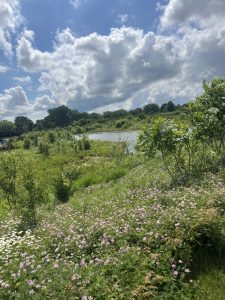
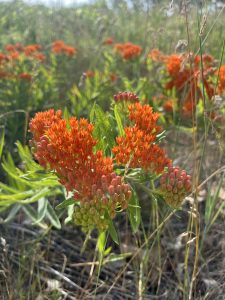 My opinions do matter, and it is possible to voice them loudly. Like a small rock making waves in a pond, a grass growing in the middle of a cracked sidewalk, a bee pollinating the vegetables in a neighborhood garden. My voice is not as small as I have been made to believe.
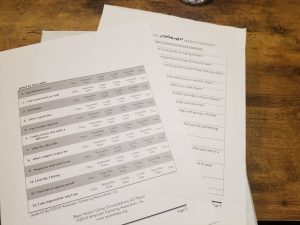 As I sit down to write this blog post, one realization crosses my mind. It is the realization that time keeps marching forward, and that is especially true when it comes to summer and my placement. As of the first week of July, I have officially hit the halfway mark of my duties serving Opportunity Enterprises and Camp Lakeside. The phrases “Time flies when you’re having fun” and “You never truly appreciate what you have until it’s gone” perfectly define and encompass what this experience has been. As I look back at what I have accomplished, a lot of it hasn’t felt as actual work. This is not only true for myself, but also for the campers and staff that I interact with on a daily basis. While much of my job is done behind the scenes, I also have many opportunities throughout the week to interact with campers in a way that I still fulfill my duties as a researcher for the camp and OE as a whole.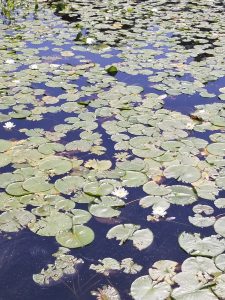
 We often hear the phrase “don’t make excuses, make improvements”. For many, this may be a difficult thing to be told – this kind of statement misses and overlooks the individual nuances and circumstances of the situation we find ourselves in. But despite these challenges, we now find ourselves forced to continue on with no acknowledgement of them.
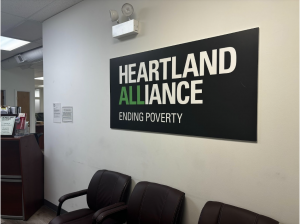 When I take a step back now and consider Heartland’s broader role in its community, it falls in some sense along the lines of this exact idea, providing solutions in all kinds of forms in housing, employment assistance, vocational English language training and even trauma assistance. The team here can only think in these terms (solutions, that is); when people’s livelihoods depend on you, you have no choice.
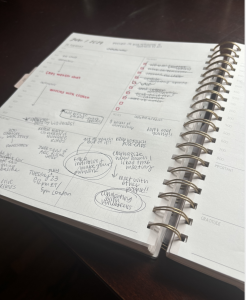 Now that I have over a month of my CAPS fellowship under my belt, it is easy to slip into a routine and let the day-to-day pass by quickly, and without much thought. May and June were a blur of emails back and forth, numerous to-do lists scribbled on Post-it notes, Zoom call meetings, and countless hours of staring at my computer screen. Don’t get me wrong, I am enjoying the work I’m doing and staying busy throughout the long summer days. I enjoy my lists and checking off projects as I complete them. But lately, a little voice in my head has reminded me of the importance of recognizing the small moments of purpose and slowing down before the summer comes to a close.
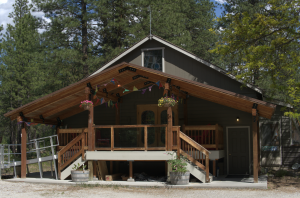 Curiosity killed the cat is a saying that I have heard throughout my child and young adult life. While it may be true in some situations, the age old saying takes away from what I believe to be one of humanities’ main functions, and that is to explore the unexplored.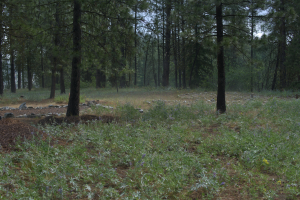
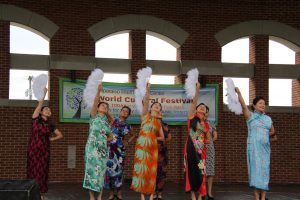
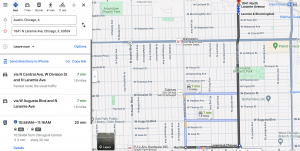 The easiest way to get to 1841 North Laramie Ave from Austin, Chicago by 10 AM every weekday without a car is to take the Green Line at Austin via Ashland/63rd, get off at Laramie & Lake, then take bus 57 towards Grand/Latrobe and get off at Laramie & Bloomingdale. In theory, this journey should only take about 33 minutes: a 5-minute walk to the station, a 12-minute train ride to Laramie & Lake, a 14-minute bus ride to Laramie & Bloomingdale, and a 2-minute walk north towards the building, meaning I could leave my house at 9:20 AM.
 For my second blog in two weeks, I was really struggling to find an experience that I did not touch on the week before this. As I was reflecting on my summer, already at the halfway point of this experience with Jacob’s Ladder and the CAPS Fellowship, I was thinking about what is a lesson I have learned.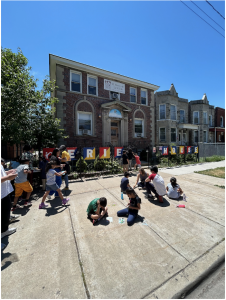
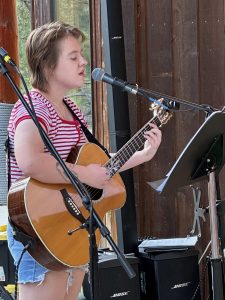
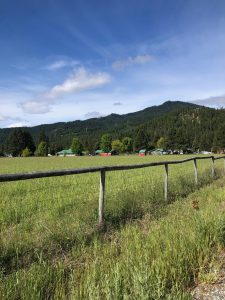
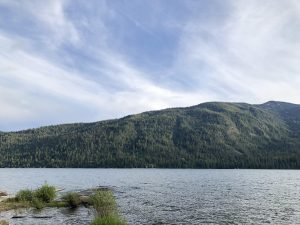
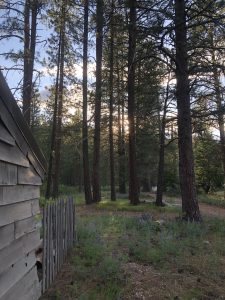
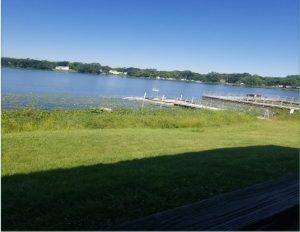 While the camp season has only just begun, I have had many different opportunities to fulfill my duties of collecting the necessary data for the camp. One of the biggest skills that I have used in the short time that I have been here is the art of creative productivity. In my position of direct observational research, that often means spending a lot of my day, directly or indirectly, interacting with campers. This has meant that, on multiple occasions throughout my week, I am often jumping in on games of “duck, duck, goose”, hanging out at the archery range, or even taking an afternoon boat ride around the lake.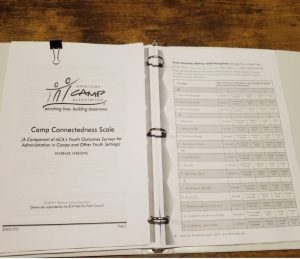
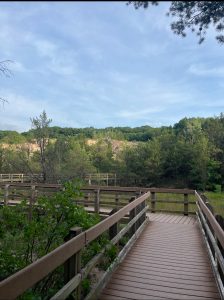 hoved in a drawer, a hair tie that had been long abandoned, maybe a water bottle that had been forgotten during a quick departure. It is apparent to anyone who works in the Barker House that I don’t usually sit at my desk, and that’s something that I’m quite proud of. Let me explain.