Category Archives: CAPS Fellows Blog

Familiarity in the Difference

Before we even get started here, I think it is important to know that I grew up in a small farm town in Northeast Indiana, to devoted and incredibly loving parents. My hometown, North Manchester Indiana, is a Tree City USA with one university, two retirement homes and three stoplights. If you travel 4 miles east of town limit, you’d find my parents’ house tucked in a woods with a long gravel lane. This environment has to be one of the top places for a child to grow up. I had frogs to catch, hills to sled down, and many cousins to play basketball with in my grandparents’ barn. Now that I am three years out of high school and into my degree at Valparaiso University, I love to reflect on my past as I am continuously blown away by my present and future.

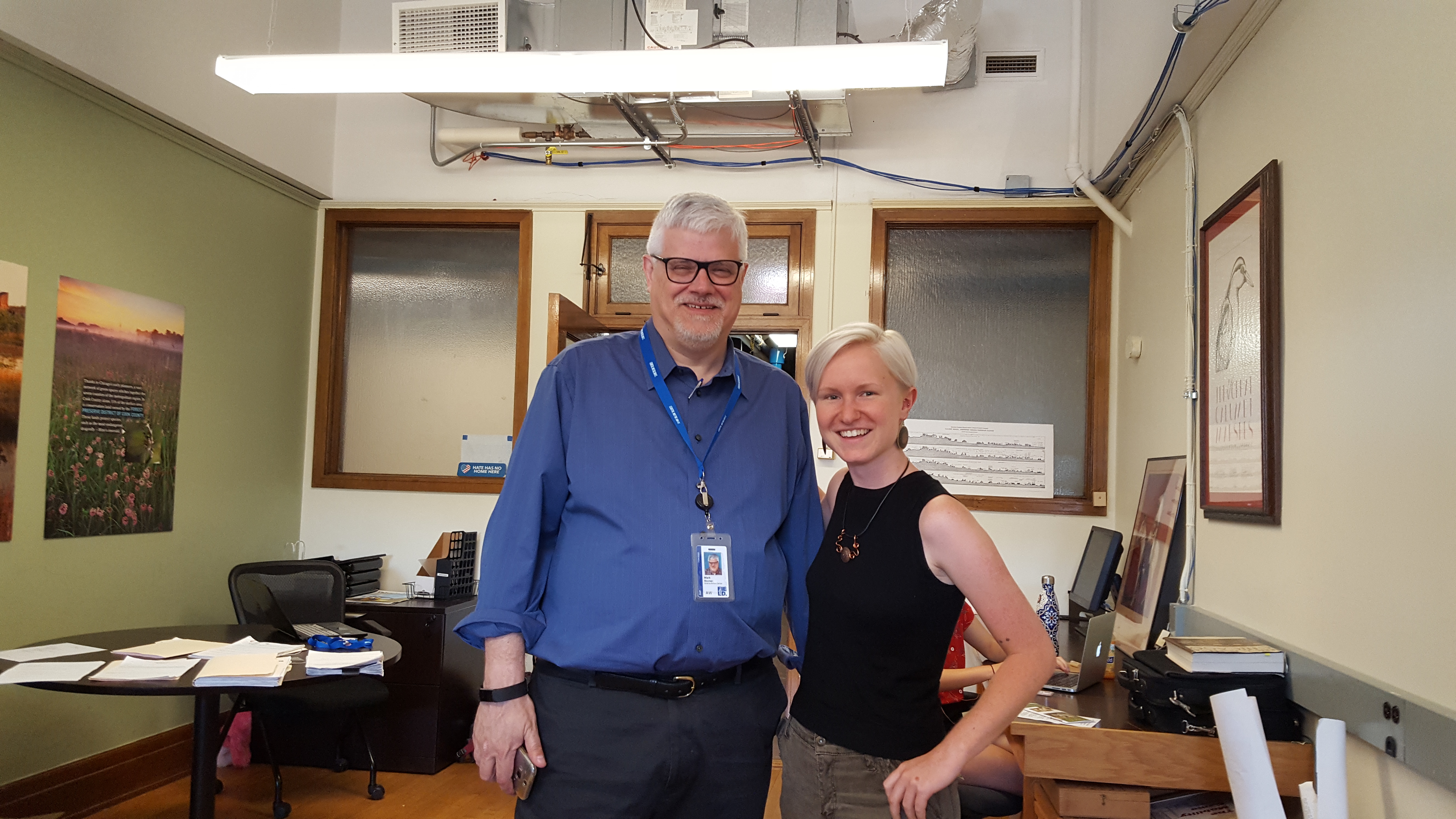
Now that you know where I am from, I want to tell you a little about where I am at right now. Currently I am sitting in the north lawn of the Field Museum in downtown Chicago, with the skyline in its full glory as the sun shimmers on the high rise office and apartment buildings. I can see the lake to my right but its natural beauty is somewhat overtaken by the noise and energy of the city in motion. I am contemplating whether I want to get a donut or a cookie for a treat from one of the shops along my walk back to my apartment, or if I should just grab some groceries and stay productive. All of this moment is something different than what I grew up knowing, yet I am able to fit into stride with the millions of people who live in this city. Obviously I have a sense of adventure and curiosity to be able to fit into the crowd like this, but I also believe that I feel comfortable here because of the people who I have met so far. Today as I was in my supervisor’s office talking about the events of tomorrow, and into the room walks a jovial man (Mark Bouman) who will be going with us tomorrow on our drive to Gary, Indiana. We do a little introduction and I find out that he not only graduated from VU, but he also had the same professor as me… in fact, he had Professor Janke’s first class and I had his last! As I reflect on this moment I feel a comfort knowing that we have an immediate connection. I also feel proud to be a student at VU, because this man has been incredibly successful in his career and he is just one example of why VU’s reputation extends in circles outside of Valparaiso. For these reasons, I am anticipating an incredibly bright and successful summer.

Though my past is geographically different than my present, my passion for people and nature remains the same. It is now evident to me that my backyard woods and my grandparents’ basketball games were much more than temporary entertainment. In fact, these things are a huge part of who I will forever be. I will always be a student of nature and a social member of a team. Therefore, I am so excited to be working on environmental community engagement in the Calumet Region for a cohort of Field Museum people that have a passion for healthy people and healthy places.

AKA, students of Ronald Janke’s first and last classes.

Are You Ready?

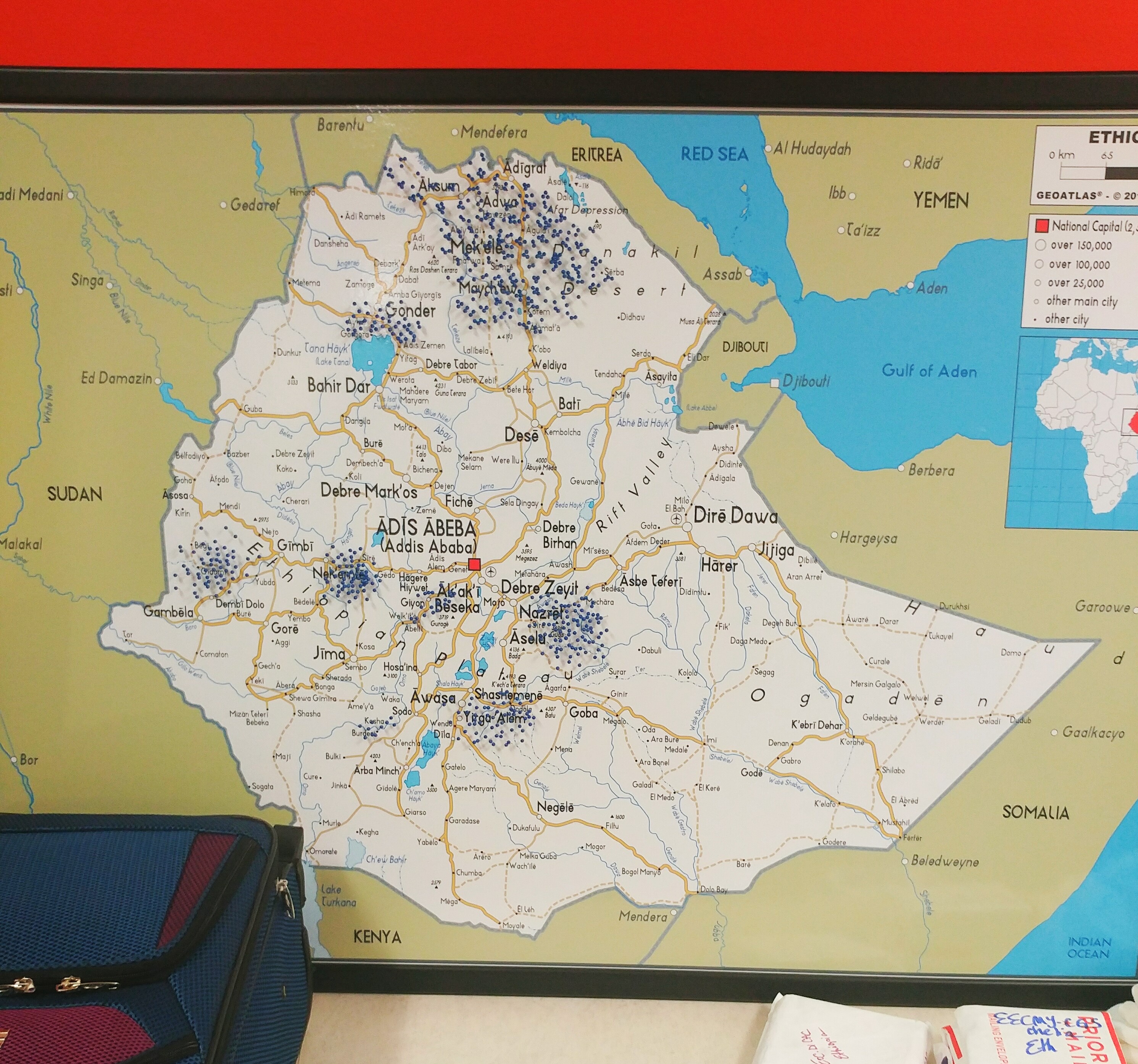
A map of Ethiopia with the blue pins at the locations of water projects.

It’s the question I have gotten many times a day for multiple weeks, “Are you ready?” Last week, it was referring to my trip to Austin and the start of work. This week it’s been directed towards my trip to Ethiopia which begins tomorrow. Which is one day from today. Which is not a lot of time. Each time I hear the question, it carries a different meaning. Sometimes the question refers to logistics, other times the packing process or vaccines and medicines, but the trickiest is whether or not I’m prepared mentally.

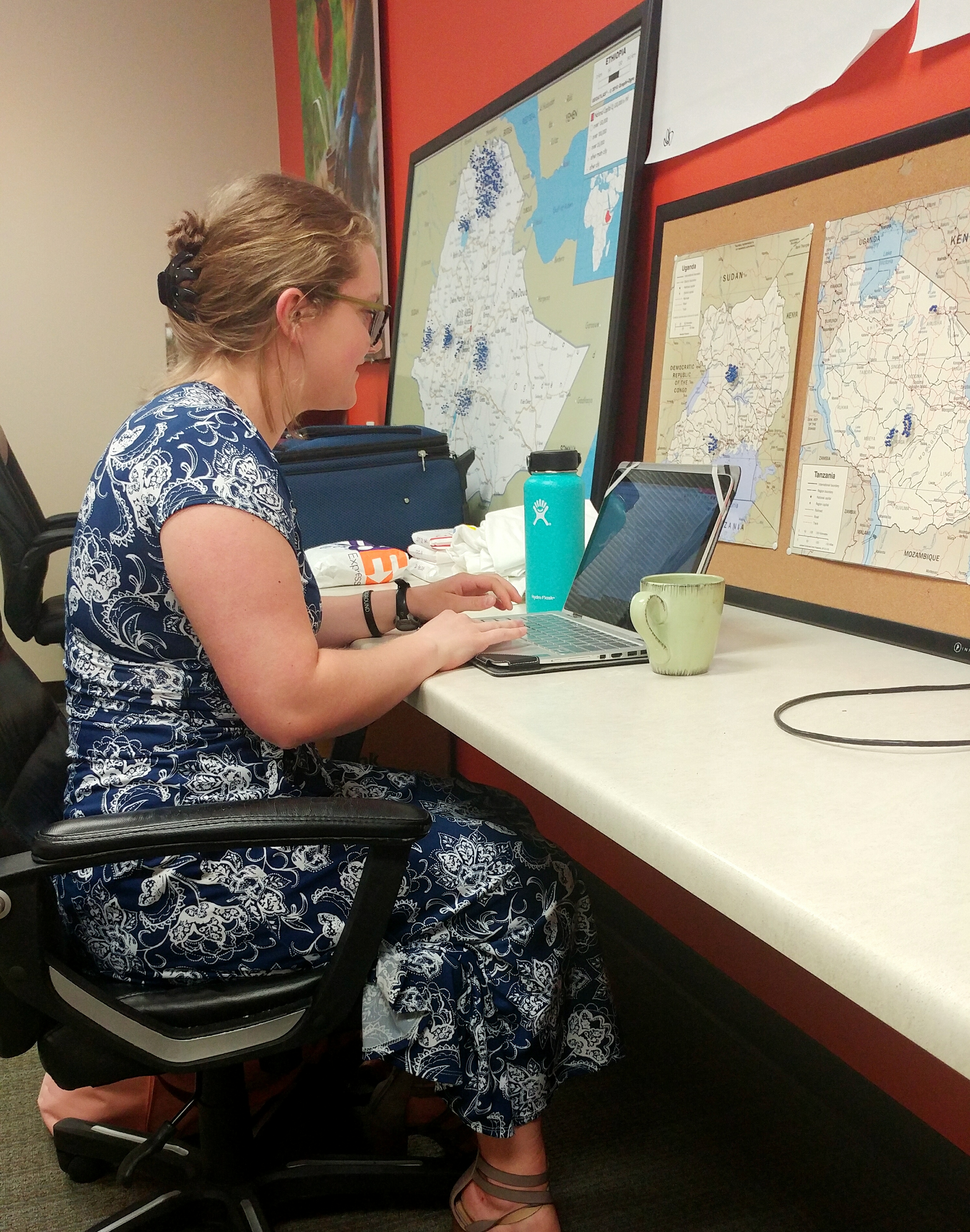
This summer I am working at Water to Thrive, a non-profit in Austin that works with organizations in East African countries (Ethiopia, Uganda, and Tanzania to be specific) to provide clean, safe drinking water to communities. I am primarily working on the beginnings of a bridge project in a village in Ethiopia that sees their only bridge connecting two sides of the village washed out each year in the rainy season. I will also be working on a best practices document that has a rich history of previous CAPS Fellows work. My supervisor has told people many times this week that I’m a great writer (which really puts the pressure on for this blog), so I’m picking up writing tasks as I go along as well. I’m incredibly excited to be working for an organization that aligns so well with my passions and studies.

Now back to preparedness. It’s difficult to express exactly how I’m feeling in casual chit-chat. It’s hard to succinctly explain how completely prepared I feel to be unprepared along this entire experience. I’m acutely aware that there’s no way to truly prepare for the journey on which I’m about to impart. That doesn’t mean that I haven’t prepared countless lists in an attempt to do so. I love lists. List writing is one of my favorite activities. I have a book full of lists, but in preparation for this summer, I’ve been viewing them more as a preparation exercise than concrete lists of exact things I will do and ask (other than a beautifully color-coded packing list, which will be adhered to). Spending time thinking through what W2T and I am hoping to gain from this experience to inform later work is helpful, but I don’t plan to pull out my list of questions to about well rehabilitation and rattle it off word for word to each member of the WASH committee.

If there’s anything Valpo and civil engineering, in particular, have taught me so far, it’s to know how to adapt and to never know what to expect. On approaching the Atrium Office Centre on my first day, I was met with a drab building ripped straight from The Office, but once inside, I was met with one of the most vibrant, energetic spaces I could have imagined. I came to Austin knowing it would be different from the rest of Texas, but I was met with more food trucks and breakfast tacos than I could have ever imagined.  I consider myself very familiar with concrete, the primary bridge building material in Ethiopia, and while one may think that all concrete looks the same on the surface, it’s an incredibly variable material, so I have no idea how central Ethiopia’s will compare to what I’m used to working with, but I’m excited to learn.

So I think I am ready for this trip and the work of this summer. I’m ready to learn better ways to communicate with people across cultures and languages. I’m ready to soak up as much information as I can and make new lists about what I’ve learned. I’m ready to be open to whatever the next nine weeks bring, and I’m ready to fully participate in the community of Water to Thrive and Austin.

Reflections on a Summer in the City


        Dedicating my summer to the CAPS Program, and more specifically the Interfaith Committee for Detained Immigrants, is not something I think I could have properly prepared myself for, but now that I have had some time to reflect on the entirety of the experience I am even more grateful for this opportunity. This past spring semester I studied abroad in Southern Africa, and came back with a lot of thoughts and feelings, and was hit harder with reverse culture shock than I had expected. Being in Chicago proved as a good transition back into the United States, or at least back to Valpo. I grew up on a cow farm, so living in the South Loop on the 15th floor of an apartment complex and driving in Chicago traffic was just as foreign to me as the countries in Southern Africa. Working with ICDI, I had the opportunity to learn about the entirety of the U.S. immigration system, immerse myself in interfaith dialogue, learn the ins and out of a non-profit organization, and see the first hand effects of our ever changing politics after only getting my political information after the presidential inauguration through a skewed lens(being abroad, local residents giving their opinion on U.S. politics, people fearing for me how the U.S. would be different once I got home). Reflecting on many of my experiencing, I am just beginning to fathom how much I have learned.

        Participating in pastoral care with individuals in immigration detention centers gave me the opportunity to have interfaith dialogue and speak with people across different cultures, background, histories, and religion. Attending Immigration Court gave me the knowledge and understanding of the court system to speak confidently about the root of my beliefs when it comes to immigration within the United States. I have learned how to be more active in human rights dialogue through different venues within my internship, making connections with others, and living within the CAPS community. I have been able to raise more awareness for human rights issues and work towards dismantling the systems of oppression within our society. All ideas and passions that were more fully developed during my study abroad experience and learning firsthand about systems of oppression within the Southern African context in relationship to Apartheid, Namibian genocide, and making connections to similar events that have taken place within the United States such as the Native American Genocide, Segregation, and blatant racism. Through my participation in ICDI I learned more about non-profit organizations in a United States context and found affirmation for my sense of calling to attend seminary and do pastoral care through a lens of social justice in the future.

        With such an intense internship, it was necessary to process with other people and decide what the take away of the day, week, or summer had been. In communicating with other CAPS Fellows in Chicago, we realized many of us had grown up with parents from the generation of “You don’t talk about religion, politics, or money.” I always questioned this growing up and was given various answers as to why not to talk about these things: “People might not agree with you”, “It’s just being polite”, “There are nicer things to talk about.” As I have quickly learned at University, avoiding conversation about these topics is exactly the opposite of what we should be doing, and shows the vast amount of privilege we were raised with. Not talking about religion shows our religious freedom. I have learned that talking to those whose understanding of faith is different than my own, and it has led to fascinating conversation and reflection about why we carry out our religious practices the way we do. Avoiding the topic of politics, especially today, shows a certain amount of privilege. If the majority of the white, middle class, English speaking population were to not follow the news, they would be able to assume that there is nothing happening in the world that is directly affecting them. This population is safe and has nothing to worry about. Many minority populations are, have been, and will continue to be directly affected by politics and national news, including but not limited to immigrants, people of color, non-English speakers, those living in poverty, black lives, the LGBTQ community, Muslims, and more. And lastly, being able to avoid the topic of money, or not worry about money is a privilege many do not have as a majority of the wealth in our country is held by a very small percentage of United States residents, a gap that is continually becoming wider and wider.

        Other aspects of my internship that had a large effect on my learning within the experience were speaking with my mentor, and reflecting on ideals of leadership and purposeful work. Conversations with my mentor were highly motivating in following my passions and not working to meet the expectations others have about me, and focusing on the social justice issues I am most passionate about and have the most need despite the levels of controversy and debate surrounding certain issues. We talked about the importance of mindful conversation, especially with those different from one’s self, advocating for one’s self, and the importance of self-care amongst passionate work. While this summer’s internship was one of the most challenging experience I have been a part of to date, I am very thankful for the work I was able to for ICDI, and for the countless number of lessons, conversations, and unforgettable moments I had the blessing of being a part of.

I owe so much of what I have learned from those who have come before me and have been doing advocacy work for years and years. The two Sisters who began ICDI have the largest passion for equality for ALL people that I have ever seen. It is purely inspirational and motivating hear their story of all the obstacles they have overcome to open safe houses for immigrants, fundraise, begin a court watch program, pass a state law to give those in detention the right to pastoral care, and stand on the steps of the Broadview Detention Center every Friday for ten years to hold a prayer vigil for families being separated by deportation. These two Sisters have reached out over the years to hundreds of individuals that volunteer and participate with ICDI weekly. I am grateful for other volunteers I worked alongside with and learned from, and supervisors who shared their stories and wisdom with me. While I am glad I am back at school, I will be missing working every day with these important and necessary ministries, but I know I will be back to volunteer as often as I can.


If you feel called to help as well, ICDI always welcomes more volunteers: http://www.icdichicago.org/

An Ounce of Hope is Worth Everything

          Everything was worth it: these are the words that come to my mind when I think of the long hours spent compiling spreadsheets, scrutinizing travel documents, making supply orders, and ultimately working with an incredibly dedicated team to ensure the fluid execution of an event with over 1,000 participants.  Admittedly, there were days when my demeanor was less inspired and moments when I allowed the aura of the capitol to distract me from the value of the work that I was a part of.  This compounded with my natural introversion, resulting in a self-induced monotony, a symptom that allowed for days to pass quickly, the city to become a mere blur, and leisure hours to be spent inflecting in hopes of uncovering a solution.  As luck would have it, this was one of those conflicts that was solved with the simple virtue of patience, leading to a personal victory over monotony.

I shall preface this triumph with a description of some realizations that my experience with IREX allowed me to discover.  I have always known that, when faced with important tasks of any kind, my work ethic becomes trenchant, meaning that I focus the entirety of my efforts on the details of a project.  Though the intent behind such a practice is to maximize efficiency, the transposition of this practice into the professional workplace resulted in a mental drain that affected my ability to focus and recharge over time.  Another realization, partially derived from the aforementioned point, manifested itself through a consistent frustration with the lack of perceived impact that I saw my work having; my default thought was always “I still do not feel as if this is enough,” something that I always struggled with in the humanitarian field.  Of course, my deeds were acknowledged and often rewarded with more responsibilities, but the distance between myself and the Fellows that we were working with still seemed so vast.  These realizations taught me that bringing lightheartedness into your work is just as important as bringing seriousness and concentration.  Furthermore, I discovered that I am inherently inclined to desire perceptible results in my work; the tangible fruits that can be gleaned through dedicated labor is a crucial step for my consciousness to appreciate the processes that compose the project.

The discoveries that I made about myself explain why the Summit (the gathering of all 1,000 Mandela Washington Fellows in D.C. for a three-day conference) was the climax of my internship with IREX; it is a major component of why I can confidently say that everything was worth it.  Fundamental human interaction with various Fellows was enough to reignite my passion for working with others to provide support and access to the resources that can change lives.  There was a moment, at the closing of the Summit, when the Fellows received hand-tailored certificates from the State Department, marking their fulfillment of the Fellowship’s requirements.  It was during the distribution of these mementos that I realized just how much of an impact a small team can have on the lives of a thousand people, and in turn, how much of an impact those thousand will have on ten thousand more, and the process continues to repeat itself.  A common adage echoed by each of the Fellows was that “We are the future of Africa,” and to simply have served on a program that could provide that degree of confidence and hope in the future is enough to bring those same emotions to my heart and even tears of happiness to my eyes.  Above all, my experience as a CAPS Fellow has given me the resolve to persevere; in the maw of hatred and bigotry, humanity will always serve as a vehicle of hope in our world.  Thus, it is our duty to serve one another, lead responsibly when called, follow passionately when necessary, and ultimately know that the good fight will be worth each ounce of effort when we witness our actions positively impacting those who seek simply to sow hope in places where it is all but lost.

For the Love of Numbers

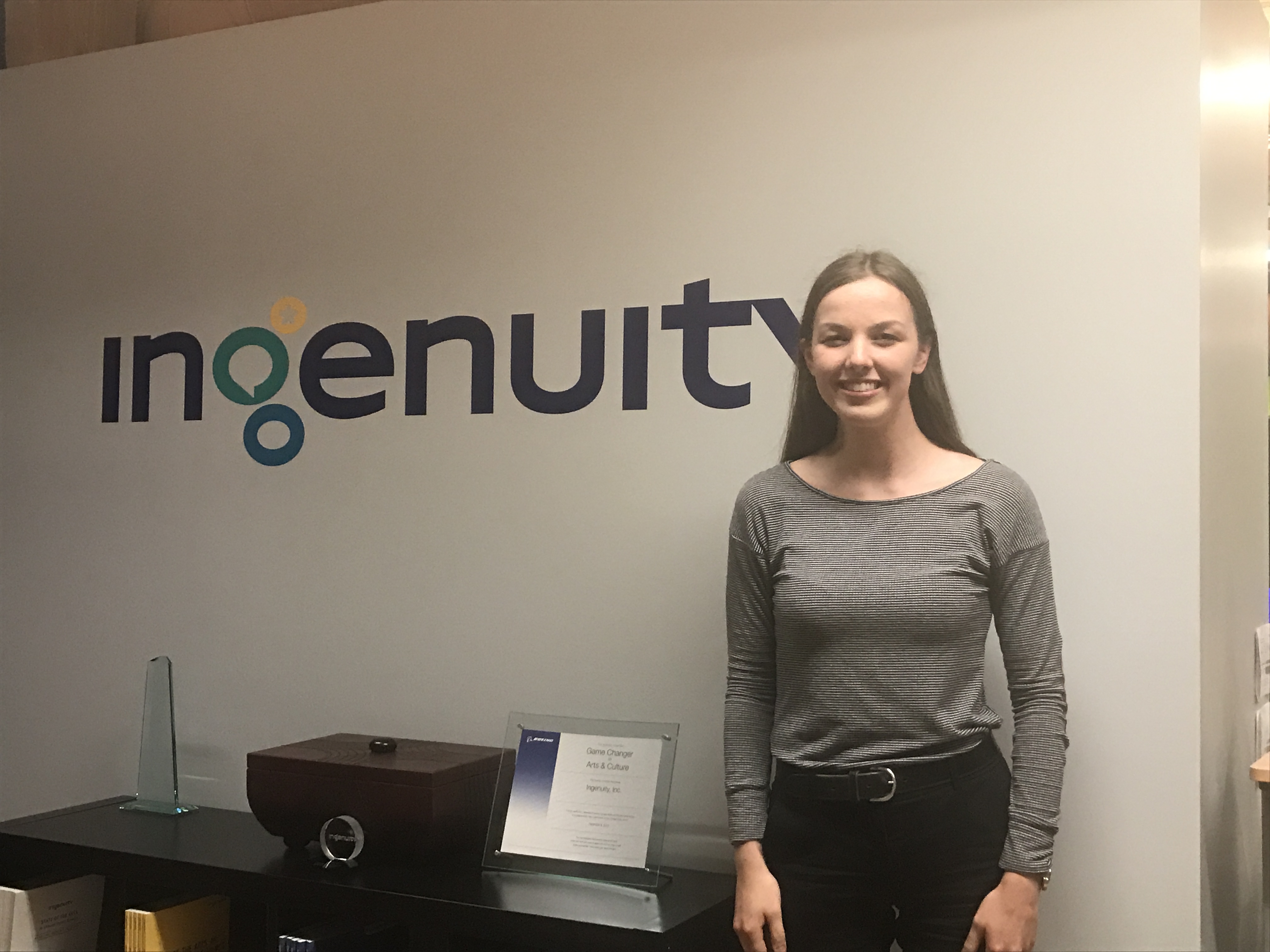
I honestly should not have gotten the Data and Research internship with Ingenuity. I was completely under qualified. My application was a total shot in the dark; I only hoped the arts education organization in Chicago would see that I applied to every position they offered and maybe understand just how much I wanted to work for them. The internship description called for candidates who had:

  • Familiarity with ETL tools for data warehousing (e.g., Zapier, Apatar, CloverETL, Talend, Pentaho)  
  • Experience writing APIs  
  • Experience designing and developing software and/or computer systems  

Even after nine weeks with Ingenuity, I can’t tell you what half those words mean. Thankfully after reviewing my resume, my supervisor envisioned a different project for me — one that would teach me new skills while still utilizing my writing and research abilities. (I could write a whole other post about what I learned about applying to jobs I think I’m “under qualified” for, but I’ll save that for another time).

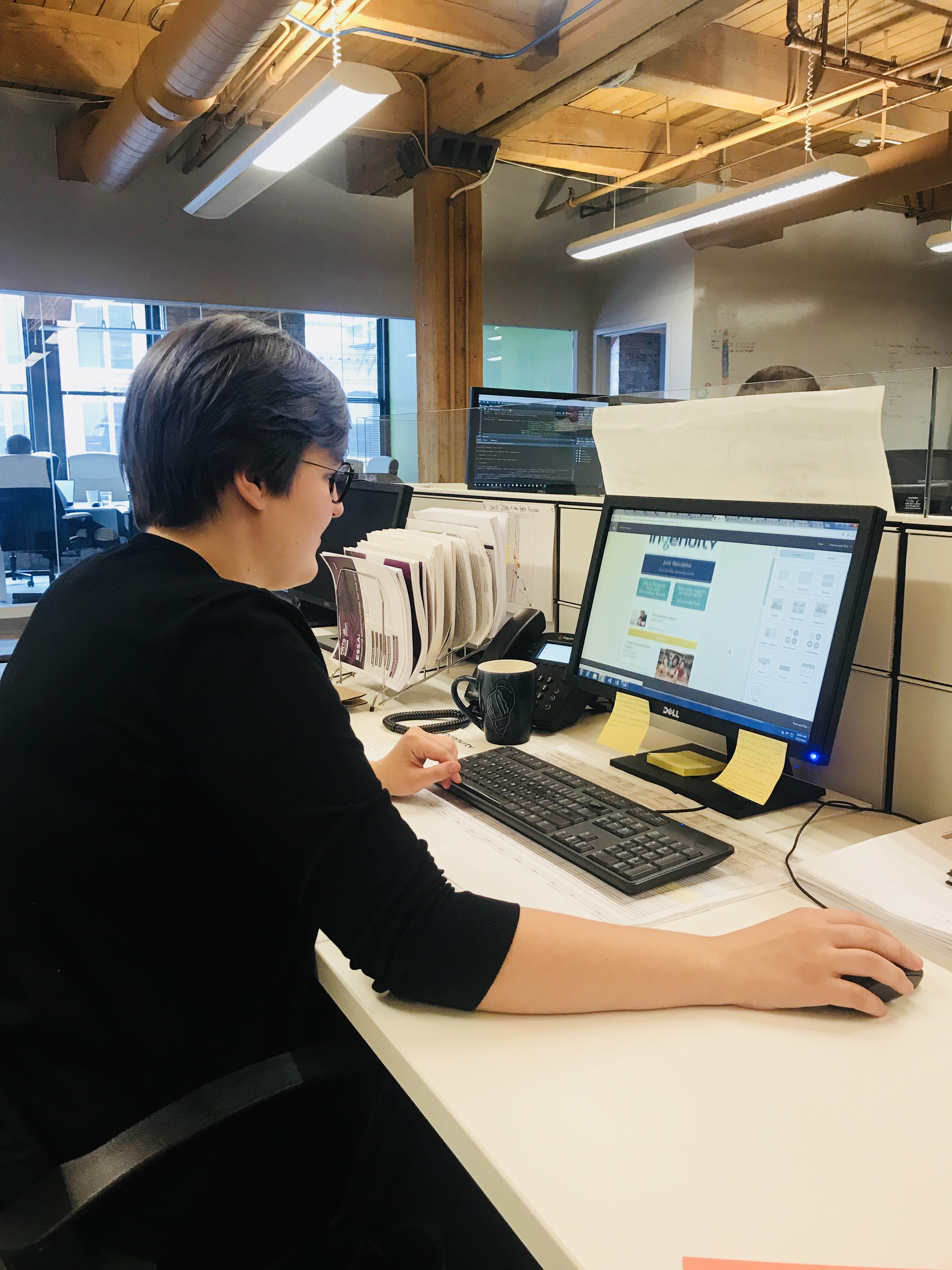
This summer I took the lead on writing the annual State of the Arts report which examines the arts education landscape in Chicago Public Schools (CPS). The 100-page publication will be available in October, and I had a blast collaborating on data analysis with co-workers, providing feedback to the designer, and presenting preliminary findings to Ingenuity and CPS directors. Possibly the best part of the summer was learning how much I enjoy working with data.

As an English and music major, I had firmly established myself as “not a numbers person.” In fact, the only reason I worked to pass AP Calculus in high school was to never have to take a math class again. I wasn’t necessarily bad with numbers, I just didn’t find excitement in them as I did with a good novel or a new piece of music.

However, working on the State of the Arts report showed me that I do actually like numbers — I like numbers that tell a story.

Ingenuity collects A LOT of numbers from schools, arts organizations, private and corporate funders, and the CPS district offices. Some days I spent hours pouring over spreadsheets trying to make sense of all them. My supervisor, co-worker, and I would do mental aerobics trying to figure out how to manipulate numbers into meaningful data. Some days I left the office with a pounding headache and no answers to our numerical problems, but the days we figured out solutions were extremely rewarding.

Once we collected and analyzed our data, it was my job to write it into a narrative. No one wants to read a 100-page report and still be asking “why does this matter?” in the end. By framing our numbers within a larger narrative of supporting schools in providing arts education to every CPS student, our data has meaning.

So while on paper I should never have been made the Data and Research intern at Ingenuity, I ended up being in exactly the right position to learn how important numbers can be in advocating and supporting a field I am passionate about.


Much of the data Ingenuity collects is available at artlookmap.com. This summer, I also had the pleasure of leading a breakout session showing new arts partners how to utilize the website.

“Don’t Change the World, Change Worlds”

When I first decided to pursue nonprofit public relations a year or so back, it was mostly because I didn’t want to work in corporate America. The idea of big business meetings filled with people in suits (which is how I stereotypically envisioned the corporate world) just didn’t appeal to me. So when people asked me what I wanted to do when I graduated, I said nonprofit PR. But now, after having a couple of internships in nonprofit communications, I know that that decision I made on a whim was the right one.

Over the past few semesters, I’ve taken some classes that have ignited an interest in human rights, so much so that I bookmarked the website with the Universal Declaration of Human Rights. Here in the U.S, we take so many of these rights for granted. But there is a plethora of places around the world where people don’t have their fundamental human rights. Obviously, the lack of human rights is a difficult problem with no easy solution. There are political, economic, and social reasons as to why people don’t have all their human rights and nothing is going to fix that overnight. However, there are changes that can be made to aid the process. As I’ve learned during my time at Water to Thrive this summer, water is one of those changes.

Article 25 of the UDHR states, “Everyone has the right to a standard of living adequate for the health and well-being of himself and of his family, including food, clothing, housing and medical care and necessary social services, and the right to security in the event of unemployment, sickness, disability, widowhood, old age or other lack of livelihood in circumstances beyond his control.” No access to clean water = No adequate living. It’s as simple as that. Unclean water sources lead to waterborne diseases, such as diarrhea. I’ve gone through a myriad of statistics to support this claim. 50% of rural Africans suffer from waterborne illness. 10% of children die before their 5th birthday because of diseases such as diarrhea. I’ve seen pictures of women gathering water from the same streams where their livestock are drinking. That’s just not healthy. In the villages where Water to Thrive builds clean water wells, waterborne disease is nearly eradicated.

Article 26 states “Everyone has the right to education. Education shall be free, at least in the elementary and fundamental states. Elementary education shall be compulsory. Technical and professional education shall be made generally available and higher education shall be equally accessible to all on the basis of merit.” Education is one of the biggest areas I’ve focused on at Water to Thrive recently. Children spend hours every day walking to retrieve water, causing them to miss school. The diseases they get from these unclean water sources also keep them from attending classes. Just the other day, I was reading through some testimonials from a school in Uganda where W2T is hoping to build a well. These kids talked about how they have to miss school to gather water and often get diseases like cholera and typhoid from it. Although they have the right to education, many cannot get that education because of something as simple as water.

My time at Water to Thrive has taught me a lot, from marketing skills to navigating Austin public transportation, but what has impacted me the most was learning about the African water crisis and reflecting on the effect it has on human rights. Through writing articles and working on an informational packet to send out to schools, I’ve been able to share the importance of clean and accessible wells. Although I’m not out in the field building wells myself, I still feel that I’m making a difference through spreading awareness. St. Francis of Assisi once said, “Don’t change the world, change worlds.” While Water to Thrive isn’t going to single-handedly end the African water crisis, they are changing the lives of individuals every day. And that’s what service is all about.


Fleeting Moments Meet Reflection

[Insert bittersweet hello here]

I am quickly approaching my final days in Washington D.C. and I can’t help but get a feeling of heartache. I’ve grown so much here, in many different ways that I hadn’t even anticipated. I feel transformed and empowered to move forward. My chapter in D.C. may be short one, but this place and these people that I have come to know in such a short span of time will always hold a special place in my heart.  

Lutheran Services in America, because of you I am a better me. My time at LSA has been a journey in itself. From my first few days as a very nervous intern that was terrified to make a mistake to a confident professional with a voice that is no longer afraid to ask for help and has become inspired by power of social ministry and what you are able to achieve when you stand firmly together.

I’ve gained deeper insights into how the field works and what it takes to be successful. While there have been challenging moments due to my inexperience, everybody has been more than helpful and communicative. They’re understanding and welcoming when I end up asking a million questions. They offer encouraging advice when I get insecure about my work performance. Thank you Jackie, Jasmine, and Rachel. And thank you to the remainder of LSA, I couldn’t have asked for a better work environment to walk into each day. I’m going to miss the good morning thumbs up from Bola, the sound of coffee brewing as Jonah pours his fifth cup of the day, the discounted hot dogs from Izzat each week, and sneaking away for some mid-morning Jeopardy with the other interns on the “fun side” of the office.
I am going to miss the boys. Being placed in an apartment that was directly down the hall made it feel like we were all still back in the Valpo dorms, except Lankenau doesn’t have a hot tub or balconies overlooking the city. Our group may quite possibly be the oddest group to end up together, but I am so forever grateful that we did. I am thankful for Jonah’s heart of gold and his ability to find the most fascinating places in D.C. I am going to miss the endless amount of sour gummy worms and how he always knew when to ask to go to Ebenezers for lunch (basically every day). I am going to miss the in depth and reflective conversations with Aaron. We could talk about anything under the sun and still not run out of things to discuss. I am grateful for your capability to always give the best advice or offer encouraging words. I can’t wait to see everything that you accomplish here. I am thankful for Josh’s carefree spirit and his excitement to try new things. I’m definitely going to miss living the high life in the Diamond Club!!! I am NOT going to miss hearing “HUZZAH” yelled every two minutes. 😉 I am going to miss Jake’s bold spirit and how moments were never dull with him. I admire his ability to start a conversation with just about anybody. Thank you all for the constant laughs and interesting adventures. I couldn’t picture myself spending a summer in D.C. with anybody else.  

I consider the CAPS Fellows program to be my final of many incredible opportunities that Valpo has given me. The CAPS Fellows program has given me the chance to explore and grow within the professional world, while being able to reflect on my personal goals. No two CAPS experiences are the same. Each experience is engaging and you have this incredible opportunity to gain insight into what life looks life after Valpo. This is what CAPS is supposed to be about. It is about discovering your passions and aligning those with God’s plan for your life. It is about finding purpose in the world around us and finding where you fit best. CAPS is about identifying your God given strengths and improving on those to serve others.

Signing off as an official Valpo alum,

– N

Check out some more D.C. images & look out for video soon!


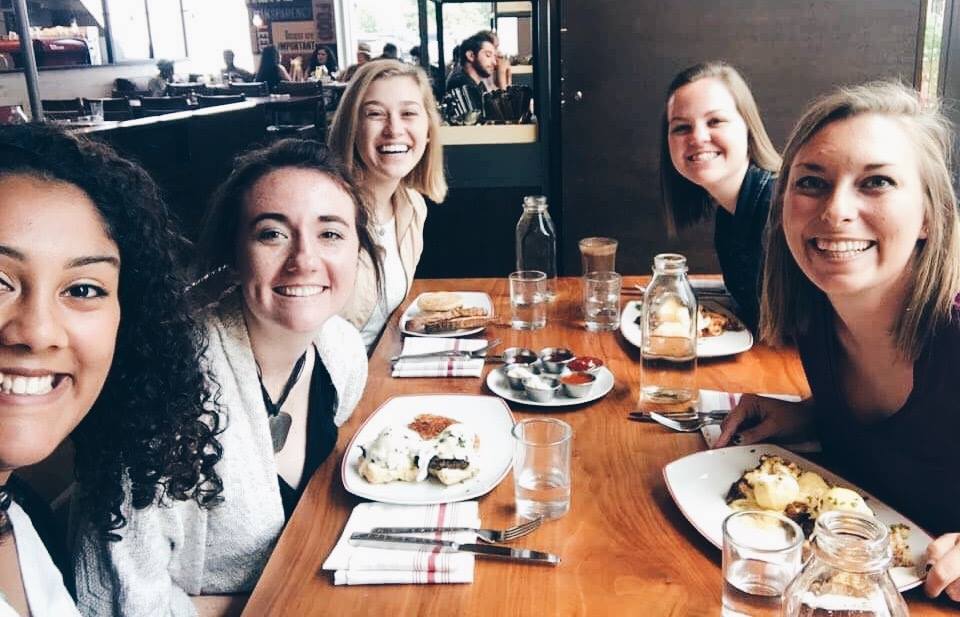
Brunch with CAPS alumni, Nura Zaki and Rockville CAPS Fellows, Michelle Andersen, Katie Bahn, and Maddie Nieter.

Ebenezers [aka my second home]

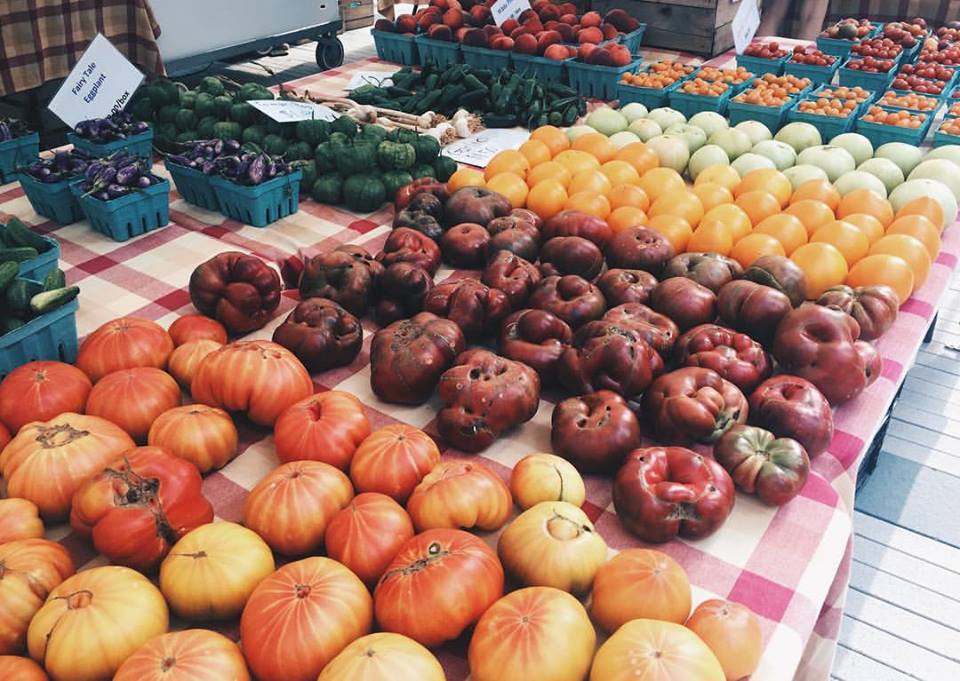
Rosslyn Farmer’s Market

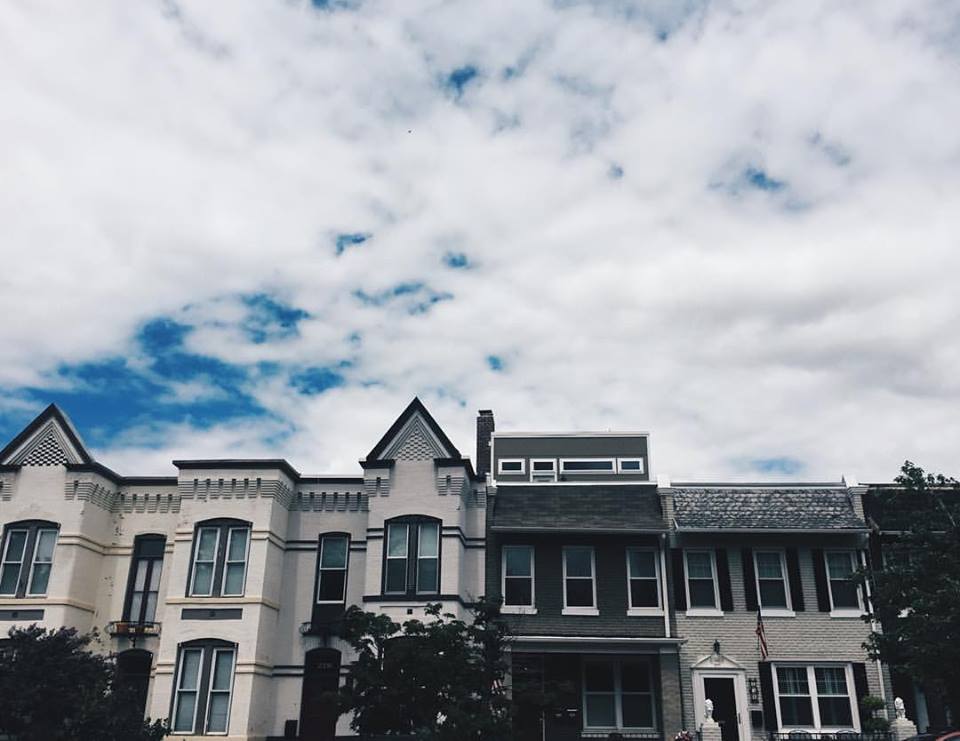
NOMA

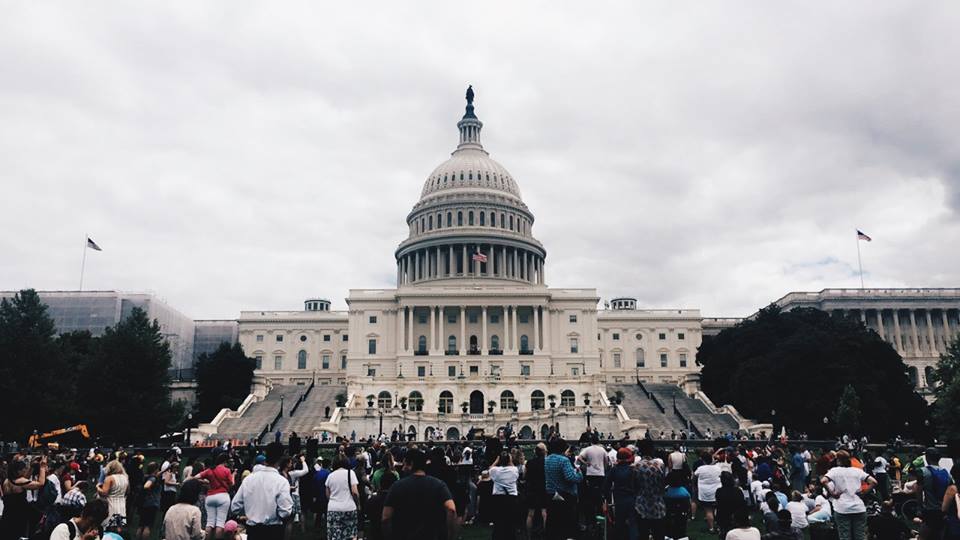
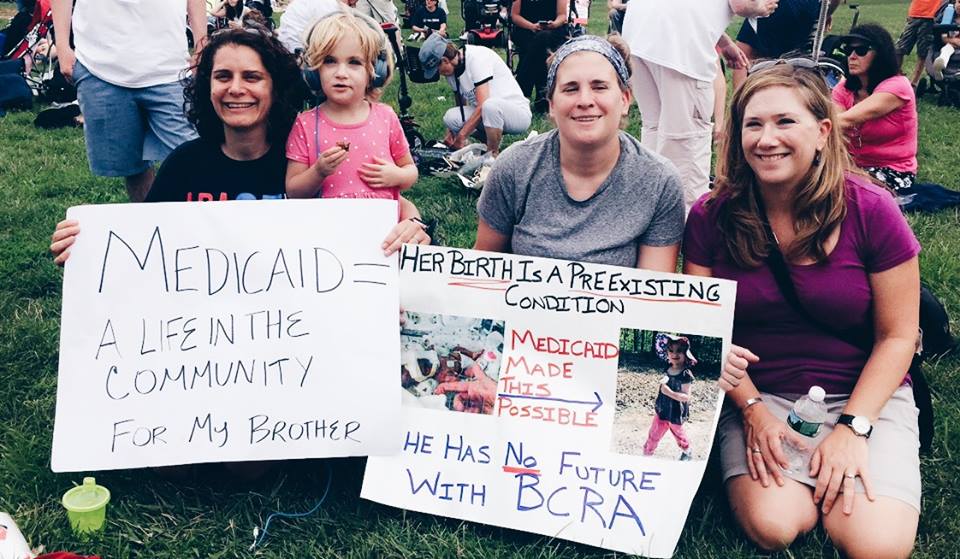
Medicaid | Disability Rights Rally

Medicaid | Disability Rights Rally

NOMA

Engagement in Silence

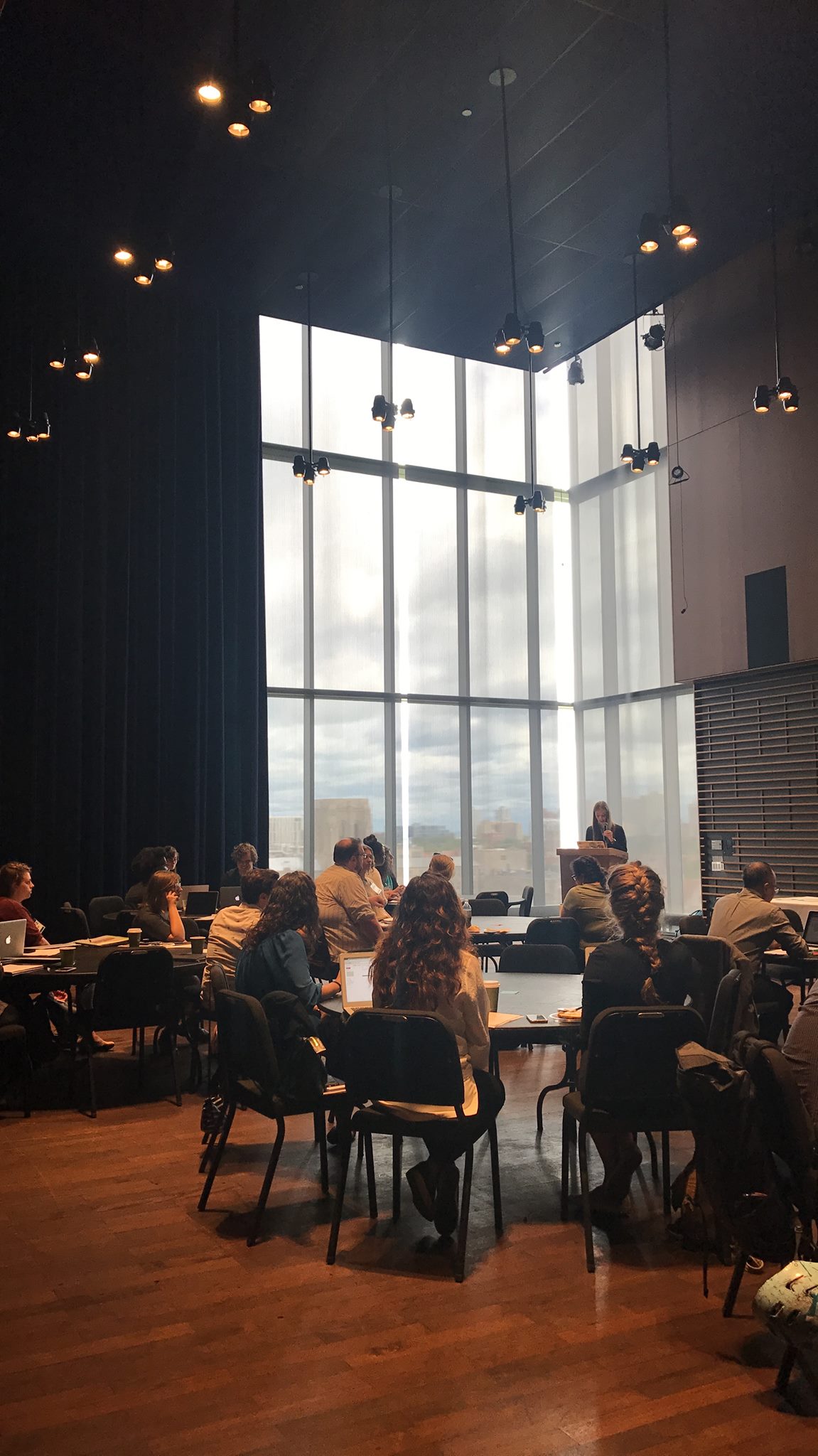
Partner Starter Institute

“Artists have the power to see obstacles and create solutions and that is pretty beautiful,” an arts partner said to me when I met with him to talk about his partnership with Chicago Public Schools. There was a pause in the room. He continued. “Thank you for asking me to speak at the Partner Starter, it has given me the opportunity to pause and reflect on the qualities of partnership.” I smiled.


The arts partner told me that he used to be concerned with the outcome or “performance” of the students’ art pieces, but now he realizes the importance of the process for the students and that some students might not see how the arts influences them until later on in their life. You don’t always get to see the impact you have, but it is still important. Whether they consider themselves an artist or not, they are still thinking in a different way, creating in their own way, and accessing a new part of themselves.


I feel like I am accessing a new part of myself while recognizing how important reflection is in understanding my experience here. Sometimes in the constant movement of the arts non-profit world, it is easy for me to get lost in it all: that everything needs to happen now. That I don’t have time. That pausing would be a waste of time.


However, I realized in this thought process that taking a moment to pause and reflect is the key to quality work in this experience and making sure that every voice is heard in the community, in the arts sector, and in the schools.


A few weekends ago, I decided to go to the American Writers Museum that just opened in Chicago. I stumbled upon a writer’s talk that was in session with Deepak Unnikrishnan and his book Temporary People and cultural critic, Illan Stavans. The conversation circled around the diversity of voices that created and continue to create what it means to be American. I was really taken on Deepak’s perspective on language and the importance that the English language had in creating a bridge for him between all the other languages he knows, and keeping all of them alive.


I have been thinking a lot about the way language interacts with leadership and meaningful work this summer. The arts in a way is a language, a narrative, that can be shared with all, creating bridges among people, conversations, and places. Embracing the moments to pause has made me a better worker, and reflection has made me a more impactful creator, problem-solver. I have been able to make connections from what I am doing to the larger narrative that exists in my life, that what I am doing does not just end when the clock hits five, but the process of learning this summer will influence me today, tomorrow, and down the road in unexpected ways that I have yet to see.

There is an engagement in silence, in reflection, in pausing, in paying attention to the details, and I see that engagement working throughout Ingenuity, amongst each busy day. I see the way reflection and leadership are constantly intertwined in the work that each of Ingenuity staff member and it empowers me and the community.

While many things I have learned or experienced might be unique,  I have realized there is a connection to community. As I share  the details of my experience, and while some may be forgotten, and listeners might not completely understand, each interaction I had is important to understanding meaningful work. Each interaction with the world matters and the stories of the people around you are constantly in conversation with how we all experience the world. From the CTA driver who waited for me to get onto the platform before closing the doors so I could enter the train, to Judy who would always read Agatha Christie novels at the Art Institute on a Saturday, there is always an opportunity to make a meaningful interaction. I realized that sometimes you just need to stop for a little while, take it all in, and be open to the people around you. We have so many awesome opportunities as people of communities to build off one another, to listen to each other, to learn from others’ stories and when we become empowered by our own unique experiences as well as the people we interact with (on a small and large scale), we can find our strengths, our purpose, and calling.

The Final 48

The Final 48

Growing up, my mom and I were super into crime shows, and one of the shows we always watched together was ‘The First 48’. While that probably isn’t a show I should have been watching at six years old (thanks mom), I clearly remember that the intro always said, “their chances of solving the case are cut in half after the first 48,” or “the first 48 is just the beginning.” Now you’re probably wondering what possible relation that could have to my summer (no worries, I am getting to it!). No matter the case, no matter the episode, the intro to every show always specified how much could have in the span of 48 hours.

As I write this I realize that I have only 48 hours left with Ingenuity.

It’s hard to believe that I only have one more full week (and one day) at Ingenuity and here in Chicago. I wrote my first blog when I was just starting off and learning the ropes, and now, as I write this, I realize it is time for me to begin wrapping things up. Time really flew by! Living in Chicago has been unbelievably amazing and my time at Ingenuity has been incredibly diverse and enlightening. It is so hard for me to describe my time here because I have done more in these past few weeks than I could have ever anticipated (but I’ll try my best!).

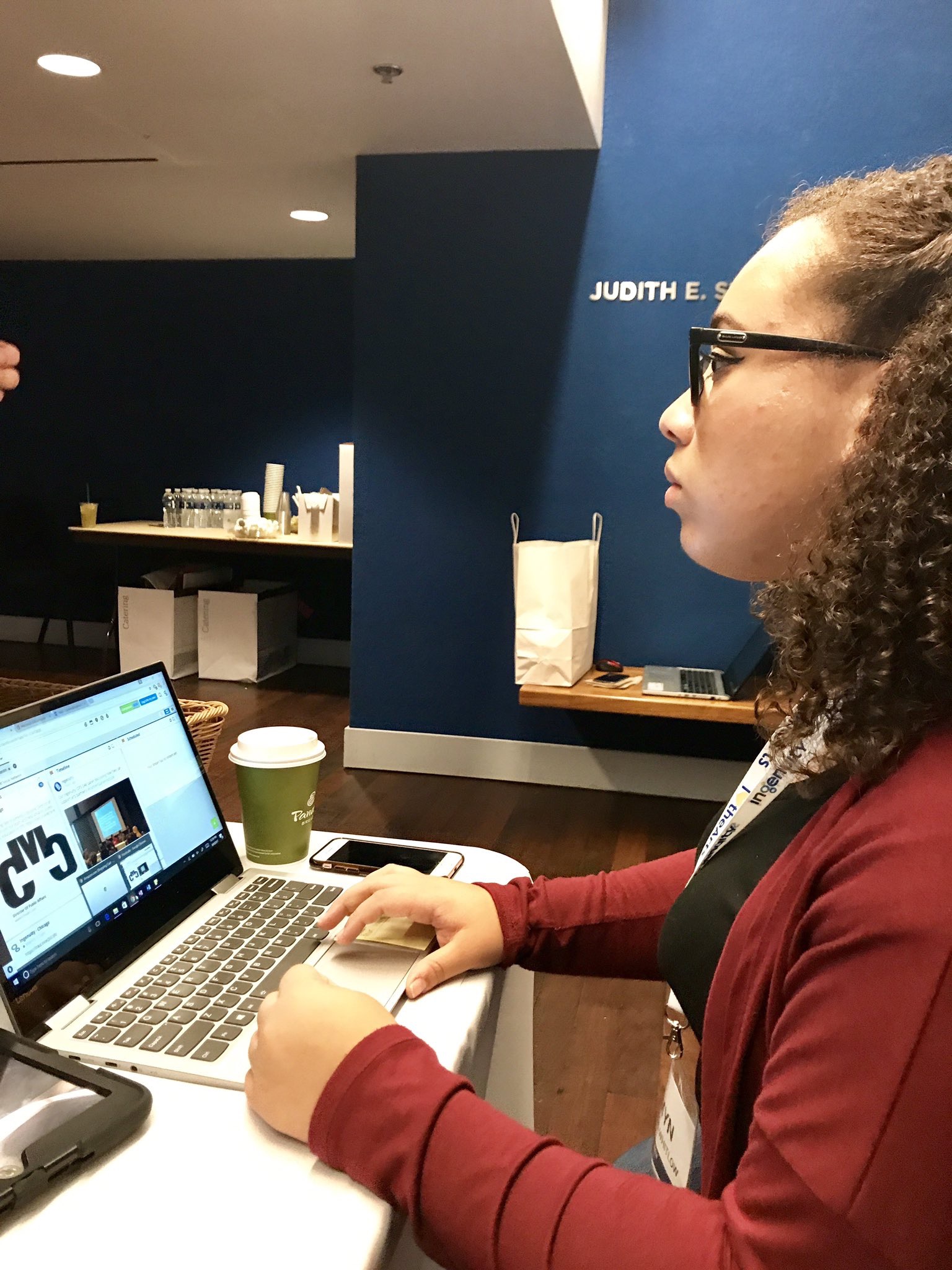
Working on social media for an event!

One of the major things I have done this summer at Ingenuity is handled all of the social media that the organization has. When I first found out this was going to be one of my tasks, I thought ‘this should be easy; I spend a lot of time on social media as is so it will be fun!’ While the task was definitely fun at times, it was not as easy as I originally anticipated. Because Ingenuity has such a diverse audience, I often had to craft my social media posts to each targeted audience. This task, though unexpected, really taught me to pay attention to detail. If I thought I was good with little details before this summer, I must be an expert now! While it seems insignificant, phrasing and details for particular audiences is so important to making sure you get the correct message out.
Another thing I have learned this summer is to not being afraid to go to someone and tell them what you need.

Until this week, I would say I was sort of struggling with my work here at Ingenuity. Because I was working with everyone one in the office and doing different things for each person, I sort of felt lost, like I was roaming without a clear purpose or person to go to when I needed something. In addition, when I came into the office, I was given a list of tasks to complete over the summer, but because of what the tasks were, I was able to get them done fairly early within my summer. After I finally got the courage to ask for more work, I was given another task to complete, but it required me getting in contact with people and organizations outside of the office. When I reached a point where I was sort of at a standstill, I began to lose sight of my purpose.  It was difficult for me because on one level, I truly believed what I was doing was impactful and that once I heard back from others, I could continue my work.  On the other hand, I felt like I wasn’t accomplishing enough and I didn’t know how to go out and seek more work (again).
One of my many tasks at Ingenuity: helping run registration for our many events.

It’s challenging when you are an intern and want to speak to your supervisor. Don’t get me wrong, everyone I worked with at Ingenuity was more than welcoming, but because we are such a small staffed organization, there is always work that needs to be done. I felt that no matter when I would approach someone, I would be interrupting their work, which is the last thing I wanted to do. It was a hard thing to work through, I won’t lie, but I realized the more I went to people and told them what I needed, the better response I would get. My mother always told me ‘a closed mouth doesn’t get fed,’ and it’s true. Sometimes my job would require me to speak up to people who have way more seniority that I, and it was scar, but at the end of the day, it helped me more than it hindered me.

The greatest thing I think my summer with Ingenuity has taught me is that I want to work directly with people. Don’t get me wrong, there is a lot of administrative work that needs to be done behind the scenes so that the people who do interactional work with people can do their jobs successfully, and the behind the scenes work is just as important as the hands-on work. However, for me, I feel like working with people is where I am better suited. I spent a lot of my time in front of a computer screen and interacting with others through social media and email. While I enjoyed it for the first couple of weeks, I began to notice that I longed to have more interaction with the community around me. Whenever I was given the chance to meet with people and have face-to-face interaction. I noticed that I always felt more confident about the work I was completing when I could directly see how it was affecting others.

These are just a fraction of the lessons I’ve learned with my summer at Ingenuity. If I talked about all I have learned at Ingenuity, I could probably write a novel (okay, maybe it would be more of an essay, but you get my point).  While I am sad to know my time here is coming to an end, I look forward to seeing what the last 48 has in store for me.

There’s Something in the Water

This has been an incredible summer full of personal and professional growth.  There have been so many significant changes that it is nearly impossible to put it into words.  When I moved out to Maryland, I really didn’t know what to expect.  I had a lot of questions such as:  “Who are these two other people I will be living with?”, “ What will I be doing?”, “How will I be able to contribute to this organization?”, “How can I represent Valpo and CAPS to the best of my ability?”.   The list went on and on and it was a bit nerve-racking.

I learned that there is something in the water at Valpo and in Rockville (where you run into more Valpo graduates than you would think!).  Valparaiso University has provided me with so many useful tools that continue to set Valpo students  apart from other university students.  Valpo not only guides us with strong academic programs but instills in us a sense of service .  We want to give back and positively impact individuals and groups.  This summer, I was able to see the way Valpo has shaped  students, graduates, and especially me with regard to serving others.  There is something in the “water” at  Valpo that leads us to do more and be more for the individuals of our community.  There is also something in the water out here too!  National Lutheran Communities and Services (NLCS) and The Village at Rockville are filled with individuals who genuinely want to serve residents and each other.  I can’t begin to tell you the countless  times employees have gone out of their way to offer me assistance and guidance.  They have something in their water that has made it harder to say goodbye to this place than I had anticipated after just a quick 8 weeks.

As I reflect on my time in Rockville, I have noticed that many of my decisions and thoughts have been re-affirmed.   I am confident I have selected the right courses for me over the past three years.  Without a doubt, I am in the correct major and am on the right career path.  With each meeting, interaction, and project development, I found myself contributing to something I desire to be a part of.  It has exposed me to areas of work that I didn’t even know were available to me. I am able to  grow professionally in this field  and take on new adventures while being able to remain passionate about service to others.    There is a multitude of opportunities  that await me after I graduate and I am anxious to find out what my path will be.

As I conclude my fellowship, I received answers to all of my initial questions. I had the great pleasure of living  with two incredible individuals who shared their knowledge and experiences with me as well as sharing a love for adventures (both traveling and food related)!  I was given the opportunity to develop a nursing on the floor checklist that I hope will be implemented soon.  I gave my best efforts  to any and all tasks that were presented to me.  Most importantly, I tried to ensure my work benefitted the people we serve.   While my questions at the beginning of my fellowship were answered, I now have new questions to fill their void! How can I best utilize everything that I learned while at  NLCS and The Village at Rockville? How can I carry this work method forward? How can I grow from here?  My senior year will, no doubt, also lead to many new discoveries and questions but there is no place I would rather be than in the place “where there is something in the water”!

Valpo representation at NLCS Leadership Summit.

Myself and 2 other CAPS Fellows in front of out cottage.

Hiking view at Sugarloaf.

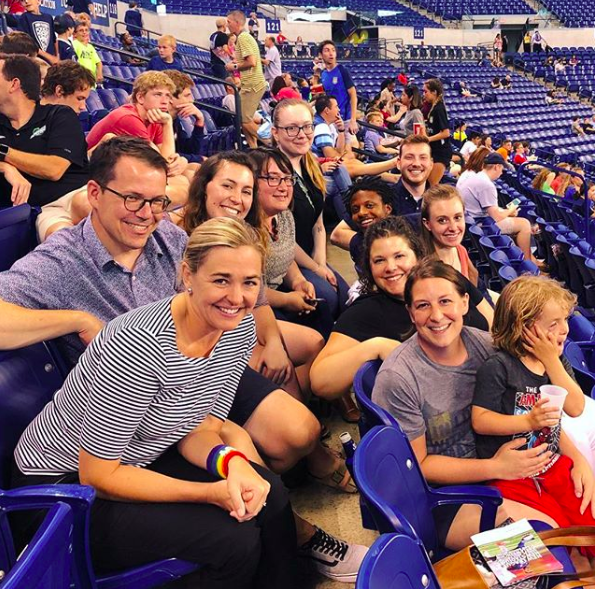
Met up with the DC CAPS Fellows for a Nationals game.

The Call for a Life of Service

As I reflect upon my experience with Ancilla Systems, I realize I am looking through different eyes than when I began the summer. When I entered as the development team’s intern, my position tasks included attending meetings, grant-writing, and email-sending. Of course these things were a part of my regular schedule, yet I find myself reminiscing experiences that were much more impactful.

One of my fondest memories includes interviewing Sisters who work or have worked in healthcare settings. Prior to our interviews, I was eager to meet the Sisters but I did not expect how much wisdom would be revealed during each conversation. Each Sister offered a very unique but consistent view of healthcare:  one that involved ministry. I loved hearing the compassion for the patients they served and the miracles they achieved in their healthcare careers. Every sister who I interviewed spoke about her love for developing relationships with patients, a quality that is not always present among medical professionals. In each story, I could see that the Sisters cared for each patient’s spirit as well as his or her physical health.


As a privileged American citizen, I used to ignorantly assume that healthcare was universally available. I thought that if you could afford to live in America then you must be able to afford insurance! However, the United States spends the most amount of money on healthcare insurance and still reaps one of the poorest healthcare systems in the world.  In many other countries, governments provide universal healthcare for all citizens, no matter their income because they view healthcare as a basic civil right. Within the American health system, many people are often denied the right to healthcare if they cannot afford insurance.


While I shadowed Sister Nora Hahn, PHJC, at St. Joseph’s clinic in Plymouth, IN, I saw that help can be given to clients who may not have insurance. I witnessed medical personnel who overcame many obstacles to ensure that patients received much needed care. Many clients appeared at the clinic with diagnoses that required immediate intervention or long-term treatment. Without help from the wonderful staff, it is likely that many of the patients would experience a decline in health status simply due to lack of insurance.


Another memory that resonated with me the following weeks included holding the children currently housed at Nazareth Home (NH). During my NH volunteer orientation and tour, I witnessed each of the staff members mention “giving love to the children” or “spending time with the children.” Nazareth Home is not an ordinary foster home, it is a haven in which volunteers naturally deliver love to children who desperately need compassionate human contact. I could not believe the miracles that occurred in the short time I spent at the Home: the children were laughing, smiling, napping, eating, and playing in a safe environment where painful experiences, if even for a moment, were just memories.


Another memory I loved was attending the Sojourner Truth House walk held in both Donaldson and Gary, Indiana. One moment that stood out to me specifically was during the registration period in Gary: while many could not donate money (or could only donate very little), they still volunteered time and participation. I was amazed by the generosity exhibited by each member of the Walk and the joy that I witnessed at the registration table.


While I remember each of these moments, I contemplate my future in nursing since I have experienced the wonderful ministries of the Poor Handmaids. How can I effectively serve others with a humble spirit and full heart? How will I know what others need so that I can heal them? How can I maintain my relationship with Christ in a world that is, at times, hopeless? I decided to view these questions through the eyes of the Poor Handmaids of Jesus Christ.


Much of nursing education revolves around one crucial theory developed by Abraham Maslow, known as the Hierarchy of Needs. “Maslow’s Hierarchy” focuses on levels of personal needs that must be met sequentially before a person can be his or her best or “actualized” self. While Maslow’s Hierarchy is a very fundamental structure, as times change, the means to meet those ends change as well. The Sisters have exhibited their ability to be dynamic over decades, during civil rights movements, ecosystem transitions, and ministry development. As a nurse, I will have to adapt to changing times as well. Health needs change, disease prominence changes, and my relationship with my patients will change. However, as a human being who naturally cares for others’ spiritual, emotional, and mental well-being, I must be well-equipped.


I have noticed that when the Sisters serve others, they address specific needs so that the poor, whoever it may be, can achieve personal goals and develop independence. I have focused on some reflection components that are necessary when serving others, and serving in the spirit of the Poor Handmaids.


Humility is a God-given value that is necessary when dedicating your life to serving others. First, I must address where my ego lies in God’s eyes. How can I effectively serve others if my pride eclipses the Holy Spirit’s presence in me? The Bible has much to say about pride but one verse in particular that speaks to me is Philippians 2:3 (NIV), “do nothing out of selfish ambition or vain conceit, rather, in humility value others above yourselves.” The Poor Handmaids do not just serve others, but they humbly love those whom they serve. Sisters have dedicated themselves wholeheartedly to a life of service, denying materialistic wealth and cherishing a life in Jesus’ wealth instead.


As I become wrapped up in my own plans for the future, I seem to have forgotten that God will always provide for me. Acquisition of materialistic items very easily hinders motivation to serve. For instance, how can I give freely to others if I am overly concerned about my own future financial security? Placing my faith in resources here on Earth will not allow me to reach others effectively, and attempting to serve others solely with worldly items will not help them either. While monetary resources will oftentimes be necessary when I serve others, it should not become central to my service. As I serve others, I remember that my service must include nurturing the non-physical well-being of others, in addition to their physical state.


This leads me to another focus: how can I identify what another person needs while I am serving others? This ties back to Maslow’s Hierarchy as it addresses how to love others who may not need something tangible like shelter or food. I often struggle with trying to satiate another person’s needs with something that can be physically given to them but in reality that person may just be yearning for an active, listening ear. When serving a friend, patient, or even complete stranger, focus on them in that moment. What is his or her greatest need right now? Oftentimes, words of advice or quick actions just become a haphazard bandaid solution in someone’s desperate time of need. Instead, give love in its multiple forms: time, patience, or just presence.


My final focus falls upon a relationship with Christ which is crucial to living a life of service; if Christ is love, how can I love others without loving Him? The Poor Handmaids exhibit this Christ-like love everyday through humility, presence, prayer, kindness, encouragement, and so much more. To serve like a Poor Handmaid means I must evaluate my relationship with Christ first. What am I doing daily to strengthen my faith and how can I ensure that Jesus’ Holy presence is with my during my service? Presence, patience, kindness, love, and many other attributes that the Sisters embody come only from a dear relationship with and constant focus on Christ.


Questions, Answers, and More Questions : The Life of an Intern

Washington D.C. in the summer months becomes more like Washington D. I. (the District of Interns).  Going to work in the morning on the Metro reveals large swaths of college age, well-dressed, people, on their way to the heart of the city.  If there is any doubt that these are interns, one only needs to look at their badges (governmental interns receive an identifiable “intern” badge) or listen in to their conversations.  Often times interns travel in friend groups, or work groups, headed to the same place.  In either case, they will often talk to each other about the kinds of work they are doing in so-and-so’s office or for this-or-that agency while on leave from their various universities and colleges located around the country.

Noticing these large groups of people one is forced to wonder: why intern?  Is it the great pay and glamorous lifestyle?  No, that surely can’t be it.  Most people could likely make more working a summer job back home.  The fact that we are all riding a dirty metro displays that there is little glamour in the whole thing.  Is it the ability to put this on the resume for better chances at future employment?  This is indeed a perk, however, having an internship on your resume does surely not guarantee a job position.  In addition, one could likely have a very good looking resume going out into the workfield without ever doing an internship.  Is it the experience of it?  This seems like a much closer answer to the truth, but maybe not in the traditional sense of experience.

The answer that I have come to accept is experience in a kind of “trial and error” sense.  By this, I mean we intern to test out certain theories of what environment we want to work in or what kind of work we want to be doing.  At Valpo, the word “vocation” is thrown about often, forcing you to start thinking about what this may mean for you fairly early on in your college career.  Where do you belong?  Where does your passion lie?  In essence, what do you want to do for the large majority of the rest of your life.  No pressure.

Throughout one’s college career we develop theories of what we want to be doing and what we will enjoy, however, we rarely acknowledge that these are only theories.  Once we decide on a passion and ideal career trajectory, it is easy to forget that this is largely unbased.  We have never actually tried doing this kind of work for 40 hours, 5 days, a week.  In this way, it is like a question that we forget is a question.  We assume we know the answer because we think we know ourselves, but in reality this is something that needs to be proven.  Do we actually know ourselves as well as we think we do?

This, then, is where internships come in.  Internships provide a relatively safe, temporal, chance to test out a career in the real world.  If you like it, as you thought you would, you get a sense of satisfaction.  You now have proof that the trajectory you see yourself on is the one for you.  This opens up new questions though, of more specifics.  Now that you know what the work you want to do is, you must figure out in what way you want to enter into this field and in what capacity you want to work.

However, there is also an alternative response to an internship. It might be that you end up having a rude awakening, that what you assumed would be your ideal career may be less than ideal.  This, while it can be momentarily jarring, is actually just as helpful to your self and career development.  This teaches you that you need to go back to the drawing board, come up with a new theory, and test it again.

This is how the life of the intern is truly a process of questioning, questions being answered, and this answer somehow always leading to more questioning  Once this is realized, though, there is a sense of solidarity on the morning Metro ride.  Yes, all us interns may be doing different kinds of work and may be at different points in our lives, but we are still trying to all answer the same questions, and in the end, we will all get one of the same two answers.  Whatever the answer may be at the end, we are all learning critical things about ourselves as people and, in the case of CAPS fellow, workers for social justice.


Bittersweet Moments

“You’re leaving next week? But you just got here!”

With Emily Knippenberg, Valpo ’16 and previous CAPS Fellow. Emily was my main supervisor during the fellowship and helped direct next steps in my project and was always giving the best professional and life advice.

Doesn’t it feel like that? It’s true what the saying says – time flies when you’re having fun! Time also flies when you are kept incredibly busy and everyday is filled with numerous learning opportunities and personal and professional challenges.


To incorporate clinical nursing experience I helped with the Wound Fair that was mandatory education for our nursing staff. Prevention is key for pressure ulcers!

As my summer at The Village at Rockville (TVAR) in Maryland wraps up I can’t help but reflect on the time I have had here. From the people I have met, the meetings I have sat in on, the responsibilities I have been given and the times I’ve spent exploring the area – I look back and wonder how it all managed to happen during one CAPS Fellowship. I can honestly say that everything that happened was unexpected, challenging at times but so worth it. So worth the occasional discomfort, confusion, exhaustion, and hours of meetings.

To give you a better idea of what my summer looked like I will explain it this way. I worked 9-5, except Fridays which were 7:30AM-5PM so I could participate on wound-rounds.  There were occasional evenings during the summer that I would stay late or go in and talk with night shift staff but other than that my evening and weekends were available for endless adventure and exploring the Maryland, Virginia, D.C. area.

I took a solo road trip to Annapolis, MD last weekend. Fun, very historic downtown to explore.

When we weren’t experiencing the numerous restaurants, hiking trails or activities people had encouraged us to visit, we were in the office working on our individual projects. Other times we were attending meetings both at TVAR and at the corporate office – National Lutheran Communities and Services (NLCS).


With: Jason, the Executive Director at TVAR and another main supervisor; CAPS Fellows – Maddie Nieter and Michelle Andersen; and Emily Knippenberg

A huge part of making this CAPS Fellowship what it has been, are the people I have encountered both at TVAR and also beyond at other NLCS entities. Every person I met has encouraged me to reach out to them and to let them know if I ever have any further questions or need professional guidance. It has amazed me to experience the compassion and desire other people have had to see me grow. I know many times it is said that words cannot fully describe something ­- in this case that saying can’t be truer. Words truly cannot describe the appreciation I have for the amount of wisdom, guidance, and support I have received the past 8 weeks. I have received many notes with words of advice, wisdom, various contacts, and many other little tidbits that I will be reflecting on and incorporating into further development, especially, in the coming years as I continue to pursue my passion of becoming a nurse.


Now comes a bittersweet time of saying goodbye to such an influential group of people I have had the honor of working with this summer. It will be the people of National Lutheran Communities and Services, especially The Village at Rockville, that I will miss greatly.

One of my favorite things to do was explore new and always breathtaking hiking trails. As well as, other outdoor activities like kayaking and white water tubing down part of the Potomac River.

But as this journey comes to a close I walk away a determined and more knowledgeable nurse and professional. I also leave reflecting on the word “change”. A goal in my life is to create change somewhere, somehow. I don’t know yet if that change will come in the form of a medical mission trip, a pediatric hospital, a church, or with family or friends, but I have been made to realize that change won’t always be seen with my own eyes. Maybe the change I create in the world will happen years after I have an idea or begin to create something. Maybe this change in the world happens within my own heart, creating a domino effect. In addition to having a passion to serve in a pediatric hospital I now add a passion of working with dementia patients. It is hard to imagine how much an entire perspective and desire can change in a few weeks time.


The Art of Storytelling

Hello from The District!  

I don’t know if anybody else feels this way, but this summer has been FLYING BY. If feels like it was only a week ago I was beginning my time in our nation’s capital. Over the past month, I have been serving within the Marketing & Communications department at Lutheran Services in America, a health care and human services network that represents over 300 Lutheran nonprofit organizations and it has been an adventure. The district has this beautiful energy that keeps you on your toes. It’s an exhilarating energy that makes the workplace unpredictable and anything but mundane.

I have spent my days attending rallies and going on hill visits to advocate on behalf of LSA, which was COMPLETELY outside of my comfort zone. Seriously, I felt completely out of my own element. However, looking back at my first few weeks at LSA, it’s evident to see how much I’ve grown in such a short amount of time. I’m beginning to the think that the whole being forced outside your comfort zone thing isn’t actually that bad. I have found that in order to succeed in, you must adapt quickly, be unafraid to ask questions (easier said than done), and find innovation to go above and beyond during those rare quiet moments.

I’m discovering that the work that I find most rewarding is when I have the opportunity to use it as a creative outlet. I’ve always considered myself a storyteller. Having recently graduated as a Digital Media Art major, I take pride in being able to share others’ stories creatively and with a vision that others aren’t always able to see. If there’s one thing that I’ve learned about storytelling at Lutheran Services in America, it’s that every single person has a story. Each story is unique and deserves to be valued. It is my job to share their story and advocate for those who aren’t always able to share their own story with those that need to hear it.

LSA takes social ministry to an entire different level and is able to cultivate such a wide array of stories and share them on such a large scale. At its core, LSA takes storytelling and makes it about generating an authentic, human connection. Storytelling, when done right, can increase your influence and produce a ripple effect of supporters who want to invest in you’re fighting for.

Here’s a sneak peak into just a few my adventures! To see more, check out my VSCO profile dedicated to finding all the cute hidden corners of D.C.

– N

United Methodist Building [aka LSA’s office]

Union Station

Georgetown

National Building Museum

Ebenezers Coffee

Lincoln Memorial

Member Engagement Intern, Jonah Koetke & I meeting Senator Warren

The Flash Ain’t Got Nothin’ on This Summer

Putting the “I” in Indy

As I write this final blog post, I am bombarded by many feelings…the two most prominent being confusion and denial. I’m in a constant state of Wait, I’m sorry—what did you say the date is again? and No, that can’t be right…it’s still June, isn’t it? If summer mercilessly flew past you at full speed, and if you are shocked by the date on your calendar every morning, then you might be experiencing symptoms of End of Summer Whiplash. I have coined this condition with the hopes that it will help many of us place a name to the whirlwind of emotions we are feeling about the end of our summer as CAPS Fellows. We are nearing the end; what a strange thing to say.

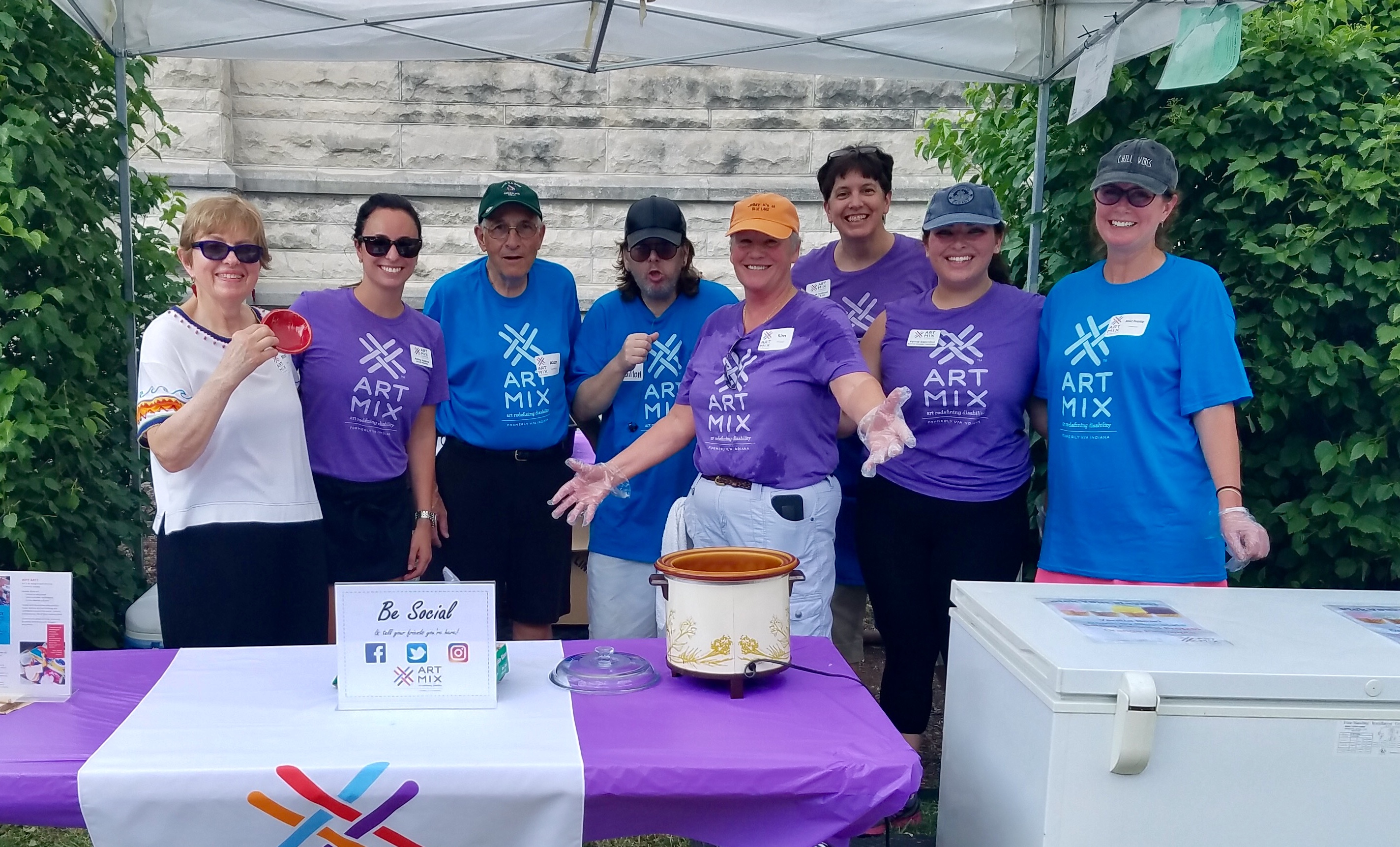
Just for the sake of recap, I am an intern at ArtMix, a nonprofit in Indy which provides access to the arts for people with disabilities, while also practicing and promoting inclusion. For me, which may be unlike many people in my CAPS cohort, I went into this position with no experience in the nonprofit sector whatsoever, and into a position that (on the surface) is not directly connected with my major. Now, I am typically not the type of person who throws caution to the wind and enjoys going into situations with little to no knowledge. But, that’s what made the CAPS program and ArtMix such a unique and fulfilling experience. In my nine short weeks here, I have learned an incredible amount about the nonprofit sector, what it means to really serve people, and how much elbow-grease it really takes to keep an organization spinning.

Linda, Kathy, Me, Katy, & Gayle

The President & CEO of my organization once asked me to think about my Aha! moments during my time here, so that I may reflect on them and take them with me as I find my way in life. One of those moments was the moment I realized that small nonprofits run much like how I imagine start-up businesses running. There is such an enormous emphasis on presence: getting exposure, putting your name and mission out there, and connecting, connecting, connecting. For me, this translated to a lot of experience in marketing and social media management that I previously had never been involved with. I have a renewed appreciation for the strategies and planning that go into building a presence online and in the community. Along those same lines, I knew fundraising was important; that felt like common knowledge to me. However, before this position, I had no experience with fundraising. Here, I learned the practical steps for educating people about our mission, gathering financial support, and maintaining relationships with the people who are gracious enough to donate their money (and time!) to our organization. Cultivating those relationships is extremely important to ArtMix, because the people who give to us are who make it possible for us to serve the community, and to transform the lives of people with disabilities.

As I reflect on what I will miss most, it really is two-fold: the ArtMix staff and the ArtMix students. I am extremely fortunate to have a staff surrounding me this summer who have been nothing but supportive, helpful, and kind to me. Above all, I felt like staff while I was here. Surely we’ve all heard an intern horror story or two, usually involving an intern who was always reminded of their intern status, whether it be through interactions or task-assignment. This could not be further from my experience. The ArtMix staff made sure I was always involved in the events, meetings, and camaraderies as much as any other person in the office. They are a group of truly phenomenal people, and I will miss them after my return to Valpo.

Meghan (middle), Ivey, & Me

Finally, I will miss the students who come to ArtMix day after day, dedicating time and energy to our programs and their own personal growth. I have especially become friends with people in the Urban Artisans program: I attended my new friend Meghan’s dance recital with her family and my coworker, received the nickname “Trouble” from the comedian of the group, Jordan, and was invited to join David at his church service on Sundays. Serving their lunches also means I know which students will eat the chicken sandwich and which won’t, I know everybody by name, and I get to ask each one of them how their day is going. These people are so kind and welcoming, and their lives have all been touched by the hard work of the ArtMix staff and teaching artists. For me, that connection between the service and the served was the end-all-be-all: ArtMix was the perfect placement for me.

There’s Nothing Like Summer (Program) in the City

“Despacito! Play Despacito!” Repeats from around the 15-passenger van as ten 8-14 year old refugee youth call out for my fellow intern Wendy and I to play the smash hit from Louis Fonsi, Daddy Yankee, and Justin Bieber. “It’s the radio” we say with a laugh, “we can’t control what comes on, but if you wait long enough it will probably come back on again”. And thus begins, and usually ends, the day at Heartland Alliance’s Youth and Family Service’s Summer Program.

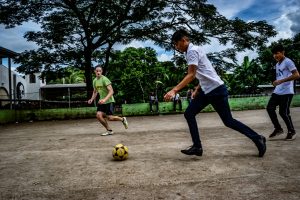
Being an intern in Summer Program has provided me with a great experience to work with some incredible young people, and has been a thoroughly rewarding experience. First, a little about what Summer Program exactly is. Every day of the week in Summer Program takes us to a different location and provides a unique experience, all of which generally center around our program theme of “Good Neighbor”. Mondays, we meet at a local church where youth participants play games, make crafts and learn a little about the general theme of the week, topics such as conservation, creativity, etc. Tuesdays, our program takes youth around the city on different field trips designed to show our participants, all first year refugee youths, different places in Chicago and provide them with unique learning experiences; places such as the Peggy Notebaert Nature Museum, Heartland Alliances Urban Farm or the Evanston Art Center. Wednesdays and Thursdays take on a little bit more of a fun, laid back approach; Wednesdays consist of playing soccer with other refugee organizations. While Thursdays are visits to the beach, where in addition to swimming and playing in the sand our program engages in a bit of a beach garbage clean up, thus encouraging our theme of “Good Neighbor”. As is evident, each day is unique and a whole lot of fun, however it provides so much more for both participants and staff.

For our participants, these activities provide the chance to get out and explore their very new city, and see some of what Chicago has to offer. It also gives them the opportunity to consistently practice English and meet new kids from different cultures and parts of the world. One of the coolest parts of this experience is that on a daily basis one can watch kids who speak different languages become friends and hang out, despite the lack of a common language. Observing and being a part of this serves as a daily reminder that at the end of the day all of us are more alike than we are different. While that may sound cliché it really is powerful and rewarding to be a part of a program that brings people together and shows recently arrived refugee children what America is really about; a place where all are welcome, and a place that values diversity and inclusion.

Being a part of Summer Program has provided me a lot, including a never-ending loop of Despacito playing in my head. Through this ongoing experience in Summer Program I’ve also come to truly appreciate the value of non-verbal communication and learn the power that a positive disposition and a smiling face can have, especially when the populations you are working with might not understand what you are saying. Additionally, every day provides a host of new learning experiences: including learning simply phrases in Arabic and Kurdish, learning about the foods and cultural norms of other cultures, and just coming to appreciate the unique and wonderful nature of all people. Every day is an opportunity to improve the lives of the youths we work with, and every day is a chance to improve the world just a little bit, and I consider myself extremely blessed to have had this opportunity this summer.

We Are Called

“We are called to be the hope for the hopeless…We are called to act with justice, we are called to love tenderly; we are called to serve one another” -We Are Called, David Haas

Leadership Summit with some of my wonderful co-workers

My first blog was after 3 weeks at National Lutheran Communities and Services (NLCS) and now I finish next week. It will be hard to describe all I have learned and thank all the people that have supported me in a few paragraphs. These last couple weeks have been some of the busiest between board meetings and trying to finish up everything at work while squeezing in more sightseeing. There’s no denying I’ve learned a lot about not only about elder care but also about myself. It can be difficult to put into words, but I have improved my ability to understand myself. I have been using more time for myself to read or take walks. As a future social worker, a career with high burnout rates, figuring out how to practice self-care is essential.


Many of my reflections have been about what type of life I want for

Dress rehearsal for A Capitol Fourth concert hosted by John Stamos

myself in the future. I had a limited idea of what my future or even this summer would look like. Now I can look to my co-workers as examples. They are passionate and hard-working people who manage to make the workplace enjoyable despite the constant struggle to create quality work under time constraints. They are helping me envision the type of person I want to be while building on my own individual strengths. I am still trying to figure out how to become this person and make a meaningful difference in the world. It can be frustrating getting caught up in the day to day busyness or strict regulations but the important reminder is the people. The people you are working with are the core motivation at the end of the day and they drive your efforts. I look forward to a future where I can work with older adults every day to better their lives. Now I have more experience and specific examples to mold me into the best version of myself.


One of many adventures with my roommates, Maddie and Katie

I am so blessed for this opportunity from Valpo’s Institute for Leadership and Service to work with such a diverse group of people who have been nothing but helpful and kind. My co-workers at NLCS have trusted me with the opportunity to learn from their expertise and develop an individual project as well. Words cannot express how grateful I am to each and every person who has been a part of my journey, including my support system of my family and friends. My wonderful cottagemates, Katie and Maddie, have put up with me 24/7 for almost two months straight, being there for every meeting and adventure along the way. Jason, Cyndi, Emily, and the rest of the team have put so much trust in us. They have been there to answer every question and aid in our growth process. Marcia, Cathy, Karen, Kathryn, Hannah, Mike, Larry, and numerous others have offered advice and taken time out of their day to let me learn from them. A huge thank you to the Institute, NLCS, and the residents who have welcomed us with open arms and without whom I would not have had an amazing summer experience that challenged me in the best ways.

A part of my project

The biggest question I am left with regarding my project and myself is where does it go from here? The patient education tool I have been formatting is ready to use, but the responsibility of implementing the new discharge summary will fall on other people. It’s hard knowing I will have to walk away from something I have worked on for months. Overall, I cannot say I have fulfilled my purpose since it is an ongoing journey. As this part ends and I continue on, I am grateful for all I have learned. I am blessed to not only have support but also examples to aspire towards. It’s hard to know where my journey goes from here but I will try and be open to the new opportunities and lessons that await me. Time to wrap up my projects, say many sad good-byes, and start a new list of firsts as I am called to the next step in my journey.


Final Reflections

Wow, I can’t believe it’s already my last week at Heartland and in the Chicago area. I’m purposely refraining from reading my first blog post so that I can read both side by side and see how much I’ve grown.

Because yes, I truly feel like I’ve grown. I remembered being intimidated and even a little terrified my first few weeks: there were so many heavy tasks I was thrown into with little to no instruction, so many language and culture barriers, so many weights I didn’t feel strong enough not to get crushed under. But now, I feel completely transformed. I’m proud to say that I’ve developed the skill of communicating effectively with non-English speakers to a level in which I consider it one of my strengths. I feel comfortable coming into the office each day instead of a little apprehensive. Both the newer interns and the refugees come to me to ask questions when the case managers aren’t around. I’ve even been sitting in the case managers’ desk area (because we have more interns than computers in the “intern cave” now, which is a great problem to have!), and the case managers talk to me like a co-worker. All of these have made me feel more a part of the team than ever, and it’s very empowering.

Not only have I experienced that sense of the empowerment myself, but I’ve had the joy of witnessing it among the refugees, too. I’ve been here long enough now to be able to see their growth over their first month or two here. For example, one of my jobs is to conduct home visits both their first 24 hours in the country and after their first 30 days. During the 24 hour visits, the refugees are often exhausted from travel, culture shocked, and afraid. They feel like a foreigner, a guest in our United States. During the 30 Day visits, however, I typically see a huge transformation. The refugees are happy, confident, and assertive. They consider me a friend. They open their homes to me, usually with great food and as much jovial conversation as they can manage at their English level. Now I am a guest in their home, their Chicago, their United States. They become free and autonomous, and while the road for them is anything but easy, they are able to taste their dream of living in a place where they are safe, loved, and accepted – a dream that we as lifelong US citizens so often take for granted.

All of this will go with me even after I leave the office for the last time on Friday. My CAPS experience is occurring in the middle of my greatest life transition yet: In May, I graduated college, and said goodbye to Valpo as well as my friends, mentors, commitments and activities – really my whole way of life – there. In two weeks I leave the 60-mile radius of the Midwest I’ve lived in my entire life move to Denver, Colorado, a place where I’ve only spent about 36 hours total and know virtually no one. As of last week, my family officially completed their relocation to Charlotte, North Carolina, where my dad was transferred for work, so I also said goodbye to my childhood home, my hometown, and my old friends and neighbors. While navigating this huge life change in the midst of an experience where I must reflect on my calling and purpose in society, I have had another question thrown into the mix: who am I? When all of your roots are pulled from the ground – all of the places and activities that up until this point in your life made you who you are – what is your identity? I wish I had the answer for you. I do, however, have one valuable insight I want to share:

The experience of your life may be unique to you, but it is shared. It is shared with everyone you smile at on the street, everyone you commute with on the subway, everyone you dedicate your time to the same cause with. Every time you interact with someone, you are bearing witness to their story, and they yours. Community, I believe, is the essence of our existence as human beings. To love in all its forms is our calling, and to use our strengths to give, receive, and perpetuate that love in the biggest or smallest of ways is our purpose. My CAPS Fellowship – and my entire experience at Valpo, honestly – has helped teach me this.

I suppose the idea of CAPS is to figure out how you specifically fit into that grand idea of love and life. I don’t know if working with refugees is my entire life’s calling (if I even have an entire-lifelong calling), but it was this summer. God brought me here to do good work, and I did. Now, He sends me to Denver to do even more. I’ve started to turn away from the idea that we have one specific calling and one specific purpose. Last spring, my calling was to apply for CAPS. This summer, my purpose was to help resettle refugees. My current calling is to go to Denver and complete a Master’s program in International Disaster Psychology, and my purpose there will be revealed to me in due time. For now, I am endlessly thankful for my CAPS experience, and I’m beyond excited to take my new skills, experiences, and growth into my next chapter of life.

Made for You and Me

One of the most exciting things about moving Chicago is being able to say that I live in Illinois!  It may only be temporary, but for someone who has spent the last 18 years of her life living in Valparaiso, IN (minus a semester in Costa Rica), spending two months in the big city is a pretty big deal.  One of my favorite parts about living in the city is listening to people speak in their many native tongues.  When I’m at the train station, I can hear a pair of students conversing in Arabic.  While I’m walking through Millennium Park, I can understand the parents talking to their children in Spanish.  When I walk down the street, I recognize one of the very few German words I know as a man talks on the phone.  During the time I spent at my internship over the last two months, I have heard conversations in French, Arabic, Rohingya, Burmese, Tigrinya, Somali, Mon, Farsi, and a plethora of other languages that I don’t know a single word of.

As a self-declared lover of languages, hearing so many languages in such a small space is exciting.  As an intern at Heartland Alliance and as a language teacher, listening to their voices is inspiring.   This is what the whole world will probably be like in a few more decades, and I for one can’t wait to be part of it!

Unfortunately, not everyone shares my love of languages, and even more unfortunately, not everyone recognizes the value of living in a community as diverse as Chicago.  Once the United States accepts 50,000 refugees this year, no more will be welcomed in unless they have a close family tie here.  Thousands of people who have been waiting in refugee camps for years will be denied access to the place they want to call home.

Instead of sparking political debate, I want to use the remainder of this blog post to praise the efforts of people who are working to welcome people into our country.  Last week, my family and I had the opportunity to attend Chicago’s celebration of World Refugee Day.  The day was one of protest, but the time was mostly designated for celebration and fun!  It was a wonderful opportunity to interact with coworkers and participants outside of the work environment, but more importantly, it showed them that they are valued in the larger Chicago community.  We gathered together as people from all over the globe to participate in a march, eat international food, watch the “Refugee World Cup,” and dance to international music.  One of the songs they played there was also the song that the English students sang loud and proud at their graduation from the last quarter of classes, and I can’t think of a better way to sum up what the refugee experience in the United States should be like:

“This land is your land, this land is my land,

From California, to the New York Island.

From the Redwood Forrest, to the Gulf stream waters.

This land was made for you and me.”

Write Marketing Plans, Change Lives

I’ve been working at Water to Thrive for over a month now, and the time has flown by. My main project is a marketing plan that W2T can use to reach out to their Christian audience. Although W2T is a faith-based organization with roots in a Lutheran church, they don’t currently have any marketing strategies to reach one of their biggest donor bases – churches. That’s where I come in.

Like with any project I’ve done for school, I started with research. This included looking up Christian publications, nearby churches, and best practices for nonprofit marketing. I also needed to know everything I could about Water to Thrive, an organization I had never heard of before I worked here. I also had to go through all their currently marketing, especially social media and print collateral to see how I could tweak it to appeal to a Christian audience. My favorite part has been creating sample social media posts, when I get to channel my creativity and minimal graphic design skills.


Current W2T marketing materials

I’ve learned that creating a marketing plan is a really good way to get to know an organization. I’ve had to include statistics, such as how W2T has funded over 750 wells since 2008, which have affected over 400,000 people. I’ve looked at their recent campaigns, which have come from churches, universities, and weddings. I’ve poured over their annual progress reports and learned about how the organization has touched lives on both sides of the Atlantic.

The motto of W2T is “Build Wells, Change Lives.” As I work, I’m constantly amazed at how deeply lives are actually changed. Clean and accessible water is something that we constantly take for granted. We can have it everywhere – in our houses, in our schools, in our churches, in almost every building in the country. But that’s obviously not the case in rural Africa. Women and children walk for miles to get water, which is often dirty and contaminated. But a single accessible well can flip their lives upside down. The children can go to school because they don’t have to spend hours walking for water. Women have more time to care for their family and cook better meals. There is less disease from waterborne bacteria. The well becomes a place of communal pride for the whole village. While some in developing countries may believe that drinking water is just a “fad”, for many around the world, water is life.

But the lives being changed don’t stop in the African villages. Here in the States, people are continuously being affected by the work of W2T. Wells are funded through campaigns, where a group or individual raises $5,000 to sponsor a well. There have been campaigns by churches, university groups, elementary schools, even couples sponsoring wells in lieu of receiving wedding gifts. In the grand scheme of things, $5,000 isn’t that much to change the lives of hundreds of people. I love that there are people here that are so willing to donate just a few dollars to a campaign in order to change the lives of Ethiopian villagers halfway around the world. They’re willing to host small fundraisers, attend W2T’s annual events, and educate others about the African water crisis. The dedication of W2T supporters around the country is unbelievable and it inspires me to do all I can to spread the message of this organization. Although my work isn’t immediately affecting anyone in Africa, I can do my best to make sure that it does influence churches, who can take the steps to launch their own well-building campaign and change lives.

Three generations of W2T CAPS Fellows: Lars, Louisa (me), and Krista

As someone who was born and raised in the Midwest, life in Texas was certainly an adjustment. I studied abroad in England last semester, yet I experienced more culture shock during my first few days here than months in Europe. The most obvious difference is the heat. The locals laughed when I complained when it was in the mid-90s. They said it would just get hotter. And it sure has, much to my chagrin. There’s prickly pear cacti and aloe plants along the street and in front yards. And people do actually say “y’all” all the time. But besides the heat and birds that occasionally try to attack me (grackles are the worst), Austin is a really fun city. There’s always something to do, whether it’s hiking, live music, free movies, taco festivals, exploring museums, or hanging out with former W2T CAPS Fellows (shout-out to Lars and Krista). And I could write a whole other blog post about how great the food is here. But I’ll save that for another time.