Category Archives: CAPS Fellows Blog

The Summit of the Summer

700 fellows. 48 sub Saharan African countries. 3 days. 1 incredible experience. To say that the past two weeks working at IREX has been an adventure, would be an understatement. On July 29, all of the 2018 Mandela Washington Fellows from 27 institutes across the country descended onto downtown Washington DC for the annual Mandela Washington Fellowship Summit to close their fellowship experience.

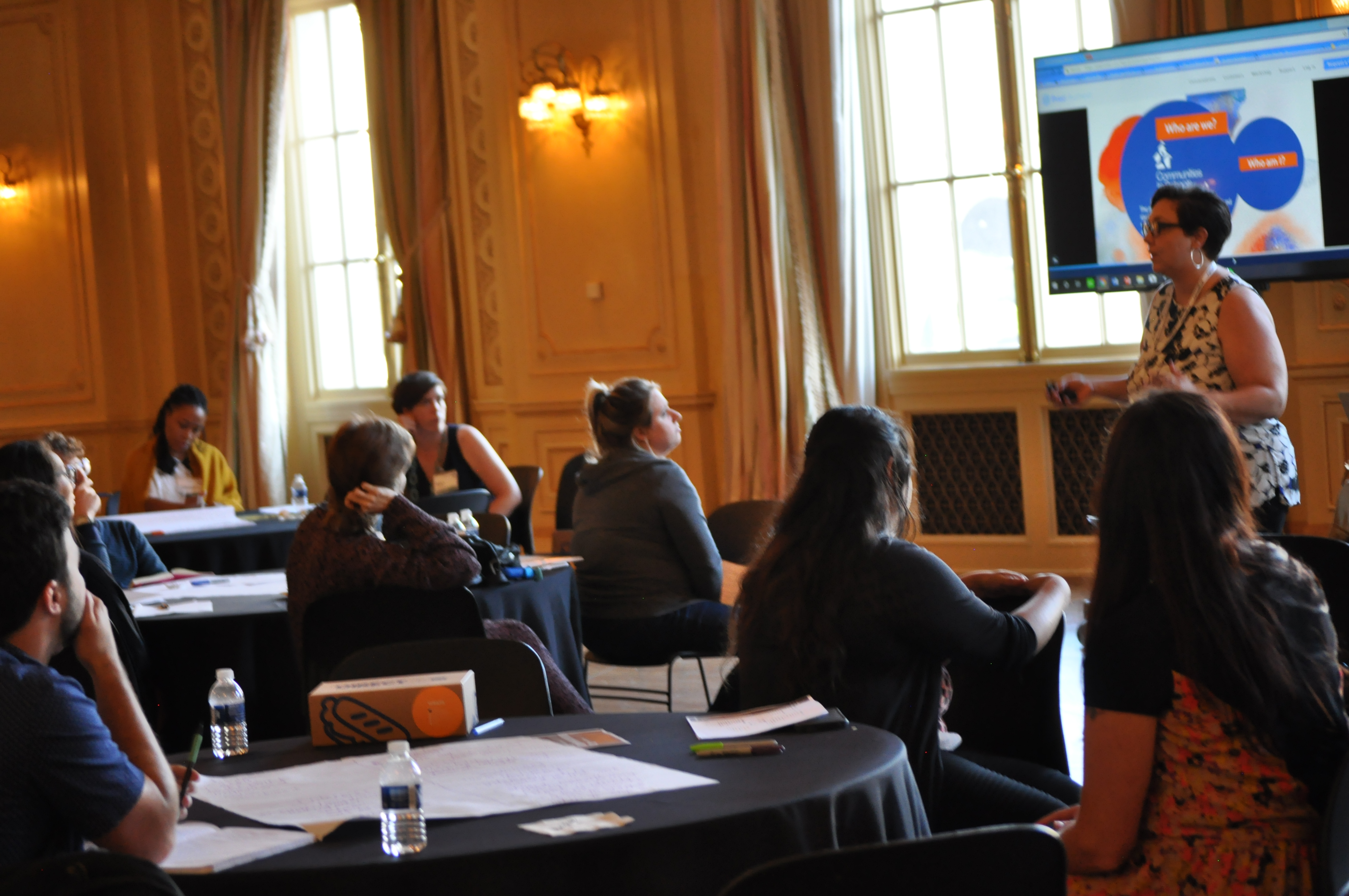
Keynote speaker, Masai Ujiri, speaking at the Summit

This summer, my internship working with the YALI (Young African Leader Initiative) team involved pouring over spreadsheets, looking through passports and tax back forms, and running errands all over the city. While I learned tons from my co workers, especially with technical skills in excel and salesforce, I eagerly awaited getting to meet our fellows in person. Last Sunday, all of the YALI team packed our bags and moved into the Omni Shoreham Hotel, where the Summit was to take place. The days were long and tiring starting at 7 am everyday and not ending until the late evening. After welcoming the fellows Sunday afternoon into the night, we started Monday with the opening plenary followed by keynote speaker, Masai Ujiri, President of the NBA team, the Toronto Raptors.  Masai is Nigerian and connected well with the fellows. He spoke of how the press often boast that he is the only African to ever reach the highest position in professional sports in North America. Masai saw this differently, he saw this as a place of improvement, because he should not be the only one. That theme kept on throughout the summit, that people under cut the value of Africa, and the importance of Pan Africanism and the potential for countries to work together.

Between ushering fellows through the maze of the old Omni hotel, I got to time keep and microphone run which allowed me to sit in on several sessions. The session that by far stuck out to me the most was the ignite talks. Select fellows were chosen to stand up in front of their peers and tell their stories. These fellows had overcome great struggles such as persecution from Albinism, being a refugee in a war torn country, becoming blind at a young age, and trying to raise a family in poverty. Here were people from all different countries that were only between the ages of 25 and 35 that had already lived through so much, but here they were in Washington DC, having the power to tell their stories.

After several other incredible sessions from a panel on empowering women to a congressional panel with Senator Chris Coons and other representatives, the final activity was the talent show, Wednesday night. This was my favorite part. Fellows dressed up in their traditional dress and preformed, ending in an all out dance party. It was a great way to end a jam packed three days.

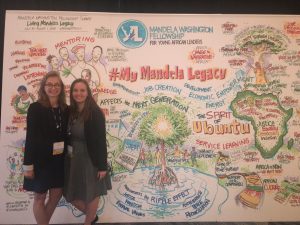
Fellow YALI intern, Camille, and I in front of the #mymandelalegacy pledges

The theme for the Summit was “Living Mandela’s Legacy”, in honor of Nelson Mandela’s 100th birthday. We asked that everyone make a pledge on their personal Mandela Legacy. For me, my Mandela Legacy is to take all I have learned this summer through the CAPS program and to continue to work to invest in people at Valpo and as I hopefully continue to work in international development for many years to come. One of Nelson Mandela’s most famous quotes is “It always seems impossible, until it is done.” And while my internship is nearly done, there is still so much to do.

Finding New Growth in the Garden

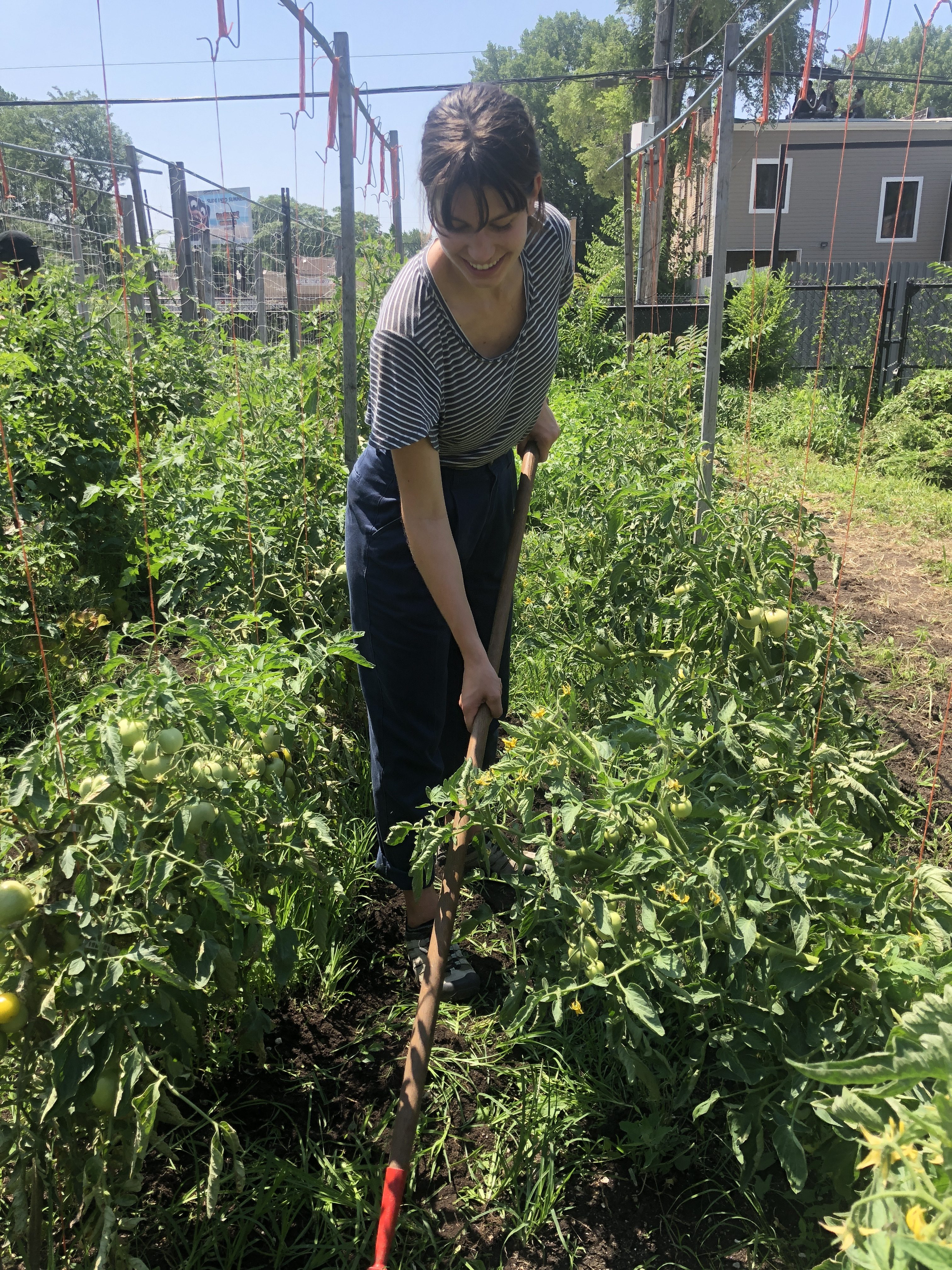
Weeding the tomato plants with a volunteer group.

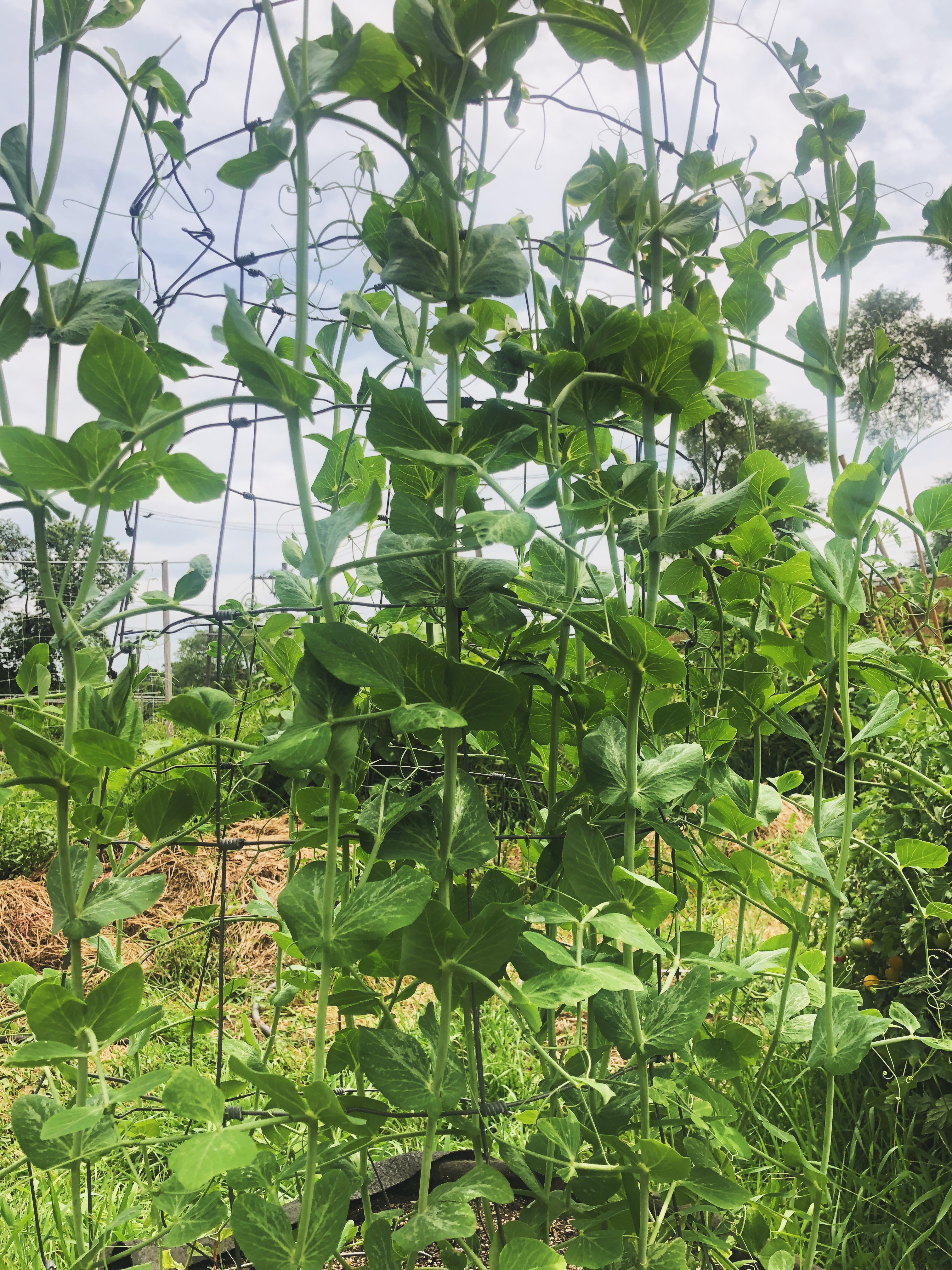
This week is my last week at Growing Home, so naturally, I have been taking more time to pause and reflect on my CAPS journey. Last week, I spent time in our Learning Garden which serves as a hands-on experience for kids to touch and taste the produce we grow. The garden is the responsibility of my department to maintain, so I’ve spent a lot of time in that space over the summer pulling weeds, pruning beets, and harvesting all kinds of vegetables: tomatoes, radishes, green garlic, kale, swiss chard, and a few strawberries, (getting to sample a few along the way, of course). While working in the garden, I was surprised to see how tall our pea plants had grown from when we planted them a few weeks after I started my internship. These plants, which were once pea-sized seeds, had climbed to nearly 3 feet in just a few weeks. As cheesy as it sounds, I cannot help but connect my personal growth through the CAPS experience to the growth of these plants. Just as it’s difficult to notice a plant’s growth in real time, my own growth wasn’t always apparent day-by-day, but looking back through this summer, that growth is undeniable.

Our growing pea plants

I am so grateful for the people and experiences that have supported my growth over the summer. One of those experiences has been the opportunity to work in each of the departments at Growing Home, which gave me a full experience and understanding of the organization and the work that they do. I mainly worked with the Community Engagement department hosting volunteer and tour groups on the farm, attending community events, and, lately, I have spent my time to helping prepare for Growing Home’s first Back to School Farm Fest at the end of August. This preparation has included everything from making a promotional flyer to creating 70 seed germination necklace kits that will be used as the kids’ activity to teach them about the beginning stages of plant life. Although I won’t be here for the event, it has been fun to see it take shape and to see the corner of our office pile up with boxes of in-kind donations, especially the 60 backpacks, full of school supplies, that will be given to children at the event.


Outside of my department, I visited the office where our development team works and learned more about what our development team does to keep the organization running smoothly and to raise the funding needed to keep the organization operating. I was able to learn about the process of organizing a fundraising event and helped create some social media posts.


Being given a variety of tasks and experiences has been one of my favorite parts of internship at Growing Home. I’ve learned proper way to bunch pieces of kale to form a uniform bouquet, helped with resume and job search workshops, acquired in-kind donations from local businesses, prepared weekly cooking demos, and recently created a short video for a grant. As a self-identified planner and sometimes overly-cautious person, these experiences have shown me my ability to take on new tasks or challenges and succeed, even in unfamiliar circumstances.


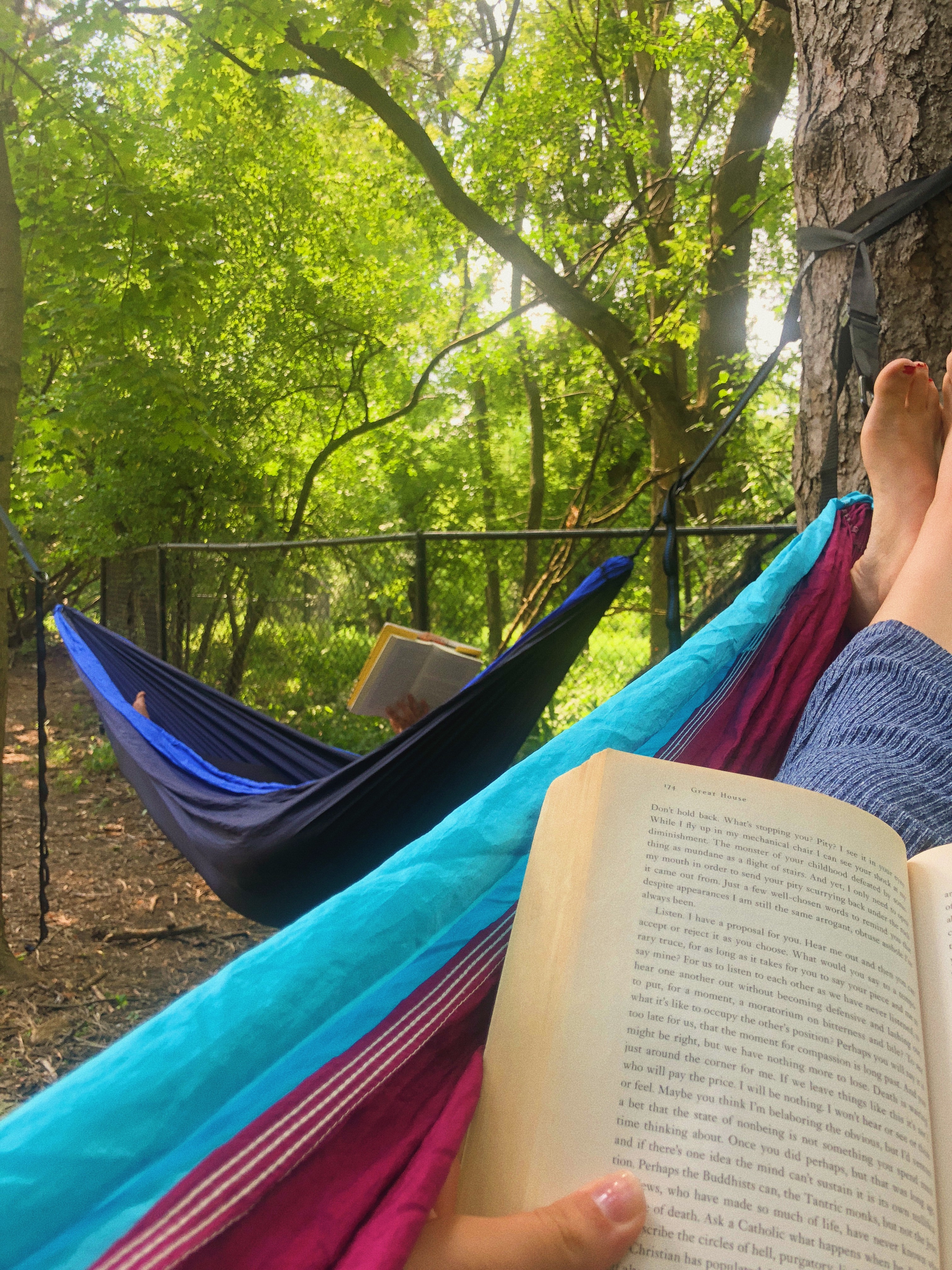
Taking some time away from the farm to hammock and read with my fellow CAPS Fellow, Emily.

Overall, my CAPS experience has stretched my perspective, not only on the work that goes into running a non-profit, but also on the many injustices in our food system and the amazing work community members in Englewood are doing to overcome the challenges and barriers they have had to face.


Although I will miss working with the talented staff at Growing Home and spending time with the Chicago CAPS cohort, I’m happy to have made lasting connections with these wonderful people who have supported my growth this summer in the same way the metal cage supports the pea plants ability to grow taller and stronger. Going into the next semester, I’m thankful for the personal and professional growth I’ve made this summer, but just like the pea plant, I still have plenty more to grow.

A Hot Commodity

My confidence is often borderline arrogance; however, I mean it when I say I’m a hot commodity at the American Red Cross. Not only do they literally want my blood, but my skill set has garnered a lot of attention throughout the region. I’ve been working as a Regional Communication Intern for the Red Cross, meaning I maintain their social media accounts, graphic design, and video. The last one is my focus, passion, and something that the Red Cross was very interested in. I think it’s important to stress that I am currently their only staff video editor in the state, as it is responsible for all of my stress.

My supervisor, Duchess has been very supportive of my editing passion since she interviewed with me, and I’m very grateful to have her constant encouragement and understanding of the process. I receive plenty of support from everyone in the office; however, supply and demand has come to create another barrier between myself and those who don’t have the same understanding. It hasn’t been negative by any means, but I’ve been nonstop for about three weeks and am still receiving pitches for video projects during my final days. In this fast-paced environment, Duchess and the Indy CAPS fellows have helped me prioritize, recognize my value, and work up the courage to be more assertive in the working world. I know the skill I have is valuable, and I don’t feel arrogant in saying so. My time at the American Red Cross has made me realized that my time and energy have high values and that I have every right to recognize that.

I no longer feel like I’m making an excuse when I say “I don’t have the time to pick up another project”, and I’ve gained confidence in discussing what’s top priority and what can wait a few days. My biggest inspiration regarding self-worth and negotiating expectations is Duchess. She has provided me with a professional means to carry myself as a leader without being overbearing. Thanks to her guidance as my supervisor and compassion as a friend, I feel comfortable admitting stress and asking others to help combat it. With the projects are clearing up now and the end of my internship is in sight, I can say with conviction that knowing Duchess and this experienced overall has strengthened me both individually and professionally.

Caught in the Experience

As the summer internship comes to a close, I want to reflect on the experience I had at Indiana Humanities, a statewide non-profit that encourages Hoosiers to think, read, and talk. Over the past couple of weeks, I was fortunate to work big events and go to places that no other internship can offer.

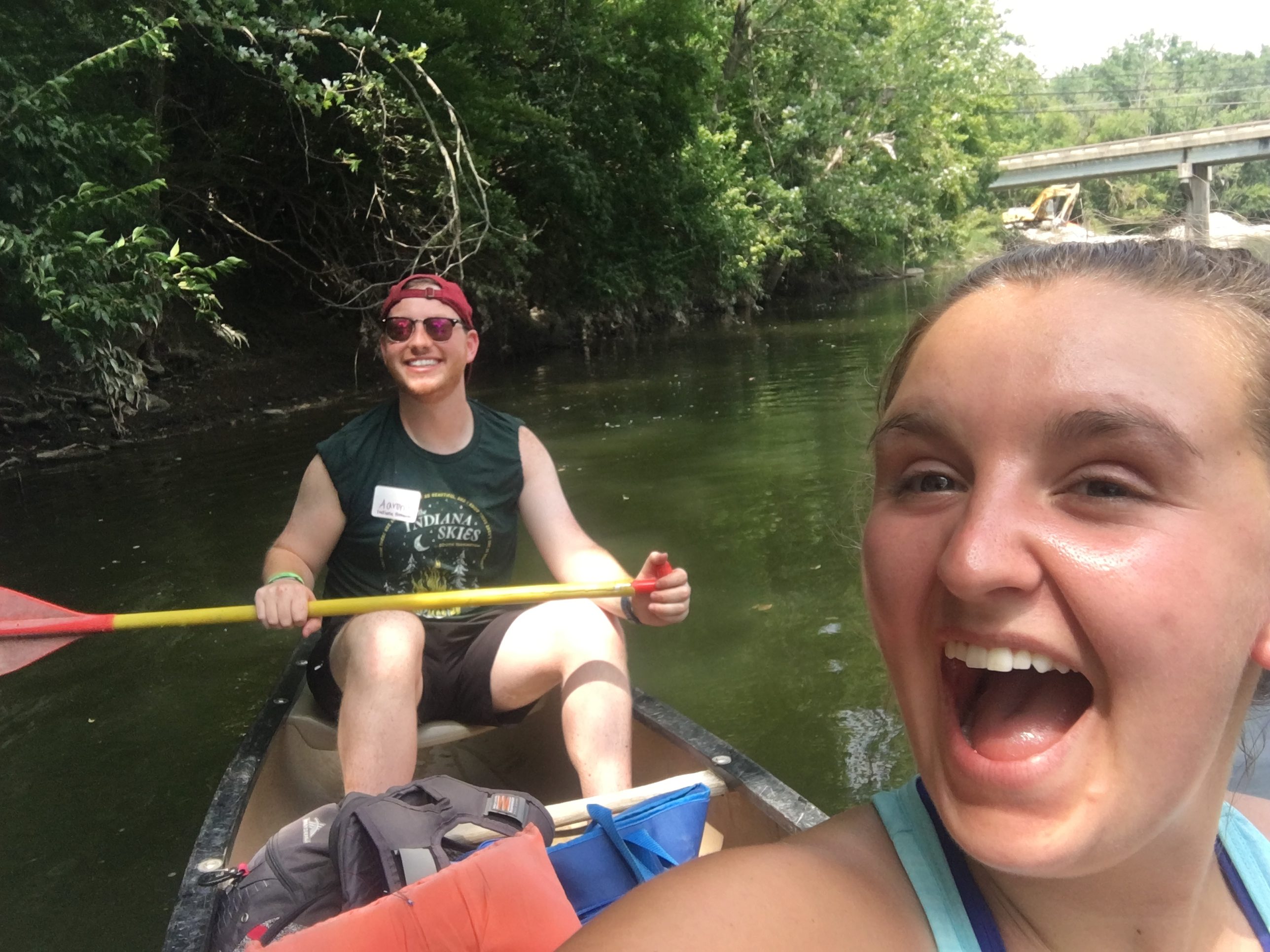
My co-intern Julia and I paddling on the White River.

The Next Indiana Campfires Series is a program unique to Indiana Humanities. This program combines treks into nature with literature and campfire discussions. The series won the Helen and Martin Schwartz Prize for Public Humanities Program in 2017, a national award given to the best humanities program in the nation. I was able to take a canoe trip down the White River while engaging in a conversation about literature. My co-intern, Julia, and I shared a canoe for the trip, and it was a bonding experience. I never thought that a four-hour canoe trip would change a relationship, but let me tell you, it definitely does.

One experience that specifically that brought us closer was having to work together when we got stuck between a couple logs and stopped moving. The river was very low, so not only were we stuck, but the boat kept dragging across the bottom of the river, making it hard to paddle out. Of course, with our luck, at the same time, it started to pour. At that point, we both looked at each other, decided to take a breath, and worked on getting out of the mess we were in. A few minutes later we were able to get free. About a half mile down the river we met up with the rest of the participants who were on a sandbank under trees trying to stay dry. Soaked through, we paddled up and joined them until the rain stopped.

As part of the program, participants gather to discuss the connections between nature, literature, and place. Kevin McKelvey, a University of Indianapolis professor, led our discussion. He read poems, short stories, and excerpts about nature in Indiana, and asked us to reflect on what we thought of the readings. Many points were brought up about how the White River is impacted by the current political climate both in the state and in the nation. Not only was it a wonderful (and wet) experience, I learned a lot about the White River and how the environment around the river impacts so many people.

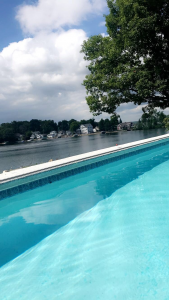
The lake house pool with Hamilton lake behind it.

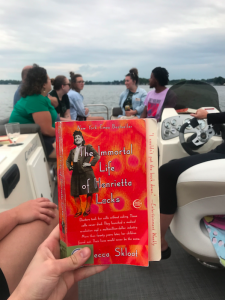
With Indiana Humanities, I was able to participate in the staff retreat. We stayed at the President/CEO’s lake house on Hamilton Lake in Hamilton, Indiana. During the three-day retreat, the staff discussed the successes and improvements of the current theme, Quantum Leap, which connects the STEM (science, technology, engineering, mathematics) field to the humanities; the next theme and its programming; grant application changes; the strategic plan for the next couple of years; and a discussion on the book titled The Immortal Life of Henrietta Lacks written by Rebecca Skloot.


The Indiana Humanities staff during the book discussion.

I found that the discussion of the book was one of the more entertaining parts of the weekend because we engaged in a deep, thoughtful conversation. The Immortal Life of Henrietta Lacks is about Henrietta’s cancer diagnosis and how her stolen immortal cells, now referred to as HeLa cells, helped start a scientific and medicinal discovery period. Taken without Henrietta’s consent, her cancerous cells were used for testing that led to discoveries in polio vaccines and how many chromosomes people have. It also helped scientists learn more about the AIDS virus and leukemia. The book follows the Lacks family – how they struggled to overcome poverty, to accept the fact that Henrietta’s cells have outlived Henrietta, and how the family has not been compensated for the advancements her cells have brought to the field of medicine. We engaged in conversation about whether life can, or should, have a patent on it, if the Lacks family should be paid, and if Skloot was using her white privilege to share this story of the Lacks family.


The Indiana Humanities staff hanging out on Hamilton Lake.

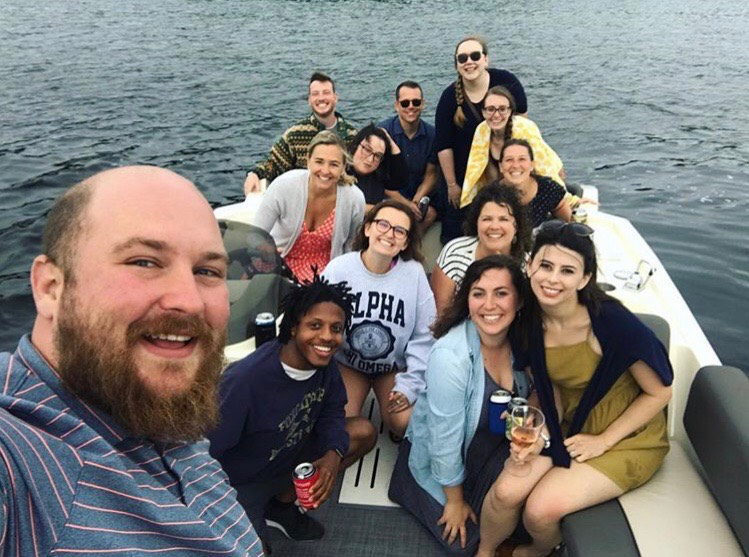
The staff retreat offered me the opportunity to get to know my coworkers outside of the workplace. We played Mafia (the card game) and hung out by the pool. We went paddleboarding and kayaking out on the lake. It was nice to be away from downtown Indianapolis and enjoy time together on a boat just to hang out.

I only have one week left here at Indiana Humanities, and I’m going to make the most of it. The connections I have made with the staff and other interns are strong and I know that I will be in contact with them as I grow in my profession. Thank you, Indiana Humanities, for the wonderful summer that I have experienced here.

Focusing In

One of my boss’s three cats, picture taken from the desk in his house where I usually work

The majority of my time spent in Indy after my trip to El Salvador so far has been focusing in on what project I want to work on for the remainder of the summer. After some deliberating with my supervisor, we decided that I would work on researching ultraviolet (UV) water purification processes and their potential compatibility with water system projects that CoCoDA has been implementing in Central America.

I didn’t have many, but one of the concerns that I had going into this internship process was that I would end up just doing busy work for the summer. This is work that could potentially be useful, but in the end is just a made up task to keep me busy. In this scenario I still would have done all the wonderful learning and reflecting that I knew would come with the CAPS style internship, but without really contributing to the organization. I had no idea that on top of the learning and reflecting I would be doing research for the organization that could change the way that they do water projects in the future. This research could really contribute to providing a more sustainable water system to families, and that is an exciting concept for me.

The current method of purifying the water in the systems that we have helped implement so far is through chlorine tablets, a method that works, but with a couple drawbacks. The first drawback is the upkeep. A trained person has to apply the chlorine to the water in regular monthly or weekly intervals throughout the year. This also comes with the regular purchasing of the chemical to purify the water. The second major drawback is the change in the water’s flavour. After shocking the water with chlorine, the flavour of the water becomes quite bad, providing a motivation for the people to put less chlorine in the water. The potential for a new method of purification that doesn’t change the flavour and only requires UV light bulb changes once a year is quite appealing.

This UV purification leads to a number of questions though. What specific purification device do you use, one that is already manufactured or should you attempt to design a new one? At what point along the journey of the water, from the ground to the home, do you purify it? Should you purify all the water or just the water that will be used for drinking? These questions and more all have many answers and are often dependent on each other. My job this summer is to find potential engineering solutions to these unique problems.

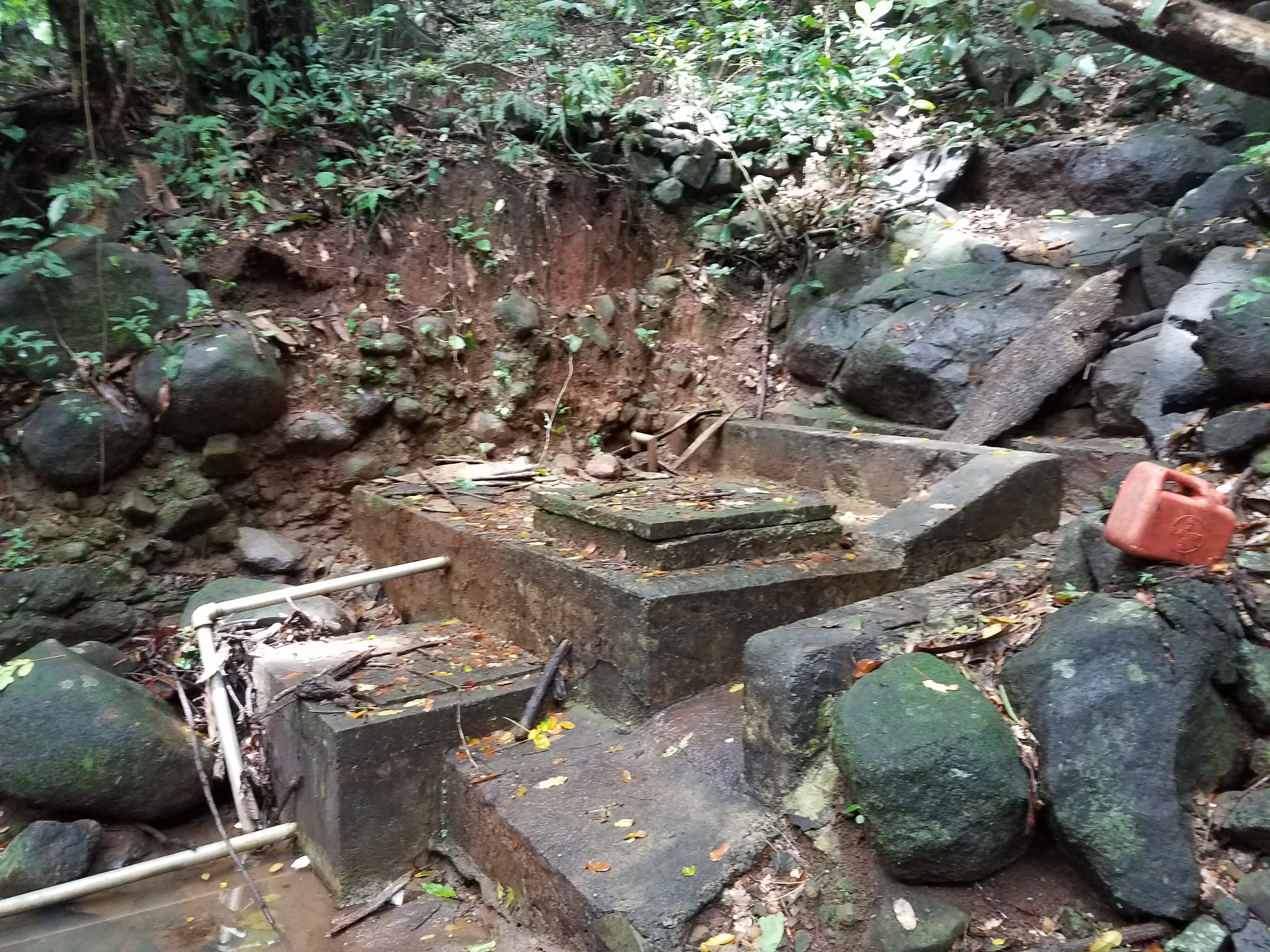
A water collection tank, the beginning of the water’s journey as it makes it way to the families in a community

Besides working on the project, Monday of this past week brought a CoCoDA board meeting. This meeting continued to  help me understand the inner mechanisms of a service based organization. The majority of the meeting centered on keeping the board up to date with what CoCoDA was doing, but seeing the employee interaction with board members showed me how imperative it was to have a governing board. The presence of an objective panel is a way of making sure that CoCoDA stays on the right path and it instills confidence in the employees that CoCoDA is not being run unchecked.

This really cool project paired with the organization I am working for, and the other (really awesome) CAPS fellows that I am living with has so far made my time in Indy an enriching experience. I am so happy with how the summer is going and I’m excited to see where it has yet to go.

Traveler/Tourist: Reflections on Two Weeks in Uganda

One month before I left for Uganda, I called my parents to share the news: “Hey, remember how I’m going to Austin for that internship this summer? Well now they’re letting me go to Uganda first!!” They knew that I was excited about the chance to work with Water to Thrive (W2T), a nonprofit that builds wells in sub-Saharan Africa. However, they were somewhat concerned about the two-weeks in the African bush with such limited communication. I’d already been studying in Europe for five months, so they had been looking forward to my return to the U.S. On this call, I didn’t tell them that I’d already booked my flights to Uganda, nor that I didn’t know if I’d get any funding. I had made up my mind to go. And nothing, not worried parents, nor homesickness, nor the crazy logistics of getting there, would stop me.

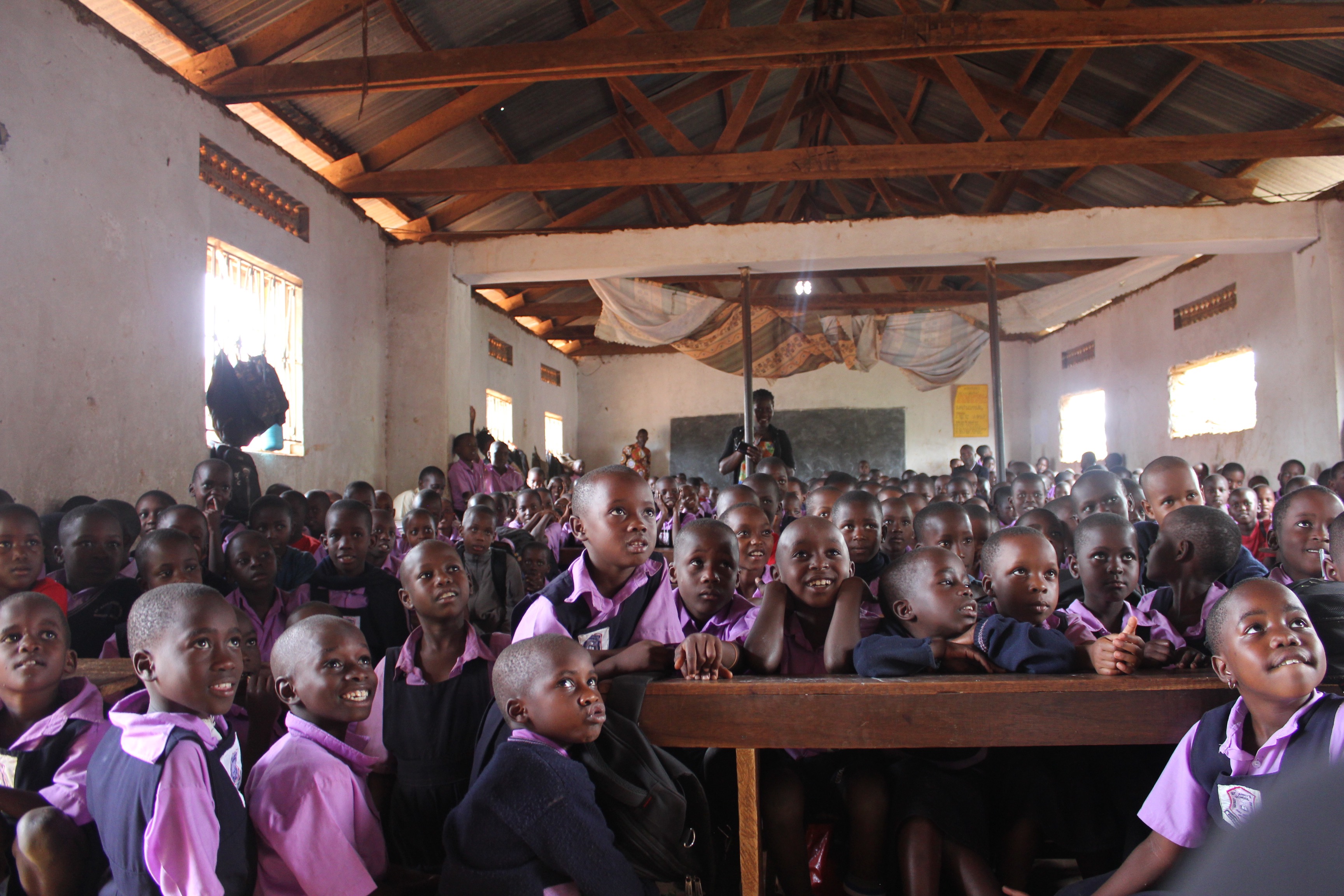
Visiting a primary school in the Mityana district.

My role on this trip was mainly as an observer — to gain some first-hand knowledge of the culture and various water projects.  Upon returning to the states, I would be doing research and data analyses on the impact of W2T’s partner organizations and drafting a grant proposal and newsletters.  So I had a role or a job to do — sort of. But as I stepped outside the Entebbe airport on my first day, anxious and sleep deprived, and not sure if I had the right VISA, I felt mostly like an outsider, and a spectacle. Robert, the driver who picked me up from the airport, laughed and told me that he’d immediately recognized me. My colleagues had told him to look for a “young woman with long hair who looks like it’s her first time in Africa.” And I did look that way: like a tourist.  Travel writer Paul Theroux writes that “Travelers don’t know where they’re going; tourists don’t know where they’ve been.”  I like this idea: while tourism is about arriving at a carefully packaged destination, travel is about the detours, the ongoing journey, and paying attention along the way. It’s not about arriving.

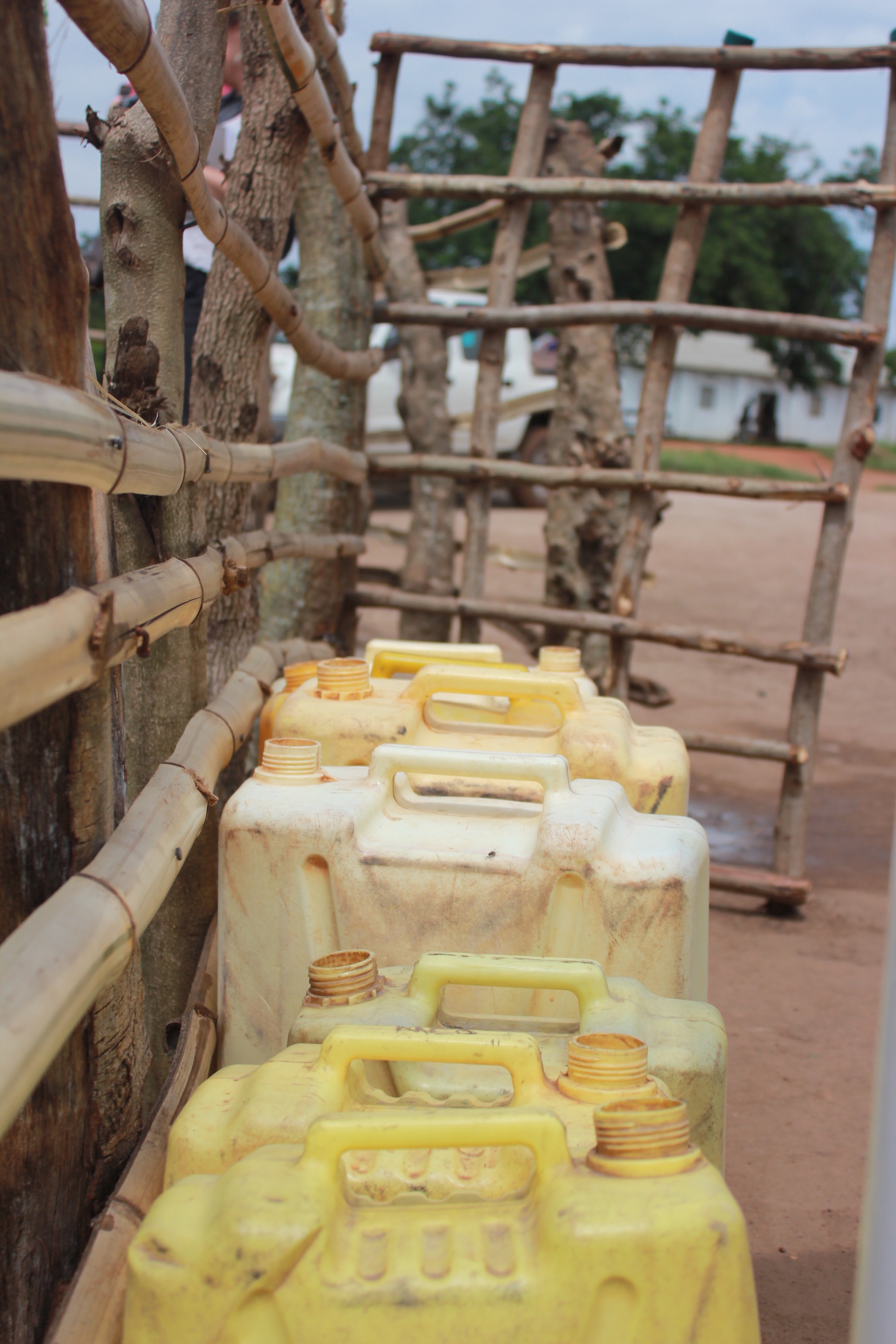
Jerry cans (the most common method of gathering and storing water) lined up next to a well.

In Uganda, I traveled with Susanne (the W2T director, aka my boss) and Gashaw (W2T’s Ethiopian hydrogeologist). Susanne called our trip a “vision” trip, to distinguish it from the many mission groups that take trips to build wells in Africa. While our visit was short term, W2T’s commitment to the communities it serves is long term and community based, and always works through local community organizations. But unlike Gashaw and Susanne, I didn’t have any real skills to offer the communities. While they analyzed water projects and worked out funding with partner organizations, my biggest role on this trip was simply to watch and listen. I could collect the stories and learn what these people had to teach me.  And in those two weeks of travel –– of bumpy car rides on roads built for cattle and bicycles, of celebrating and singing and impromptu dance lessons –– I learned that it’s not just about the water, not just about jerry can contamination and borehole depths, but also about history, and race, and what is enough.

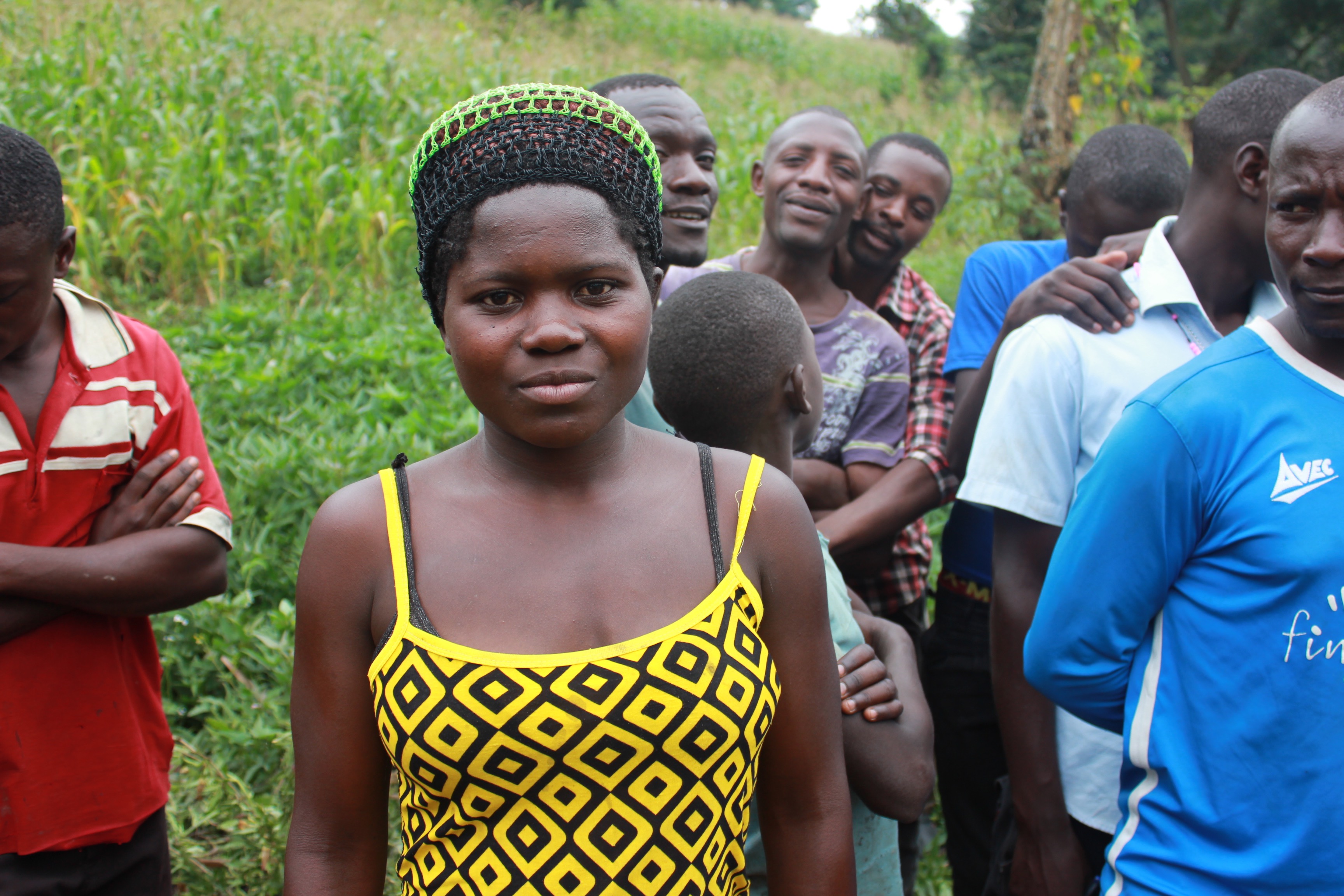
Armed with a camera, a journal, and my hiking boots, I spent ten wide-eyed days trying to take in everything around me.  At the very first well we visited, I met a 23-year-old woman named Grace (two years older than me), who told me

Grace, age 23, is married with four kids.

that she was thankful that her four young children now didn’t get sick so often. In another village, one of the elders who spoke a little English told us that the old women were “crawling on the ground in happiness” now that they had water within easy walking distance. I chased kids as they shouted “Muzungu, muzungu!” (white person), who would 
“accidentally” let me catch them and then shriek with laughter as I scooped them up. Yet other villages would explain that their new well still frequently ran dry from the sheer volume of people using it.  They wondered if we might work on a second well to better sustain their needs.  I stood with villagers and listened to humbling and heartbreaking prayers. They asked God to bless the water he had brought them and to remember those villages who still need a water source.

I have more questions than ever, about race and privilege and responsibility. Questions that I’m only beginning to be able to articulate, questions laced with uneasiness and discomfort. But these questions feel big and important and relevant, and I’m excited to keep exploring and learning about these themes as I continue my work here.

Compassion Fatigue

One morning on my commute to work, the woman sitting next to me on the train struck up a conversation with me, as we are often on the same train for a portion of our respective commutes. I took two things away from that conversation, the first being that I am fooling no one in my efforts to seem like a seasoned Chicago 9-5er, as she immediately intuited that I am an intern. The second thing I took away was her reminder that I am looking at the next forty years of my life in the workforce. I’m not sure if that piece of sage wisdom was supposed to terrify me (40 years of working seems pretty daunting), and at first it definitely did. With time, however, I’ve come to regard that statement as crucial in my personal journey to find a career or goal to work towards in my life that I feel called to do.

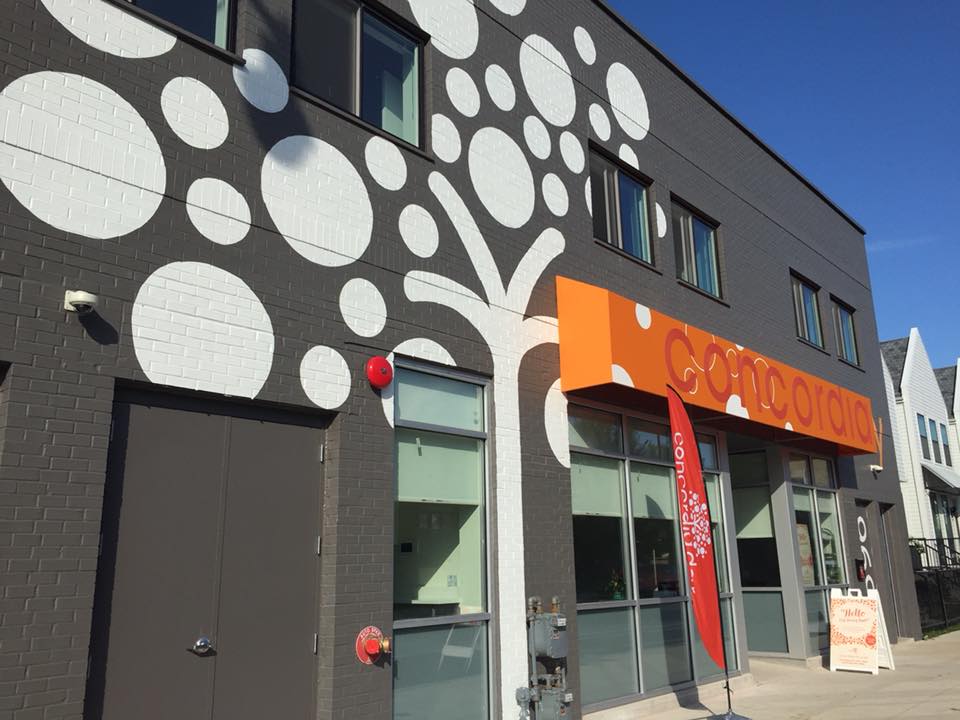
I’ve been working at Concordia Place for five weeks now. Concordia Place is a Lutheran non-profit whose mission is basically to support members of the community at all stages of life, from early childhood to the teenage years to retirement, through accessible services that have arisen out of the need Concordia Place identifies in the communities it serves. I am shocked that the time has flown by so quickly, but the abundance of things that I have learned about myself, nonprofits, and the needs that often go unmet in the Chicago area community, are proof of the passage of time.

My supervisor, Cameron, has been awesome about taking me along on her meetings around the city, whether it be with Concordia Place board members, public relations consultants, or potential donors, and helping me to understand how a nonprofit runs from all different angles. For a nonprofit that I had never heard of until my involvement in CAPS, Concordia Place has a large and impressive network of players and contributors, and the people of Concordia Place have worked tirelessly to get this far. In a political and social climate that has presented charitable need in so many different areas and issues, I am impressed by how Concordia Place continues to grow.

In a recent meeting I accompanied Cameron to, I learned about the concept of compassion fatigue. Compassion fatigue is best described as a feeling of indifference towards charitable campaigns addressing even the most important of issues, due to a saturation of appeals for aid for various social issues. As human rights are infringed upon with increasing frequency lately, there are just too many problems vying for attention. For example, it might be difficult for Planned Parenthood to campaign for funds right now, when the ACLU is also campaigning for funds to help families separated at the border, which is a recent social issue that is dominating the news cycle. Both organizations work towards a very worthy cause, yet people cannot put their time, energy, and money into an infinite number of worthy causes. They do what they can, and no one can do it all.

As a college student who is lucky enough to attend Valpo and feel safe and at peace in my privileged bubble in Indiana, it is easy to understand how compassion fatigue comes about. Eventually, we just stop talking about social injustices and things occurring in our country that are against our personal convictions, because they are too numerous, and the thought of all that needs to be fixed in the world is overwhelming and upsetting. And because these injustices often are not directly impacting those as privileged as myself, we can just push these thoughts aside. This is a dangerous pattern of ignorance and comfort to fall into.

This CAPS fellowship couldn’t have come at a better time, as I myself was beginning to fall into this pattern. What could I, an average college student, do to help fix any one of these problems? It often felt like the answer to that was nothing. Now, working for a nonprofit, I see that there is so much that I can personally contribute with my talents and gifts, and even more importantly, so much that can be done when numerous compassionate and driven minds come together for change. Compassion fatigue is a very real phenomenon, but one that can be combated with passion and persistence. I’ve learned that any progress towards change is worth being celebrated, no matter how great or small. And optimism is key.
If I’m looking at the next forty years of my life, the nonprofit sector seems like a great option as a place to spend them. The lady on the train’s terrifying advice now suddenly seems terrifying for a different reason, in that forty years doesn’t seem like nearly enough time to achieve all that I wish in making this world a better place. Although at times it may feel both difficult and hopeless to fix social issues, I feel called to push aside compassion fatigue and just do what I can with what I have to fight for change.
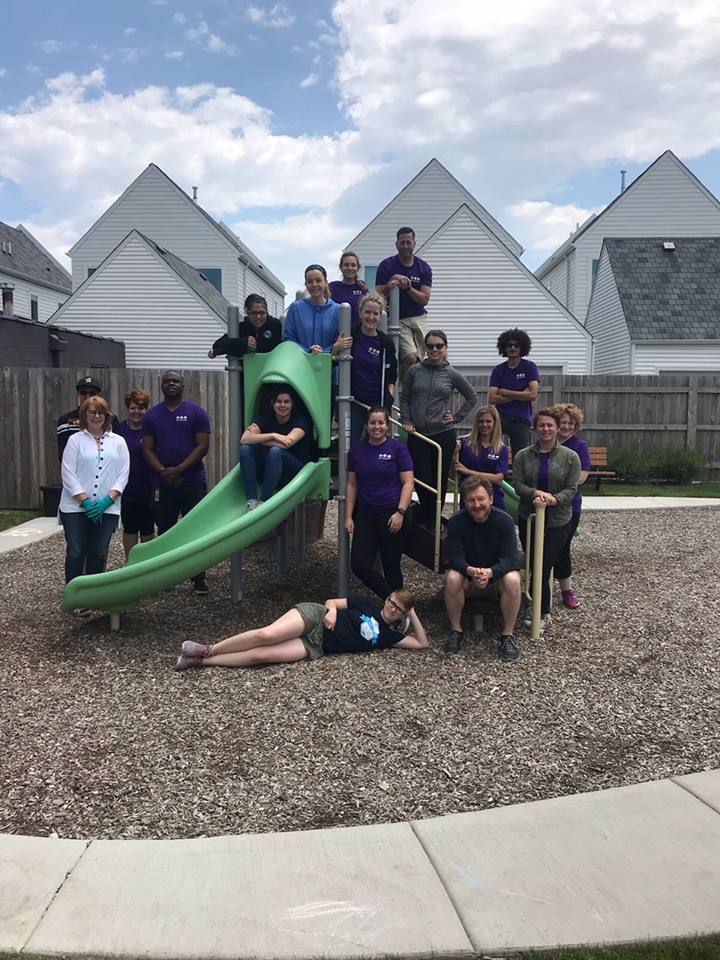
Volunteer day at the new Concordia Day center opening later this summer on Milwaukee Avenue!

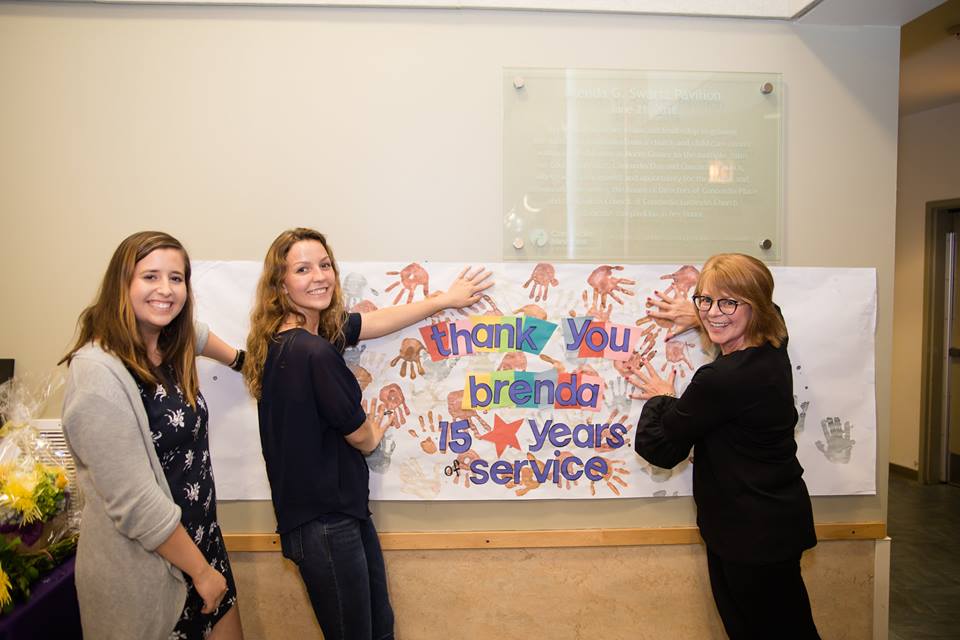
Concordia Place interns with CEO Brenda Swartz at her 15th Anniversary Party

Where Do I Go From Here?

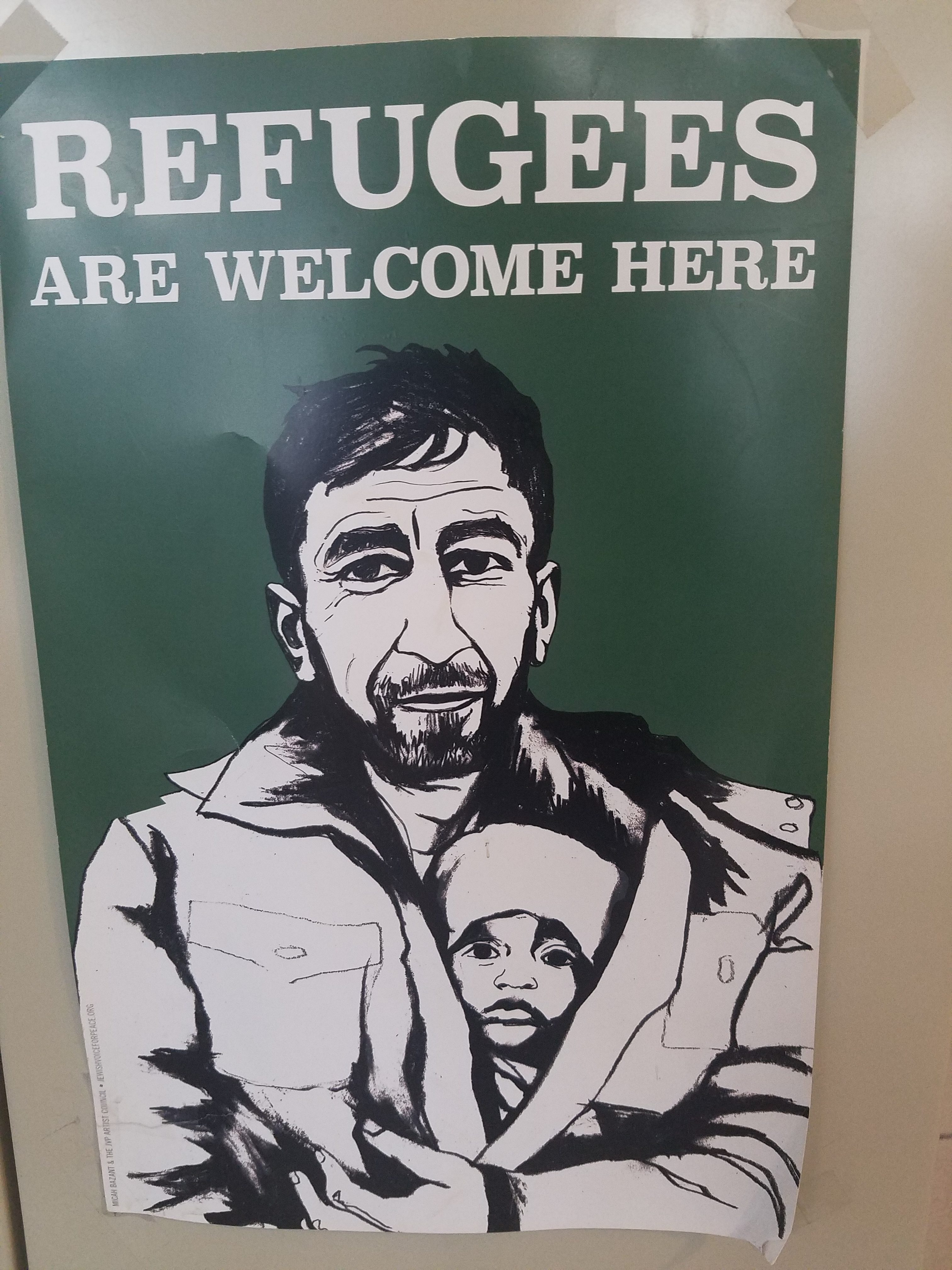
Since this is my first blog, I’ll introduce myself. Hello, I’m Alicia, and I want to be an advocate for human trafficking survivors. It’s always a little awkward for me when I tell people my career aspirations. Human trafficking it’s exactly a light dinner conversation people expect when they ask me, “what do you want to do after graduation?” It may seem like I’m being unnecessarily specific, but I’m actually expanding my options. In high school I wanted to be a psychologist that specializes in healing trauma caused by human trafficking; however, VU has helped me broaden my career horizon while still centering it around human trafficking survivors. I could work as a lawyer, a policy maker, a researcher, an FBI intelligence analyst, or a caseworker. This why I find myself interning under caseworkers at Heartland Alliance’s Refugee and Immigrant Community Services (RICS). While this internship has been interpersonally and emotionally challenging; it has helped me grow in self-awareness and awareness of refugees and asylees.
Through this internship, I’ve learned more about the refugee process, specifically the resettlement process. I’ve seen first hand some of the difficulties that immigrants and asylees encounter. I’ve often found myself thinking about how I would feel if I had to live in a country I can’t easily communicate. I know their journey can be dismal and hopelessness at times, and I wonder if they think the immigration is or will be worth it. When I encounter families, in particular, I’m reminded of my own family. They made me think of my grandfather and his immigration to the U.S. For the first time, I thought about the challenges that he went through. All that I have in the U.S.—my very existence—is because of his decision to move here despite not knowing much English or having any family here. Even though I can’t talk to him now, I feel so fortunate to be doing something that positively affects other people coming to the U. S.


Because of how RICS teams function, I am able to contribute to the workload as an intern in a measurable way that is not overwhelming. I’m surrounded by people that have the same goal of helping others in the most compassionate and effective way. The type of people these jobs attract and the way this workplace is structured gives me the opportunity to be apart of the most supportive, encouraging, understanding, and well-communicated group of people that I’ve ever worked with. I’m given space to learn how I can make a meaningful impact on participants* and improve my interactions with them.  


This is especially important for me not only because of my ancestry but because of my identity as a U. S. citizen. Recently, I heard someone say that the separation of families at the border is not a Trump administration problem. It’s a problem that all of the U. S. is responsible for. The lack of compassion in our actions (or lack of actions) toward refugees and asylees is and has been a tragedy. At our highest intake of refugees (when we accepted more refugees than any other county recorded), we still accepted less than 1% of refugees around the world. I feel so fortunate that I’m able to talk to people about my internship and incite compassion for these fellow human being. I feel fortunate that I’m able to share this with you, my reader, and people I have and will meet with.

There is, however, an obstacle I face that inhibits my capability of maximizing my efforts: anxiety. At Heartland Alliance it’s important to create a welcoming environment for the participants by knowing the participants by name, greeting them when you see them, and asking them how they are doing. It’s also important to create a friendly environment for fellow coworkers. This is a challenge for me because I get more anxiety than the average person during certain social interactions. For example, I get a great deal of anxiety from names; pronouncing someone’s name wrong, calling them the wrong name, or completely forgetting someone’s name genuinely bring me fear because I feel like I’m unintentionally insulting someone and/or making them feel insignificant. I can work on and manage anxieties like that, but it can be exhausting to manage from 9am to 5pm for 4-5 days a week. 

Based on this experience, being a case manager for human trafficking survivors might not be the career for me; however, I think it’s still too early to be sure. I have no doubt that being a case manager for human trafficking survivors would give me a more holistic understanding of human trafficking survivors. Long term, I might be more comfortable with a job that specializes in helping them with one thing (such as mental health) instead of managing their entire case. That way, I can focus on the participant for a prolonged amount of time and help with the specifics of their mental, legal, or ect case. However, my opinions on this may change. Only time and experience will tell.


*Participants are the refugee and immigrants coming to the office. Heartland Alliance uses this term as a reminder to the employees and the participants that the participants are not just passively receiving services; they are expected to actively be involved in attaining their goals.

Savior Complex: It’s not about you, it’s about the community

As a recent graduate from Valparaiso University in Social Work and Spanish, I have begun to experience life in the “real world”. From various job applications to calling insurance companies, I am learning what it means to be an “adult”.

In this time of transition between my next job and the end of my college career, CAPS is filling the time with experiences that have opened my eyes to understanding the complexities of being a part of a non-profit organization. While this is not the first non-profit organization I’ve worked for, I have had the ability to see more of the “behind-the-scenes” aspects, such as the logistical planning and important meetings, such as meetings for fundraisers. In addition to these invaluable experiences, I’ve also come to discuss and explore what my calling is in this work that I do, but also understanding one essential aspect of service work: I am not a savior.

That probably goes without saying, but sometimes embedded subconsciously in our minds and hearts is the feeling that we are “saving” a community through the work we do. But we need to rephrase and review how we approach the service sector. The point of service and outreach is not to fulfill and feed the “savior complex” many individuals have, but rather to ask and assess what the community needs. We are more prone to assume what a community needs instead of taking the time to investigate what the community needs most, whether this is through forums, community surveying, or even personal testimonies from those living there. I admit that I had a “savior complex” stepping into the field of social work. I saw myself as someone saving other people, when in reality, it isn’t about me. It’s about the community or the client. Instead of saving, perhaps we should seek to empower.

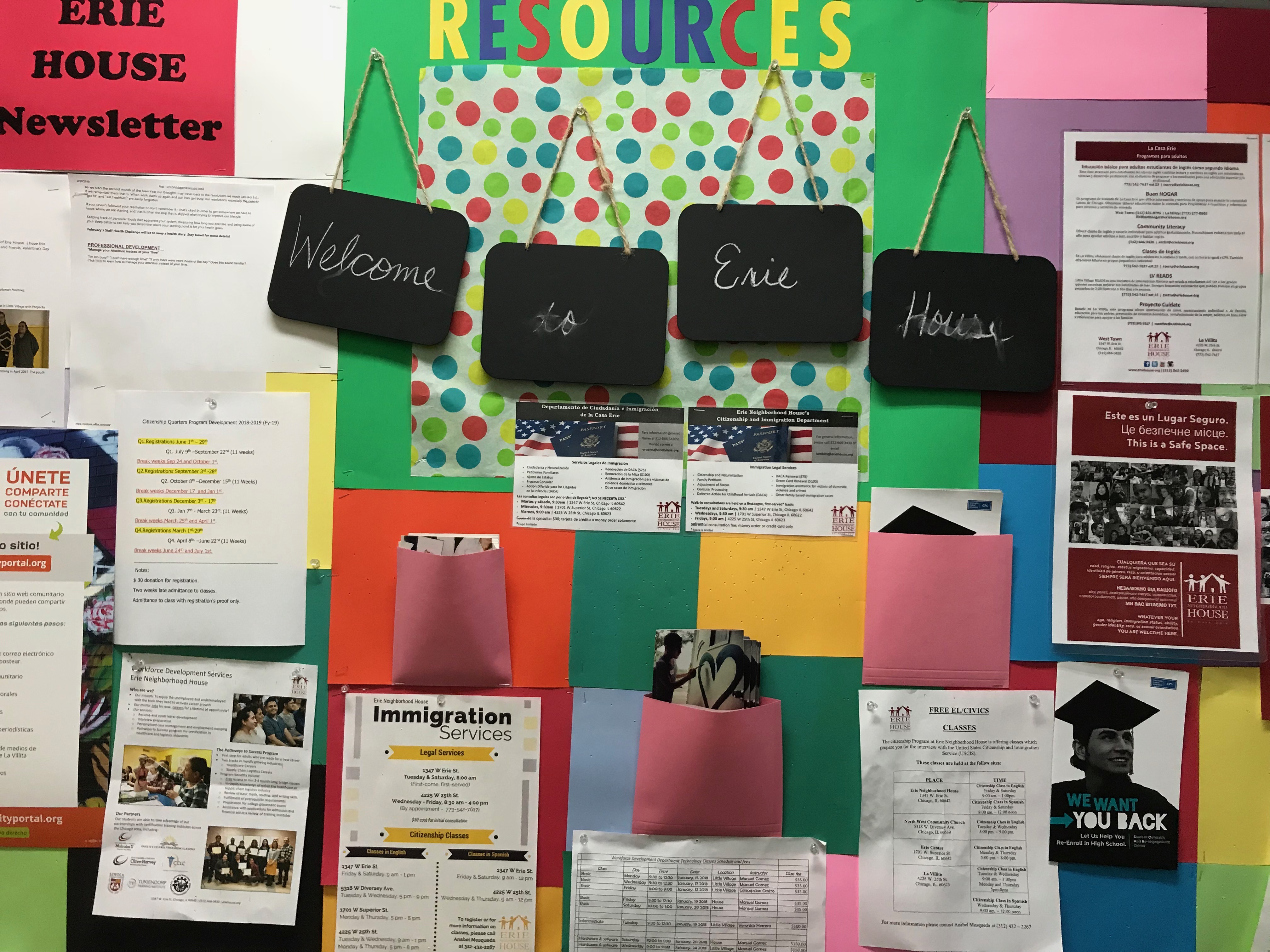
There’s a famous metaphor that alludes to this concept of empowerment through the idea of teaching an individual to fish versus giving fish to an individual. Teaching the individual how to fish allows one to continue being self-sufficient. Other times, the individual knows the skills, such as “how to fish”, but doesn’t have the resources. And yet other times, they don’t have a place where opportunities or “fish” are readily available. Thus, non-profit work and service work should ultimately be about giving clients the tools to be self-sufficient and assessing the needs of the clients instead of assuming or giving without empowering them. Many of the programs here at Erie House support this idea of empowerment and independence. Through the citizenship classes offered to youth mentoring programs, the philosophy is that we are helping a community help itself. We are helping individuals help themselves. We are empowering, not saving.

Therefore, through my service work at Erie House, I am learning to be an accountable, active member in society. I am learning to give the tools, link clients with the necessary resources, and ultimately act as a way of getting clients to their goal—I am not delivering their goals to them. In all, I am just an everyday person looking to give back to a community with the hope that the cycle of giving and empowering allows the community to thrive in new and bigger ways.

Even though the work I do isn’t always glamorous or “fun”, I know that in the long-run, I am serving an organization that is here for the right purposes and serving the community in the best ways it can through the programs and resources offered. So as I sit here and continue to sort crayons and crafting materials, I know that these seemingly trivial tasks are important to the community and to the organization as a whole.

“But Do You Have Friends?”

“I get to do this every day.”

This thought has echoed within my mind repeatedly over the course of the last few weeks, carrying through the Chicago view from my apartment window, to the neighborhoods surrounding my brown line L commute, to the community-style lunches enjoyed by my department each day that bring together different cultures, flavors, and perspectives. I am reminded of it when I hear and learn new languages from my office desk, and when I witness the kind of joy that can only come from a two-year old ready to run outside to play. And though my first few weeks in Youth and Family Services have consisted more or less of blindly stumbling around while simultaneously trying to pretend that I actually know what’s going on, I remain thankful that I stumbled into Heartland.  During these first few weeks in Chicago with Heartland Alliance’s Refugee and Immigrant Community Services team, I have had ample opportunity to reflect on the post-graduate transitions and new beginnings that, while new and exciting and overwhelming and meaningful, can also be difficult and stressful. This relatively very small transition on my part pales in comparison to the types of transitions that our participants are making–transitions to a new country, culture, language, and community, among so many other things. Coming into my internship, I knew that Heartland worked to help provide a space for the latter among our participants and staff- a space for community- but I am each day more fully beginning to realize the type of community that I myself am entering during this time of transition. Heartland is inherently relational in both philosophy and practice; something that I both resonate with and am constructively challenged by each day.  Living out inherently relational sometimes means setting aside immediate tasks in favor of conversation with a participant, prioritizing people over productivity, and knowing that people can and must take that priority. These moments act as reminders that help me more fully engage in the relationships I claim to strive for, redefining my previous notions of professionalism in a way that prompts me personally to grow.

In building these relationships, part of my work with Youth and Family Services involves K-12 extracurricular programming, meaning that last Wednesday, we hosted our annual Girl Power Pajama Jam (find a cooler work event, I dare you). During GPPJ, I had the opportunity to listen to, laugh with, and learn from some brilliant young women all while wearing PJs, eating pizza, and focusing on the theme “girls can do anything!” It is a unique privilege to be surrounded by women from all over the world, to witness them form friendships as they go, and to be simultaneously welcomed into those friendships (but maybe most importantly, to hear the incessant laughter that follows a 15-passenger van jam out session post-pajama party).  

Yet our participants not only welcome us into their lives, but their homes, sharing stories and personal space. On a recent home visit, being granted the opportunity to enjoy tea with a Syrian family, we chatted about family and summer and Chicago, and I was asked about my recent move. After sharing that I appreciated my time in the city and at Heartland, a question was posed with sincere concern: “but do you have friends?”  

Coincidentally, life also happens to be inherently relational, and it looks like this summer, I’ll be learning about priorities. I look forward to continuing to learn from my friends at Heartland Alliance.

Living the Dream: Is This More Than a Metaphor?

When I was just beginning my CAPS placement process, my dream of what this summer would hold was a filmy concoction that I excitedly stirred; my recipe grew as I poured in stories that previous fellows had told me, sprinkled in the advice of every person that would answer me, and threw in a dash (or two) of anxiety for good measure.

I like to reward myself towards the end of the day by moving downstairs to work in the resident studio of one of my new creative friends, Abi (who also took this artistic photo).

This past Wednesday marked exactly one month (it’s felt like two weeks!) that I’ve been interning at the Harrison Center as one of their many summer Cultural Entrepreneur Interns. I can confidently say that my dream had as many holes as it did substance and that I didn’t even need to cook it up (but who am I kidding– I’m definitely already gathering the ingredients for what I imagine the upcoming school year will bring).

One of the many epiphanies I’ve acquired and tucked away has been that it is okay to dream (and worry) about my future; even though I’m certain it won’t unfold in the detailed way I plan it in my head, it’s a part of my process for realizing what I want for myself and for those around me.

Yet parts of my dream have been greatly affirmed– like my vision of a free-flowing work environment that’s continually sparked and tamed by powerful, art-loving women, and my strengthened confidence in my writing abilities and future potential. I still get a few butterflies whenever I stop and think about how I’m working a stable, 9-5 job where my responsibilities entail writing (¾ of every day), interpreting art, strengthening community, and advocating for the persuasive and healing powers of the literary arts.

When I was filling out my application for the CAPS Fellows Program, I was very skeptical that there would actually be a real-world, successful organization with a mission to create change through art. At the time, I was freshly-obsessed with the concept of Artivism (art + activism) which I’m now happily able to say with certainty is one of my callings and purposes in society. It was when I first fell into the rabbit hole that is the Harrison Center’s website, that the flame for my future-summer-potion was ignited; I’m using my creative skills and passions everyday for a cause that’s bigger than me.

At the end of my first full week of work, my supervisor spontaneously invited me to come with her to the Indianapolis Museum of Art where I got to wander around for a few hours while she had a meeting.

My time in Indy has also filled some of the cracks of my dream that–at the time–I didn’t have the trust or courage to plant into my heart. Knowing that the literary arts is often an underestimated platform of expression, I was motivated to share with the Center what I envisioned. My supervisor, Joanna, trusted me with the freedom to choose how I wanted to execute this goal– as long as I was also blog-writing, taking initiative and advocating for myself. After my first couple days, I was feeling intimidated by the lack of writers that I was working alongside and the demand to push myself outside of my comfort-zone.

Flash-forward a week after my first day: I was leading about 20 people–fellow interns, HC artists, my supervisors, and a board member–in an Ekphrastic writing exercise where I guided them in  interpreting their own subjective understandings of a 5×5 ft mixed media painting. The experience flew by and it went exceptionally better than I had ever let myself hope for. One of my coworkers told me after this week’s exercise that she never knew writing could help her process everything so well and that she can’t wait to implement this new skill into her coursework in the fall.

But more valuable than all these epiphanies (expected and not), was the fulfillment of a gaping hole in my filmy dream that I hadn’t let myself add to the recipe: the incredible friendships I’m forming with my cohort and fellow artists at the Center. I think God, fate, and Ali (not necessarily in that order) were definitely working in cahoots when arranging the people that have become instrumental to my summer in Indianapolis. My mind and heart have expanded–and will continue–to hold their different perspectives and dreams that I’m lucky enough to learn through our CAPS family dinners, bonding over shared artistic soapboxes with my coworkers, and getting caught in torrential downpours (maybe more than once).

We took this photo before we even got to Indy but it’s actually the only one with everyone in it!

The Vocation of Silent Heroes

My family has always found me to be creative, whether that meant eating hot dogs like corn-on-the-cob at a young age or creating marvelous stories in school through my writing. Even though I, too, find myself to be creative to some extent, I would have never imagined working for an arts organization.

Wait a minute- it’s not just an arts organization. It’s an art organization for everyone and anyone. You may be thinking, Felicia, of course, anyone can do art, or at least, they could try to… why is it so special? But that’s where you’re wrong, imaginary conversationalist. I would venture to say most people think that spaces (whether outside, in school, at work) are inclusive and welcoming to all people, that is, until you are the person excluded by happenstance or purposefully. And this is where ArtMix comes in. 

ArtMix meets people with disabilities where they are at, which is something that is often preached and valued but not practiced. It provides arts programming for all people with its main mission of “transforming the lives of people with disabilities through the creation of art”.

A clay bird that I’ve been eyeing, with a squid behind it that I have also been eyeing

One way that ArtMix has changed the way I think is that it makes me aware of accessibility issues. The first week I arrived in Indianapolis, other CAPS fellows and I walked around town to explore what the city has to offer. After walking a very long time, over twelve-thousand steps I believe, we sat down under the shade of the public library’s trees. It was then that I noticed how people in wheelchairs would have a hard time maneuvering the streets since there is constant construction. My friends and I were able to jump and navigate around construction, but a person in a wheelchair would not be able to do that. I struggle to write this because I know that people with disabilities have agency, yet there are barriers that go unnoticed that make life harder for them to live.

Even though some would say that people with disabilities are handicapped, they are even more handicap-able. I don’t know where I first heard the term, but I try to switch my terminology because I believe it is important to give people more agency than not (thank you, Ed professors). We cannot use our differences, and in this context, the differences of actual and perceived ability, to forge a social (and therefore a mental and emotional) barrier; rather, we must celebrate differences and bond over similarities as best as possible.

The ArtMix Gallery, displaying the artwork of our Urban Artisans

Even though I have worked at ArtMix for nearly one month, the nonprofit world is still a foreign one to me; I can say that I am slowly getting the hang of it, but there is still a lot that I have to learn. Sure, I have volunteered for a nonprofit before (shout-out to the Lake Erie Nature and Science Center), but I have never truly been behind the scenes. Now that I am in the hustle and bustle of a nonprofit organization, I can say that though I knew it demanded a significant amount of work, it is much more detailed work than anything that I assumed. Under the umbrella of development, the ArtMix team created, planned, and implemented our events Here’s the Scoop and ArtMix Home Tours with the help of staff and volunteers. We did everything from advertising, alphabetizing, analyzing- and that’s just the “A’s”. Needless to say, we were booked every day making sure each event would go swimmingly. Programming, communications, development, and CEO leadership are all one-stop shops when in regard to staff members; this still astounds me and reminds me of the passion people have for this cause.


Volunteers and staff at our Here’s the Scoop event

Something I have noticed is that ArtMix has a difficult barrier to overcome, for it is on the unfavored side of both the social scene and the arts scene. ArtMix is “low art”, which to my understanding is more down-to-earth and less prestigious. And socially, ArtMix works with a community that is considered “The Other”. This combination is unique, which makes the organization incredibly personal, in my opinion. But this organization- and other ones that reach out to minorities -is pivotal and essential for the people it serves. And that is one of many reasons why I want to be a teacher and pursue the field of education: I aim to build relationships and develop students to a better version of themselves. And furthermore, my passion still remains to make education more equitable. These silent heroes, the people who work for the betterment of others, are the company I plan on keeping.

Outside of work, CAPS has truly blessed me with an opportunity to be independent with other like-minded college students- sometimes it’s fascinating how similar we are. Every evening, we make dinner for one another every night, which I should say is kind of funny, considering we consist of two vegetarians and one person who is lactose-intolerant (so, yes, we are basically vegan for dinner). I really enjoy this, partly because it is routine, and partly because it is a time to catch up and talk about whatever we want to. Sometimes the discourse is silly and lighthearted, but other times, we find ourselves dissecting, and I mean this in all my “millennial” seriousness, the problems of the world and how we find our futures to intersect with them. It is at these points that I like to engage as well as sit back and watch while the people around me exchange thoughtfully eager remarks. Early on, we learned that, for the most part, we have learned that our future careers and our current placements are seemingly thankless yet significant jobs, which I assume most jobs with a foundation on human interaction are. We will be those silent heroes, I’m sure. We’re simply in training right now.

Two Weeks in El Salvador

Companion Community Development Alternatives (CoCoDA) is a small organization with far reaching effects. CoCoDA partners with local organizations and communities in El Salvador and Nicaragua to accomplish community building projects. To do this, communities dictate which projects to work on and CoCoDA facilitates the project process and provides resources for the project’s completion. They occasionally plan trips with external organizations (many of these being universities) to help in the implementation.

The organization originally peaked my interest because of it’s thoughtful approach to volunteering in a world where international volunteering has been somewhat sensationalized in the form of short term volunteer trips. I wanted to learn more about the effects of crossing cultural boundaries with good intentions, and how to minimize any possible negative effects. Spending two weeks in El Salvador with CoCoDA showed me that CoCoDA is among the unfortunately small ranks of organizations that realize that good intentions are not necessarily enough in international volunteer situations.

Judith Lasker, professor of sociology and anthropology at Lehigh University conducted a study researching short term medical volunteer trips (detailed in the book Hoping to Help). In doing so, she creates a list of nine separate criteria that, if met, will lead to the most positive experience for the host community. These nine, while derived specifically for medical trips can be generalized for broader short volunteer trips, like the ones that CoCoDA organizes. The nine criteria are:

· Foster mutuality between sponsor organizations and host-country partners at every stage
· Maintain continuity of programming
· Conduct substantive needs assessment, with host-community involvement
· Evaluate process and outcomes and incorporate the results into improvements
· Focus on prevention (medical trip specific)
· Integrate diverse types of health services (medical trip specific)
· Build local capacity
· Strengthen volunteer preparation
· Have volunteers stay longer

CoCoDA has taken these criteria and thought very carefully about the application of their delegations in host countries. In everything that they do, CoCoDA strives to remain culturally sensitive and provide long-term solutions rather short-term ones, solutions that build capacity and trust between peoples. During my trip I was able to visit projects sites that had been completed, project sites that are currently under construction, and meet to discuss potential new projects. The projects that CoCoDA assists in implementing range from schools to water systems. They have been involved in constructing roads as well as setting up scholarship programs, each of these are projects dictated by the communities that they are benefitting. By giving the communities the autonomy to decide the nature of support, it promotes mutuality, builds capacity, and is usually more sustainable in the long run.

The first week of the trip focused on learning the history of El Salvador and ensuring that the delegation was aware of our responsibilities visiting as USA citizens. This meant visiting sites of massacres, assassinations, listening to the stories of people, and visiting museums. Much of what we learned centered around the Salvadoran civil war in which the USA played an integral role. Throughout the civil war, the people faced brutal oppression from the government, and due to communist ideals promoted among the guerrilla troops, the USA financed the Salvadoran government. This support, however, allowed the country’s government to continue its ironfisted suppression of the peasant class giving way to massacres and assassinations to anyone who spoke out against the government. As a United States citizen, it was sobering to realize that our money supported the Salvadoran government before and throughout the civil war, supporting these heinous acts. This illumination of Salvadoran history as well as United States history played an integral part in our preparation, humbling us as US citizens while we interacted with the people of El Salvador.

CoCoDA’s goal with short-term volunteer trips is to facilitate experiences that could lead to support from visitors later on. Ideally, delegates would come back from trips and champion the image of a more just relationship between US citizens and Central Americans, being more likely to take it upon themselves to contribute meaningfully to the betterment of others.

During our stay in a hostel in Suchitoto (a city located north of San Salvador), I connected with three young men around my age. They were from Nicaragua and patiently helped me through the very rough Spanish that I had accumulated through Duolingo. Hanging out and hearing them speak so fondly about their country’s beauty and hearing the anguish in their voice as they told me how they worry for their family’s safety throughout the current conflict was a powerful experience. It was clear to me that these people loved their roots, that they were proud of who they were, hoping for the best in their countries. In the States, the common stereotype assumes that Central Americans do not like their own countries and want to immigrate to the US, but these three men as well as many others that I met in El Salvador made it clear that this is not a stereotype that holds. Most Central Americans love their country and would only emigrate if their lives were in danger.

The experience I had traveling in El Salvador was a wonderful and focusing experience. I do not know where I will end up in my professional life, but this trip has helped strengthen in me my desire to work for and with organizations like CoCoDA.

Rose-colored Bubble

I call Indiana home, but not by choice. My mom grew up in southern Indiana, and my dad thought the combination of her and the low cost of living was a great deal. I used to think the state was just boring, as expected of an eight-year-old surrounded by constant road work, potholes, and soy. Ignorance was bliss, because I didn’t start to notice the greater flaws until I started to question and explore my identity. My domineering feminist phase revealed that the “Midwest charm” includes casual misogyny and a severe lack of women in leadership roles. The feminist phase evolved into love that I had been taught by society not to accept. I know other kids have it a lot worse, but it is less than ideal being gay in Indiana. I thought it was just a regional thing at first, then I went to college and not much changed as far as attitude towards and education about LGBT issues. I sought out CAPS primarily for the opportunity to achieve my lifelong dream of getting out of the Crossroads of America, and I’ve landed a whopping two hours from my house.

This isn’t an entirely sour narrative, I just really want to exaggerate how low my expectations are for any part of Indiana, including Indianapolis. I was excited for the next level of independence: my first internship and living on my own with people I enjoy. To say Indy surprised me is an understatement, I think “shocked” is more appropriate. I’ve established myself in a safe living and working environment, and there’s so much individual, community, and city support for some LGBT needs. I’ve met wonderful allies and community members, all of who have directed me to helpful resources, gay friendly spots, and background on what the LGBT scene looks like in Indianapolis. Companies are in on it, too, and although it’s likely to make a profit it’s still refreshing to see. The support helps me thrive, and I can easily say this is one of the best summer’s I’ve ever experiences; however, I learned very quickly that the same energy and support does not extend beyond Indianapolis.

It’s like living in a mostly accepting bubble, and if you’re in the bubble why should you worry about what’s going on outside of it? I’ve lived outside the bubble for 20 years, and I know how rough it is without accessible resources or the communal willingness to learn. I’m grateful to have both an inside perspective, but I know I’ll never be fully comfortable living here and knowing what others face just beyond city limits. I always thought I’d want to live in a city, but my observation of Indy makes me wonder if I’ve been disillusioned by other cities before. A lot of gay kids dream about moving to a larger city because they’re generally more progressive and accepting, but the desire for change falls flat the city’s end. The mentality encourages people to come to places that range from okay to wonderful rather than use the resources available to change the areas that LGBT youth are running from. I want to know how I can do my part without forcing myself to live somewhere where I don’t feel welcomed, but I don’t want the coziness of the bubble to deafen me from those that can’t just pack their bags and go. I grow queasy thinking about those who’ve been in the bubble all their lives, knowing that what they have going on for them is unique, beneficial, and necessary for personal growth. I doubt it’s intentional, but there’s a lack of education here just as there is outside of big, progressive cities. I wonder what would happen if the bubble popped.


Got Questions? Ask Them!

When applying to be a CAPS Fellow, I had a limited understanding of what that meant. I knew from former Fellows that it meant interning at “real” job, travelling to that “real” job, and spending my summer gaining some experience. But, just what exactly was that job? Where would I be going? Staying? Doing? To be honest, those questions are hard to answer. The best way to understand it is to experience it.

The first day I started at Ingenuity was the first day that I really understood what that non-profit does, and, really, I don’t think anyone could have explained it to me beforehand. There’s a process, I’ve learned, that comes with entering a new space (a new workplace). It’s a whole new environment, and, to do the job right, you need a lot of context for why your colleagues do the work they do and why. Before arriving, I browsed their website and googled the work they did in the past, but I began to understand more just by being there.

What do I mean by that? I mean: you learn most about your CAPS Fellows placement just by listening in on meetings, listening to your colleagues chat about the work, and having your colleagues explain to you how their work contributes to the larger trajectory of the organization.

And, please, ask questions!! It’s really easy to let yourself feel like you’re not qualified or as experienced as your colleagues, and that might make you feel like you should remain quiet so as to not disrupt the work going on, but don’t! In my experience, folks are so happy to bring you into the conversation. They want your input! So, if there’s clarification that you need in order to make meaningful contributions to the conversation, by all means ask for it!

At Ingenuity, I’ve learned (through asking questions) that the organization’s goal is to bring arts education to every Chicago Public Schools student. One of the questions I asked: “How does Ingenuity do that?” Once I learned that Ingenuity is the Chicago ‘hub’ that tracks arts partners (organizations like: museums, galleries, creative working studios or any places that provide access to arts education) and teaching artists (in the classroom) at every school, I could then ask questions like, “What resources does Ingenuity provide that connects arts partners and teaching artists?” Their response is: Ingenuity provides several training sessions available to both partners and teachers throughout the year in order to inform them how they can use Ingenuity’s resources to their benefit (like arts grants), advocate for the continuance and addition of arts ed in schools, and much more. After learning the basics, through asking questions, I was able to not only understand the work that was going on but also where I could contribute to the conversation. It was because I asked questions that I got myself assigned to developing one of the training sessions I was most interested in (storytelling as an advocacy tool!).

So, just relax, believe in your own ideas, and trust that people want you to succeed, and then you’ll have an amazing time at your CAPS placement, meeting tons of wonderful people!

Finding Community in a New Place

Living in a new place can be an exhausting process of navigating the unfamiliar. The first few days are usually filled with trying to get comfortable in a new space. For me this included finding where to buy groceries every week, the route I would take to my internship every day, and a good, nearby coffee shop. These small forms of comfort and routine help create the space for an unfamiliar place to become a community.

On the morning of the first full day at my internship, the crowded processing room was full of applause, as everyone celebrated accomplishments and got motivated for the day. During the morning meeting we discuss the theme of week, which for my first week was “community”. As a result, I spent time that week reflecting on community and what it meant to me in the context of my recent, unfamiliar surroundings. In new places, community is something I think might feel absent at first but can quickly emerge and come together.

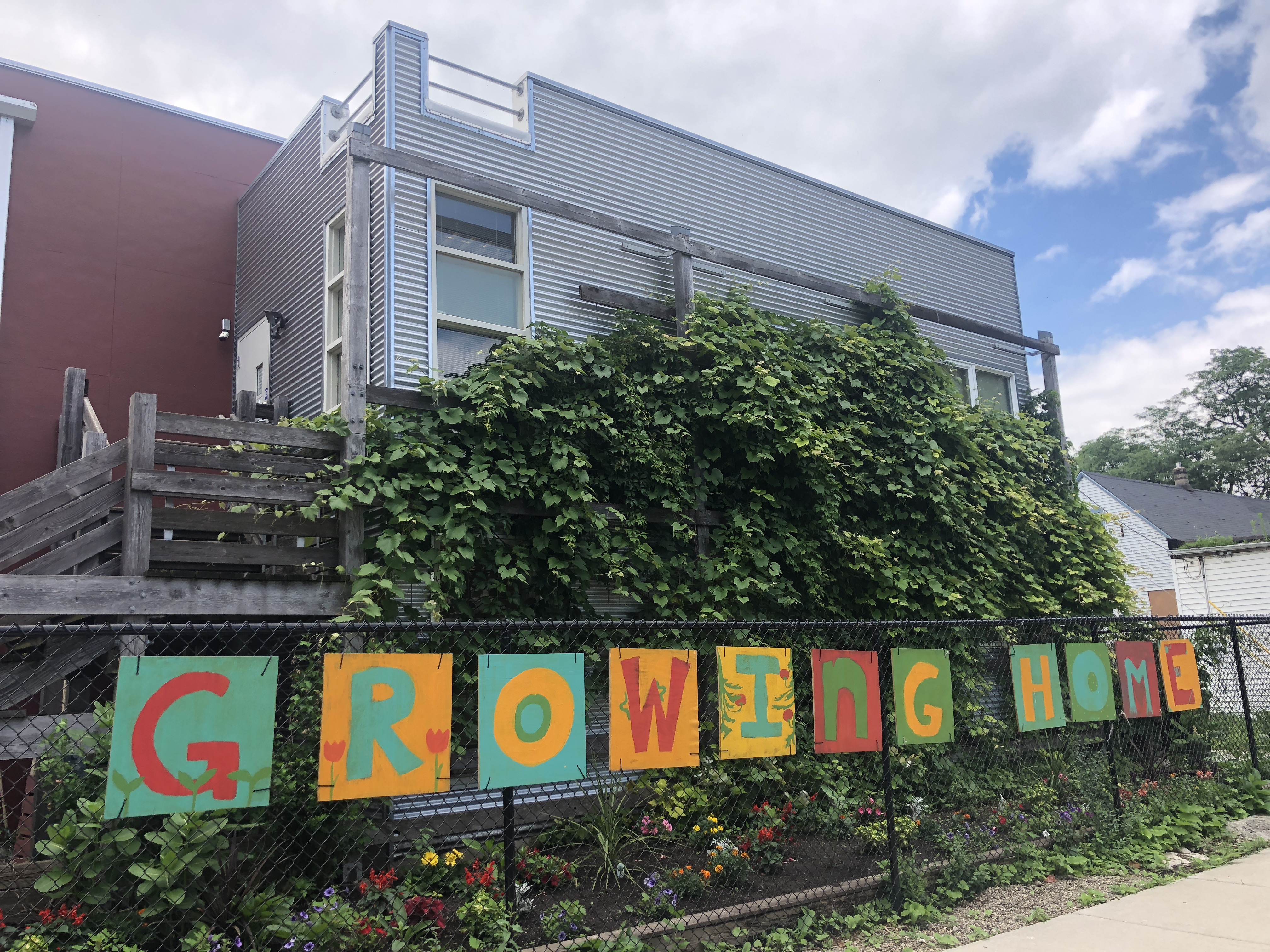
Before explaining more about my notion of community in a new place, it might be useful to explain more about where I am interning. My CAPS placement is quite different from many of the other CAPS placements and from most internship experiences in general. I am interning at Growing Home, Chicago’s first and only high-production, USDA certified, organic urban farm. Yes, that’s right, I’m interning at a farm. In the city of Chicago.

A view of the field on Honore Street, one of Growing Home’s two lots. Look closely to see the delicious and colorful swiss chard.

Upon telling people my placement, most did not know urban farms existed, or they assumed the farm was just a glorified garden. However, let me assure you, a garden will not produce 30,000 pounds of produce annually. At Growing Home, I work within the Community Engagement department which seeks to make the farm a space that is open and accessible for the surrounding, Greater Englewood community and other nearby neighborhoods, various organizations, schools and universities, and larger communities interested in urban agriculture within the city of Chicago and across the U.S. As the Community Engagement intern, I assist with our events and activities which include tours of the farm, weekly cooking demos, our annual block party, and tending to our learning garden which gives people an opportunity to interact with the plants and occasionally harvest a few vegetables to take home and try. Through these events as well as produce and seedling donations, the Community Engagement department helps improve food access in nearby communities where fresh and affordable produce is less accessible.

Tabling at a community event organized by a local high school where we served samples of a rice dish with kale from the farm.

Outside of Community Engagement, Growing Home runs a 14-week employment training program for adults who experience barriers to employment. During this program, participants work as Production Assistants on the farm and work through a job-readiness curriculum in the classroom.

Although I have only been in Chicago for three weeks, it amazes me how quickly I’ve begun to find a sense of community. Whether it’s among the Growing Home staff who have made me feel so welcome, and who are always willing to share their favorite ways to prepare the vegetables we grow on the farm, or the CAPS Chicago cohort who I hope to share many more adventures with in the coming weeks (especially more $1 Taco Tuesdays). So far, my time in Chicago and at Growing Home has taught me the importance of finding and creating community with those around you, and even though the time I will spend in these new communities is limited, I know the lessons I will learn and the relationships that form will extend far beyond my CAPS experience.

Meeting People with Passion

Last summer at the end of my internship my coworker told me her favorite quote, “One person with passion is better than forty people merely interested”- E.M. Forster. But as a I packed 28 boxes filled with cell phones, insurance cards, and hundreds of papers, to be sent to universities across the country earlier this week, I could not help from thinking that maybe 40 interested people may actually be useful. In all seriousness though, that quote has really stuck with me over the past year as I traveled abroad to Namibia and now as I have begun my CAPS placement at IREX in Washington DC.  

IREX is an international nonprofit that focuses on development. In the past I have worked with several very small NGOS, often with a local staff of 2-3 people. IREX though has a staff of over 400 world wide and 178 locally, so when I walked into the skyscraper in the heart of the DC business district, I knew this was going to be a very different experience than any others that I have had before. I immediately questioned how these people can be maximizing the work they do, but I quickly found that the larger the organization, the larger the possibilities for great impact.

IREX’s moto is “investing in people, inspiring change.” Over my time at Valpo, I have taken several classes that discuss the dangers of the white savior complex and unhelpful outside intervention. It is for this reason that instead of infringing on other countries, IREX finds local people with passion and invests in them so that their dreams can be achieved. This summer, I am working on the Mandela Washington Fellowship for Young African Leaders which is a program part of the Young African Leaders Initiative (YALI). This program brings 700 African leaders (who were selected from over 40,000 applications) from every sub Saharan African country to the United States for a six-week program at some of the country’s top universities. Following this, they all convene in a summit in DC so that ideas and opportunities can be shared. Following the summit 100 of them are chosen to participate in a professional development experience (PDE) at local NGOs, businesses, and government offices all over the country. Clearly, planning and implementing requires an immense amount of logistics and coordination. It is my job to help specifically with PDEs and helping to plan the summit. So far, my team of 16 has been incredible and it is great to see how much each of them care about all the fellows, even though often it can get overwhelming.

IREX alumni Faten Ghriss and I after IREX’s 50 anniversary alumni panel

This week IREX is celebrating its 50-year anniversary and with that they had a large celebration and brought back several alumni of their programs. While a good part of my job involves sitting in front of a computer screen for most of the day, getting to listen to the panel of four alumni talk about what they had achieved because of the work of IREX was inspiring. The first guest was Mohammad Al Abdallah, Executive Director to the Syria Justice & Accountability Centre. Once a prisoner in Syria, he spoke out against the injustices of their government and IREX stepped in and helped him conceptualize his organization. Secondly there was Alice Sayo, Founder of Nasaruni Academy for Maasai Girls, Kenya, a school that empowers girls to stay in school and avoid being married off at a young age. The third Alumni was Aferdita Saracini Kelmendi the General Manager of RTV21 in Kosovo and Macedonia who spoke out against the government almost 20 years ago in favor of freedom of speech. Lastly there was the youngest panelist, Faten Ghriss, the Co-Founder of Young Tunisian Coders Academy, which empowers youth to work in the tech industry in Tunisia. These people each were all from widely different backgrounds, with very different struggles which just showed to me the scope and reach that one organization can have. Each one of these people was filled with passion for their cause and and just needed a little help to be agents of change.


While working takes up a majority of my time, I still have found time to explore the city, which has an overwhelming number of free events and someone waiting at every metro stop to talk politics. From attending the Pride parade to walking around Arlington cemetery on Memorial Day, to going to the congressional baseball game last night, I must say that the DC cohort (there are only two of us) has been crushing it.

Jesse, our roommate Katie, and I at the Pride Parade

While I am for sure still learning the ropes at both IREX and navigating the metro, I have already had such an incredible time here. I am beyond excited for the many adventures yet to come in the next two months as I continue to meet and work with people with passion, while I work to figure out a passion of my own.


We’re Not in Valpo Anymore!


We traded our Chapel bells for rumble of the L train.  Chicago.  A city that will never cease to amaze me.  Being from a Chicago suburb, I am no stranger to this majestic city.  I spent my weekends exploring different pockets of city under the careful guidance of my family.  I like to say that my family bubble wrapped my Chicago experience.  I could not take public transportation until I was 17, and even then I was under the protection of my brothers.  My mom is a nurse and my dad is a taxi driver, they know firsthand how bad Chicago can be.  They were just trying to protect me, but they cannot shelter me forever.

The independence is liberating.  Living in Chicago allows me to explore myself outside of the safety net of home or Valparaiso.  I was overjoyed when I discovered my placement was in Chicago because it meant I could grow in a state I love.  Being a big city, Chicago offers diversity that is not highlighted often back at school.  Although every person has their differences we all share one thing in common, taking public transportation.  Everyone has their own love hate relationship with CTA.  On one hand, it is easier that having your own car because you will not have to deal with paying an outrageous amount of money for a tiny parking spot.  On the other hand, the estimated time of arrival of the CTA is unpredictable because of unscheduled stops.  Complete strangers bond over their shared feelings about CTA.  It is truly a beautiful sight.


Not as beautiful as my commute to my internship though.  I made the decision to walk to my placement to get better familiar with my surroundings.  Every morning, I walk over the Chicago River as I head to Ingenuity’s office.  Ingenuity is the glue between Chicago Public Schools (CPS) and arts partners.  Ingenuity was birthed from the city’s need to provide quality arts education to all of CPS.  My organization tackles this goal through four innovates: data and research, public affairs, outreach, and partnerships and professional learning.  With a mission as vast with these four innovates, you think there is a large army of people advocating on the behalf of arts education in CPS.  Well, there is.  Nine dynamic leaders blazing a trail in educating and advocating for arts educators.  The staff of Ingenuity works tirelessly with CPS Department of Arts Education and arts partners to enrich the lives of children in CPS.

I am honored that Willow and I have been inducted as fearless warriors in the fight for quality arts education to all of CPS.  I feel like I have become a part of the Ingenuity family.  As a Partnership and Professional Learning Intern, I am excited and nervous to plan our annual Partner Starter Institute to acclimate arts partners to the culture of CPS and instill the importance of partnership.  This summer is just beginning, but I know endless adventures await me as I explore the city and learn more about the importance of arts education.  This may not be Valpo, but it is a place where I belong.  A place I can call home.  


LET’S GO CAPS

Caroline and I posing outside of an office cheering on the Caps!

C-A-P-S LET’S GO CAPS! This was the constant refrain around DC and outside Capital One Arena last Thursday night as fellow CAPS member Caroline and I watched the Capitals bring home the Stanley Cup. It was incredible to see the energy and watch the city come alive around the event. D.C. is an amazing city, vibrant and overflowing with political energy and I have really enjoyed my time here so far. 

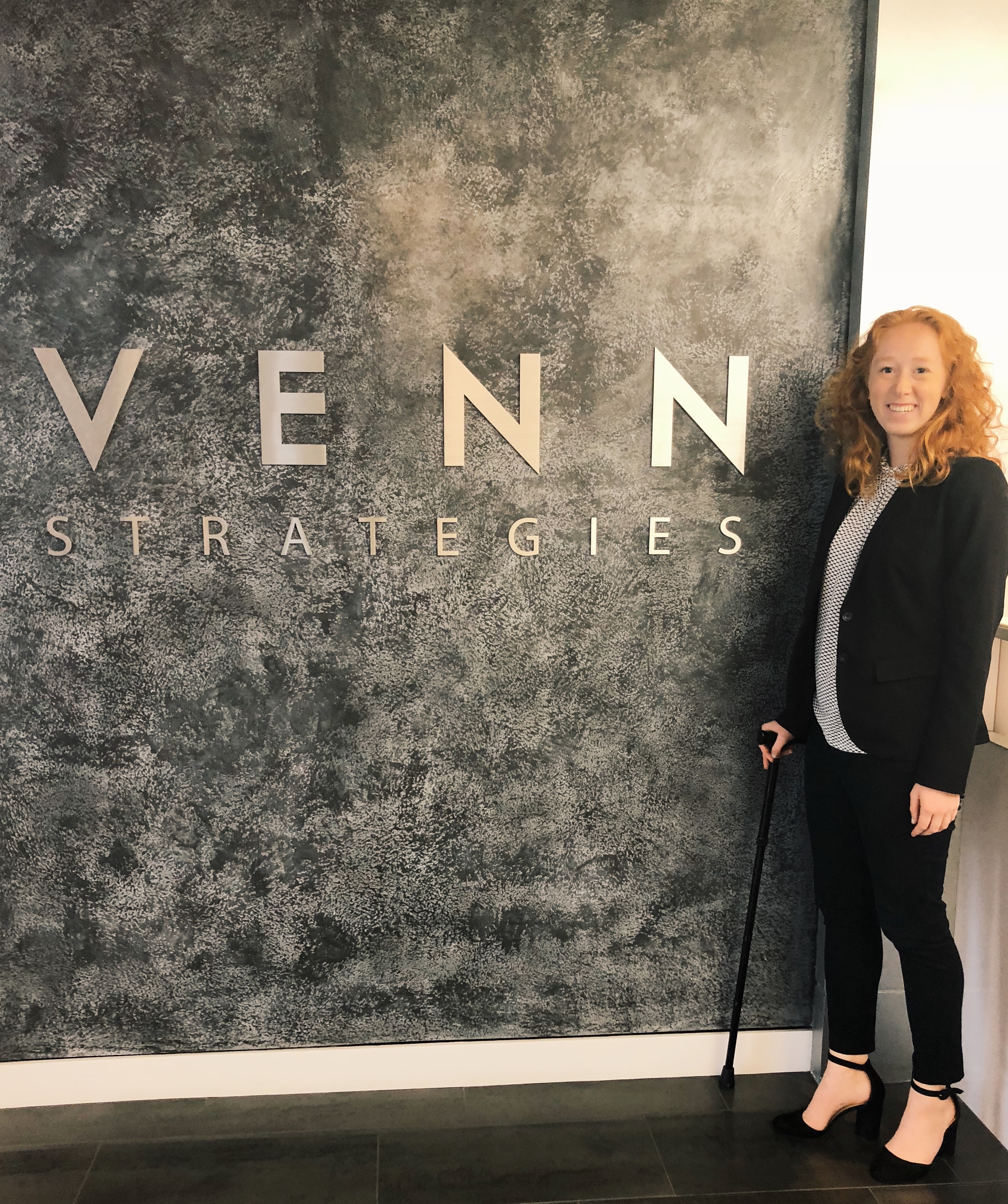
The cheering refrain was also a constant reminder of my CAPS internship and the reason I’m able to have these experiences this summer. I’m interning with Venn Strategies, a government relations and public affairs firm in the heart of Washington, D.C. I just finished up my third week and it has been a whirlwind. I am a part of two client teams based around tax and infrastructure, two things I knew very little about before arriving here. It’s been humbling to realize how many things I don’t know. At Valpo, I think of myself as a fairly intelligent and capable person and I really dislike asking for help. At Venn, I’m learning that being smart can mean asking for help, and that double checking to make sure I’m doing a project correctly means not looking bad if I finish it and it has been done wrong. My coworkers have been incredibly helpful and willing to teach me about things I’m still not sure of. I’ve really appreciated their patience as I learn the basics of writing policy memos for clients and over hearings on topics from railways to tax structure.

One of the best experiences I’ve had so far was participating in the Center for Reproductive Right’s State Summit. CRR is a client of Venn’s and I helped to organize the materials and prepare for the summit. The night before the event I attended a reception where I got to meet Congressman Joaquin Castro (D-Tex.) and several other important players in the reproductive rights field. The reception took place on the roof of the Newseum with a gorgeous view of the Capitol and surrounding area. 

At the CRR reception on top of the Newseum

The next day I attended the summit as an assistant to my coworker managing the event. I got a firsthand look at everything that goes on behind the scenes to put on a large event (this summit was for 200 people!) I have a new respect for anyone who has ever stuffed folders or made name tags after seeing how much work it takes.  When we had gotten everything under control, I was able to participate in the summit and listen to panels on maternal mortality and non-profit cooperation and alliances. CRR hosts this summit every year to empower state leaders in the reproductive justice movement. Their hard work is really inspiring and gave me a lot of hope for the future. Watching the news and looking at social media, sometimes the world seems like an incredibly negative place. However, as I watched these strong women encourage and support one another, I felt empowered and was reminded that I too am able to make a difference. It was a really interesting day and seeing it all come together helped me to understand the importance of the work that I’m doing here.

All together, I’m definitely achieving the goal I set for myself of understanding what lobbying looks like. While I had a general idea at the beginning of the summer, I was aware that I had probably watched too much Scandal to have an honest picture. My coworkers have showed me, through taking me to meetings and explaining goals and plans to me, how cooperation and honesty (not blackmail) can help make real policy changes happen for their clients. I’m having a blast here in D.C. so far, and can’t wait to see how much I learn and grow over the next seven weeks.

They Always Say Congratulations

Indiana has never been a state that I have found very appealing. Although yes, I go to school in Indiana, northwest Indiana and the area around Valparaiso University has a very different feel than the rest of Indiana. The rest of the state sees what they know as “The Region” as a suburb of Chicago more so than part of the rest of the state.

When I got placed in Indianapolis, I was skeptical, although it seemed everyone else was excited for me and kept “saying congratulations.” I didn’t know what to expect because I’ve only been to Indianapolis one time prior to the internship. I didn’t know what there was to do around the area or how the people are. During my interview with my placement here in Indy, my now supervisor, Kristen Fuhs Wells, vice president of Indiana Humanities, asked me what my thoughts on Indiana were. I responded saying, “I have my opinions,” but I went on to explain that I hear all the stereotypes about Indiana, but couldn’t judge for myself since I haven’t seen to the rest of the state yet.

From the Indiana Humanities intern photoshoot outside of the office.

Turns out you should not make assumptions about a state, even if the stereotypes are true. I have been in Indianapolis for the past two weeks and have had the most fantastic experience, both inside and outside of my internship placement. I am placed at Indiana Humanities, a statewide non-profit that whose mission is to “connect people, open minds and enrich lives by creating and facilitating programs that encourage Hoosiers to think, read and talk.”

Over the past two weeks at Indiana Humanities, my focus has been on research and alumni engagement of the Lilly Scholars in Indiana. For those of you who don’t know, Lilly Endowment Inc. hands out a scholarship to a couple graduating high school students in each of the ninety-two counties in Indiana and provides them free tuition to either a private or public university in Indiana. Indiana Humanities received a large grant from the Lilly Endowment Inc. to run the research on the Lilly Scholars. I specifically have been looking at other mentorship and leadership programs across the country and seeing what they do to engage alumni, and have been using that information to help begin to create a Lilly Scholar alumni network.

The Indiana Humanities staff having fun bonding at the Indy Eleven soccer game at Lucas Oil Stadium.

With Indiana Humanities, we also have taken an outing to the Indy Eleven game at Lucas Oil Statidum which was a great bonding time for the entire staff. As well, we threw a “Garden Party” to help show off the new renovations of the house and had plenty of visitors. In addition, through the internship I got the opportunity to attend the Indiana Philanthropy Alliance (IPA) Conference just outside of the city and got a chance to meet with numerous staff from Community Foundations (those that help choose the students the Lilly Scholarship goes to) across the state to see what ways they are engaging alumni and what ways they would like to see more engagement. Also, in a few weeks, we are going to have our annual Bar Crawl around Indianapolis. This year, the theme is “Out in Indy” and this historic bar crawl through the city will explore stories of Indianapolis’s LGBTQ community at five different locations. Next month, I am going to help facilitate an event by Indiana Humanities and the Hoosier Environmental Council where we go kayaking on the White River and read while hiking and kayaking in the area which I’m very excited about. 

From the walk at Eagle Creek Park.

Although, for the past week, work hasn’t been the only thing I have done. I was off Monday, June 4th, and decided to take a long hike through Eagle Creek Park, only a twenty-minute drive outside of Indianapolis. The walk was about seven miles, but it was a beautiful path with a lot of beautiful plants and animals. Along with that, the other CAPS Fellows in Indy and I actually try to go on walks almost every other day, just so we can go out and explore the city. It has been a blast getting to know them and I really look forward to the rest of the summer with them.


From the Indiana Farm Bureau Insurance Lawn at White River State Park where Post Malone performed.

Lastly, I got the chance to go to a Post Malone concert on Wednesday, June 6th. Another CAPS Fellow who was placed in Indy and I actually got FREE tickets to the concert. One of Post Malone’s friends from backstage came up to us and handed us tickets to the concert (just to let you know, the tickets were priced at $250 – $300 dollars). It was such a fantastic night and got to see the artist who is known for his hit song “Congratulations,” where the title of this blog comes from.

Though it’s only been two weeks, I think the next eight are going to be a wonderful time and I will now forever be grateful to Indy for the opportunities I’ve already had here.