Category Archives: CAPS Fellows Blog

Service? Service.

A big component of the CAPS program that really drew me towards it was the service aspect. When I first began to explore all of the placement options, I was sure that I’d end up at a non-profit, because I associated the two words. To be honest, where I’m interning couldn’t be further from a non-profit. Truth be told, I’m working for a big money organization. Venn strategies, my fellowship location, is a public affairs and consulting firm.


Everyone always asks me what exactly is a public affairs and consulting firm. Simply put, it’s a lobbying firm.

.

Most of us shudder when we hear lobbying, thinking of outrageous sums of money in politics, people whose voices seem to be significantly louder or more powerful than the average American’s. Big tobacco, the NRA, manipulation, corruption, bribery…these are all things I used to think of when I thought about lobbying. In this I don’t think I was unique.


But the truth is, any interest out there likely has someone who lobbies on behalf of it. For interests both good and bad, there is somebody or some group out there lobbying for policies that protect or further that interest.


Lobbyists are not experts themselves on whatever subject matter is at hand. A lobbyist’s job is to act as intermediaries between private businesses, churches, coalitions, whomever wants to affect policy change, and those with the power to enact change. We know the ins and out of D.C., whether it be Capitol Hill, various government departments, think tanks, we work to develop strong coalitions and formulate the plan of attack. A successful lobbyist usually begins his or her career working on the Hill, and building their professional network-something that is crucial in the lobbying world.


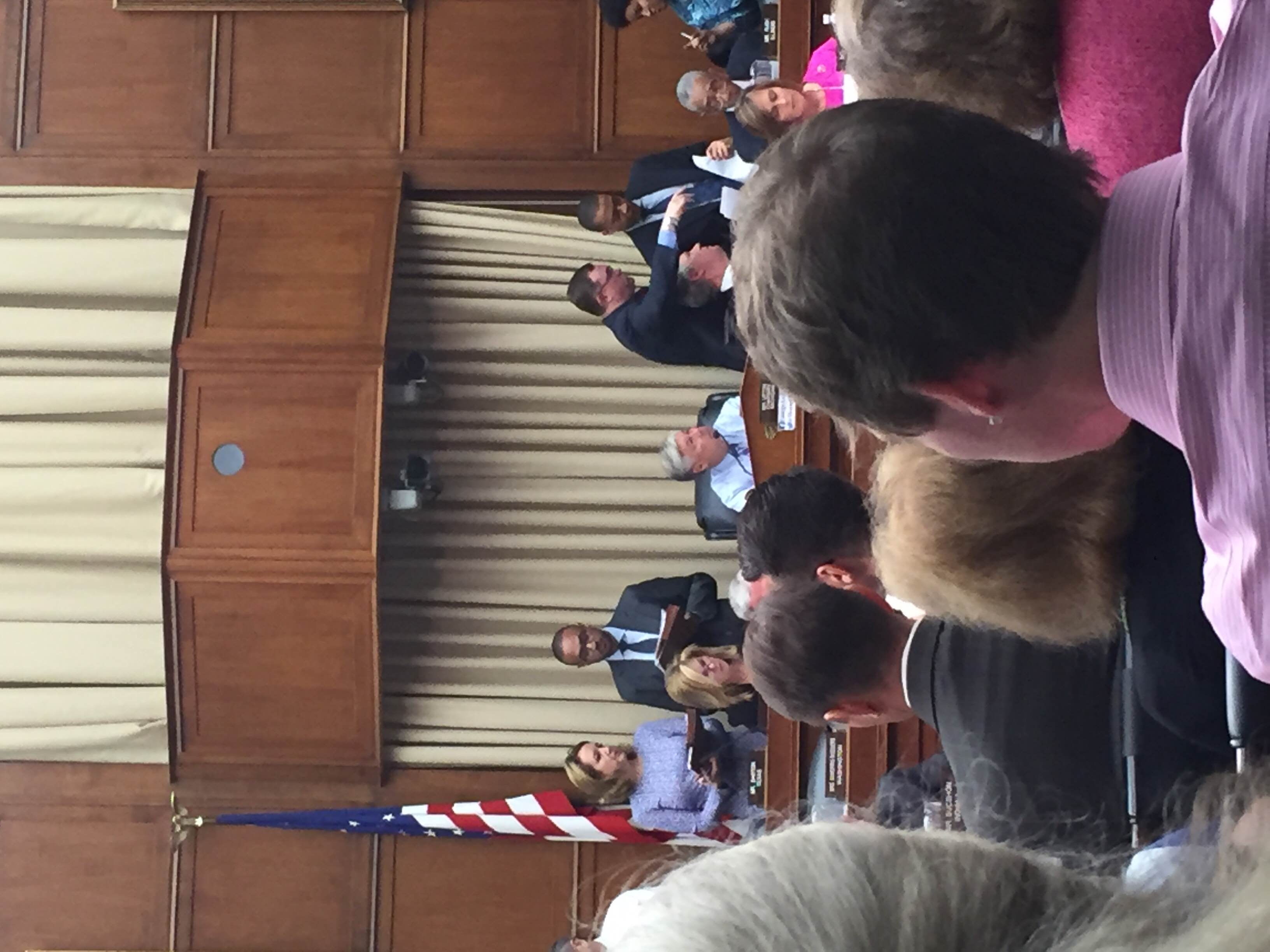
Along with creating coalitions and meeting with political officials, we have to create a portfolio of documents to educate policy makers as well. As an intern, I work mostly with setting up the meetings and helping to collect the appropriate information. My tasks range from performing basic research, to putting together unintimidating yet informative documents to educate others on our cause, to attending relevant hearings or markups of a bill.


A hearing on a Mental Health bill I recently attended.

A hearing on a Mental Health bill I                     recently attended.


The service that we provide to our clients varies depending on both the client and the interest. In the case of my current project, which I am unfortunately unable to divulge, we are serving not only the companies in the coalition themselves, but truly all of their employees. The actions that we are taking on the Hill, if successful, could potentially save about a million US jobs in the long term.


For the longest time I struggled with feeling like I wasn’t performing the service aspect of the CAPS program. I’ve had to rewire my brain to understand that what Venn does is indeed is a service to many. Working at a for-profit company doesn’t mean that I am not providing a worthwhile service. Saving US jobs is a service to each individual who holds that job, and by extension a service to their family.


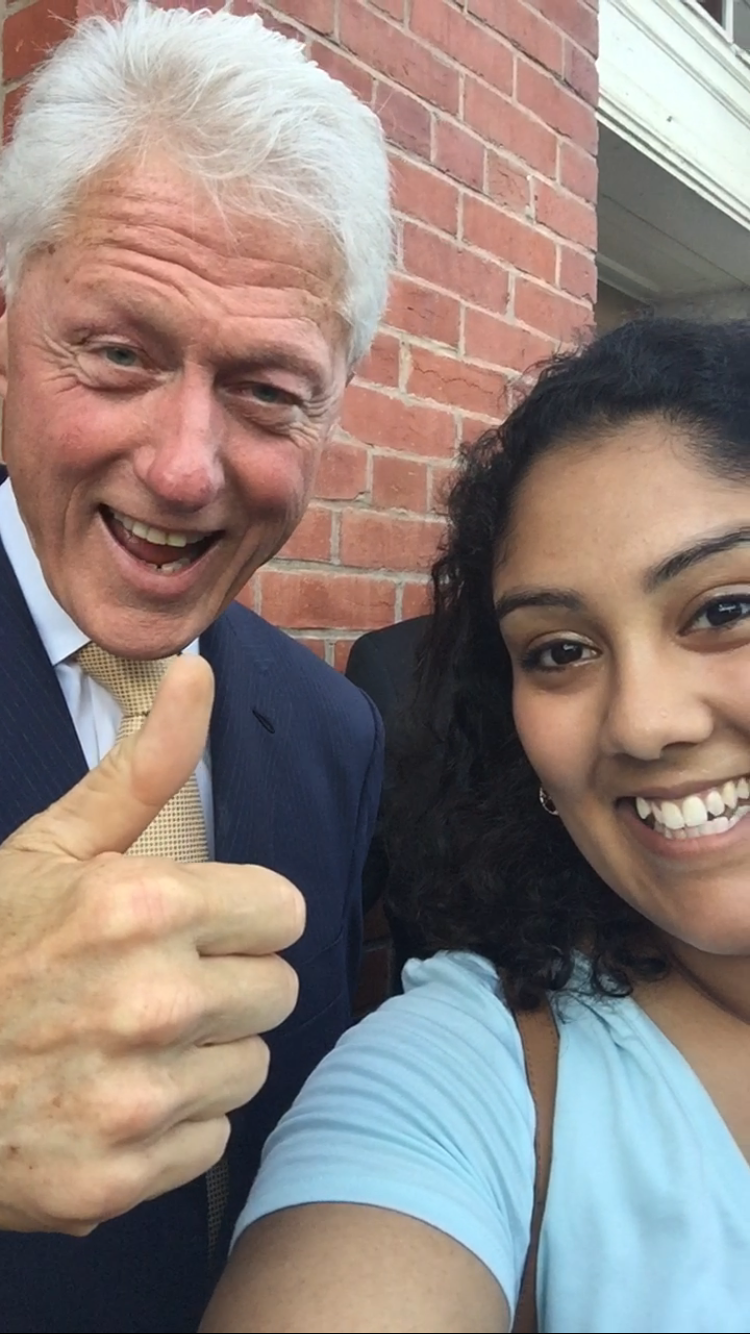
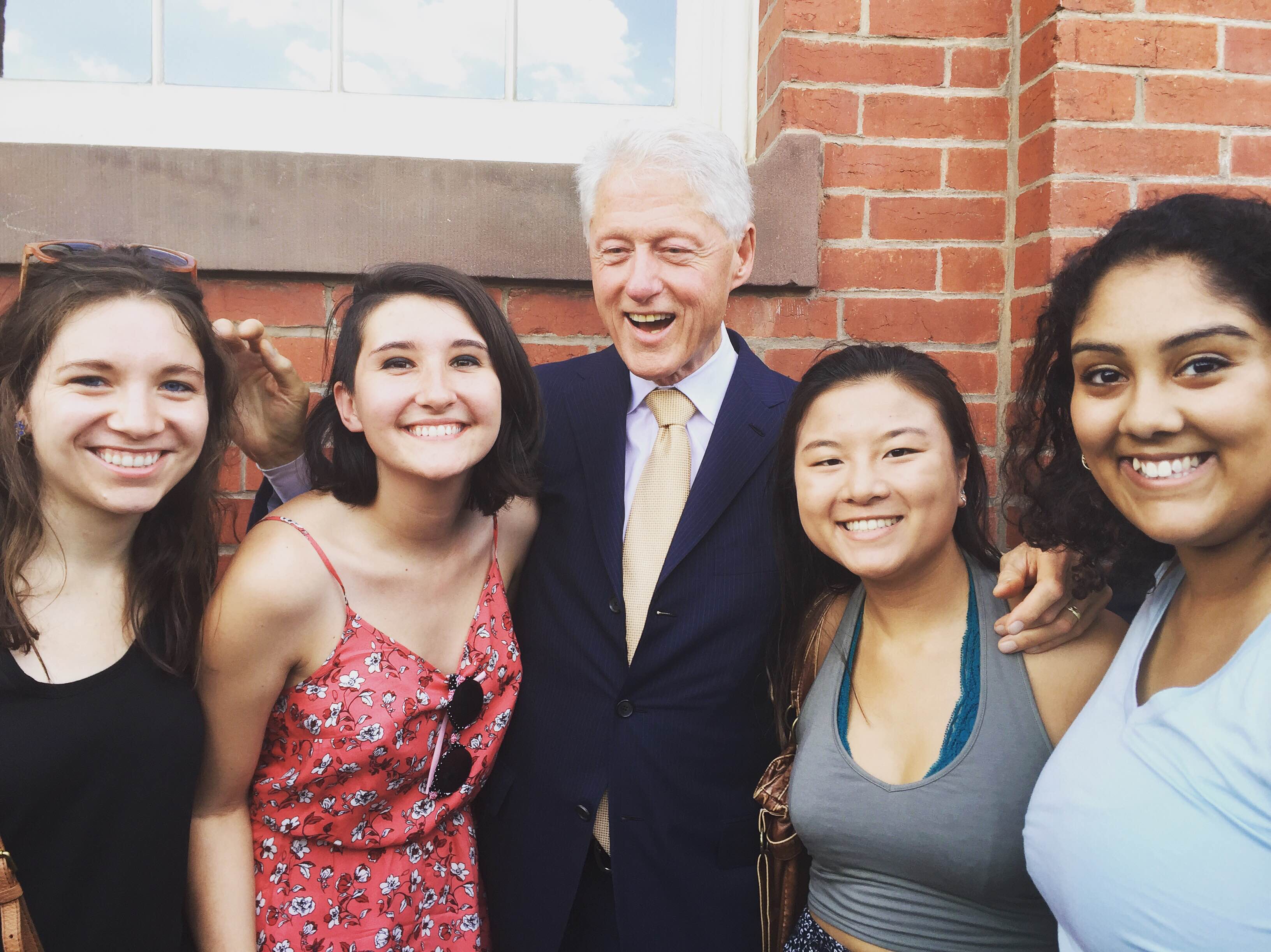
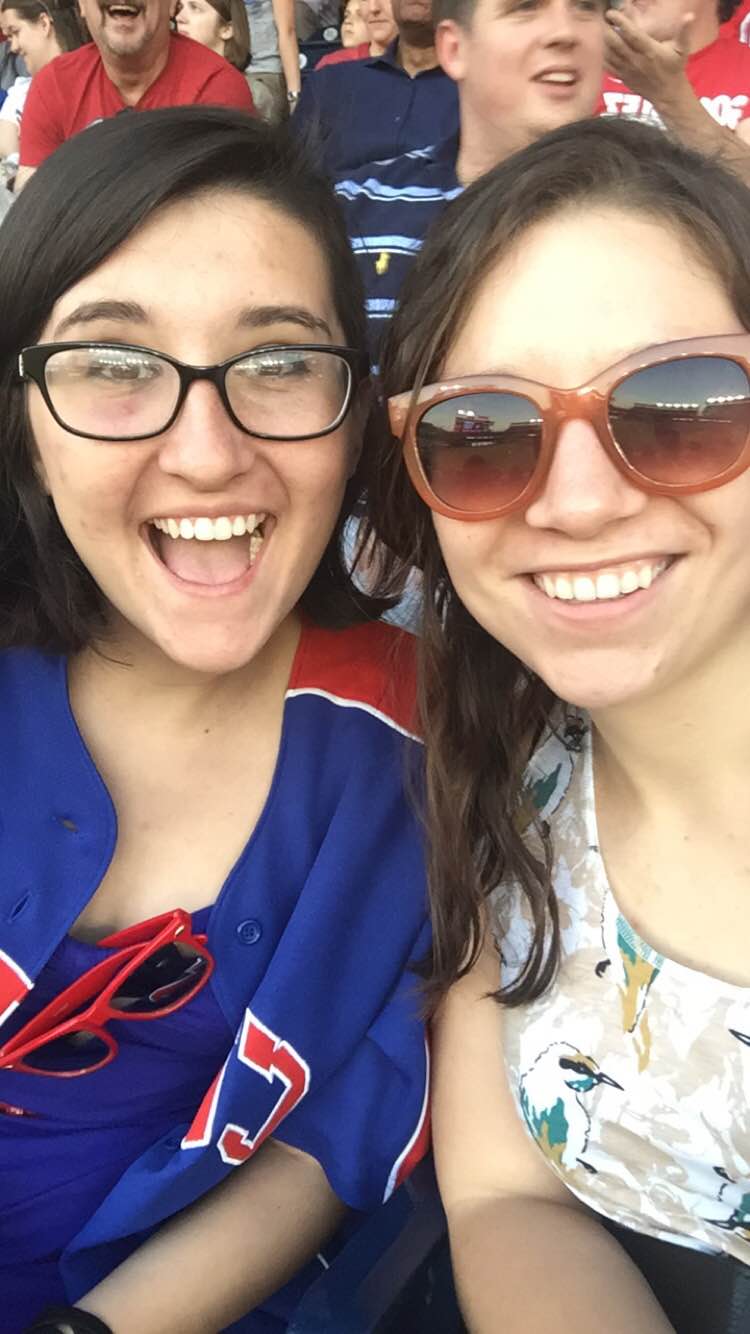
DC is a fantastic place to spend your CAPS fellowship. Life in DC moves fast, and there’s always something (free) to do. Whether it’s Jazz in the sculpture garden on a Friday night, shopping at Eastern Market and running into former President Bill Clinton, exploring local artwork, or seeing the Nats play (Go Cubs!), you won’t be disappointed in this city!


Meeting former President Bill Clinton!

Meeting former President Bill Clinton!


Go Cubs!

Go Cubs!


New Opportunities, New Experiences, and New Friendships

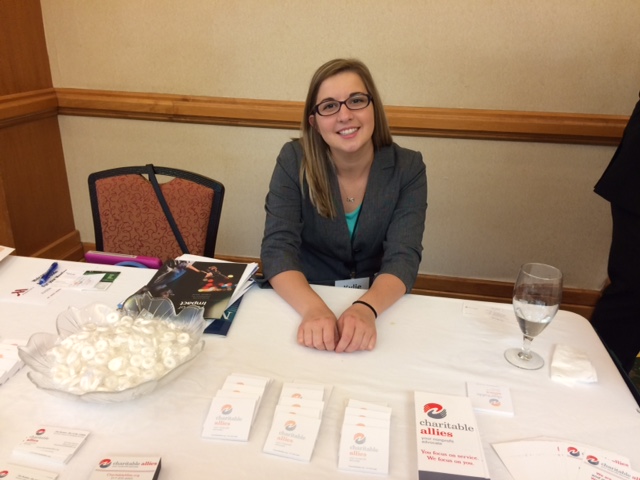
Even though I am only starting week four, I feel like I belong, like I have made great strides, like I have become a part of something pretty awesome. Where I work is different than what I am used to. When they said it was a small office, I assumed it would be like other places worked before- an office with 12-15 people. Just enough to get to know everyone pretty well, and maybe even a few would become friends. Well, when I got here on my first day, I arrived early, but the door was locked. Feeling slightly embarrassed, I made my way back to the car to wait another 30 minutes before trying again. After that, I was able to get in. That’s when I met Laura, the legal assistant/paralegal/doer-of-other-random-things. She introduced herself, informed me that Zac- the attorney and executive director would be late due to a last minute meeting, and showed me around the office. It was not the size of office I was used to. It only took aScreen Shot 2016-06-10 at 1.33.14 PM few minutes to realize that this was only an office of two (well, now three).

In that moment, I was surprised and not sure how the next few months would go. However, it did not take long to realize that having fewer people in the office would give me the opportunity to develop unique relationships with intelligent coworkers and work closely and ask questions of people who have more life and work experience than me.

Also, Charitable Allies is a small office, but one that has a large client base and makes a big impact in the nonprofit world. That meant that starting on day 1, I was given part of the workload, the ability to take on big responsibilities and learn about the legal world in a way I have not been able to before. I was essentially given a case to work on throughout the summer. Along with other responsibilities like writing news articles and doing work on policies for other charities and nonprofits, I will have time to build a case with evidence for one of the firm’s largest cases.

The last four weeks have brought opportunities, friendship, some challenges, but a lot of opportunities to learn. Within one week, Laura and I had found many similar points of interest and now, I consider her a friend. On day one, we realized that in addition to both being Valpo graduates, we also went to the same high school and are from the same side of town. Now, she has shared not only information and knowledge about tIMG_4445 (1)he legal world and the work that she has done over the last several years. I definitely look forward to more time to get to know her and growing in a work relationship and friendship.

Opportunities for learning, for networking, and for doing meaningful work have been abundant. Just this week, I shadowed a county prosecutor who let me go to court with her and allowed me to ask questions about her career path, her education, and things like work-life balance and finding a calling and purpose. Last week, I was able to attend the Indiana Philanthropy Alliance conference where I met professionals in the philanthropy world at community foundations, trusts, and more and got to attend various sessions learning about the intersections of philanthropies, nonprofits, improving quality of life, and more.

Entering into the nonprofit world was not something that I was new to four weeks ago. I have worked in three since I’ve been in college. But seeing it from the outside, from a legal perspective, and the philanthropy that makes this experience a unique opportunity to explore even more career paths that my life could take. I am looking forward to more weeks of learning, working, and developing relationships.


Inclusion Through More Than Just Art

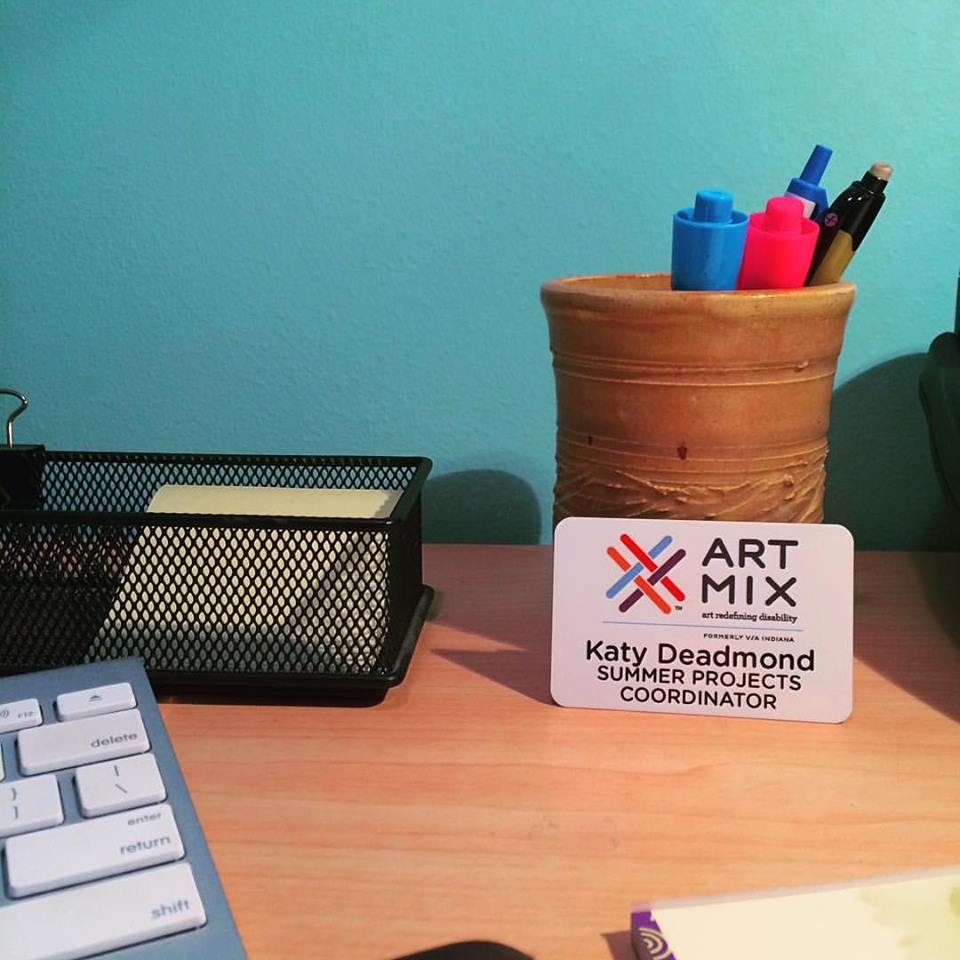
As I reflect on my time so far as the Summer Projects Coordinator at ArtMix, I am in awe of how much I’ve accomplished and learned in only three weeks. My first couple of assignments were fairly simple, like look around the Harrison Center (which is where ArtMix is located), familiarize myself with the website, read last year’s end of the year financial report, and memorize the mission statement:

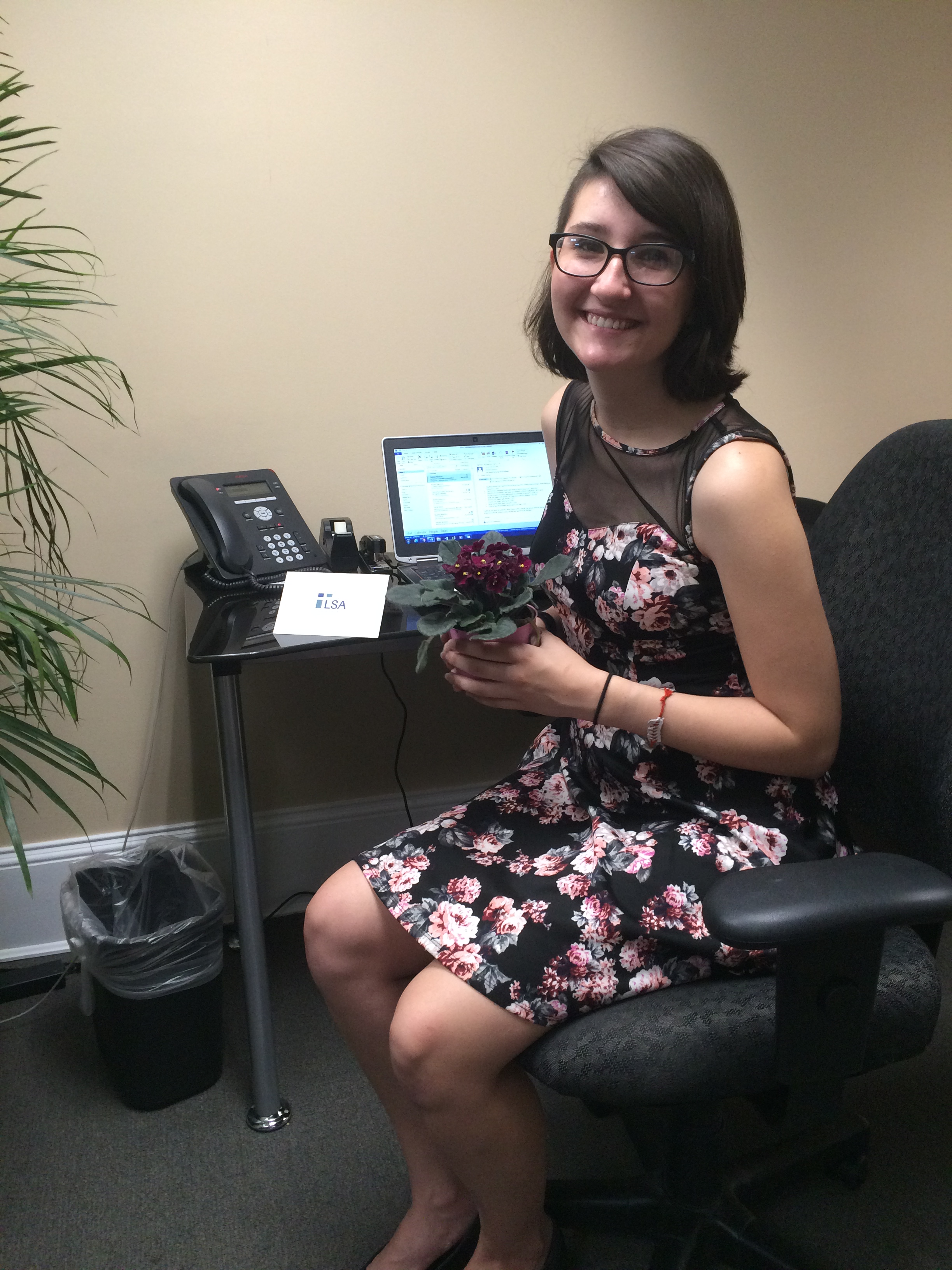
I love my desk space! And the name tag makes me feel very official.

I love my desk space! And the name tag makes me feel very official.

ArtMix transforms the lives of people with disabilities through the creation of art.

I quickly learned that ArtMix is all about inclusion, not just in their programs, but on the administration side too. The moment I walked into the office I felt like I was a part of the team. They value my ideas and ask for my opinions.

My co-workers believing in me, gave me the confidence I needed to jump right into the projects they had come up with for me. So far my projects have revolved around two events, that were raising money to support our program Urban Artisans. The Urban Artisans program is nationally recognized, and it helps students with and without disabilities develop vocational skills. The students learn how to create, market, and sell art, while being payed minimum wage.

Here's the Sccop

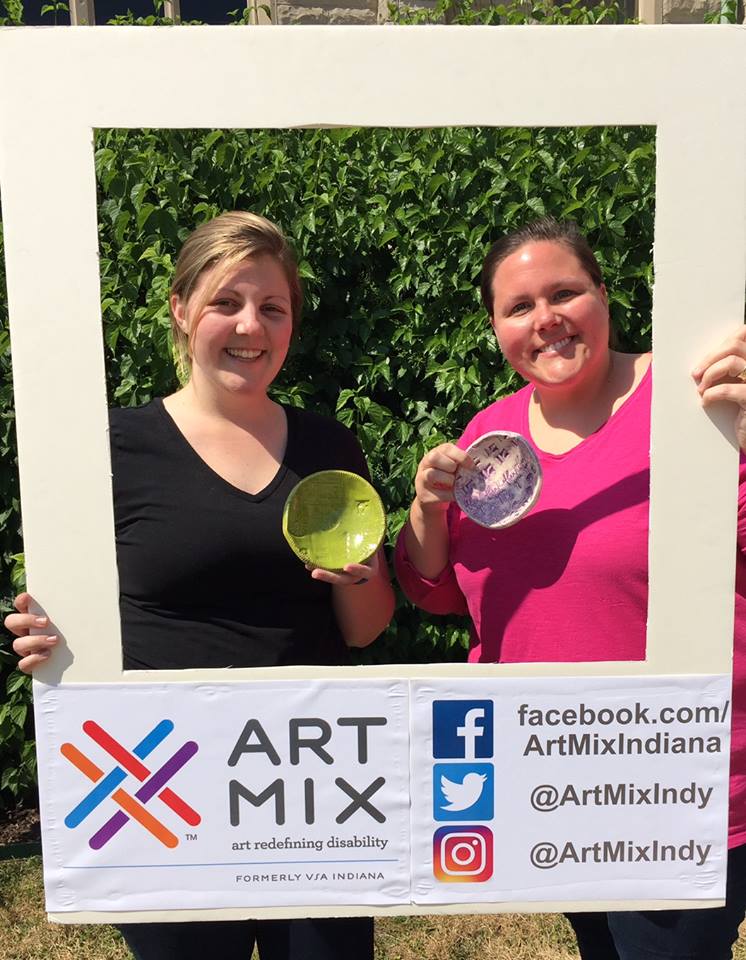
My co-worker Adrienne and I holding bowls as we setup for Here’s the Scoop!

The first event was called Here’s the Scoop. It was Saturday, June 11 in conjunction with the Independent Music and Art Festival. We sold ice cream in ceramic bowls made by the Urban Artisans, and all of the proceeds went right back into the program. In preparation for Here’s the Scoop, I corresponded with the volunteers. I also created a picture frame that people could take photos with, in the hopes of increasing our social media reach. I had total freedom with the project, and when it was finished, I was really proud of what I had created.

My Here’s the Scoop projects were easy in comparison to the projects for our other event. The kick-off to the Art & Home Tours was Thursday, June 16. The bulk of my work was outreach, which I really enjoyed. I created a list of organizations and contacted them in the hopes that they would spread the word about the tours to their coworkers. One place that I contacted was the Indianapolis Business Journal (IBJ). I had hoped that they would do some advertising for us, but I didn’t realize how big the publication really was. They got back to me very quickly, and they were very willing to work with us. Since I was the one who contacted them, this was my project, and that meant I was put in charge of creating the ads for IBJ. I had a lot of creative freedom on the project, and with some minor adjustments from my co-workers, the ad I created was published in the IBJ online. Its surreal to know that something I made was seen by hundreds, if not thousands of people.

I also created the program for the event. I’m starting to feel confident in my ability to create things on behalf of ArtMix, and I am feeling comfortable with our brand. I understand the way things should look in order to represent the organization well. I still have a lot to learn, but I think I’ve come a long way in just three weeks.

While I love corresponding with people and creating promotional materials, I think the best part of my job so far has been talking about the programs. I love sharing with people the work we do at ArtMix. During Here’s the Scoop, I got to tell people exactly what ArtMix does. We were able to share with so many people our mission. Next week I get to meet the students who are participating in the Urban Artisans program. I can’t wait to learn more about these students and see all that they accomplish this summer.


Hit the Brakes

Contrary to the typical face-paced world we live in, at NPH USA we take things a bit slower.

Week 1: Let’s get to know about NPH USA. Orient yourself to the history. Learn the daily grind. Memorize the “elevator speech.” NPH USA is a non for profit organization that provides healthcare, education and housing to orphaned, abandoned or otherwise at risk children in nine countries across Latin America and the Caribbean.

Week 2: Learn how to use all the fancy office machines. (They stuff and seal envelopes for you!) Remember how to do all those cool tricks on Microsoft Excel and Word (mail merge is a label wizard). Figure out how not to make the printer mad.

Week 3: Pick a project and go. Gala or Golf-outing? Why not both?! Make a timeline. Set deadlines. Set-up meetings. Draft letters to sponsors. Use cool editing skills from week 2 to make an awesome map graphic for the letter head.

Week 4: Find volunteers. Develop a central theme. Meeting with Gala venue. Learn what it means to collectively brainstorm and execute. The rest to be determined.

So what have I learned in my short time here?

Take my time. Not every decision needs to be made right away and set in stone. It’s ok to take your time fully thinking about something and brainstorm new ideas before settling on one. Even then it’s ok to go back and make changes. Be clear in communications. When working with others, it’s very important to clearly communicate what it is you are thinking (not everyone is a mind reader). Ideas may come up and may be interpreted differently if you are not clear enough. New ideas may come from misinterpretations but it is important to be on the same page so that joint progress can be made. Don’t be afraid to contribute. You may have knowledge in an area that others in the office do not. Don’t be afraid to share your comments and ideas. Maybe no one has ever planned a Gala before but you have experience in quinceaneras and conferences you can draw from. Reflect. Reflection can take multiple forms and its important to take the time to explore them. At the end of a task, take a moment to review your work and look for where this piece fits into the bigger picture. At the end of the day, take a couple of minutes to collect all that you have completed that day and cross some items off your to-do list. At the end of the week, think about what you have learned and how you could apply that knowledge to other events you may have going on.

NPH USA is an inspiring organization that is changing the lives of children every day. Knowing that the work I am doing is contributing to the life of a child who may not otherwise have means to survive, makes all the difference. Since starting my journey here, I have considered participating in a mission trip with the organization to experience NPH homes first hand. This type of experience is definitely one that I will bring back to the Valparaiso community and advocate for by encouraging others to become involved.

I wonder what week 5 has in store for me?


IMG_3724

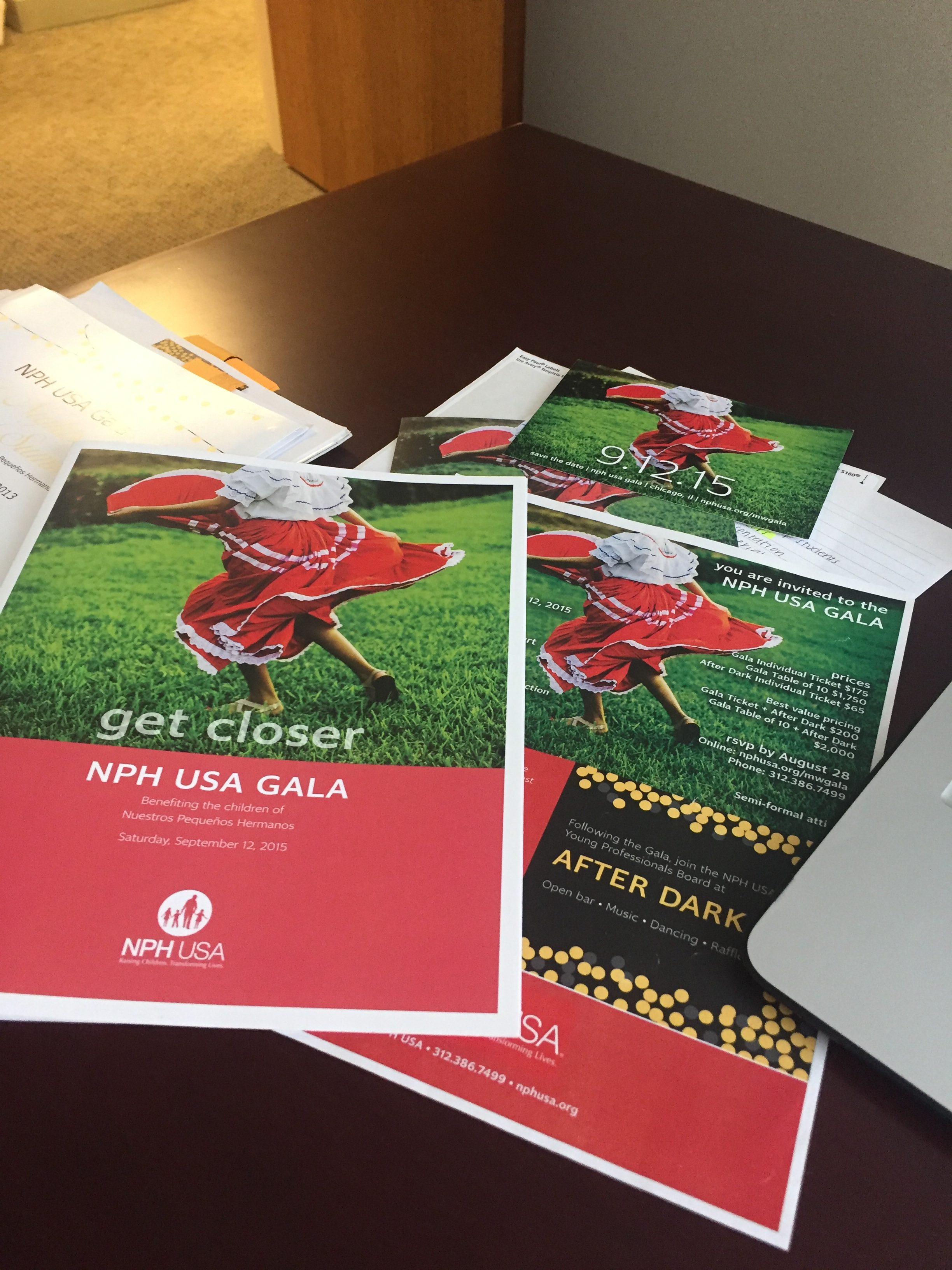
My messy desk consists of materials from the 2015 Gala.

IMG_3725

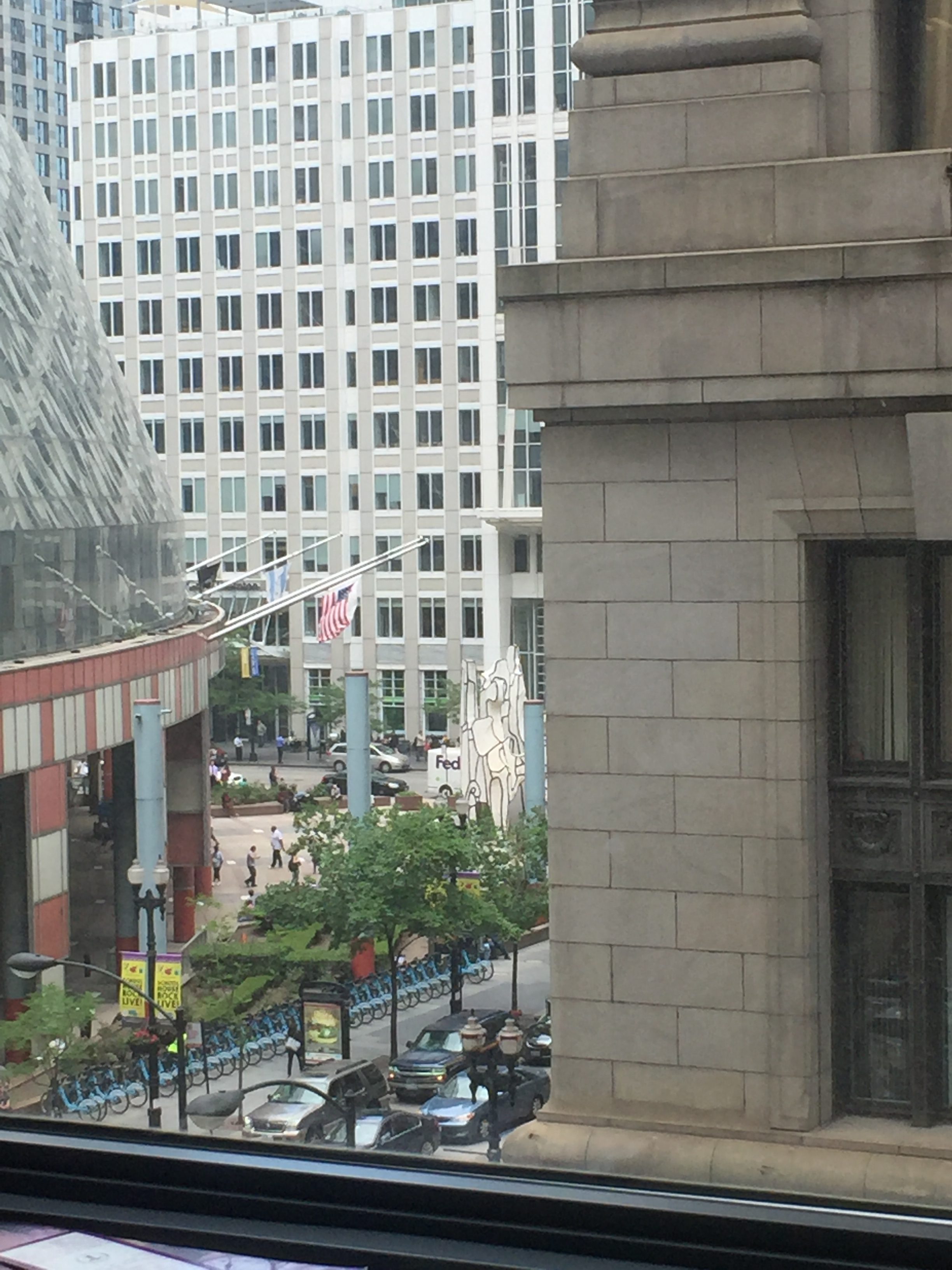
The view from my office: the Thompson Center.

Gifts are Greater

I didn’t know what to expect this summer.  When I read the placement descriptions there was something about Broadway United Methodist Church that caught my attention: their focus on conversation and community.  However, it was at a church and I was not a theology major or planning to go into ministry work.  When I arrived on my first day I very quickly realized that Broadway was different than any of the churches I’d been to, and that started with the building.  Valpo may be home to the largest collegiate chapel in the United States, but I was still overwhelmed by the size of Broadway, or at least the way in which the space is used.  Broadway has 9 kitchens; it is home to an architecture firm, artists’ studios, a pottery studio, a dance studio, and a boutique.  I’m still not entirely sure where to find everything.  Broadway uses its space for the community and to support the community.  If the space can be used for someone share a gift or talent, it will be used.  This is because Broadway is focused on gifts and talents.

I’ve been doing a lot of reading and a lot of listening my first few weeks at Broadway to help me better understand their work.  Broadway practices Assets Based Community Development.  This means that instead of asking someone what they need, you ask them what they’re good at.  Sometimes I feel like I am having to un-train myself.  I think many people have become so accustomed to caring for needs and seeing volunteer work as servicing a need, that the idea that there is another way to approach work with those in poverty has never crossed their minds.  However, asking people what they need is also asking them what they don’t have.  Assets based work moves away from a needs approach and looks at what gifts or assets a community has.  As Rev. Mather told me in a story about some of his previous work on one of my first days, “we stopped asking people how poor they were, and started asking them how rich they were.”  This is about seeing worth; it’s networking and finding gifts in the community that can be shared to the benefit of others.  It is about communities that are invested in one another: people who watch out for kids and have skills that their neighbors can benefit from and vice versa.  Assets based work means that people have agency, and it also shows that communities already have the talent and tools to be stronger when people work together.  We all benefit from an assets based approach because we build relationships.

I’ve had many conversations and been introduced to many people in my first few weeks.  I’ve listened as an artist shared stories of his process, and shared insight into the power of observation.  I’ve interviewed students for the summer roving program—where kids go around to meet and bless their neighbors—and listened to them describe themselves and their neighbors.  This week we’ve been going to the homes of the students that were hired to get to know them and their parents.  As myself and the other intern and roving coordinators walk to these homes, I learn more about the neighborhood and the people I am working with.  The first visits in the neighborhood were intimidating.  Talking to strangers is not easy, but every conversation has taught me something.  Everyone is so friendly, and the conversations go in so many directions, pleasantly surprising me as I learn about the people in this community.  I find that I already recognize faces as we walk to the next house, and people are quick to say hello if you walk past them on their porch.  We live in communities and we benefit from remembering that, from having conversations and sharing our gifts.  When we start to build relationships we see people for what they have, and the idea that we can miss out on gifts because we focus on needs is a reminder of how important conversation and connection is.  We all benefit when we see our neighbor for their gifts and talents.

Part of the Team

So I get on the CTA Blue Line, sunglasses on my head, planner and pen in my purse, and cellphone GPS ready to guide me once I get at my stop. I couldn’t look like I didn’t know where I was going; city people know when you aren’t from the city. Fortunately, I found Erie Neighborhood House no problem. In fact, I was 45 minutes early… you don’t want to be late on the first day. But I also had not intended to be that early. I met with Micaella and Emily, the two women who will be serving as my supervisors this summer. So far so good. I later met Jane and Stephanie, two other women who I will be working with this summer too. Okay, I can roll with this. I got a good feeling about being here. At the conclusion of my first day, I asked Micaella if I should meet at her office the following day. She immediately corrected me, “our office.”

I hErieNeighborhoodHouseave been at Erie Neighborhood House in Chicago working with the Health and Leadership Programs (HLP) Department for two weeks. I immediately felt welcomed and a part of the team. I do not feel like an “intern” – getting coffee and making copies – but instead I am completing tasks and brainstorming programming ideas that will impact the lives of the community we serve.

West Town, one of the location where I am working this summer, is a predominantly Latino community. On my second day at Erie, Jane and I spent about an hour and a half creating a summer program for 7th graders in the area. I found myself pulling from not only my social work knowledge, but from my programming experience from when I worked as a Resident Assistant in the residence halls. It was super cool! I am sure many undergraduate students can relate to this feeling. While you are in school and taking classes related to your major or not, you find yourself questioning, “Will I ever actually use this?” Before heading to Erie I was terrified that all of my knowledge would fly out the window; that I would not remember anything that would help me at this placement. I was definitely a pleasant surprise to see that this was not the case!

In addition to West Town, I will be spending the other half of my time at Erie’s Little Village location also serving a predominantly Latino community. I am still acclimating and finding my role at this location, but from the moment I walked into the building I knew that powerful, impactful work was taking place all around me; I could feel it. I am very excited to see what I can contribute to this energy at Erie House in Little Village.

I get off the CTA Blue Line back at my home stop. Shortly after, my parents come to pick me up and of course they ask, “How was your day? What did you do?” While I would love to explain to them how cool the women I work with are and how similar our personalities are, or the conversations I had about advocacy, future plans, and not needing to know what I want to do for the rest of my life, or even about how effective and important the work we are doing is, I simply respond with, “It was good. I worked on programs today and met some of the participants in the programs.” It would be quite a long conversation if I wanted to express to them just how cool Erie House is and all the things I have been learning!

As the summer continues, I look forward to understanding more about Erie House’s work and its impact on the community we serve. I am excited to get to know Micaella, Emily, Jane, and Stephanie better and to work with them – not as an “intern”, but as a part of the Erie House team.


Why am I here?

I wander the streets of Baltimore, searching for the bus stop. Is it this street? No. That other street? No. Maybe I passed it. Turn around, try again.

I find the bus, I board, I anxiously observe all the other charmingly dressed workers on their way to the office. I get off a stop too early. I walk in the hot sun. I finally arrive.

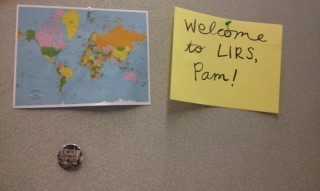
I am greeted by one of the friendliest people I’ve ever met – my supervisor, Folabi. He gives me a brief summary of who everyone is in the office and what they do. I am introduced to my cube and it is here I remain, working diligently for some of the most passionate, loving people I’ve ever met, for a mission I could not agree with more.image2

This is the end of my third week at Lutheran Immigration and Refugee Service (LIRS). As I slowly began to settle into my surroundings and remember names of coworkers, I also began questioning my passions, my desires, my purpose. Why has God lead me here? Why do I feel unsatisfied with my work? Do I have hidden expectations that have not been met? How do I befriend these strangers in all walks of life? How do I stand for the mission of LIRS when I feel so isolated in my simple “intern” tasks?

These questions are not new for me. I have had similar moments of pondering in past internships. So why was this happening again? Before I reveal the answer, I would like to share the mission of LIRS and my part of role in it.

This organization’s mission is to assist in the resettlement process of refugees, immigrants, and asylum seekers. When refugees come to the United States, they have no legal rights, are often placed into detention (essentially a prison holding cell), cannot understand a word anyone says, are often separated from other family members, and are given little support and no guidance by the U.S. government. If their case is approved by court (in other words, they are fleeing from a legitimate fear), they have three months to find housing, a job, and learn English before the government cuts all funding and support. This is where LIRS steps in. Their work, in a nutshell, is partnering with Lutheran churches and other organizations all over the country to provide community support to these refugees as they are beginning the most grueling process of their life.

The work done here is faith-based, as Christ speaks of not turning our back to the stranger. My eyes have been opened to the magic of this commitment, as I discuss projects and outreach strategies with coworkers and interact with refugees. The domino effect of the work done in this little Baltimore office extends on forever, and it was not until joining my coworker at a function in Pennsylvania that I was able to catch a glimpse at the fruit of their efforts here. It is a beautiful, holy waterfall that flows from this office – my frustration and questions as I mentioned previously stemmed from not understanding this waterfall, this trickle-down effect. Why should I feel satisfied sitting in an office all day on a computer? In the summer!? I thought I was out of my mind when I began this cubicle job (and maybe I still am). But if one thing has been at work in this office, it is the Lord.

With coworker Amanda in Mechanicsville, PA, after a long day of speaking with Lutheran pastors about LIRS

With coworker Amanda in Mechanicsville, PA, after a long day of speaking with Lutheran pastors about LIRS

My tasks have no meaning by themselves. Why am I stuffing name tags for three hours? Well, it is because refugees will wear these name tags as they present their stories to White House staff in the White House on World Refugee Day in hopes of tapping into the powerful emotions of those people that write immigrant legislation.

So, what is my answer to the questions written above? I will never be satisfied in a job if I am seeking worldly gain, such as recognition or experience. The tasks I complete will never satisfy me unless I recognize the power behind each one of them. I am working for an organization that acknowledges the coming Kingdom of God, and this has brought me peace. My efforts are not for myself or even for the refugees I help. Rather, every stroke of this keyboard points to God and His glory, for the purpose of sharing His love and spreading the Gospel “to the ends of the Earth”.

A beautiful view of the city of Baltimore

A beautiful view of the city of Baltimore


Welcome to CAPS!

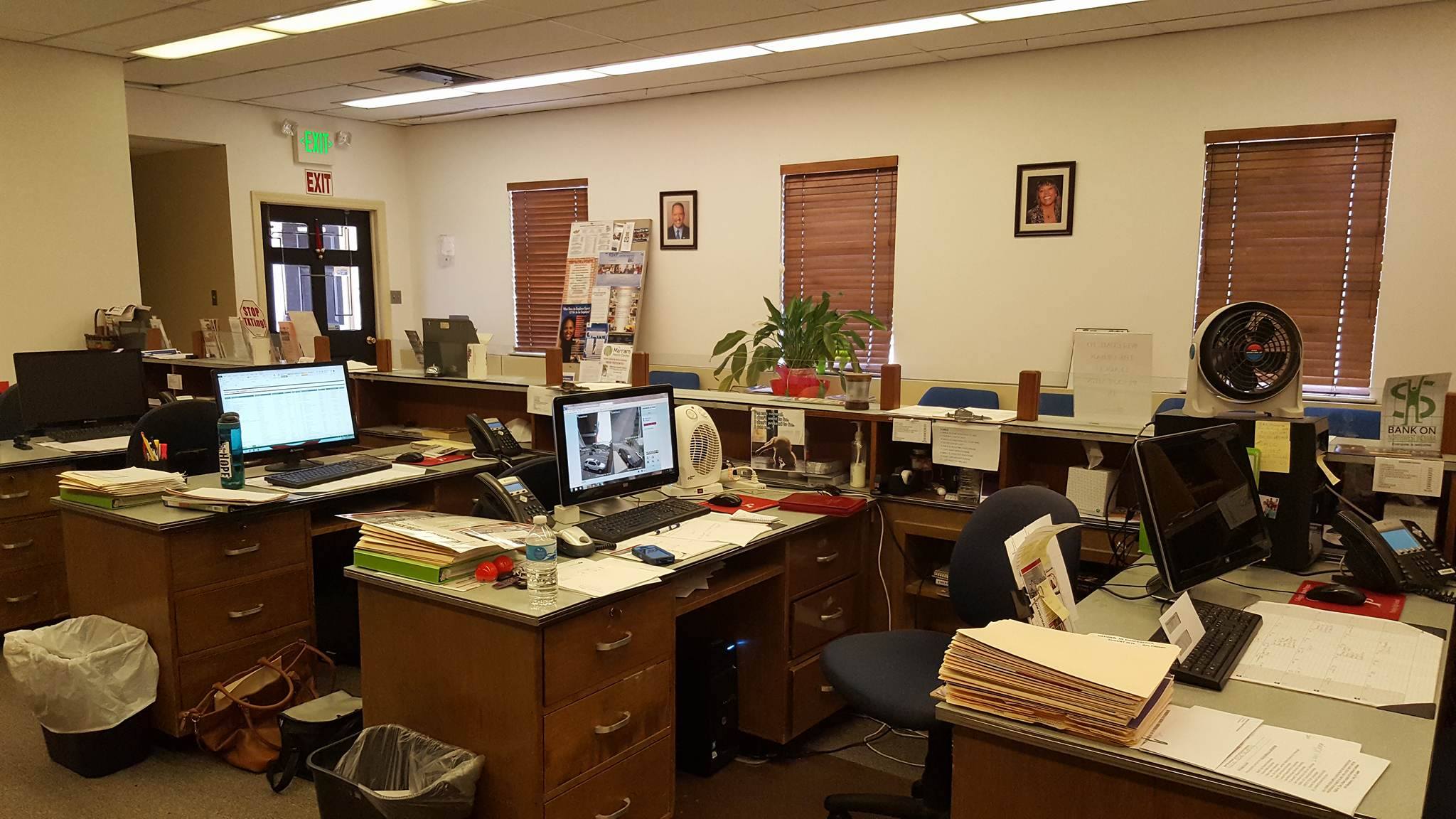
This week marks my second interning with the Urban League of Northwest Indiana through Valpo’s CAPS fellowship program and so far the experience has really been like no other work experience I’ve had so far.  Coming in to this internship I really didn’t understand what the Urban League does, but I’ve since learned a great deal about their work in the Northwest Indiana community. Basically, they have three core areas- education, employment, and diversity and inclusion. They hold several large events like a college fair in the fall, and a diversity and inclusion luncheon, as well as sponsorship events with other community organizations. In addition to these they also work on a smaller scale, by helping connect individual clients with services in the community related to housing, food pantries, and employment.

One aspect of the Urban League that I find really fascinating is that although they only have two paid employees, they perform so many tasks in the community. A lot of this is through the hard work of their employees and board members, but also many volunteers that come in on a regular basis. That is probably the most inspiring thing I’ve witnessed while working with the Urban League so far- that there are so many people coming in to help without compensation but simply because they want to help and find the work important. These volunteers do work that is critical to the agency, and there is also a strong community dynamic between all the staff and volunteers who know each other so well, and that’s been really great to be a part of.

So far a lot of my work has been on the “front lines”- or basically working at one of the four front desks which are accessible to clients that come in and we are all tasked with answering the phones for questions related to different services. One of the most rewarding things I did today was through a phone call as a student called with questions related to a scholarship application and I helped walk him through the process. The greatest independent task I’ve been working on the past couple weeks is organizing a donor list with contact details about all the various donors, and donations the Urban League has received presently and in previous years. I will also be helping to organize the college fair throughout the summer.

Although I’ve learned a lot my first couple weeks at the Urban League, there is so, so much more to learn and I am excited to continue this process and further contribute to the amazing work being done here.

The outside of the Urban League building.

The outside of the Urban League building.

Me at my office for the summer.

Me at my office for the summer.

The "front lines" seen when walking into the Urban League offices.

The “front lines” seen when walking into the Urban League offices.

Blessed

I have had the opportunity to immerse myself in many different facets of the non-profit world during my internship at EMPOWER Porter County. I’ve done research, developed an initiative with co-workers, and presented ideas to possible collaborators. The majority of my time spent at EMPOWER was in the office, scrolling through existing youth development programs and filling my mind with case studies and facts. This was an extremely valuable task, as it taught me how much time it takes to really understand and become knowledgeable on a subject. It also taught me that research and Google searches alone are not enough for me to be inspired or to get my brain (0r heart) moving. I learned that communication and meetings are absolutely essential in the non-profit world to generate ideas, share experiences, and provide incredible insight that will ultimately make the project you’re working on a success. The meetings didn’t begin until the last third of my internship but it was certainly the most encouraging and exciting time. I, along with my supervisor and co-worker Mychal, met with numerous community leaders and professionals, all giving us extremely valuable feedback that helped shape our youth initiative. A meeting that sticks out in my mind was with Garner Tullis, the founder of Our Greater Good and former pastor of Bethel Church. After our meeting with him, I felt a renewed excitement for our project and a refresher reminding me why this project is so important to our community. His passion and heart for people was infectious and uplifting. He shared with us about his mentoring program with Our Greater Good and gave us some insight into how the mentoring process develops. While I learned a lot about how to proceed with our project and where we might have hurdles, I was overwhelmingly encouraged by the meeting. I think that’s how non-profit work is so rewarding. Yes, it is hard work and sometimes the payback is few and far between. But working collectively with other like-minded people towards the benefit of others is the most fulfilling position to me. I most definitely want to continue work in service when I graduate.

Here are a just a few realizations that I’ve come to over the past few months at EMPOWER:

  • It is sometimes hard to stay motivated in an office environment when it’s YOUR responsibility to get work done. Put your phone away, make some tea, and stay focused.
  • When presenting an idea to an individual or group, it usually takes several “tries” to refine your presentation so that people understand and respond well to it. Sometimes you have to have a few rough “pitches” to learn how to read people and tweak the communication style appropriately.
  • Both using research and conducting research are both persuasive elements in the non-profit field.
  • It takes a lot of different brains and experiences working together to formulate a proposal. It’s all really confusing and fuzzy for a while until you begin talking to people and putting more organized elements into the project.
  • Ask for help and direction (sooner rather than later).
  • Lastly, I realized that the non-profit world is full of extremely kind and passionate people are have a heart for others and I truly am blessed to have met so many of them.

We Are All in One Mission

  • You will be the one connecting people one day – that day is closer than you think
  • A good manager should be training their team to take his/her job
  • The difference between humility and humbleness / ignorance and stupidity
  • Be confident in your abilities, but do not be arrogant
  • Constantly balance between your wants and your needs
  • Dream big but be realistic
  • One organization cannot do it all

These nuggets of wisdom were casually, but carefully, stitched into the fabric of conversations with the CPO, CSO, CFO, CEO, Directors, consultants, and other members of the NLCS family. The ‘life lessons’ listed above come from a very long list of things I learned during my 8 week CAPS Fellowship at National Lutheran Communities and Services. (I would love to share the stories that accompany the bulleted list above, however I do not have space in this forum. Please ask if you are curious!)

Behind the scenes of our video shoot. I was able to help interview the Chief Philanthropy Officer, Kathryn Bearwald.

Behind the scenes of our video shoot. I was able to help interview the Chief Philanthropy Officer, Kathryn Baerwald.

 I developed many skills because of my work with NLCS; some of which  include – producing a video, researching end-of-life care, creating donor profiles, communicating with grantee sites, etc. It was through these tasks and wonderful conversations that the purpose of the CAPS Fellows Program became wonderfully clear – we are ALL called to a life of service. This fellowship program calls students to  action and provides a pathway to discern that call.


“You are not here merely to make a living. You are here in order to enable the world to live more amply, with greater vision, with a finer spirit of hope and achievement. You are here to enrich the world, and you impoverish yourself if you forget the errand.”  ~Woodrow Wilson

Throughout my time at Valparaiso University I have had a myriad of opportunities that have called me to action – alternative spring break trips to Washington D.C. and Selma, AL, studying abroad in Costa Rica, SALT projects in Fall and Spring semesters, a variety of classes, and this fellowship program. Each of these opportunities, and countless others, have identified a need and challenged myself and others to get involved in that cause.

The CAPS Fellows Program is unique. It enhanced an internship into a discernment process, simultaneously connecting me with distinguished alum and building my resume characteristics. I learned the power of listening and how to ask difficult questions, during ‘Reflect-ins’ with other fellows. I gained confidence in my abilities but was humbly reminded of my reliance on others’ expertise. And I gained a deeper appreciation for the opportunities and experiences I have had and how those have shaped my Calling And Purpose in Society.

One of NLCS grantee sites quoted the hymn We Are All In One Mission in their grant application and I have been continually impacted by the following verse:

We all are called for service
   To witness in God’s name;
   Our ministries are different,
   Our purpose is the same:
   To touch the lives of others
   By God’s surprising grace
   So every folk and nation
   May feel God’s warm embrace.

This theme has extended through every aspect of my summer. It holds true in my work, in the mission of NLCS, the work of all the CAPS fellows, my conversations, and what I hope for in the future. We are all called to some form of service – those forms are unique and different but we all hope to affect change and do it with grace, love and compassion.

Hiking in the Appalachian mountains with other CAPS Fellows and wonderful friends!

Hiking in the Appalachian mountains with other CAPS Fellows and wonderful friends!

The delicious cake from our send-off party

The delicious cake from our send-off party on the last day at National Lutheran Communities and Services.


Panera and Possibilities

My last full day at EMPOWER Porter County was a beautiful summer day. The sun was shining, there was a cool breeze, and beautiful cotton candy clouds littered the blue sky. My supervisors, Heather and Kaye, decided to take me and my coworker, Faith, to lunch in order to celebrate our last day together as a staff. Panera in hand, we sat outside to enjoy our meal. It was at this time that Heather asked us the question:

“So what do you two think you learned most from your time with us?”

I mulled the question over in my mind as I chewed my flat-bread. I looked out at the businesses across the street from us. Parking lots filled with nice cars and people with full wallets, ready to spend their paychecks on haircuts, electronics, mac n’ cheese, or some craft supplies. If my time at EMPOWER had taught me anything, it’s that not everyone has those opportunities, and as I finished my lunch and felt my stomach filling, I remembered the stories I had heard of kids going to school hungry, or being made fun of for only having one T-shirt. EMPOWER made me aware of my own privilege and blessings in my life. I had a great education, great parents, and great mentors. But not everyone has those gifts. Some people have to work hard everyday in order to learn, care, and survive. And some of them have to start learning these difficult lessons when they’re no older than six. When I was six, I worried about which episode of “Rugrats” would be on when I got home from school.

My point is, it’s easy to forget that people struggling to succeed actually exist. In the Valpo campus bubble we get caught up in getting a good grade on a paper, or getting that one really cute girl to notice us, when down the street there is a seven year old kid who has to take care of his/her younger siblings because mom is at work. My time at EMPOWER made those struggles tangible for me. I learned not every character is the same. Not every story has the same starting chapter.

I also learned that people can be more interesting than any character I could ever come up with. In the many meetings we had as a staff, we met with CEOs, program directors, professors, doctors, pastors, and parents. It was easy to assume what each meeting would be like, how everyone would behave, the pleasantries, the facades. But what made the meetings exciting to me was how every person was such a character. They told jokes and stories that made me understand why they do the work they do. They made funny facial expressions and asked questions. They were real people. It’s always so easy from the outside looking in to identify somebody from their title. “I’m the CEO of the local YMCA.” But his name is Bob, he likes to wear polos, and tell a lot of jokes and talk about sports. He’s not just a CEO, he’s a person with feelings and motivations just like anyone else. The superintendent isn’t just in charge of the school district. She cares about each and every kid. She is a Green Bay Packers fan and when she couldn’t find her flyswatter, she chased a fly around the office with a toy baseball bat. It’s these unique stories and quirks that made my experience at EMPOWER so rewarding. I think it’s so easy for us to forget that people are people, and not just the positions they hold or the profession they follow.

So as I swallowed my last bite of flat-bread and cleared my throat, I looked at Heather and Kaye and said:

“Ooof…where do I begin?”

Ready to Go

It’s now been a week since my internship at Concordia Place ended and now that I’ve spent a few days sleeping in and watching Netflix instead of working, I’m starting to prepare for my senior year at Valpo and also the years ahead.


Throughout the whole summer, I was asked the typical “What do you plan on doing with your degree?” or “What are you doing when you graduate?” You know, the questions that people ask you from the moment you start looking at schools. For years, I have felt like I’ve needed to tailor my responses more to what people want to hear like “I’m thinking about becoming a teacher” or “I’m thinking about law school.” Because with a History and Latin double major, those are the job options that people expect from me. And I convinced myself that those were my future career options. But I realized that I really didn’t want to be a lawyer or a teacher. I don’t want to settle for what people expected of me. I want to do what I want to do.

11816889_884649134916924_4229251799268419856_n

Some members of the wonderful Advancement team and myself.

This past year I spent a lot of time learning about social injustices in our country. I participated in events and discussions and tried to figure out what my part in the fight is. During this searching, I started to think more seriously about working in a non-profit that serves the community, but I wasn’t quite sure how that would work.


The reason I’m so grateful for this fellowship is that it gave me the opportunity to figure out how I could follow what I was being called to do. I watched some of my friends struggle this summer with figuring out what they were called to do while I found myself reaching a clearer and clearer picture just by going into work every day.


Working at Concordia Place I learned more about what it means to run an organization. Not just becoming educated about the issues, but what it really means to work in the non-profit sector. I found myself doing a little bit of everything during my internship- things like researching foundations, writing grant proposals, designing signs, entering donor information, helping with volunteer events, social media- anything and everything that did something to help the organization grow. I worked on a lot of projects that had more to do with the day to day running of an organization and I really enjoyed doing all of that work.

IMG_2763

A sign I created that more importantly has some statistics about Concordia Place’s year.


One of the conversations I have had with a few of my peers is “What if we don’t feel like we’re changing anything?” And this summer, I was lucky to live out these questions. Concordia Place, as an organization, does wonderful work, and while I wasn’t directly working with the kids or teens or seniors, I was contributing to the overall mission. Some days, it didn’t always feel like I was doing anything. But I was. I had the unique experience of entering the CEO/president’s donor interactions which was a bit tedious and boring, but I got to see what a CEO/president does on a weekly basis, and this information was also important for advancing Concordia Place as an organization.


I’ve always been a firm believer in the fact that every bit counts, and this summer, I got to live that out. Large change isn’t going to happen without all the people on the ground- in the offices, on the streets, wherever and anywhere there is some work to be done. We’ve got to start there and then work our way up, and I feel called to be one of those people.


One of my last days, my alumni mentor and I visited the Chicago Botanic Gardens. She took me to the Japanese Gardens and walked me over a bridge that was a zig zag because according to some Japanese folklore, evil spirits have to walk in a straight line so they can’t follow you over this bridge. She took me there so I could start my senior year fresh and ready to go without any evil spirits behind me, and I am. I’m ready to go and do what I feel called to do and what I want to do. I’m ready and the CAPS fellowship is to thank for that.

IMG_2780

The bridge at the Botanic Gardens.


Success in the Process


W2T logotype final


Yesterday was the last day of my fellowship with Water to Thrive (W2T) and tomorrow, I’ll be boarding my ninth plane of the summer headed back to my family. Did you get that? Nine planes. Now, I wish I had recorded the exact airtime that amounts to, but a rough estimation comes out to just short of two full days above the clouds. For anyone who hasn’t seen what I’ve been up to this summer, I’ve been in the wonderful heat of Austin, Texas. Before settling here for the summer, however, I went on a two-week trip to Ethiopia with W2T where we toured the country and experienced the results of enabling and empowering rural communities through the gift of clean and accessible water. It’s fascinating for me to think of the amount of time I’ve spent in planes this summer, because it wasn’t so long ago that I had little interest in traveling. I was comfortable with the environment in which I grew up, and I guess that explains why it’s less than a three-hour drive home from school. I am beyond joyful that I ended up at such a fantastic university that made me aware of and prompted me to go to places I hadn’t considered before.

The cover sheet for the BPD.

The cover sheet for the BPD.

In my last post, I reflected on the idea that being partially immersed into another culture, especially in another country, can influence your perspective and how you understand and share that perspective with others. I have continued to grapple with that idea this summer through discussions with other CAPS fellows and conversations with those in the office. I have been especially fortunate to consider this through my work on a Best Practices Document for W2T’s implementing partners. The BPD, as it has been conveniently named, will serve as a guideline for implementing partners of W2T. Its purpose is, in part, to “ensure efficient and effective service delivery while maintaining desired quality standards.” Thus, it is a resource that will be available to NGO partners as well as a way for Water to Thrive to evaluate the quality of services that their partners provide to rural communities.

Thomas and I on the last day.

Thomas and I on the last day.

The idea of the document might sound really great, and in our research this summer, Thomas (another W2T intern) and myself have seen that there is a whole network of great resources out there for non-profits and NGOs that aim to accomplish something similar to ours. However, we have come to realize that those who work in international development must be very mindful of the role that we can play. Thomas has a saying that goes: “Never do for somebody else what they can do for themselves.” It has become something that we keep constantly on our minds as we write the document because in the area of rural water supply, failure to work by that saying has caused many water projects to fail far sooner than they should. Many good-intentioned and qualified people have worked, individually and through organizations, toward providing clean water to those who need it, and have failed to fully grasp that it is community initiative, not just expert outsider influence, that allows for sustainable projects.

As we’ve proceeded with the BPD, we’ve wrestled with identifying areas where we are at liberty to require, or should rather just recommend. We’ve also come across areas where we ought not try to offer anything because either we don’t know, can’t understand as Americans, or need to leave it completely open for the community to decide. To try to account for this, the above mentioned idea of community initiative has formed the basis for the BPD. From the selection of the location to the long-term maintenance of the project, the community is to be fully involved. The communities to be served are chosen by Water to Thrive partners based on their need, but also on their willingness and ability to manage and maintain the water point. All beneficiaries of the water are required to pay, if they are able, a small monthly amount of money that is saved toward a maintenance fund, as well as used to pay a guard who ensures that the water point is not abused. All W2T projects are required to have Water, Sanitation, and Hygiene (WASH) committees. These committees start to form before construction even begins and members take on different roles to manage the water point, as well as prompt community members to make decisions that are in the best interest of all. The community is expected to contribute to the construction of the project in different ways. That may include providing laborers or even paving a road for construction vehicles. In the experience of Water to Thrive, these initiatives along with many others have led to successful and sustainable projects.  My hope is that Thomas and I were able to communicate humbly, accurately, and clearly and that the BPD may become a useful resource for W2T’s partners.

Working for W2T this summer has been invaluable to me in many ways and taught me countless lessons. I’ll just write about a few. I’ve learned how to be a better team member, as Thomas and I have needed to come to mutual decisions about the best, yet realistic, procedures. I’ve learned to struggle with a tough task, to make a plan and make deadlines, to improvise when information is lacking or an email response won’t come. I’ve learned about the constant need to put aside initial perceptions or ideas that I feel like should be used, and rather place focus on what may really be best for communities. I’ve learned that success is sometimes found in the process more than at the end. I think this last one has been the most encouraging, since we didn’t write all we wanted to into the document. It’s been an incredible journey this summer, though, as I’ve worked with great people in the office and in Ethiopia. I’m sad to leave so early, but excited to see how the experience and lessons learned this summer guide me forward.

The Search for Calling

What do you want to be when you grow up? This question rings through the days of childhood and is littered with the hopeful responses of “doctor”, “fireman”, “teacher”, “astronaut” – all things big, bold, and exciting, with the promise of a new adventure around every turn. I personally aspired to sing and act on Broadway…a dream that was somehow transformed into the world of health care. I suppose that dancing on stage and “dancing” into a patient’s room are one in the same, right?

What are your plans after graduation? Similar to the question presented in childhood, this question is also saturated with curiosity, hope, promise, and adventure. It can be daunting when faced with the prospect of formulating a response that meets the expectations of the asker. One may feel as if their path of study is a step towards life changing work, or at least the fulfillment of a personal passion that will also pay the bills, until met with the response of “oh…that’s nice…and what do you plan to do with that?”

Having embarked on a path towards nursing, I cannot say that I have ever received the aforementioned response when sharing my career choice. Instead, I am often greeted with comments of approval, head nods, and smiles. It is invigorating to have found a profession that I am passionate about and proud of, one that seeks to serve in a multitude of ways.

But the question still remains, is this my calling? Is this my purpose?

During my fellowship at National Lutheran Communities and Services I was surrounded by an array of intelligent and impressive people who each possessed a contagious passion for the mission and ministry of the organization. Each staff member was equipped with a unique set of gifts and traits that enabled them to contribute to the service of our communities and beyond. It was here that I IMG_2764observed the beauty that is found in the convergence of differences, of the powerful things that can happen when individuals learn to share their talents and rely upon those of others as well, acknowledging that no one person has all that is needed to complete the mission – be of an organization, or in life.

It was here too, that I was reminded of the multifaceted layers of all people. Our Chief Philanthropy Officer is an avid angler, and a great sports fan. Our Chief Financial Officer has a passion for 80s music and singing through the halls. Our Chief Strategy Officer is most at home at sea, and can often be found sporting a colorful bow tie that relates to his love of the water. At first, some were surprised to learn of these characteristics, amazed that a lawyer would be found knee deep in waders, or that an accountant could possibly have an upbeat personality. And yet these enjoyed pastimes are only glimpses into the entirety of the people who became my family for the summer, mere glances at the intricacies that compose the ones who invested in my life and taught me more than I could have ever imagined.

Just as we have a tendency to silo off the abilities of the people we meet, I believe that we have the tendency to isolate the definition of one’s calling or purpose. It can be so easy to categorize – he is a researcher, she is a sales clerk, he is an artist – all the while failing to realize that who the person is, and the way in which they influence others, extends beyond far more than the title of one’s profession.

Yes, it is true that I hope to gain the title of a nurse. I also hope to invest deeper into health and human rights policy and work in population health. But these ambitions are specific directives. They themselves are not the overarching calling or purpose of my life.

Discovering the joys of sailing with my summer family.

Discovering the joys of sailing with my summer family.

This summer has helped me to see that calling and purpose are not static concepts. Rather, they are fluid, and will change and grow as does my life and understanding of it.

While I hesitate to assert a specific calling over my life, such as a calling to a career, I do believe that there are core aspects of my calling and purpose that will always remain, even if the expression of them changes. Three of theses characteristics were made evident this summer as I was enveloped in an atmosphere of stewardship, community, and life-long learning.

Regardless of where I may be or what I may be doing, I will always be called to be a steward of the time, talent, resources, and relationships that I have been given by God. All of life is a gift, and as such, the calling follows to make good of what I have been given, to be responsible in all that is placed before me and around me. The circumstances will change but the responsibility will remain that all of my life may bring glory and praise to God.

Following in this is the call to community – to live in community, to create community, to recognize the community around me. The summer has been filled with reminders that who I am is a compilation of the countless individuals who have had an influence in my life, both positively and negatively. It is impossible to claim sole responsibility for any aspect of my life. Rather, each step that I take is one linked to community, the communities I am a part of, and the communities I will help to create. Our calling is embedded within the network of human relationships, and the community that I found at National Lutheran Communities and Services helped to reiterate the incredible things that can be done in a supportive, empowering, and loving community.

IMG_2859

Breathtaking views of the Appalachians

Finally, I believe there is a call to life-long learning. To claim complete knowledge is an impeding arrogance that will prove destructive in any endeavor. NLCS taught me the value of admitting ignorance, of pursuing curiosity, of recognizing that there are endless opportunities to learn, and individuals to learn from. A life of constant learning creates a forward momentum that is contagious and dangerous – dangerous in the endless possibilities that await.

The questions of life will always continue. After graduation the queries will shift into that of what do you do? What is your vocation? While I will never have a concrete answer as to what my calling and purpose in life is, my fellowship this summer helped to reveal that such an answer is not required. My calling and purpose will always be fluid, carried forward by dynamic and overarching traits for which I am responsible. The questions will change, but so too will the answers. And for this, I could not be more grateful.

All the Little Things Count

As this internship came to an end, I realized that this was just the beginning. This was just the beginning for me. I am forever grateful for the opportunity to be part of this program. I have come to learn tons on and off the job from the Urban League, my mentor, and the conversations with other CAPS Fellows.


The opportunities given to me from developing the health care initiatives for the organization to working with Ms. Ola on the Federation of Block Clubs and the tenant council, to going to varies vendor events and representing the Urban League to getting to help clean up the 6th district of Gary have all been amazing experiences.


IMG_1884

General Health Pamphlets

When working on the health care initiatives I was a bit timid because of the importance of the project and with knowing the healthcare disparities that exists across different socioeconomic classes and races. For the first project, I created a general health pamphlet both in Spanish and English. Along with the healthcare pamphlet, I have also created a list of resources and health clinics spread throughout the region the Urban League serves. Moreover, as I was looking for more ways to help the community and make the resources be sustainable, I bumped into the Colgate Total Bright Smiles program. I wrote a grant and now hoping for a package of 300+ toothbrushes and toothpaste packs for kids! Lets keep our fingers crossed! I am thankful for being handed such responsibility of a project. Because of that, I was able to learn about my own potential and expand the resources the organization provides to help the community.


IMG_1991

Clean Up Day in Gary

Getting to help clean up the 6th district of Gary was definitely insightful. As my internship carried on I got to know Gary a bit more. Through this experience I learned from community members and their frustrations along with their determination to improve their neighborhoods both young and elders. Throughout the day we set out from a church to the streets to clean up yards of vacant homes. The most saddening part to me was when I found out that people from other towns were dumping their garbage and used tires on vacant homes. That itself disgusted me to know people would do such a thing. Instead of helping clean up and maintaining it, people were creating more problems. The clean up group consisted of a youth catholic group from all across northwest Indiana along with community members, police, councilmen, city workers and the mayor! The day was filled with bugs, garbage bags, meaningful conversations, learning, and loads of fun!

IMG_2006

Ms. Ola Morris and myself outside of the office

After this internship I got a bit more of understanding of people who live in deep poverty through the services provided and getting to know community members. The need is so much, and the Urban League does what it can with what it has to help who ever they can. It has been mind blowing to see the amount of work four people in the organization can do alongside with the handful of volunteers that they have. It has been a privilege to work with this organization and to learn from each individual. With this internship, I have learned more about myself and about the type of work I want to do in the future. There is a lot of work to be done. We need to not only help our communities, but also help our neighboring communities. No matter how big or how small, all work is significant and makes a big difference.

Convergence

Alexander-K-Uryga-in-front-of-Convergence


Another painting in our apartment is called Convergence by Jackson Pollock. Pollock, an artist that mastered the technique of splattering paint across a canvas, almost makes viewers dizzy with the array of paint that is dripped, splashed, and sloshed around in this masterpiece. I know that it even feels dizzy making this type of art, as my mother, cousin, and I made some of these types of “drip paintings” as they are called, before I went to high school.


Using simple, monotone, primary colors of white, black, red, yellow, and blue for his palette, Pollock throws the paint at the canvas, creating a “convergence” of vivid, vibrant colors that have been suddenly strewn together into lines that are hair thin, that are thick, and that are every shape and size in between.


With this unique method of assembling paint on a canvas, diversity is created. And as I leave the capital of my country, I cannot disconnect an apparent connection between Convergence and the capital.


You see, Convergence is full of diversity. Pollock’s painting is full of different colors, different shapes, and difference sizes, that join together to form a culmination of variation.


Likewise, our country is full of diversity. The United States of America is full of different beliefs, different ideas, and different people, and the capital is one of the places where these beliefs, ideas, and people come together.


And as I fly out of DCA, with my nose pressed against the small window, I notice all of the roads and highways that stretch out like arteries from the heart of our state, Washington, D.C. Opinions, thoughts, and persons are pumped into the capital as much as they are pumped out of the capital.


And as I fly out of DCA, I think of how I was pumped into the capital for the summer through the Valparaiso University Institute for Leadership and Service Calling and Purpose in Society Fellowship program. I thank them for giving me this gift of continuing my experience in our country’s capital as well as living in an apartment complex in Rosslyn which my family and I drove past four years ago, by mistake, not at all knowing then that I would be back there, not by mistake, ending up as an intern in the office of one of Indiana’s United States Senators and as a CAPS fellow at a public affairs and government relations firm.


I remember our CAPS orientation day in May, and I remember our discussion with the Director of the Institute for Leadership and Service, Dr. Elizabeth Lynn. We read a short story from Pablo Neruda, which is also in the book that the Institute gave to us, The Impossible Will Take A Little While: perseverance and hope in troubled times, which I read in its entirety, although it was not required. On page 168, Pablo Neruda sees “…that all of humanity is somehow together.” Elsewhere in the book, the theme of unity is clear; “The planet is in fact one interwoven web of life,” (141).


And as I fly out of DCA, I think of how I am being pumped out of the capital, into the wider world of human beings whose lives are inextricably intertwined with ours, and into the wider world that is much more like Pollock’s painting of convergence than some seem to realize.


Read more about Alex Uryga on his website, www.alexuryga.com.

Experiencing Hospitality

In times of uncertainly and confusion, a person desires nothing more than the calming kindness of a stranger or a neighbor, who generously offers assistance, support, and understanding. This is the ministry of hospitality. I experience this ministry every Friday when I spend my day at ICDI’s House of Hospitality, where I help the men living there with school assignments and learning English. The house, located in Cicero, IL, is for men who have been released from detention and have no other place to go upon their release. Upon hearing this process for the first time, I was awestruck by the unpredictability of it all. Dropped off on the corner of 101 West Congress, these men, uncertain of their surroundings but certainly confused on what to do next, are approached by a stranger who knows their name and nothing else. The stranger ask them to get in the car so they can take them to this mysterious house that their legal counsel has told them about. The men agree and the ministry of hospitality begins. Once they arrive, the new residents are given basic necessities: a small room to live in, clothes, hygiene products, and a small stipend for public transportation. Most, however, send a portion of this stipend to their families back home. I was more inspired by the hospitality extended to these men; yet, the residents also illustrate the ministry of hospitality in a miraculous manner.

The house is by far the most diverse place I have ever been. Fifteen men live in the home and more than 10 countries, spanning from China to Ethiopia and many places in between, are represented. All the men are bilingual and many are trilingual, yet levels of English vary the spectrum from minimal to superb. Communication, however, is not stifled by the barriers of language or culture because each man in the house extends hospitality to one another. It is as if the ministry of hospitality becomes a universal language they everyone is able to speak. All of them are separated from their families. All of them are living in an unfamiliar place. All of them are painstakingly waiting for some sort of status or permit to come from the immigration system. Many have been waiting for more than a year and a half, and the waiting will continue. The men deeply comprehend each other’s situation because they too are living the same reality. It is the shared experiences of restlessness in their waiting and anxiety about their futures that allow for the ministry of hospitality to be exercised freely. I will provide one example.

Headed to the house for the third Friday in a row, July 17th was a steaming hot day with spectacular sunshine that Chicago had not seen all summer. As I walked in, a delicious scent of spices and smoke coming from the kitchen filled the house. I followed the smell to find a feast being prepared by Ray, who is from Rwanda and no stranger to the kitchen. I have seen Ray preparing something or cooking a meal each of the previous Fridays. Each time he offers me something to eat or drink as soon as I arrive. I asked Ray what this feast was for. With sweat gleaming from his brow he told me that today was the beginning of Eid, which is the celebration that occurs at the end of Ramadan, a month of fasting and prayer for Muslims. Ray said the Muslims in the house were downtown praying and they would be hungry when they returned. So I asked Ray how I could help and the only thing he wanted me to do was test the food. The food was almost complete when the Muslims came back drenched in sweat and in obvious need of water and food. To their surprise, Ray had prepared a feast fit for the whole house so that all could join in their celebration. The table was set, the food cooked, and hospitality was served.

The most endearing aspect of this story was knowing that Ray is a Christian. Most Christians I neither know what Eid is, nor have they ever sat down for a meal with a Muslim. Yet, Ray understood the significance of the day, he understood his fellow residents of the house would be hungry, and he understood they needed food. And so he cooked for them. The Muslims did not ask Ray to prepare a feast full of chicken, beef, rice, salad, and soup. Instead, Ray used the ministry of hospitality to invite his neighbors to the table and join in a celebratory feast of both Eid and brotherhood. As ten men, some Christian and some Muslim, from numerous countries sat around the table, I was able to witness and experience the ministry of hospitality in a way that most people never will.

Opened two years ago, the Marie Joseph House of Hospitality for Men is home to 15 men representing more than 12 countries.

Opened two years ago, the Marie Joseph House of Hospitality for Men is home to 15 men representing more than 12 countries.

Interning with the Interfaith Committee for Detained Immigrants is unlike any internship I could imagine. Most internships focus on the completion of a project or report that will be of some use for the organization and display the impressive new skills or information the intern has gathered. However, this is not the emphasis of my internship. My role at ICDI is to experience this ministry of hospitality and solidarity. I will not leave with a specific task done or a tangible goal achieved. I will leave, however, with stories, relationships, and experiences: stories of remarkable encounters such as this one, relationships with the unlikeliest of people, and experiences that will shape my thinking from now and forevermore.


Wrapping Up at the Village

The past 8 weeks interning in a senior living community have been eye-opening in several ways.    Many residents have passed on even during my short time here, serving as a constant reminder that death is a constant presence in this environment.   I have learned about the multi-faceted operation that makes up a nursing home.  Housekeeping, laundry, accounting, legal support, janitorial services, and even a person for medical supplies are needed to keep it going.

Recently, since many of the departments have run out of things for me to do, I’ve been spending a lot of time with my boss in his office.  Some of the most personally enriching moments of the fellowship have been the conversations we’ve had on a variety of business topics, from the nature of healthcare to career and leadership advice.  My final major trip with him was to the Accountable Care Organization (ACO) meeting at St. Anthony’s Hospital in Crown Point.  An ACO is a concept created by the Affordable Care Act that encourages different health institutions to collaborate and reduce the cost of care.  We represented one of several nursing homes/rehab hospitals in the ACO.  Patients from St Anthony’s needing long term care are sent to one of us to maintain consistency and ease of follow-up.

I’ve also done some soul searching as I’ve been immersed in long term care, and I’ve decided that this field is not for me.  This conclusion is based on a variety of factors:  1) The license exam to become an administrator is very difficult and is roughly equivalent to nursing boards.  Both the state and national exams must be passed, and it is quite common for takers to fail them.  2)  Once an administrator is licensed, he or she is constantly put in a no-win situation where the state, residents, families, and staff must be kept happy when it is impossible to keep everyone happy.  As someone who is not naturally a people-pleaser, I have learned that I’m not wired to be an executive of a care center.  However, I would excel in the role of department head, in which I would lead a specialized section of the operation.  While my future calling and purpose in society is not in the field of my internship, I am nevertheless grateful to the Institute for Leadership and Service for the opportunity to discover that early on.

This isn’t to say that it was all work and no play.  As I mentioned in my last post, my boss invited me to go sailing with him and some of his crew on Lake Michigan.  On the second to last day of the fellowship, we left from Belmont Harbor in Chicago to go on a 3 hour cruise on the lake.  I learned about sailing terminology and how teamwork plays such a pivotal role in sailing and in leadership.  I also got some pretty cool pictures of Chicago from the boat.  It was a great way to wrap up a fantastic learning experience.

The front of the sailboat going out into Lake Michigan

The front of the sailboat going out into Lake Michigan

The view of Chicago from the sailboat

The view of Chicago from the sailboat

Like A Second Family

We’ve all heard the saying before. We refer to our best friends’ families, our church congregations, fraternities and sororities, and even our campus communities as our families. So to me, one of Horton’s Kids’ mantras, “like a second family..”, may be more accurate if it were described as a fifth or sixth family.

I have an incredibly loving, supportive, and close biological family at home. I would not be who or where I am today if it were not for my mom, dad, and three brothers.

I have an inclusive church family, as well. They not only have taught me countless lessons through the years but continue to send encouragement and hope.

I go to (in my slightly biased opinion) the greatest school possible, and am surrounded by friends and professors that continually motivate and push me to grow.

I am a very proud member of a phenomenal group of women. The Alpha Lambda Chapter of Chi Omega has undoubtedly shaped me into the woman I am becoming and has provided me with sisters to be there every step of the way.

I’ve spent the past two months living in an apartment with three of the greatest people I have ever met. They lended a listening ear, genuine excitement, and never ending love day in and day out.

Last, but not least, I’ve spent the past two months working in a community center, located inside of a housing project in DC’s Ward 8. Through that time I was blessed with the friendship and company of youth- from ages 4 to 17. I would not be who or where I am today if it were not for them. They not only have taught me countless lessons, but sent me off with encouragement. They continually motivated and pushed me to grow. They shaped me into the woman I am becoming. They lended a listening ear, genuine excitement, and never ending love- day in, and day out.

I am all too clearly aware that to these children, Horton’s Kids is truly a second, not a fourth or fifth family and source of love and support. And for many, it is a first. Looking back on each individual, group, and family that has helped me grow into a passionate, hard-working young woman, I quickly become aware I would not have been able to become so on my own. I’m sure most of you can look back on your life and say the same.

Unfortunately, not all children and young adults are fortunate enough to have several or even one solid support system. However, I am proud to say, with complete confidence, that every child in Wellington Park has at least one family that is there to motivate, love, and encourage them in Horton’s Kids. I am proud to say I am a part of that family.

Now, I’ve never been good at leaving. Summer camp in 7th grade, high school graduation, freshmen year move-out day… they all left me longing for just a little more time with whichever family I had become most recently attached to. This, however, is by far the hardest “see you later” I’ve yet to encounter.

Finishing my time at Horton’s Kids is leaving me a very strange combination of empty and full to the brim. I know that my efforts were appreciated. I received letters, crafts, going away cards and thank-you’s that showed genuine appreciation. One of my high school students came into the center this week immediately after finishing an interview at Chipotle.

“Anna, Anna, guess what?” Jermekkio began while walking through the door in a plain t-shirt and khaki pants, button-up shirt in hand. “I just left my interview, and they asked me the same questions we went over in the lesson yesterday! The exact same ones… I’m so glad I knew how to answer them. I also tucked my shirt in, took notes, and remembered to keep my eye contact!”

I’ve never felt more full.

At the same time, leaving hurts. These kids are the ones I’ve spent the majority of my summer with. I’ve grown to love them. I feel so called and drawn to the youth of this community that leaving feels wrong. Doing anything but this every single day doesn’t sit quite right with me.

Another one of my high school students wrote me a letter beginning,

“Dear Anna, Why do you have to leave so soon? You could’ve stayed a little longer..”

And while I wish more than anything I could stay a little longer, I am confident in my calling and know I will be back soon.

So, with half of my very full heart still with the kids in Anacostia and half on my sleeve, I’m headed back to finish my education at Valparaiso University. I feel very deeply blessed by my experience this summer and am filled with hope and excitement for the future.


image2 (1)

15 year old Jerrod

image1 (1)

15 year old Nyasia showing off her 4.0 GPA

image4 (1)

13 year old Emani before going to Camp Kiniya

Just a few of the wonderful youth that blessed my summer experience

4 year old Isiah at the Horton’s Kids ice cream party

Résumé or Eulogy Virtues?

In the opening introduction of the book Road to Character, author David Brooks makes an important distinction between two kinds of virtues, résumé and eulogy virtues. Résumé virtues are the list of items typically seen on your own personal résumé, the skills you bring to the job market, the ones that aid career success.

Eulogy virtues go deeper. They are those virtues that get talked about at your funeral. What relationships have you formed, whether you are brave, honest, kind, faithful, or patient. They exist at the core of your being.

Most of us would agree that these eulogy virtues are of greater imIMG_1375portance and worth than the résumé virtues. Yet, I know that I focus more time on my résumé virtues and developing those than my eulogy virtues. I also believe our education system and society put a greater emphasis on those résumé virtues.

As my internship has come to a close with National Lutheran Communities and Services, I am grateful that I have become aware of this distinction between virtues. But better yet, I have been blessed to see examples of people who, while possessing these résumé virtues, have instead shown us time and time again that eulogy virtues are those that will have a lasting impact.

In the process of saying my goodbyes to those in the office that have made such an impression on me, I made the comment that I was grateful how everyone had gone above and beyond these past eight weeks to make our internship team feel so welcome. That person’s responded in a matter-of-fact tone, “No I don’t think so.”

As I thought about the exchange, the initial surprise of that comment, and th_DSC1105e tone in which it was said, still resonated with me. Throughout our summer in Rockville we were treated to numerous meals, a Nationals baseball game, we were taken sailing on the Potomac River, the CFO took three hours out of his day to speak to us about accounting and finance, we witnessed a board meeting, and more importantly than all of those events, we worked everyday with people that were always ready and willing to humbly share their wisdom. Of course they went above and beyond.

In truth, National Lutheran Communities Services went above and beyond only my expectations. I had in my mind the average experience of an intern and came into the office thinking that was what was in store me. The people in the office had another idea of what it meant to host an intern. They believed it was more like welcoming someone into a family; in fact, our supervisor playfully called us his “kids.”

The eulogy virtue of generosity was apparent in my summer. Generosity is one core virtue of National Lutheran Communities and Services. In the future, as I look back on my experience, that virtue will stick with me. In turn, I hope to welcome people who do not expect it the same way that I was this summer. It is just one way I can try to develop my eulogy virtues.