Category Archives: CAPS Fellows Blog

The Intersection of Passion and Profession

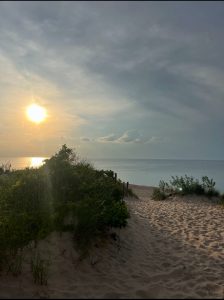
My office is tucked on the second floor of 444 Barker Road, just a stone’s throw away from Lake Michigan. My desk had been haphazardly dragged in front of the room’s only window, and upon my arrival only had one singular occupant, a snake plant that was practically begging for some water. And honestly, three weeks later it doesn’t look much different. A flyer shoved in a drawer, a hair tie that had been long abandoned, maybe a water bottle that had been forgotten during a quick departure. It is apparent to anyone who works in the Barker House that I don’t usually sit at my desk, and that’s something that I’m quite proud of. Let me explain.


My arrival 3 weeks ago was followed by a whirlwind of activity. First there was orientation, then an introduction to my coworkers, which in turn was quickly followed by my first staff meeting. I was given project after project, leaving my head whirling and my laptop full of fragmented notes. It became quite clear that the staff at Save The Dunes wore many hats, and worked passionately to keep this non-profit relevant, flourishing, and dependable. And for some odd reason, this shocked me. Not to any fault of their own, but simply because I had forgotten it was possible to work in alignment with your passions. In my mind, my future career and profession (whatever that would end up being) had long been labeled as something that would merely provide me a source of income and perhaps multiple cups of lukewarm break room coffee a day. I didn’t quite dread what was coming, but I certainly wasn’t looking forward to it either. This brought around a question that I had scribbled in my CAPS journal a couple weeks before; where did passions belong in a profession, and vice versa, could a profession truly align to a person’s passions? 


And to be honest, I’m still working on an answer. But seeing my coworkers love the environment enough to advocate for it every day sparked a little bit of hope that maybe one day I’ll work in a place like that too. Where I wake up in the morning (or at least most of them) and I’m actually EXCITED to drive to the office and try to make a difference that the average person can see. And you know what? Maybe one person can change just a tiny piece of the world. 


I don’t intentionally avoid my desk, or leave my desk to get away from my coworkers. It’s just simply that since the very beginning the entire house on 444 Barker Rd has felt like home. The warm, cushioned chair on the sunlit covered porch, the elegant conference room, and the cheery yellow tiles of the kitchen always give me somewhere new and unique to work. My coworkers laughing on the porch or sitting on the couches of the living room are the best company (And truly now feel like family) and the group hikes often leave me content and sunburnt. Why in the world would I ever sit at my desk when there’s so much to learn everywhere else? 

Wishing the weeks would go by slower, 


Heather Elwood, 

PROUD Save the Dunes Intern


Adjusting to the New: My First Few Weeks Serving the American Red Cross

I entered my internship with the American Red Cross without expectations, mostly because I didn’t know fully what to expect and what I would be working on. I felt excited to try something new and branch out beyond my area of study and my typical skill set, something I had mentioned during the CAPS application process that I wanted to focus on and grow in. So far, I believe that the work I’ve been able to do through the American Red Cross has helped me to see myself and my calling as something greater than one niche thing. I have my hands in many different places, and it’s been refreshing to exercise different skills and ‘muscles’ of my brain to assist with various projects. 

Specifically, I have been working with my wonderful supervisor, Colleen, on various projects relating to the alliance between the American Red Cross of Indiana and Indiana University Health. I am updating the volunteer information packet for the new volunteers from IU Health. I am adding updated information to the packet and also improving the design. Additionally, I am putting together the summer edition of the quarterly newsletter, which involves designing the newspaper and interviewing nurse volunteers to highlight in the newsletter. 


Something I am learning, especially having a remote internship, is that just because I don’t see a direct impact of the work I’m doing doesn’t mean that my work isn’t impactful or important. While I may not be able to directly interact with a lot of the volunteers or know who will read the packet and the newsletter, I understand that those resources that I am working on will benefit the network of Red Cross volunteers in one capacity or another. As someone who normally craves instant feedback and honestly, gratification, learning to trust the long-term impact of something I’m creating is a major growth area in these first couple weeks of my internship. 


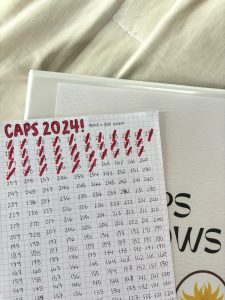
Another growth area from the first few weeks of my internship has been building a practice of discipline. Working remotely means that I need to create a schedule each day, and keep myself on track for certain tasks and projects I need to complete. I have learned a lot about myself, how I work best, and how I can keep myself motivated, especially on the days when I am not as eager to work on things. Having the end goal of completing three hundred hours in the back of my mind has been especially helpful. I even made a paper tracker to cross off the hours I complete, which has been a fun reward at the end of each workday. Keeping myself on track for completing the hours has led to a practice of being more intentional with how I spend my time and a new focus on the importance of routine and prioritization, skills that I can continue to apply throughout the rest of my professional and personal life.


All in all, the past few weeks interning with the American Red Cross have been rich in learning opportunities and moments of growth. I am looking forward to what the rest of the summer will bring!


  • Grace Roberts, American Red Cross


Little Moments are Often the Most Breathtaking

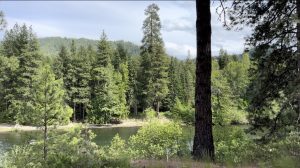
I am going to go out on a limb and say that the summertime brings joy to many people. A balanced mixture of sunshine and warm weather has always been the driving factor for my love for summer. Luckily for me, this summer I have the amazing opportunity to enjoy the wonderful joys of summer at Grunewald Guild located in Leavenworth, WA.

During my time as an undergrad at Valpo I have used the summers away from school as a time of self-reflection and intend to do the same this summer. My method of daily self-reflection usually entails asking myself, “What is one memorable thing that has happened today?” Sometimes I can easily pinpoint a moment that stood out to me, but sometimes it takes more time to find a significant moment each day. Whenever I struggle to immediately pinpoint a memorable moment, I am forced to replay the day’s events in my head, often highlighting the little moments that go overlooked in the moment. And now that I am officially beginning my summer at the Guild, I would like to share some of the little moments that I found on my journey out here. 

My summer adventure started off with a connecting train ride into the windy city of Chicago. This initial train ride was my first time on a train and was an excellent precursor to the long 42-hour train ride headed out west. During the ride, I tried to soak in the sights and memories of Northwest Indiana because I wouldn’t see cornfields again for at least a few months. The sight of the fields reminded me of my family and friends that I was leaving behind for the summer. Something as simple as a cornfield helped me reflect about my loved ones and it helped ease the nerves of traveling across the country. 

As the train continued its tracks towards the coast, the passengers were instructed that the train was stopping for a weather delay in Wisconsin Dells, WI. What was initially a 45-minute delay turned into a 2-hour long conversation with other passengers, including another CAPS Fellow. At first the weather delay seemed to put a damper on the trip but turned out to be quite the opposite. It got passengers talking and cracking jokes to one another to pass the time. Through the mutual connection of being stuck on the train and the less-than-ideal weather, many bonds were created through passengers. Some of these bonds lasted for the remainder of the trip in the form of having a buddy to talk to during maintenance stops along the route. Again, something that many may see as insignificant or even detrimental ended up being one of the highlights of the journey. 

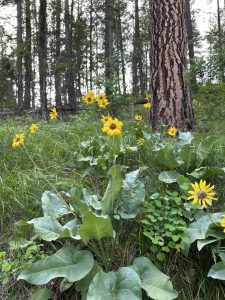
While my journey out west has concluded for the time being I will continue to make every day memorable. Whether it is a fun conversation or taking a few extra moments to look at flowers, there will be no moment overlooked – no matter how little they seem.

  • Corey McClure, Grunewald Guild

Surprise Feathers, or Cultivating Prophetic Voice

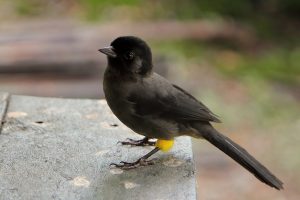
Yellow Thighed Finch, Costa Rica

As we explore questions of leadership and service at Valpo, we talk a lot about leadership in times of complexity and challenge, or serving the world’s deep needs.  While it is valuable and necessary to think about how we can change things for the better, our leadership and service must also be marked by a humility that understands that “we” might not have the right answers, or the tools necessary to “fix,” and that we might actually need to change something about ourselves, rather than about the world.

More to the point, what happens when we see the world as good as we lead and serve?  What happens when we see those we seek to serve as having assets, resources and capital that we ourselves might not have?  Does anything change?

In my capacity as a Lutheran Deaconess, I was recently invited to share with students of the Lutheran Diaconal Association at Valparaiso University on the topic of one of our diaconal hallmarks: Prophetic Voice.  This powerful hallmark reads:

“Individually and as a community, the diaconate points to God’s vision of shalom (peace, wholeness, and salvation) for the whole creation. Through action and word, the diaconate raises a prophetic voice, calling and recalling the church to its diaconal task, advocating with those whose voices have not yet been heard, exposing injustice and oppression and reminding all God’s people that in God’s realm the least is the greatest. Lest they lose sight of God’s vision of shalom, members of the diaconate also remain open to the prophetic voice of others, especially those on the margins, who challenge them to remain faithful to their diaconal call.” 

Specifically, the diaconal students were looking at this point in the hallmark: “A Deaconess/Deacon identifies personal power and cultural privilege, using these as opportunities to lift up those caught in cycles of powerlessness and oppression.”

Susan L Maros points out in her book, Calling in Context, that it’s often harder to see our own power, and easier to see where we feel our power is lacking.  In situations where we are the ones with personal power and cultural privilege, how do we learn to identify this and to listen to the abundance present in the world, to the voices of those who have assets and resources we have never considered?

Rabbi Abraham Heschel, an inspiration and mentor for Dr. Martin Luther King, Jr, writes in the introduction to his book on the Prophets that the key attitude to cultivating a prophetic stance is to be “sensitive to God’s spirit” and to “know what we see rather than see what we know.”

What does this mean, knowing what we see rather than seeing what we know?  I am reminded of the time that I was bird watching in a Costa Rican cloud forest, practicing my binocular skills with some US university students.  I saw a gray bird in a cypress tree, looking quite unremarkable.  I almost walked right by.  Then I used my binoculars and saw that the bird actually had bright yellow “pants,” feathers along its legs that are a delightful surprise.  This aptly-named Yellow Thighed Finch is endemic to Costa Rica and Panama, and thus by identifying it upon closer inspection I was able to see a bird that very few people in the world actually get to see.  

How many times have we assumed we knew what we were looking at, whether it be a bird, or a political question, or a conversation with our partner or other relative?  How often do we take the time for a closer look?  How often do we stick with it long enough to be surprised?  

The particular challenge of the diaconal hallmark comes when we are asked to identify personal power and cultural privilege.  Those of us with a lot of power and privilege don’t get our assumptions questioned very often.  It can be easy to run roughshod over others through simple “privilege inertia” that allows us to plow forward even if what we are doing is nonsensical, or at worst, harmful to others.  When we come from a position of personal privilege and cultural power, standing for God’s shalom means problematizing our own position, and practicing humility and justice.  

Can we with power and privilege come to know better what we see, and be humbled by the bright yellow feathers on the seemingly simple, gray bird?  And when we notice and understand the strength held by others, how does this change our behavior?  

A friend recently pointed out that people who speak two languages are not often credited with the unique strength that is being bilingual.  Bilingualism brings with it many more benefits than simply being able to speak two languages.  The US Department of Education points out that bilingual people have better critical thinking skills, are better at remembering information, have an easier time with math and logic, and can more easily understand and learn more languages.  They can code switch between cultures, understand divergent viewpoints, and even identify more emotions and ideas due to the fact that they have a larger vocabulary overall.  And yet, in our society students with a first language other than English are seen as “behind” in school, Deaf people are losing access to ASL in school, and high-stakes standardized tests are built for monolingual English speakers, failing to showcase the strengths of bilingual people.

What other areas have you noticed where characteristics that are largely seen as deficits might actually be assets?  How does changing our mind about these characteristics open us to promoting God’s shalom in our communities?  


-by Deaconess Kat Peters, M.Ed, M.A, Assistant Director of the Institute for Leadership and Service

Photo credit: By Cephas – Own work, CC BY-SA 4.0, https://commons.wikimedia.org/w/index.php?curid=34218026

Calling is not a straight line

When I was a Valpo student, vocation was often discussed in my circles as being the place where one’s “deep gladness and the world’s deep hunger meet.”  This is a classic statement from Frederick Buechner.  It’s shorthand, while also holding important meaning.  In fact, Buechner helpfully gives some practice examples of this, suggesting that writing cigarette ads might be fun but probably not helpful, and that being a doctor in a leper colony is very helpful, but if it drains your joy then may not be your best-fit vocation.
 

The image that this formula always brings to my mind is that of a cross-hairs: two straight lines that find a center, a bullseye.  The world’s need on the x-axis, my gladness on the y-axis.  In this image, as an undergraduate, I found a target with a point system, like the archery targets I used to practice on at summer camp.  Miss the mark, lose the game.  If I cannot find my center, my purpose, will my life be worth living?

In my work in development studies, we confront the same problem – how to define development, how to measure it?  One key problem to the idea of development is that it necessitates the existence of “underdeveloped” places and people, those who need to be brought into alignment with a “better” way of life.  There is a target, and you can hit the mark, or miss it.

This may not be Buechner’s intent, and a charitable reading will give him the benefit of the doubt.  Hopefully everyone can find themselves at this crossroads.  But images bring with them connotations, and this image of the axes connotes targets, success, failures.  What if a different image were a little more helpful?

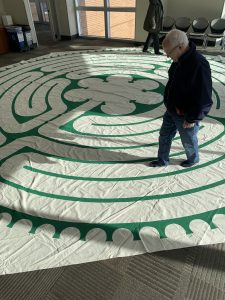
Valpo is also home to several labyrinths.  There are two outdoor labyrinths, one located on the east side of the Chapel of the Resurrection, and one at the Lutheran Diaconal Association center.  There is also an indoor, portable canvas labyrinth, which was used at a session for MLK Day in January on spiritual resources for action and contemplation.

As Travis Scholl (‘96), the author of Walking the Labyrinth: A Place to Pray and Seek God and the presenter at the MLK Day session, eloquently points out, a labyrinth is the opposite of a straight line.  In fact, the center of the labyrinth is not located at the crosshairs, and the way to the center takes the longest and most circuitous route possible within the space.  Moreover, the center of the labyrinth is not a dot, but an empty place.  

What does this mean for our journey of understanding our purpose and calling?  As many of us can attest, years or decades after college graduation, life does not play out in a series of straight lines.  If we find a magical “bullseye” where we feel fulfilled, glad, and useful, this feeling may not last or it may not be present every day.  

Scholl tells us that the empty center of the labyrinth demonstrates the emptiness of our clichés and our pieties, and calls us to understand that all we can do in our search for purpose is to find ourselves in the present moment.  In that moment we find ourselves face to face not with our definitions, aspirations, or accomplishments, but with our Creator, who tells us that we were created for just this moment, that we are enough.  No instructions beyond that.  That simple, and that difficult.  

Where our previous ideas told us we fell short, that we are lacking, in the center of the labyrinth all that we have walked before comes to fruition in the moment, and meets the moment, if only we can trust.  

And then, rather than congratulating ourselves for hitting the target, we walk the long and winding path back out into the world to live and act in the present moment, having experienced the center.

  • by Kat Peters, Assistant Director of the Institute for Leadership and Service
  • Photo credit Pastor Kate Museus

The Division of Calling and Spiritual Life (ILAS and the Chapel) is working with campus partners this Lent and this spring to bring the canvas labyrinth to different corners of the university.  We invite you to watch for this labyrinth, or to visit the outdoor labyrinths east of the Chapel and in the garden of the Lutheran Diaconal Association Center.  We invite you to take the first step, to take one step at a time, to reach the center of your life.

Bittersweet Ending at the Bridge

As I go into my last week of my CAPS internship, I reflect on my time at The Bridge Teen Center. It brings a certain realization when I think about my internship ending and that is how my time as an undergrad is ending as well.

When looking back through the summer, my favorite parts have to be when I would spend time with the students. As the program intern, I get the opportunity to lead and help with programs that the students are in. I was able to lead a program which was a ‘Big Room Hangout & Karaoke’ program. This was a lively program since from start to finish students were singing a song. They went up alone, in pairs, and even groups of three. The students had a lot of fun and so did I! Another program I was able to be in charge of was a ‘Project Serve: Thrift Store’. Students signed up for this program and sorted clothes that were donated to the thrift store. When leading this program I was nervous since there were a lot of things I had to remember to say since I was explaining everything around them. From the clothes racks to what was on the table and even the roles they had to do. I became the person they mainly asked questions to and it made me feel more confident since I felt like they trusted me to know the answers to what they were asking. The best part for me is when they remember my name without looking at my name tag and I am able to do the same.

Another part I have enjoyed is receiving the project of comparing the Bridge Thrift Store to other thrifts in the area. I compared the prices, the departments, the setup, and even the guests inside the store. It was interesting to do this project because I love thrifting and this was a new perspective on thrift stores I never had before. I was looking at them with different eyes since this time I was not there as a customer but I was there as a ‘secret shopper’. The founder, Priscilla, gave me this secret shopper project and allowed me to do it as I wanted to. She gave me full freedom and I felt trustworthy since she was trusting me with this project. With Priscilla, she can be intimidating since she is the founder of the Bridge and is the executive director so the Bridge Teen Center is something she built from the ground up. Getting to know her through this project has shown me that she is not intimidating but she is respected. It has been such an experience to hear Priscilla speak about this project and about her time shaping the Bridge into what it is now and what it will continue growing to be. 

As I look to the future, the Bridge Teen Center will be a turning point in what path I take. This has been such a rewarding experience and it is difficult to say goodbye to a place I spent so much time in. I will continue to foster the relationships I made here and hopefully in the future I will be able to volunteer here since it is a part of the community I live in and I want to join that community.

-Mikayla Flanagan, The Bridge Teen Center

My Summer Adventure

My internship has now come to an end and I’m now able to reflect on my entire experience. I moved to Indianapolis at the end of May to begin my internship. When I first arrived I was very nervous and scared. But, I was also excited. The first few days I was a little shy and nervous. My first big surprise was that everybody worked out of a community house instead of a traditional office. But that quickly subsided.

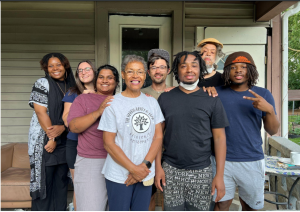
I built a great relationship with mentor and/or supervisor Rasul Muhammad. He really did a good job looking for me over the summer and my experience at Kheprw was so great. I also built such a good relationship with the rest of the staff at Kheprw as well.  They cared and looked out for each other. Inside and outside of work. They were more of a family rather than just coworkers.

The internship just furthered my desire to build community in all areas of my life. Whether that be at Valparaiso University, in my hometown of Chicago, or any other place that I may visit and/or potentially move to. It is just amazing to see what Kheprw built and how all the individuals in the community loved them. It was fun to see various people stop by at the porch everyday to just talk to staff and interact with them. Or how people would just stop by if they had a problem and needed someone to talk to. The community was also lively and together. I haven’t seen anything like that before.

I worked on a variety of projects throughout my internship. I worked at a foodshare every other sunday. At the foodshare we passed out free healthy food and vegetables to members of the community. I also helped create a data gathering sentence to track attendance for events at various locations. This information is critical to an organization like Kheprw because they need this data when applying for grants and also this allows them to know who they are interacting with most at events and who is most visiting various locations. This allows them to know how they can further impact the community.

I also completed training on a data gathering tool called Salesforce. I participated in multiple meetings. Those meetings weren’t all about the data space, which was what I primarily worked in. Some of the meetings I sat in helped provide financial training to the community. Also, I learned about something very interesting. That is a community land trust that is being developed inside of Indianapolis. I did not know about community land trusts and was happy to gain knowledge about what they were and how they were created. My last thing that I will say. You will never find a place like the Kheprw Institute anywhere else. It is an unorthodox grassroots non for profit organization. But I’m glad to have found them and they are a very special organization and group of people.

-Chris Gatlin, Kheprw

Saying Goodbye: My Last Week with Heartland Alliance’s VELT Team

As I am completing my last week with Heartland Alliance’s VELT Team, I am both excited for the upcoming school year and a little sad about having to say goodbye to such a wonderful team and group of students. I have had so much fun here and although it was a bit tough for me at first, I have grown so much and I am grateful for
that. I have asked for help more, realized the importance of a work-life balance, taken on new challenges and opportunities, and built relationships with so many different people. I don’t believe I would have grown so much this summer without this experience.

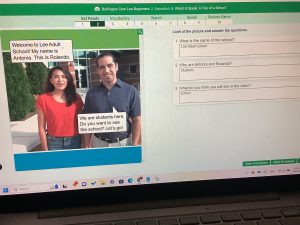
Asking for help and accepting that needed help hasn’t been easy for me. I am very independent and I try to do things on my own as much as possible. I have many different reasons for that but I think the biggest one is that I don’t want to be a burden to anyone and by asking for help I may be taking out of the few resources they have. However, when I got here to Heartland it wasn’t the same and I didn’t realize that until my supervisor commended me for always asking for help when I needed it. Looking back, that was one hundred percent the case during my internship. These students were taking the time out of their day to study and work hard at learning English. So I wanted to be able to support them the best way I could and that involved me asking teachers for help. I learned how to lesson plan, find resources that students needed, and even do administrative work because I asked for help.

Many of the things that I have learned to do will also be some of the things I will miss the most. For my final week I have had the chance to be a substitute teacher for a morning class I have been helping in. Both tutoring my students and teaching in the literacy class have helped me be able to do this. When I first led the class on Thursday I was super nervous because I had never run a two hour class before let alone by myself. I know that it wasn’t exactly like how it would be if their teacher was there and at first it was a bit disappointing. But if there is one thing I have picked up from this summer it will be that everything won’t go perfectly. There will be times when you make a mistake but they are all lessons. I know I made plenty of mistakes when I first started to tutor one- on-one with my students but I know I do way better with teaching them. These are some of things I will miss the most!

Saying goodbye to my students and letting them know that I wouldn’t be teaching them anymore was hard. I wasn’t sure what to expect but I am glad I was able to sit with my supervisor and offer them the chance to get a new tutor. While I won’t be able to keep all my students I am going to be working with a couple of students this Fall! Overall I am grateful for this experience, and every single thing I have learned. Without my coworkers, students, and all the others I have met I wouldn’t have had this great experience!

-Allison Howard, Heartland Alliance Vocational English Language Training

A City Divided

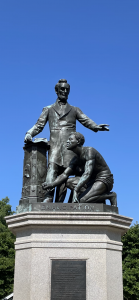
The “Urban Plunge”

One of the activities that I lead with City Service Mission is called the Urban Plunge. This activity is centered around the general idea of food insecurity and the food deserts in not only Washington D.C. but also wherever in the country the visiting group is coming from. The plunge involves bringing the group to Lincoln Park in Capitol Hill and explaining to them the causes and effects of food deserts. After providing context to the activity’s purpose, the group is let loose to go and locate the nearest grocery stores and create a budget based on a hypothetical family who has a household income below the federal poverty line. This is an opportunity for the students to experience a small taste of what it is like to live with food insecurity and begin to think more about how they might play a role in influencing the larger conversation surrounding the issue.


Race and Servitude

During the plunge, a parallel lesson to that of food insecurity is on the matter of race in the district. Lincoln Park is a popular location for nannies to take their kids during the day to get out of the house. These nannies are almost always women of color and the children they look after are almost always white children. This is a great indicator of who lives in the neighborhood of Capitol Hill and who the servants of these residents are. I use the word “servant” intentionally. The town homes in this area are valued at 1.5 – 2.5 million dollars, and it is very obvious that it is a majority white neighborhood, with people of color coming in from surrounding areas to provide services like child-care, house-cleaning, construction, landscaping, etc. As the groups go out and participate in the simulation of the urban plunge, they also take note of the very real racial divide that is ever present in the city. Once they come back to the park after spending time on their own in the city, we have a discussion about it, ultimately identifying that segregation, both physically and socioeconomically, is still a thriving problem in the district as well as other places throughout the country.


Exclusive Inclusivity

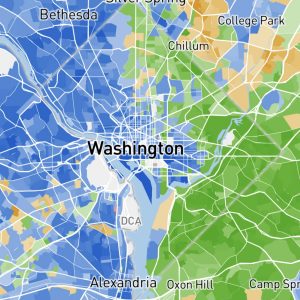
Washington D.C. is split almost perfectly down the middle in terms of where different races live throughout the city and in the neighborhoods surrounding it in Maryland and Virginia. While this is something I have been aware of for quite some time, leading groups in the urban plunge has brought this reality to the front of my mind. While the groups are out doing the activity, I get a couple hours to go around the neighborhood, usually to a coffee shop, and each time it has become more prevalent to me that I am often one of two people of color in the establishment, the other being behind the counter. The irony of this is that neighborhoods that have been gentrified in D.C. often wish to send a welcoming message to others by promoting images of inclusivity in their neighborhoods. This includes posting signs like “Black Lives Matter” “All Are Welcome” “LGBTQ Pride” etc. in their yards and windows, but the subliminal messages people, children, receive in these areas is that people of color are the ones who are meant to “do the work for us here but live with them over there.”


What do We Learn?

While this is personally challenging, aggravating, and discouraging, leading the urban plunge provides a great opportunity to talk about the issues of food insecurity, gentrification, segregation, and NIMBYism (Not-In-My-Back-Yard-ism) with kids and adults who otherwise may never have seen the reality of such things. It is always very encouraging to hear the students talk about how the experience has impacted them afterwards, and I hope to continue spreading that message as I continue in this line of work.

– Fox Wilmot, City. Service. Mission.

Embracing the Transformative Power of Music and Prayer at Lutheran Summer Music

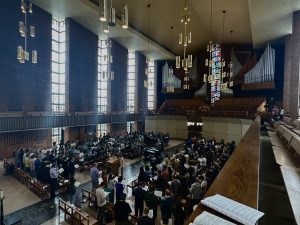
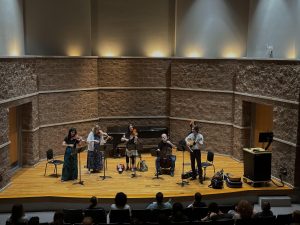
Stepping into the world of music as a social work major with an art minor at Lutheran Summer Music (LSM) was an intimidating yet transformative experience. Among the many incredible aspects of LSM, my involvement in the chapel choir stood out as a profound journey of self-discovery, connection, and spiritual growth. Reflecting on my time in the choir and the daily morning and evening prayer rituals, I am reminded of the transformative power of music and prayer within a supportive community.

The chapel choir at LSM became more than just a group of individuals singing together; it evolved into a supportive community that embraced me with open arms. Despite my initial insecurities about not having extensive musical knowledge or the ability to read music, the choir members and our dedicated choir director fostered an environment of acceptance, encouragement, and unity. Together, we created something beautiful through our collective voices, transcending our individual limitations. The chantor said in my first chapel choir rehearsal, “This is practice; you’re supposed to make mistakes. So make them loudly and make them proudly.” These words have resonated with me ever since, reminding me that the journey of learning and growth is meant to be embraced with enthusiasm and courage.

In the chapel choir, I discovered a safe space where my limited knowledge of music did not define my worth but rather served as an opportunity for growth and learning. The moments of shared devotion and love for God through music were incredibly powerful. As we sang hymns and joined our voices in harmony, the chapel became a sacred space where I experienced a deep connection to something greater than myself. The power of music intertwined with prayer and readings from the Bible created a profound sense of spirituality, evoking a range of emotions, and providing a channel for expressing reverence and gratitude to God.

Participating in morning and evening prayer sessions within the LSM community cultivated a unique sense of togetherness and shared devotion. Daily, individuals from diverse backgrounds and musical abilities united in a collective expression of faith. These moments of communal connection remind me that spirituality is not solely an individual pursuit but a shared journey of seeking connection with God and one another. The regularity of these prayer rituals created a consistent and intentional space for reflection, centering, and connecting with the divine. In the morning’s boosting of energy and the evening’s reflective serenity, I found solace, guidance, and grounding amidst the vibrant energy of LSM.

Morning and evening prayer became spaces for introspection, enabling me to quiet my mind, reflect on my experiences, and explore the depths of my spirituality. The contemplative silence, guided readings, and hymns allowed for moments of profound self-reflection and personal growth. These sacred pauses amidst the bustling program enabled me to delve deeper into the questions and yearnings that reside within my heart.

As my time at LSM ends, I carry the transformative experiences and lessons learned in the chapel choir and through morning and evening prayer. This journey has taught me the transformative potential of music and prayer in nurturing spirituality, the power of community and shared devotion, also the beauty of embracing vulnerability. The chapel choir and prayer sessions have become integral parts of my personal and spiritual growth, encouraging me to continue exploring the depths of my faith and embracing the transformative power of music and prayer in all aspects of my life.

– Erica Castillo, Lutheran Summer Music

Embracing Identity and Finding Self at CRS

As I come to the conclusion of my time as a CAPS Fellow with Community Renewal Society, I find myself reflecting on how I have grown and developed through my experiences as a Communications and Development intern. While this summer has certainly gone by fast, it has been a delight to learn about various macro-level and policy approaches for tackling the connections between racism and poverty, participate in webinars on engaging members of a congregation and building a valued donor base, aid in launching the new CRS website, and celebrate the passage of the Pretrial Fairness Act in Illinois. Most notably, it has been incredibly educational and rewarding to witness the elimination of cash money bond, a crucial part of the prison industrial complex that furthers racial and economic disparities for individuals presumed to be innocent. Despite the time it has taken to recognize the value of eliminating this inequitable and unjust system, the hard work of the Coalition to End Money Bond, the Illinois Network for Pretrial Justice, and CRS’s own policy and organizing team remind me of the importance of celebrating the little wins in the larger pursuit for healing justice and social change.

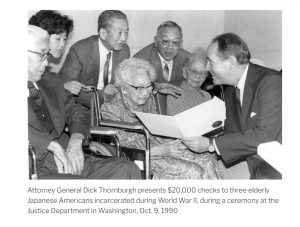
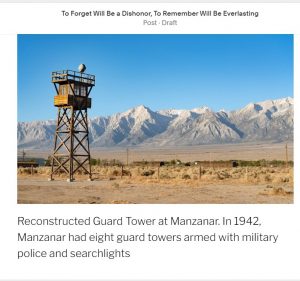
One of the most enjoyable and exciting things this summer has been the writing and publishing of a three-part series featured on CRS’s blog. In particular, I had the opportunity to share my experience as a facilitator for the 2023 Kansha Project through the Japanese American Citizen’s League (JACL) of Chicago. The Kansha Project is a program that was established in 2011 with the aim of connecting self-identified Japanese Americans aged between 18 and 25 from the Midwest to their identity, history, and community. Participants are given the opportunity to partake in an immersive educational trip to Los Angeles’ historic Little Tokyo neighborhood and Manzanar National Historic Site, where they engage in an in-depth examination of the WWII confinement site experience. Through this writing opportunity, I was able to reflect on the striking similarities between the modern-day movement for reparations towards descendants of slavery compared to the redress movement for survivors of the World War II Japanese American Concentration Camps. If interested, you can read all three parts of my blog article series here, on the new Community Renewal Society website!

In addition to writing about my time as a facilitator for the Kansha Project, I have had the joy of speaking on the sentiments of legacy, gratitude, and remembrance. In particular, it was incredibly moving to reflect on the experiences of my ancestors and compare them to the modern-day struggle against anti-Asian sentiment, unjust policing practices, and the need for economic restitution for other marginalized communities. Through this internship, I feel that I am now able to see myself as an advocate for social justice through my enhanced understanding of historical context and the effect it has on shaping public policy. Moving forward, I hope to bring with me the focus of building a Beloved Community where all of God’s children can flourish in my developing and evolving career as a social worker.

– Katie Hill, Community Renewal Society

Nurturing Your Passion Through Learning and Growth

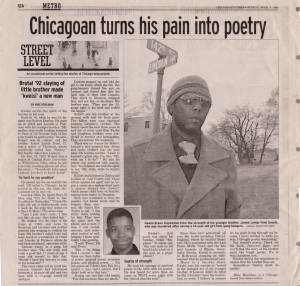
Through the Chicago Reporter, I had the chance to pursue my passion project on gun violence. Last week, I had a meaningful interview with Kweisi, who tragically lost his brother to gun violence years ago. Kweisi, a poet and advocate, strongly believes in healing through his poetry and the concept of forgiveness. He believes the only way to heal is to grow and forgive. When he shared his story with me, I was struck by the profound strength he possesses to navigate a world filled with cruelty, his determination to prevent similar situations and aid others in healing from their traumas is truly inspiring. My current aspiration is to bring Kweisi’s story to the forefront and shine a spotlight on the significant issue that the Chicago community and the entire country is grappling with. The issue is the absence of adequate checks and balances for gun control and the mishandling of trauma. Through sharing Kweisi’s experiences, I aim to raise awareness about the pressing need for comprehensive gun control measures and more robust mental health support systems. The story serves as a reminder of the devastating consequences of lax regulations and insufficient attention to mental health challenges. Through this project, I hope to ignite meaningful conversations and prompt action among policymakers, communities, and individuals mainly in the Chicago community. In the pursuit of a safer and healthier society, sharing these narratives is a crucial step in fostering empathy, understanding, and collective responsibility toward building a better future for everyone.

Listening to Kweisi’s story drove me to research additional similar experiences and to compare how each person dealt with their own struggles. For me, the most rewarding aspect of my work is engaging with diverse perspectives and listening to the profound and traumatic stories people share. This engagement enables me to provide comfort, respect, and genuine compassion, while also conveying their stories to the world, hoping to make a meaningful impact.

This fellowship experience has helped me practice my interviewing skills and allowed me to see that there is always room for further improvement, regardless of my proficiency in the English language. I have learned that language proficiency is an ongoing journey, and there is always room for growth. Another crucial lesson I discovered is that no matter where my future career path is headed, I must work twice as hard, push myself, and always expect challenges along the way because I am still learning. It is important to remember that the key is to remain diligent and committed to constant learning. As I move forward, I embrace the idea that continuous improvement is essential not only for professional development but also for personal growth. It is a mindset that encourages me to embrace new challenges and seek out opportunities that stretch my abilities. Moreover, I have come to realize the significance of acknowledging that I am still on a learning journey. Embracing this mindset allows me to approach every situation with a willingness to learn from others, no matter their background or expertise. The Chicago Reporter continues to expand my mind even though there is not much time left as I am stepping through the final last weeks’ I hope to maintain my work and use my passion through this project to bring something important that can influence others and assist this organization with the inspirational stories it delivers. This fellowship has been a transformative experience that has highlighted the importance of continuous improvement, hard work, and resilience for me.

– Nour Alhajjeh, The Chicago Reporter

Exploring New Horizons: My Journey at Lutheran Summer Music

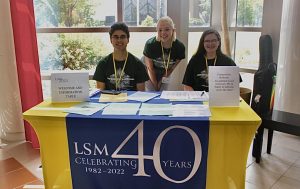
While Lutheran Summer Music, or LSM, has been around for 40 years, this was my first year. As a social work major with an art minor and no prior experience in music, joining the LSM community was intimidating. Luckily, with an art concentration in my background, I know that art comes in many different forms, and all forms of art are enjoyable for me. Although coming into LSM, I knew little about anything musical, nor had I ever listened to ‘nonpopular instrumentals’. So I was a bit out of my comfort zone, although the mindset I had due to my artistic background helped me navigate the unfamiliar territory of music at LSM because it was a completely new world to me. Luckily, the LMS community is very welcoming, which made learning about musical culture easier. As a social work major, my major instructs me to understand and appreciate different cultures; often, this means our norms, values, races, etc. Working with LSM helped me immerse myself in a new culture without feeling pressured to know everything about it; I didn’t feel the guilt of not knowing information about music like I would with the different cultures that we speak about in my major. I feel that this has been an important part of my journey here at LSM. To learn about culture, I have been able to learn how to ask questions about it, how to be respectful, and even how to enjoy it. LSM has not only allowed me to learn about their culture, but they have allowed me to join it too. As I now sing in the chapel choir! Although I do not know how to do things such as read music or necessarily sound good (although I am learning!), they have fostered an environment that is nourishing and encouraging enough for me to want to participate, even with such talented musicians around me.
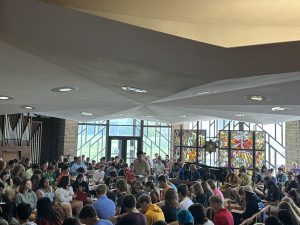
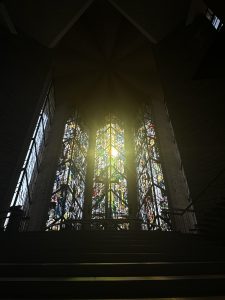
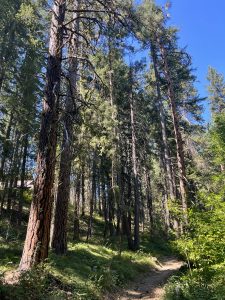
The CAPS Program through Valparaiso University allows its fellows to find internships that enable us to find our sense of calling and purpose in the wider world. Recently, within the last year or so, I have felt a calling, unlike anything I have felt before. I have had this inner yearning to discover something bigger than myself, more prominent than academics, more significant than a career. As I get older, I ask questions that cannot necessarily be answered through books or scholars, but questions that I feel can only be explored through a spiritual perspective. Although, as I get older, I have also realized how challenging it is to learn about religion and spirituality without committing to a church or denomination. This is why I decided to do my fellowship at Lutheran Summer Music. I saw this as an invaluable opportunity to learn about religion and spirituality without fully embracing a specific religious institution. I felt LSM could introduce me to some spiritual aspects of faith that I have been craving in an accessible and understandable way, as the program is created for incoming high schoolers to college students.

Through the morning and evening prayer, Sunday worship, and chapel choir, I have delved deeper into immersing myself in honoring God by exposing myself to different religious practices and perspectives. Over this past month, I have immersed myself in this. It is essential to recognize that spirituality is intensely personal for every individual. The journey I have been taking on at Lutheran Summer Music may resonate with me more than others, but it has undeniably played a role at the beginning of my journey to finding my own beliefs to find my own spiritual path that aligns with my values and convictions.

– Erica Castillo, Lutheran Summer Music

Reflecting Back on My Time at the Guild

I am currently a little over halfway through my time here at the Guild. That sentence conjures up both feelings of restlessness and anticipation.
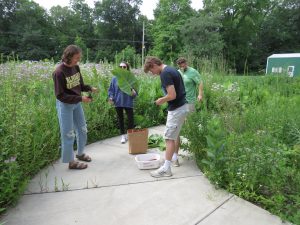
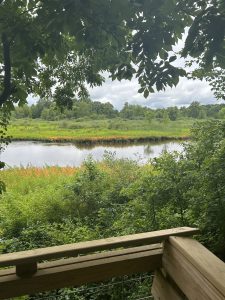
Grappling with the reality that this is the last summer of my college career (and maybe life) has been an unexpected challenge that I have had to overcome this past month. A reality that, in the scheme of things, is wildly unimportant but nonetheless a challenge I have felt deeply. At the start of the summer, I was excited to explore the vastness of the nature surrounding me. My time was often consumed with various tasks that had to be completed before Summer Programming began, so I never really had the time to dwell on this revelation. As tasks died down and a once-foreign daily routine became my new normal, I started to have more time to miss the people that I would usually fill my downtime with. While being away from those that I love has been emotionally taxing, the supportive and uplifting community that dwells within the Guild has helped ease that discomfort.

A part of the week that I have come to look forward to is arrival day. Every Sunday afternoon a new group of participants arrive at the Guild. Welcoming them into the comforting spaces that we have prepared a day prior is always a rewarding experience. While preparing those spaces it is easy to feel as if the work I am doing is insignificant or that it leaves no real impact. However, seeing the smile on people’s faces when they are welcomed into a clean room with a blessing left on their pillow, either by the Guild staff or by the participant who stayed in that room the week before, helps make turning over rooms worth it. The constant flow of new people arriving bringing their excitement and anticipation for their upcoming retreat brings a rejuvenating feeling that I am grateful I get to experience every week.

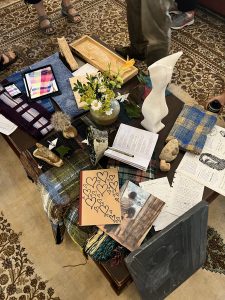
A tradition that I also anticipate each week is closing ritual. At the end of every week, participants are invited to share a piece of their time at the Guild with the rest of the group. This can be done in various ways. Whether it be placing the project that they created that week onto the center table or verbally sharing an experience/feeling that they encountered. Hearing about the healing that people come across in this space as well as the overwhelming feeling of belonging they are left with has been such a blessing to witness. Something that I admire about the Guild is its ability to hold people and meet them where they are which often provides participants with a sense of comfort.

An additional aspect of the Guild that I have enjoyed participating in is watching Richard Caemmerer’s recorded masterclass lecture series that focuses on the history of Christian Art. We have been holding a viewing of the first episode of the series in the middle of the week so participants can encounter some of Richards’s teaching, whether it be for the first or the hundredth time. I thoroughly enjoy Richard’s viewpoints as he always seems to open my eyes to a new perspective every time I have the privilege of hearing him speak. The discussions afterward have also given me insight both on the artwork that was shown as well as on Richard himself. I cherish the knowledge that I gain from these conversations.

Something that I have noticed during my time at the Guild, is that people talk of Richard and Liz with a mix of reminiscent joy and grief. Sentiments regarding them and their impact on the Guild remain constant throughout every group of participants. Recognizing this emotion in visitors has been an eye-opening experience that has revealed a great deal about the lasting impact that kindness and compassion can have. Richard and Liz are loved by the Guild community. The fact that this place – often referred to as their passion project – is still thriving, brings comfort to those who knew them. Watching people leave with a sense of peace that their friend’s and role models’ legacy is being well taken care of is an inexplicable feeling. I’m glad I am able to play a small role in uplifting the large and important mission of the Guild.

– Erin Murphy, Grunewald Guild

Reflecting on a Nature-Filled Summer

As I wrap up my fellowship at Shirley Heinze Land Trust, I’ve been reflecting on my experience and looking towards the future. I have enjoyed working with a group of smart, driven people this summer who have equipped me with invaluable information to advance my career. 

Through my research, I’ve written educational policy briefs on urban agriculture, water quality, conservation easements and more. I’m proud of how I’ve been able to create and execute this project from the ground up, and I’m excited to see what direction Shirley Heinze takes this work once I transition out of my role. Not enough people in Northwest Indiana know about land trusts and their vital roles in conservation and preservation, so I hope that my work helps with outreach and education in that regard.

I’ve appreciated how the rest of the Shirley Heinze interns and I have been engaged in professional development throughout the summer. We’ve had workshops and “Lunch and Learns” over topics such as grant writing, leading and facilitating community meetings, stewardship, strategic planning and more. Several of us want to continue working with nonprofits in the future, so these meetings have given us a deeper understanding of how this sector functions. The staff here have made a conscious effort to support us in our future endeavors by giving us career advice and connections. 

I’m excited to bring back what I’ve learned from Shirley Heinze to Valpo. I’ve been able to keep my writing and editing skills fresh for my roles at The Torch and the Writing Center, and the environmental policies I’ve researched will be helpful for my political science coursework. 

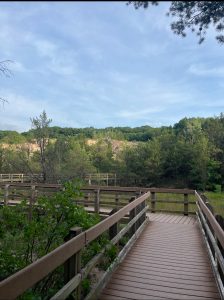
A non future career-related highlight of the summer was going on intern site visits. We most recently visited Lydick Bog, which just finished an expansive capital improvement project for constructing a pavilion, restrooms and a boardwalk. The boardwalk in particular seemed like a feat of engineering, as its poles rested on top of the bog in order to reduce environmental impact and evenly distribute weight. Before this project, the trail was inaccessible at times throughout the year and could only be reached by donning hip waders and hoping for the best!

The areas we serve contain a variety of conservation types such as dune and swale, coastal dunes, marsh, forest/flatwoods, lakes and more, so there’s always something new to explore. I tend to take the biodiversity in Northwest Indiana for granted, so I’ve appreciated how willing the staff has been to show us a few of the sites Shirley Heinze protects.

The last few weeks of my fellowship are poised to be plenty busy. The interns are having a “paddle day” down the east branch of the Little Calumet River. Shirley Heinze has a kayak/canoe launch at one of their sites, so we’ll follow the river into Lake Michigan! On the final day for all interns, we’ll each give a presentation about what we accomplished this summer. It will be a bittersweet day, but I’m excited to celebrate my friends’ work!

– Grace Aurand, Shirley Heinze Land Trust

Summer Fun at By the Hand

I am about two months into my summer internship at By the Hand Club for Kids, which has been gratifying. Unfortunately, my time here is quickly reaching its ending point. I am enjoying my time so much that Interning here is flying by so fast and does not feel like work! 

During a normal day of Summer programming, I was able to sit in a music class for 1st graders. It was a beautiful moment to witness the students praising God by singing and dancing to Gospel music. I even discovered that a few of my students had a true gift of singing and should consider pursuing it. 

On Friday, June 30th, we were able to treat students that made A’s, B’s, and C’s to Great America. Many of the students that went on the trip had never been, so it was great to see their faces light up as we were getting off the expressway and began to see the rollercoasters. All of the children and staff were able to attend for free which was truly a blessing. I chaperoned two students which was both fun and nerve-racking. Thankfully all three of us had a blast and no one, including the rest of the students got injured. It was a long day, but definitely worth the lifelong memories.

Yesterday, for our second personal development field trip with the other interns, we went on a Bronzeville Walking tour in Bronzeville, Illinois. Our supervisor, Peter set this trip up in order to explore the rich legacy of African American life in Chicago within the neighborhood. It is vital to learn about the contributions of different communities to Chicago’s history. There, we visited the Victory Monument, erected in 1927. The monument was built to honor the Eighth Regiment of the Illinois National Guard. It was refreshing to see the beautifully built homes in Bronzeville and view them in a positive light. 

By the Hand feels that it is important to have the students visit surrounding neighborhoods outside of their normal environment and participate in fun activities. So the students attended and I chaperoned at the Insect Fest in River Forest. The students were able to go on a bug hunt, explore bugs through dance and music, and create their own clay insects. It was a fun and unique experience for them. It is important to expose the students to different types of activities to help them better discover new interests and passions!

During my time at the internship, I have been given various projects to work on. My supervisor has tasked me with ensuring the staff has completed their Mandated Reporter Renewal training. The purpose of the training is for staff to understand the role they play in protecting children by recognizing and reporting child abuse. This project has strengthened my data entry skills and polished my time management skills. It is my responsibility that the staff has received my email to remind them to complete it and to make sure they complete it before the deadline. 

Another project other interns and I were given was to pack backpacks filled with new school supplies for the upcoming school year. The backpacks are for students that do not have the means of getting their own school supplies, so thankfully we were able to provide the students in need through a kind donation. We were able to pack well over 200 backpacks which was both fulfilling and amazing.

– Camille Jefferson, By the Hand Club for Kids

Developing the Confidence to Create Supportive Spaces for Others

I’ve been lucky enough to have had plenty of great experiences these past few weeks working with the Care Coordination Team of Heartland Alliance Health! For some highlights, I’ve assisted in organizing outings to Lincoln Park Zoo and the Chicago Botanic Gardens, which were successful and offered fun, community-building activities to participants and staff. I’ve worked closely with one particular case manager in dividing up some of her weekly tasks involving participants, and have formed connections with participants while supporting them with attaining resources such as entrance into our program, public benefits, bus cards, medical care, and disability parking permits. I’m refining my administrative skills, especially by practicing case-noting, and am noticing an increase in my comfortability levels with directing my own tasks.

I can honestly say that I’ve enjoyed this work experience, and have felt a sense of empowerment from it in ways that I did not expect. While I did not have clear expectations going into this, other than expecting to put myself in a position to learn something, I feel as though I will be walking away from this experience more capable of taking on and being excited about new challenges that may have otherwise seemed too intimidating. I feel more comfortable than I thought I could be with new tasks such as navigating programs that are unfamiliar to me; participants showing up unannounced with a concern for me about something like their mail, or how to obtain X,Y,Z; and with conducting my own IM-CANS meetings to discuss participants’ goals for their life and their use of our program.

A huge part of that confidence has been due to the support I am privileged to receive from my team at Heartland Alliance, as well as the uplifting nature of the CAPS program and those working to uphold its design of empowering fellows through reflection on purpose and calling. With the seemingly small actions done through this program, I am working on my larger goal of showing up for people who need someone to show up for them, creating a space that provides relief and empowerment for others. I am learning this by looking to the people, places, and experiences that have allowed me to feel comfortable and confident.

I feel as though it would be doing a disservice to myself, as well as to the staff and participants I have worked with, if I were to walk away from this without the motivation to go and try something new that is working towards creating that space of comfortability and confidence for others. Not everyone has the opportunity and privilege to have a space to reflect on purpose and calling as well as to have programs in place to further support their learning, and so I don’t want to take that for granted. The refugee and immigrants participants have shown me so much about what it means to be resilient and to navigate one day at a time despite an unkind world filled with struggles that may seem unending; and the staff displays great love in their work of giving back to their community because they feel as though they have a duty to do so, despite the stress, and being underpaid for their invaluable work. I have developed a greater appreciation for the space I have to say “yes” to learning opportunities, and in my future professional and personal life alike, I will do what I can with the privileges I have to collaborate and create spaces for others to grow, and to feel comfortable and confident.

– Cylia Srmek, Heartland Alliance Health

Almost Halfway Through!: A Look Into My Internship with Heartland Alliance

For the past few weeks I have been working with Heartland Alliance’s Vocational English Language Training Team. So far this position has been very eye opening for me and has helped me reflect on my future. In my first week it was all about observation. I was tasked with watching various classes ranging from Level 1, the lowest level taught, all the way up to their higher level courses. Each teacher had their own way of teaching with some using similar resources and others making their own curriculum. I tutored in high school so I had a small experience doing that but I had never experienced teaching at this scale before. At this point I wasn’t sure what my job here would look like or how this position would affect my future goals but I was willing to go along for the ride! As the weeks began to progress, I went from observing to actually assisting the teachers and tutoring a few students myself! I was participating in classes everyday of the week and tutoring three days a week up until our break. I didn’t know that similar to other types of schools and classes, ESL programs give their students a break for a few weeks before starting classes again for the new year. While this was a well deserved break for the students, it took place at a difficult time for me because I was just starting to get the hang of teaching. I was really getting used to my routine and getting to know each student in the classes I was working with but now this would be put on pause. I still needed to fill my time with something so I have been tasked with handling administrative work, continuing my tutoring with students who still want additional help, and participating in registering new students. I have also been completing my tutoring training in the meantime as well so I should be able to get a certificate for it by the end of this month. I think all of these current experiences have allowed me to seriously consider the different career paths I have thought of and things that I would like to have in a work environment.

The one thing that I have realized is that teaching is extremely hard work. I was raised in a family of teachers but to see a small portion of the work they may have had to do is eye-opening. This job allows you to make such a big impact on a big and small scale but to do that you may have late nights, early mornings, and even weekends given away to finish a task. Due to the break I am currently in, I have realized that no matter what field of work I am in I need a work life balance that takes into account the value of time. I am still working the same amount of hours during this break but I have had a little bit of flexibility in my schedule. This allowed me to be able to attend my little sister’s college orientation and spend time with my family before we all leave again for college. Without a flexible schedule I may not have had the time to do that. I know that my views on these things may change as I grow in this position and have the chance to take on more projects and responsibilities. So I am hopeful to see how this experience will grow me and my expectations.

– Allison Howard, Heartland Alliance

Bringing Hope Through Healthcare

HealthLinc continues to impress me with their unique ways of serving their patients and the communities they are in. Coming soon is National Health Center week, and HealthLinc will be celebrating by hosting Community Health Fairs at various sites in Northwest Indiana. These fairs provide wellness check-ups, sports physicals, and COVID-19 vaccines all free of charge. And, of course, there are plenty of games and food! Part of the preparation for this event was organizing school supplies that could be given away to kids in need of basic supplies. Many volunteers including myself spent several days packing backpacks full of supplies that could be sent to the site fairs. These fairs are one of HealthLinc’s biggest yearly events and contribute to the goal of creating healthy communities.

In addition to these fairs, HealthLinc’s outreach has also expanded to virtual services. Thanks to TeleHealth, we have been able to perform annual wellness check-ups and other doctor’s appointments online if needed. Now, HealthLinc is planning on launching their app which will include an array of services. One of these services will be reminding patients of their appointments, and even further, reminding them to check their vitals with their given Remote Patient Monitoring device. The app will also include health educational videos recorded by HealthLinc personnel. Some of the video topics include stress management, nutrition/cooking demonstrations, yoga/flexibility, and low impact workouts. I was given the opportunity to lead the low impact workouts, and I enjoyed every minute of it. The workouts ranged from cardiovascular training to strength training as well as flexibility and recovery. In the videos, I also informed people about the importance of exercise and how it can improve chronic conditions by strengthening the heart and training the muscles. I also touched on the need for proper recovery and nutrition after these workouts.


On top of learning skills to improve community health, I have also been able to develop my skills as a future healthcare provider. I participated in a random situational CPR training. This training simulated a medical emergency that could happen at any time in the workplace or any public area. Trainings like these equip people with tools that will give them confidence to act if someone were to collapse from cardiac or respiratory arrest.

It has been awesome to see the progress both grant funded programs (Food as Medicine and Remote Patient Monitoring) have made so far. The data we have gathered show tremendous promise for the future. Evaluating this data on a large scale is necessary, but what’s most important is how the lives of patients are being transformed. When we enroll patients in these programs, they commit to pursuing a healthier lifestyle, and we are there to provide them with the resources to do so. People find hope in knowing they ar  e part of a team. Patients and providers are all a part of one team whose goal is to achieve a higher quality of life. Patients enrolled in our programs tell us how much our care means to them and how it is changing their life for the better.

– Tytus Ragle, HealthLinc


Journey at Kheprw

Hello, my name is Chris Gatlin. I am a rising senior at Valparaiso University. I am interning at the Kheprw Institute and my internship title is democratizing data intern over the summer. My internship has been a new experience for me since I’m staying in Indianapolis. I am originally from Chicago, Illinois. I really love the city and I am happy to have built a relationship with the people inside of my workplace. Though I have been homesick, staying in Indianapolis has allowed me to build the relationships and connections that I would have been unable to build if I would have done my internship remotely. And has allowed me to have a more enriching internship experience.

Throughout my internship, I have completed several tasks and learned a lot about a multitude of areas. I have helped create efficient data collecting tools for various Kheprw community events. I have been trained in a program called Salesforce. I have been able to work outside to help rejuvenate some farmland that Kheprw has purchased. Also, being able to manage IT ticket requests.

My internship has taught me a lot about the value of community. Kherpw helps take care of those in its community. They host summer camps for kids in the community over the summer, a community garden that residents can use, and also have a food share every Sunday where community members can come pick up free food. Kheprw is also a very different organization than typical non profit organizations. It is a grassroots organization. There is no typical office space, the organization is pretty much run out of houses inside of the community that Kheprw supports. They have a multitude of different people who are helping work at the organization. There is a great group of younger and older ages, some people with and without college degrees, multiple cultures, people with various interests, and those with various backgrounds. But despite that, the organization still feels like a close-knit community. This is an organization that I think you will be unable to find in any other place. I came into this internship with no preconceived beliefs or expectations but when I started to work at Kheprw my mind was still blown.

I feel throughout my experience it’s not only been about the work that I have done, but also the people I have met. I really enjoy being around the people that I work with. And I have been able to meet a multitude of interesting people. Being a part of this internship has helped me find my sense of purpose in life. I want to be a person that is able to build community for themselves and others, no matter the place that I go to. I want to be able to help build community in places that have a diverse population. A population where that is a multitude of culture, income levels, gender, age, etc. Kheprw is a place that I would like to continue to be involved in and support past my internship end date. I could not be more grateful for the opportunity to have interned at Kheprw. It has been a life changing and eye opening experience.

– Chris Gatlin, Kheprw