Experiencing Water to Thrive in Austin Texas by Ebony Jessen

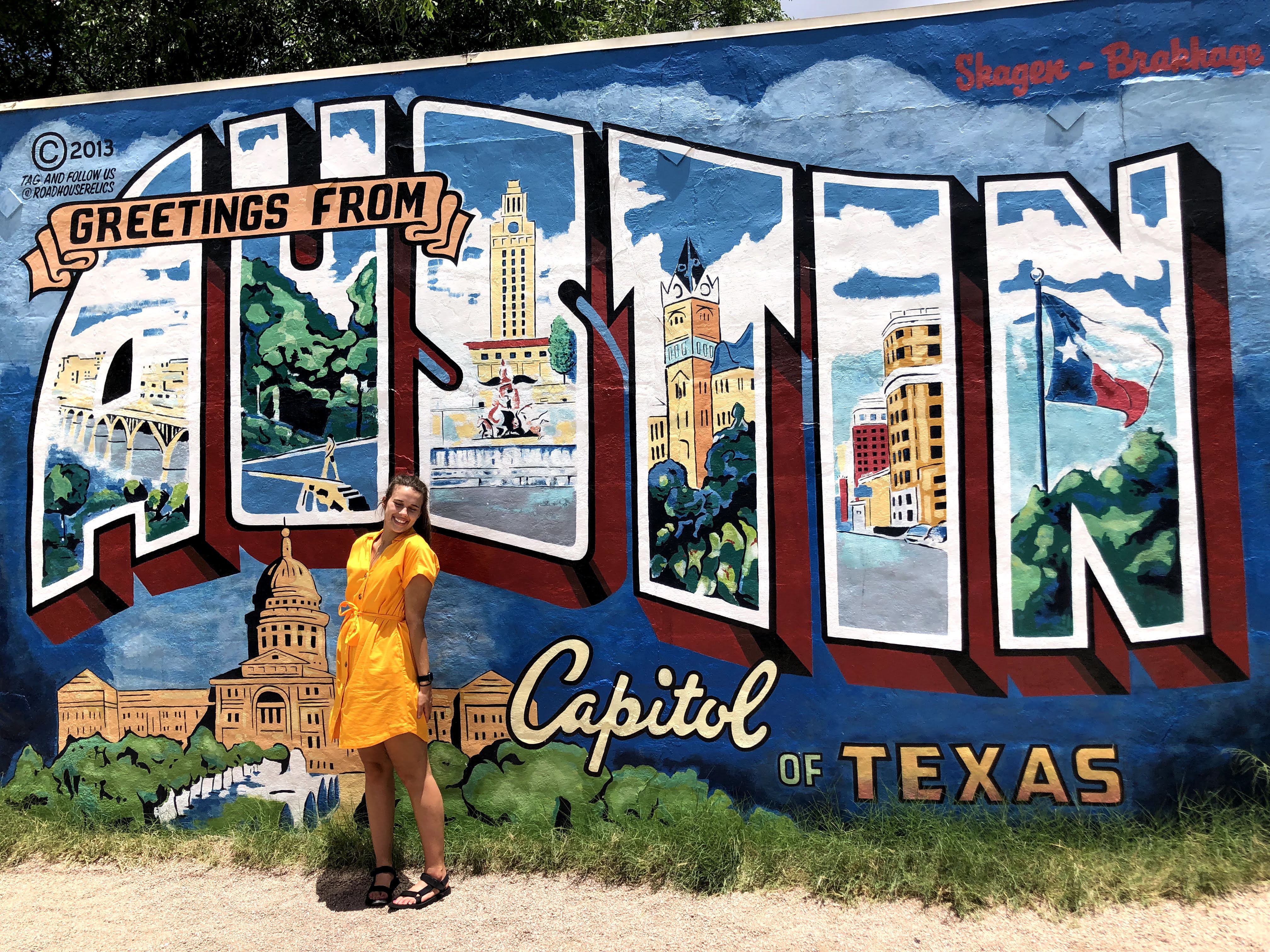
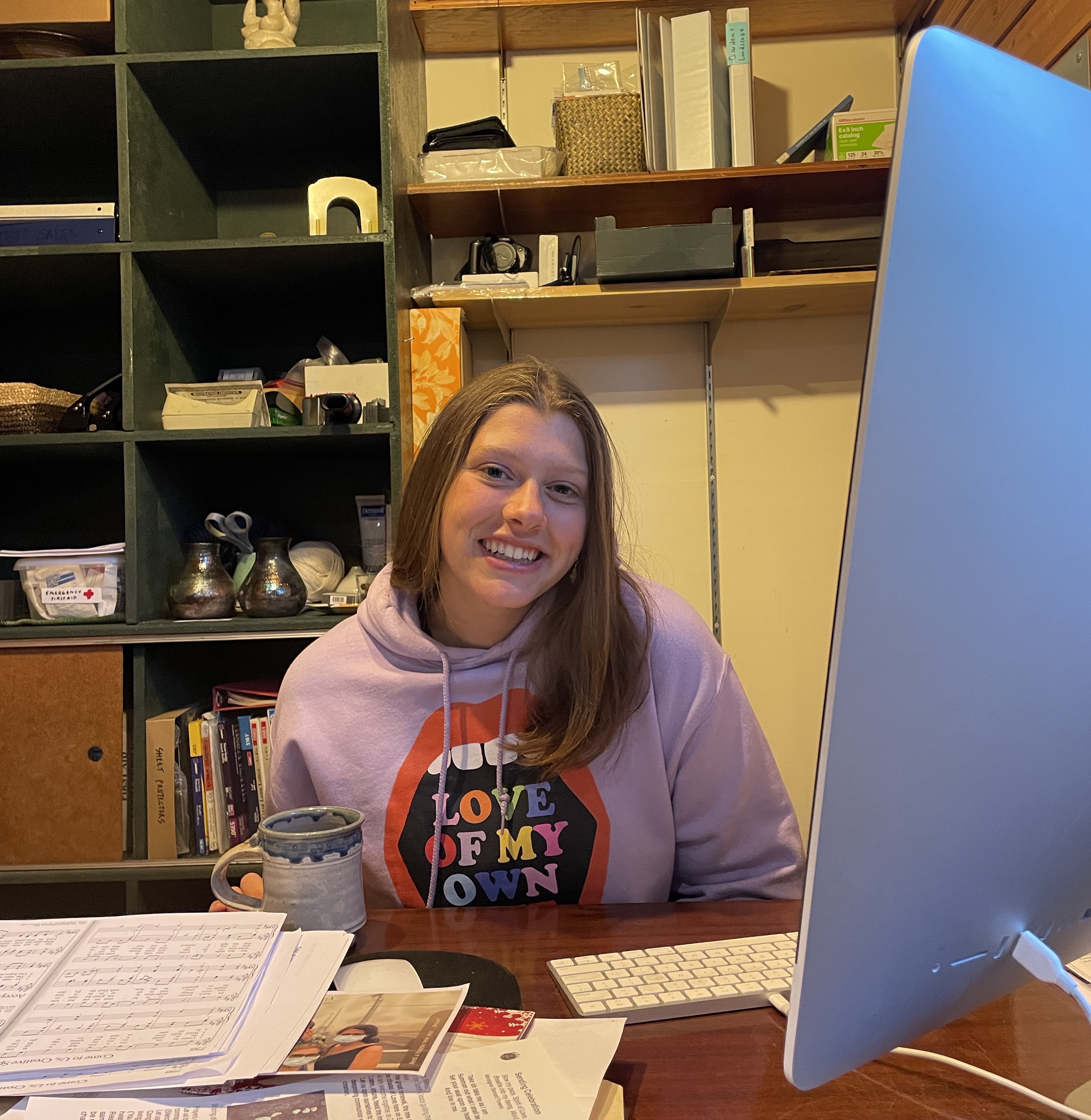
My first experience in Austin Texas was sleeping on top of my luggage at the Austin International Airport. After 5 long hours of flying and 4 hours of layover, I eventually made it to Texas where I soon realized nothing was open yet and I had to stay at the airport until 9 in the morning. Thankfully, I had my book and lots of delicious coffee to get me through it.

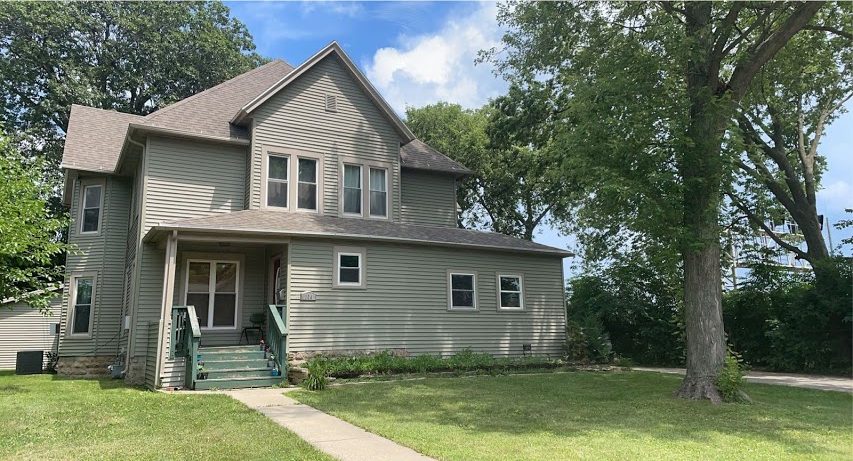
Checking into my apartment was fairly easy and went very smoothly. What I did not expect was a roommate. Do not get me wrong, I was happy to have a roommate; however, it would have been nice to know beforehand instead of thinking I walked into the wrong apartment room. All that considered, my roommate Dani is a really nice person who has helped me experience what it is like to live in Austin Texas.

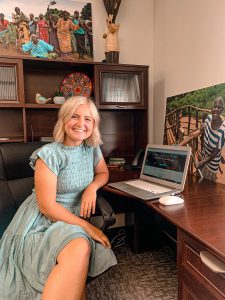
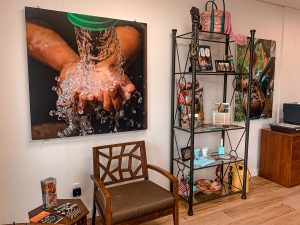
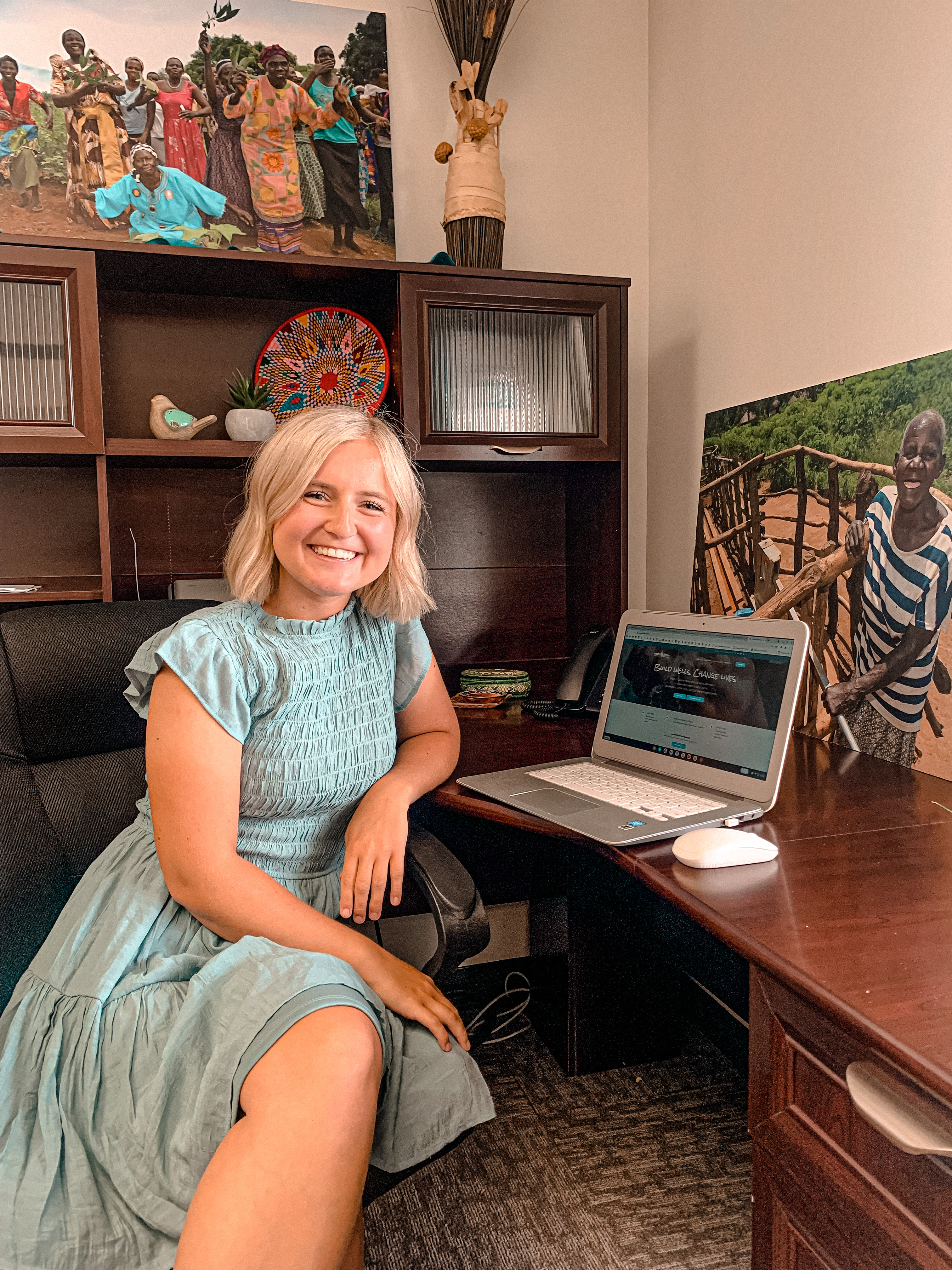
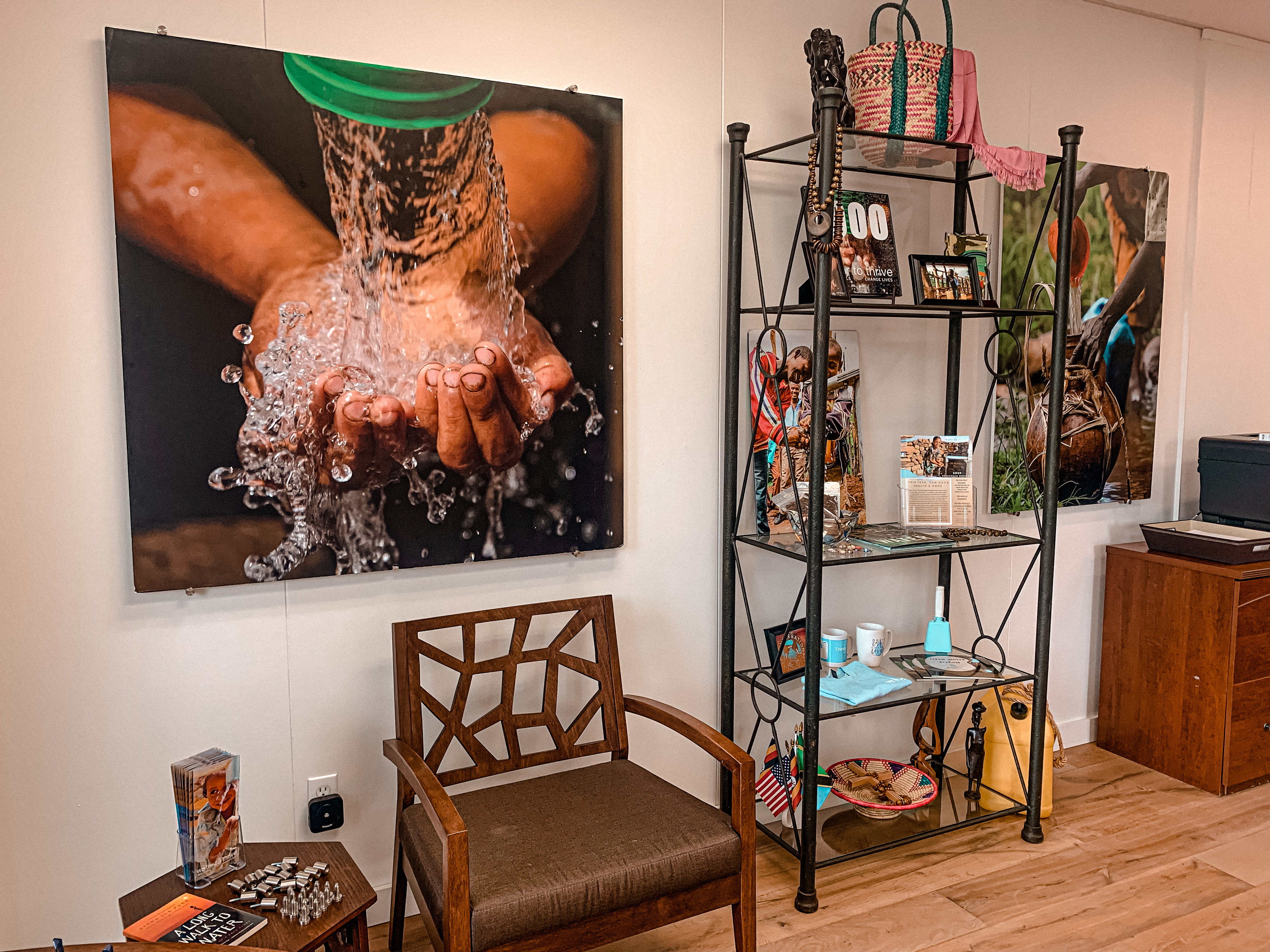
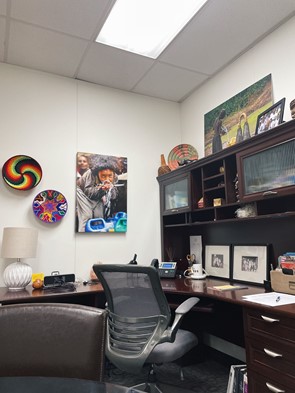
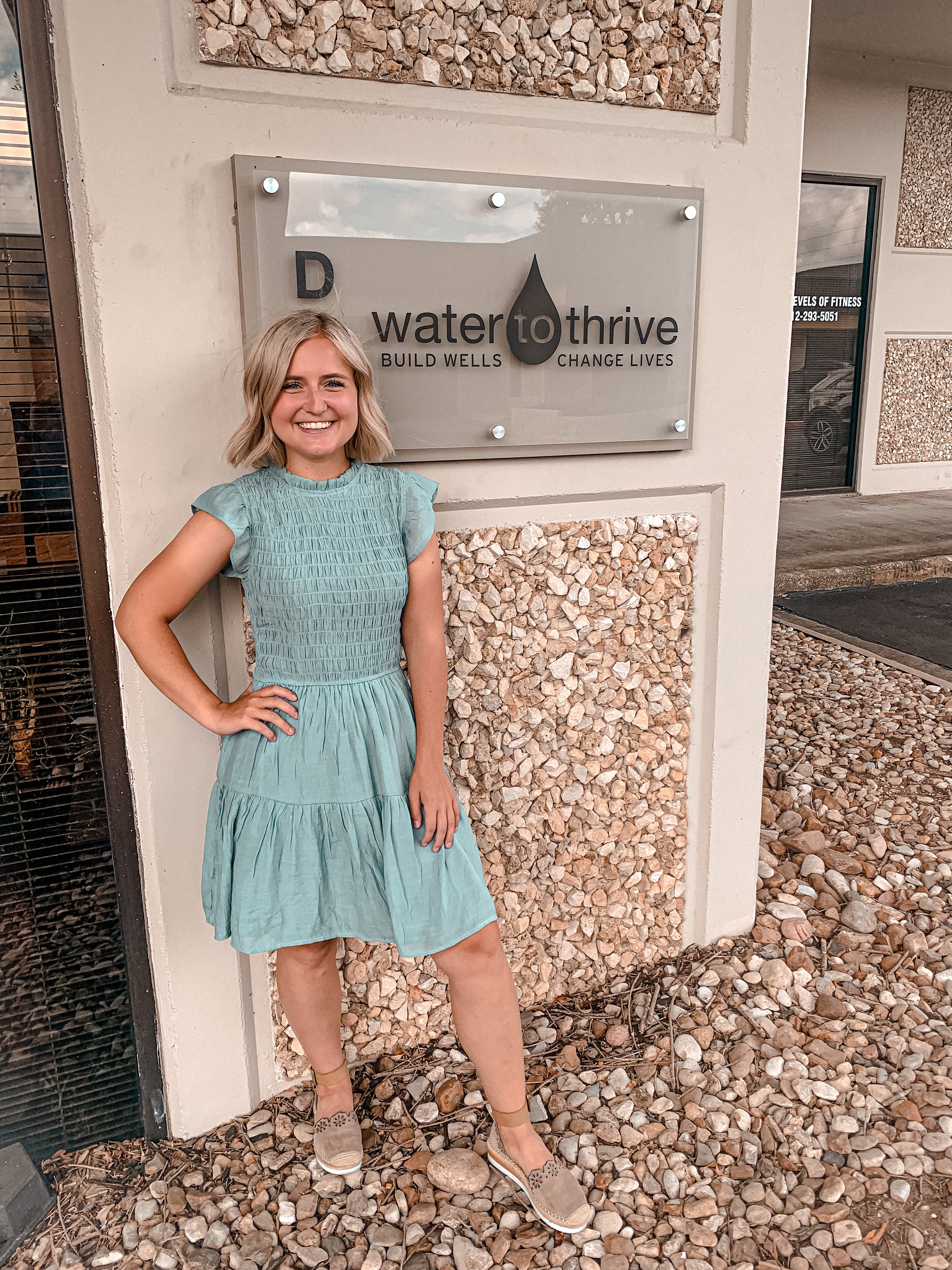
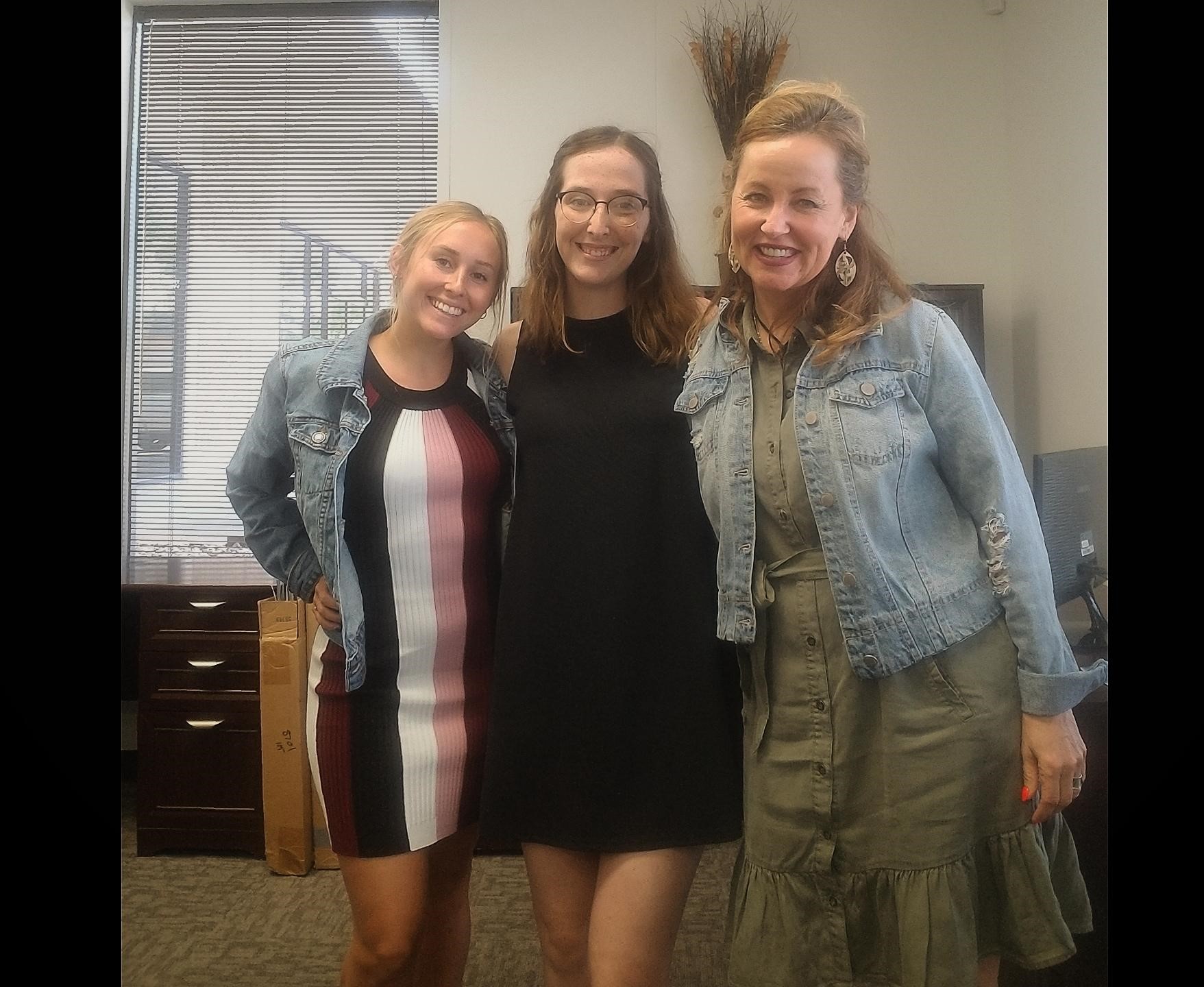
On June 3rd, I had my first official day in the Water to Thrive office. I learned so much about my other coworkers and what it is like to work for this nonprofit as a CAPS fellow. I also learned more about the organization in general.

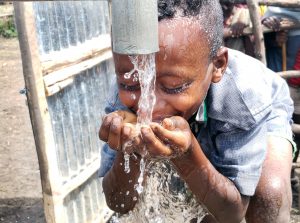
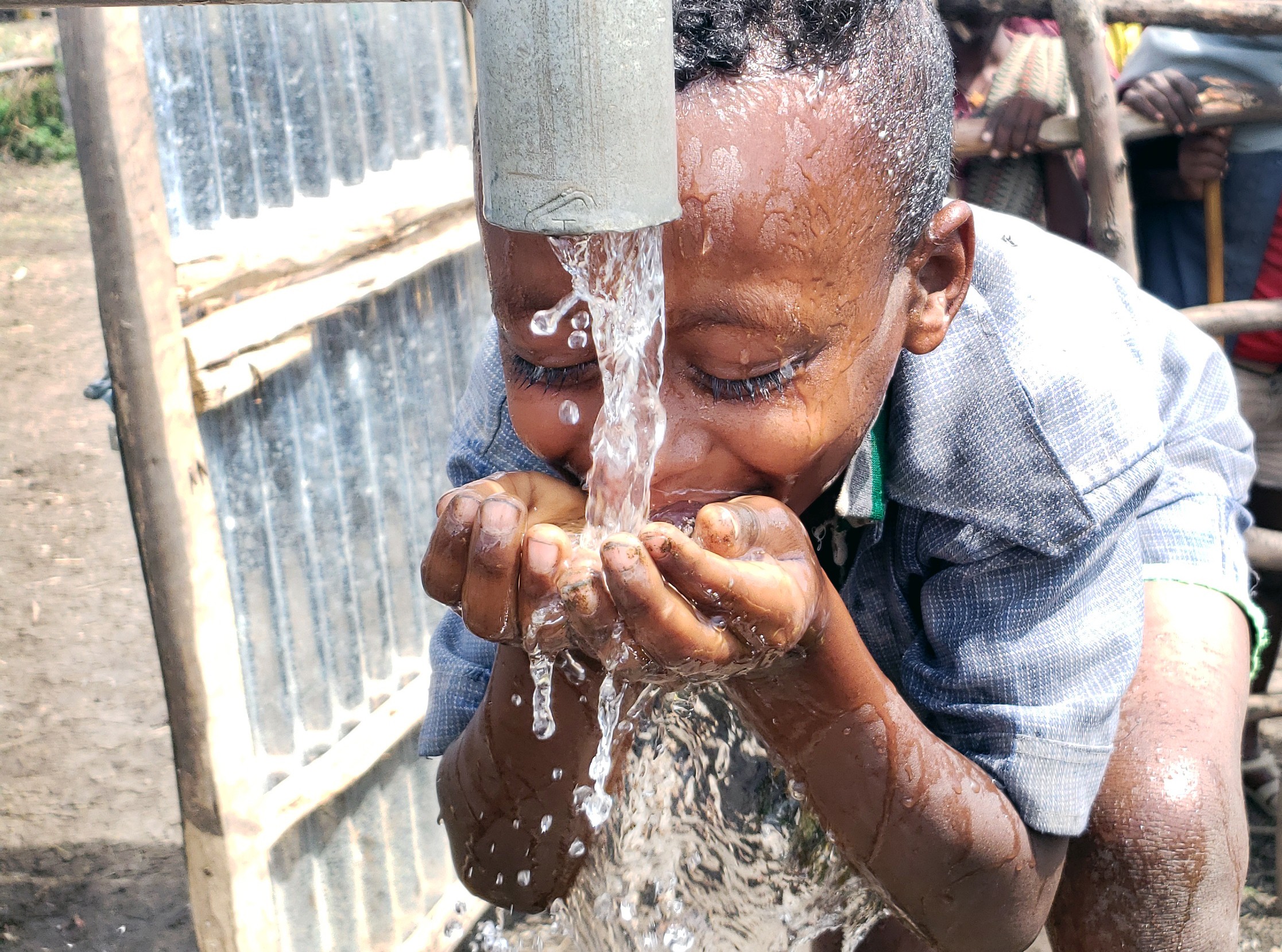
Water to Thrive is a faith-based, nonprofit organization that works directly with East Africa to supply clean water to the rural areas. This was interesting to me because it brought up so many questions that I did not know I had. For instance, I wondered about funding for the projects and the organization, how the wells are maintained, how well locations are decided on and what goes into the training for the implementation of these wells? Learning the answers to these questions is all a part of my projects this summer and I am very ecstatic that I get the privilege to work side-by-side with this wonderful group of people while experiencing the amazing city of Austin.

From the projects that I have been working on I have learned communication skills, how to create various kinds of graphics and posts, project plan proposals and what it takes to keep a nonprofit organization going. I have also learned and experienced what it is like to live in a different state essentially on my own. All of these skills and experiences are things that I want to continue working on because it will help benefit me in my future career as a healthcare leader. As well as help me find my place that I want to be a part of.

All things considered, I would not change the experiences I have had so far because all of them, even the challenging ones, have impacted who I am and who I want to become. I have had to adapt to a completely different city and figure out my own way to live here. As mentioned at the beginning, I may have had a bit of a rough start but in the end it has made me stronger and more confident in myself.

Get Connected (For Free)

As I prepare for my trip to Austin, Texas, where I will be spending one week of my internship in-person with Water to Thrive, I can’t help but reflect on all of the connections in my life that have helped get me here. My introduction to both the CAPS Fellowship and Water to Thrive organization started my freshman year of college while taking a required class for my Philanthropic Leadership & Service. Assuming that students attaining this minor were a target audience to introduce to the CAPS program, we had someone from the Institute for Leadership and Service present to our class about this fellowship opportunity. Being both a first-year and exploratory studies student, I was hesitant to apply for this opportunity, as I had little to no idea what I wanted to do when I was older. However, Madison Magiera, a classmate of mine, applied and was matched with Water to Thrive, so I learned a lot about the program and her experience as she was going through it herself.

It took me until the spring of my junior year of college to decide to officially go for it and apply for this fellowship. After a fairly lengthy interview process (and probably some personal bias towards the organization I had heard such great things about), I was matched with Water to Thrive. Not only that, but so was Morgan Olson – a mutual friend of mine. Morgan and I both grew up in the city of Valparaiso with many mutual friends in high school, but were never officially introduced to one another until becoming collegiate cohorts in this program. However, the connections we both had to one another allowed for us to plan and execute a week-long in-person internship experience together in Austin.

Not only had I realized that much of the position I am in today was due to connections I had made during very different walks of life, but soon another few random connections would soon lay even more opportunities in my lap. First, Morgan’s alumni mentor offered to lend a helping hand and pick us up from the airport when we arrived and even suggested dinner one evening this upcoming week. Along with this, a family friend of mine discovered I would be in Austin, his hometown, and insisted that he take us to a “honky tonk” while we are here.

As a college student interested in the field of communication, I have always been told that networking and making connections with people is crucial in this particular career field. Not only have I been fortunate to have my connections aid me in navigating this new experience travelling to a new city, but I am sure I will make even more connections when I am down there, which may come back to help me in the future.

1989 (Phia’s Version) by Sophia Behrens

My friends and I have a running theory that moving to a new city should perfectly encapsulate the feeling you get when listening to the album 1989 by Taylor Swift. In this album, Swift is upbeat, bold, and seemingly unphased about her move from Nashville, TN to an apartment all by herself (and her cats), in New York City. While I was pretty sure that I would feel a bit more nervous about moving to a city alone, I knew that this internship would be a growing experience that only comes along once in a lifetime. 


 With a burst of confidence, I found myself testing our 1989 theory through the CAPS program, in my dream city. After a whirlwind of goodbyes and some (admittedly frantic) packing, I found myself settling down in a comfy apartment on the outskirts of Washington DC. While the pandemic has made my internship with Lutheran Services in America virtual, I have still been able to learn a great deal from this internship site in the few short weeks that I have been here. The first lesson? Outlook. This one came as a surprise, as I have almost religiously used Google for all of my school, work, and home needs for as long as I’ve known how to work a computer. After just a few hiccups (and missed messages in Microsoft Teams), I was well on my way to diving into projects and learning what a (virtual) office setting looks like. 


To my delight, I am able to continue past work of a former CAPS Fellow during my time with Lutheran Services in America. I’ve begun research on racial equity data within the nonprofit world and continuing to research LSA’s member organizations for the same type of data. I have also been able to learn more about how nonprofits can work together to combat the systems that hurt the people they serve. I’ve particularly enjoyed learning about aging adult facilities and how they help aging adults in rural populations. 


While I’ve enjoyed this work, it’s also led me to consider my calling for the future. In having a lively conversation with my CAPS mentor, I found that more often than not, our paths in life aren’t as straightforward as they seem. In fact, the further I get in my studies, the less I know what I want to do with my career and life path. Luckily, CAPS has allowed me to explore one of the many options that my degree leads me to. Nonprofit work can be difficult, frustrating, and can be either focused on day to day life or the big picture. LSA allows for me to see both sides of this work, experiencing conversations with those doing the nitty gritty ground work. The people who are constantly putting out fires while simultaneously making the world a better place. On the other hand, LSA takes the non profit staff and gives opportunities to focus on the bigger picture and direction of their work. This has led to more and deeper conversations around race and racism, reaching out to typically ignored populations, and creating a safer space for those who need help. Overall, I feel grateful for the different opportunities LSA has given me and allowed me to explore on my own. It has given the flexibility of a learning environment while still showing how to be productive in a work environment. 

Why is the River Rushing? by Rebekah Hershberger


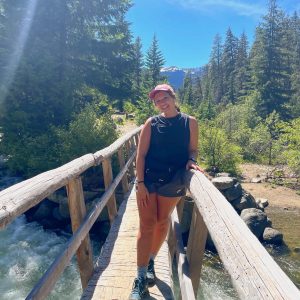
On a hike at Icicle Gorge

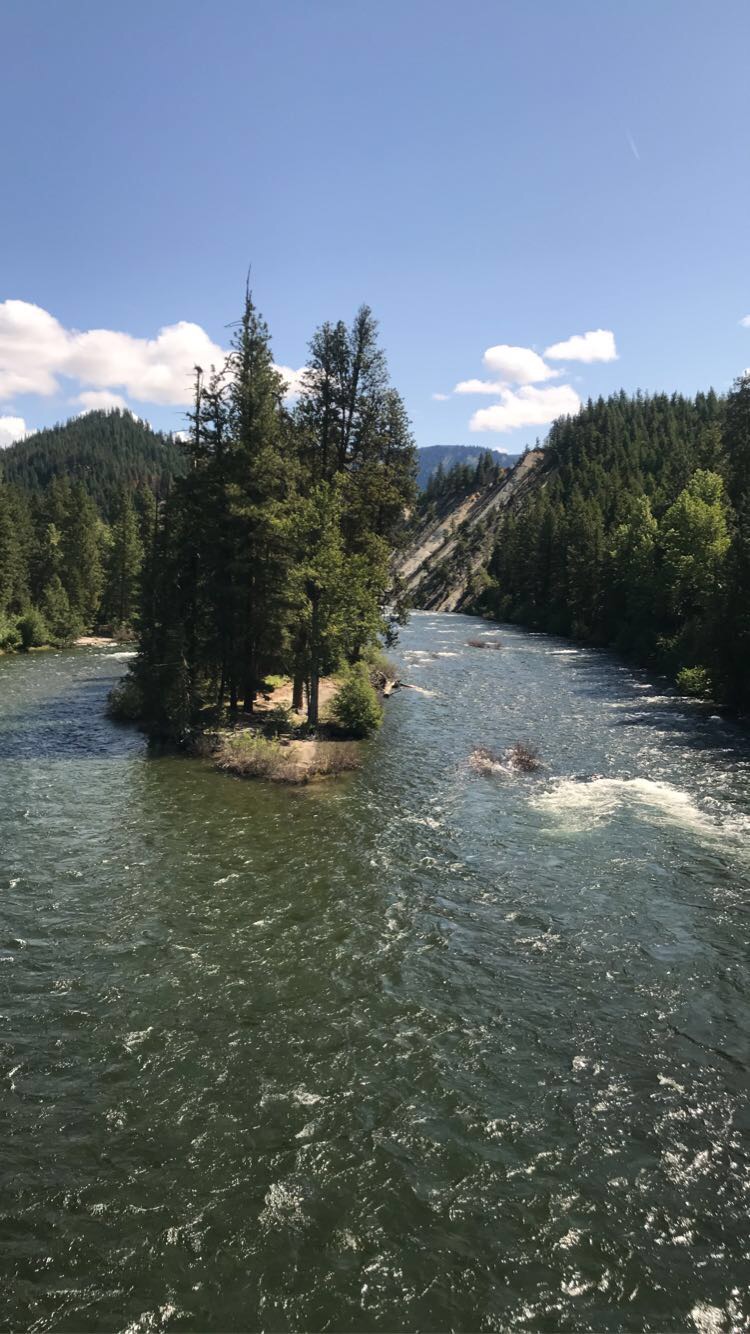
My CAPS Placement at the Grunewald Guild is a bit unconventional, which is exactly what drew me to it. Nestled along the Wenatchee River, the Guild is surrounded by the snowy peaks of the Cascade Mountains, and the vibrant Wenatchee National Forest. When I arrived at the Guild at 11pm my first night, my supervisor took me out to the walking bridge over the river to listen to its roar and watch the stars. He told me that the river was the highest and fastest he had ever seen it, after recent warm temperatures led to a massive snow melt on the mountains. That first night I fell asleep in my loft to the sound of the river rushing right outside my window, imagining the new experiences it would bring with it. 

The Wenatchee River

Now three weeks later, the water levels have gone down a bit and I have adjusted to the constant sound of the river. I also have adjusted to the pace of life here in Washington. The Guild’s larger art classes will be starting in July, so for now, my daily tasks include preparing campus housing for guests, gardening, coordinating volunteers, and getting to know the other staff members and artists. When I met the other staff the first Thursday I was here, we had a short orientation meeting and then they told me the next item on the schedule was a Monday morning meeting. I spent that first weekend exploring the campus, hiking along the river, and bonding with my team. This relaxed pace has given me the opportunity to settle into a new environment and reflect on each day as it passes. 

As a college student whose biggest accomplishment is balancing 800 classes, clubs, and committees, it feels unusual to have time to just be still. My mind is always moving on to the next item on the to-do list, the next time block on my Google Calendar, before I even finish the task at hand. However, during my time here, I have been reflecting on how I can best use my time to meaningfully serve others and myself. I have the unique opportunity to spend a whole summer in a totally new place, learning about myself and taking time to think through my interests, passions, and commitments. As the hospitality coordinator for the summer, I have been assured I will be plenty busy helping guests in July and August. But in this time of preparation, I have not only been resetting guest rooms, but also my mindset in how I measure productivity and success.

I constantly feel the pressure to make progress and check things off my personal and professional to-do lists. Why am I rushing to have my whole life figured out? Even if I woke up tomorrow knowing my future education and career path, I would still be here at the Guild until August. There is no rush. Although it has been difficult at times to not compare my summer experience to my peers who might be making professional strides in more traditional ways, I know that serving at the Guild is where I am meant to be. In my three weeks here, I have already grown in my independence, ability to advocate for the things I need, and responsibility to delegate tasks to others. These along with many other developing skills and experiences are my new measure of success. While I might not include my new capacity for spider removal or my dishwashing talents on my resume, the personal growth I have experienced this summer is an accomplishment in itself. 

So why is the river rushing? Maybe it is because someone told it that it needs to have its entire career planned out by the age of 20. Maybe it’s because its peers recently posted about their new high-profile job opportunity. Maybe it is scared of not living up to the definition of success created by society. Or maybe it is just because recent warm temperatures led to a massive snow melt in the mountains. Whatever the reason, I have learned that life is not a race. I can learn and grow at my own pace, without fear of the future. After all, the river and I have different destinations and I am content right where I am. 

Funding the Gap by Lillian Gramza

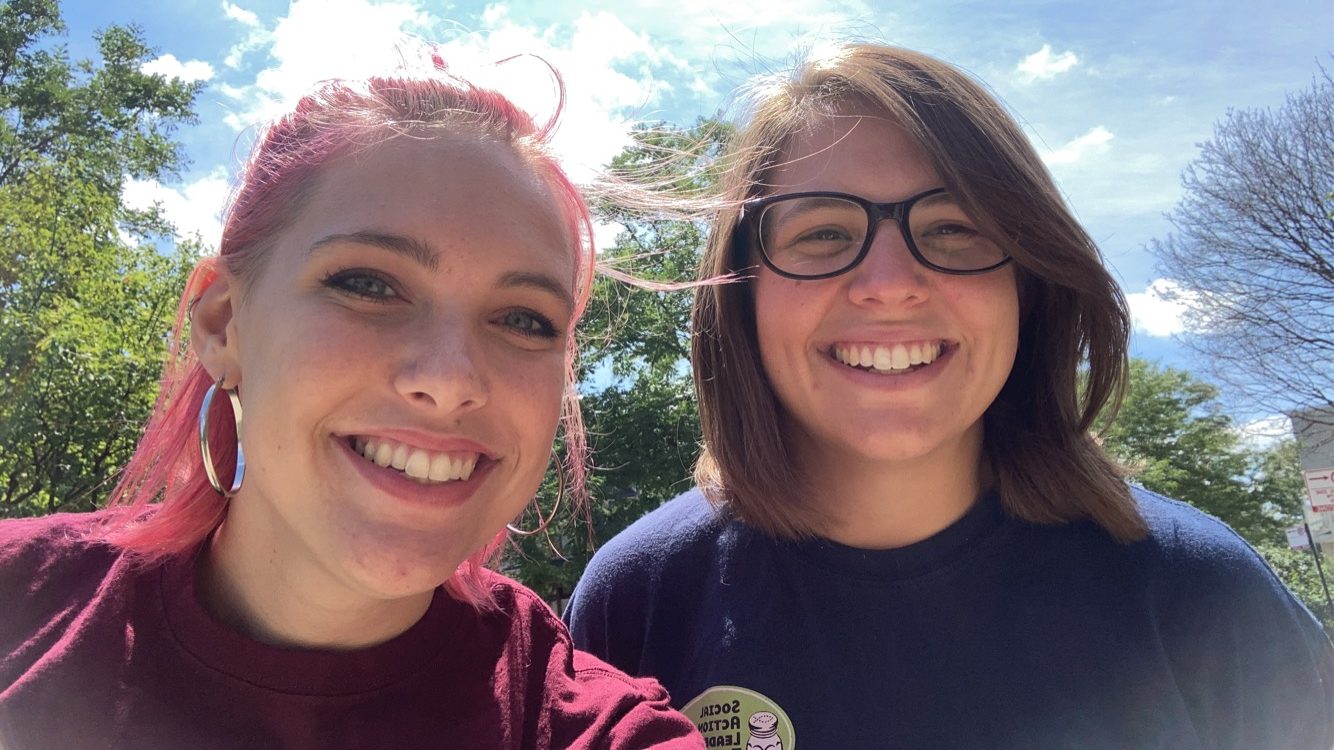
Going into my Caps experience, I knew my work would give me a valuable peek into the administrative side of nonprofits. I did not anticipate, however, how a goal of empowerment, growth, and economic opportunity requires a constant fixation on money. I knew that services need funding and most social problems stem from financial inequality, but I underestimated the amount of time and energy that goes into securing money to run the organization and deliver services. Essentially, I did not realize that nonprofits were allowed to be greedy.
Growing up comfortably, without needing to worry about paying for my basic needs, I learned to appreciate the world separate from “treasures on Earth”. I understood that money, while necessary to survive, should not be the focus of life. People who spend their time seeking money would find themselves with less than their neighbors. That reality helped me become a more empathetic and grounded person, but it also forced me to see wealth in a negative light. So when I learned about the intense fundraising efforts of nonprofits, I was both impressed and skeptical. It seemed wrong to tell myself money was the root of evil while simultaneously working hard to secure more and more money for this business.
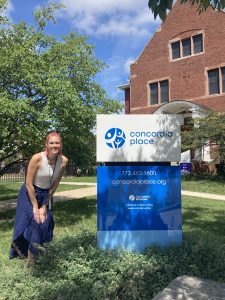
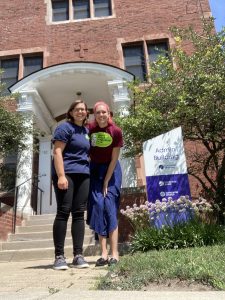
However, the nonprofit I work with, Concordia Place, truly uses their profits with the wellbeing of their community in mind. Concordia Place serves around 800 people a year. They provide childcare, education, teen development programs, English language classes, and home visits for newly expecting mothers. The children, teens, and adults speak a total of 27 different languages. The organization prides itself on being a place of yes, a place where any person can come seeking assistance for themselves or their child and will receive what they need.
The mission of Concordia Place goes hand in hand with one of my most recent classes about the American welfare system. Essentially, in America, the government sets a limit on the amount of money someone can make or possess before they no longer qualify for public assistance. This means that someone making a few dollars over that limit is actually worse off than someone who makes a few dollars below the limit. Concordia Place recognizes that many families struggle to pay for childcare, but cannot receive the benefits granted to others due to governmental restrictions. They address this problem by offering sliding scale tuition, which allows families above the poverty line to apply for a reduced rate in whatever service they are seeking. They call this “funding the gap”; giving extra assistance to those too poor to afford the regular costs, but too wealthy to qualify for public assistance. Not only does Concordia Place provide instant relief for individuals through their programs, but the organization has a long term focus. By increasing the quality of childhood education and the opportunities parents have once they find a safe place for their children during the day, those same families have a higher chance of employment and, hopefully, the ability to generate generational wealth. Concordia Place battles systemic inequality with accessible services that allow for growth in both the child and the parent.
I fully support everything Concordia Place hopes to achieve and I hope I can do everything in my power to contribute to their mission. This being said, I will continue to examine the role of money in my life now that I understand that more wealth can also mean more good. The more funding Concordia Place secures, the more community members they can serve, the more lives they can impact. It seems unlike me to envision a life where I consume myself with the acquisition of money. When I thought about my future as an employee at a nonprofit, I saw myself doing administrative work but with the assumption that money would simply be there to run the organization. However, nonprofits have to fight just like everyone else to maintain enough funding to survive. A fixation on money is not counterproductive to the life-giving mission of a nonprofit, it is absolutely necessary. Through my experiences at this internship and college, I will strive to learn more about the world of fundraising and fund management. I feel grateful to have an experience at an organization like Concordia Place where I can see a true calling for social change in action alongside a mission of extensive fundraising.

Beginning My Journey at BallotReady by Hailey Kmetty

Leading up to my first week at BallotReady, I felt concerned about being good enough. I have more soft skills than hard skills. I have a passion for politics, but I felt like an amateur. I quickly learned that there was no need to be so worried. In my first week, I met with my cohort of other interns, both data and engineering, and had meet-and-greets with the whole BallotReady staff. I instantly felt welcome despite the remote setting BallotReady is working in. It was a breath of fresh air to work with and be led by young people who are motivated by and interested in similar things.

Thus far, as a data intern, I have primarily been aiding BallotReady’s Data Team in researching current officeholders across the U.S. as the organization seeks to expand their product to more of a year-round service, not just during election cycles. Data interns also get signed on to other projects like researching voter registration requirements in each state. It is really exciting to me to know that our work is contributing to informed voting for fellow citizens. I was so impressed with my supervisor who exemplified just how important this work is; she told us how she spent an hour exploring Google Maps to find accurate directions to and the address of a polling place in a trailer. It was used by ten voters who, without her directions and hard work, would not have found their polling station to vote. Starting next week, I will be taking up my intern minor project. I will be working with the Director of People and Operations to consolidate their HR information into a new database system. I look forward to continuing to expand my horizons, building my skill set, and furthering my relationships with my supervisors and peers.

In my fourth week on the team, I find myself becoming more confident in my hard skills and I now know that my involvement with civic engagement is what is important, not being an expert. I also truly value the diversity and inclusion practiced at BallotReady. I feel comfortable being myself with my coworkers, communicating and asking questions, and trying new things. One of my goals as a CAPS Fellow is to narrow down what it is that I want to do and what type of roles fit me best. For the past few years, as a Valpo student and Global Service major, I had always thought working at a nonprofit in some sort of capacity was the answer for me. However, with just four weeks as a graduate and BallotReady intern under my belt, I see that there is so much more out there for me. This may sound like the opposite of my aforementioned goal, but it has been extremely insightful to me.

“Responding to the Gospel…” by Emily Gaus

I was given a tour of a normal looking office building, with tall grey cubicles and sounds of fingers steadily typing in the distance. With the pandemic, only a handful of employees are actually in the office. My lovely supervisor brings me around, introducing me, and I try not to show my nervousness. Amongst the chaos of this year, this is the most new people I have met in a really long time. At one point, I say thank you to someone after introducing myself, and I think about it for the next few days hoping she doesn’t remember how awkward I was. I have to remind myself this is part of the process, and it is okay. 

At this point in my experience, I have been with Lutheran Social Services of Illinois (LSSI) for three-ish full weeks, but it feels so much longer. I have the mission statement stuck in my head, and remember to consider it in everything that I do (hence the title). I have met everyone and no one at the same time. I have conducted interviews, written articles, and created flyers and social media posts that will be then sent to the rest of the company. I feel useful. I feel connected in what I’m doing. There are times where it’s difficult to feel like I’m a part of something bigger, working half at home and half in the office. But as soon as I hear a “they really liked what you did” or being mentioned in a staff meeting, I realize how worth it it is. Everyone I have met at LSSI so far has only admiration for their place within the organization and their fellow employees. It’s inspiring. It’s a great work environment to be a part of. We have weekly coffee chats in the morning, my preferred choice of drink is apple juice, and it’s an informal way to get information out to the team. This has been especially important during remote working, and it has been a great way for me to put some names to faces over emails. 

Last week I visited one of the facilities that they are shooting a Youtube virtual tour of, and it was great. After talking with our tour guide, I recognized what sacrifices non-profit organizations have to make in order to do their job well, consistently well. My supervisor took note of some things that need fixing, hoping to bring it to her people and get a donor who could contribute. I loved seeing that initiative take place. Constantly thinking of others and potential solutions. 

With COVID-19, facilities are a little more hesitant to offer tours or meet and greets. Working with the communication and advancement team is exciting because I get to talk to lots of different people across the organizations, taking the time to learn about many different programs, as opposed to being in one branch. Throughout this experience, I’m recognizing how much I like being backstage to the operation, versus being completely hands-on. There’s potential for opportunities where I could be a little more hands-on and compare, that I’m looking forward to. I’m very grateful for the social media and graphics experience I am receiving, because it lets me explore my creative side in a productive way. 

There is so much potential to be had and I can only gain new and exciting learning experiences from here.

Patience is a Virtue by Nick Skrobul

I began my internship with the Heartland Alliance last Wednesday, 5/26/21, and have been met with a number of logistical challenges right off the bat. The Monday before my orientation I took the time to attempt to log in to the necessary online portals I would be frequenting as my internship is remote however I was met with screen after screen of dead links. It wasn’t until Thursday that I learned that the Alliance’s IT department was having major outages across several of their servers. Because of this I have thus far been unable to begin many of the tasks of my internship such as reaching out to clients and writing and logging case notes. All communications and video calls with my team have also had to transition from my Heartland Alliance email to my school email that I have access to. Needless to say this has been quite the source of frustration as I was so eager to dive into the world of social work.

Another source of surprise has come from the content of my work thus far which has largely been in the form of reading large quantities of legal documents related to the US refugee system and Heartland’s own policies surrounding their programs. While much of this has been important to understand, and I have learned a great deal from it, it certainly is a deviation from my desire to help the clients in the system; but that will come with time. On the first day of my internship, I met with my supervisor for a brief orientation session where we discussed the importance of the work we do. I was presented with some rather harrowing statistics about the global refugee crisis and watched some videos interviewing refugees to understand their personal experiences through resettlement. According to the UN, there are approximately 80 million forcibly displaced peoples in the world today. Most of these individuals take refuge in UN Refugee camps, which although good in theory ends up looking like tent cities with few resources available for medical or psychological care. Less than half of a percent of these people will successfully resettle in a new home after a rigorous screening process that can take anywhere from 5-20 years.

The knowledge of these struggles has kept me humbled and level-headed throughout the process. I often remember the words of the early 1900s radio host Orson Welles:

“We must each day earn what we own. A healthy man owes to the sick all that he can do for them. An educated man owes to the ignorant all that he can do for them. A free man owes to the world’s slaves all that he can do for them” (1943)

Such has been my reason to pursue this internship and my motivation to see past the comparatively insignificant ailments of the first world. Of course, there is a fine line to walk between humility and delegitimizing one’s personal emotional struggles; however, the fact of the matter is that I can certainly persevere through IT troubles or remote learning environments for the betterment of others. After all, the existence of such problems is evidence of my own privilege in life; and what good is my privilege if it is not used for the betterment of others.

First Days at LINC Ministries by Elizabeth Nevarez

It was a hot May day when I moved into my Chicago bungalow, two mornings prior to my first day at LINC Ministries Int’l Inc. LINC Ministries is a nonprofit organization that provides nontraditional church ministry to urban areas. This nonprofit finds ministry leaders and church partners to equip in serving others. They focus on spiritual community, personal development, ministry development, organizational support, and resource networks in order to establish well suited leaders for those in need. LINC Ministries has seven different locations in the nation– Chicago being the newest addition. I am the first intern at the Chicago location, all thanks to the CAPS Fellows Program. Upon hearing that I would be working at LINC, I was filled with passion, excitement, and nervousness, as this would be my first experience working for a nonprofit organization, let alone, a formal job. My previous work experience was as a camp counselor: I was used to wearing a tie dye shirt with camp logos and having screaming kids surrounding me, but on that Monday, I was putting on a business dress and grabbing my briefcase as I walked out the door. While the new wardrobe is still something to which I’m adjusting, I can confidently say that I have now been working for LINC Ministries for two weeks. I have learned so much through my encounters with Lutheran churches, ministry leaders, the incorporation of my academic learning and my job, and the logistics of a nonprofit organization (each of which I will detail in turn).

I have loved being able to meet with Lutheran churches in the Chicagoland area. I have been able to hear their mission and vision behind partnering with a nonprofit organization like LINC. Churches like these create a firm foundation of spiritual support and a community of like-minded individuals for LINC. They also provide resources and connections for continuing ministry outside of their walls. Although these churches differentiate in staff, organization, and communication, they all still come together as the body of Christ.

I have also had the privilege of meeting with many ministry leaders in the Chicagoland area due to LINC’s connections. These ministry leaders have had a calling from God to serve a specific people group in the city. The leaders vary in age, gender, and background, but they all collectively have a purpose for God’s work. These callings target different groups of people, specifically immigrants, human trafficked victims, the homeless, and at-risk youth. Ministry leaders meet with my boss and me weekly in order to continue their vision framing process and find their purpose for why they serve. These weekly meetings further their planning and challenge them to go above and beyond in serving.

Within my two weeks at LINC, I have noticed so many beautiful aspects of nonprofit work. I have already begun to see the beginnings of how churches are started (a term called “church plants”), Christ-centered recovery homes, bilingual ministries in immigrant communities, tangible hope in tent cities, and discipleship, healing, and restoration for the at-risk youth. Being able to see people become the hands and feet of Jesus and pour into the city of Chicago has been inspirational.

I have also been able to incorporate my academic learning into my work as well. As the Diversity, Equity, and Inclusion chair of my sorority, I have been able to reference back to my workshops about identity and racism for future use at LINC. I have also been able to use my knowledge of 990 forms and profiling of nonprofits through my college classes in my work. Lastly, learning the logistics of nonprofit work has been intriguing. I have gained a better understanding of “asks” from donors, budgeting, fiscal agencies, and more. Starting an internship through the CAPS Fellows Program has been a true honor and something that I will not take lightly. I am excited to share that my time at LINC Ministries has furthered my perspective of nonprofit work and has solidified my desire to take this career path in the future.

A Fresh and Clearly Set Start by Michael Olson

The process of a fresh and clearly set start can be paralyzing. The CAPS Fellowship is no exception as I, among many other fellows, attempt to settle into our respective placements and make an unique impact. A quote from Buddha tells us “There are two mistakes one can make along the road to truth… not going all the way, and not starting.” My main worry when beginning my fellowship was being unable to get out of my shell as a person. Being viewed as somebody who is untrustworthy or incompetent for my inability to get comfortable within my space felt like my greatest fear. While starting well may be difficult for myself personally, along with many others, I am proud to state that I have been doing well to show my full self to Kheprw throughout my first two weeks.

For a short synopsis, I spent my first week bouncing between many meetings, exchanging names with individuals from varying committees within Kheprw. My coworkers at Kheprw were extremely welcoming and excited to pause their busy schedules to explain the important role of their various committees. Along with, multiple check-in meetings with mentors who constantly asked me about where my current wants, passions, and needs are for my fellowship. Their impact on my confidence and attitude towards my current objectives can’t be understated. Currently, I have been assigned about three personal projects which encompass three committees within Kheprw while still being allowed to join any meeting to satiate my own curiosity. Even though my work on these projects has been short, I can already see the different ways of thinking which will be demanded of me and how differently I will have to act in comparison to any classroom setting.

One aspect of the CAPS Fellowship I have appreciated within my own viewpoint of reflection is the opportunity to meet many great wells of wisdom to draw upon. At the beginning of my time with Kheprw, I was told, in my own rough paraphrase, that I would need to be prepared to clash with big voices and have my ideas challenged within the Kheprw space. I didn’t realize just how much I would enjoy that previously described environment. Within my check-in meetings, I am not only forced to think in a much less concrete, cookie-cutter way about achieving my goals; but also, what I want to accomplish and how I should accomplish my goal. At first, it felt difficult to work on finding my passions or solutions to questions within Kheprw with little specific information. However, upon reflection, I realized two essential points: this isn’t a classroom, so I can’t ask for a syllabus and there is no right answer to the questions I am being posed. It felt paralyzing when asked open-ended questions about “what I had noticed within Kheprw’s different spaces” until I realized that my input was perceived as equally valuable in comparison to others’ in my mentor’s point of view. I realized, in relation to my own purpose, that these people had gotten to where they are because of their humbleness. Amidst their own success, their ability to treat everyone they meet like an expert in “something” was admirable. Being relied upon and viewed as a trustworthy coworker has done wonders for my own personal confidence and passion for the projects I have undergone.

From looking back on my past two weeks, I was reminded of a quote from Henry Thoreau “The mass of people live lives of quiet desperation.” I realized that despite my shortcomings or personal doubts, the last quality I want to be attached to me is “quiet” and I will not be afraid to leap before I look. I look forward to the rest of my time with Kheprw and wish my “fellow” CAPS Fellows all the best on their own unique paths in their placements.

Sincerely,

Michael Olson

To A Future CAPS Fellow by Justin McClain

It has been two weeks since I finished my internship with Heartland Alliance on the case management team. Another case management intern, Marie Dix, wrote the blog post, “Unfinished,” and her words beautifully captured some of the thoughts currently racing through my mind: the positive staff culture I’ll miss, the systemic injustices refugees face, and the connections to families I now have to let go. With my final blog post, I want to leave a message to future CAPS Fellows:


I am not sure how I will capture everything I want to say, but I suppose the easiest place to start is at the beginning. The application process for the CAPS Fellowship is not a hard process, but, just like the internship itself, you get out what you put in. It definitely makes you take a moment to close your eyes and envision the future you want. I, like many other Fellows I have talked with, saw myself using the privilege I have as a white, middle-class male with a college degree to positively impact the lives of those less fortunate than me. I encourage you to take the application time to start reflecting on your time at Valpo and how you want to use your future degree, and not just write your personal statement how you think the ILS would like it. Your personal statement is also something interesting to look back at throughout the internship and see how it might have changed based on your experience.


I am guessing you have probably made it through the application/interview process if you are reading this and want to know tips for the internship itself. From the very start, you will be thrown a lot of new information (people, places, acronyms, offices, tasks, meetings dates and times, etc.) and will probably feel like you are being baptized with fire. It may sound cliché, but this will all get easier with time, and you can speed up the process by writing it all down somewhere. Marie and I created a shared Google Doc with all the acronyms we were given and were able to get familiar with them relatively quickly. Realizing you can finally understand and speak the language of the organization is a really nice feeling. This leads to my next tip – you were chosen for the internship and placed with the organization for a reason. Yes, the “fake it ‘til you make it” mindset can get you through the internship, but you have more skills than you might realize and might not actually need to fake it. Be confident in yourself. On the flipside, it is also important to know your limitations and when to ask questions. Asking a question does not show weakness; it shows strength and maturity.


The biggest tip I have for you is to celebrate the small victories and brush away (but learn) from the small losses. Thinking back to the personal statement, a lot of the goals you might have for your future are lofty and fall along the lines of “changing the world” or “solving all the world’s problems.” These are great aspirations, but they are probably not super realistic for a summer internship. You may get discouraged doing what seems like busy work or a small task that does not impact too many people, but it is all helping the organization or the people they serve in some way. For instance, I spent a lot of time on hold with insurance companies, scheduling medical appointments, or just checking in with the refugees. None of this was revolutionary or changed the world, but it all was helping the people Heartland Alliance serves. It changed their world. The refugees I did those mundane tasks for have very little understanding of English and would not have been able to get the medical attention they needed without my help. Sometimes an insurance company would not be able to cover all the medical charges or a transportation company would be difficult to work with, and delivering news like that to someone may seem like a let-down and not ideal, but the refugees would always say how thankful they were and how much they appreciated my work. This goes back to the celebrating the small victories. In cases like those, I was still able to get some of their medical bills covered or help them change the time of their medical appointment to better fit the constraints of the transportation company. Those were still wins for the refugees. I just had to change my mindset.


Lastly, you will have the support of the ILS, current and past CAPS Fellows, and your placement supervisor throughout the entire summer. If you get overwhelmed or need any help, remember that you have plenty of resources. The resources are only helpful if you reach out, though. Taking the time reflect on your experiences and decompress on your own will also help you stay motivated, energized, and protect your mental health. I encourage you to journal, dig deep into the blog posts you will be writing, or even just talk to yourself before bed to process what you go through.


This past summer was definitely not what I imagined when I applied for CAPS. Putting the restrictions from COVID-19 aside, things were still very different than what I was envisioning, but I am so thankful for CAPS. I know that I have grown as a person and developed a deeper sense of what it means to serve, what it means to be human, and what it means to truly live your values.


I wish you the best of luck.


Uncertainty, Discernment, and Discovery by Lydia Knorp

As I reflect on my time at Heartland Alliance, many thoughts and emotions come to mind; the most prominent being gratitude. I came into this internship seeking clarity. Whether it be clarity regarding the path I want to pursue or a deeper understanding of what I do not enjoy, I was hoping to find meaning in this experience.  This feeling of gratitude that I mentioned is for the gift of clarity that Heartland Alliance has blessed me with. I came into my internship confident and still am certain that I have found my home in the field of Social Work. However, in a vast field, I had struggled to pinpoint my passions within the field.

Working with refugees at Heartland Alliance is something I thought I would enjoy, but I had no idea how much I would come to love it. There is something special about working with people from around the world. It is truly a gift to have the opportunity to learn about different cultures and traditions from places so far away. Each day that I interned, I had the opportunity to get to know many different individuals and learn about their experiences, stories, and culture… what a gift.

Here I am two months later grateful for the clarity that this experience has given me. I have discovered and confirmed the passion I have for working with a diverse group of individuals, listening and learning about their experiences, and walking alongside them as they strive to accomplish their goals. I look forward to seeing how this passion of mine unfolds as I take my next steps in both my academic and professional careers.

The CAPS fellowship has encouraged me to lean into my uncertainties. It has reminded me that the unknown aspects of life are not necessarily bad. Uncertainty can lead to discernment and discernment has led me to discover a passion and a purpose. The CAPS fellowship has helped me discover the young professional that I aspire to be.

Just the Intern by Emily Friedman

At my job, I’ve been doing a lot of sanitizing and temperature taking. Part of my uniform includes a smock, face shield, face mask, and rubber gloves. If we didn’t have these precautions, I would not have been able to work in-person at The Bridge Teen Center. COVID-19 has made us rethink how we host student programs. Prior to the pandemic, The Bridge offered drop-in hours for students and hosted signature events that could have accommodated hundreds of students. Now students must pre-register for events which have limited capacity. They are required to wear masks, wash their hands before entering the building, get their temperature taken, and answer a few questions about their health. In the program, students must sit six feet apart from each other and cannot share materials. At first, it was an adjustment. Not only did students have to learn a new routine, but they also had to navigate social situations under these conditions. It’s hard to hear people and see their facial expressions when others are wearing a mask, so it’s easy to minimize conversation. With time, we all learned to adapt to this new environment. Considering these extra precautions, I’m still able to create connections between students. Everything feels as normal as it can be during this time.

In one of the CAPS Reflect-Ins, we read the poem, “A Bed for the Night” by Bertolt Brecht. It was about a man that collected beds for the homeless on the snowy streets of New York. While he was doing a charitable deed, the poem reiterated that his actions wouldn’t change the world. This poem made me think of the concept of “intern work.” Classically, people imagine the intern as the person that gets coffee for the office. It’s the kind of work that anybody can do, but nobody wants to do it. Adjectives to describe “intern work” could be boring, unimportant, or tedious. Why is there such a negative stereotype?

We all have moments where we have to do something that’s less than glamorous. Let’s use taking out the trash as an example. I’m not “above” taking out the trash, but it’s not the most exciting thing in the world. Nevertheless, it must be done. If nobody does it, the place won’t be clean. As someone that likes to work in a clean office, I’ll do whatever it takes to contribute to that cause. If that requires taking out the trash, then I am happy to do it!

Even though I have a positive attitude about taking out the trash, I can still admit that it’s not going to fulfill my soul. It’s not a sign of ingratitude to acknowledge that a task does not fuel your passion nor help you discover something new about yourself. You’re just being honest about your feelings. It can be hard to look at the big picture when we can’t see the fruits of our labor in real time, but I have to remind myself that these small tasks, like cleaning the facility, will create a space for those larger opportunities that make me feel fulfilled.

I think part of our identity is wrapped up in our job and our self-esteem is heavily tied to our merits. If we think our work is boring, we imagine ourselves as boring. If we perceive our work as impactful and meaningful, we envision ourselves that way, too. When we see other people doing impressive and grandiose things, it can be easy to question ourselves than to celebrate others.

Value can be found in the smallest of jobs. At work, we often joke that the person taking temperatures is the “sanitization specialist.” The job sounds a lot cooler when you give it a fancy title, but does that change the nature of the task? Not necessarily. So how can we rethink the narrative of intern work? First, recognize the chain reaction that comes with doing a small task. If someone doesn’t do X, this could prevent someone from doing Y. Second, identify how you can develop long term skills from a task. Our director Katie gave the great example that getting coffee is an opportunity to network with employees. Finally, do some self-reflection whenever these feelings arise. Complaining about work does not mean you’re being ungrateful, but it is still important to figure out what’s going on inside. If your ego is tied to your merits or you catch yourself comparing yourself to someone else, remind yourself that work is not the only place where you can derive your sense of self-worth.

Unfinished by Marie Dix

This is the last of my 11 weeks with the refugee case management team at Heartland Alliance. I admit there is much about this remote work that I won’t miss: being on hold for 15 minutes with an insurance company, realizing that the reason my coworkers were ignoring me was because I was muted, and the frustration of being “it” in games of four way telephone tag between clients, interpreters, and other offices. There’s even more that I will miss though: my coworkers (and the gifs they send in our Microsoft Teams chat), the families I’ve come to know, and the opportunities to learn about the world without leaving my bedroom.


My sphere of awareness grew beyond the four walls of my cozy suburban house to encompass the ongoing genocides in Myanmar/Burma, the torture and murder of LGBTQ people in many African nations and the harsh realities of rebuilding a life in a country with endless freedom yet endlessly complicated bureaucracy. My prayer is that I will not sink into the feelings of apathy and helplessness that tempt us to shrink our world once again in order to avoid the pain and responsibility of our global reality.


After I’ve met people who’ve faced (and overcome) challenges like war, torture, starvation and homelessness, how will I respond to discomfort and suffering in my own life? How will I respond to the struggle of my friends, my family, strangers? How will I think differently about what I hear in the news and see on the streets? How will it change my conversations? How will I let this work change me?


It feels weird to stop when so much is incomplete. I have a list of “loose ends” I hope to tie up before Friday (it’s 14 items long), but that doesn’t include all of the ends I’m forced to leave loose. Some applications I worked on will sit pending for nine months. Some people won’t return my calls before I go. I’ve made referrals I can’t follow up on, and appointments I can’t send reminders for. I will never meet the babies whose mothers we’ve been equipping with supplies and childbirth education. Honestly, it’s possible I won’t even see my coworkers from the shoulders down.


But I suppose that’s how it goes, the line of interns keeps moving and I must trust that the people I care for will be taken care of.


A Post-Hard Pants Society by Elizabeth Palmer

A couple weeks into quarantine, when we still had the emotional bandwidth to joke about it, I recall seeing someone’s husband enjoying his new life in sweatpants, vowing never to wear “hard pants” (jeans) again.

Approaching my fifth month sans hard pants, I’ve been trying to reflect on what I’m going to
take with me from this chapter.

  • Will I ever wear jeans again?
  • How many more holes can I possibly poke into my ears?
  • Will the existential dread that reared its head in March ever go away?
  • Will I ever feel safe in public without a mask on?
  • What’s the point of having my nose pierced if nobody can see it?

When the social constraint of hard pants left, so did my ability to really check in with myself. I have a million thoughts in my brain, but once I actually sit down and try to work through them, I can’t even name one. I know I’m not alone in this which is taking the pressure off attempting to figure that out, but that doesn’t make it any less scary. I’ve always been the person to remind others to take time to themselves, to allow space for whatever emotions they’re feeling, to move their bodies and breathe, and I used to be a good model of that for others.

Now, instead of spending my first two hours awake each day going for a run, stretching, meditating and reading, I sleep in (even though I fall asleep before 10 every night), scroll on Tik Tok for an hour until my eyes start to hurt, eat whatever baked good is on the counter and start my internship.

I’m not alone in feeling like I’ve lost myself a little bit. I’ve worked so hard these past 3 years to establish a routine and good habits, prioritize my mental health and be a good, transparent example. I’ll be honest and say I feel a little bit like I’ve failed myself these past four months.

But then the part of my brain that encourages others says to me, “You’re alive in a pandemic, that’s your only job. Stay alive, and keep others alive by being responsible. That’s literally it.” That gives me a new perspective for a few minutes, and then my attention span fails me again and I’m back on frog Tik Tok.

So what does a post-hard pants society even look like? Are we all going to finally accept wearing leggings in the workplace? Do we all go to therapy? Does anyone have any ideas? Because for someone who has a lot of opinions and thinks she knows everything, I have absolutely none.

Thoughts on Reflection by Gabe Martinez

This summer has been very different from previous years. Although the circumstances for this summer have not been ideal, it has created the best environment for reflection. I am a person who dislikes free time because it gives me time to think about everything. A lot of overthinking has been done in these three months. All this thinking is overwhelming because there’s no structure, and my mind likes to spiral down during these moments. My goal for this summer was to better my reflection skills. Through CAPS I have been able to do that through peer reflect ins, mentor meetings, and these blog posts. I have found that whenever I feel overwhelmed the best way to get rid of that feeling was through writing. I have never been a fan of journaling because I always enjoyed talking to people about it (in person), but due to COVID-19 that wasn’t possible. I knew that I could always call or facetime anybody, but it wasn’t the same. Somehow journaling was better. All of these spaces have allowed me to reflect on current events, and my future.

One of the biggest questions that I reflected on has been, “What do I want to do after I graduate?” I am finally entering my “senior” year of college, yet I have no idea if engineering is something I want to pursue. Before coming to college, I had no idea what engineering was. All I knew is that they were people who liked to build things to make life easier. The only reason I went into engineering was because I had teachers tell me that I was doing well in my math and science classes. Another reason was because of how difficult this major was perceived to be. I was the teen that believed I was so ready for college, and that high school was a breeze. I wanted a challenge, and engineering definitely delivered that. Somehow, I have survived these past three years, and with that I forced myself to “enjoy” engineering. I don’t think I have ever hyped up engineering, rather I enjoyed talking about the work I have done with students. That work has been focused on incoming first-year students, and the students who identify as BIPOC. My favorite part about working with those students has been seeing them grow to be leaders on campus, whether it’s within their majors or with organizations.  These past couple of years I have seen that my involvement in Student Affairs has given me the opportunity to look into Higher Education as a possible career choice.

Why continue engineering if there’s a possibility of not going into that field? Honestly, I am too deep into the program to change my major, but I have also never thought about what other fields would interest me. I have acknowledged that engineering has also given me a lot of skills that can be applied elsewhere. There’s a small portion of engineers that have decided to go through different routes whether it be law, medicine, business, or education. One’s major and passions may not always coincide, although there are people who have been able to find that. My passion is to serve others, and while I know that there are ways that I can do that with engineering it’s not something I can see myself doing. I want to say that it’s okay if your major and passion don’t coincide. It’s not the end of the world, I promise you.

This is an idea of how my reflections go, obviously they go way more in depth and are more complicated than this. Reflection has given me the opportunity to ask myself the hard and scary questions. It has also allowed me to reflect on the kind of person I was, the person I am, and the person I want to be.

Colorism by Willet Debrah

I met my best friend, Marglucy Omwega, in the 4th grade. We both arrived in America around the same time. She came from Kanya. I came from Ghana.  The only thing we had in common was the darkness of our skin. Throughout our school years, people would often confuse our names or would ask if we were sisters. From an early age, we recognized how differently people treated us, including our peers.  People would tell us that “we were too pretty to be dark-skinned,” as if we couldn’t be dark and beautiful. Society made it clear that there was something more appealing to lighter skin and boys in school made sure that we were aware of their preferences. In elementary school and middle school we both faced bullying. It wasn’t until high school that we embraced our beauty and recognized that we are God’s masterpiece. Beautifully and wonderfully made in his image. 

In our young adult lives, we have both discovered different ways to bring awareness to Colorism and how it has impacted our lives. 

For me, it has been understanding what it truly means to love my blackness. 

Colorism is an endless battle dark skinned people fight in a society that glorifies light skin. Colorism is a huge problem especially for dark skinned women. Society has made it hard for women to exist and even harder for dark skinned women. From my own experience as a dark skinned woman,  I am constantly trying not to be seen as the angry Black woman, trying to earn people’s approval and show that I am just as qualified as them in whatever I do. I am not allowed to make mistakes, because I am already seen as incapable. I not only need to earn my worth, but also my existence. Imagine being a woman in society, now imagine being a dark skinned woman in society. My only message to dark skin women and girls is this: Love your skin, it carries the story of your ancestors. Be proud of its history. Be proud of your resilience. Marilyn Monroe once said: “Imperfection is beauty, madness is genius, and it’s better to be Absolutely Ridiculous than Absolutely Boring.” Learn to love the color of your skin. Love the way it glows in the sun. I hope reading this blog post helps someone discover their beauty and I hope it helps someone learn a little more about colorism and is aware of its damaging effects.  I am grateful that I did not experience colorism alone. I am grateful that I had Marglucy, my sister, and my friend.

Let the World Come to You by Kiera Pratt

As I was speaking with my CAPS alumni mentor this past week, he shared a story and the essence of this story is to be content with letting the world come to you, which is exactly the point my mentor was trying to get across as I expressed the somewhat indecisiveness I have towards my career plan. He goes on to share a story about a woman who was riding on the train and received a call from her boss asking her to contact someone.  Overwhelmed with yet another task to complete, she happened to look up from her phone, gaze down the aisle of the train car, and to her dismay see the person she was asked to contact. A perfect example of letting the world come to you.  


Oftentimes as college students I think we are taught to be proactive, network, and seek out great resume building experiences, but I also think it is so incredibly important to let opportunities come to you.  While I believe that taking those actionary measures yourself is crucial, I am learning that being patient can also lead me to paths I may not have considered.  Being a young professional is no easy task and navigating the workforce can be difficult when some of us are still grappling with what we envision our future career to look like.  


At the ripe age of 18, we are asked to determine a major that consequently may determine our future career and the rest of our lives. While college is not the path that all high school graduates take, there is still an expectation that future plans be decided on.  Pressure to choose a discipline that will be fruitful and rewarding, the fear of losing interest, and the expectations to succeed at a high level have real effects on a young person. And yes, I understand that students have an opportunity to change their majors if they do not see themselves working in that field in the future.  Truthfully, I was one of those students.  The uncertainty that looms entering college can still exist getting ready to leave college. 


Fast forward two years later after one major change and as I enter my senior year of college, the decisions I have to make as a soon-to-be graduate are quite similar to the ones I had to make when I was navigating the college space.  The question is now – what do you really want to do with your life? I contemplate this question quite often and I get frustrated because the questions do not end there.  The internal dialogue I have with myself comes with bouts of uncertainty, periods of hope, and sometimes feelings of content.  However, I face the same challenge I did entering the workforce as I did entering college which is defining what I want to do.  


At the nucleus of the CAPS fellow program and the Institute of Leadership and Service is the idea of defining one’s purpose and calling.  I think this program has been such a formative experience for me in that I have been able to define partially what I want to do in life.  While those plans are still partially unexplored on top of being uncertain, I gained a knowledge of an industry that I otherwise would not have had the opportunity to and for that I am grateful.  I realized that it is okay to not be consumed with what my next step will be and to not constantly search for what I think I need.  Maybe what I actually need is to just let the world come to me and take a moment to look up and see if what I need is actually a train car away.  


We think we know what we want, but the world is actually showing us what we need.  At a young age, our future is already being played out in front of us and it is up to us to decide what road we want to take, but I think it is important to look up and look around to see what it is we actually need to move forward.

Your Environment by Akira Kennedy

There are a lot of things that have a subconscious or conscious impact on you. Waking up to it being a gloomy day versus a sunny day affects you. The way someone says something to you, or your outfit of the day. Over the course of these past few months I have had the time to acknowledge these subtle changes in my day, and how they can drastically change my mood. I started only picking out clothes that I wanted to wear, so that I can have that extra ounce of confidence. I noticed the difference in mood when I did not get fresh air and when I did. The difference of one less hour of sleep. Right now I am noticing how my bedroom does not fit my current needs and plays a big part in the lack of motivation I have been feeling since quarantine started. It took me a while to figure that out though, but I realized that the “vibe” at school is way different from the one at home. I feel relaxed in both, I know people in both. But school is made for school and home is not school (duh). I no longer had the same amount of independence,

I had to take my family back into account (I always think about them of course, but I did not have to physically deal with them and the emotions they have too), and usually when I am home, it’s during breaks so I typically do not have to do anything. Making the mental switch to starting working on school and then eventually an internship all while at home was so foreign to me, and a really huge mental block I had to get around. We are always told to separate work and home, but that has been impossible these past few months and so anything to change your environment and make your days home a little bit better is something to do. I say all of this to also mention that your work environment is just as important. I have been working with Heartland’s Youth and Family Services team for 2 months now, and because of the relationships and remote environment they had created- I felt and still feel so good working with them. They inspire me to put my best foot forward, and they encourage me to share my ideas. Having an ideal work environment is so important. Just like the college you choose. You are going to spend a lot of your time at this place with these people, so it is important that you feel good while there. I am glad to say that I have found that at both Valpo and in Heartland. Though both are temporary stops, I feel more confident and willing to find other places where I feel the same.

Tip of the Iceberg by Christy Craig

I have just finished up week 6 of my fellowship at The Village at Rockville (TVAR) with 2 weeks left to go. It’s rather surreal. Yesterday feels like my first day, yet I’ve learned so much since then. Admittedly, the first several weeks were quite difficult. I tried to be optimistic, but a huge part of me felt like a failure. I struggled to communicate effectively with my supervisor and thus I didn’t know what was required of me, let alone when or how I should go about doing it. That being said, I knew deep down that this experience was stretching me in the best way. 


A big part of this discomfort, I think, was transitioning from an educational setting to a work setting. As someone who has always felt comfortable in school, adjusting to work life was uncomfortable to say the least. As an illustration, in school, you’re assigned with projects with clear instructions and deadlines. You go to class for a set period of time then have free time to study, go to extracurriculars, or work a part-time job. The 9-5 life, on the other hand, is entirely different. For starters, there’s the 8 hour block staring at a computer screen with the occasional lunch and 10-minute break. Then there’s meeting your coworkers, figuring out who can act as a mentor when you have a question (I always have a lot), and learning how to ask the right questions. To succeed, I had to become much better at a variety of things I did not previously have to do (e.g. constantly following up, strategizing how to improve communication, taking intentional breaks, guiding a conversation in the right direction). While this led to several uncomfortable “growth” weeks, I am finally starting to feel more comfortable in my shoes. Further, I have realized this experience is only the tip of the iceberg; the beginning of figuring out what I want my life to look like after I finish graduate school. 


In addition to helping me improve my soft skills and adapt to work culture, this fellowship has helped me realize some new interests. You see, going into this summer, I was dead set on working at The Village at Orchard (or TVOR as they call it). I wanted to be on the clinical side, helping to set up a clinic at that location. With the onset of COVID-19, however, my plans changed. Suddenly, TVOR was unable to take me on remotely, and I was moved to TVAR. Although I was hesitant at first (the role seemed to business-y to me), I have since surprised myself by thoroughly enjoying the big picture work I get to do. For example, I have gotten to work on TVAR’s master plan (aka what they want their organization to look like in the next 5-10 years) and their strategic plan (smaller goals that help drive the master plan). This work has helped me understand the complexity, time, and effort that goes into an organization’s future and the challenging decisions that must be made. It’s also given me the opportunity to work with a bunch of the senior leadership team (directors of marketing, nursing, dining, sales, and philanthropy, just to name a few). As a result of these experiences, I’ve started considering the ways in which business shapes health care (and vice versa), and I’ve been hoping that some of my health policy courses will touch on this. Anyway, this is just a little bit about what I have been up to this summer, and I hope you enjoyed reading about it. Overall, this experience has been both challenging and unexpected, but also extremely rewarding and enlightening!