The unflinching memorist Dorothy Allison writes, “Two or three things I know for sure, and one of them is that telling a story all the way through is an act of love.” A thorough and full accounting is indeed an act of love, and even an act of service.
Following a meaningful spring break service trip in northwest Indiana several weeks ago, I might amend Allison’s formulation a bit further: telling a story all the way through is an act of love and service…and so is attending to that story–listening compassionately, for understanding, and then figuring out what it means to hold and carry that story forward.
In a week spent criss-crossing northwest Indiana and south-southwest Chicagoland, we (Anna and Kat from the Institute for Leadership and Service) joined eight Valpo students on a journey to hear story after story–some ecology, some art, some history, some activism, some sociology – while participating in hands-on service projects related to our region’s grappling with environmental justice.
We visited National Parks, local museums, green spaces in Chicago, an urban garden in Gary, land preserved in trust in Valparaiso and Hammond, and a local farm while we interrogated questions of land access and power imbalances, the pros and cons of industrial development, food deserts and the burgeoning urban garden movement, local agriculture, and native and invasive species in conservation work.
Again and again, we witnessed this region’s beauty, potential, and fragility. It is a place of interlocking species and stories, held together by shared earth, water, and air–a place intimately shaped by the forces of nature as well as the people within it.
In last week’s CSL newsletter, Pastor Kate reflected on the profound “gift of hearing a community’s story [during a spring break service trip]–bearing witness to their tragedies and their triumphs.” We felt similarly humbled by that opportunity here in Indiana, as we learned and served alongside people doing all manner of good work in this corner of the world–from park rangers and “guerilla gardeners” to community artists and activists. In the spirit of valuing stories and perspectives, we offer below the reflective takeaways from some of the students we were fortunate enough to accompany on our early March trip.
Melanie
The regional service trip highlighted the importance of understanding stories both personal and historical. Every place we went to had its own background story, shaped by its people, environment, and history. Understanding these stories helped us connect with the land around us, fostering empathy, respect, and a deeper appreciation for diverse cultures and experiences. By learning about the challenges of the communities we visited, I better understand the broader issues they face and how we can contribute to positive change. Stories help us see the bigger picture and find meaning in the actions we take.

Student Leaders Melanie and Adam help with seed planting for this year’s Juneteenth celebration at Nichol’s Park in Midtown Gary.
Adam
Having this regional trip helped me to continue seeing the world in a different light. Doing hands-on service is nice, but it’s always harder to bring the lessons of a roof repair or hurricane relief work to NW Indiana. However, listening to stories about families within and just beyond VU’s walls resonated with me more easily, and also made me feel that I was having an impact in my community. It’s too easy for us to say “this is a problem, but it’s not happening where I’m from”, but this trip forced us to confront these questions in our own backyards.
Abby

Abby and other students explore the Indiana Dunes National Park and help remove invasive species to make space for an upcoming stream monitoring project.
This service trip really made me understand our environment in a different way, both culturally and naturally. I have always thought that gardening was hard to accomplish in Indiana, and that you need the perfect land to do so, but through learning about sustainable gardening, and the different ways you can re-plant food, I have been proven wrong. It was really interesting to participate in this kind of service trip, one that combined our current understanding of service, with one that sees service as learning, giving time instead of giving physical labor. Doing both helped me broaden my worldview, and I will take that forward to work that I do in my church and community.

Ximena gets her hands dirty while practicing winter sowing for the Juneteenth plant giveaway.
Ximena
As a first year student, I was anxious as to what my first service trip would be. I had never done outdoor service and it honestly scared me. However, this trip helped me see many ways one can do service. We started our trip by learning about our environment and history from not only Indiana but Illinois as well. Our group worked on looking past the “front cover” of cities and looking at its inside work. We learned about different viewpoints and how a community can overcome its struggles. Through this service trip, although we did do some physical labor, we learned to listen and carry the stories we learned and how that is also an act of service.
Dallas

Dallas helps with invasive plant removal and with packing totes full of locally grown produce for new moms in the WIC program.
Our Spring Break Service Trip was a very unique experience for me that helped to deepen my personal understanding of how different communities come together. Throughout the duration of our trip we learned about some of the business decisions that caused some of the largest environmental and social issues in Northwest Indiana and Chicago. Personally, I’m still amazed at how much damage can be done to one community in such a short period of time. Every area we visited challenged me to strengthen the value of listening to help learn from those we want to serve. It was truly moving to see how much it meant to them that we simply took the time to listen and understand their situation.

Jake helps with invasive plant removal at the Shirley Heinze Land Trust Meadowbrook Nature Preserve.
Jake
Coming from someone who isn’t from the area, there was a lot of learning to do on this trip. Our service trip focused on learning a lot. Each day left me with a greater understanding of the places we visited, because we took the time to learn about where we were, and the communities present. Learning about the unique geography of Northwest Indiana served us well, but it’s something that would benefit all service trips. Similarly, getting to connect with the people we were helping first rather than simply getting to work immediately enabled us to further understand the impact of our efforts. I strongly believe understanding and service go strongly together hand in hand after this; understanding the context behind the need for the service is just as important as the service itself.
Carolyn

Carolyn helps with plant removal to make way for an upcoming stream monitoring project.
It’s impossible to truly be of service without understanding the communities you’re serving and why you’re doing it. Without knowing the background behind the struggles a given community is experiencing, it’s impossible to address them effectively. During this trip, we were intentional about educating ourselves on the background behind the environmental issues northwest Indiana and Chicago are facing, and how they have historically impacted our area. It’s only in light of this knowledge that we were able to truly understand the context and importance of the current work that organizations are doing in our communities. By understanding why they’re responding the way they are, we were able to work with these organizations rather than simply for them to genuinely meet their needs.
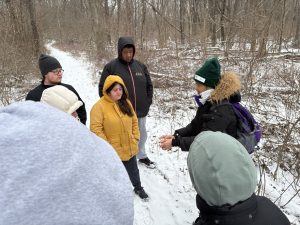
Dunes Learning Center Fellow Lisa explains native and invasive species in the Indiana Dunes National Park, on our way to the Maple Sugar Time Festival at Chellberg Farm.
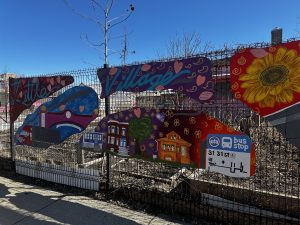
Murals created by local youth and families at the La Villita Park community garden in Little Village, Chicago.
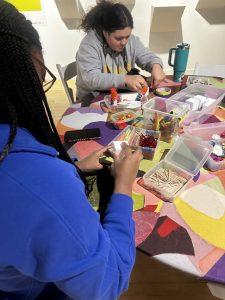
Dallas and Jazzy create their own art as part of the Ordinary Wonders exhibit at the Lubeznik Center for the Arts in Michigan City.
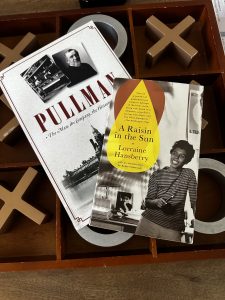
Two ways to think about land, power, race, and industry in our area: the Pullman National Monument, and Lorraine Hansberry’s “Raisin in the Sun.” We experienced both live and in person this Spring Break.

ILAS Director, Anna Stewart, and Assistant Director, Kat Peters. We both feel so fortunate to have been on this trip with an amazing group of thoughtful, talented, and engaged students.
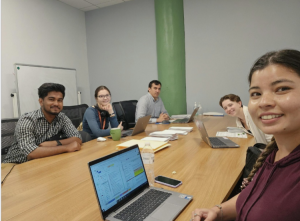 After my first week at Heartland Human Care Services, I had already picked up on a trend of adaptation within the organization in the face of federal policy change. After a month, I have learned that the term “adaptable” fits no one more than the immigrants and refugees we serve. They come from countries all across the globe, fleeing war, persecution, and denial of human rights. Many of them do not speak English and are completely unfamiliar with American culture and infrastructure. I have met participants who are highly educated and professionally trained in their home countries, but unable to secure employment in the United States due to language barriers and lack of accepted credentials. All of them struggle through complicated bureaucratic processes to secure clothing, housing, and food for themselves and their families.
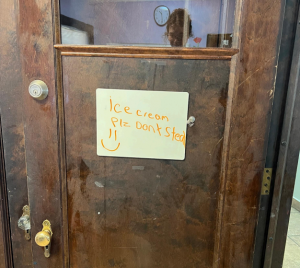 Calling and Purpose in Society, CAPS, this is what the fellowship is all about and how we, as individuals, find it within non-profit work. Over the course of the summer we have had some very thought provoking readings and discussions, in particular over Frederick Buechner’s idea that calling lies “where your deep gladness and the world’s deep hunger meet”. And now as I am wrapping up the final two weeks of this internship I turn back to it. Finding the world’s deep hunger is a very daunting task; in the current state of the world there are many hungers that need our attention. Erie Neighborhood House’s focuses on the hunger involving immigration and supporting the Latinx community and within Erie House, the READS program helps engage students in literacy work over the summer. To some this may seem like we are getting further and further away from the truly deep hunger but in reality this program is helping many families receive support and resources that they need. This theme is at the core of most of the world’s hunger and one could consider those supports and resources the small hungers of the world creating the deep.
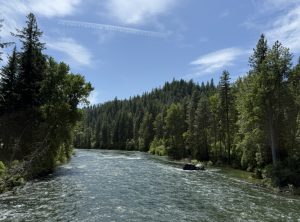 Recently, I had the opportunity to go floating on the Wenatchee river with some other staff from
 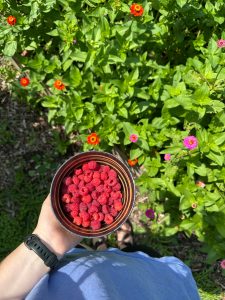 This summer, I am deeply grateful for all the growth and beauty I’ve been able to experience in
 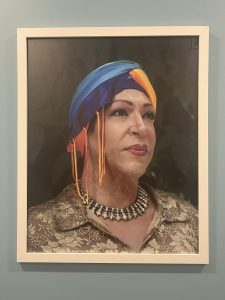 I’ve been working at Heartland Human Care Services’ Refugee and Immigrant Community Services (RICS) team for a little over a week, but it feels like I’ve gained at least two months of experience. I already have a well-established commute, taking the red line north through Old Town, Lincoln Park, and finally arriving at Uptown. I admire the artwork decorating the walls and street throughout the neighborhood as I walk the three blocks from the train station to Heartland. So far, I’ve had a habit of showing up early—when you’re taking the “L,” arriving just on time is a gamble against train delays and track repairs.
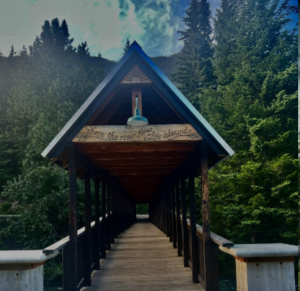 In my humble opinion the concept of Sacred Space is not just exclusive to Holden
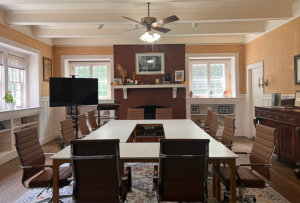 I spend most of my days working inside the Historic Barker House sitting at my desk with my
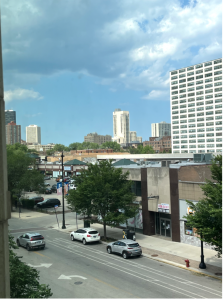 It’s been a month since I started at Heartland Alliance, and I’m so thankful for the experiences I’ve had and everything I’ve learned so far! Since completing my training, I have started working with some participants within the Refugee and Immigrant Community Services program. Some of my responsibilities when working with participants include reaching out to each participant and talking to them about their current employment situations, searching for jobs that participants are eligible for/interested in, and helping participants apply for jobs. If a participant gets a call-back for an interview with a job placement, it is also my responsibility to accompany them to the interview, if necessary. Each time that I interact with a participant, whether that’s over the phone or through messaging or in-person, I also have to file case notes. As I’ve started getting to know each situation and learning about how I can best serve the participants that I’ve been assigned, the case notes have been very helpful. I can go back and read case notes from people who have previously interacted with/assisted my participants, which has helped me know how to move forward and continue communicating with the participants in an effective way.
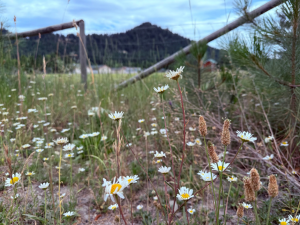 With Week 2 of our summer program nearing an end, it’s safe to say that I’ve had ample time to settle in here at the Grünewald Guild. I’ve absolutely loved the opportunity to work here in the beautiful Cascade Mountains for the summer and be a part of this inspiring community. I have the privilege of meeting new people every week, and the connections I’ve made here at the Guild are so valuable to me. I’ve learned a lot from our guests as well as my fellow staff members and supervisors.
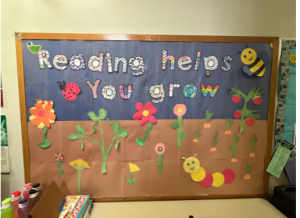 As I started my internship this past week I Full of questions and eagerness to learn the
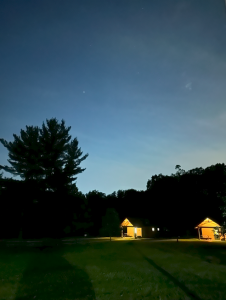 I wish I could see in the dark.
 This week marks my second week working with Heartland Alliance’s Refugee and Immigrant Community Services Program! As I’ve been reflecting on the start to my internship with Heartland, it seems like every day has brought new learning, new challenges, and in particular, new excitement. At the beginning, all I could think about was how nervous I was as I tried to navigate a different environment. The first challenge that I faced was driving through Chicago alone – which, up until last week, I had promised myself that I would never do. I remember setting my alarm super early on that first day, to plan in advance for the fact that I would probably miss at least 2 exits on the expressway. But even with the extra-early start, I quickly realized that Chicago traffic is way more unpredictable than I had planned for. I swear I could hear the traffic’s evil laugh as I rounded a bend in the highway and beheld an endless line of brakelights swarming the W. Lawrence Avenue exit ramp. After arriving at the office, I parked, walked across the street, and rang the doorbell to be let in. Inside the lobby, there were comfortable couches and a reception desk, where my supervisor met me before taking me on a tour of the office. As we walked through the various hallways and passed by the conference rooms and common areas, my supervisor smiled and told me, “Don’t worry if you don’t remember everything I’m going to tell you on this tour, because I know it’s a lot”. I know this statement sounds insignificant, but it helped put my mind at ease, and reminded me that it’s okay to not know how everything works right away.
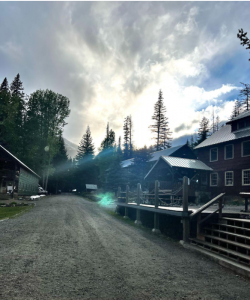 From the ecstatic moment a person arrives at Holden Village, an iconic retreat center located in the heart of Washington’s North Cascades Mountains that offers visitors a unique opportunity to step into the wilderness they are greeted with a “Hosti”. This person designs a sign with your name on it to welcome you to the village and answer any questions you may have. From the moment the school bus with Holden Village written on the side was in sight of the village entrance all the way to the time I stepped off said bus I was greeted by most, if not all, of the village waving at me and cheering for my arrival. Before even getting to the village I was required to complete a Child Safety Training which is crucial to the safety, comfort, and well-being of the children that reside in Holden Village.
 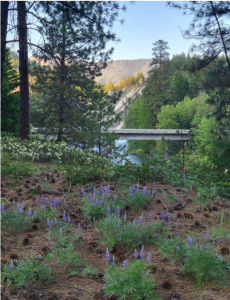 It’s now been almost a week that I’ve been at the Grunewald Guild here in the mountains of Washington state, and I’m thoroughly excited for the months ahead. I’m staying in what’s called the Riverhouse, as it directly overlooks the river flowing 50 feet away from the back porch. This porch is one of my favourite places so far to sit and enjoy the area, as it’s fully screened in to keep the bugs away (mosquitos remain my arch-nemesis) and is beautifully lit with string lights in the evenings. The quiet rush of the flowing water is a constant and peaceful sound, and a wide range of birds fill the trees and air with their calls too. (There’s one critter that makes a fascinating little clicking sound sometimes and I can never find it, but it intrigues me.) I was surprised by how windy it gets here in the side of the valley given the mountains on either side and the tall pines packed pretty densely around us, but the breeze is nonetheless refreshing and gives the sense that the forest itself is breathing. There’s really just so much about the space here that I love, everything seems so contentedly alive and welcoming – the bright purple and red-orange flowers, the neon lime green moss, and the spiders weaving intricate lace across the corners of the porch.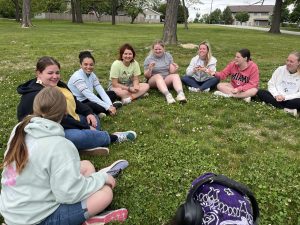

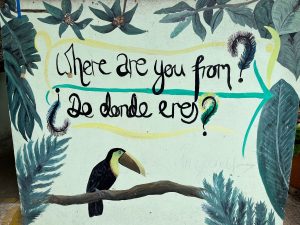 I would like to invite you into a journaling activity this week. We at the Institute for Leadership and Service like to promote reflection. We think of it as a muscle we can exercise. You know, how strong muscles are just kind of “nice to have” until one day when you need to move a couch or pick up a child, and then those muscles become absolutely necessary. Similarly, reflection may seem superfluous, until the day we kind of just need to know what we think about a subject.