Valpo Voyager

Student Stories from Around the World

Page 32 of 124

Food Experiences

Blogger: Kortney Cena

Program: San Jose, Costa Rica – Study Center

I have never been a picky eater. Growing up, I could count on one hand the foods I wouldn’t eat— I would eat basically anything except those individual slices of American cheese (those tasted like plastic). But coming to Costa Rica, I have discovered myself to be very picky about the foods here! One may be tempted to think that all Latin American food is similar to Mexican food if Mexican food is all they have encountered. But if you come to Costa Rica with this assumption, you will be disappointed! In reality, each Latin American country has distinct food customs—for example, Costa Ricans eat rice at every meal while the Salvadorian’s staple food are pupusas. I suppose I finally have to accept that my mom was right when she told me, as I was growing up, that taste is a learned trait. However, there are many Costa Rican foods or food customs that I do not think I will be developing a taste for any time soon. Here are five interesting food experiences that I have had so far in Costa Rica!

  1. Imagine a pineapple. Now make it twice as big and pour vanilla yogurt inside of it. If you’ve been following along in your imagination, you might have a pretty good idea of what a Guanabana is like. Despite many attempts to get over my gag reflex, I could not finish the slice I was given. The juice is actually very tasty, and if you ever get the chance to try guanabana juice I suggest you get a whole glass! But the texture of the fruit — the creamy, milk-like substance coming out of a soft but stringy inside– it was too strange for me! Some English speaking areas that cultivate guanabana call it the ‘Custard Apple’.
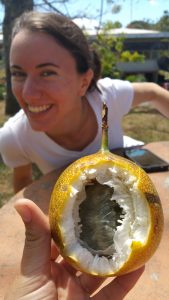
  2. While we are on the topic of strange fruits, granadilla is one fruit that I have mixed feelings about. When I first wrote this, I tried to find a way to describe the seeds that didn’t make it seem gross, but I couldn’t because in reality the granadilla does not look appetizing! A granadilla is an egg shaped fruit with a thin, soft shell. You crack open the shell, and on the inside is what looks like a bunch of fish eggs. This is really a bunch of black seeds mixed in a mess of some grey substance. Granadillas taste great if you can gather the courage to try eating some of it. The grey liquid is deliciously sweet and the seeds are tart, creating nature’s own version of the popular candy ‘sweet tart’. As long as you don’t get all of the seeds in your mouth at once, (which feels to your tongue that you are indeed eating fish eggs), granadilla is a wonderful snack fruit, and pretty cheap to buy!
  3. My family comes from an Italian background, and as such we have some very specific ideas about how mozzarella cheese should be used. Therefore, I was very surprised when one night for dinner I was handed macaroni and cheese, straight out of the kraft box, but with mounds of mozzarella cheese on top. Talk about a double cheese pasta. Of course, I still ate the plate—this was not even close to guanabana-level dislike. But I don’t think I would ever do it myself!
  4. As a special treat, sometimes my host mom warms up milk for Santiago (my six-year-old host brother) to drink before bed. The first time I discovered this, my host mom warmed some up for me too. And I thought ‘oh, warm milk– that should be fine, I mean, I like cold milk’. But I think that somewhere in my mind I had connected warm milk to spoiled milk, and so I could not shake this bad aftertaste (though it was probably imaginary). I pretended to drink the milk until my mom went to bed, and then I carefully dumped it into the sink.
  5. Another custom Costa Rican’s have is to pour canned fruits on top of your ice cream. When I say canned fruits, I mean the kind you used to get for lunch in elementary school. Can you remember the grainy square slices of pear, the green grapes, the slimy peaches, and if you were lucky, a hollow half of a bright red cherry? That canned fruit. Along with all that sweet, syrupy juice that it’s all pickled in. It was not really gross, just different. I felt that the pure taste of the delicious ice cream was compromised by the canned fruits, but, of course, I still enjoyed eating the bowl!

Now you have a little taste of some of Costa Rica’s food traditions! Now I feel like I must defend Costa Rican food by explaining how, on the whole, tico food is delicious! Ticos (Costa Ricans) eat rice at almost every meal, and they like to have beans, fried pork, and plantains as well. But Costa Rican food it is not to be confused with Mexican food. As I have been learning, just as each Latin American country has a distinct culture and history, so also does each have its own food traditions.
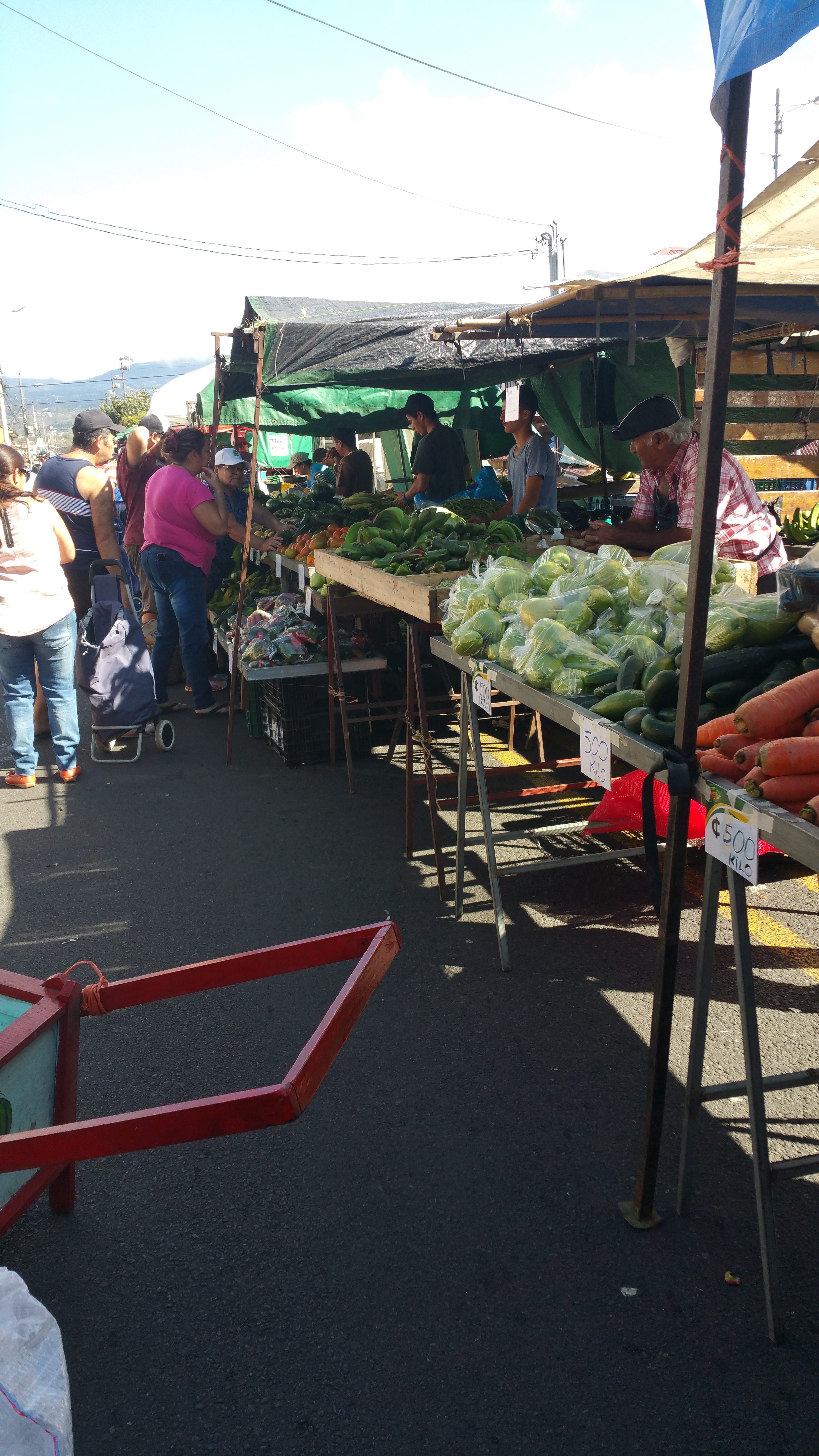
Whether it is trying new and exciting fruits, or getting a feel for the different ways people here eat the foods that I already know, it is all a part of the Costa Rica experience. Study abroad really does broaden your mind, as your understanding grows in every topic. As I learn more about Costa Rican history in my mind, my tongue learns more tastes!

Pura Vida,

Kortney
Started from the Bottom…

Blogger: Natalie Wilhelm

Location: Cergy-Pontoise, France

I chose to do my semester abroad in France this year because I wanted to improve my French language skills. In high school, I was given the opportunity to do the Indiana University Honors Program in Foreign Languages for High School students, which greatly accelerated my French learning. But since then, I haven’t had many opportunities to use my French, besides in French classes. So, it seemed the natural choice to come back to France and ameliorate my French speaking and reading skills.

My French has definitely improved since I arrived in Cergy. I speak French with most of my friends here. I listen to French music and read books in French occasionally. My classes are conducted exclusively in French. In the first class I had back in January, I was completely lost. I basically understood none of what my professor said and spent most of the time reading off of her PowerPoint. I can follow her much more easily now, thankfully.

There have been a few embarrassing moments, though. For example, I was at the train station the other day, and somebody asked me if the train went to Paris. I told him yes, it does. Just as I was congratulating myself on looking confident enough to be asked questions, he asked me something else. That time, I had to ask for clarification. Once I got from the train station to my destination, I went into a Parfois store to buy a bag, and had to ask the clerk to repeat herself THREE TIMES! That was definitely a little embarrassing.

Every time that something like that happens, though, I remind myself of three things: 1. I’m here to learn, and asking questions is the best way to do that; 2. If the person I’m asking for clarification were in my shoes, he or she would not want me to get annoyed by being asked and 3. Just nodding and saying yes or no when you don’t know what the person is saying often gets you into more problems than you would have if you just asked for clarification. So, I ask. And people get annoyed with me. And then we move on, hopefully the better for it.

Sometimes, people do hear my accent and immediately switch to English, which can be frustrating. I feel like French people often assume automatically that Americans don’t want to practice French. While that may be true for some people, I enjoy speaking French. At this point in my trip, it’s actually difficult to speak English when I hear French being spoken around me, or when my friends are speaking French with each other. My brain is so hardwired to expect French in certain situations, it’s hard to switch back to English.

But overall, I think using French all the time is an incredibly rewarding and interesting experience. Our language is so tied to who we are, how we define ourselves, and where we come from. I speak English because I was born and raised in America; I speak French because I was lucky enough to go to a school that offered classes, and I took the initiative to learn it. French has shaped and redefined my life in ways I never could have imagined when I sat down in my first French class in eighth grade.

Studying French has taught me – and continues to teach me – how incredibly vast the world really is. Yes, we say the world is small because of how quickly and easily we can travel, and the massive use of social media today. But in reality, the world is not small. There are billions of people on Earth, and each one of them has different experiences every single day. Whether that be through language, culture, or religion, every single day is unique for every single person. I am blessed enough to have widened my world by studying French.

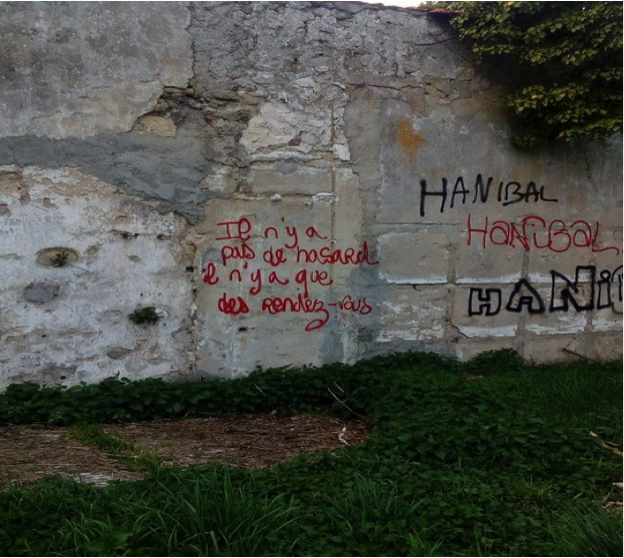
This was a rather sappy post, but it’s true! I know I’m going to miss speaking French when I get back home to the U.S. I won’t have any reason to use my French on the daily over the summer. Now please enjoy this photo of some graffiti I liked. It says, “There is no luck, there are only meetings.” Roughly I think it means that there are no chance meetings. People (or things) come into your life when they’re supposed to.

A bientôt,

Natalie


Blooming in Bloemfontein

Blogger: Katie Karstensen

Program: Windhoek, Namibia

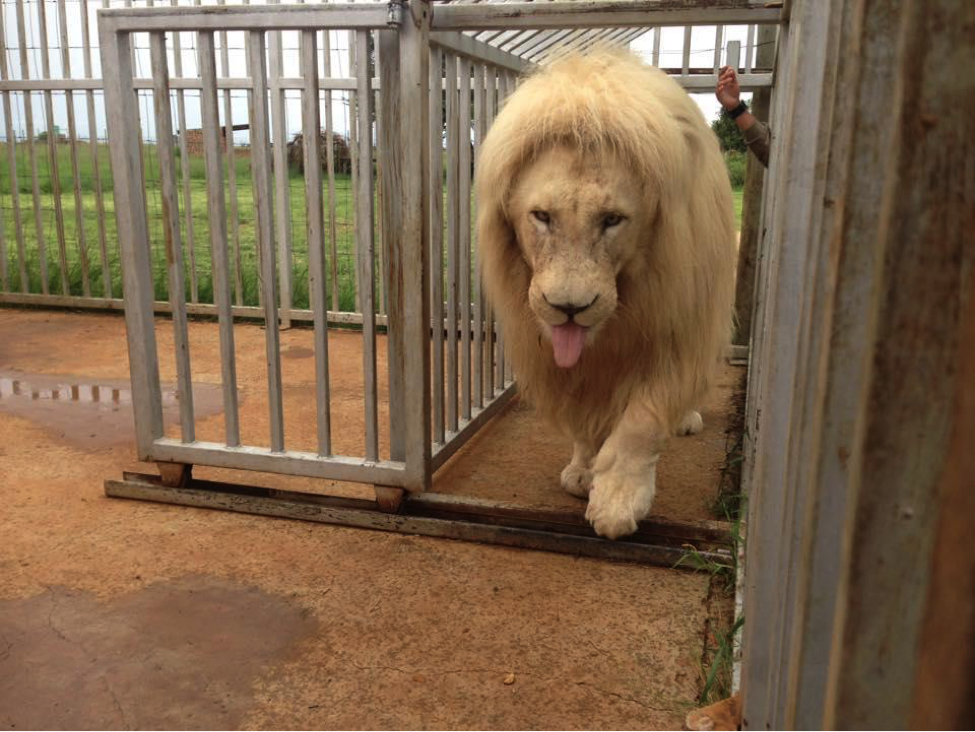
After our time in Johannesburg and Soweto, we reluctantly left St. Paul’s Guesthouse and their lovely manager Sister Jackie to head to our next destination. In Bloemfontein, we stayed at Cherry Lane Bed and Breakfast, a cozy settlement in a rural area surrounded by fields full of horses, donkeys, and our favorite, zebras. The highlight of our stay was a visit to Zanchieta Cat Farm, a wild animal rescue facility. Since they’ve begun their mission, they have rescued 98 wild animals from hunting or breeding lists, animals in need of medical attention, or animals that would have otherwise gone to zoos. Zanchietas claims they are different from zoos as they feed their animals every day and give them wide and open ranging fields they can occupy. They told us their lions are a little “fluffier” than animals in the wild because they feed them a little extra as they are currently doing work in their pastures, plus lions bother you less when they have a full stomach.

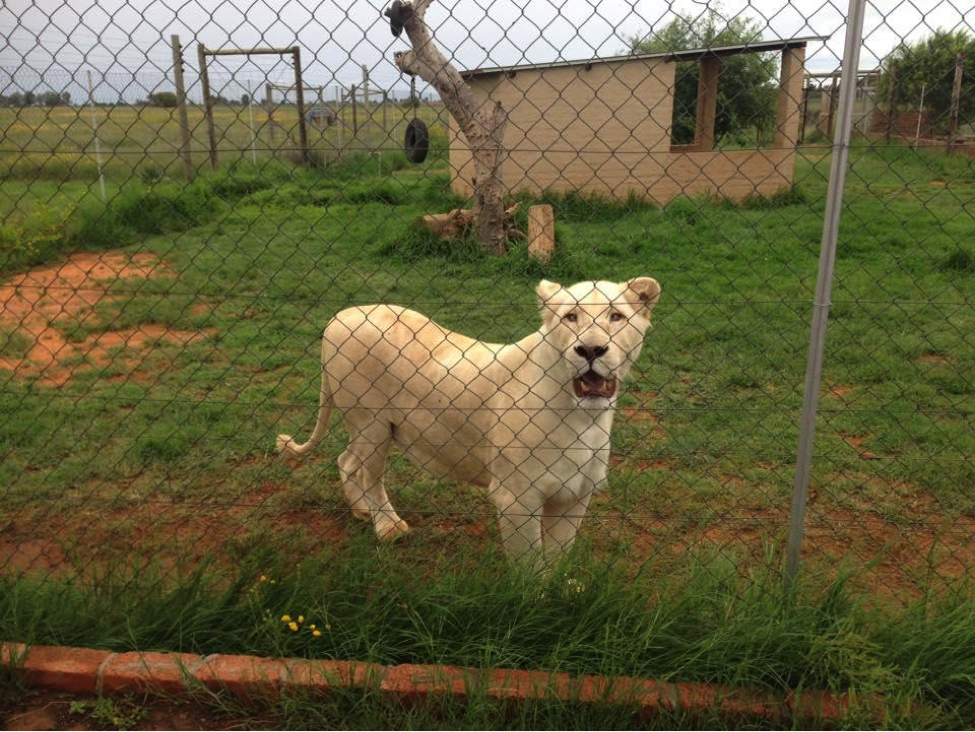
When we went to see the lions, the animal handler warned us to stay back about a meter from the enclosure as the lions sometimes would try to pee on people if they were agitated or felt threatened. I was able to get close as they were opening the gate to let the lion enter its feeding station to snap the above picture. William Wallace, the lion, appeared far less threatening than he had been talked up. William Wallace’s partner, Princess (left), was rescued by Zanchieta’s and suffered from malnutrition. Other lions had begun to try and eat her as they didn’t think she would make it. The facility calls her princess because, “even though she’s looked better in the past, she’s still just as beautiful.”

— Katie

Independent Travel

Blogger: Alyson Kneusel

Program: Reutlingen, Germany – Study Center

Hello again!

Today I went on a day trip to Heidelberg, which is about a two hour train ride north and slightly west from Reutlingen. The thing I valued most about the trip was not the Heidelberg Castle, the Philosophenweg, or even the Altstadt Old Town, although each of those sites was breathtakingly beautiful. More than anything else, I recognized the trip as a marker of my own independence and confidence. Four years ago I would have been too afraid to go to a restaurant in my own hometown by myself and order my own food. I couldn’t navigate from my house to the nearest Panera Bread by myself! Yet yesterday, I traveled by myself to a town two hours away in a foreign country via public transportation with a significant language barrier. Not only did I survive the trip, but I flourished and felt that I grew from the experience.

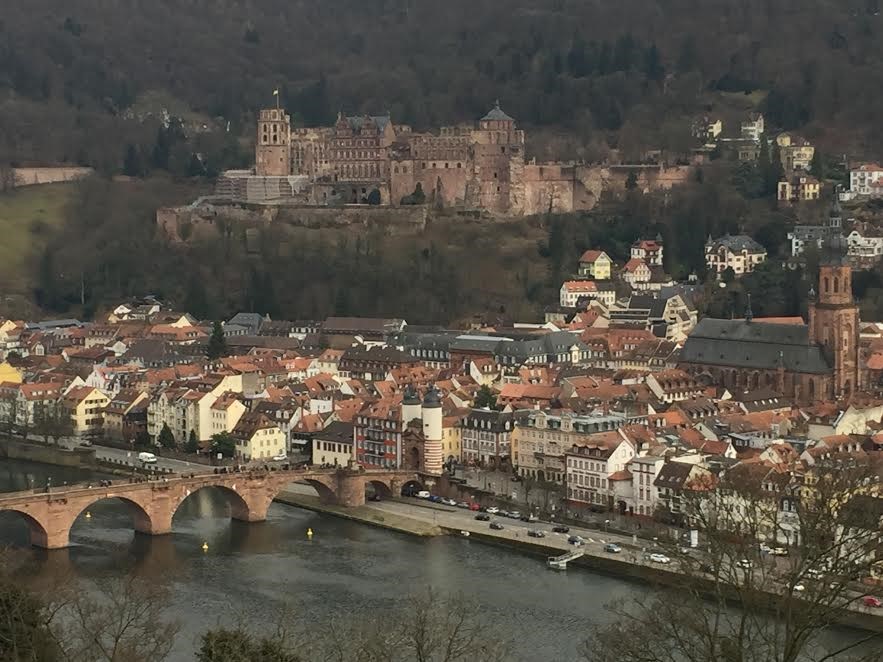
In order to understand my trip, it is crucial to share some information and images from the city, which is just as well because it is an enchanting place (I would highly recommend visiting if you are ever given the chance). The Heidelberg Hauptbahnhof (the main train station) is about a 2 miles walk from the Heidelberg castle. The castle lies on a hill and overlooks the valley which contains the town, including the Altstadt Old Town. The Neckar River runs through the valley below and is traversed by the Carl Theodor Old Bridge. On the other side of the bridge, there is a river walk and another large hill, which contains the PhilosophenWag, which translates as Philosophers’ Walk. This is a peaceful climb up the side of the hill opposite the castle which provides not only a beautiful overlook of the castle, town, and river, but also an introspective opportunity to the person climbing it.

I began my journey in Heidelberg at the train station, walked the 2 miles up to the castle. After roaming around the castle grounds I descended through the town and across the bridge. At that point, I climbed Philosophenweg and sat for a while on a bench near the top where I wrote in my journal and appreciated the view. Looking back on the experience, in that moment what struck me was the realization that I almost didn’t make the trip and nearly missed out on such an amazing experience. I had sat in my room that morning and came up with every excuse in the book for why I should stay home. I was too tired, I had been traveling a lot, I hadn’t done enough research on the place, I didn’t have enough time, I didn’t speak the language, no one else was going, and so on and so forth. The more I think about it, the more I realize that these are not real reasons to not do things; they are mechanisms by which we limit ourselves.

I took away two main lessons that I think are worth sharing yesterday. The first is that Heidelberg is a beautiful city full of life, people, and nature. The other thing is that I am capable of being independent, navigating, and making my own decisions. This is a confidence which I think I was previously lacking, and this is definitely something which study abroad has given me. It broadened my horizons not just geographically, but also mentally. I encourage you all to not hold yourself back with excuses and doubts, and challenge yourself to (safely) do those things which you might otherwise have lacked the confidence to accomplish.

Until next time,

Alyson Kneusel


Adventure?

Blogger: Kortney Cena

Program: San Jose, Costa Rica – Study Center

If you were to look at my Pinterest account, you would notice that I have a deep desire to travel (that may border on the obsessive). I have always been so interested in other cultures– the people, traditions, languages, architecture, history— all of it. To me, the world looks like a fractal of brilliant colors and designs made up of beautiful people, rich music, strange foods, and different ways of life.

Part of it is that travelling is such an adventure. Personally, I love adventure—but I wouldn’t ever be able to be one of those crazy cliff-diving, parachuting, bungee-jumping thrill seekers. The type of adventure that comes with travelling comes in small but common doses. You may not get an adrenaline rush from being utterly lost and trying to catch a bus, in Spanish, to somewhere you do know. But it certainly is an adventure. And you feel so capable when it’s over!

Each place you go also has its own adventurous activities to offer (if you have seen The Amazing Race, you probably have a good idea of this). For example, in Costa Rica the most common activities are surfing, zip-lining, hiking, rafting, and volcano viewing trips.

But something I have come to learn is that it is not the activity that makes a trip memorable, but the people you have by your side.

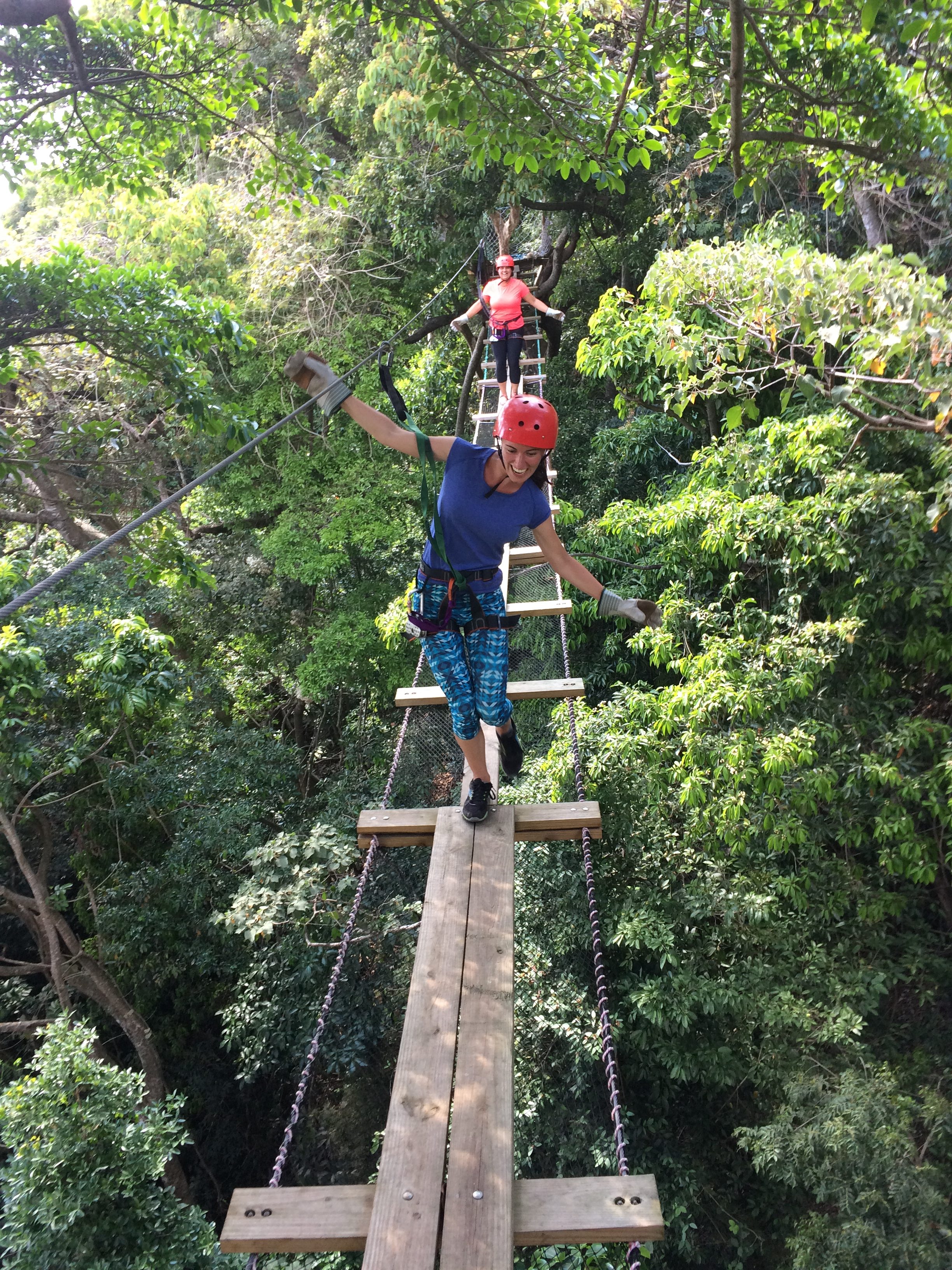
Last week a friend from Valpo, Krista, came to visit for a couple of days of spring break. She wanted to see the nature and adventure of Costa Rica, so she, along with me and another study abroad student Erin, began to research nearby places with waterfalls and zip-lining. We had a really hard time, since online we could only find the very touristy and expensive places, and of course, we don’t have $75 just laying around to spend on a zip line trip. Luckily my host family hooked us up with a place that had a waterfall hike, some zip-lining, pools, free lunch, and a collection of watersides that we could enter for a daily fee of $30. This was more doable.

But we realized why this place was cheaper when Krista, Erin, and I arrived—the park was incredibly under-whelming. It did have all of the things mentioned, but all done rather poorly. The waterfall hike took all of 10 minutes to arrive, the pool was so cold that we couldn’t stay in for more than a minute, the slides had no water, the zip-line crossed over trash heaps, and even the lunch was sub-par. Perhaps other girls would have seen the poor craftsmanship and the lack of fun activities and decided to go somewhere else. But not us. While this park was disappointing in many ways, I must say that I have no regrets in going there, because Krista, Erin, and I had an amazing adventure there that I will treasure forever.

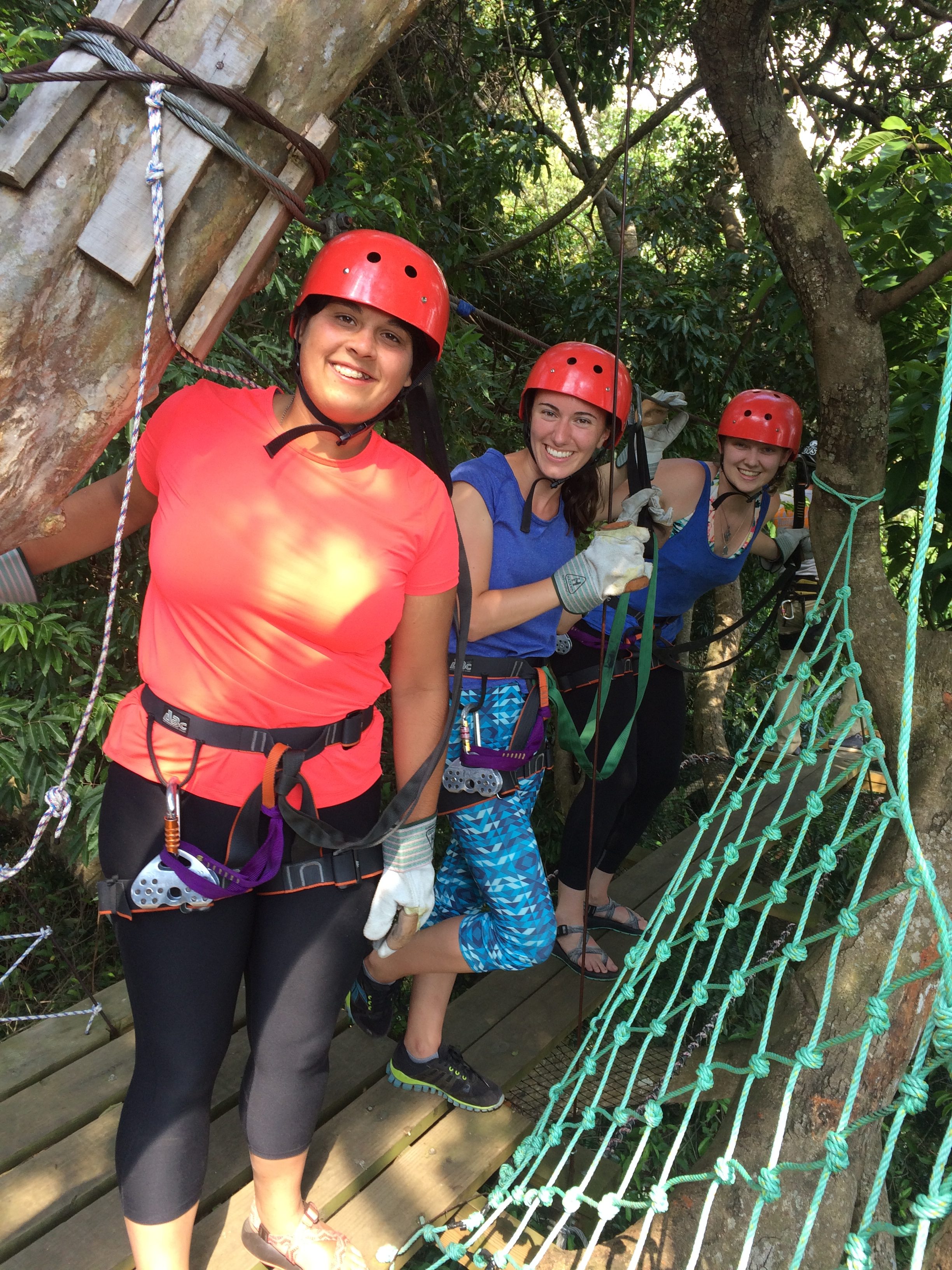
We took our water bottles, filled them with pool water, and proceeded to drench all of the waterslides so that they were usable. Along the longest slide, we set up stations where we would pour water in as someone was sliding to help them through dry patches. We found the little kids jacuzzi, which was heated, and invaded so we could do some swimming. We climbed to the rocks underneath the waterfall and took some awesome pictures. And the view of ziplining wasn’t spectacular, but the activity of zip-lining was the most fun adventure we had the whole day. The guides were a ton of fun, so we would joke with them and with each other as we went along. One carried around Krista’s phone and took pictures of our adventure (along with a couple of un-planned selfies). And when we got to the rope-bridge section, whoever was on the bridge in front knew to be wary, because those behind would do their best to rock the bridge and knock them off.

This is just one example of how I have noticed that it is the people that make an activity enjoyable. Another example would be the bus trip I mentioned earlier. I really did get lost with Erin in a town we had never been in. The trip home took two hours when it probably should have taken more like 30 mins. After asking the 10th person for directions to a bus stop, or after watching yet another bus go by that goes to the wrong city, it would have been easy to become frustrated (especially since we both had a paper due that night as well!). But instead of becoming exasperated as we sat at the bus station waiting, Erin started to sing to pass the time. So we sang songs together, we talked, we ate some cookies and some watermelon, and when it finally came, I looked ridiculous boarding the bus with half a watermelon in my arms. I will remember this adventure forever.

I have learned that people are what make any activity enjoyable, and with the right people around you, every day can be an adventure! So, I would suggest that all you adventure seekers out there stop trying to find the perfect activity or take the perfect trip, but instead, try to surround yourself with adventurous people. People who like to laugh and who can look past obstacles to find fun solutions. People who make mistakes into memories. And maybe, try to be that person yourself—it is all a matter of attitude!

Pura Vida,

Kortney
Lessons from Outside the Classroom

Blogger: Abbey Little

Program: CIS Abroad — Newcastle, Australia

Hello, mates! I write to you from Newcastle, New South Wales, Australia, where the sun shines all day, and the uni comes alive at night –(uni is the word Australians use for “college” whereas a college here refers to another residence on campus). My decision to study abroad was impulsive and brilliant.  Having dealt with social anxiety for years, I was concerned that I would not be able to fully embrace the journey.  Of course, my intentions were to meet new people, explore new places, and embrace a different education system, yet I must admit that I doubted myself at times.  But since the moment I landed on Australian soil, I have been overpowered with kindness from every individual I came across.  The thought of worry is out the window and the feeling of anxiety is no longer present.

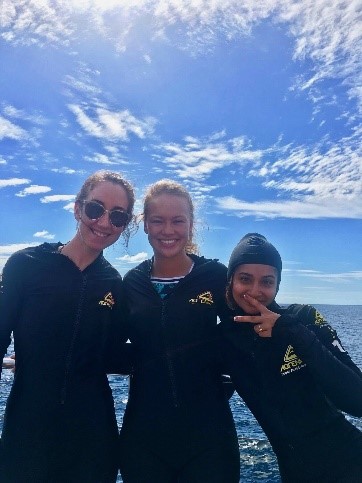
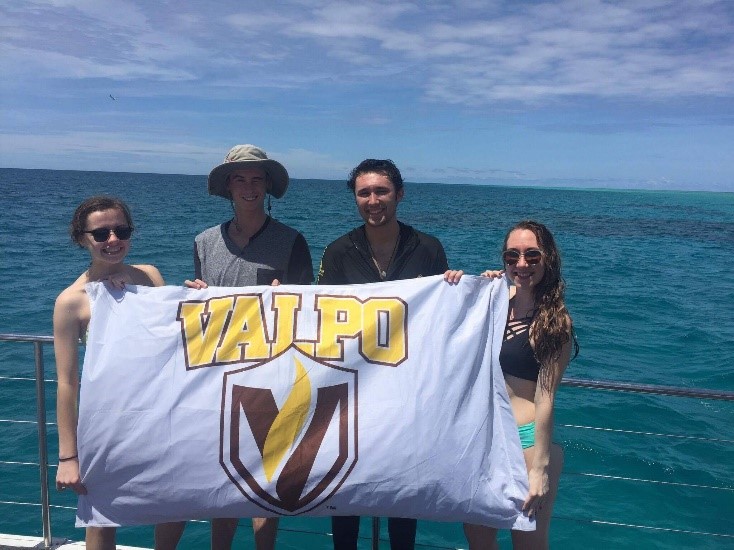
Just three busy days after my arrival, my group headed out to the beautiful Great Barrier Reef.  I felt no concern in my commitment to scuba dive in the reef, but once I was fulfilling it, some fear snuck in.  We dove in groups of 4 accompanied by the instructor.  We ran some drills to rehearse the hand signals and ways to pressurize our ears and clear our masks before descending to the reef itself.  Our instructor let the air out of our vests and we began to swim below the surface of the Pacific.  I was having difficulties with water leaking in to my mask (SALT water to be more specific—so you can only imagine how lovely that felt) and I became overwhelmed, causing my breaths to shorten and become insufficient, rather than taking long, deep breaths as necessary.  Acknowledging my hyperventilation only made it worse.  Earlier in the week, a fellow mate, Grant, had asked the group, “when was the last time you took the deepest breath you’ve ever taken?”  This quirky remark snuck its way in to my mind just then, and I remembered to take a deep breath.  As I looked to my left, I was reminded that I was in the company of some of my new best mates. To my right, the liveliness of the spectacular reef.  I was okay.  I was swimming with the fish in the Great Barrier Reef.  I had no reason to be worried, so I simply stopped worrying.

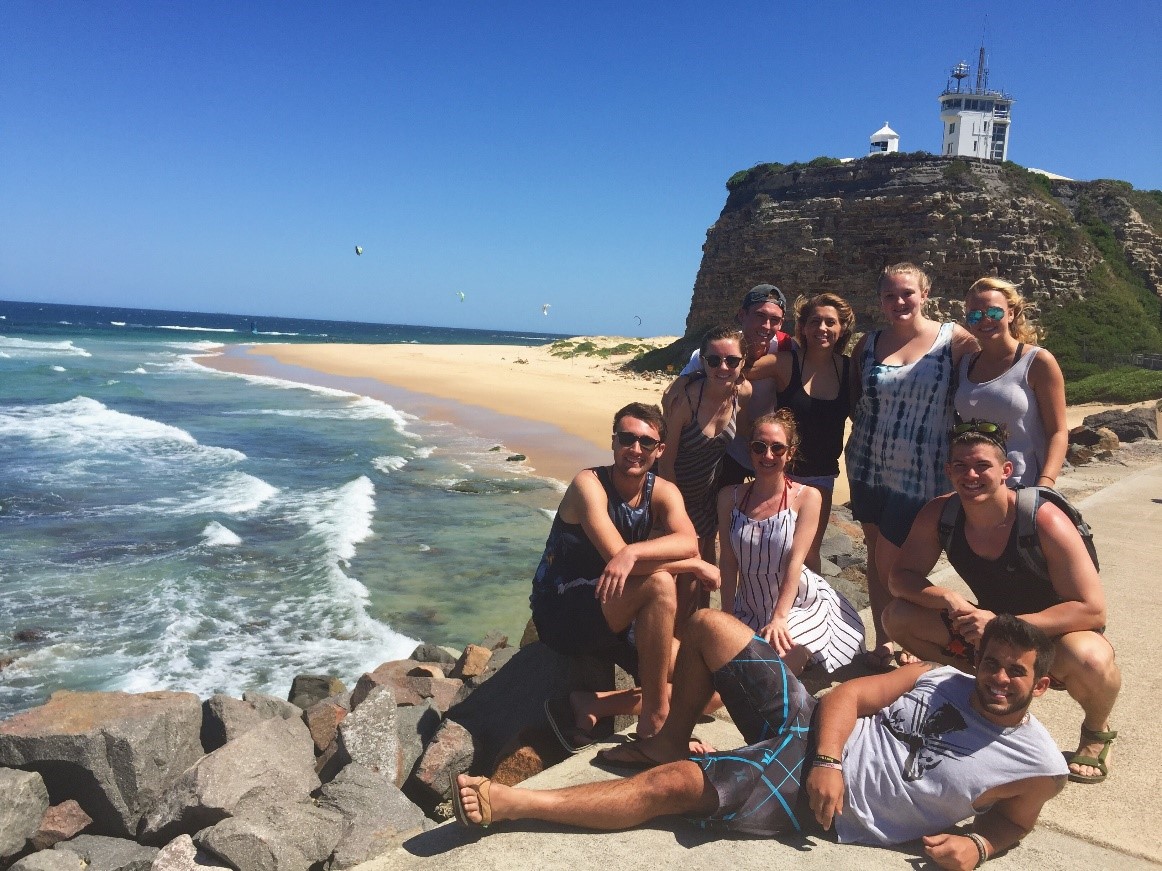
I was welcomed in to tropical Cairns, Queensland, Australia with guidance I am honored to have from the most marvelous site directors, Jackie and Indigo.  I could ramble on all day about how delightful it has been to interact with them and how adequate their leadership has been.  The friendships I have formed in my first week in Australia have provided me with fresh new perspectives that I more than look forward to respecting during my time with those dear mates.  I have already accomplished an ample amount of my goal to meet new people.  My fellow foreign mates here in Newy–Natalie, Josh & Josh, Grant, Gabrielle, Will, Elena, Liz, Moira, Ali, and Josephine—have all positively affected my life in their own way as individuals.  As a group, we are unstoppable.  I have yet to step foot in to an Australian classroom (seasons are opposite here, so they are just finishing their three-month long “summer break” and classes will resume the week of 27 February, 2017) –yet I have already gained such compelling knowledge.  I have learned that I am capable of just about anything—apart from escaping a shark attack, I still have some doubts about that!  I am happy to be settled in at Uni in Newcastle now and I am eager to see what lessons I will learn within the classroom considering the revelations I have already been so fortunate to have.  Remember to appreciate where you’re at and all of those around you.  That’s all for now, mates!

Cheers!

–Abbey

Happy Month-a-versary!

Blogger: Natalie Wilhelm

Location: Cergy-Pontoise, France

Hello Valpo friends! In this blog post, I’m going to talk about the fact that it has been exactly one month since my flight landed at Charles de Gaulle airport in Paris. One month since I moved into my then very lonely-feeling apartment with little more than two suitcases, a backpack, and forty-eight hours of sleeplessness to my name. This may have been the craziest, busiest, most up and down month of my life so far.

And already, there is so much I could tell you. What do you want to hear? Do you want to hear about my first trip to Paris, when I bought a Nutella crepe for three euros and walked around the cobblestone streets, taking in the beauty of the city? Or the first public presidential candidate meeting I went to for my independent study, where a young man came up to Lauren and me crying and asking for a place to stay? Or maybe I should tell you about how, for some unknown reason, French women have taken to Ugg boots like fish to water, making me feel like I have been plunged back into eighth grade again? (Seriously, they’re everywhere. Sparkly ones, high-heeled ones, silver ones, brown ones, black ones. Ugh, France. Just stop.)

The point is, there are so many stories I could write about, and it’s only been a month. I feel like I’ve lived in France for ages already. At home, going to classes at Valpo every day and seeing my friends and doing homework, a month seems like nothing. But here, I feel like it’s a significant milestone. I only have four months, two weeks and one day until my flight leaves for Chicago O’Hare, and I’m feeling an almost desperate need to make every single one of those days count.

I think I’ve gotten a pretty good start on making my days count, though. Sure, I’ve spent one or two afternoons binge-watching Teen Wolf in my apartment. But I’ve also gone to Paris. I’ve visited the Louvre, the Eiffel Tower, and all the good touristy stuff that the city has to offer. I’ve studied at the Centre Pompidou, which has the coolest library I have ever seen. I’ve eaten at cafés by myself. I’ve also cried, overwhelmed with homesickness. I’ve bounced back and forth between feeling incredibly motivated to work on schoolwork and never wanting to read another page about the French political systems ever. again. All of that is a normal part of moving overseas for six months. I’ve just been taking it in stride and seizing every opportunity for adventure that comes my way.

One such adventure was definitely participating in the Women’s March on Paris, an extension of the Women’s March on Washington, D.C. There, I met French women who were part of different feminist activism groups, Canadian men with female dogs (“She’s a girl, too, so she gets to march today.”), and of course, young French women, all who were there to march in solidarity and support of women’s rights everywhere. It was truly a landmark in my life.

This roller coaster of a month has taught me something very important: you have to look at the big picture. Even at the end of a hard day, when you’re tired and miss your family and friends, you’re still abroad. When I collapse into bed, mentally exhausted from a six-hour long French class, I’m still in France. I’m doing something that many people may never get the opportunity to do. I didn’t let myself be limited by fear. Fear, in all of its many forms, is a great dream killer. It can invade you, without you even realizing it, and convince you to stop doing things. To stop pursuing your dreams, from leaving your comfort zone, from taking an opportunity that may come around only once in a lifetime, and change you in ways you never could have predicted. All you have to do is say, “I see you, fear. I acknowledge you. And I’m going to do this thing anyway.”

Given all that has happened in this first month, I can only imagine the stories, worries, adventures, challenges, and discoveries that are going to come my way before I step back onto a plane to head home. And I am resolving to welcome each and every single one with open arms.

A bientôt,

Natalie

The Importance of Community

Student Spotlight: Erin Brown

Program: San Jose, Costa Rica – Study Center

¿Qué es esto? (What is this?) This phrase has quickly become my “catchphrase” since arriving in Costa Rica two and a half weeks ago. Learning, living, and growing in a new culture and country has reminded me of my childhood. Here, I am experiencing everything for the first time. I am trying new foods. I am visiting new places. I am learning new facts about history.

Getting to know my neighborhood and community better by going to different events in town like the feria (farmer’s market).

The Feria – farmer’s market

I am experiencing new customs and sayings. Some days seem like they are filled with information overload. With so much to constantly take in, I often feel like there is so much that my brain can’t absorb.

I have always been an independent person and have liked being able to solve problems out on my own. Studying abroad has been a humbling experience in that regard, because I have to learn how to do little things that used to be insignificant to me all over again.

 I need to learn how to use the shower, how to take public transportation, and how to function in a different language. In all aspects of living right now, I feel like a child completely dependent on those around me. I’ve needed to learn how to ask for help. It has been through these experiences that I have come to see more clearly the definition of selfless love. In my confusion and in my doubts, my host family has been there to help me through all of it.

My host parents are patient, kind, and understanding when I am unsure of how to do something. They are willing to listen to the stories that I have to tell about the information I am learning in my new classes.

Host Family

Host Family

They are excited to share the culture of this beautiful country with me and all of its new and lively tastes, sights, and sounds.

In my search for independence in my first couple weeks of being in Costa Rica, I have been blessed with the gift of something even better… community. Intentional community is an essential part of the culture of Costa Rica. People intentionally sit down with one another once or twice a day to drink coffee and catch up on how each person is doing. They sit down with one another for meals and talk about how their day has gone. The men and women here do not run by a rigid time table like the United States that can be sometimes be constricting or limiting. They are intentional with one another and are more interested in knowing the person in front of them than knowing how many hours have passed by.

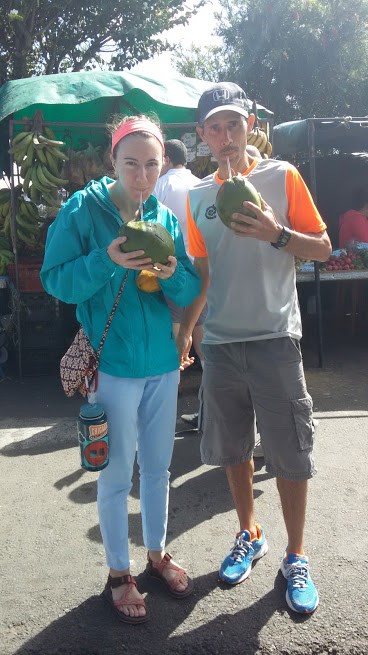
Drinking pipa de agua (coconut water) for the first time with my host dad.

Drinking pipa de agua (coconut water)

Instead of trying to figure out how to do things on my own, I have found a new sense of freedom through the community that surrounds me. I have made new friends and relationships that fill me with joy and love. If I have a question about something, I can freely go to my new friends and family and ask them for help. In the middle of all of the newness, my community has been a beautiful reminder that I am not alone and that I am loved and cared for. Romans 12:4-5 states, “For just as each of us has one body with many members, and these members do not all have the same function, so in Christ we, though many, form one body, and each member belongs to all the others.” It has been a wonderful, beautiful, and liberating experience to interact with more of God’s children on this earth and come to know a little more clearly what the body of Christ represents… community, family, and love.


– Erin Brown

Definitely Not In Northwest Indiana Anymore

Blogger: Katie Karstensen

Program: Windhoek, Namibia

Lowell, Indiana → Chicago → Washington D.C. → Ghana → Johannesburg, South Africa

An early morning take off from Chicago to Washington D.C.

I’m constantly thankful that I’ve been instilled with a sense of adventure from a young age. I didn’t have the opportunity to travel outside of the Midwest before college, yet I was constantly outside hiking, attending camp, or even playing outside on my farm. Valparaiso University has granted me travel opportunities I am forever thankful for, and it is one of the reasons I decided to attend this school. I’ve known I wanted to study abroad since my freshman year and enjoyed the process of deciding where I wanted to go and which program would be the best fit for me. That process has led me to a semester in Southern Africa with a program through the Center for Global Education at Augsburg College, called Nation Building, Globalization and Decolonizing the Mind. For the next three and a half months, I will be exploring Southern Africa, learning about the history and its effects in this area, taking classes, and working at internship with Family of Hope Services in Windhoek, Namibia.

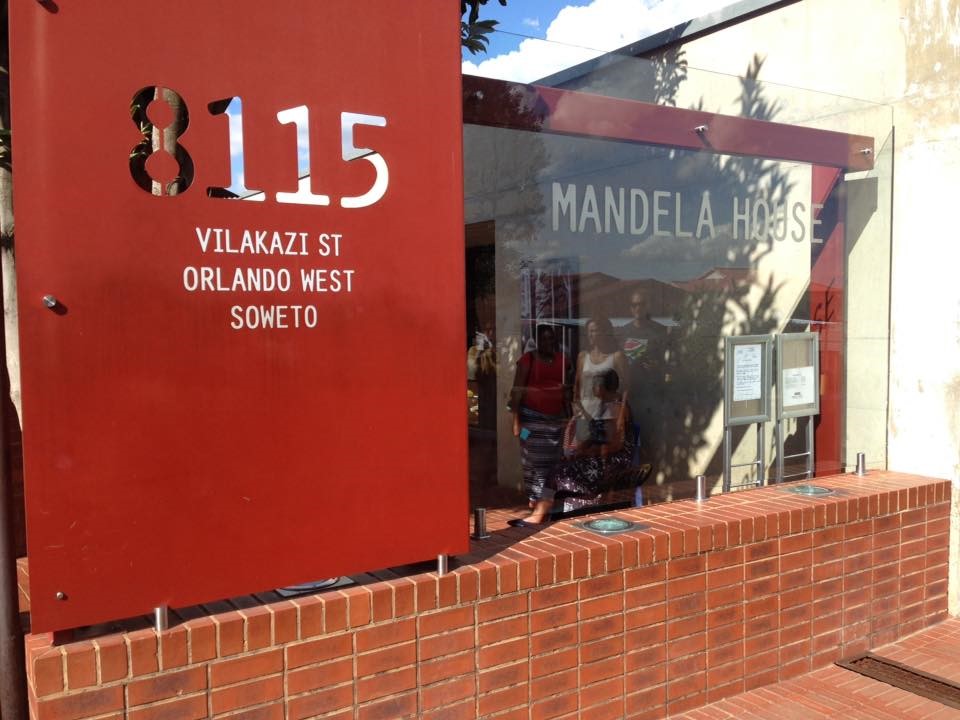
Nelson and Winnie Mandela’s House in Soweto

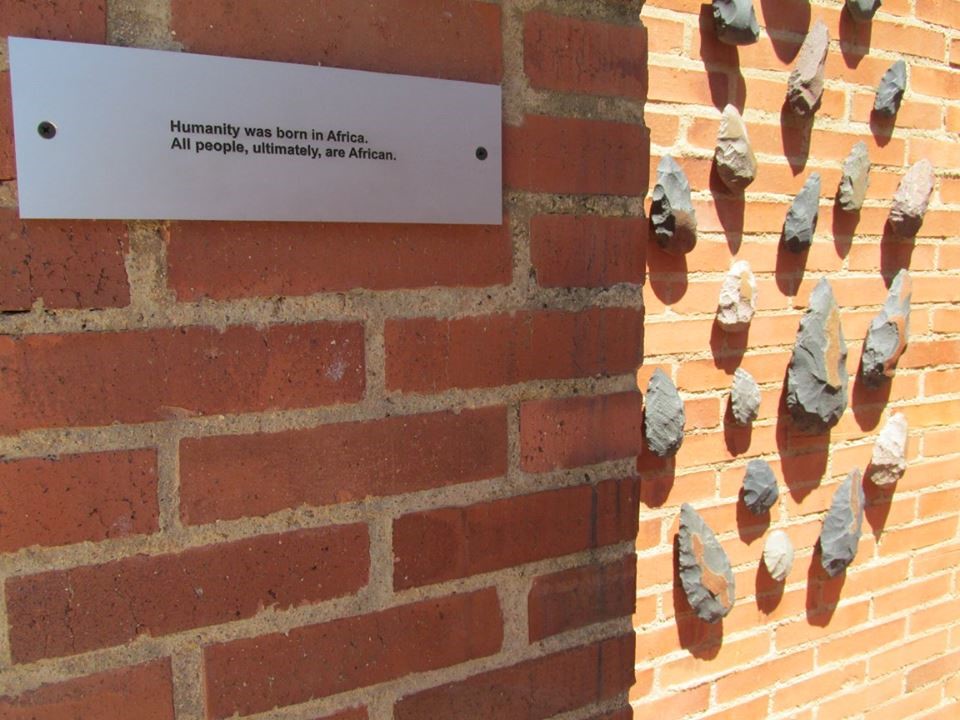
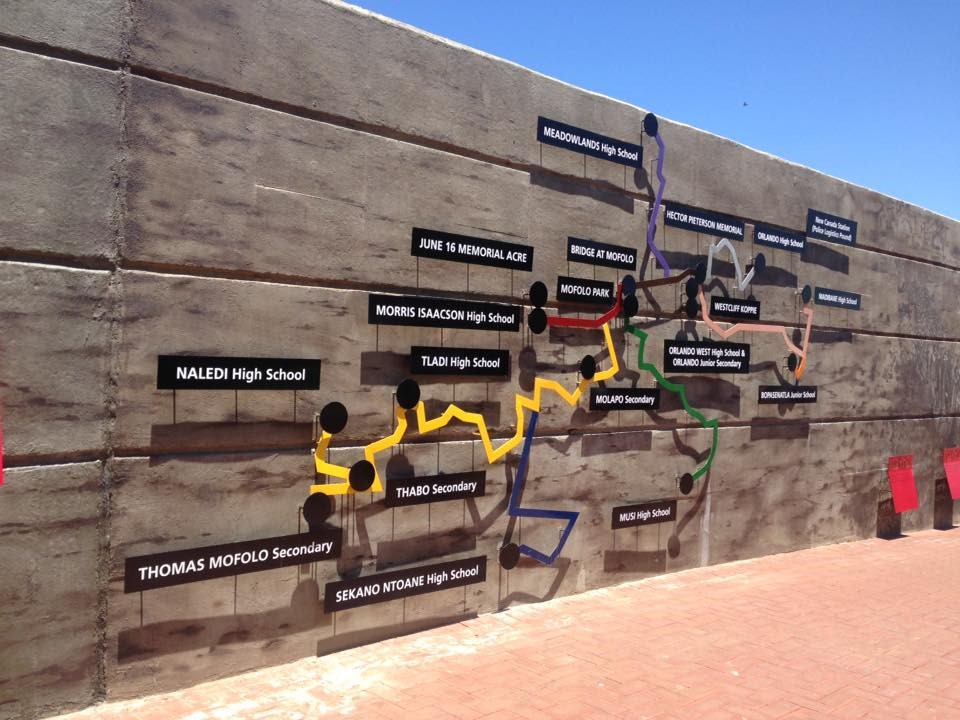
Our first few days in Johannesburg entailed getting a crash course in the history of South Africa, the role of Apartheid, and a focus in the role youth have played in the country’s history. We visited Nelson Mandela’s house, the U.S. Embassy, Apartheid Museum, the Hector Pieterson Memorial, and Regina Mundi. My first impression of Johannesburg were the vast amount of contrasts we encountered. During our driving tour, our group went through a rich subdivision, which had experienced white flight after Apartheid, and viewed large houses with extravagant gardens and maximum security. Then looking in the other direction across a field, there were a collection of tin shacks families were residing in.

In communication with local residents, South Africans know the United State’s political system in and out. In contrast, only one or two student in my group knew who the president of South Africa was, or that there are more than two political parties. The trend of finding contradictions has continued throughout my time here.

An exhibit from the Apartheid museum. Upon entering the museum, visitors were randomly given tickets saying “white” or “non-whites.” After receiving our ticket we had to enter in two different entrances according to our race.

June 16th Children’s Memorial, the route in which children marched and rioted in the streets. The accounts presented in the museum are from government records, due to government funding. The actual events of the day involved much more violence and blood from police officers towards students.

One of the stained glass windows at Regina Mundi, a church where the students involved in the June 16th march took refuge amidst the riot. Police shot at the walls of the church from the outside and banged their guns against the marble altar hard enough to chip off its edges to scare the students, but no students were shot within the walls of the church.

This particular window shows the image of a saint whose race appears to be white from the inside, and black from the outside.


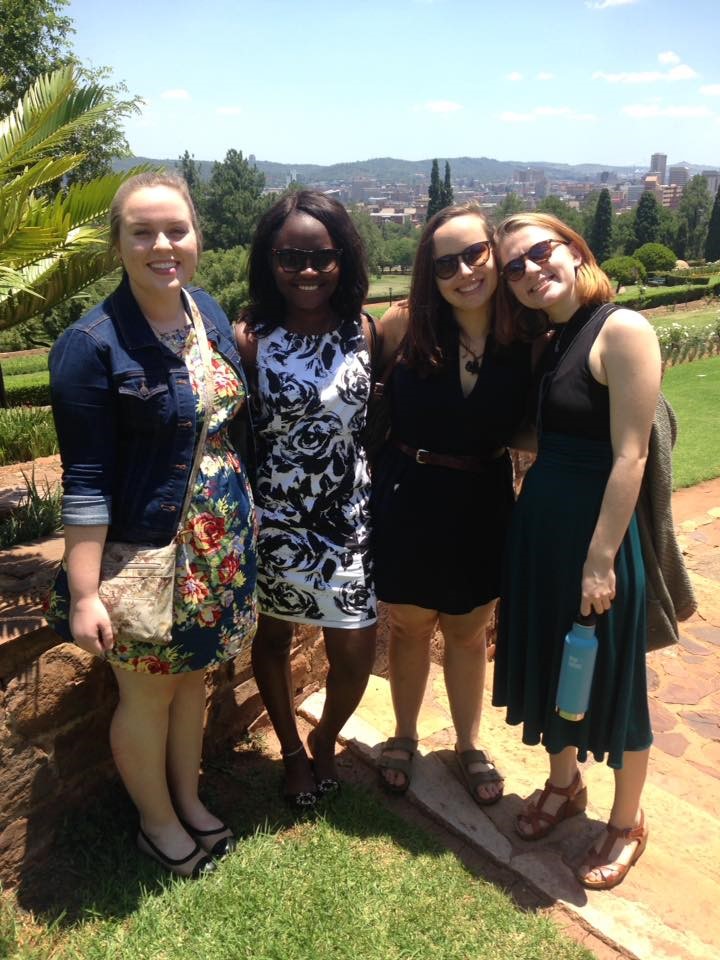
Visiting the Union buildings with an overlook of Johannesburg

The first weekend in South Africa, our group was divided into pairs and hosted by families across the city of Johannesburg and Soweto. I stayed with a family where both parents worked for the police station, and had two children ages eight and fourteen. The family has been working with CGEE(Center for Global Education) for many years and welcomed my friend Emily and I into their homes as if we were their own children. Another difference I repeatedly notice is the lack of language education we have in the United States compared to other countries. Everyone I have met in this country speaks multiple languages including English, Afrikaans, French, German, Spanish, Xhosa, Damara Nama, and usually a few other African dialects. My host father speaks thirty languages and explains he needs to know them so he is able to communicate with everyone he comes in contact with through his criminal intelligence office. As we strolled through a market together, he bartered with five different women for vegetables and fruit, and after speaking to each told me which language they had been speaking in, all five speaking different native tongues and our father replying at ease to them.

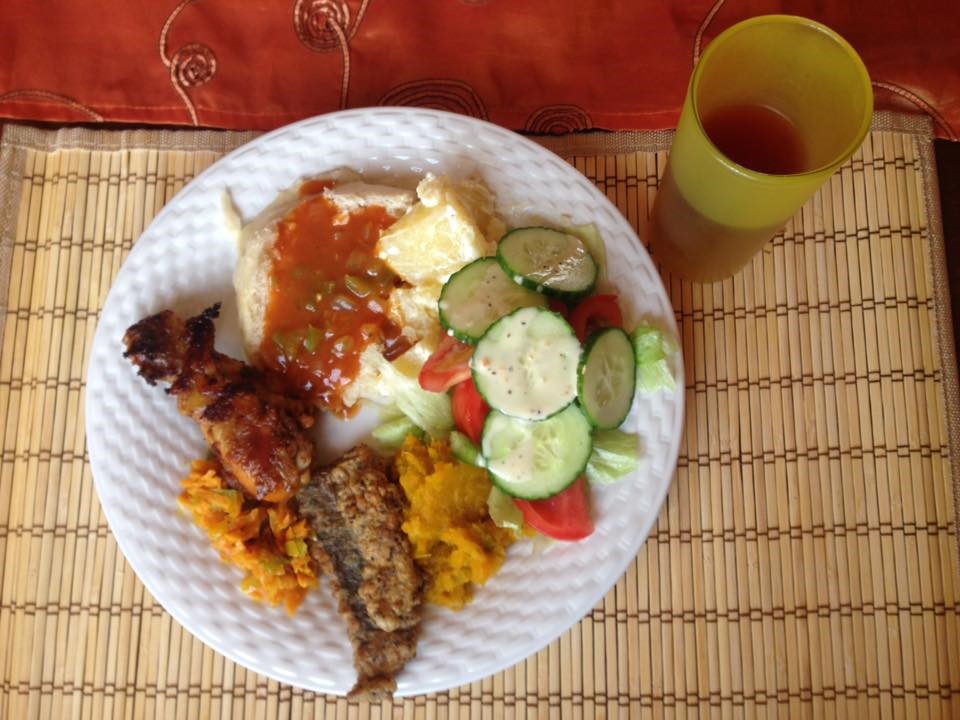
Another favorite part of my homestay was the food. Food is generally a favorite part of my life, and cooking with my host mother and trying unfamiliar foods was a favorite part of my homestay as well. Every meal consisted of pop, a grain that is comparable to the texture of thick mashed potatoes. We ate with our hands and used pop to stick to our other foods and eat. I became an expert at making pop and chakalaka, a spicy vegetable mixture. While being in Southern Africa, I have also discovered my favorite tea. It is called Rooibos, a red tea that can be found in every household and restaurant here.

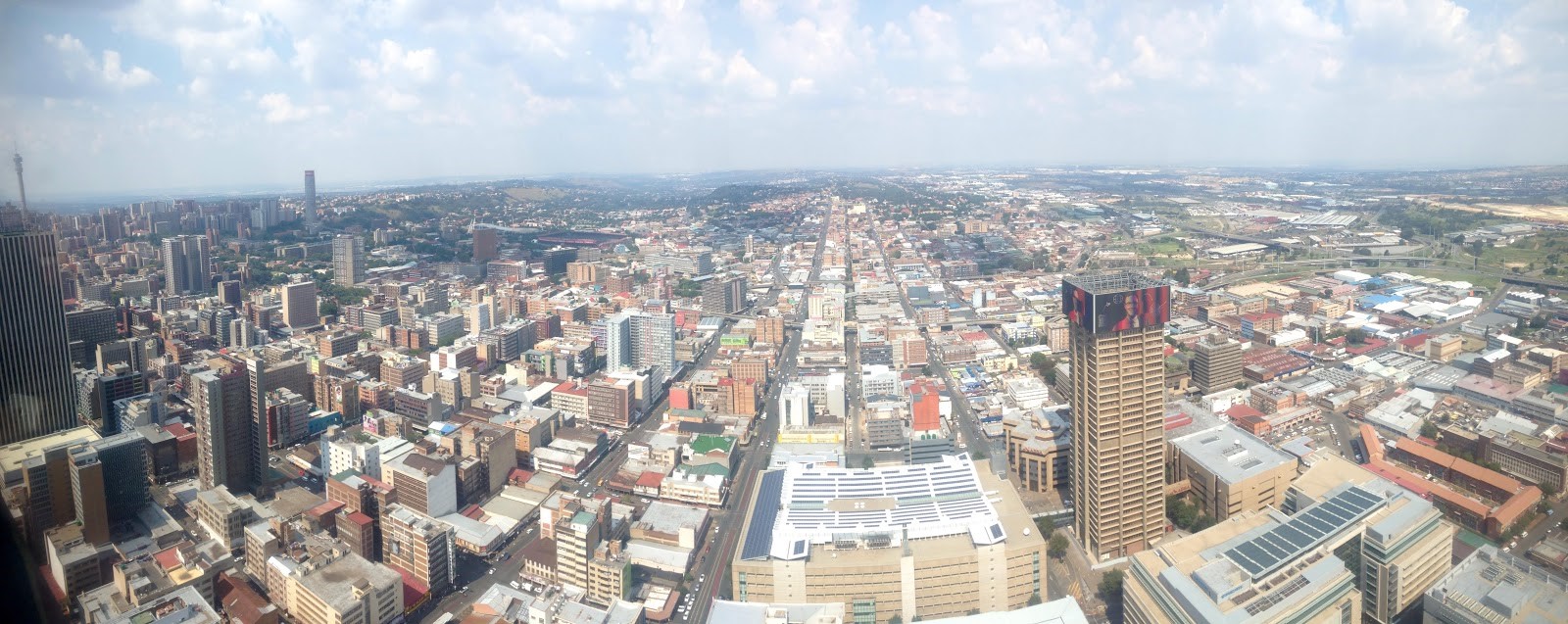
View from Top of Africa at the Carlton Center, the tallest building in Johannesburg

Dinner I helped to prepare at my homestay. On Sundays my host family has “seven colors meals.” They prepare a dish that consists of seven different colored foods, so may add foods like beets, carrots, squash, tomatoes, and other foods so they have a larger variety.

Finding Familiarity in Berlin

Blogger: Alyson Kneusel

Program: Reutlingen, Germany – Study Center

Hello all!

alyson_berlin4

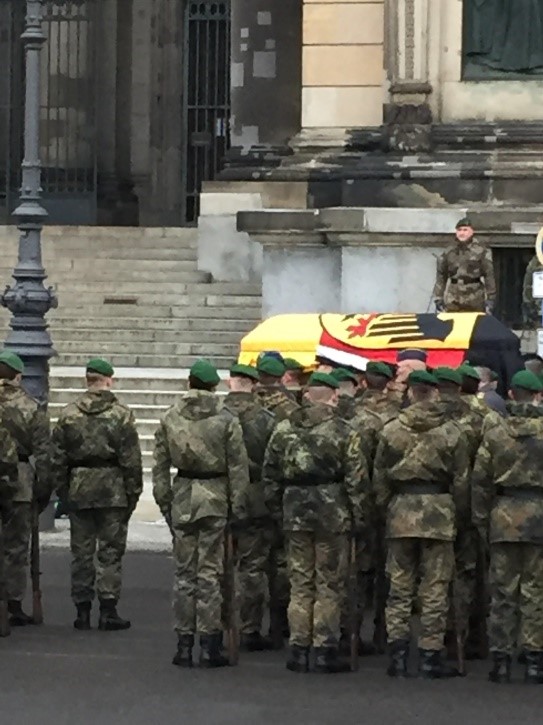
Public Military Service

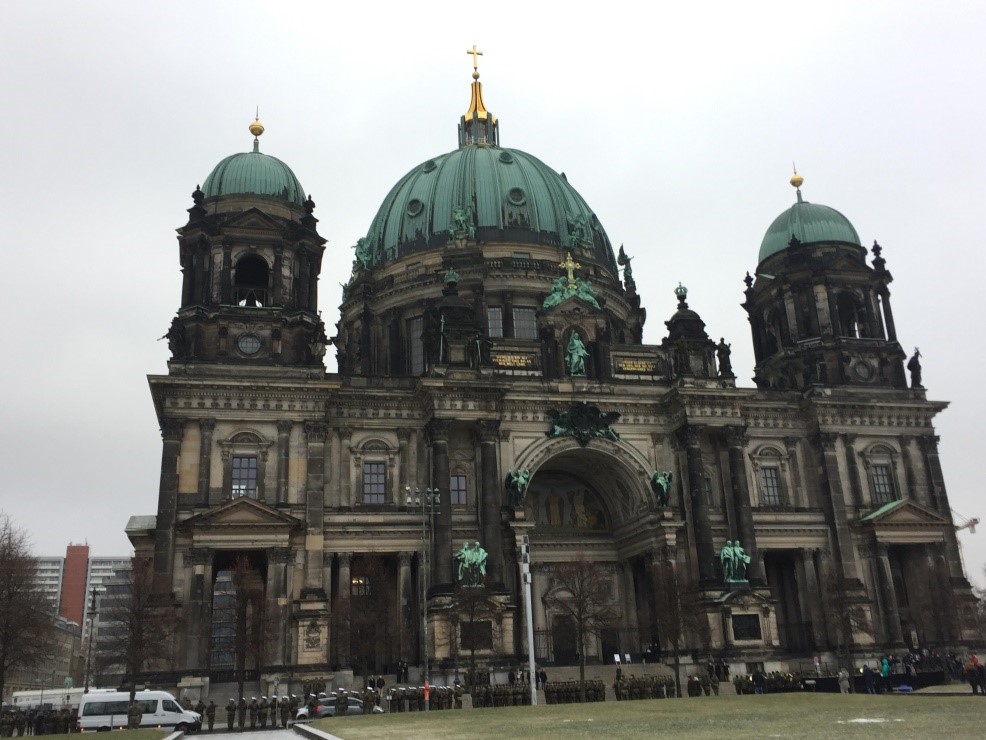
In the last week and a half, I have visited Berlin, Copenhagen, and Hamburg. I’ve experienced an astonishing assortment of museums, architecture, and history.  However, the most impactful experience I had was entirely accidental. When attempting to visit the ancient history museum in Berlin, our group of American students stumbled upon a public military funeral service occurring outside of the Berlin Cathedral Church (shown to the right). I was shocked how much this made me evaluate the relationship between Germany and America. Not only that, but the experience made me question my own role in that history as an American student studying abroad in Germany.

The Berlin Cathedral Church is a beautiful and well-known landmark of downtown Berlin. With its original construction dating back to 1465 and church bells whose sound echoes across the center of downtown Berlin, it is a powerful symbol of German and religious history.

alyson_berlin3

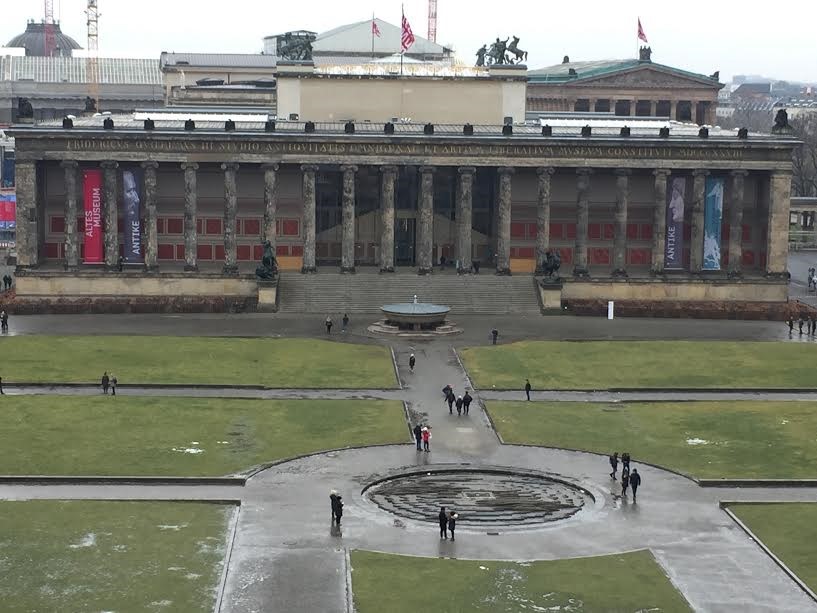
Altes Museum

However, most Americans would be more likely to recognize the infamous Altes Museum building which stands on the adjacent side of this main square. This building is shown in numerous textbooks of Nazi history because the Altes Museum was the site of a military march and speech for Adolf Hitler’s 50th birthday in 1939. I have always viewed this image as just a page in the text, not an event in a place that really existed with real buildings and real people. Standing there the other day, I was struck by the fact that just a mere 77 years ago, there would have been Nazi German soldiers standing in that very spot.

Not only was that a humbling experience, but to see the German military assembled for the funeral right next to the location from that picture 77 years in the future, I realized how many people I have to be thankful to for the fact that I (an American student of mixed Jewish and German descent) could be standing in the presence of the German military in that historic spot without fear for my own safety.

alyson_berlin

Berlin Cathedral Church

Having grown up in a military community myself (living near MacDill air force base), I recognized how many aspects of the German military were not so different from our own in the United States. Watching them mourn their dead and hearing the military band play reminded me that even though our armies were once opposed one another, we are truly not so different. More than that, we hold many of the same values including those evident in the ceremony such as music, mourning the dead, respect for the military, and even the Christian ideals suggested by the location of the funeral outside the Berlin Cathedral Church.

I am not saying that I am thankful just to the Allied powers or just to the German military for this opportunity, but more that I am thankful for all the efforts which have been put in by all countries involved in rebuilding the relations between our nations. I was saddened to learn that this beautiful church I was viewing was in fact damaged by an Allied-forces bombing raid during World War II. As I continued through the rest of Berlin, Copenhagen and Hamburg, I saw more destruction from WWII in the cities. It became apparent to me that although the Allied powers prevailed in the war, no one really won. I’ve heard stories of all the civilians lost on both sides and saw the destruction of otherwise historical sites that had occurred during the war, and it was clear to me that such destruction can never be allowed to happen again.

I am not sure if I could have ever truly appreciated what was lost on both sides of the war if I had not had the opportunity to see this with my own eyes. For this reason, I understand how crucial it is our people experience different countries and cultures.  I fully encourage everyone, not just students and not just Americans, to travel to different countries. This not only allows us to appreciate our differences, but more importantly it teaches us to recognize what we share. I will not say that I think this will solve all the world’s problems and produce world peace, but this experience really makes me hopeful that through learning about each other and recognizing our similarities, we can take a big step towards a more peaceful future.

Until next time,

Alyson Kneusel

« Older posts Newer posts »

© 2026 Valpo Voyager

Theme by Anders NorenUp ↑