Valpo Voyager

Student Stories from Around the World

Page 6 of 124

I Spy: Costa Rican Edition

Author: Mia Casas

Location: Cahuita, Costa Rica

Pronouns: She/Her/Hers

One of the top attractions of Costa Rica is the wildlife. Many visitors look forward to seeing all the tropical species that are home to the country. The most recognizable include sloths, monkeys, iguanas, toucans, and more. You won’t find these animals easily in San José, but will definitely have the opportunity to see these creatures in their natural habitat during excursions. The best areas, in fact, are the national parks, which offer shelter for the animals to roam freely.

National parks are protected areas that prohibit the destruction of wildlife in all forms. Commonly, you will see signs that warn against feeding or touching wild animals and littering in nature. These precautions protect the natural environment and ecosystem. In Costa Rica, the regulations of national parks can be even more stringent. For example, Cahuita National Park, along the Caribbean coast, closes daily at 4pm, a relatively early hour. This allows the animals to have a break from human interaction, and still enjoy the daylight hours. For Manuel Antonio National Park, this same standard applies, and the park goes even farther to be closed all-day on Mondays.

While visiting these parks, there will be some animals that you can spot easily. However, most hide clandestinely in the vegetation of their habitat. With this in mind, it is worth considering hiring a guide to help you in your scavenger hunt for all the wild animals. Many animals hide in plain sight, and you need a trained eye to be able to spot them. Otherwise, you may end up looking at the same animal over and over again (like the white-faced monkey).

Additionally, some areas offer day tours, as well as night tours. During the night tours you may spot insects, spiders, frogs, and bats. In Cahuita, Heidi solicited the help of her friend Fernando to give us both a day tour and night tour. An extra benefit of a hired guide is that they have the proper instruments to see the animals, such as telescopes and special lighting during the night. Check out some of the pictures we took, with the help of Fernando.

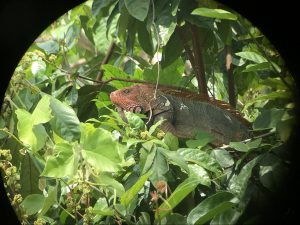
Iguana at Manuel Antonio National Park

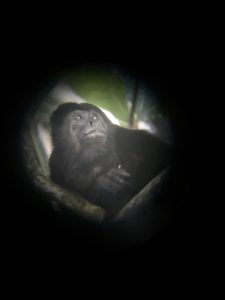
Congo Monkey at Cahuita National Park

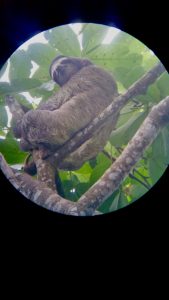
Three-Toed Sloth at Cahuita National Park

Two Frogs at Fernando’s Place

White-Faced Monkey Video

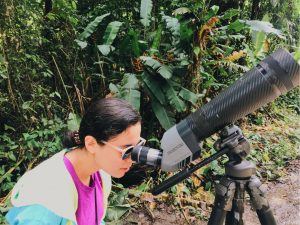
Me at Manuel Antonio using a telescope to view the animals in the trees

Changed

Author: Elisabeth Walters

Location: Reutlingen, Germany

Pronouns: She/Her/Hers

Before leaving to come to Reutlingen in August, I was nervous and scared. The idea of leaving the country I call home to experience something new was, although exciting, also nerve wrecking. My mind kept replaying all the things that could go wrong. However, going out of my comfort zone was the best thing I could have done for myself.

By going out of my comfort zone, I have, firstly, seen the sights of the world from the Pyramids of Giza in Egypt to Buckingham Palace in the United Kingdom. Secondly, I am able to say that I’ve tried swabian food from Germany and seafood from the Mediterranean Sea. Also, I am able to say that I have lived in a culture that varies from my own and I am able to compare the teaching styles of Germany to the United States. Another thing is that I have faced challenges that I would have never have faced back at home and I’ve learned important life lessons from those challenges.

Besides the lessons that I’ve learned, the most important thing is that throughout my study abroad semester I have made true friendships with people who live differently than me. I’m able to say that I have a home away from home because I have come to love the city I stayed in during my time in Germany. Also, during my stay in Reutlingen, I’ve made memories that I’ll be able to replay in my mind for the rest of my life as well as share with others.

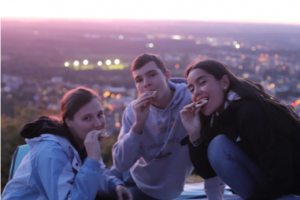
Clara, Ethan, and I eating smores on top of Georgenberg

A couple of us celebrating Ethan’s birthday in Reutlingen

As my time in Germany comes to an end, I have realized that I am no longer the same person that I was when I came here in September. I have changed. I am no longer afraid to test the limits and go for what I want in life. I have also changed in regards to my cultural awareness. Having stayed in Germany for a few months, I can say that I am more aware of what is a stereotype of that culture and what is not. Lastly, the lessons I have learned, the memories I have made, and the friendships that have blossomed in Reutlingen are not ones that I am saying “goodbye” to, but simply saying “see you later”.

Interning at a French Law Firm

Author: Bianca Gamez

Location: Paris, France

Pronouns: He/His/Him

For the second half of the semester, my study abroad program had the students do an internship in either English or French. Before being placed somewhere, the program teams up with EUSA that deals with the placement of each student. This process was tedious for me and pretty much every other student because over the summer we had to turn our resumés into a CVs which is a different format and it also needed to be in French. Apart from this, we also had to have a Skype interview with one of the EUSA representatives in order for them to see our French speaking skills and be able to get to know us. Not only did we have to do this, but we also had to fill out a couple documents and surveys online through their platform. After all of this, we just had to wait until we came abroad and see where we would be placed and who we will be interviewing with.

Since each student could specify which sector they would like to be placed for their internship, I decided to be placed in either political science or law sector. Since, I have already had experience working at a law firm in the U.S. it was not hard to convince them to place me in one. Fortunately, I conducted my interview at Cabinet Castellane Avocats which is a French law firm. The founder, Béatrice Castellane, of the enterprise let me intern with her firm for the rest of the program, and so far, I have been pleased with this internship.

Cabinet Castellane Avocats is located in the northwest part of Paris, Trocadero. In order to get into the building, you need three different types of codes in order to enter the private neighborhood, the apartment, and to access the stairs and elevator. The office is small and only consists of the attorney Castellane, another intern who is about to graduate from law school, and me. The other intern and me both have our own desks, computers, and work folders. I only work Mondays through Thursdays from 10a.m. to about 7p.m, and my tasks mainly consist of reading and responding to e-mails, reading cases, contributing my thoughts and opinions on the cases, helping draft documents, and preparing the documents for the hearings. Most of tasks and communication is in French except for the cases that are conducted in English.

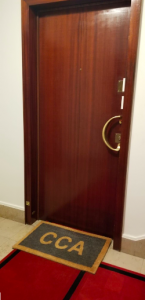
(This is the outside of the law firm.)

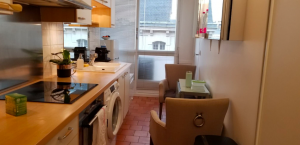
(This is our kitchen. We are given an hour for lunch and just to relax after our busy morning.)

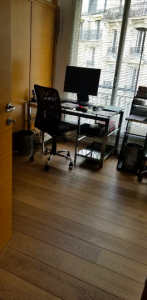
(This is my desk where I work on the cases that are given to me and translate words from French to English for my own comprehension)

Throughout my internship, I have been taken out of my comfort zone and have had my own morals and thoughts challenged. I learned that this was normal since my culture and the French culture is different especially when talking about politics. I will say, however, that I have learned so much from interning at a French law firm. My vocabulary and grammar have advanced so much legally and also from a day to day basis. I have become more comfortable when speaking in French because of this opportunity since I am forced to communicate effectively on what I am thinking and feeling about documents. Overall, this internship has helped develop my French speaking skills and has opened another professional career for me which is arbitrational work.

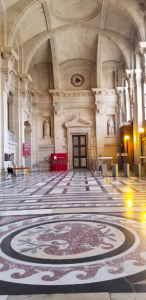
(I went to the Palais de Justice for a hearing. This is one of the main lobby areas of the courthouse.)

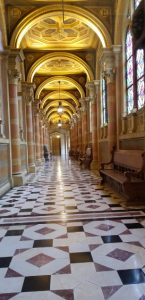
(This is also inside le Palais de Justice except this is one of the areas that is restricted and only those who have cases in this area are allowed to enter.)

Exploring the Japanese countryside

Author: Brandon Polinski

Location: Azuchi and Sekigahara, Japan

Pronouns: He/His/Him

For most of this semester I have constantly been surrounded by people and things. Kansai Gaidai is in the heart of the Kansai region, and is in the vicinity of not one, but three major cities. In Japan, it is also more difficult to distinguish where the city ends and suburbs begin, as the city sprawl extends outward, blending into the neighboring cities. The buildings may get smaller, but it does not get much less dense. My place of residence in Hirakata-shi is considered by the locals to be a small residential town, but it and the surrounding area is bustling compared to Valparaiso and my hometown in Illinois.

I had been interested in taking a trip to see what a non-urban Japanese town was like, so I was excited when my friend invited me on a countryside trip. We were still very much in the bounds of civilization, but this was probably the most unique of my experiences in Japan.

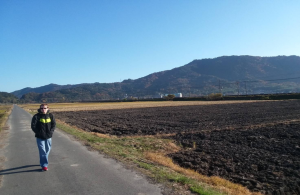
First stop was Azuchi. This is also the location of the ruins of the historic Nobunaga’s castle. To get to our destination we had to walk from the station through about a mile of rice fields. There were not any sidewalks, just single lane roads. Overall, this was still something of a tourist spot, at the museums there were quite a few elderly Japanese and at the castle trail there were many Japanese families. However, the town itself was easily the smallest town I had been to so far, with an estimated population of around 12,000 people.

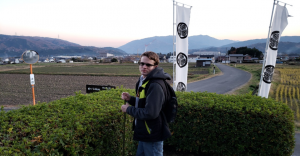
Me in Azuchi.

View from the top of Nobunaga’s castle trail.

Sekigahara was even further out. On the way there we made a mistake and missed a train. This mistake cost us time, so we had to wait more than thirty minutes for the next train. In Hirakata, it would be rare to wait more than ten minutes. Aside from this set-back, there were no other issues and we arrived safely. Sekigahara has a population of around only 7,000 people, even smaller than Azuchi.  Sekigahara also hosts some museums, along with being the site of the historic battle of Sekigahara. However, we saw almost no people. We walked through more fields and a mountain trail, completely alone in wide open surroundings. In America, finding yourself alone in a spacious area is not a difficult thing to accomplish, but here it felt surreal and cathartic.

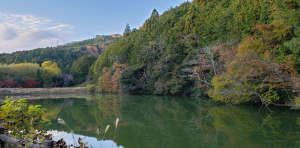
Parts of Sekigahara looked like something out of a painting.

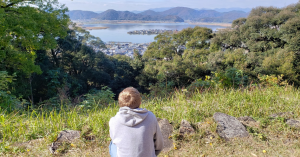
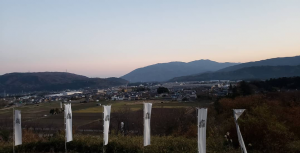
We walked until we could not walk any more, and then treated ourselves to an amazing view of the sun setting over the ancient battlefield, with the town stretching out into the distance. Once rested, we began the trip back home. I am very happy I made this trip because it gave me an experience that I felt I was really missing most of this semester. I feel like an even more knowledgeable and well-rounded traveler, especially pertaining to Japan and the greater Kansai region.

Taking a rest.

The sun sets on the battlefield.

Normandie: Bayeux

Author: Bianca Gamez

Location: Normandy, France

Pronouns: She/Her/Hers

Europe, especially France, has so much history within it when dealing with World War 2, and historical war sites in Europe were one of the things that I have always wanted to see in person. Since I finally had the opportunity to study abroad in Paris, I decided to take advantage of that and go up north to Normandie and visit Omaha Beach and other D-Day historical sites. Since I wasn’t the only one who wanted to see historical landmarks, some friends in the same program as me, joined along for a weekend in Bayeux. We took a 2-hour train ride, which is very typical here in Europe when traveling to places. We ended up arriving at Bayeux late at night due to some difficulties with the train, but we were still optimistic that we would still enjoy all of Saturday and half of Sunday.

The next morning, we decided to have breakfast at a cute little pink café. Since most of the group members were females, we all pretty much felt as if we were in a Barbie playhouse because of how much pink was in the place. There were also doilies and news clippings from years ago. However, overall, it was a cute little café and the owner was super sweet with us and would explain what was on the menu and what she would recommend. In the end, we ended up ordering a typical French breakfast which was tea or hot chocolate with croque-monsieur or madame. A croque-monsieur is a piece of long bread that is toasted with ham and cheese, and the croque-madame is the exact same thing except it has a sunny side up egg on top.

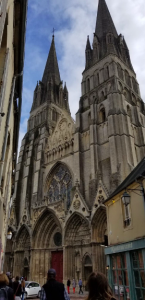
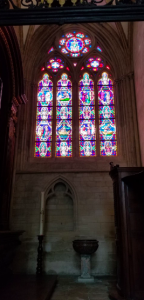
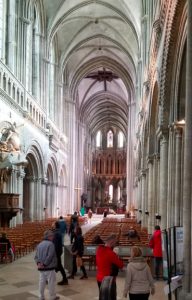
After breakfast, we decided to start our adventures in Bayeux. We visited one of the cathedrals, Notre Dame de Bayeux, that was in the middle of the town. This cathedral was built in 1230-1270 with medieval architecture.

(This is the front of Notre Dame de Bayeux)

(This was the stained glass inside the cathedral)

(Once you enter the cathedral this is the first thing you see)

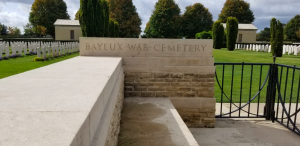
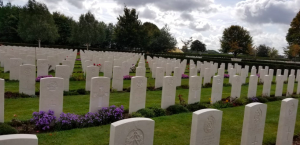
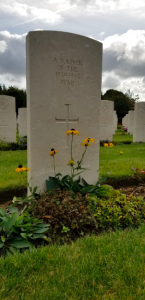
The next historical site that we visited was the Bayeux War Cemetery. This cemetery has almost every soldier that fought in the Bayeux War. Walking through the cemetery was an unexplainable feeling because seeing all the tombstones was astonishing since many were from different countries, different ages, and had different experiences. For instance, some tombstones read “unknown soldier” and others would read “to my only son”. It was hard walking through the place and just realizing that some of the soldiers were our age when they died. It was a weird feeling because they fought fighting for what we currently have today which one appreciates a lot but it is also sad to realize that many had to lose their lives in order for that to even be possible.

(This is the sign before you enter the cemetery)

(One side of the cemetery that shows a couple of many tombstones)

(An unknown soldier’s tombstone. It was sad seeing how many of these were here.)

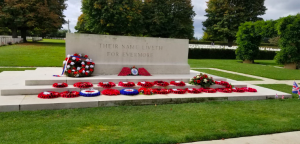
(This is placed right in the middle of the cemetery)

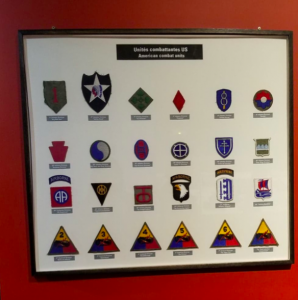
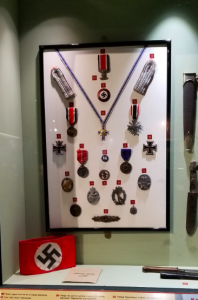
Next to the cemetery, there is a museum that houses articles of clothing and war items like knives, bombs, and invasion plans. Inside the museum, there is also a small theater that explains D-Day and how the plans for the invasion were planned out and what steps they took.

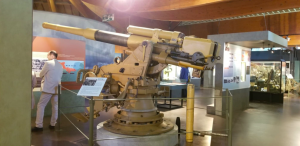
(One of the military machines used during D-Day)

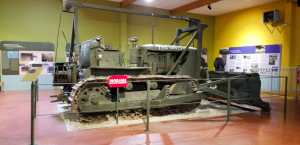
(Another one of the equipment that was used on D-Day)

(These were the badges that were used by the US)

(Some of the badges that were used by the Nazis)

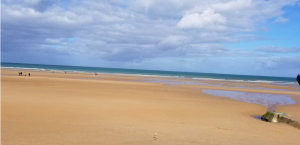
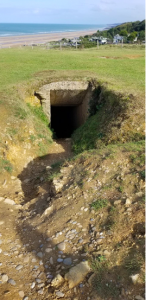
The last historical site that we ended up visiting was Omaha Beach, where D-Day took place. We had to take a taxi all the way to the beach since it was too far away to walk to. When we got there, it felt so surreal because the atmosphere felt so peaceful and calm, but when I reflected to what happened at that beach it was not like that at all.

Overall, the trip to Bayeux and Omaha Beach was an amazing opportunity! I had a great time with my friends and also had a moment to reflect back on life and those who fought for us and our future.

(The view of Omaha Beach)

(One of many bunkers that can be found at Omaha Beach)

Everything You Need to Know About The Costa Rica Study Program: Culture and Recreation (Part 2)

Author: Mia Casas

Location: Santo Domingo, Costa Rica

Pronouns: She/Her/Hers

Here is the second piece of everything you need to know about Costa Rica. In this part, I will review some cultural aspects of the Pura Vida country and provide an overview of recreational activities in Costa Rica that are tuanis.

Where am I going exactly? How do I get around?

If you want to scope out in advance what area of Costa Rica you are heading to, the exact location is Santa Rosa de Santo Domingo de Heredia. Santa Rosa is the smaller neighborhood, Santo Domingo is the city, and Heredia is the province (but there is also the city of Heredia). It is a pretty good location because you are about 20 minutes from San Jose, in one direction, and 20 minutes from Heredia, in the other direction. Santa Rosa has a train stop right in the neighborhood, and there are plenty of bus stops nearby, too, that can get you around easily. The routes can be intimidating to navigate at first, but don’t be afraid to learn by trial and error. Worst comes to worst, you can always call an Uber or taxi, (or DiDi! — a new app similar to Uber) to come to your rescue.

What do I do with all my time in Costa Rica?

Aside from classwork and internship, you will have plenty of time to experience the culture of Costa Rica by engaging with your host families, being involved with activities hosted by Casa Adobe, and travelling! I recommend creating a bucket list of all the places you want to see and things you want to do in Costa Rica early on so you can adequately plan for each item. If you start feeling restless, branch out and visit local activities in Santo Domingo’s park, like bailles (P.S. everyone dances in Costa Rica) or conciertos. You can also venture out to San Jose or Heredia. San Jose has a larger nightlife, but the city isn’t really all that pretty, let’s say. Some locals prefer traveling to Heredia, which is more recently developed and has a cleaner look. Keep an eye out for cultural activities going on locally and nationally. The advantage of being so close to San Jose is that you can go to sporting events or concerts for famous Latin American artists (think Marc Anthony)!
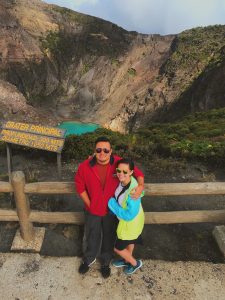
During Fall break, my brother visited me and we visited several landmarks in Costa Rica, one of them being the Irazu Volcano, which features a lagoon inside the crater.
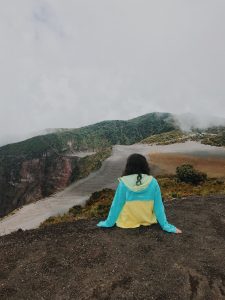
Where do you get to visit while you’re in Costa Rica?

There are a ton of websites and blogs online that give recommendations about the top places to visit in Costa Rica. For transportation, this website was very useful for getting around. Truthfully, there’s so much to see but you can really make the most of your time if you plan properly. Here is a comprehensive list of all the places I travelled to for my own leisure:

In San Jose/Heredia Provinces:

1. Barva Volcano

2. Irazu Volcano

3. San Jose Central Market

4. Oxigeno (This is just a mall, but it has a very cool mirador of the Central Valley)

5. Zoológico y Jardín Botánico Nacional Simón Bolívar Park

6. Jade Museum

7. Museums of the Central Bank (Pre-Colombian Gold Museum/The Numismatic Museum/Other Temporary Exhibits)

I found this from the website. “Admission is 2,000 Colones for citizens and residents, and 5,500 Colones for foreigners. Admission is free on Wednesdays. Admission is 2-for-1 on Sundays for citizens and residents with Costa Rican I.D. Admission is free for children under 12, students wearing their uniform or with school I.D. and retired citizens.”

8. Basilica of Our Lady of the Angels in Cartago

9. National Theater of Costa Rica — Guided Tour and a show (1001 Noches)

10. Estado Nacional // La Sabana Park

Tip: Have the UCR issue you a student ID, and you can get student discounts at certain locations.

In Other Provinces:

1. La Fortuna, Alajuela — Arenal Volcano

2. Manuel Antonio, Puntarenas — Manuel Antonio National Park

3. Jaco, Puntarenas

4. Santa Cruz, Guanacaste

5. Puerto Viejo, Limon
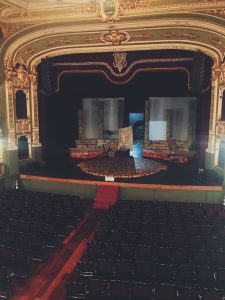
The National Theater is one of the many gems of Costa Rica. In the guided tour you learn that the theater is used for many important, national events, like the President’s inauguration.
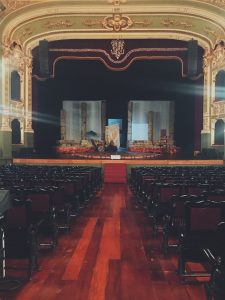
It is also ranked as one of the most beautiful buildings in the world.

As a cohort, the group goes sightseeing. Here are the places we went in Fall 2019 in Costa Rica:

  1. National Museum
      5. Cahuita, Limon       
      2. National Monument (and more)      6. Bri Bri, Limon
      3. Contemporary Art Museum       7. Tortuguero, Limon
      4. Guayabo National Monument        8. Tacares Waterfall

With Heidi, students also visit untraditional tourists locations like indigenous communities and refugee communities. They may not be glamorous areas, but they are very eye-opening and experiences for personal growth. (Bolded items are my favorite locations.)
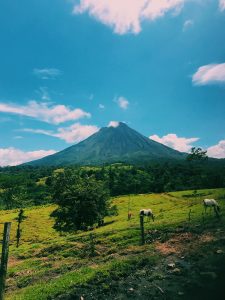
At this site, visitors can enjoy walking across hanging bridges in the National Park, bathing in hot thermal pools, or zipline through the jungle.
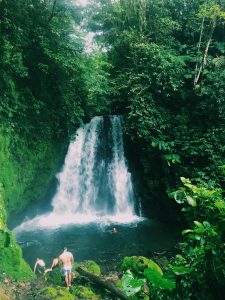
At this site, visitors can enjoy walking across hanging bridges in the National Park, bathing in hot thermal pools, or zipline through the jungle.

Random pieces of advice for those planning on going abroad?

While I would like to say that everything about studying abroad in Costa Rica was perfect, the reality is that you experience some growing pains while here. The best way to maneuver any uncomfortable situation is to ask for help and open up to someone you trust, whether it be Heidi, a fellow peer, someone in your host family, etc. Some lessons are bigger than others, but here’s some tidbits that may be useful.

Weather

In the Central Valley, it gets chilly at night. If you are traveling to Costa Rica in the fall semester, make sure to bring some sweaters or light jackets. Even during the day, you won’t want to wear summer clothes, like flip flops or shorts because it is not beach weather in San Jose. The fall semester coincides with the rainy season, so ALWAYS have an umbrella with you, that’s the number one rule before leaving your house in the rainy season. You may also want to bring other attire that is water-resistant.

Shoes

You will do a lot of walking throughout the semester, so bring walking shoes that are supportive, and it may be smart to leave behind any shoes you don’t want to get dirty or ruin. The sidewalks and streets are not that great here, so the most important element is functionality. Also, if you wear sandals on a cold, rainy day, you will stick out as a foreigner. Most people wear closed-toed shoes here, which is also good to keep in mind when you go to your internship.

Host Families

One major culture shock may be living with a host family. Not only is it a family that is not your own, the “parenting” of parents in Costa Rica is very different than US parenting. Some people love the experience, whereas others may find it difficult. In some ways, it is like being in highschool again, where you have to be conscious of how frequently you go in and out of the house, what time you come home at night, eating all the food on your plate, etc. The best way to prevent any uncomfortability in a homestay is to, first, be clear in your application what your hobbies are, what kind of food do you like and don’t like, what kind of environment do you prefer, all the details that will help Heidi pair you with the right family. Second, open communication is best, especially with Heidi. She will always help you navigate any situation relating to cultural cues, to arranging a doctors visit, to handling difficult conversations… with anything you need help with.

Costs of Living

In relation to other neighboring Central American countries, Costa Rica is very expensive. I love going to the malls but I never buy anything because everything is overpriced. Be smart and save money where you can. Opt to make lunch at home, don’t buy things in touristy spots where things are overpriced, use the bus versus Uber; this will help you save money to spend on experiences like going out with friends or travelling. Beware that some tourist activities are pricey and foreigners often get upcharged a ton versus residents.
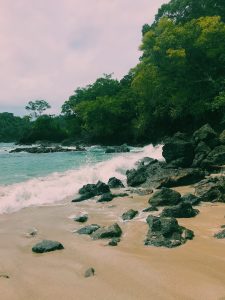
Manuel Antonio is known for having some of the most beautiful beaches in the country.
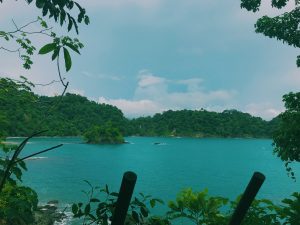
he National Park is extensive and has many breathtaking views.

Everything You Need to Know About The Costa Rica Study Program: Classes and Internship

Author: Mia Casas

Location: Santo Domingo, Costa Rica

Pronouns: She/Her/Hers

If you are thinking about studying abroad at Valparaiso’s Study Center in Costa Rica, here’s a detailed guide that outlines everything from class structures, internship options, housing accommodations, and other notes that may help you in your decision to study abroad in Costa Rica. Originally, I wanted to answer these questions all in one document, but I realized there’s just so much that it would be better to split up the topic into two parts — academics and recreation.

What is a study center?

A Valpo study center provides more resources to students during their time abroad. A defining characteristic is a local, on-sight Valpo director who works one-on-one with students to provide classroom instruction, group excursions, local directions, etc. If there is anything else you may need help with, you will always have someone easily accessible to ask. Included with the cost of the study center fee are housing arrangements, whether it be in a homestay or residence hall. For Costa Rica, students do live with a host family, and typically there are other students from Valpo that will form your entire cohort. More information about the different study abroad programs available at Valpo can be found here.

What classes do you take in Costa Rica?

Everyone is automatically enrolled in three classes:

  • Spanish Grammar class
  • Spanish Conversation class
  • Ethnology and History of Costa Rica

Before you enroll for your Spanish classes you will complete a placement exam to determine your level of Spanish. The levels are assessed as A, B, or C; A being the beginner level and C being the most advanced level. From there, each section is split into section 1 and section 2, the latter being the more advanced course. Truthfully, your performance on the placement exam does matter, but the number of students available for each class session plays an important role for the university. I say this because, for our group, we were all placed either in B1 or B2 and no C level classes were offered, initially. This also means that you may be in a course where each students’ Spanish-speaking capabilities vary, but regardless we were all placed in the same class for the sake of class availability. Once you start classes you will realize that the class size is very small, approximately 10 students or less, so it is a good environment to ask a lot of questions.
The structure of the classes is designed to be an intensive course. You will take both Spanish classes at the same time, starting at 8 am and finishing just before 1pm, for four weeks. Between classes you have a 30-minute break. This may not sound too bad, but you may find yourself waking up as early as 5:30 am so you can catch the 6:40 am bus to UCR. But, after just four weeks you will have earned 6 credits of Spanish! Another unique thing is that this Spanish class is exclusive to foreign students, so you have the chance to meet people from different parts of the world and even form friendships.
For the other course, you study with Heidi Michelsen at Casa Adobe, Valparaiso’s Study Center (also known as the Praxis Center). You begin this course as soon as you arrive to Costa Rica, and it lasts for 9 weeks. The first four weeks are intense because you meet almost everyday for almost the whole day. The good thing is that the topics of the course are interesting, Heidi frequently invites guest speakers, and group excursions are built into the curriculum. Then, on the fifth week the cohort does a study tour. This year we went to Panama, in previous years students travelled to Nicaragua, but, since last year, it has been too dangerous to travel there. Heidi intentionally designs the program so that students are exposed to various walks of life — from urban life, to rural life, to indigenous life. So, just as you will do in Costa Rica, you will experience different lifestyles in Panama. Once you return to Santa Rosa, you will start your Spanish classes. At this time, you will meet less frequently for Heidi’s class, typically just once a week. After the first 9 weeks, students typically begin an internship, but there are other options available, as well.

Interested in other miscellaneous class work? Heidi does her best to arrange whatever classes you may need to take abroad, and each member of my cohort has taken various elective courses. Two of my classmates enrolled in a Theology course about ethics at La Universidad Bíblica Latinoamericana, which is a theology course purely in Spanish. The course lasts 15 weeks, spanning the entire length of our program, and ends in December. They meet for a few hours in the evening only once a week. My other classmate decided to forfeit doing an internship and continue taking classes at UCR. He was initially placed in B1 and has progressed into the C1 course. He is also taking another class with Heidi about the Sociology of Healthcare in the evenings once a week. As for me, after classes at UCR I began a 3-week course on Central American literature with Latin American Studies Program, a study abroad program for various Christian colleges in the US. I am also completing an independent study course on Liberation Theology with Heidi, and an independent study for my International Economics and Cultural Affairs Senior Seminar with my professor at VU. Don’t worry about buying any textbooks for any of these classes. As far as I could tell, all the materials are provided for students.

What are the internships like?

After the first 9 weeks, students typically begin working with an internship of their choice. Most are business related or medical related. I’ve included a link to the list of internships available as of August 2019. If you have a clear idea of where you would like to work, talk to Heidi so she can help you. We always joke around that Heidi has connections everywhere, and it’s true.

Veronica Campell has worked in the neighborhood of La Carpio, a marginalized community of predominantly Nicaraguan refugees and migrants, translating locals’ stories into a book that recounts monumental moments of community members.

In general, I would say your internship is what you make out of it. The work culture is very different here, so it probably won’t match your expectations of a typical internship, based on US standards. For one, ticos (Costa Ricans) have a different concept of an internship than we do, that is to say, they don’t often employ interns. So when you arrive, you will have more personal responsibility and liberty to outline what projects you choose to participate in at your internship. While there, you may also realize that the work environment is more relaxed, and it may feel like you have a lot of down time. Use this time to talk with your peers and/or supervisors and learn more about the company culture and Costa Rican culture, in general.

Veronica works alongside The Costa Rican Humanitarian Foundation, which offers a variety of community enrichment programs.

A lot of this information will be explained by the Study Abroad Office and/or Heidi Michelsen, the Costa Rica program director. However, I hope it helps having the details provided here for you to read thoroughly. I based these questions on some things I had wondered before going to Costa Rica, so hopefully this clears up any doubts! If you ever have a question in the future, I’d be happy to answer any of your questions via email at mia.casas@valpo.edu

The international Spanish students took a field trip with their UCR Spanish professors to breakfast and the Jade Museum.

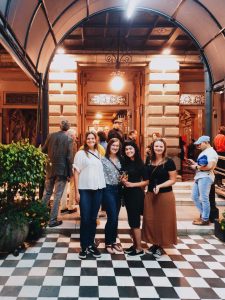
Veronica and I befriended students from the Netherlands and Norway, and have enjoyed going out for dinner, going to the theater, and getting to know Costa Rica together.

Friendship in Barcelona

Author: Elisabeth Walters

Location: Barcelona, Spain

Pronouns: She/Her/Hers

While studying abroad, it is important to open yourself up to not only new cultures, but also to new and different people. In the beginning of my exchange semester, I had met a unique girl, named Clara, from Barcelona who was finishing her year in Reutlingen within a month into my semester there. I also met Neil and Ethan, who would be in Reutlingen during the duration of my semester. However, the first time I met these people, I never imagined that in three months I would be visiting Clara with these two other boys.

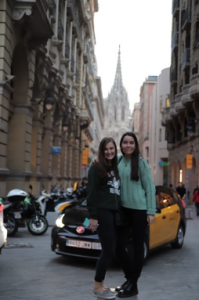
On Thanksgiving day, Ethan, Neil, and I traveled to Barcelona to meet up with Clara. We arrived late in Barcelona; however, that was perfect because in Barcelona they have a different eating schedule. They usually eat breakfast around 7am, a snack around 11am, lunch around 3pm, and finally dinner around 9 pm or later. Awaiting us at her place, Clara prepared us a Thanksgiving dinner and there we talked and caught up about the happenings in our life. Throughout Friday, Saturday, and Sunday, Clara showed us around the place she called home.

On Friday, she showed us the Arc de Triomf, Casa Batlló, La Pedrera-Casa Milà, the Barcelona Cathedral, and she took us to a churro shop. Clara had us try traditional Catalonian tapas and Spanish churros, both of which were phenomenal. While on Saturday she showed us sights from the beautiful old city of Barcelona, the Port of Barcelona, and took us to watch the sunset at the MUHBA Turó de la Rovira. Throughout that time, she continued to have us try traditional Spanish foods such as Paellas, in which, she taught us how to eat clams and shrimp properly. On our last full day, Clara took us to see the Basílica de la Sagrada Família, the Museu Nacional ďArt de Catalunya, and finally the Arenas de Barcelona

Although each day seemed different, they were actually really similar. Each day, we joked around, had meaningful conversations, and stayed up late into the night enjoying each other’s company. We played games, visited the local Christmas market, talked about Spanish traditions and customs, and even had a movie night at Clara’s apartment. On Monday morning, I was sad to leave Barcelona, not because I had to go back to school in Reutlingen, but because I was leaving my friend and a beautiful city with amazing memories.

My time in Barcelona, however, is not valued by the sites I visited or even by the food I tasted. When I look back in a few years, I’ll remember my time in Barcelona as the place where I made memories with my friends. Through my whole time abroad and specifically in Barcelona, I have realized that memories do not come from the sites you visit, but from the jokes and conversations that you had with the people you care for the most. Memories come from the friendships you build, and these memories are ones I will remember from my exchange semester abroad.

Reflection: Studying in Japan during fall semester was for the best

Author: Brandon Polinski

Location: Kansai region, Japan

Pronouns: He/His/Him

When I first transferred to Valpo, I assumed that I would be able to complete a degree in International Business and cram in a semester long study abroad within a mere four semesters. That was a naïve assumption to make and reflected my lack of experience at the time in understanding how college works and what realistic goals are.

If things had gone that way I originally envisioned, I would have likely ended up studying in Japan during the spring semester. In fact, that is what many of my peers who came before me did. Interestingly, the difference between fall and spring semester at Kansai Gaidai for international students is stark, and it is not just because of the weather. Based on what I have learned and experienced, I would strongly encourage anyone looking at Kansai Gaidai to study abroad to aim for the fall semester.

Firstly, there is much less stress during the initial application process. The application process is fairly lengthy with a lot of different moving parts. There are obligations the student needs to fulfill both on Valpo’s end and on Kansai Gaidai’s end. For spring semester exchange, it is a very quick turnaround because winter break for Valpo students is only three weeks. For fall semester, there is a three-month buffer called summer vacation. I was very on top of everything during the entire process, but if I had made mistakes or lagged, I had more time to resolve issues.

Next, while the Asian Studies program operates on a calendar similar to the one at Valpo, the same cannot be said for the rest of the programs at Kansai Gaidai. Local Japanese students start their classes two weeks later than international students in the fall, but during spring semester their classes do not start until April, several months after international students arrive. This is the majority of the student population numbering in the thousands. During my first two weeks here, the campus grounds were deserted and empty, and it was quite unsettling. Several hundred international students may sound like a lot, but that does not even come close to filling the campus. Spring semester transfer students arrive in January but do not get to see the campus operate at full capacity until April. I would have felt like I was missing out on an authentic experience if I had needed to wait more than two weeks. I also would have made less connections.

Lastly, yes, I do have to talk above the weather. In late August through early October, the Kansai region is incredibly humid. I did not always enjoy this, but I found it much preferable to back home especially given that the Chicago area this year was already experiencing freezing temperatures in October. After this humid period, the region transitions to fall, and it is almost perfect. At the moment, it is almost December, and while my family at home is freezing, I can walk around and still be quite comfortable. Also, while spring students get to see the cherry blossom blooms, I would argue that Japan is just as visually striking in the fall. If I had to recommend a place to check out during the fall that really showcases impressive fall sights, it would be Arashiyama, Kyoto. Anyone who is here during the fall needs to check it out!

A view from within Arashiyama’s bamboo forest.

Kyoto during fall.

Even when the lighting is not the best, Arashiyama is striking.

A Dilemma in London

Author: Elisabeth Walters

Location: London, England

Pronouns: She/Her/Hers

At times we all find ourselves in a dilemma while traveling; these dilemmas often catch us off guard. However, the best option is to remain calm and find another solution. My roommate and I found ourselves in one of these dilemmas while traveling during our fall break and, although we did panic, we did find a solution.

The dilemma occurred on the last day of our fall break, the day we were to head back from London to Reutlingen to resume classes. We left our hostel around 7am to walk an hour with luggage to St. Pancras International Station in order to check in to our train. The train in which we had to check in for was the Eurostar, the high speed train that goes from London to Paris. In order to ride the train, we had made reservations about a week prior through the Eurail app. While making the reservations, my roommate and I had difficulties with the Eurail website crashing; however, we were able to complete our reservation, but we failed to notice a major problem.

This major problem was discovered when we handed our reservation tickets to the lady checking us in. The problem we failed to notice was that the date in which our reservations were for had been switched during one of the website crashes. Thus, our reservations were invalid and we could not board the train. We approached a staff member who informed us that we could no longer buy reservations because the trains were booked for the next week and they could not refund us the money for the reservations we had bought.

Panic and uncertainty immediately set in. My roommate and I decided to immediately sit down and try to figure out a solution. At first we had difficulty. After our mini panic attacks ended, we decided to buy a plane ticket to Amsterdam. From Amsterdam, we would take the trains back to Reutlingen. The only problem with our solution was that we could not find cheap flights for that day. The only cheap flights we could find were for the next day. Thus, we would no longer make it back to school for our Monday classes. Although, we would miss class, the later was the more economical option for us so we decided to book a hostel for the night and proceed with our plan.

In short, we made it back to Reutlingen a day later than originally planned; however, we learned important lessons from our experience. In addition to learning to always quadruple check your reservations, we learned that while traveling there is always going to be an obstacle, but we cannot let those obstacles ruin the overall trip. Even though we had this issue, we did not let it take away from the rest of the experience that we had in London. If anything we were able to enjoy the extra day that we were given and make another memory that we can share with family and friends later on.

« Older posts Newer posts »

© 2026 Valpo Voyager

Theme by Anders NorenUp ↑