Valpo Voyager

Student Stories from Around the World

Page 63 of 124

汉语难

Happy China National Day! 65 years ago today the People’s Republic of China was founded. Think of it like 4th of July in the United States.

As a student, China National Day means I get a week off of classes. Although I just started last Tuesday, I’m not complaining.

For someone who is far from gifted when it comes to language, I’d say the Mandarin classes have started off pretty well. My class has just under twenty students, a few of the students are teachers themselves (retired, or in other subjects) and many students are in grad school or have just graduated, I’m one of the youngest. Although we haven’t had a lot of time for conversation it is really neat to be in a class with students from large swaths of the globe—though South America and Africa are notably absent (and seemingly underrepresented in the International College as a whole). The students in my class hail from Indonesia, Japan, Thailand, Vietnam, Sri Lanka, Pakistan, Iran, Yemen, Russia, Ukraine, Bulgaria, Germany, France, Spain, Italy, Portugal, Scotland, and England.

The Russian and Ukrainian are pals and I haven’t got anything worse than friendly greetings from the Pakistani or Yemeni, even though the American government conducts unlawful drone strikes in their countries. It may simply be the type of people study abroad attracts, but I get the impression that we all are far more open to conversation and friendship than reflecting the fractious policies or conflicts of our respective governments.

Our class has developed a sort of bashful good humor as our three Chinese teachers frequently call on us to speak or write on the board, which we often do with great trepidation. At first I found the pace and newness of the language to be staggering but by yesterday I felt as though it had balanced out. That said, we are learning 10-15 new words daily and spend fifteen hours a week in the classroom, so it isn’t far-fetched to believe we may actually learn “a year of Chinese” in eight weeks.

The Chinese teachers also bring their own unique style to class as well. Alex, the speaking teacher, is the most casual of the three and enjoys watching movies or making fun of the Beijing accent’s excessive use of the ‘r’ sound on word endings. He also gets points in my book for the Anonymous wallpaper and Google.com bookmark on his laptop. (Although Google’s services are blocked here, the company’s name is still treated as a verb, and I haven’t heard anyone say “Baidu” or “Bing” it.) Since listening is my worst subject I’m extra luckily that the listening teacher is the nicest of the bunch. The grammar teacher, Ma Laoshi, is strict, but she is still very nice.

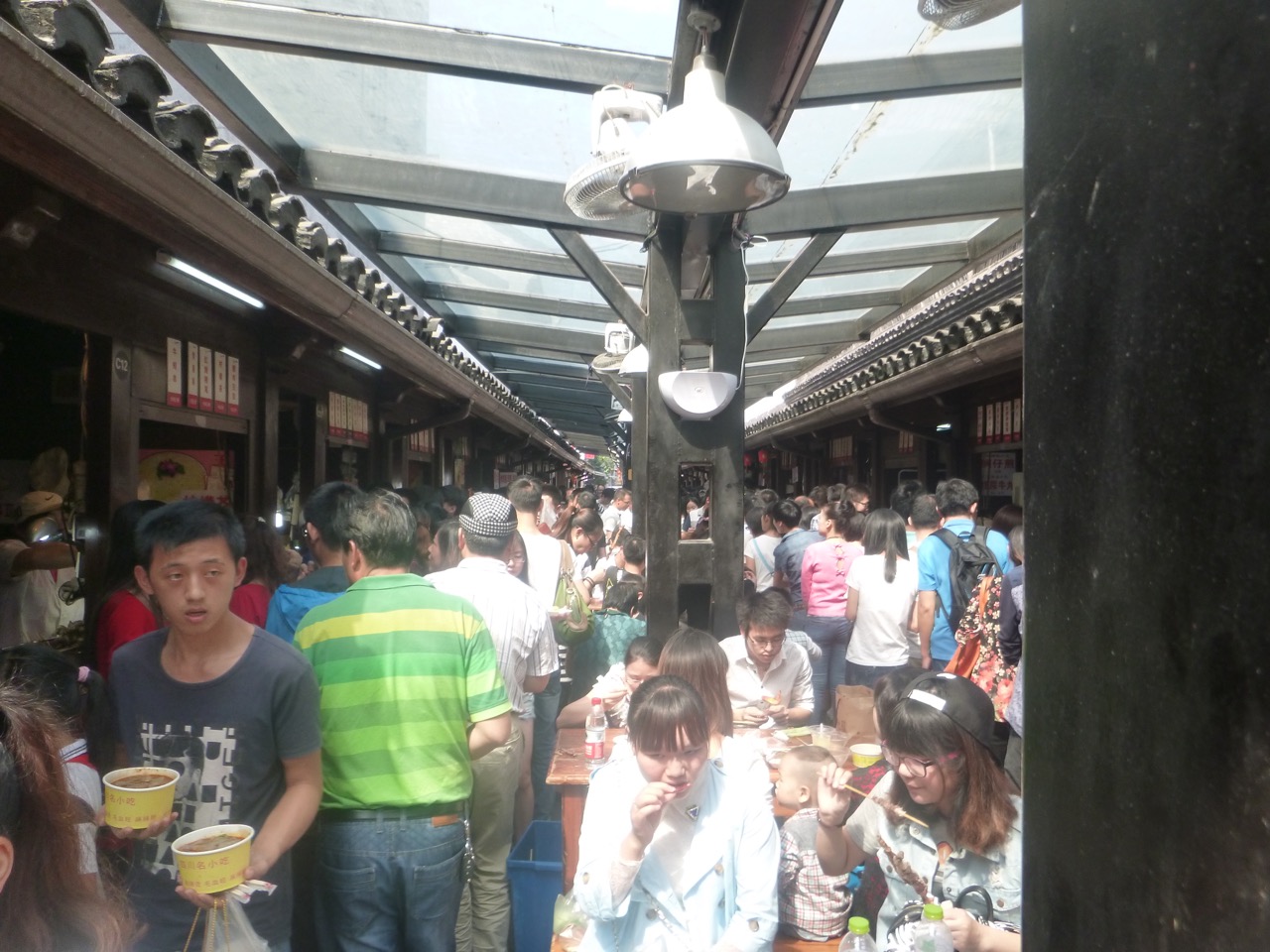
Although China National Holiday is one of the most popular times for locals to travel, we still decided to venture out today. (That said, we’ve all rescheduled our travel plans for the week and are staying in Hangzhou because of the steep prices and crowds.) We visited Hefang Street, just south of downtown, which is jammed with eateries and little shops selling jewelry, clothing, and other touristy nicknacks. I wasn’t in a shopping mood, I’d seen many similar items in Beijing or Xi’an. So I tried to make the best out of people watching, and ending up starring in the occasional Chinese tourist photo. Many Chinese who come to Hangzhou during this week aren’t accustom to seeing foreigners so we are get a little celebrity treatment.

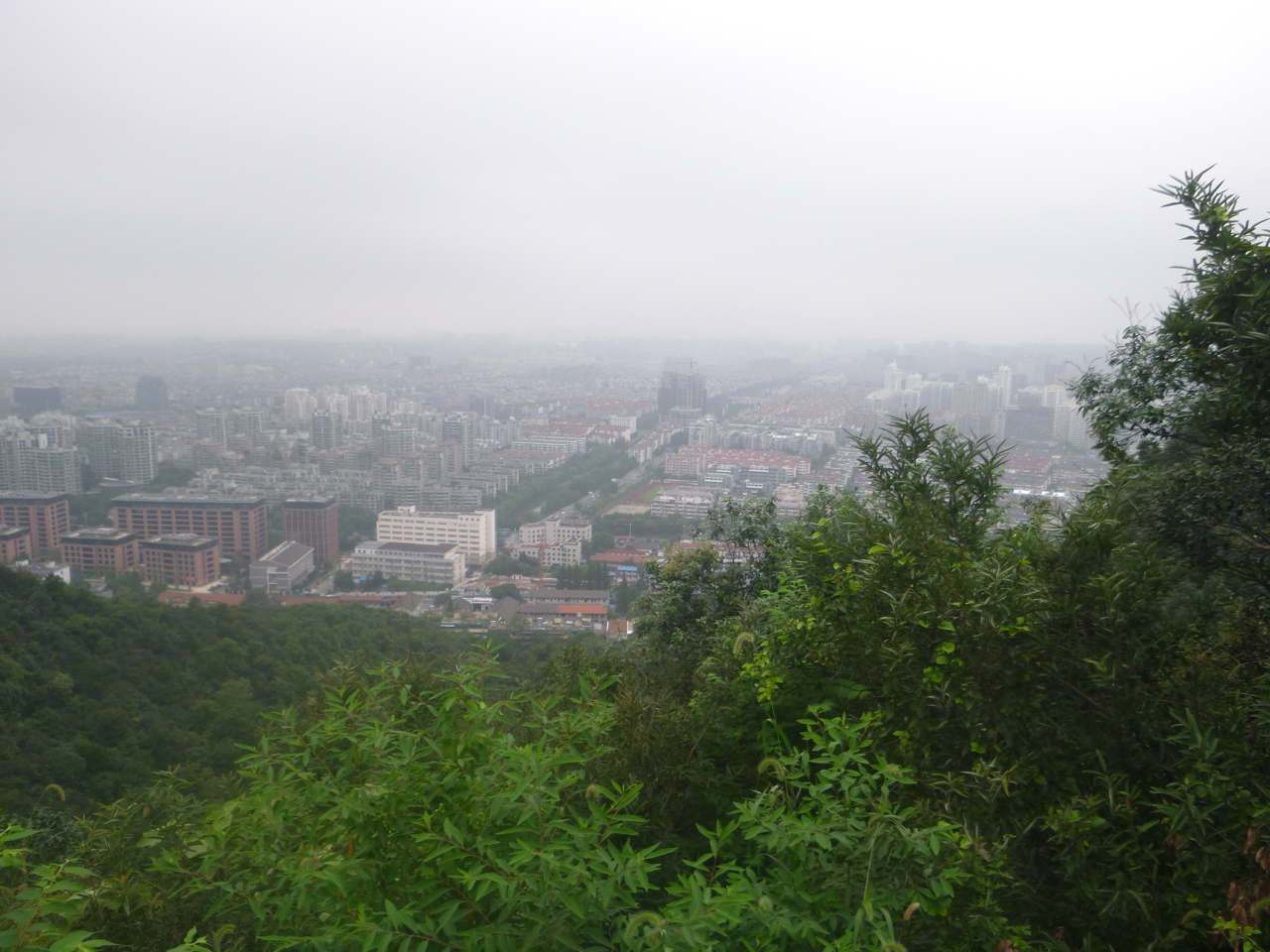
At dusk I went for a run in Forest Park just behind campus. It has become my favorite almost daily getaway and takes less than thirty minutes to get to the top and back. Though haze always obscures the horizon, it is a treat to look out on a city of millions from such a forested haven. The hills stretched to the southern horizon, cradling West Lake on their eastern flank, the Xixi wetlands faded into obscurity to the southwest, an office complex covered in photovoltaics stood next to large construction project at the base of the hill while a small fireworks show burst above the apartments.

With the start of classes, the prolonged excitement and newness of China has definitely been dampened for me. Lazy afternoons of wandering around Hangzhou are now replaced by copying Chinese characters and practicing pronunciation. Also gone is the newness of the most obvious cultural differences which initially provided much to ponder and entertain. I am still trying to go to as many ‘English clubs’ as I can. They provide me the best way to interact and get to know the local Chinese—or in the case of last Sunday’s club, a German woman who’d just road tripped from L.A. to Seattle. (We got to talk about Oregon!)

And lastly, as much as I like to follow current events, I’ve spent a growing number of hours in the recent days glued to the BBC’s live coverage of the pro-democracy protests in Hong Kong. Even though I’m hundreds of miles from Hong Kong and except between the international students not even whispers of #OccupyHK have reached me here. (The increased police presence I noticed today is most likely for the holiday and its the proliferation of tourists.) While the BBC has published reports noting Beijing’s heavy hand on the Uighur minority and violence in Xinjiang, the scale and coverage of Hong Kong’s protests has the potential to be a defining moment for years to come. I’ve found it disheartening that among my Valpo peers there is so much seeming apathy—especially when we hail from a country that is supposed to be emblematic of freedom and democracy. (Though it shouldn’t be a surprise, I’ve known about the general public’s political apathy since starting debate in high school.) While China sensors Weibo terms, blocks Instagram and publishes almost comically skewed views of the Occupy protests I’ve been thrilled by the amazing teamwork and civility of the Hong Kongers. While the BBC and western media may clearly highlight the best of the protestors, I haven’t read anything to suggest that they’ve done anything worse than protest—the economic and stability harm argument is weak. For perspective, Hangzhou, one of the nicest cities in China, often can’t keep its streets clean (even with a near army of public servants) and meanwhile the protesters collect their own recycling and trash! Being in China makes following the protests all the more exciting, especially given the entrenched stances of both sides. Two years after the violent protests of the Arab Spring it is hard not to whole-heartedly root for a group with such a strong claim to the moral high ground after Sunday’s teargassing. #UmbrellaRevolution

written on October 1st, 2014
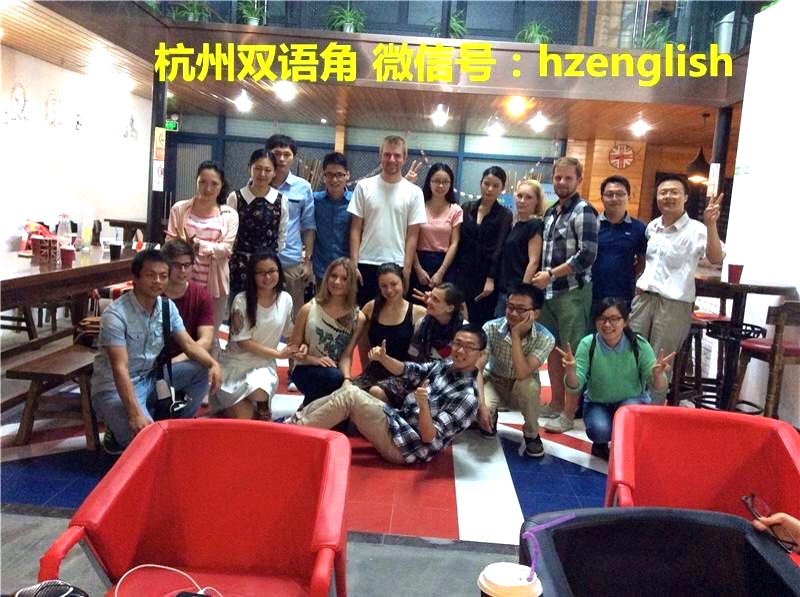
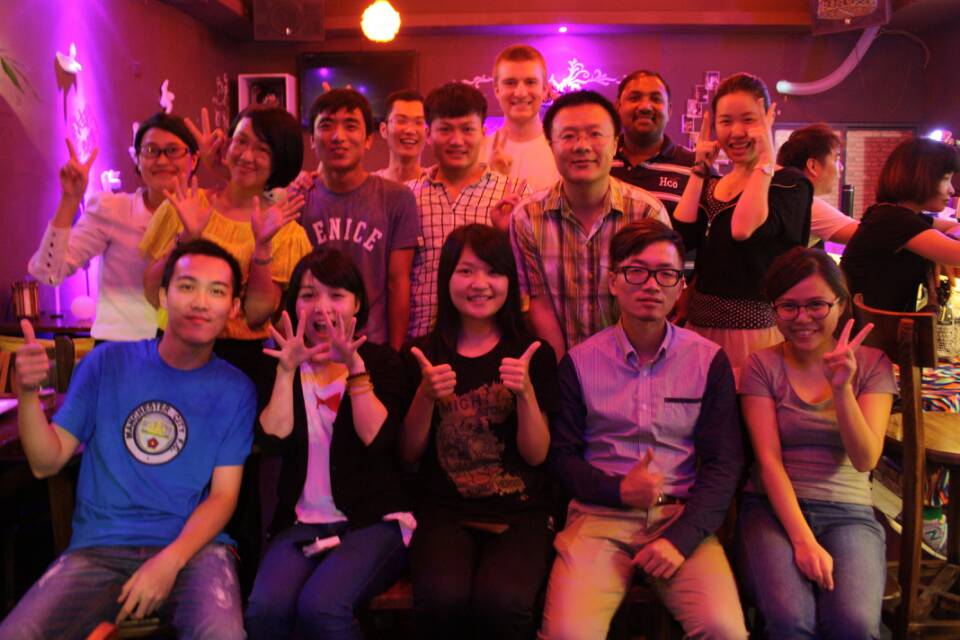
Sunday night's English club

Sunday night’s English club

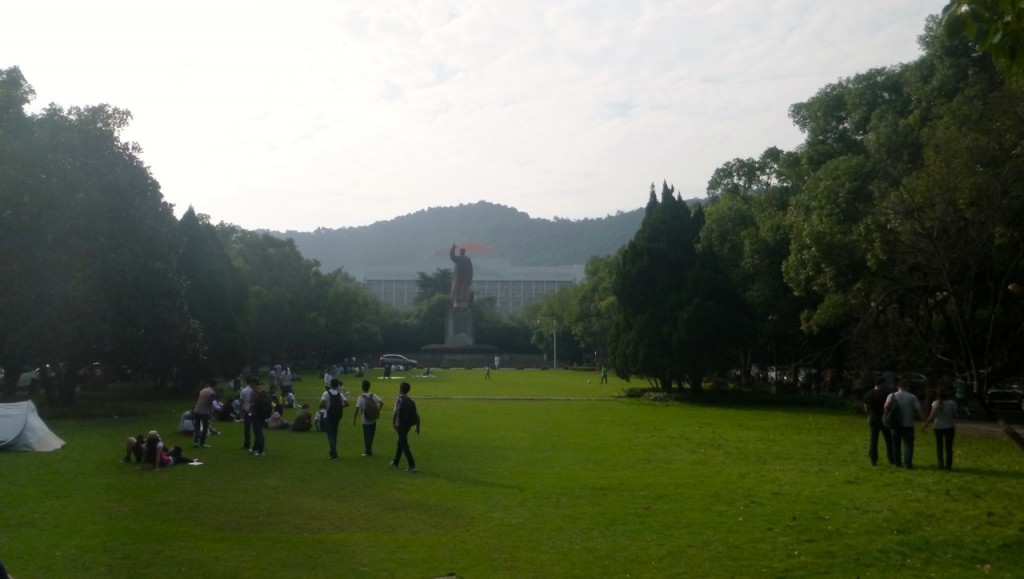
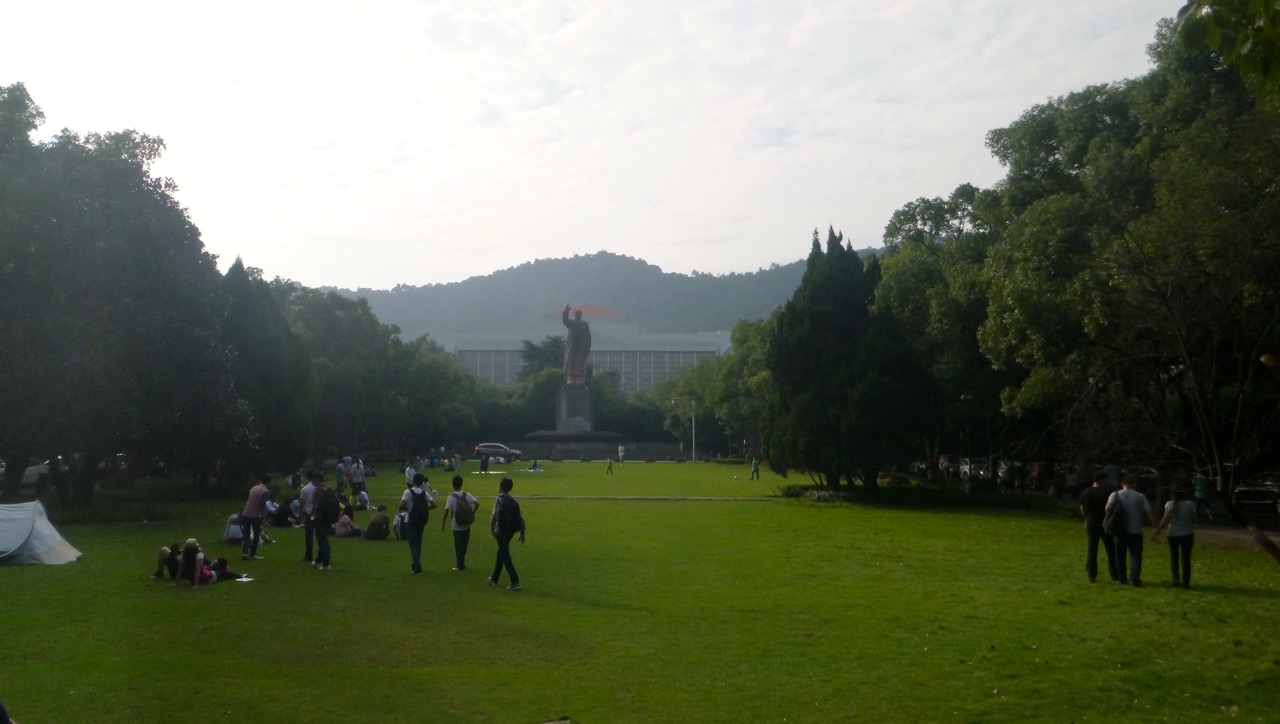
The main quad of Yuquan Campus
The main quad of Yuquan Campus

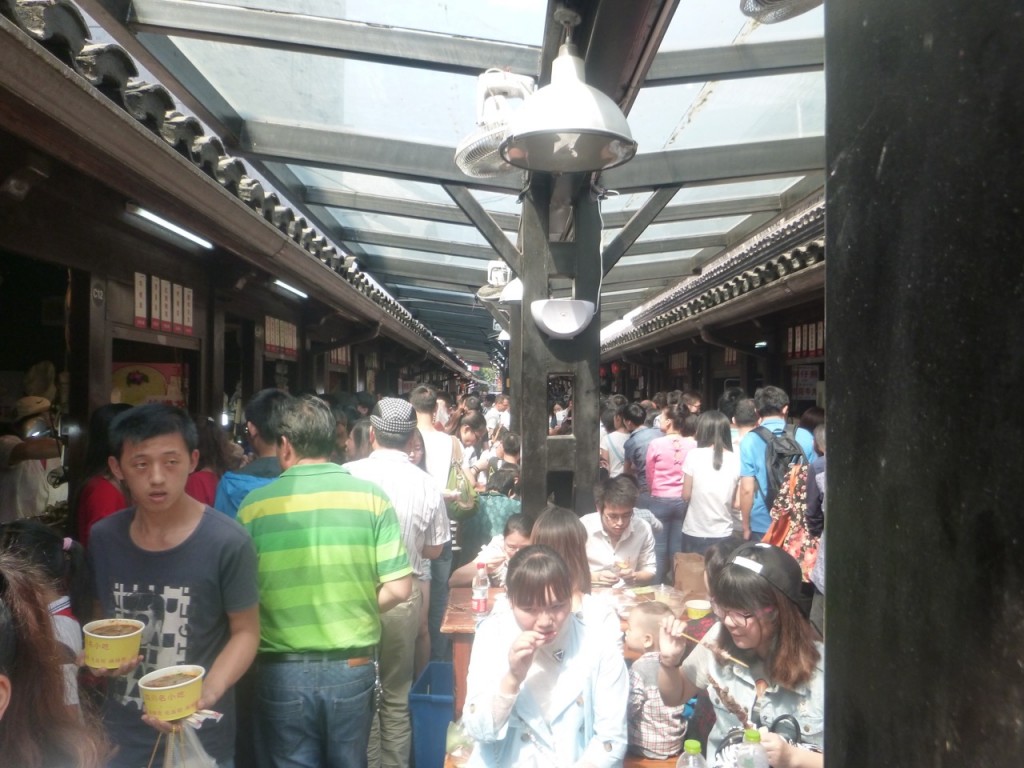
The crowd on Hefang Street
The crowd on Hefang Street

Another Wanderung

So it has become something of a habit that I go hiking at least once a week with my friends. And  I thought it was about time that I summarize some of the fabulous hikes we have taken together.

Hiking, it should be noted is a very German pastime. The subcategories of hiking are “Spaziergang” which involves a jaunty walk lasting less than 2 hours and “Wanderung” which must last at least 2 hours to qualify for this category regardless of level of difficulty.

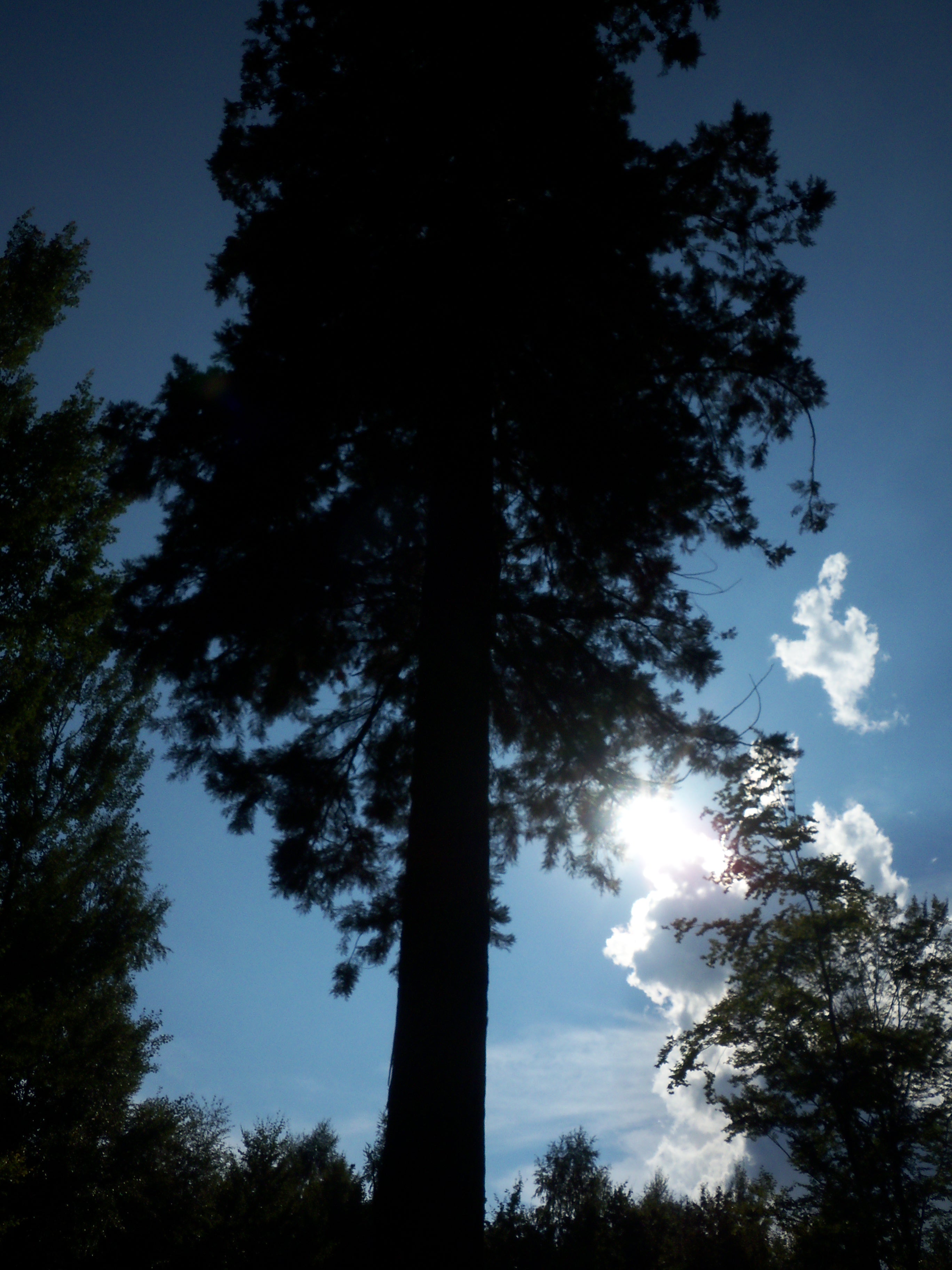
A sequoia tree (originally from California) found in the forest in Schönbuch park

A sequoia tree (originally from California) found in the forest in Schönbuch park

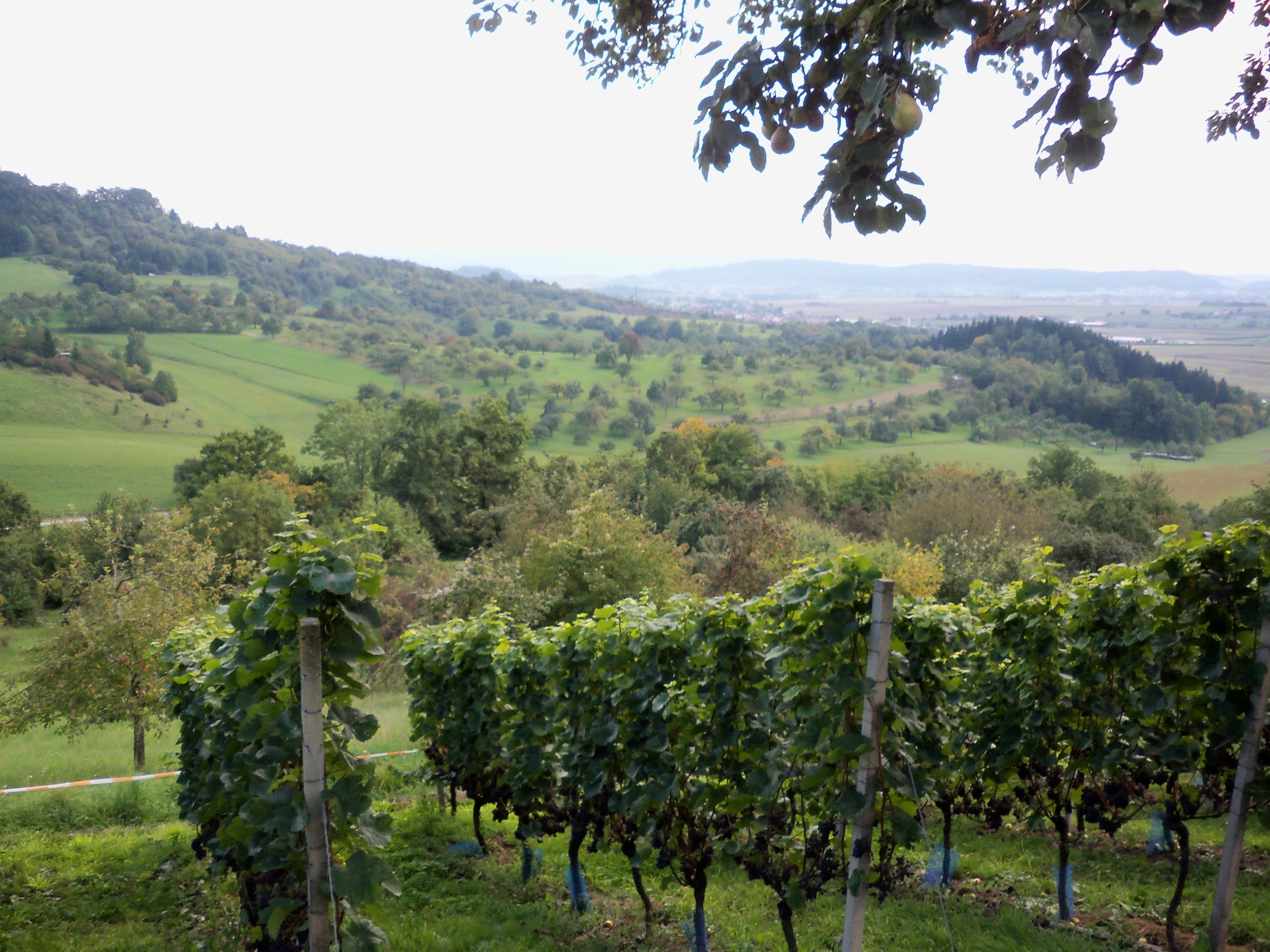
Bebenhausen: It was only a short bus ride from Tübingen out to this idllyic small town, but we ended up taking a 13 km hike around the Schönbuch forest preserve. One of the highlights of this hike was the small forest libraries located towards the start of the trail. It was charming and I was able to lend out a small thriller (called Krimi), which is one of the more popular genres in German popular literature. It was interesting because there was actually a gate at the entrance to the park, but it was free for everyone to open, so it was really an enclosed park. We did not originally intend to go 13km but as it turns out, we took a real Wanderung after all. We ended up going through some gorgeous wine mountains and landing in a small town nearby. All in all it was a great day under the open skies and my first experience being in a national park in Germany. It also convinced my friends and me that we should keep hiking.

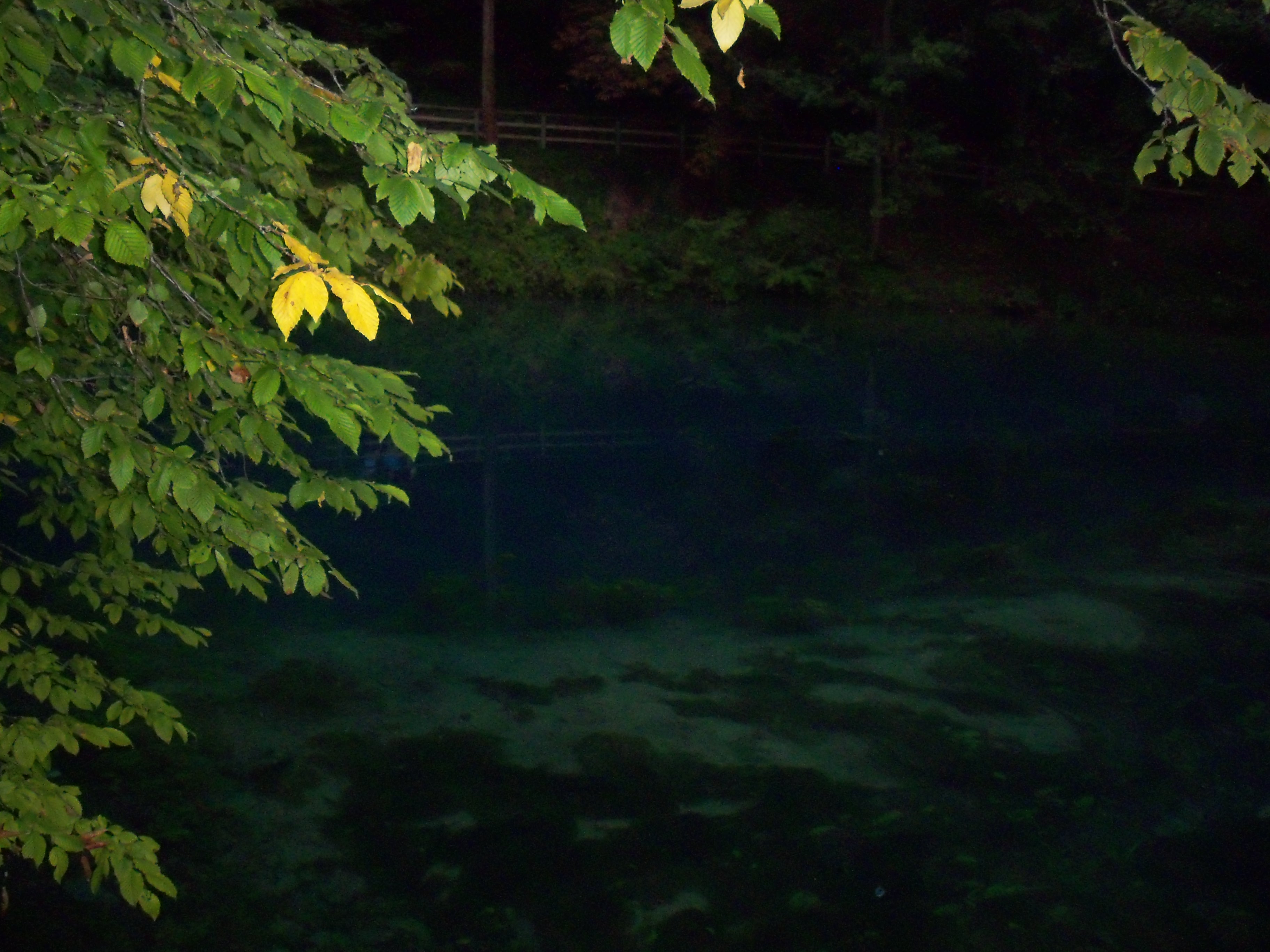
A slightly too-dark picture of the Blautopf

A slightly too-dark picture of the Blautopf, I promise it is very blue.

Blaubeuren: This hike actually took place during our class retreat. We went on a tour of the monastery located in the town of Blaubeuren and then proceeded to the Blautopf, or blue lake in town. Blaubeuren actually has a special connection with the University of Tübingen because it is where the bishop who asked the pope for permission to open the Uni Tübingen lived. Then we went past the blue lake to some ruins located on the top of the mountain. Although it did not technically take 2 hours to get to the top, this was a much more difficult hike than in Bebenhausen. Afterwards we hiked to a giant cross and memorial on the top of a hill in Blaubeuren. This was actually nice even though the first hike had been kind of tiring. It was good to have an afternoon off of classes to just enjoy nature and be outside.

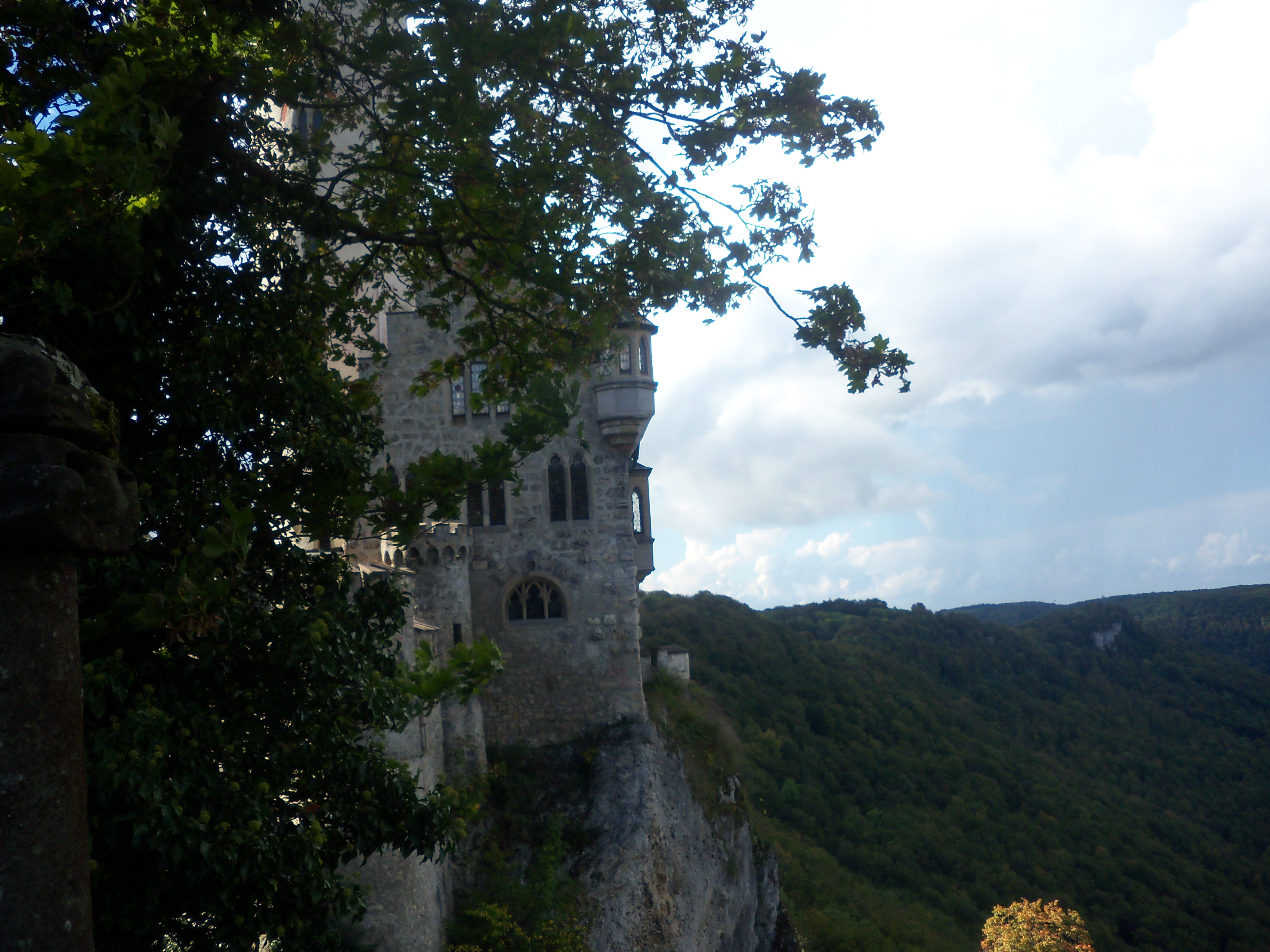
The view of Schloss Lichtenstein

The view of Schloss Lichtenstein- named after the light colored stone on which it sits

Lichtenstein: This was perhaps the only one of the hikes that actually had a goal at the end. We hiked not to Lichtenstein the country (which is in fact properly spelled Liechtenstein in German),but to Castle Lichtenstein located about 40 km from Tübingen. We took a bus most of the way and only ended up hiking a few kilometers. This was most definitely a Spaziergang. It was very easy and partially paved and of course ended in a castle and a biergarten. The castle itself was modeled after a book at the wish of Count of Urach, so it was literally something out of a fairytale. It was located on the edge of this beautiful cliff and had a gorgeous view. This hike was one of the best planned so far and we even remembered to bring a cake along to eat at the end of the trip up to the castle. This castle also has a connection to the University because its owners were relatives of Count Eberhard Karl (for whom the University is actually named).
Bodensee (Lake Constance):

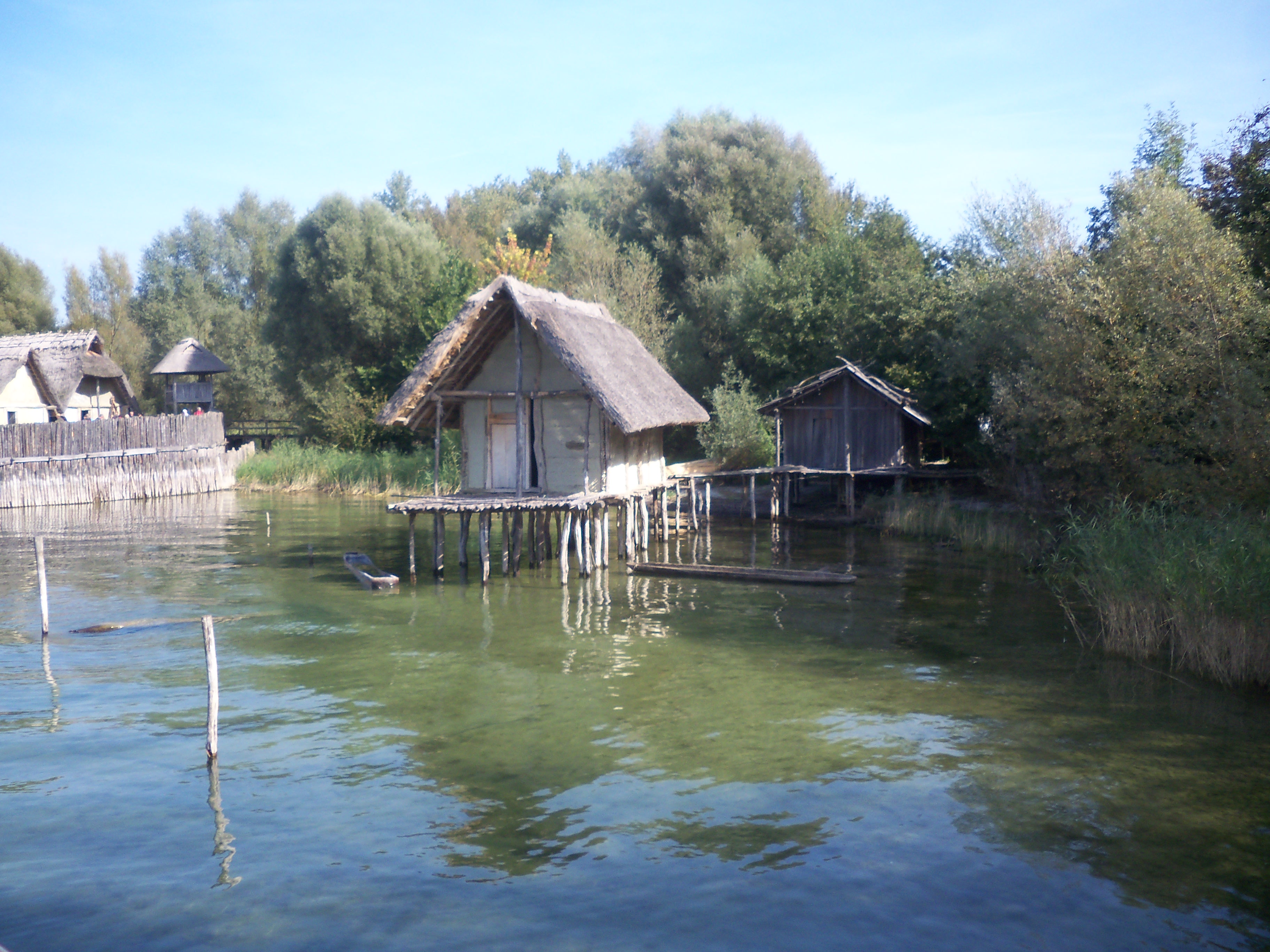
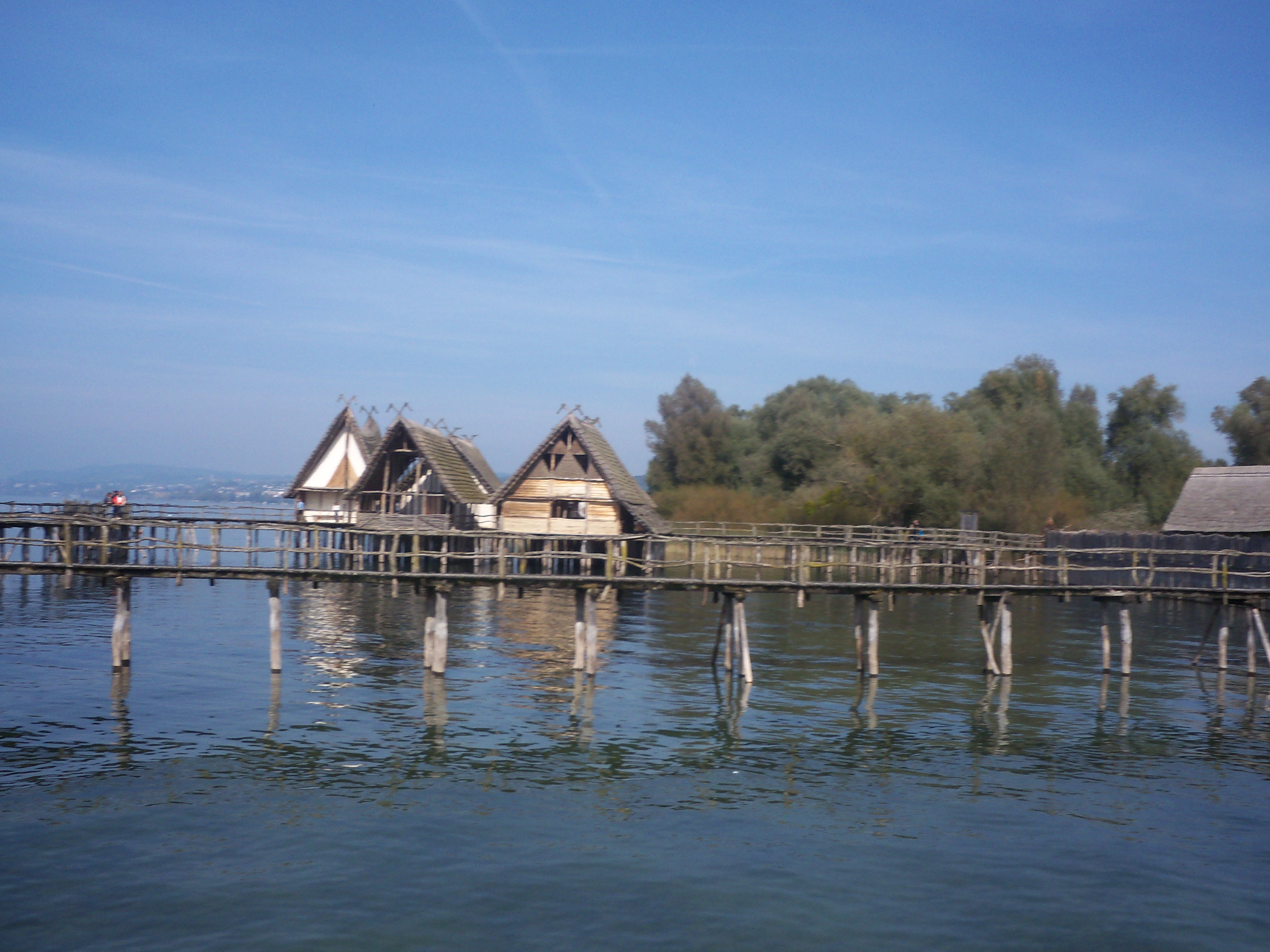
The English translation of the name of this lake will always remain a mystery to me, but it was really gorgeous no matter what it was called. This trip was yet again in conjunction with my German course. We took a bus from Tübingen down to the lake to first look at the Marienkirche located on the shore of the lake. We went to Schloss Meersburg where Annette von Droste-Hülshoff, a very important German poet lived and learned about her life a bit. My favorite part however, was neither the castle, nor the church (although both were cool), but the stone-age museum that we saw on the lake. The stone-age museum was actually a collection of reconstructed stilt houses in the lake. The houses were built because the provided optimal protection from animals and allowed for easy access to trade routes.

100_1461    100_1462

This was interesting to me because it was something that I had never expected to see something like this in Germany. With the abundance of castles and churches, it is easy to forget that there were periods in German history before any of that was built.  So, this wasn’t really a hike per se, but we still had quite a good Spaziergang between the different points of our trip and enjoyed a nice day on the lake.

The “German-ness” of hiking reminds me of an important cultural difference between the U.S. and Germany. Germany, at least the Green-Party-dominated region of Baden-Württemberg, is a country that is very aware of its relation to nature. Aside from the fact the Green party, which bases the majority of its politics on an environmental viewpoint, is a major player in parliament, Germans themselves seem to take into account the environment in small ways in everyday life.  Recycling is precisely sorted out people are more willing to take public transportation systems and always bring their own reusable bags to the supermarket. The bike lane is something to fear whilst crossing the street due to the number of bikes zooming past at any given moment. And its not to say that these lifestyle choices are not without their marginal benefits: gasoline is much more expensive here in Europe so it makes sense to drive less, the urban sprawl allows for more public transportation in more places and German grocery stores charge for plastic bags making it cheaper to bring your own bag. However, I find it overwhelmingly positive that such initiatives exist at all and that care for the planet is in the forefront of everyone’s minds. And with all the gorgeous opportunities to hike, how could you not want to do everything to protect the planet?

Bis Bald!

History’s Place in Modern Japan

Recently I’ve traveled to Tokyo and Nara.  One is the new capital, famous for its sprawling metropolitan landscape and population density while the other is the historical capital, perhaps now best known for cultural assets and (mostly) friendly deer.

In Tokyo I constantly noticed traditional culture jammed in between the concrete and railways, which I thought was fascinating.  The most interesting to me was Meiji Jingu, or Meiji Shrine, located just a few hundred steps from Harajuku Station on the Yamanote Line that circles around central Tokyo.  As I stepped out of the station, it was obvious that I was in Tokyo.  There were tall buildings, little restaurants jammed together in a line, and dozens of people waiting for the pedestrian green light (since people hardly ever cross streets when the pedestrian light is red in Japan).  But after going down the street a little ways and turning right, I was already on shrine grounds.

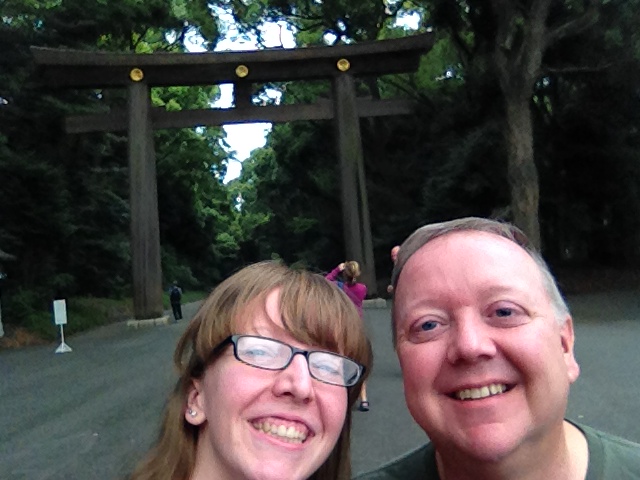
Dad came to visit me in Japan!  This is the torii, or gate specific to Shinto shrines, beyond which everything is considered ritually pure.

Dad came to visit me in Japan! This is the torii, or gate specific to Shinto shrines, beyond which everything is considered ritually pure.

Most of the shrine complex is a dense, towering forest that is somewhat reminiscent of the forest in the Ghibli movie, Princess Mononoke.  Visitors are not allowed to freely wander beneath the trees, making it even more mysterious.  Moreover, the trees dampen the sound of the city to the point where you can sometimes forget that you’re right in the middle of the most densely populated city in the world.  There’s also a lovely inner garden where Emperor Meiji and his wife, Empress Shoken, used to go.  It was really incredible to be where they were, since they were so incredibly important to Japanese history.

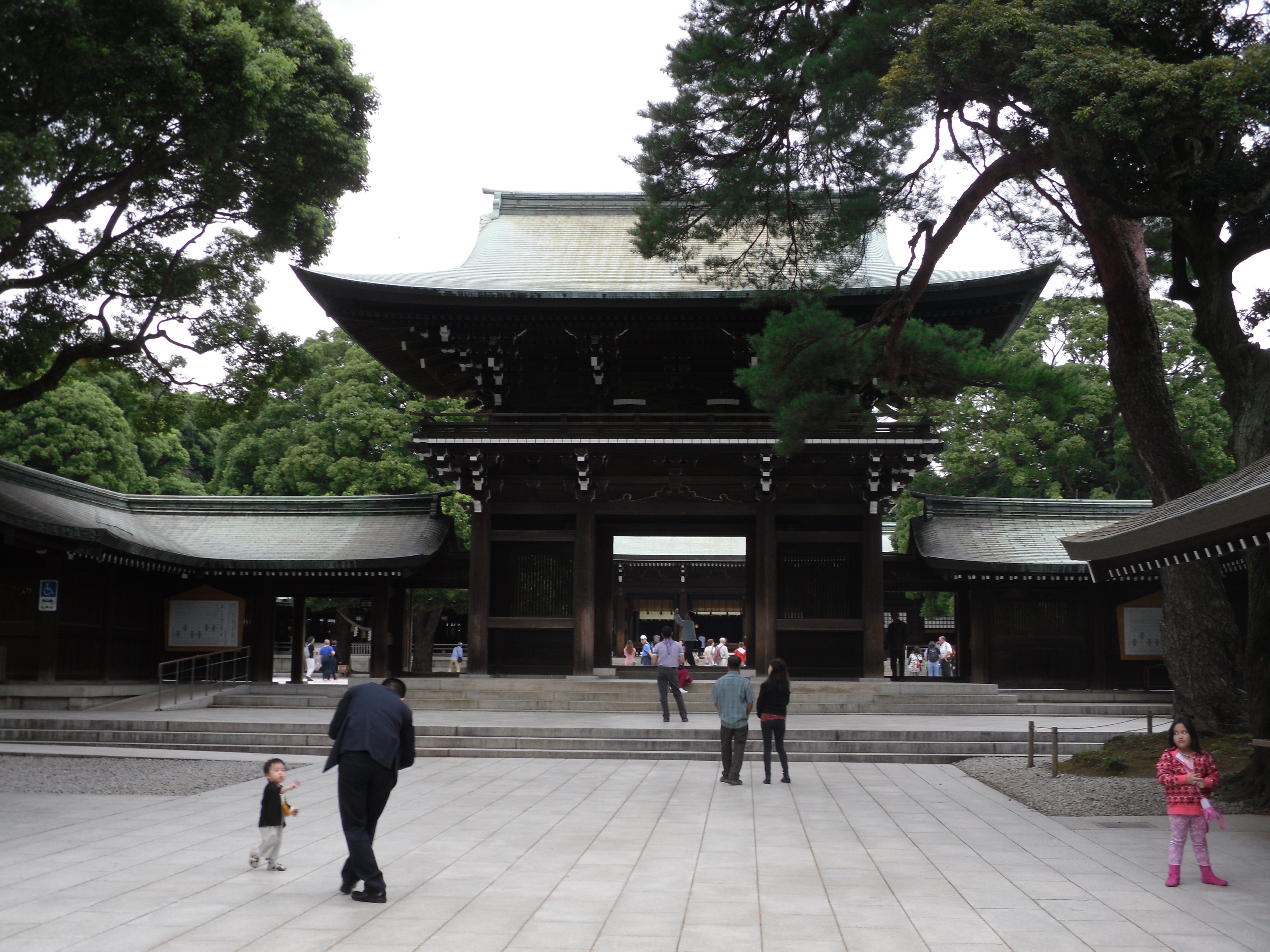
Entrance to the actual shrine where Emperor Meiji and Empress Shoken are deified

Entrance to the actual shrine where Emperor Meiji and Empress Shoken are deified

Dad and I also went to Rikugien, or “Six Principles of Poetry Garden,” and Edo Period garden originally built by a samurai and official of the Tokugawa Shogunate under the fifth shogun.  It features scenes recreated from eighty-eight famous poems, besides being a gorgeous garden.  Rikugien is also in the middle of Tokyo, only two stops away from the Yamanote Line, and though you can sometimes see skyscrapers over the tops of the trees, it is still quiet and peaceful.

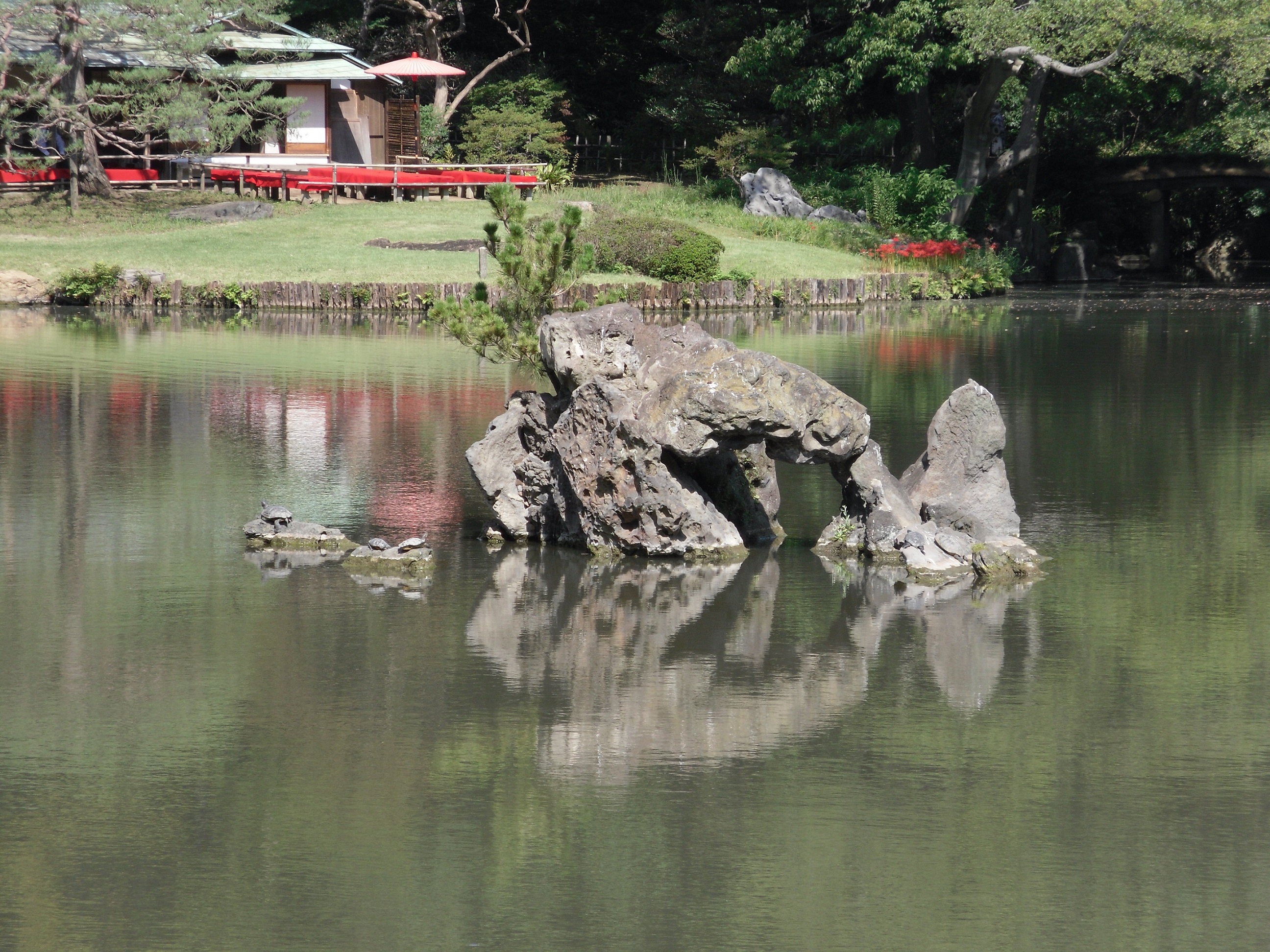
A recreation of Horaijima, which my Japanese friends recognized immediately when I showed them this photo

A recreation of Horaijima, which my Japanese friends recognized immediately when I showed them this photo

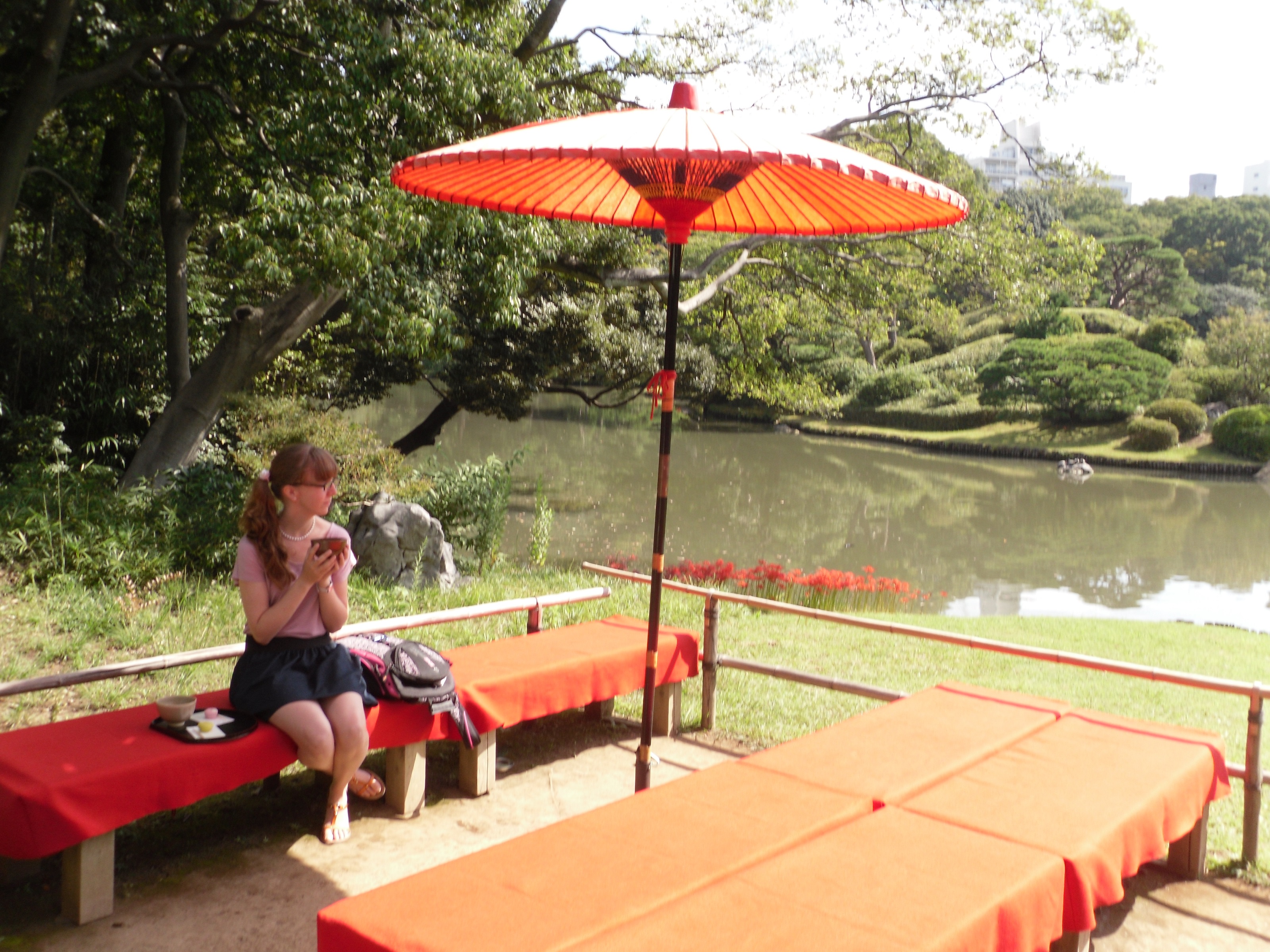
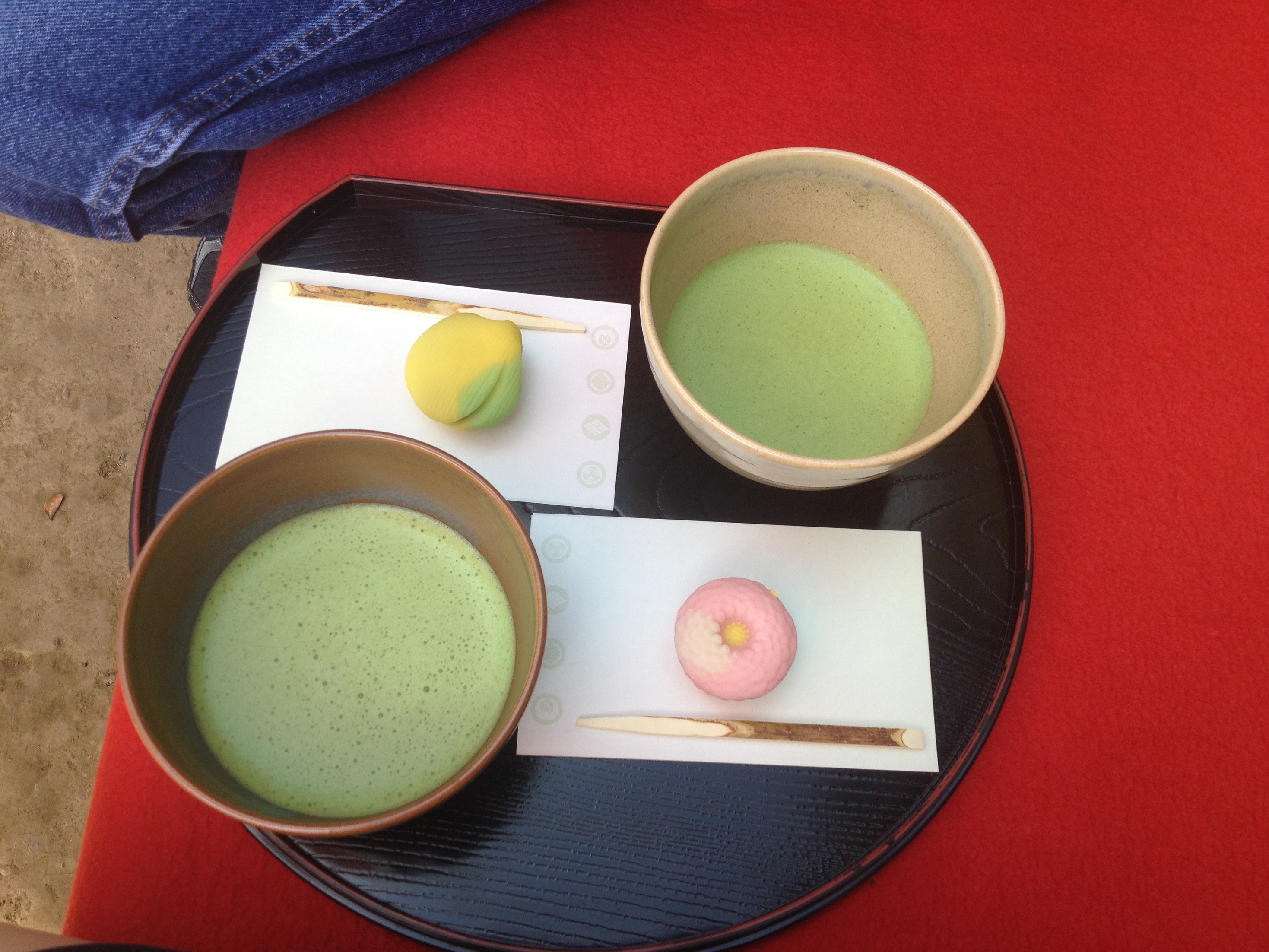
There is also a tea house where you can sit outside and enjoy traditional Japanese tea and sweets.

There is also a tea house where you can sit outside and enjoy traditional Japanese tea and sweets.

These delicate and detailed okashi were filled with sweet red bean paste.

These delicate and detailed okashi were filled with sweet red bean paste.

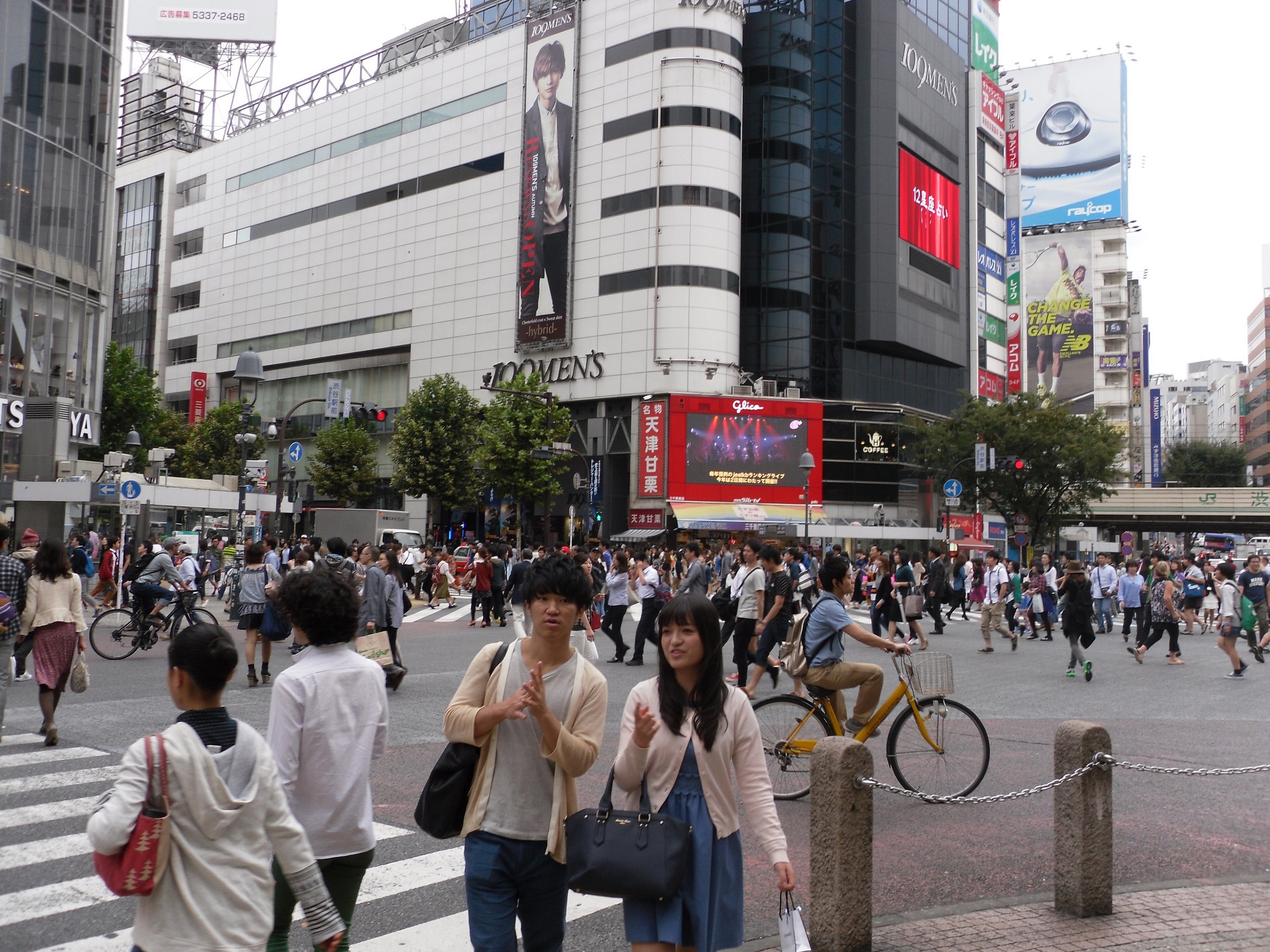
On the other hand, Tokyo also has much to offer for people interested in its urban side.  There are more restaurants and stores than I cared to count near Shinjuku and Shibuya Stations.

Shibuya's famous Scramble Crossing and 109 department store.

Shibuya’s famous Scramble Crossing and 109 department store.

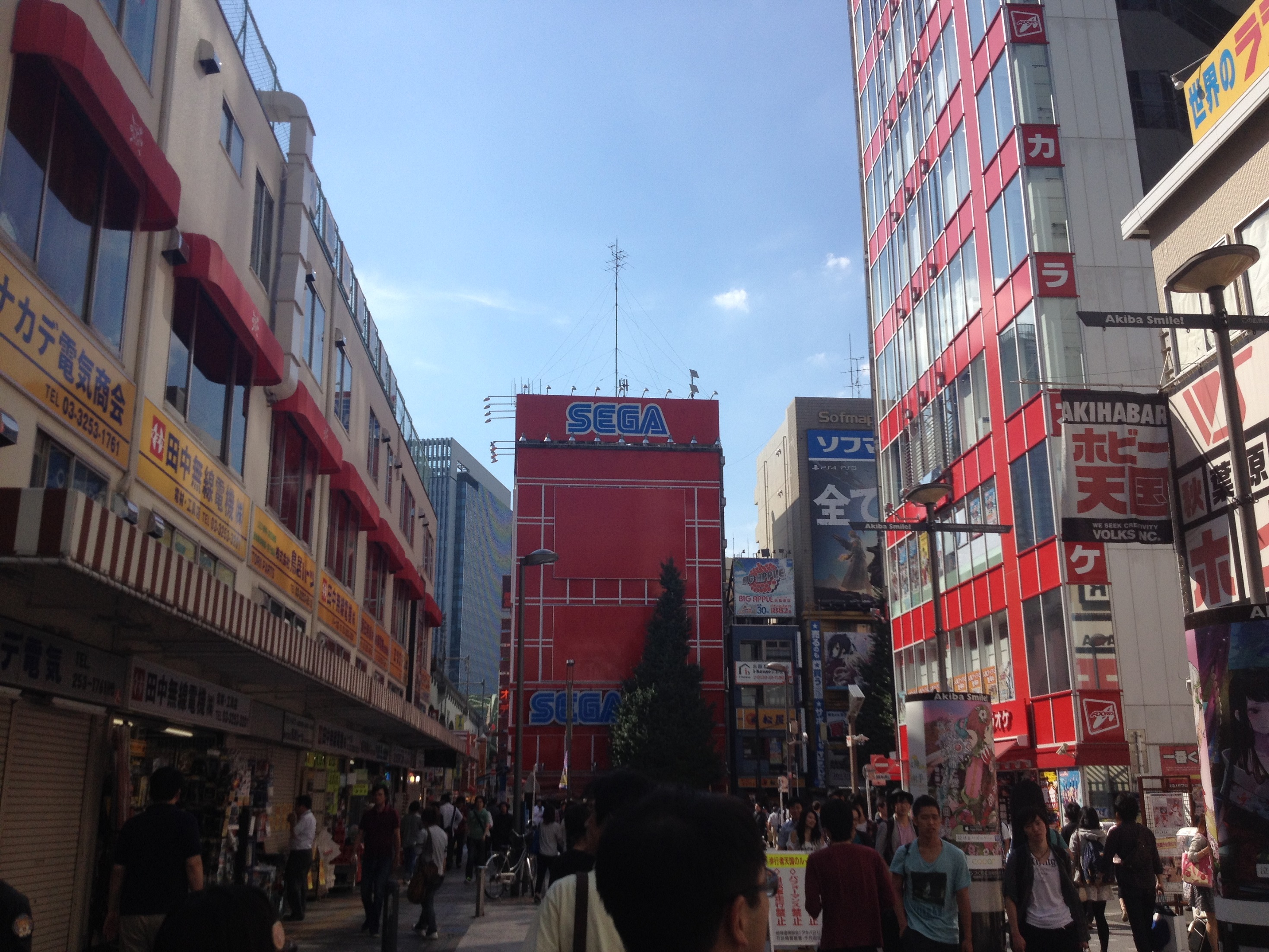
Famous shopping district in Akihabara where most places sell pop culture items

Famous shopping district in Akihabara where most places sell pop culture items

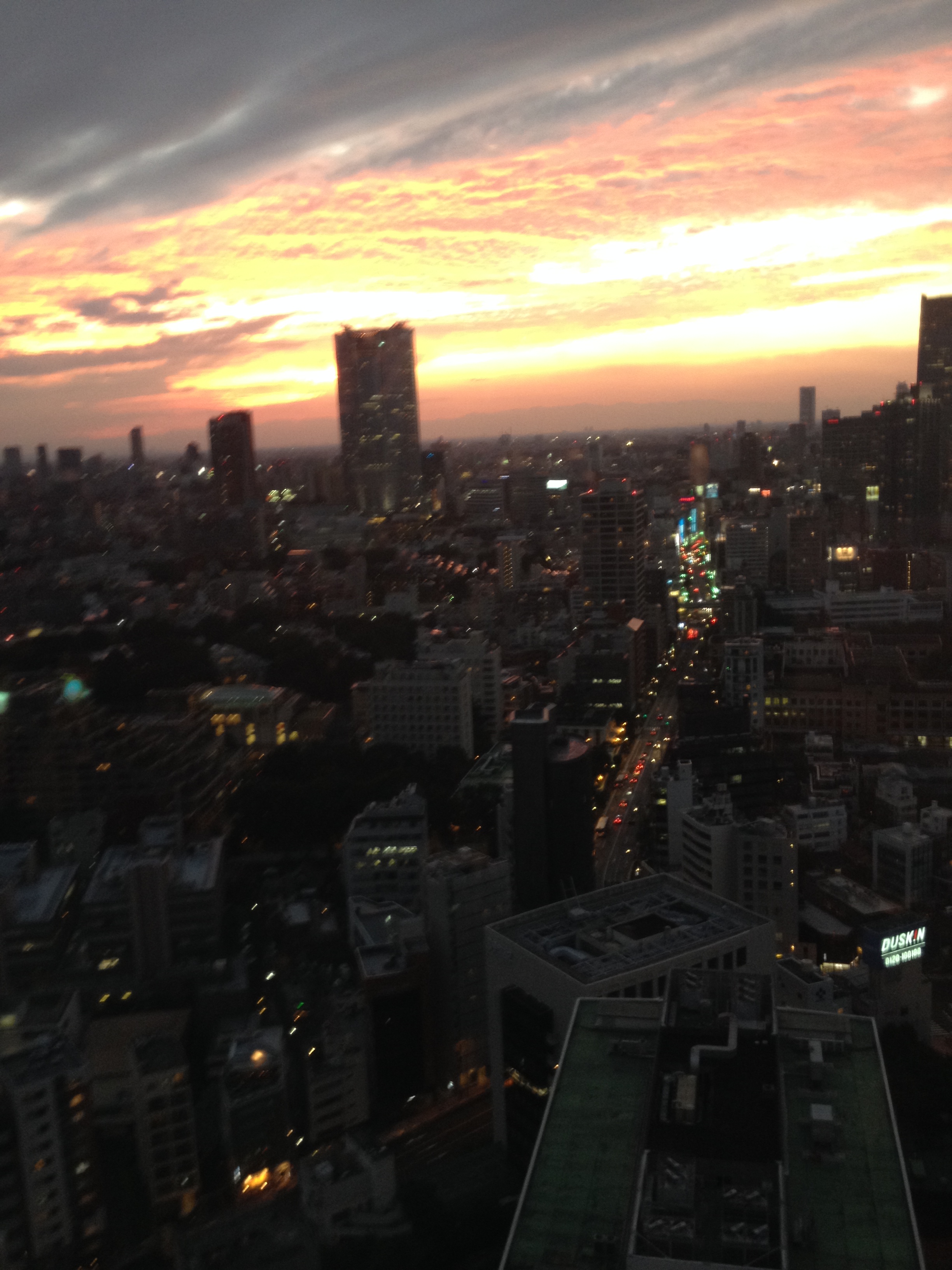
We also went to the top of Tokyo Tower, where all we could see was city from the base of the tower to the horizon.  If I hadn’t been to the little forest of Meiji Jingu and quiet Rikugien myself, I probably would have found it hard to believe that they coexisted with the cityscape in front of me.


Sunset from the lower observation deck at Tokyo Tower

Sunset from the lower observation deck at Tokyo Tower

The week after I went to Nara with some friends.  Nara was the ancient capital of Japan over a millennia ago and is now famous for its temples and deer that, as a result of their revered status as servants of the gods, have become comfortable around people.

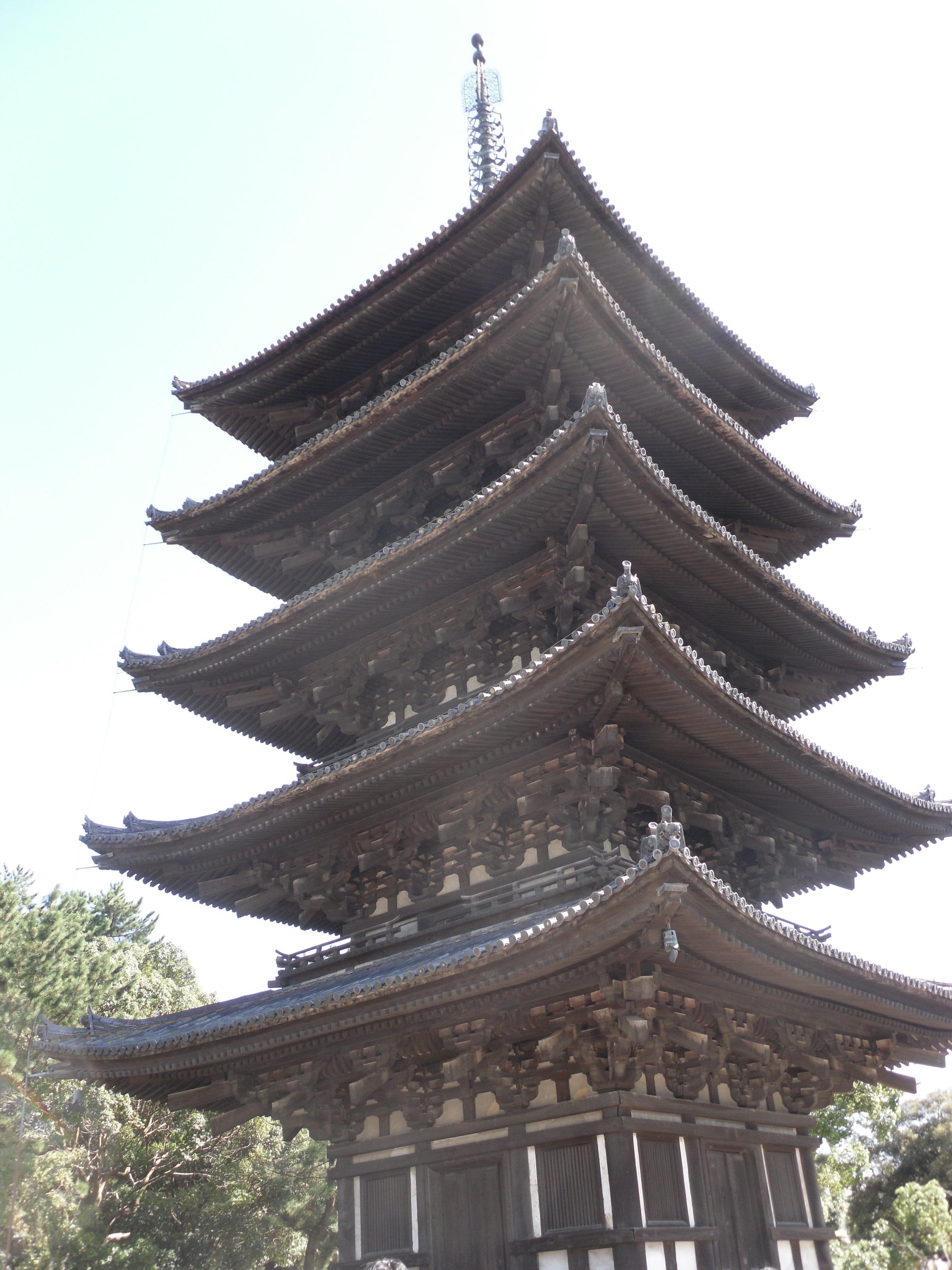
Five storey pagoda at Kofukuji, the second tallest pagoda in Japan and originally placed in Nara in 710

Five storey pagoda at Kofukuji, the second tallest pagoda in Japan and originally placed in Nara in 710

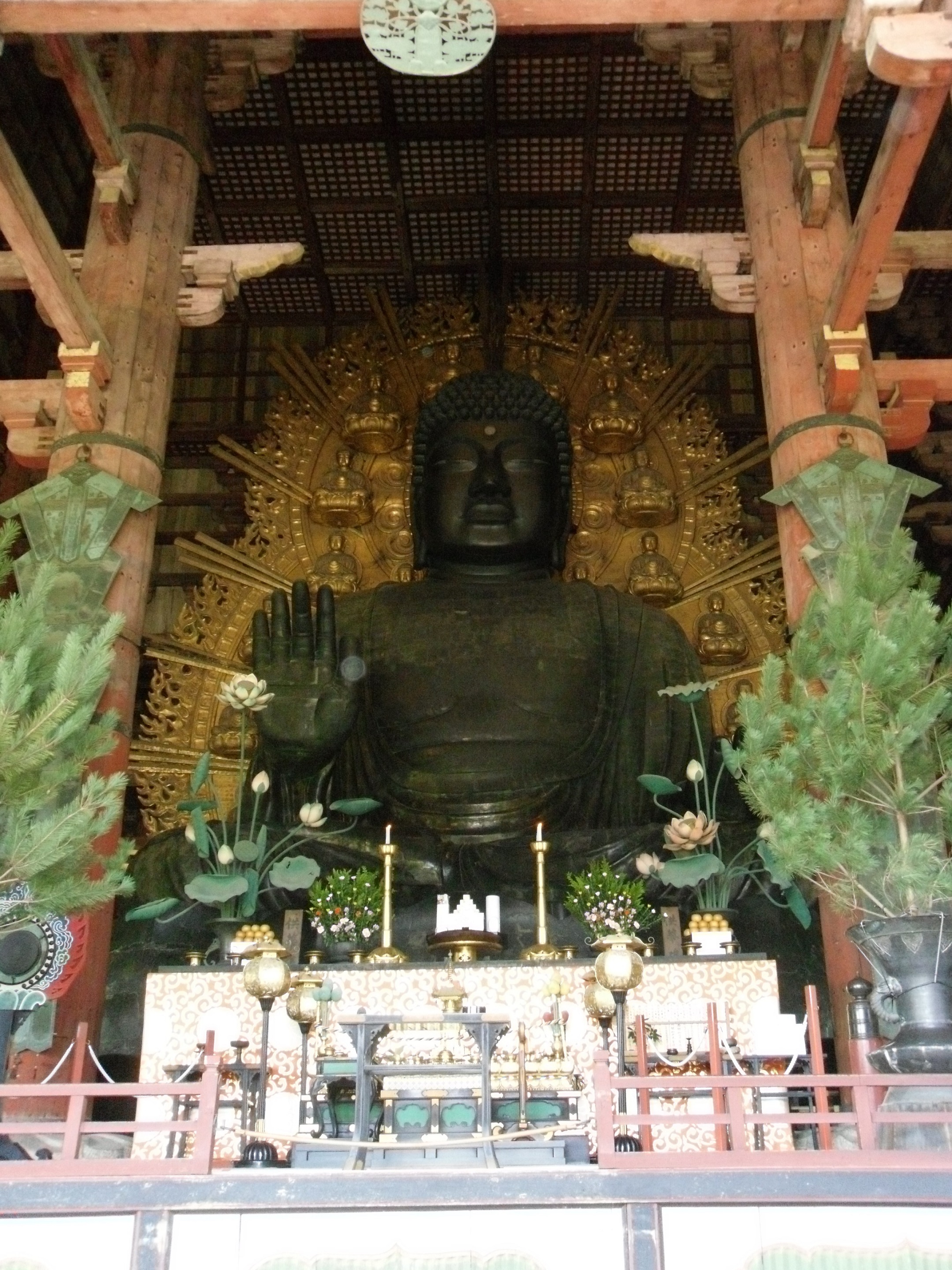
The 15 meter tall statue of the Buddha Vairocana, the largest in the world, located at Todaiji in Nara

The 15 meter tall statue of the Buddha Vairocana, the largest in the world, located at Todaiji in Nara

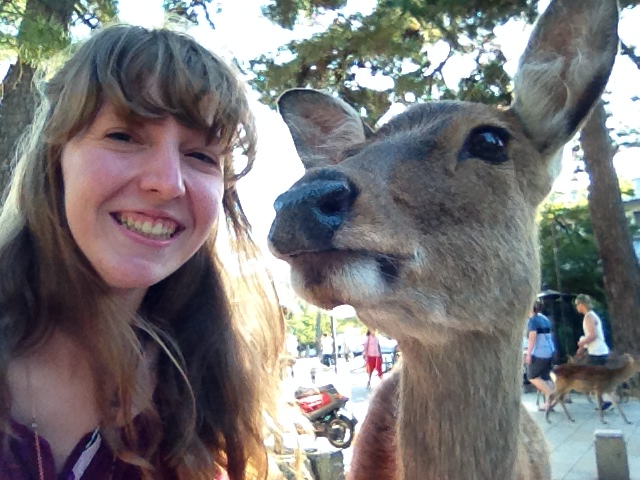
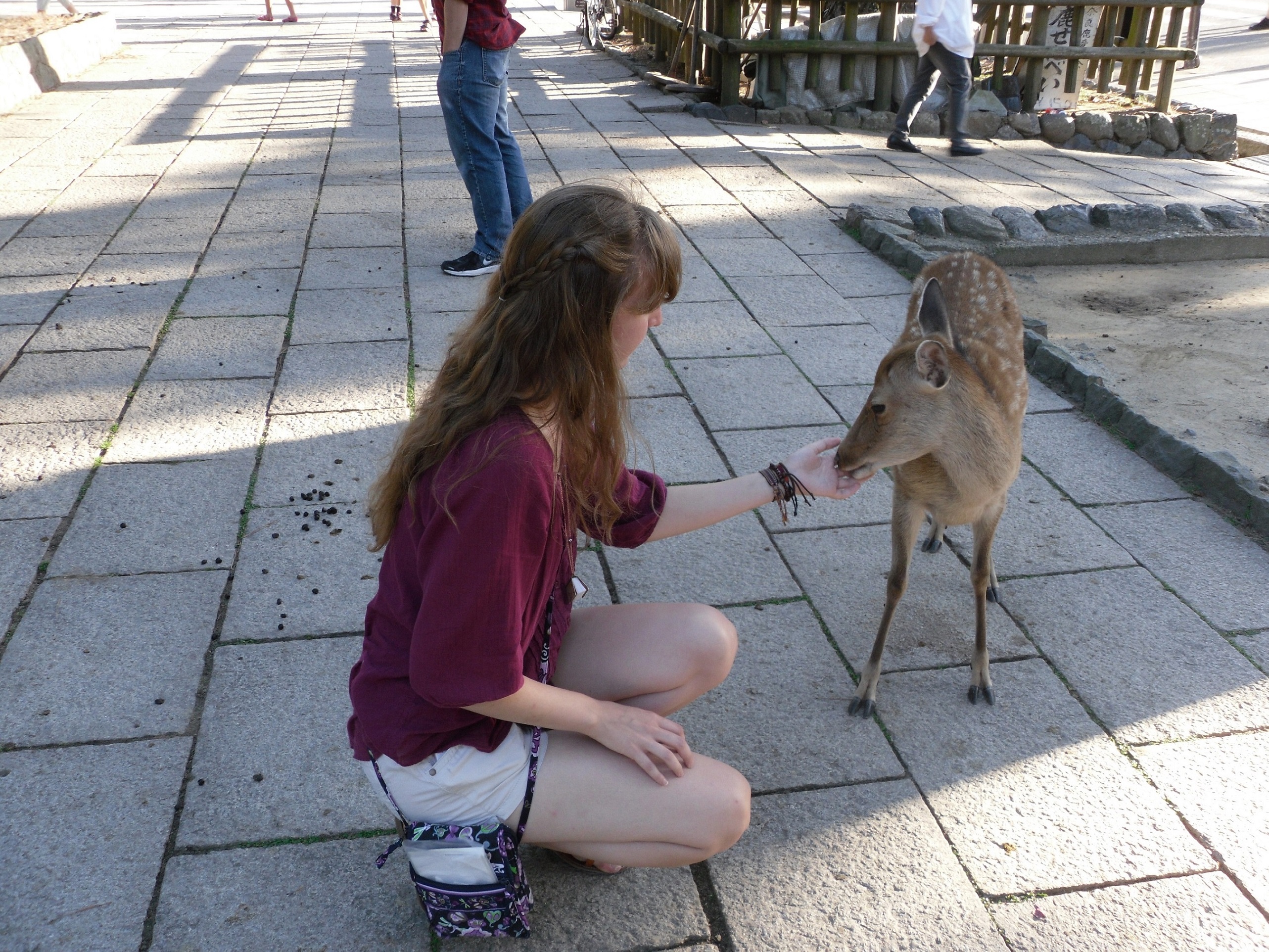
The deer are always looking for special deer biscuits, called shika senbei, and will approach people.

The deer are always looking for special deer biscuits, called shika senbei, and will approach people.

I think it's so cool that the deer don't run away.  Some even bow.

I think it’s so cool that the deer don’t run away. Some even bow.

Wandering in the Woods of Wales

This past week was full of a whirlwind of activities, the most recent being our group’s weekend trip to Wales. Normally, groups travel to the Lake District in England for their hiking trip, but our director Matt decided to take us to Wales instead. And we were all very glad he did.

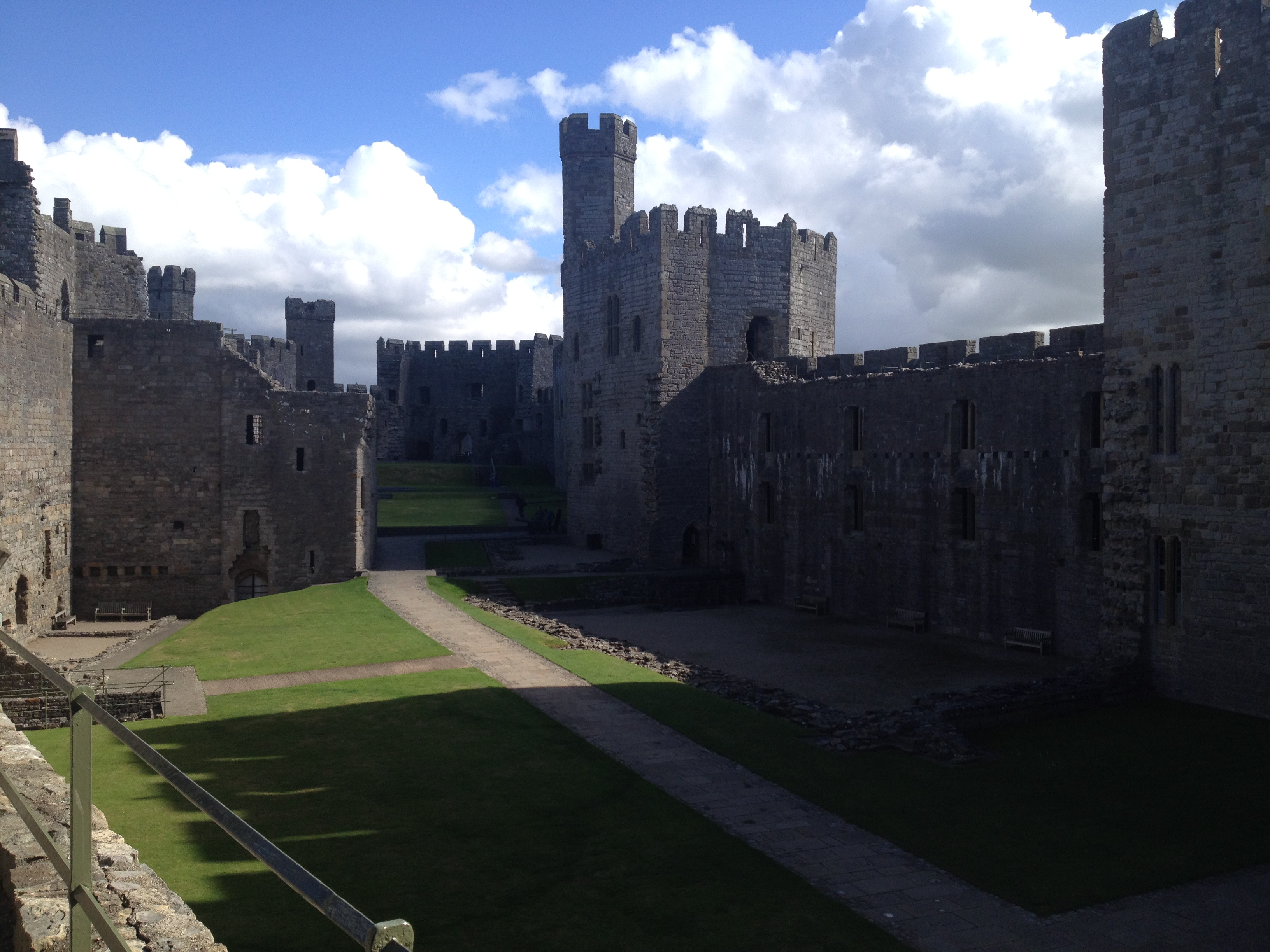
Our first stop was Caernarfon Castle in Wales. I have a fascination with royalty and princesses, so for me, seeing a castle was the perfect way to spend a couple of hours. Being able to see the passages and staircases and rooms in a castle gives me a better sense of what life would have been like for royalty back in the day. I can definitely see where a castle would have been drafty–there were a couple of times when the wind whipped right through the windows.

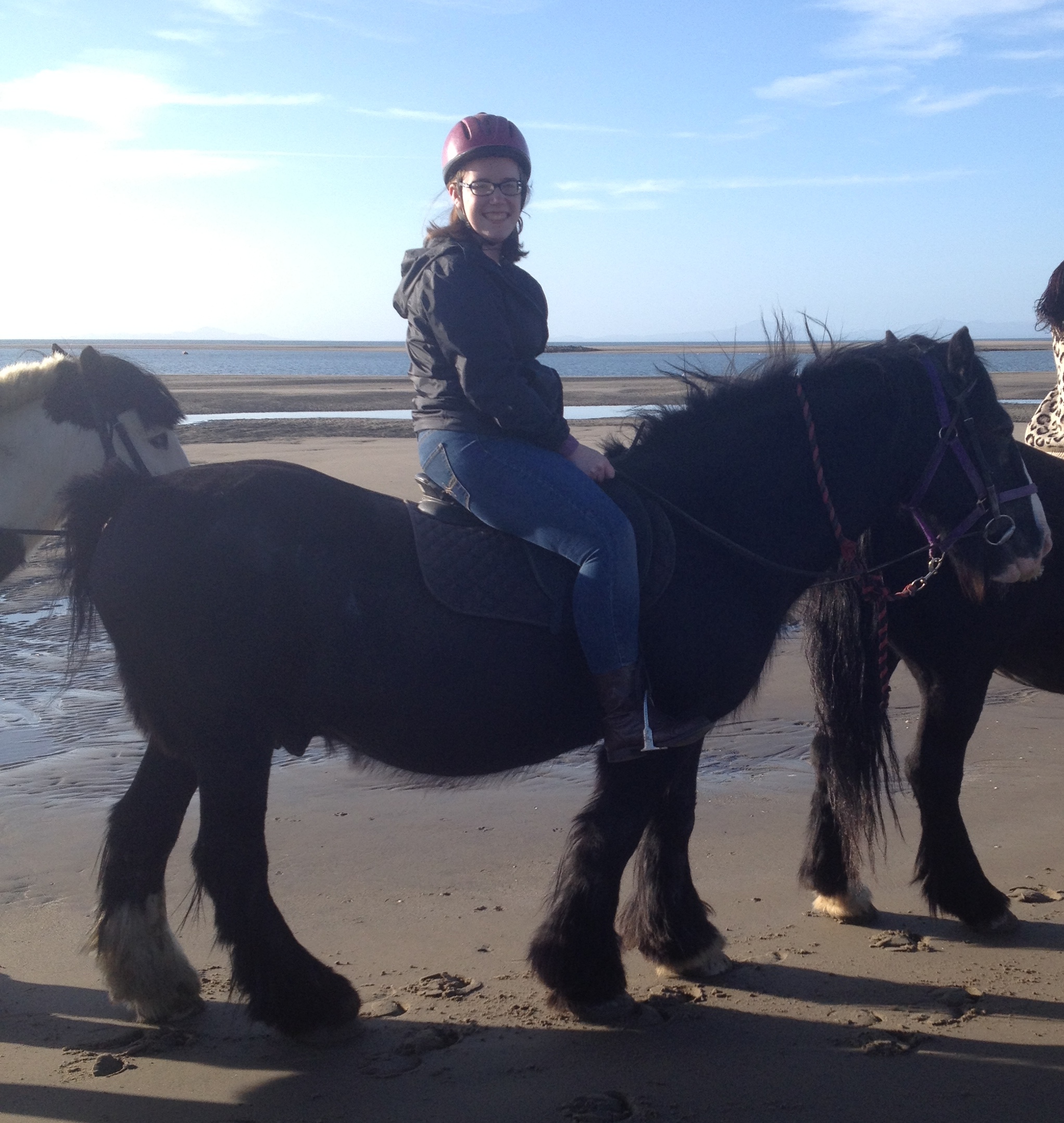
We also had the opportunity to go horseback riding on the beach. It was a gorgeous evening, and the sky was so blue, and it made it the perfect afternoon. My horse’s name was Tommy, and he was black with a little nub of a tail. He had a mind of his own, so by the end of the walk, we had moved up from sixth in line to second in line. This was only my second time on a horse, but I felt so secure and relaxed with Tommy that I was able to enjoy all the scenery around me without worrying about breaking away from the group or falling off.

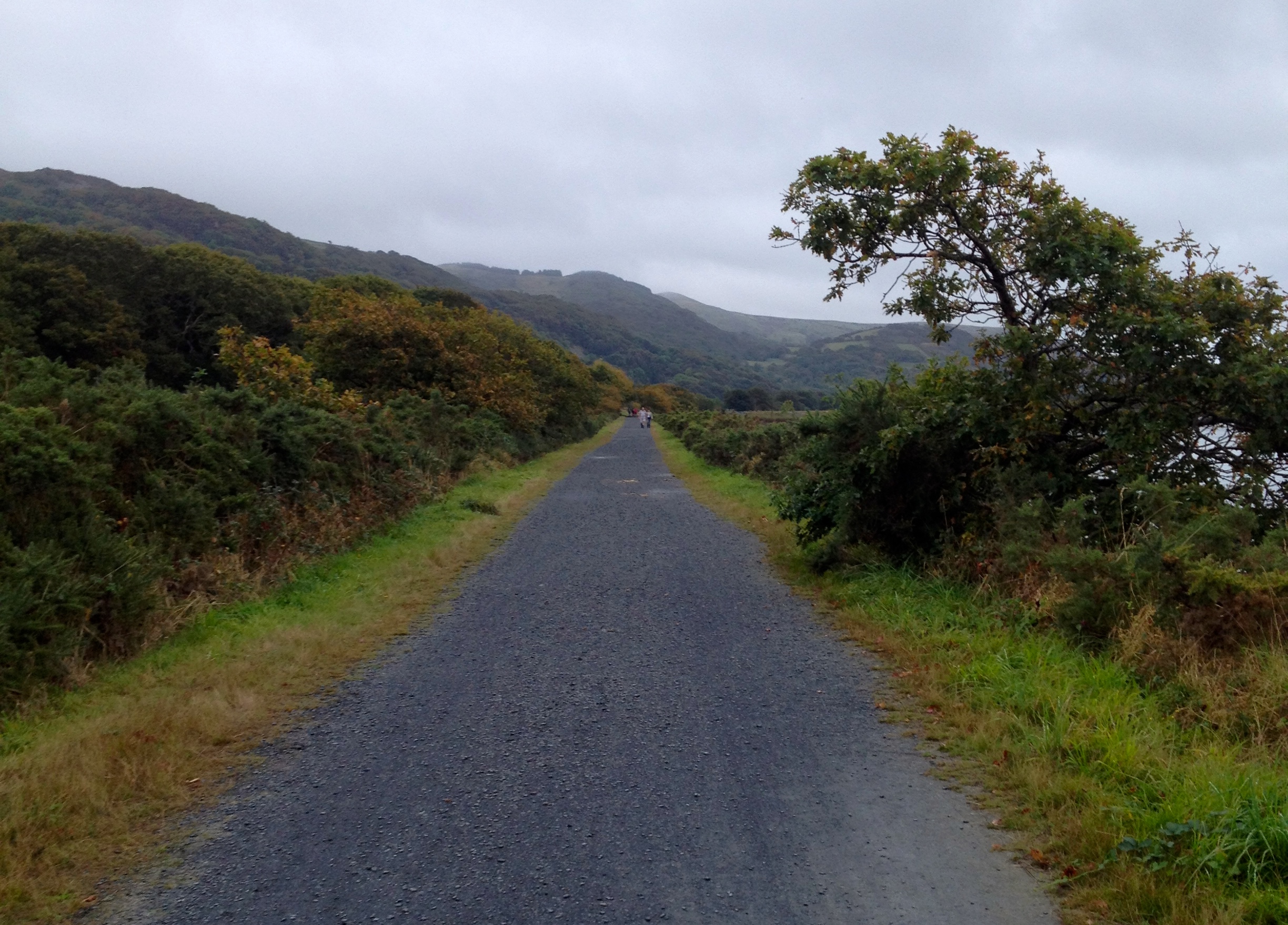
The next day, we went on a “hike” (more like a nature walk) down a road from our hostel. The day was cloudy, and it rained a little, but it made for a very peaceful walk. The clouds were low in the sky, and covered the tops of the mountains in a sort of eerie fog that I thought was absolutely beautiful. We strolled through the rolling hills, next to the water and the estuaries, and then out to the sea. There were blackberries and gooseberries along the side of the road that we picked and ate along the way.

On Sunday, we drove to Liverpool and visited the childhood homes of John Lennon and Sir Paul McCartney. Our group stood in the front entryway of John Lennon’s house where the Beatles practiced, and sang a Beatles song. We can now all say that we sang where the Beatles sang :). Because Liverpool was the main dock where slaves were transported into the UK, we also visited the Maritime and Slavery Museum in Liverpool.

It was a wonderful weekend, and the perfect way to see a new country. If anyone else has the chance to go to Wales while they are in England, take that chance. As several people in our group said, now that we’ve been to Wales, we couldn’t imagine coming here and not visiting Wales. It is such a beautiful and unique place, and absolutely worth the time to go and see.

Caernarfon Castle

Caernarfon Castle

Tommy and me on the beach :)

Tommy and me on the beach 🙂

IMG_2350

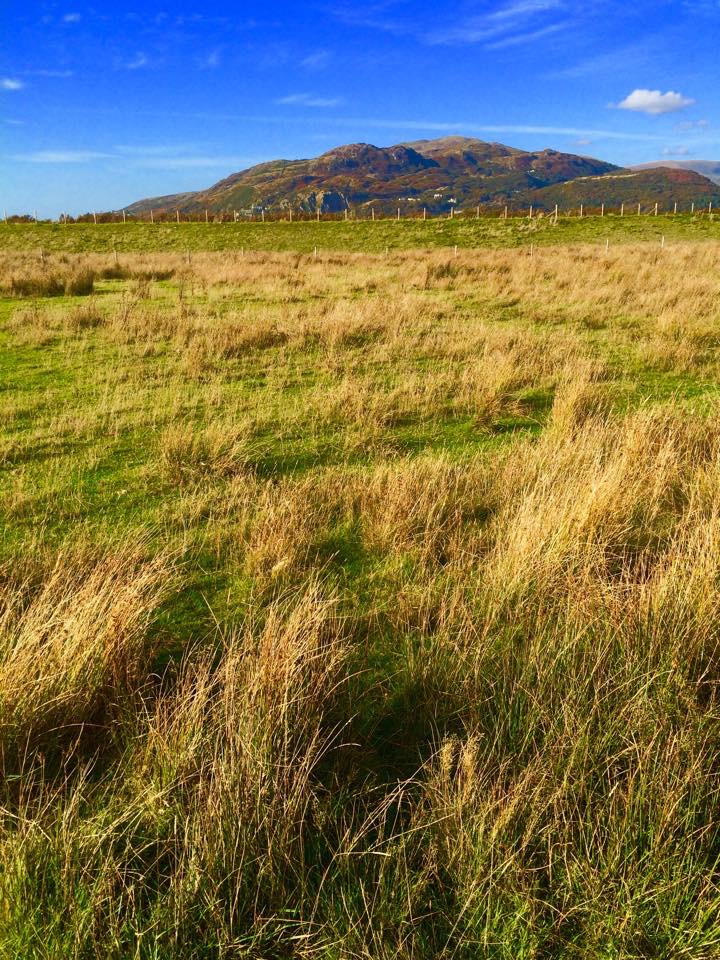
View from our horse ride to the beach

View from our horse ride to the beach

A Day Well Spent

The air has finally cooled down. I roll over to look at the clock. It’s 5:09am and I know that in 51 minutes I’ll be meeting outside our tent to run around the campsite before the sun comes up. My mind wanders off into amazement and disbelief that I’m camping in Namibia where lions, zebras, giraffes, and elephants roam right outside our gate.

It’s 6:00 now and we are off running, first around the campsite and then to the waterhole with hopes of seeing animals gather for a drink. When we arrive, I can tell that some people have been perched there for hours; bundled in scarves and hats, accompanied by large lensed cameras that sit on tripods. After waiting for a while, there’s no luck. We head back to the campsite for breakfast and a game drive.

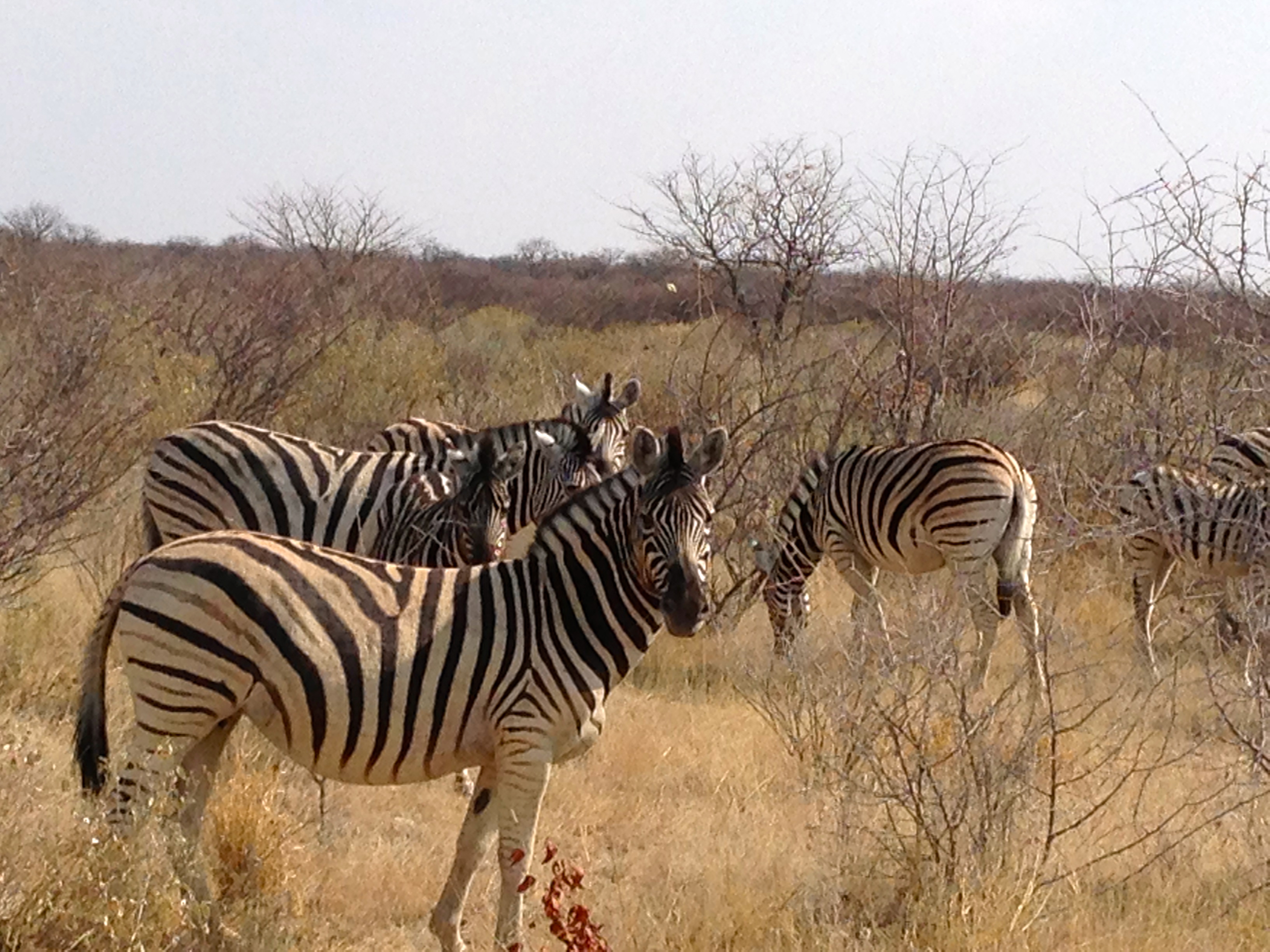
Driving through the park, we see mostly zebras and springbok at first. Moving onwards, there are elephants and giraffes. A pile up of cars is ahead and one of the other drivers told us that there is a leopard under one of the trees. Our van is frantic over the binoculars until we see his polk-a-dotted coat under the tree. Amazed, we stare a little longer.

Now, we make our way to another waterhole where a hyena drinks. Zebras approach in a single file line, keeping there distance from the hyena as they stay on the other side. The hyena ignores them for a few minutes, but decides it is time for them to go, running towards them. They who is in charge, so they take off. The hyena takes a few more drinks and then sprawls out on the ground. It is out of  our sight now.

Looping back around, a herd of elephants approach the leopard from behind the tree he lays under. There are baby elephants in the herd and some of us start to worry that the leopard might attack, but our driver assures us he won’t. Instead, the elephants will be the ones to kick the leopard of his spot. The four baby elephants stay back as two of the elders chaperone them. Two more approach the the leopard and, sure enough, he moves for them. We drive parallel to the leopard as he tries to find another spot. He lays down again under shade, staying far enough from the elephants not to be bothered again.

Back at camp we have lunch and swim. Later, we go on another drive to see elephants, both young and old, and other areas of the park. After, we watch the sun dye itself a pinkish orange at the waterhole and rhinos approach for a drink. IMG_2310 IMG_2334 IMG_2350


First Trip: Part 1 Berlin

So, having been in Germany for a grand total of three weeks, we decided it would be a grand idea to take a ten day trip to Berlin, Hamburg, and Cologne. Seriously.

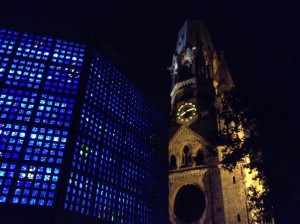
IMG_0835

Kaiser Wilhem Memorial Church, left unrestored in remembrance of the horrific damage WII caused not just here, but everywhere.


Technically, the Berlin trip was a part of our Modern Germany class. Nothing is more exciting as a college student than a field trip. (Excepting free food and naps.) Learning about the Friedricks and Wilhems of Prussia is great, but their importance doesn’t really sink in until you see building after gorgeous building funded by the Prussian monarchy. There are many of these buildings in Berlin. We also visited Sachsen-hausen Concentration Camp and the German History museum to continue learning about Germany outside of the classroom.

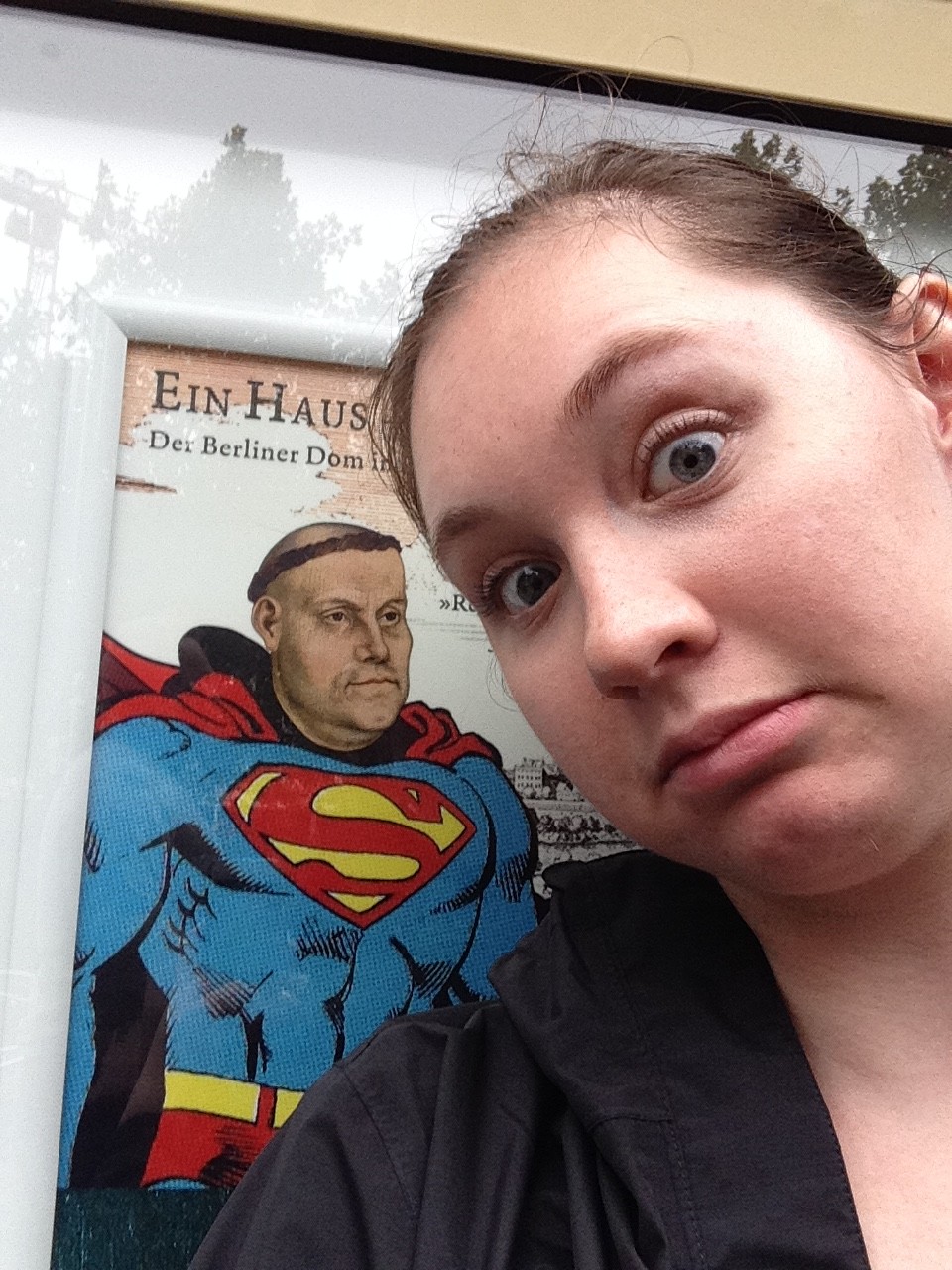
IMG_0796

No, I do not know why Super Luther is a thing. Seen outside the Berlin Cathedral

We were in Berlin from a Friday to a Wednesday, so there was plenty of time outside of class to go exploring. Berlin is a fantastic city to walk around in and admire the architecture. I loved exploring the neighborhood of Savignyplatz, where our hotel was located. There were fun restaurants and shops everywhere, gorgeous turn-of the-century buildings, and (most importantly) two fantastic bookstores underneath the S-bahn: one for fiction, biography, and philosophy; and one for all kinds of art-based non-fiction (film, music, architecture, art, etc.). I bought a book one rainy afternoon, and read and enjoyed fantastic hot chocolate at a cafe three doors down from the hotel, which was delightful.

Blog 4

Platter for four at the Zillemarkt in Berlin, just a few blocks from our hotel. Yes, this was a ridiculous amount of food.

Since this was a longer trip, we visited so many places that I started losing track. We went on a bus tour that highlighted key sights in East and West Berlin, including the Checkpoint Charlie Museum and a few sections of the Berlin Wall (Cue Pink Floyd). We toured the Berlin Cathedral, took pictures in front of Humboldt University (where Einstein and Max Plank taught!), visited the Brandenburg Gate, marveled at the beautiful Schloss Charlotenburg and its extensive grounds, admired Art Nuveau at the Bröhan Museum, and ate authentic Berlin Currywurst.

IMG_0637

Train rides across Germany are long if you do not amuse  yourself.

(As a side note, while they might not always be there on the exact minute, German trains, buses, and subways are pretty much the best. Easy to understand maps, signs showing the train, its final stop and stations between are everywhere, and they-re pretty much always clean. Plus, even in second class, the inter-city Deutsche Bahn trains are very sleek. They have automatic glass doors between compartments. It’s like a science fiction movie. Maybe James Bond?)

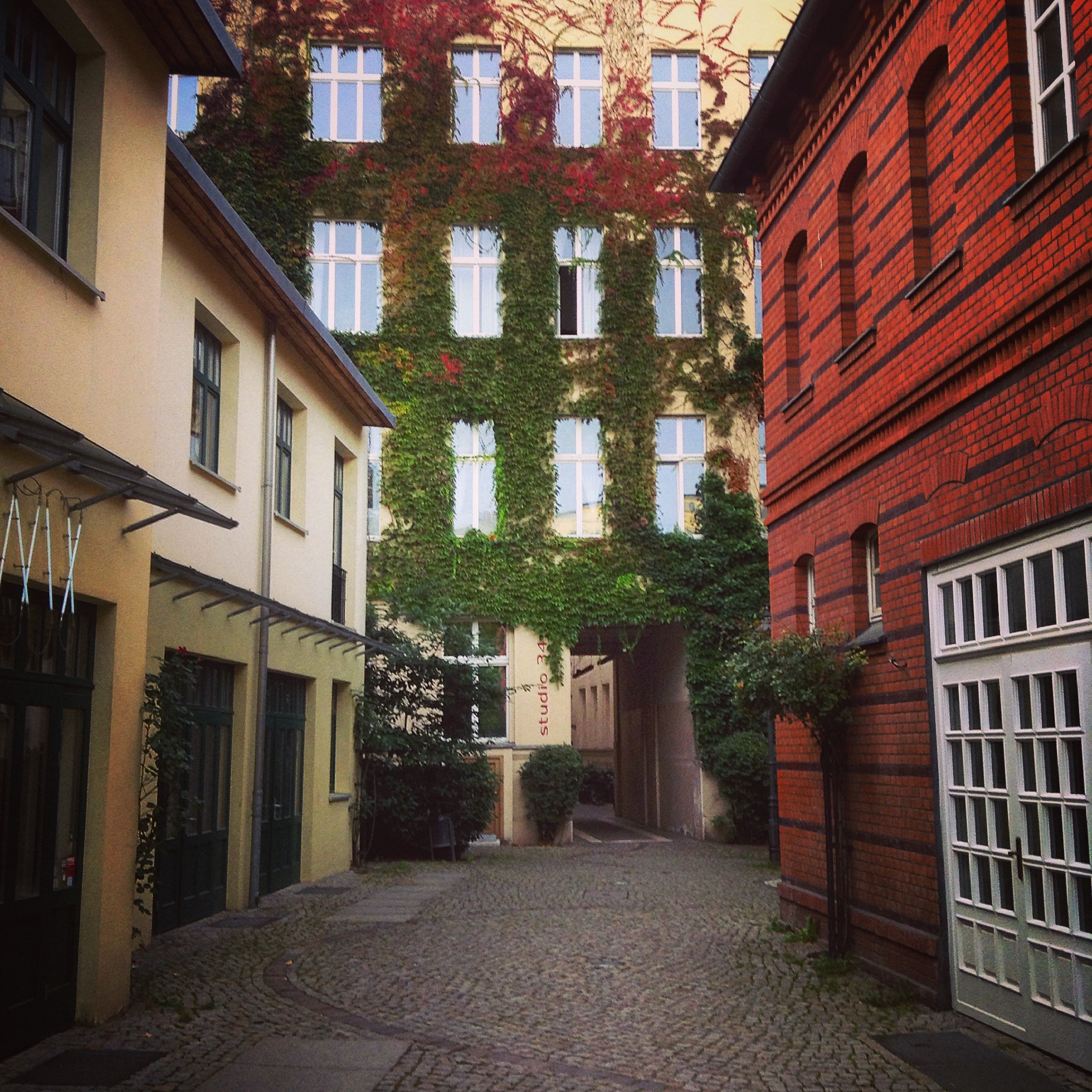
IMG_0907

Courtyard and Alley to Orangienburger Strasse

There’s my update on our Berlin adventures. I will explore some of our tourism in more detail, along with Hamburg and Cologne, when we arrive back in Reutlingen. Right now: Hamburg. Tomorrow: Cologne. I’m excited for more trains!

In Ulm und um Ulm und um Ulm herum

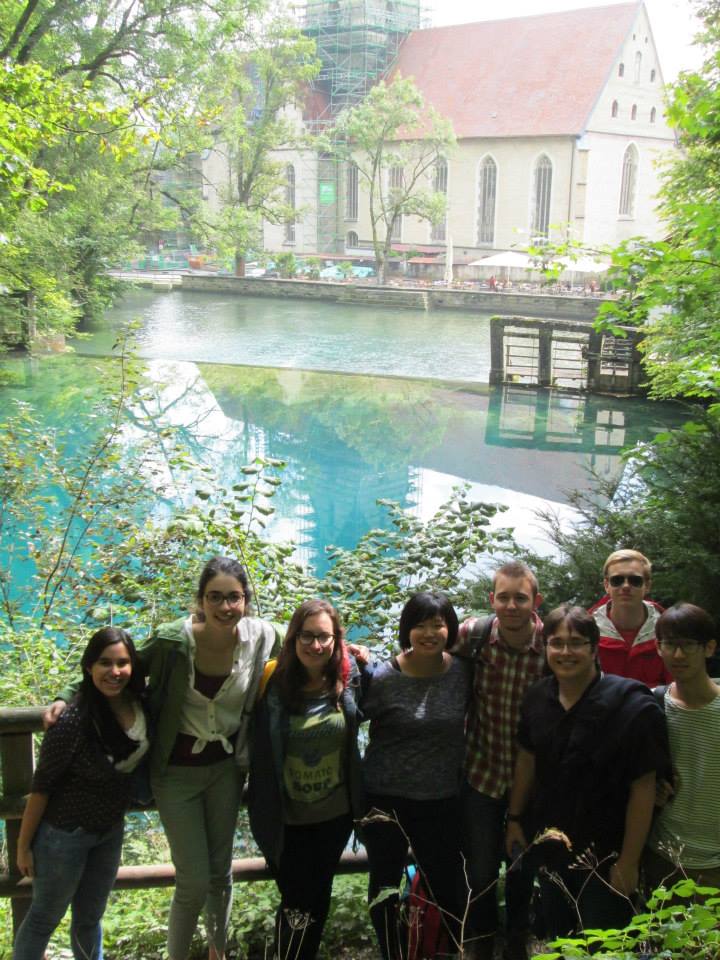
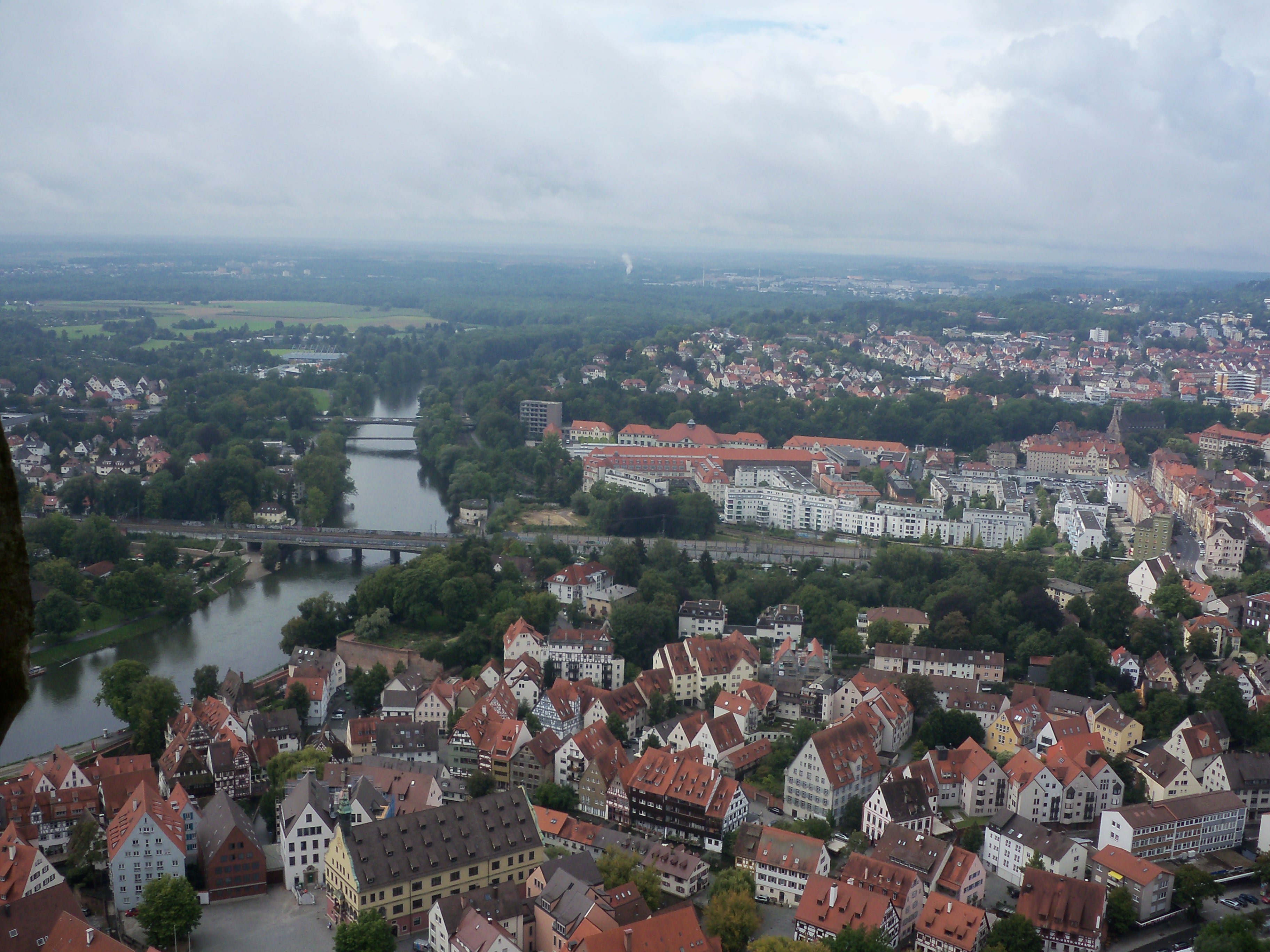
So, this past week my class took a week-long trip to the small town of Blaubeuren, just outside of Ulm. Blaubeuren is adorable and famous for it’s blue pond created by a chemical reaction between lime and carbon dioxide and the poem about it written by Eduard Mölrike. It was a great week filled with German learning, hiking and many, many excursions.  I had one of those coming full circle experiences because I visited a city for the second time in my life. That city, as shown by the three times it appears in the title of this post, is Ulm. Ulm is the home of the world’s tallest church tower, which I have now had the pleasure of climbing not only once, but twice. It was in fact the topic of my admission essay to Valpo, about however the world seems to be getting smaller and smaller, there are always surprising new things to learn as we go (that is a summary, the original was a very extended metaphor made worse by the fact that I had been abstaining from the English language– something which I think can be made clear is happening again based on the almost 3 lines that make up this sentence).

Ulm ca. 2011 I'm proud to say that I got almost the exact same shot.

Above: Ulm ca. 2011 I’m proud to say that I got almost the exact same shot. You’ll note the subtle differences to the below shot of the Danube ca. 2014

100_1430


One of the things that surprised me most was the way that my teacher described the tower. The Ulm Münster as it’s called was funded by the people of Ulm. The city itself was not very clean, being there was no modern sewage system at the time it was built and the church could house almost 5 times the number of people than the population of Ulm itself. For these people, my teacher said, coming to the Münster was like coming to heaven. It was clean, it was quiet, there was room to spare. Going back there now reminds me of how much framing influences how we perceive the world around us. Now, in a world filled with images, music and modern sewage, the Münster does not seem like quite such an astounding building, but at the time it was built, it was really one of the greatest feats of its time.  And the same thing goes for everything that we see in life, the more that we see, the more that we have to compare it too, and the more we can learn about the reasons why things are the way that they are in the world.

Otherwise I have been doing my best to “live into” my new home, as one would say in German. I’ve been trying to think of ways to decorate my room and cook for myself to make my apartment more like home. Recently the addition of a new roommate from Spain has made it feel a lot more lived-in than before.  We’ve also been working on the first project for my German class. My topic is about the local dialect called Schwäbisch, which I have turned out to be surprising good at pronouncing. Although many people find dialects to be a sign of simple mindedness, I find them totally fascinating. They give language personality and are proof of socio-linguistic developmental patterns that created many smaller pockets of dialects as opposed to one homogeneous language.

One of the other things that I’ve noticed most about the German language is that although I understand most of what’s being said, some of the subtleties of German body language haven’t necessarily been totally clear to me. Instead of using a wide range of facial expressions or a drastic change in tone,  Germans like to change the structure of their sentences or throw in extra words in order to reveal their true emotions. When my teacher talked about this in class, I have to admit that something clicked in my mind. It brought back countless memories of me feeling like I was somehow unable to achieve the cool, collected calm that seems to permeate German culture. I think it might take a while before I can master the art of showing emotion verbally, but it will certainly be a challenge that I’m willing to take on. Hopefully that will make my German that much less frantic-sounding and more authentic.

And so I am off to go practice speaking without moving my face so much!

Bis bald!

A Luxurious Life!

Time flies when you’re…in China…taking only two classes…eating lots of pastries…enjoying long walks…talking with locals…window shopping at ultra luxury malls…running in the rain…visiting museums and temples…reading the Analects…meeting new friends…watching movies…and having fun!

My extended and wondrous welcome to China is drawing to a close. Although we (the Valpo group) have been in Hangzhou for a month already due to scheduling differences between Valpo and Zhejiang U we haven’t started our Mandarin classes. That all changes tomorrow when we begin eight weeks of intensive study—fifteen classroom hours a week just for language and who knows how much homework.

Although I’ve been fully enjoying the luxury of open-ended exploration and long weekends it will be nice to start learning Mandarin. (“Thanks,” “Hi,” and “I want…” will only get me so far.) But my thoughts on school itself will have to wait until next week, so I’ll devote the rest of this post to a review of last week’s activities.

The quiet summer campus is gone, the number of students on campus has probably quadrupled since I arrived. From daybreak until late into the evening Chinese students steadily stream along the many roads through campus, when it rains a sea of colorful umbrellas stretch down the sidewalk. At the official “International college” welcome assembly last week we packed the auditorium with students from over one hundred nations. Wow! The assembly ended with performances of traditional music and dance of various Chinese provinces by ZJU students. The troupe’s performance was a lot of fun to watch, the performers clearly enjoyed what they were doing and they were incredibly talented.

Rainy skys have been more frequent, but the blessed cool and clean air they bring are well worth the grey drizzle. Besides, I’m from Eugene, I like the rain. After constant sweating for the first few weeks the ability to stroll around Hangzhou for hours while the air whispers of autumn is delightful.

On Saturday evening I attended Catholic Mass (in English) at a church tucked between shops and apartments near downtown. The service was very similar in liturgical order to the Lutheran services I’m familiar with. I found many of the hymn melodies hard to follow and the Priest’s message calling us to ‘evangelize’ seemed odd given Beijing’s restrictions of religion. Partitioners scattered through the narrow pews, the majority were Chinese but there was also a fair number of foreigners, especially Africans.

After the service Professor Pati, Michael and I walked the few miles back to campus. We stopped at various hole-in-the-wall bakeries and bemusedly strolled through a shopping mall filled with clothing and accessories imported from many of Europe’s finest brands. The wealth here is incredible, even if Alibaba’s IPO does create scores more millionaires in Hangzhou they already have plenty of competition to stand out among the BMWs, Benzs, Porsches, not to mention the occasional Rolls-Royce, Bentley, Ferrari, Lamborghini, Aston Martin, Tesla, or Maserati which dot the luxury mall parking lots. (Yes I’ve seen all those car brands.)

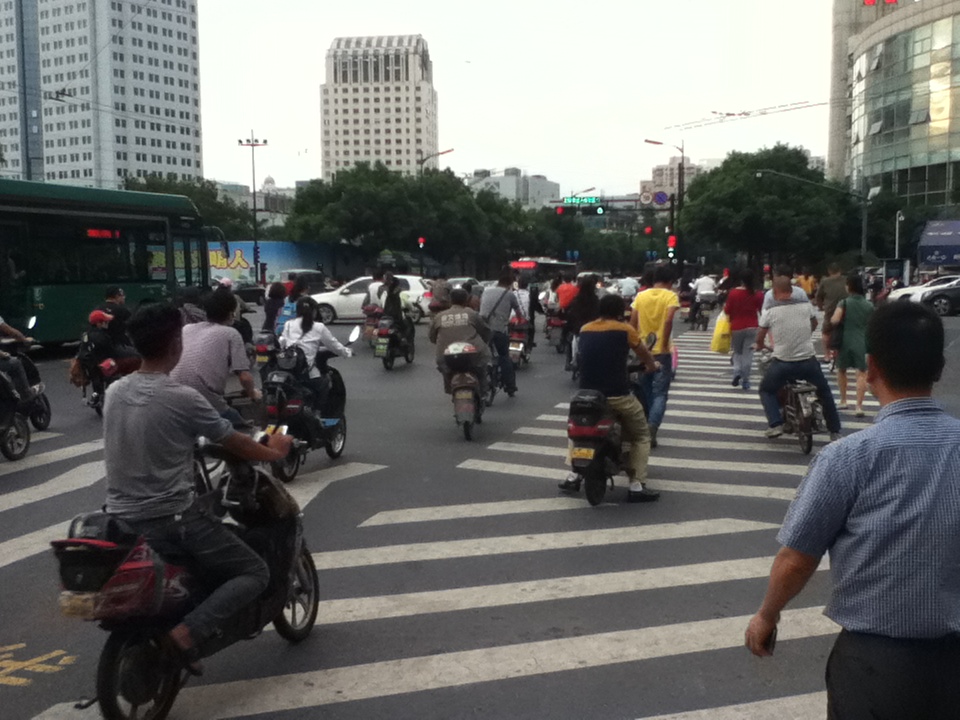
The best part of long walks though is the time they have provide to people watch. As someone who is not likely to strike-up conversation with a stranger I am more than happy to gather my experiences in a more passive manner. I’ve watched older folks practice tai chi and gather for dance groups in small parks; I’ve watched tired orange-garbed workers sweeping litter with homemade brooms; I’ve watched children enjoy snacks while riding on the back of their parents’ moped; I’ve watched young adults constantly on their phones; I’ve watched people sleep on buses with many times more passengers than seats; I’ve watched business men and women deftly negotiate thick traffic while blaring their car horns.

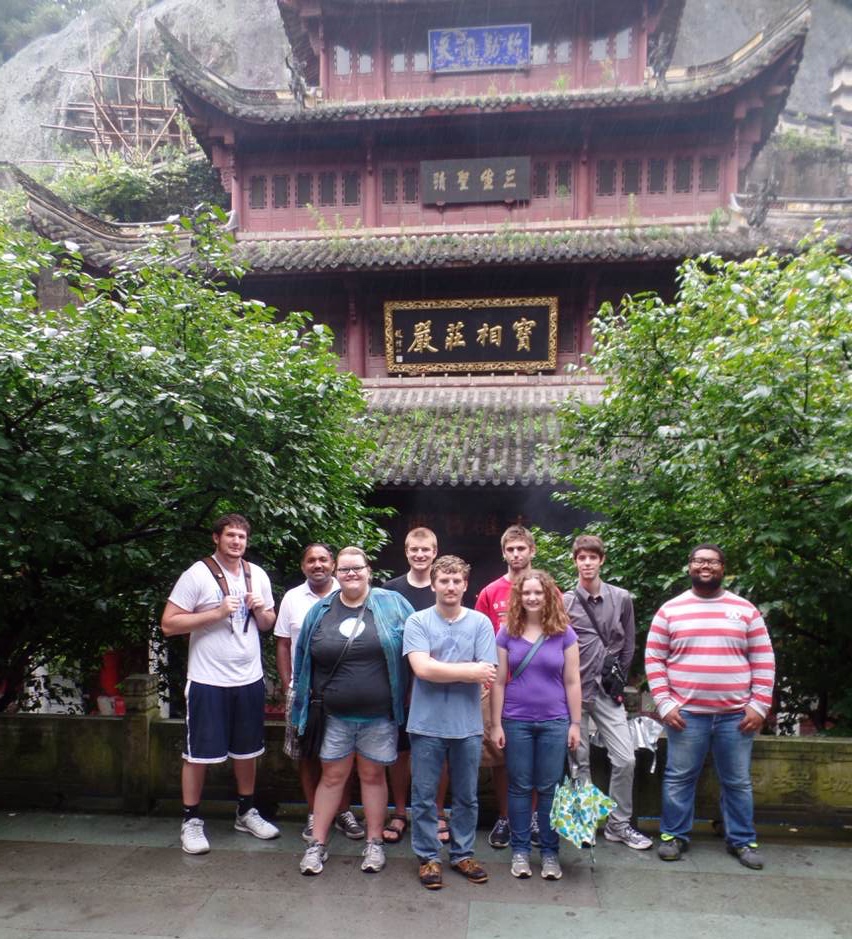
Also as a group we have visited the Dafo Temple in Xinchang, the Hangzhou Silk Market, the National Tea Museum, and the Zhejiang University of Technology campus. The Dafo Temple, a two hour bus ride south of Hangzhou, is set amid verdant hills. We visited on a drizzly day which added to the tranquility of the winding paths and various temples built into the hills—including the famous ‘Big Buddha’ sculpture (over 10 meters tall) which was carved out a mountainside over a millennium ago.

I picked up my textbooks today and so hopefully I am all ready for class tomorrow. Being in an international dorm, diversity is for once exists far more in actuality than in discussion—my class of sixteen has students from fifteen different countries. Should be fun!


IMG_0180

A typical rush-hour intersection

IMG_0182

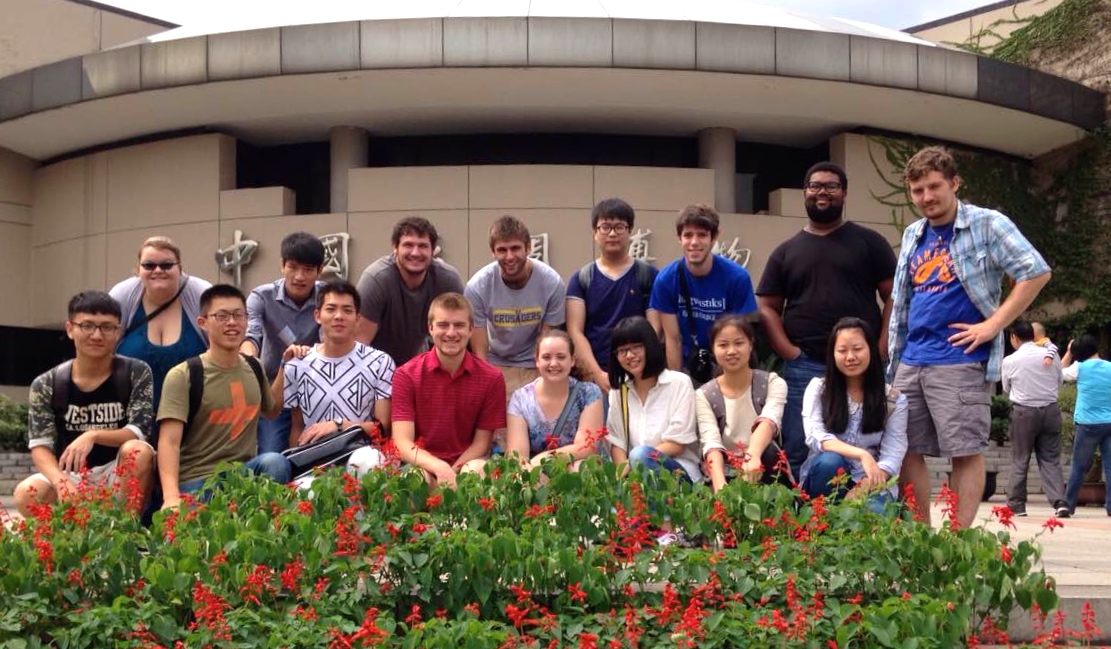
The National Silk Museum with Zhejiang University of Technology students

IMG_0164

Visiting Dafo Temple in Xinchang

P1060611

Looking west from the top of Forest Park on a particularly grey day

P1060597

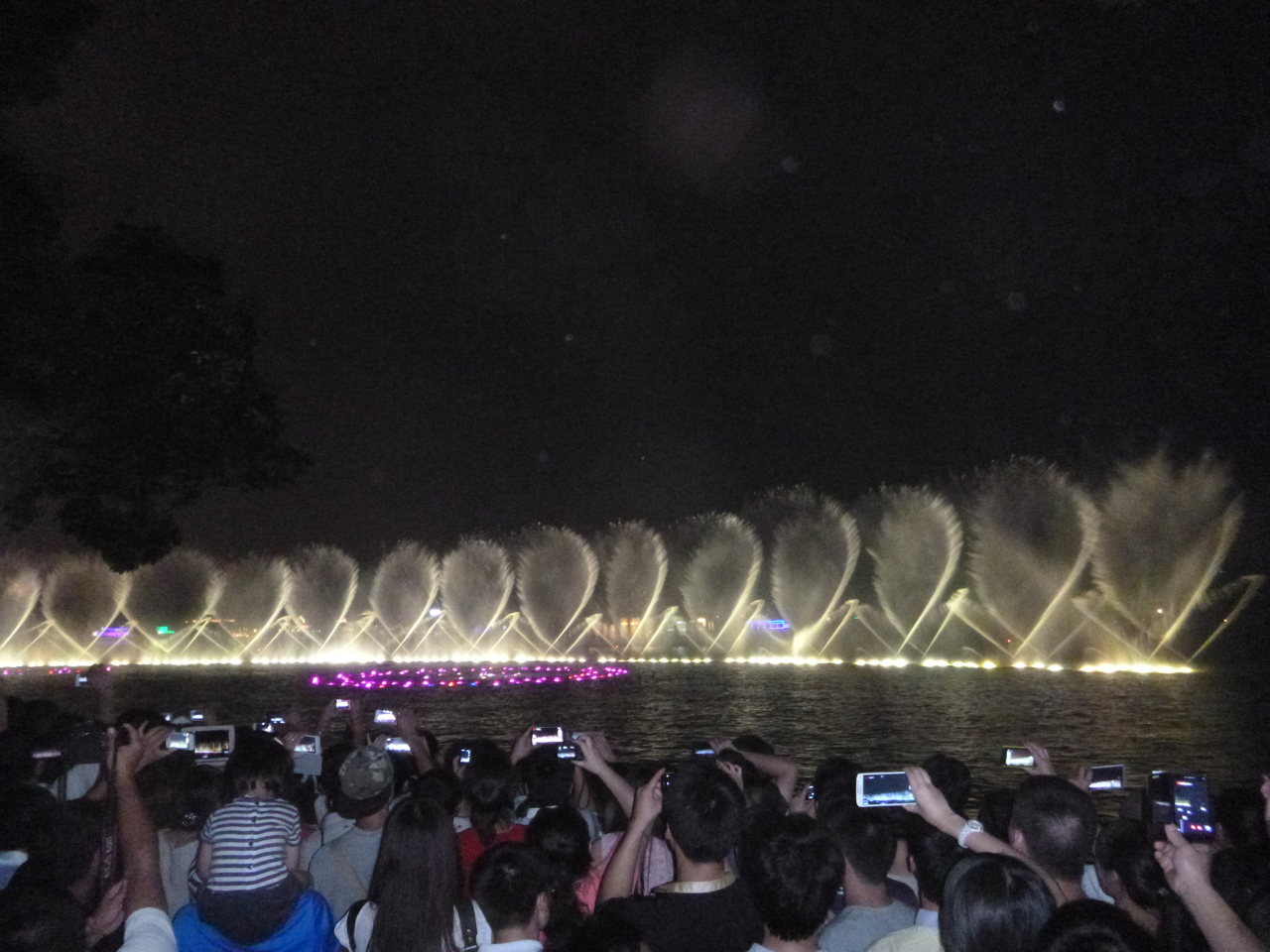
Watching the fountain and light show on West Lake for Mid-Autumn Festival.

IMG_0145

Thursday night English Club!

The Week in A Nutshell

For the past few weeks, I have been working with first and second graders at my internship to help with reading and grammar. Last week, I enjoyed spending time with the older kids, grade six and seven, to help with math work. I still truly like to work with younger students, but I have also been thrilled giving assistance to older students. It’s been a lot of fun getting to know them and getting good feedback from them on homework that we worked on in previous sessions. One of the girls I helped, Brumelda, has become a buddy of mine. After the first time helping her with work, she’s come to me for other help ever since. This was a neat moment for me because I was worried that I might not be as useful to the students as I would like, but I’m more confident now in helping them. It’s very satisfying to me when I see them to start understanding the work and have students approach me for help. I try to be extra positive and enthusiastic with the students because they might not get that at school, according to my supervisor. Brumelda noticed this and, at first, I thought she might have found it a bit annoying, but she ended up writing a story for school about a day when her life changed and she wrote about meeting me! I think she picked it mostly because she was struggling to chose a topic, but it was awesome that she even thought about me for that. As far as interning goes, it has been a great week and was followed by a fun weekend.

On Saturday night, we celebrated the first birthday in our house. We had fun going to a sky bar at the top of the Hilton Hotel in town and then made our way to other parts of town. It’s always fun to try new places around Windhoek and everyone had a great time. Following our evening, we decided to go out for brunch on Sunday morning. It did not go as planned, though. The restaurant we selected only got one of eleven orders correct. For example, two friends got Eggs Benedict, but they gave them a piece of stale bread, ham,  and boiled eggs slathered with a frighteningly large amount of mayo. Some of us were a little frustrated, but the group of us have such good attitudes, we were all laughing about it an hour later. I can’t wait to see what lies ahead this week as we travel to the northern part of the country.


Exploring Cambridge

I’ve been in Cambridge for a few weeks now, and I feel like I have settled into a routine. My days these past couple of weeks have been filled with a few classes, but mostly going out and getting to know the city that is my home for the next eight months.

I keep myself busy during the days by walking around the small little streets of Cambridge. I don’t have any classes on Wednesdays, so I usually take that day to explore. I go out by myself and take my time going down whatever road I want to just to see what’s there. I love wandering around and exploring and even getting a little lost. It’s been a great way to get to know the city. I love the smaller shops and local businesses. You never really know what kind of shop you’re going to walk into, and I think that’s awesome.

Yesterday, the entire group went punting. For those of who who don’t know what that is, a punt is a wooden boat with a flat area on one end. Someone stands on that and uses a long pole to push the boat through the water. Anyway, it was another unusually gorgeous day outside with clear skies and the sun shining, and I had a blast.

The group split up into two punts, and our two tour guides had us go side by side so they could both talk about the things we were seeing at the same time. We passed St. John’s College, Trinity College, King’s College, and Magdalene College on the River Cam. Both of our guides were very knowledgeable and had a lot of interesting stories to share about the colleges and things that happen in Cambridge. It was nice to sit and relax for an hour and be outside in the sunshine and see Cambridge without having to walk anywhere.

Today I climbed the the highest spot in Cambridge. Granted, I live in Colorado, so this “high spot” was a little baby hill. But nevertheless, it still offered the best views of Cambridge. I could see the entire city, and I realized that it was much bigger than I thought it was. Because I can walk to anywhere I need to go so easily and relatively quickly, I always assumed the Cambridge was smaller than it was. I could see all the way to the King’s College Chapel.

The hill that I climbed was actually built by the Romans in the early A.D.’s. It was a point where four different roads met to cross the river Cam into the city, and, being the highest point in Cambridge, it was easy to defend. Like I’ve said before, and will probably continue to keep saying, it is fascinating to be in a place where the history extends over a thousand years.

I have really enjoyed getting to know Cambridge so far, and I am excited to do some more exploring. Tomorrow is International Student Orientation at Anglia Ruskin University, and a few of us are attending that. I’m sure there will be many more stories to tell and things to talk about when classes at Anglia start in a week and a half!

The only collegiate chapel in the world that is larger than Valpo's Chapel of the Resurrection: King's College Chapel

The only collegiate chapel in the world that is larger than Valpo’s Chapel of the Resurrection: King’s College Chapel

« Older posts Newer posts »

© 2026 Valpo Voyager

Theme by Anders NorenUp ↑