Valpo Voyager

Student Stories from Around the World

Page 66 of 125

Hangzhou: First Impressions

It is hard to believe I’ve only been in China for a week. With the exception of the language barrier I feel that I’ve acclimated very quickly to my new life in Hangzhou.

Our group had safe and smooth flight from O’Hare to Shanghai where we met Professor Pati. Even though the flight was 14 hours long we chased the sun westward so the window shades in our 747 were the only respite from continually bright clouds and sky all the way from Chicago to China as we flew over Canada, Alaska, the Bering Sea, South Korea and finally the East China Sea.

We took a bus from Shanghai to Hangzhou, about a two hour trip. It may sound cliche, but as our bus weaved towards Hangzhou I felt as though I had been dropped into a Soviet-era James Bond movie set—the monstrous scale of unfinished apartment complexes, verdant fields and farm houses abutting sprawling power plants, a concrete suspension bridge rising as a sword into the hazy sky, and most of all reddish sunlight filtering through the thick smog.

We spent the next three days exploring Hangzhou. Sometimes as a whole group with Professor Pati and his family, or in small groups or solo. Our wandering walks were thoroughly enjoyable.

Hangzhou truly has a mixed-use transportation grid. Taxis and buses practically clog the streets while bicycles and electric mopeds scurry in and out of traffic, often in dedicated lanes at the edge of the street while pedestrians stroll past various shops and stalls on wide sidewalks. Traffic at first looks to be a recipe for disaster as lanes vanished in intersections—but after further observation it looks as though the Chinese has a much more fluid approach to driving—constantly speeding up, slowing down, weaving around parked cars and mopeds—versus the rigid, aggressive and territorial driving of American cities like Chicago.

Three aspects of Hangzhou though have stood out to me:

First is the widespread aim at electricity and water conservation. Our dorm rations electricity and reduces water pressure to a functional minimum—living at Holden I completely understand the importance of these measures. Recycling receptacles are common sites along city streets and nearly all the apartment buildings surrounding campus have laundry hanging out the window. While the signage and small steps won’t completely satiate China’s consumption it is very heartening to see a government taking conservation seriously.

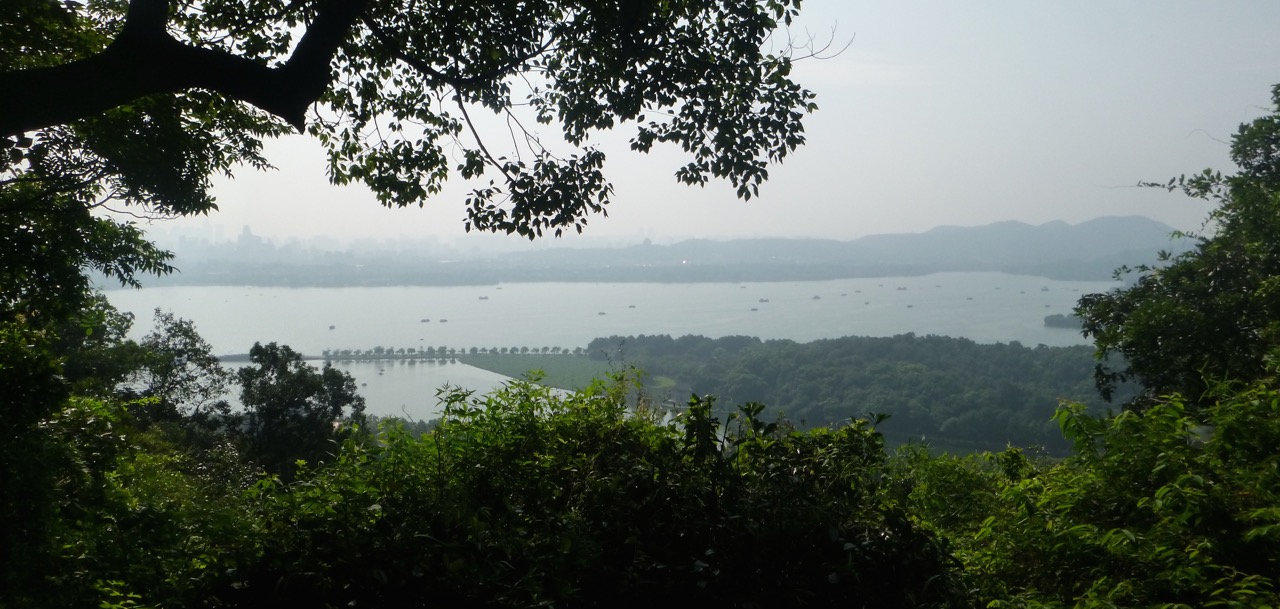
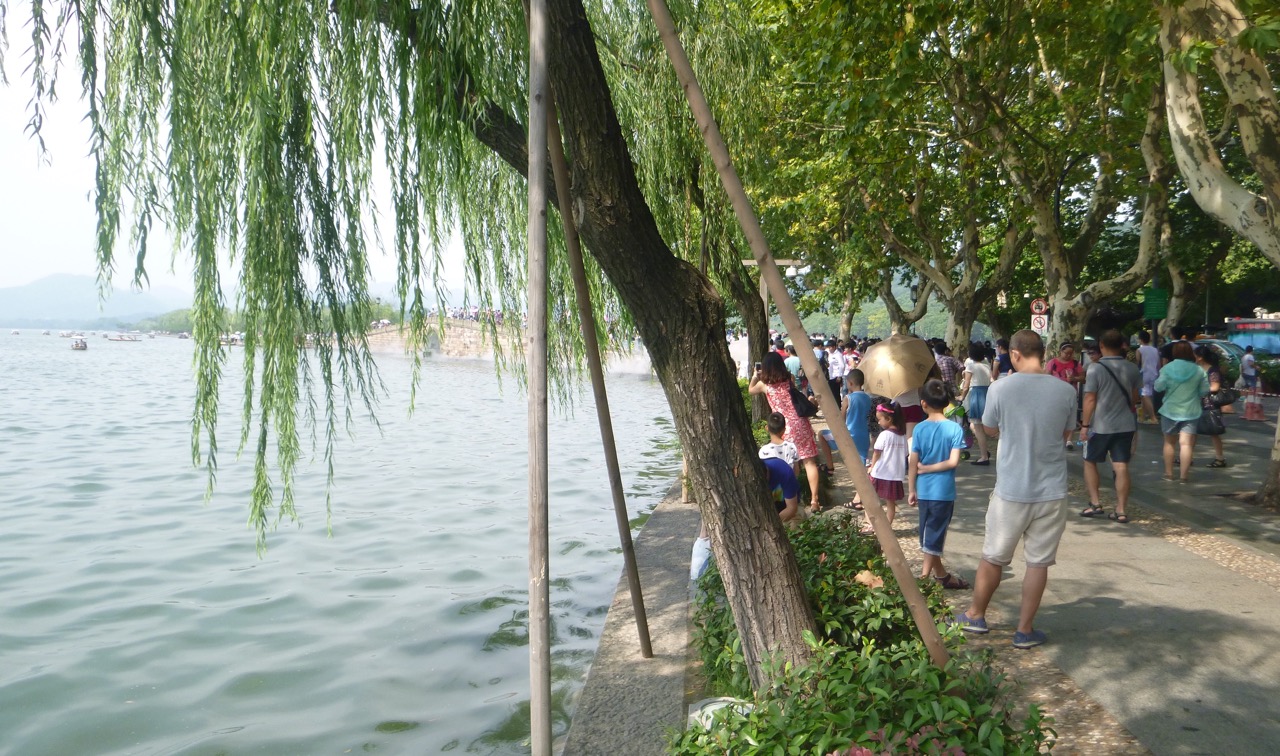
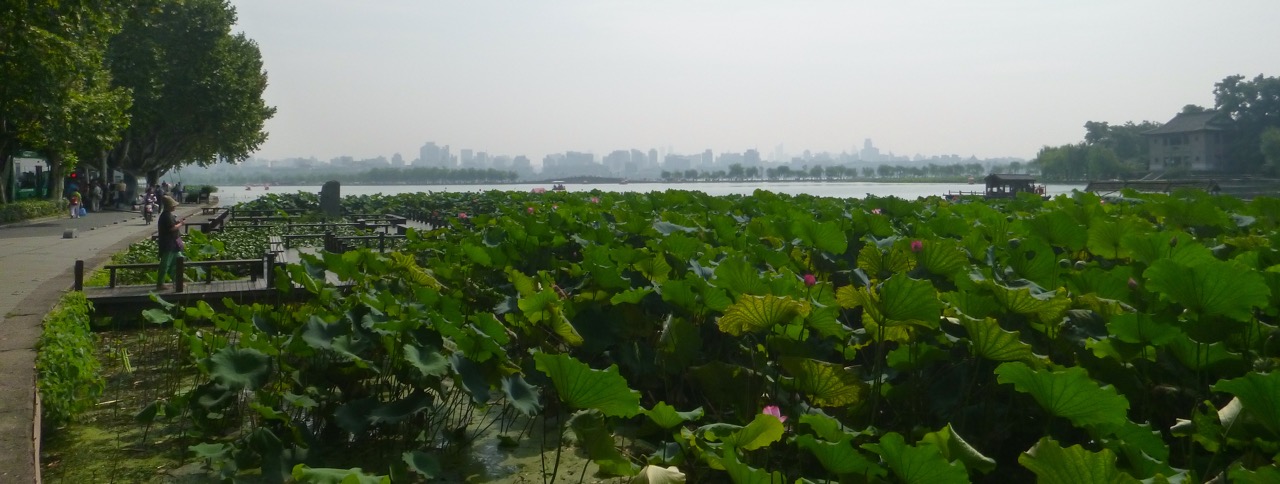
Second, is the absolute abundance of greenery. When the sun is not blocked by smog or tall buildings I often find myself under a roof of leaves—the street just outside my dorm is a verdant tunnel. Shrubs and trees hug the sidewalks and squeeze between buildings. The Zhejiang University campus where I’m living abuts a ribbon of forested hills which contains numerous trails—the ridge trail probably runs at least a dozen miles to the south. Only a mile or so from campus is West Lake (think China’s equivalent of Central Park). I spent on free day walking around the Lake (about 10 miles)—the park space was well maintained and lovely. The use of well-marked paths cordoned off green areas allows lush vegetation to thrive among the throngs of locals and tourists.

Third, the Chinese people are incredibly friendly. Growing up in Eugene I was used to making eye-contact with strangers in passing and saying ‘hello.’ The shear volume of people make that difficult in Hangzhou, but whenever I (or our group) stumbled through a food menu or asked for directions or found a local English speaker they were always more than happy to help. When walking around West Lake I was invited by an elderly gentleman to visit the “English Corner” where every Sunday locals gather to practice their Chinese. Never in the US could I imagine myself (or anyone else) spontaneously spending twenty minutes of my day telling total strangers in a city park about my life, but there I found myself in front of a score of inquisitive Chinese.

Currently I’m sitting in a Beijing hotel room, tomorrow we climb the Great Wall—so more stories and pictures will be coming soon!
P1060221

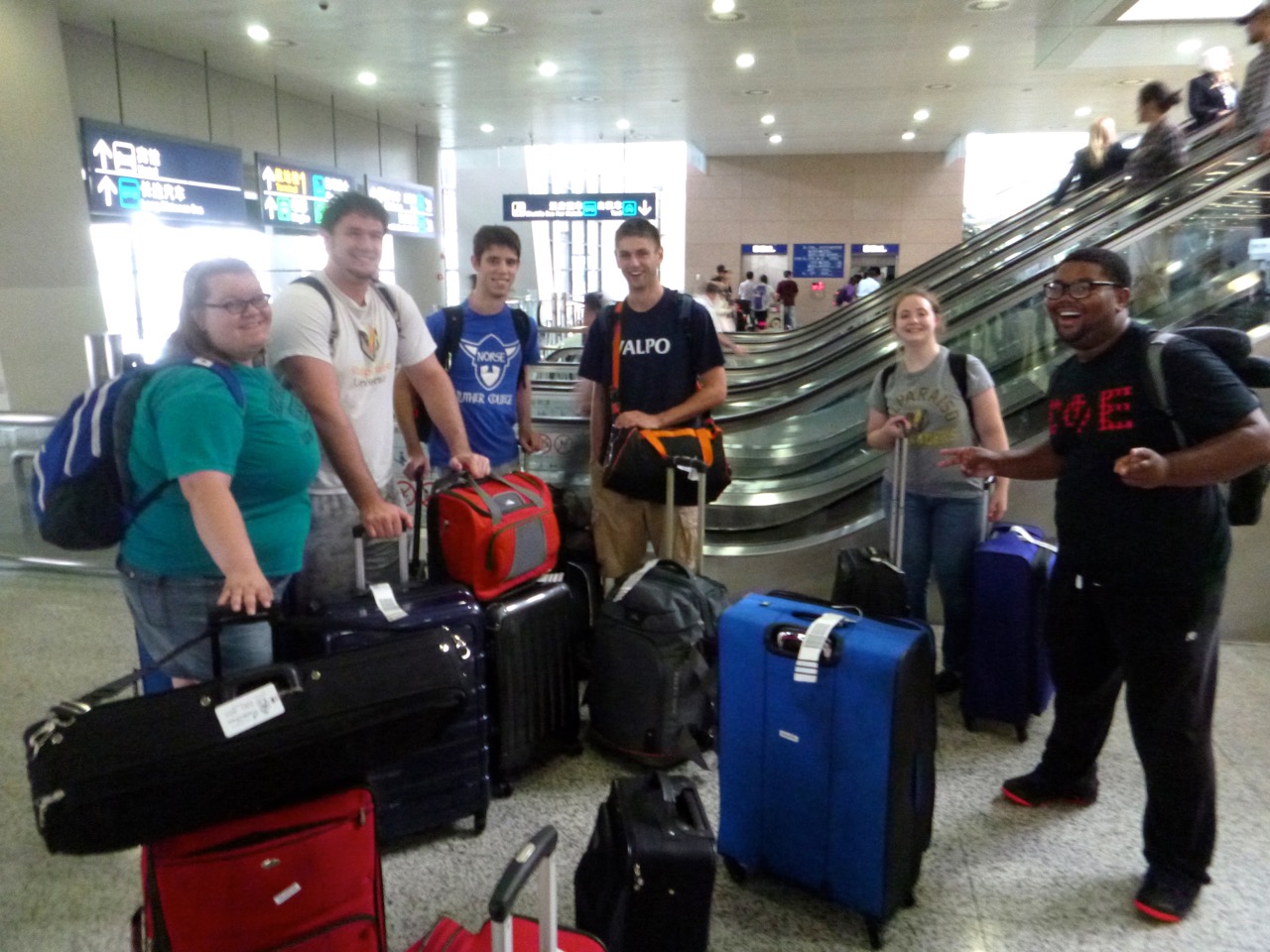
Shanghai Airport: Still smiling 15 hours later!
P1060260

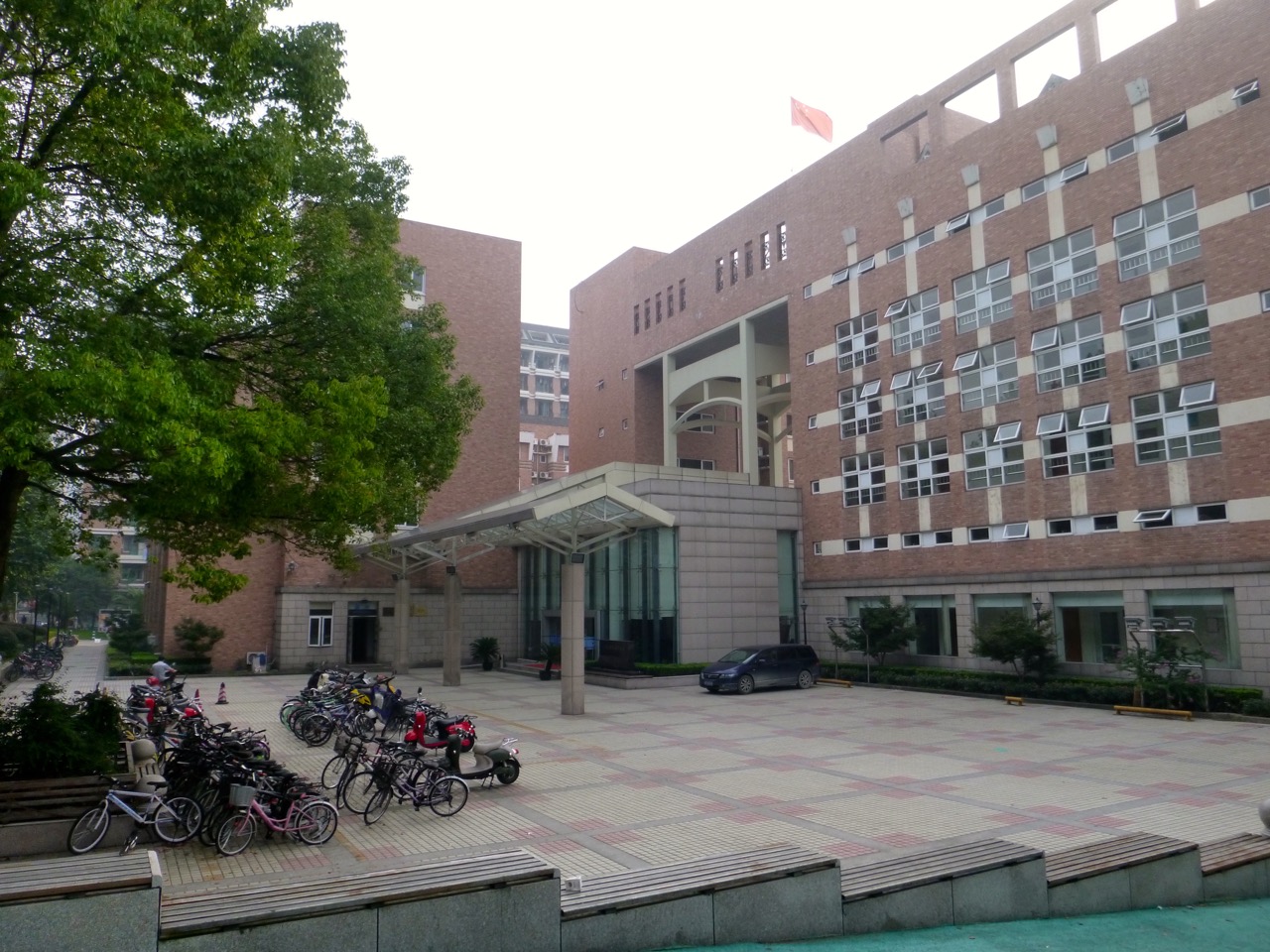
The International Dorm

P1060305

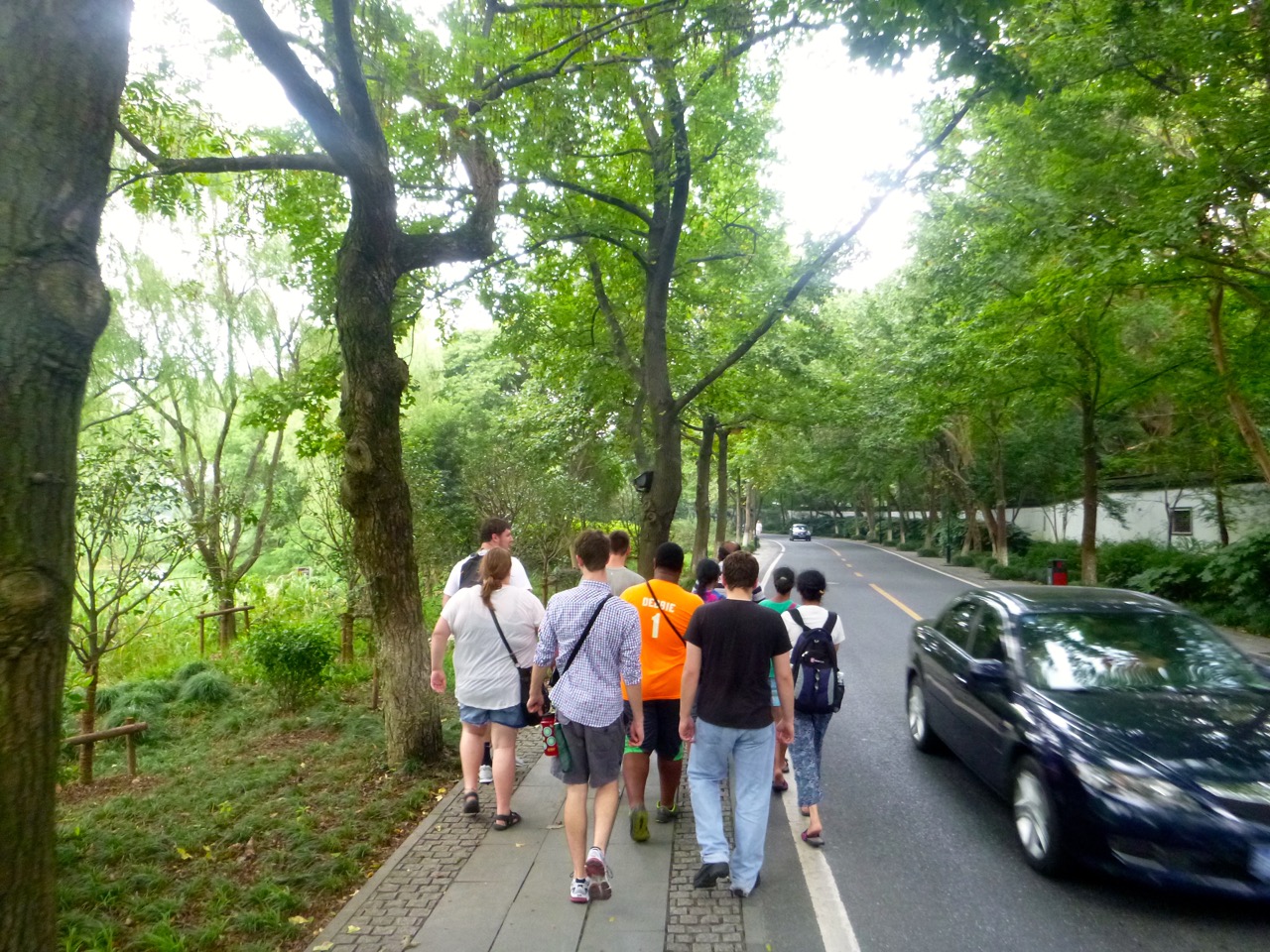
Walking Near West Lake

P1060315

West Lake

P1060317 P1060324

One Hour Until Departure- Kansai Gaidai University, Japan

In a few short hours I’ll be heading for the airport.  In just about twenty four hours, I’ll fly from Chicago to Hong Kong to Osaka.  It’s hard to believe that it’s already time to leave; the summer has really flown by.  After packing, repacking, and shoving my clothes here and there, my belongings are finally ready to go.  I am somewhat anxious, in both the good way and the bad way.

On one hand, I have travelled internationally a few times in the past, including a long flight to China when I was very young.  I’m fairly confident in my Japanese and the staff from Kansai Gaidai will even meet us at the airport to help us get from Osaka to Hirakata, where the university is located.  On the other hand, this is the first time I’m completely responsible for my own travel and the first time I’m travelling internationally without a parent or guardian.  Most troubling for me is that my family will be more than the usual two hours away.  If I run into a problem, I’m mostly on my own to deal with it.  But that’s what being an adult is about, and while I’m worried, I’m also excited to see what I can do.  I’ve been wanting to test my Japanese language skills for some time and sometimes problems are a good (if stressful) test.

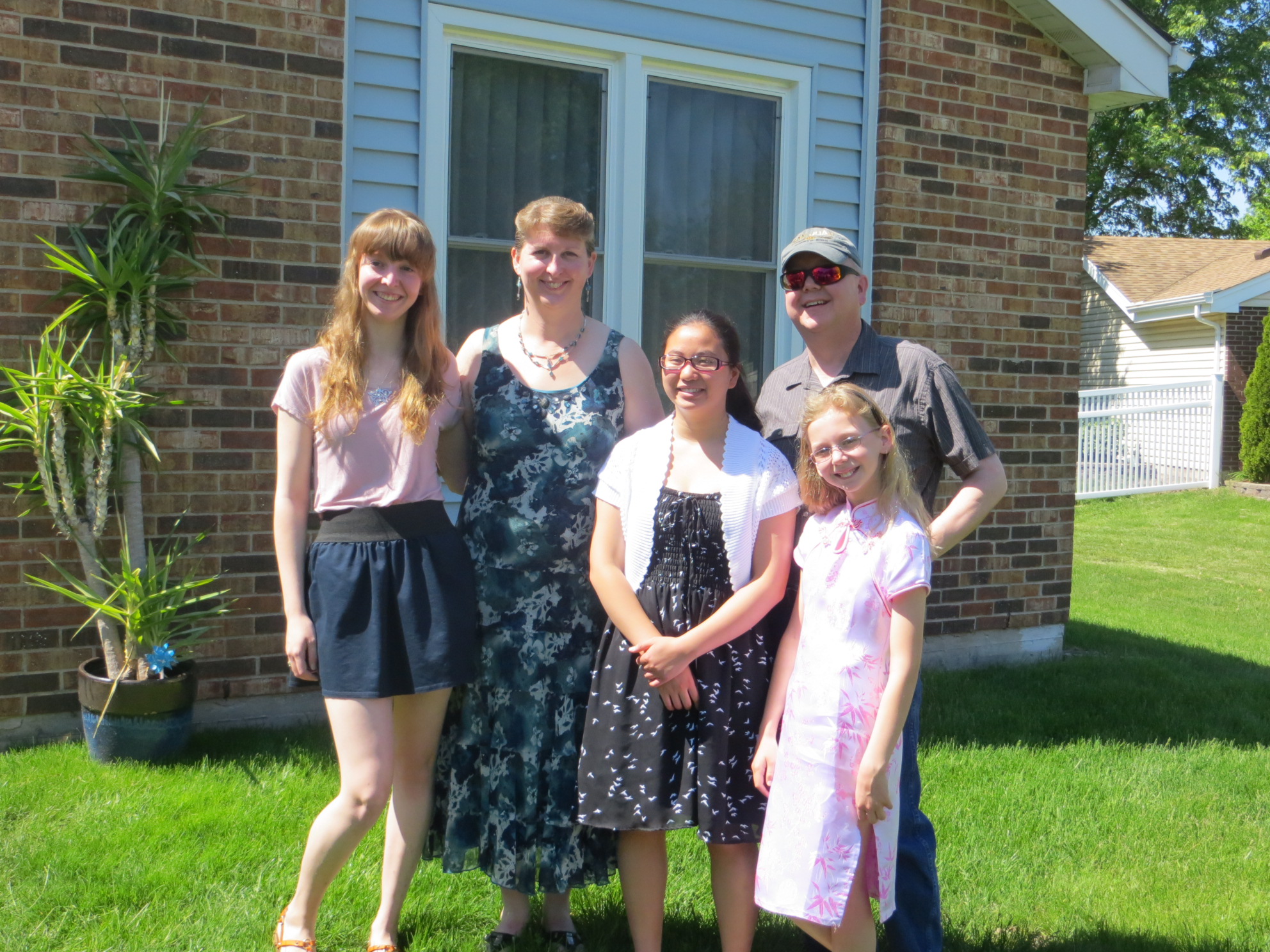
My lovely family!  It's hard to believe that I won't seem them again until Christmas time!

My lovely family! It’s hard to believe that I won’t seem them again until Christmas time!

All things considered, I’m extremely excited to be studying in Japan this semester.  I have wanted to go to Japan since I was a child eating sushi and teriyaki.  I’ve studied Japan’s history and culture in class and now I will experience it firsthand.  My language partner at the university and I have been messaging for a couple of weeks now and we’ve already made plans to go places and do things together.  I absolutely can’t wait!  If only the travel time was shorter…

Hangzhou, China: Tomorrow*!

With the exception of a few hours in Canada I have never been out of the United States, now I’m less than 48 hours away from beginning four months living on the opposite side of the globe. Wow.

At this time tomorrow I’ll be boarding a Boeing 747 at Chicago’s O’Hare Airport with half a dozen of my Valpo peers and a couple students from Luther College in Iowa for a direct flight to Shanghai. At the Shanghai Pudong International Airport we will meet our Valpo advisor for our semester China, Professor Pati who holds the Surjit S. Patheja Chair in World Religions and Ethics at Valparaiso University.

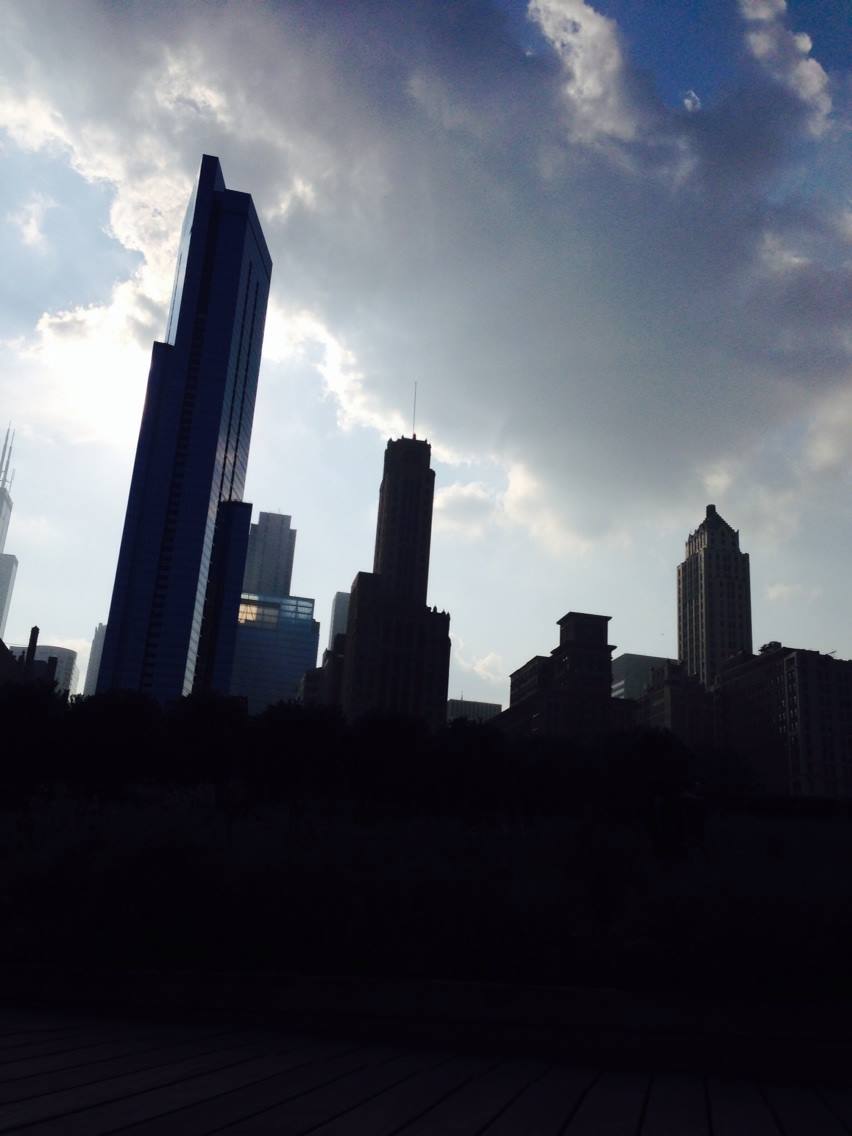
The Chicago Skyline from Millennium Park

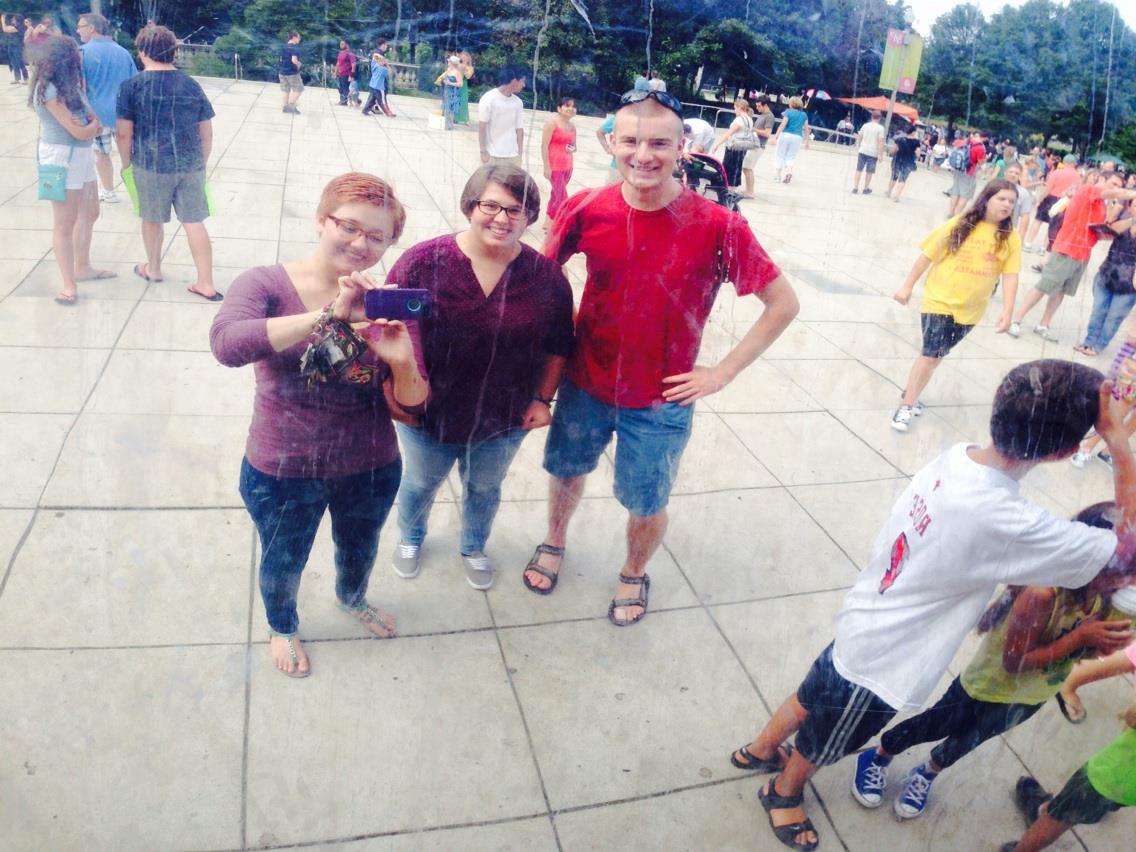
Hanging out with Valpo friends at the Bean yesterday.


I arrived in Chicago yesterday after spending a short month at home in Eugene, Oregon filled with camping and hiking adventures. Going to school at Valpo and spending my summers working in Alaska I’ve become a fairly decent domestic traveller and I hope my compact packing and public transit experience will translate to an smooth time across the Pacific.

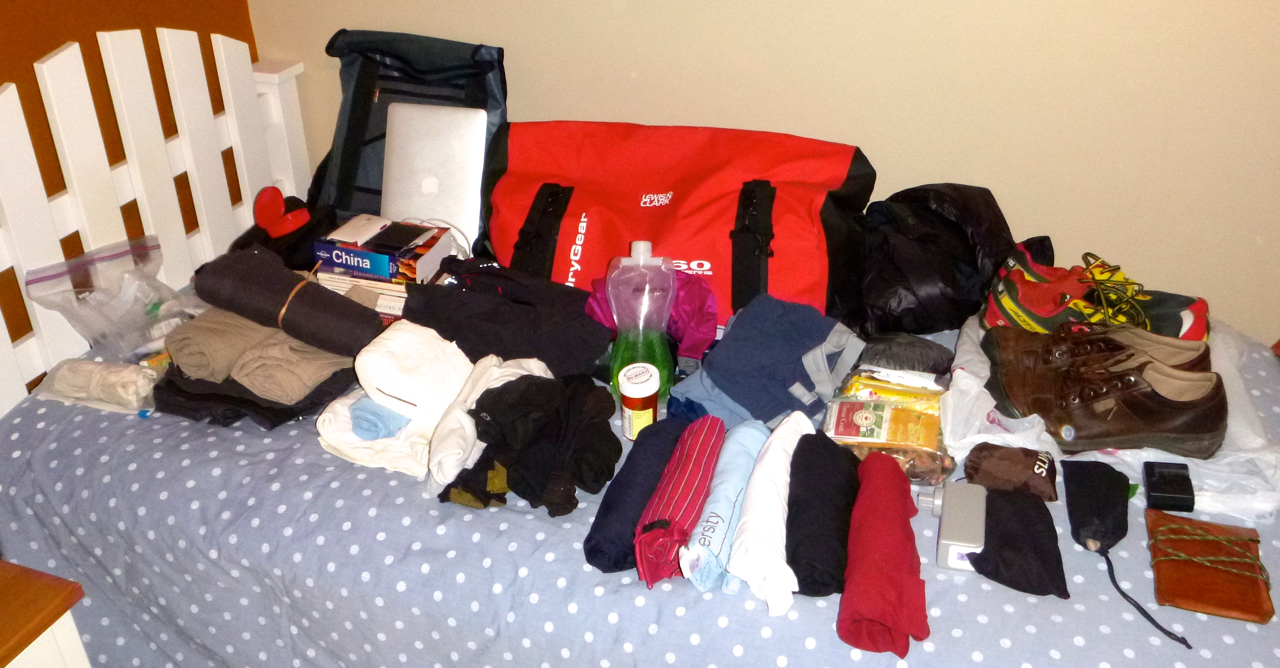
Packing almost done!

My knowledge of Mandarin is nill, as an engineering major the semester in China for me is purely for the experience. I’m especially glad that most of my peers know some Chinese and have travelled to China before. We will be living in an international dorm building on one of Zhejiang University’s campuses in Hangzhou, China. Besides taking Mandarin we will also have classes on Chinese History and East Asian religions.

Given that this is my first time overseas I’m not at all sure what to expect and have thus tried to keep my assumptions to a bare minimum. I expect my biggest difficulty will be the language barrier—I’m not good at language to begin with, especially distinguishing subtle tonal differences in words. (How did I make it in choir? Good question, I still don’t know myself.) Therefore I’m going to have to try extra hard to be outgoing and form connections with my Chinese peers. Hopefully the linguistic hurdles I will undoubtably encounter are more often humorous than frustrating.

Although I will be far more informed about my new city in a few weeks I also realize that the “small” (6 million) city of Hangzhou will be a new type environment as well. The ‘big Alaskan town’ I worked in has hardly two thousands residents and barely 50 miles of roads total, Eugene qualifies as a city with a big university and approximately 200,000 people and Valpo is distinctly small town at 30,000. So my brief visits to Chicago are the closest I’ve come to somewhere like Hangzhou. Luckily Hangzhou has generous green space around West Lake which is located near the city center which I look forward to exploring. And explore I shall!


*It might be Thursday by the time we actually get to Hangzhou, not sure how it all shakes out with the International Date Line and time zones.

Introduction: Katherine Ackerman in Tübingen, Germany!

“Man sieht sich immer zweimal im Leben”

Man sieht sich immer zweimal im Leben roughly translates to “you always meet twice in life.” When I last heard this phrase, I was 18 years old and had just spent my senior year of high school studying abroad in Germany. After 2 years studying here at Valpo, I’m going back for another year, this time at a German university. I’ll be spending my time reconnecting with a culture that I have grown to love, increasing my fluency and learning even more about the people and places in Germany.

Things will be a lot different this time around. Instead of living with a family I’ll be on my own, living in a German dormitory, cooking for myself and navigating everything on my own. This is my first experience living in a true apartment and I’m excited to learn the best ways to cook vegetarian food in a largely meat-based culture and shop for veggies at the weekly outdoor market. I’m also going to live in a city more populous than anywhere I’ve ever lived before. When I studied in Germany in high school, I lived in a town of 500, which is a radically different experience than living in a bubbling student metropolis. I’m going to take advantage of this by exploring and travelling as much as I can in the area right outside my own door.

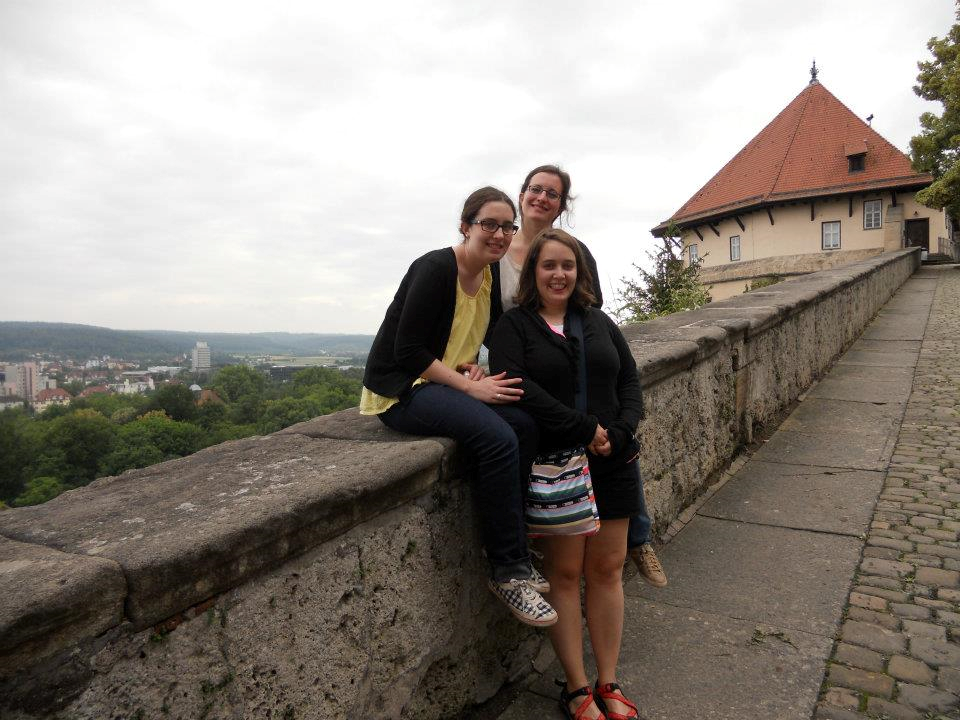
Katie in TubingenMy first semester will actually start a bit early with the Deutschkompakt (Compact German) course offered by the university. The course will give me the opportunity to fine-tune my German and get to know Tübingen before classes start. I will also get to know the other foreign students at the university as well as my flatmates. In Germany, dorms are replaced by 6-8 person flats where each person has an individual room, but all share a bathroom, kitchen and common living area. Although there are cafeterias throughout the city, there is no central/formal meal plan so most of the cooking will be up to me.

The picture I included above is important, because it’s from the last time that I was in Tübingen, a few weeks before I came to Valpo. I studied abroad during my senior year of high school, meaning that I did not have the opportunity to go on college visits before applying to college. I had been to a few schools when my sister was looking at colleges, but I had not really had the opportunity to go on my own search. Looking at the university of Tübingen was really the only true college visit that I made. It was a trip that allowed me to codify my college search experience and help me transition into the idea of going to college despite being far away from home and all oft he colleges that I was considering while preparing for it.

And so, in many ways, returning to Tübingen is an experience of coming full circle, of reconnecting with my past and bringing together two different parts of my life. I will get to experience living in Germany again while maintaining my connection to Valpo. I fully look forward to diving into this new experience and finding out what more Germany has to offer. Deutschland, wir sehen uns endlich zum zweiten Mal!

Introduction: Stephanie Black in Cambridge, England!

“The real voyage of discovery consists not in seeking new landscapes, but in having new eyes.”

―Marcel Proust

Words. For years in school, that’s all that Europe was to me. A bunch of words about important people who did important things that didn’t seem to have any effect on me today. I’d seen pictures of the Eiffel Tower, learned about the ancient Romans and Greeks with their great architecture, and memorized important dates and battles.

Stephanie in BelgiumIt took awhile to realize that these were actual places, not just words on a page. And when I did, I was ecstatic to be able to go to these places I’d heard so much about. Who wouldn’t want the chance to make those pictures and words a reality?

So far, I’ve traveled to six different countries. I’ve traveled by train, plane, bus, taxi, boat, cruise ship, and bicycle. I have seen hundreds of things, taken thousands of pictures, and shared experiences with people that I will not soon forget. But I want more.

When I traveled before, I saw a small portion of the world in two weeks. That’s a nice glimpse of the world, but it’s not reality. It’s not how people live.

I wanted to study abroad because I would be able to completely immerse myself in a culture that’s different from my own. I’d be able to have new eyes, to gain new experiences. I find that when I travel, I have a greater appreciation for the things that I take for granted here in America.London

Don’t get me wrong, I still want to see all the sites. I love the history in Europe, and there are so many exciting places to see. But I also want to participate in the culture I’m seeing. I want to become a part of something bigger than myself. I want to see the world through new eyes, and appreciate the differences in culture.

I can’t even describe how thrilled I am to be studying abroad, and I can’t wait to go. I can’t wait to see the things I’ve always been taught come to life. It will be a once in a lifetime experience, and I can’t wait.


Introduction: Margaret Prunty in Windhoek, Namibia!

Deciding to study prunty2abroad was not a challenging decision for me. Growing up, I knew I was interested, and it was highly encouraged in my family. My mom lived and studied in Europe during her college years and after graduation, she moved to Japan for a year to teach English. To this day, she is still enthusiastic about her experiences and I believe that this is what triggered my own desire to study abroad, although it was ultimately my decision.
I was fortunate enough to travel to other countries such as Canada, Costa Rica, Mexico, Belize, and Honduras. Canada was my first time outside of the United States and although I enjoyed it, it almost felt like I had not left America, because we were just over the border. A few summers later, my parents said we were going on a cruise which is when we went to Mexico, Belize, and Honduras. After seeing part of Mexico, I quickly realized that the world is a very large and unique place and it’s important to acknowledge that it is so much bigger than who we are as individuals. I was happy to be see these places even if I didn’t see everything and grateful for the lessons that I learned and memories that I made. Fast forwarding two years later, I got to see Costa Rica where I embraced a culture different from my own as my family and I lived like locals. We ate the same foods and stayed in a home similar to that of the residents. Living like this was an eye opening experience by taking on daily life in another part of the world, and makes you very appreciative of what you have, which is why it’s important to see new places.

Although my mother is an advocate of traveling, it was my own experiences in the countries I have been to that made me want to go abroad. These vacations gave me a thirst for new sights, adventures, memories, and lessons, which can be satisfied by studying abroad, in my opinion. Overall, I chose to study abroad to enrich my college experience and my perspective on life in general.

Introduction: Sarah Blackwell in Hirakata, Japan!

Last week I finally bought my plane ticket to Japan, so my study abroad opportunity is finally starting to feel more real! It’s definitely one thing to be accepted into Kansai Gaidai University and begin to fill out paperwork for housing, etc.. Those are great things that bring me closer to my destination. However, it’s quite another thing to buy a plane ticket; it puts the paperwork into the realm of reality.

Japanese Spring Festival

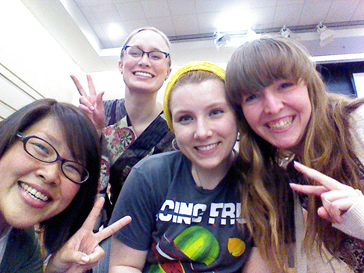
Japanese Club Spring Festival with club members Emily and Sabena, and my language partner, Nozomi. We practiced Japanese and sang karaoke, a popular pastime in Japan

I chose the study abroad program at Kansai Gaidai University because I plan to teach English in Japan after I graduate, either through Fulbright or the Japan Exchange Teaching Programme (commonly referred to as the JET Programme). Studying abroad in Japan will provide me with excellent opportunities to learn about Japanese culture, practice using the language in its native context, and get to know new people- things I’ve been wanting to do for years.

I’m probably most looking forward to making new friends and getting to know new people in Japan. From what I’ve heard from others who have been to Kansai Gaidai, students on campus are very friendly and want to make foreign friends just as much as I do.

Honduran Friends!

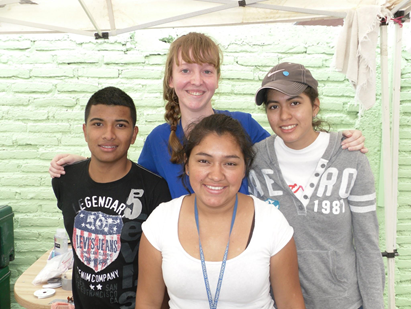
My friends from Honduras. We still talk a lot!

I also really want to visit a lot of places like shrines, temples, and “konbini” (convenience stores- Japanese konbini are famous for their uniqueness) among other tourist attractions. And just as much as tourist attractions, I want to explore Hirakata and the surrounding area for small, hole-in-the-wall places that make the area unique; I’d love to find a little “mom-and-pop” type ramen stand or something similar that would make the area feel like home. Hopefully I’ll even find time to make the journey from Hirakata to Tokyo. It’s a long way, but it will be worth it to visit Japan’s largest city. I’ve already starting making a list of places in Tokyo, Osaka, and Kyoto that I want to visit. I won’t have time for all of them, I’m sure, but organizing a list ahead of time will make my decision easier when I’m actually there. I just can’t help but start preparing now, even though this semester isn’t over yet!

I’m really excited to simply live in another place, despite the language barrier that I will undoubtedly run into. When I went to Honduras last year, I had been learning and speaking Spanish for about eight years, so I didn’t really have any trouble navigating or speaking to locals. However, I’ve only taken two years of Japanese and learned a little on my own. I’m sure the language barrier will affect more aspects of my life than I’m aware of, but honestly I’m really excited about it: it’ll give me a chance to really practice using the language. I’ll make mistakes when taking trains; maybe I’ll read the maps wrong. But I’m sure it will turn out alright, and very possibly turn into an exciting adventure. Even something as simple as going to the store won’t be as simple as it is at home. None of the products will be the same and I probably won’t be able to read much on the labels. Despite all this, I’m still very excited about it- these experiences will help me grow and develop as a person and prepare me for the career I’ve chosen. Not to mention I’ll have a good time!

Enthusiastic future Kansai Gaidai student,

Sarah Blackwell

Introduction: Katie Rinda in Reutlingen, Germany!

I have basically three months until I climb on board a plane for Stuttgart. I don’t know how you feel about change, but I’m pretty much freaking out about it. (The added stress from the end of the semester isn’t really helping.) Living in a foreign country is pretty scary as is, but it’s even scarier when you’re supposed to be working there as well.

katierinda3Every time I’ve started working at a new place, I’ve had to learn a whole new vocabulary. Every industry and company has their own jargon, and the differences amplify when you add technical vocabulary to the list. It generally takes me a month to fully understand the lingo. And, in general, going to Germany will mean I have to learn a whole new set of words and procedures for just regular life. Hopefully, those years of studying German will pay off.

What I’m worried about is transitioning to my internship. Will I have developed enough German skills to sort through conversations to find what’s technical and what’s not? There’s always a jump between engineering at school, and engineering in the workplace. Sometimes, they seem to be on opposite ends of the spectrum. When I get comfortable with jargon, I can generally connect it back to what I’ve previously learned. Will the language barrier keep me from making those connections?

I really can’t answer that until I’ve spend time abroad. However, in anticipation of this problem, I’ve developed a few strategies to combat my ignorance of technical German:

  1. Focus on language for industries I’m already knowledgeable about. I’ve already had one engineering internship, and will finish a different one this summer before I go abroad. Since those experiences will shape my resume, I’m starting to develop a list of words for industry specific terms. (Eg. I worked with aluminium rolling mills last summer: Aluminium Vorgerüste in German.) Thanks to my time at Alcoa, I know German companies who make mill products, and can learn vocab, just by reading the German version of their sites. General dictionary searches rarely can trGerman Vocab!anslate the jargon as well as the industry themselves.

  2. Find Technical Articles.  Similarly to industry jargon, technical articles will be full of official vocabulary from the field itself. Reading these articles not only teaches me more German, but also adds to my knowledge of engineering.
  3. Speaking with native speakers in a casual environment. I’ve attended the weekly Kaffestunde at the German house frequently since I came to Valpo, and it has definitely improved my comprehension of German. Listening to native speakers rapid fire discuss politics or baking or their travels using words I didn’t learn in class, and actually beginning to understand them is really cool. It also tells me that if I can start to understand half the words, I should be able to understand the gist of the conversation.

That’s what I’ve put together so far. I’ll check back in on this after I’ve been over for a bit and report on the success/fail rate, or if I find anymore brilliant prep tips.

So nervous. So excited!

Introduction: Tobiah Meinzen in Hangzhou, China!

For as long as I remember I knew I wanted to study abroad when in college. Growing up I was
interested in exploring new places, a trait I probably inherited from my father, a high school history
teacher who was born in India and served as a Peace Corps volunteer in Sierra Leone.

tobiah2I chose to attend Valpo in part because it provided a flexible schedule for engineers to study
abroad. As an engineer, Valpo’s Hangzhou study center is a huge asset. Given the huge manufacturing
and economic resources of China, collaboration with China has become a crucial element of any large
engineering transnational corporation, especially the consumer electronics industry which I am
particularly interested in.

When the Caterpillar Scholarship became available, it made my decision even easier. My
engineering advisor and I had already set aside the fall 2014 semester for me to study abroad.

I think the biggest way I have prepared for studying abroad (besides Valpo’s pre departure class)
has been by reflecting on my previous experiences moving to entirely new places: Holden Village,
Alaska, and Valpo.

In reflection, I have found that it is often the little things that are most surprising or hardest to
adapt to. I know there will be obvious differences between myself and the residents of Hangzhou,
language being the biggest. But by recognizing the big differences it is often possible to miss the effects
of the little differences.Tobiah in Alaska

For instance, when I worked at Holden Village a political philosophy was very obvious in daily
life and religious services, yet when I arrived at Valpo I found that politics could be a very polarizing
topic and were thus not talked about frequently. This difference in the treatment of political issues is
surely one I’ll have to be aware of in China where the government is relatively authoritarian.

Another difference I found was in attitudes towards recycling and consumption (aspects of
environmentalism). Holden Village was very aware of their environmental impact and we hand-sorted
all the trash and recycling, whereas at Valpo recycling is a much more passive act, simply a different
colored bin and in Alaska there were no recycling facilities, most of their trash is incinerated.

Therefore I have found that awareness for little aspects of a new culture/society can have a
dramatic impact on how I conduct myself in society and can help easy my transition into a new culture/
environment.

!Additional Note: Since graduating high school I have maintained my own blog at
blog.tobiahmeinzen.com (80 posts, 5000+ views) which details my travels including 9 months spent at
Holden Village and two summers working in Dillingham, Alaska. Both experiences have been similar to
study abroad in the sense that I moved to a new location without any connections. My posts from my
time at Holden and in Alaska include photos, details of day-to-day life and reflections on my experiences
in those places.

Farewell to Costa Rica!

The following was written by San José Study Center student Malachia Jones-Bone.

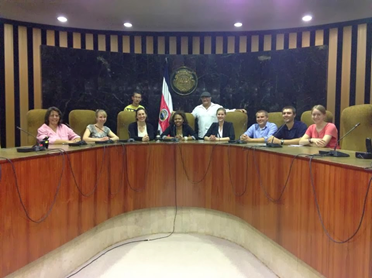
magistrates chamber supreme court

The Spring 2014 Costa Rica cohort in the Magistrates’ Chamber

I’m two weeks shy of being in Costa Rica for 4 months. This trip to Costa Rica has been the greatest experience I’ve ever experienced. The beautiful scenery, the friendly people, the warmth in each community, are all aspects I’ve appreciated. I came to Costa Rica looking to find myself. This is a broad statement, but to be more specific I wanted come out of my comfort zone and find my place in the world. The only places I was accustomed to were the Chicago and Valparaiso areas. Of course I’ve visited a few other states, but nothing like Costa Rica or Nicaragua. My experiences of the United States had me initially with high expectations of Central America. Of course the pre departure meetings helped but I was not prepared mentally nonetheless. Walking through the gate to my host family home I was nervous, anxious and somehow ready to start fresh somewhere. The first months here in Costa Rica were exciting. I met new people I’ve never seen at Valpo prior to this trip. I was forced to work with a group of students I had no similarities with, and oddly enough those students became some of my closest friends. Aside from attending Spanish classes we were able to explore Costa Rica. Every week was a different adventure. One adventure that sticks out to me was traveling to Manuel Antonio National Park, on the Pacific Ocean. We planned and executed the trip with little to no outside help. We walked the streets because apparently J-walking is not illegal here. The streets twisted and turned. The weather was exceptionally hot. You could practically fry an egg on the side walk. Every corner had a small business or local restaurant. As we walked we could hear the music coming from various restaurants, cars, and residential homes. There were chickens walking around in the alley as well as roosters who literally became my alarm clock for the next few days. For the first time in my life I felt completely independent and on my own. It was a breath of fresh air but scary at the same time. At that moment I realized new adventures might be scary but they are worth it in the end because I grew as a person! It is worth it to try something new and relinquish my comfort zone because in return I have an opportunity to experience life in a whole new way.

« Older posts Newer posts »

© 2026 Valpo Voyager

Theme by Anders Noren — Up ↑