Valpo Voyager

Student Stories from Around the World

Page 100 of 125

Living large in Vienna!

With the end of our five-week intensive German course came a small, one-week break prior to the start of the semester this week Monday. So, we had the last-minute idea to travel somewhere and take advantage of this last opportunity until Christmas break. At first, we decided to go to Berlin, but after some disappointing searches for cheap flights, I uncovered something called “Blind Booking,” through Germanwings, a discount airline that flies out of nearby Stuttgart.
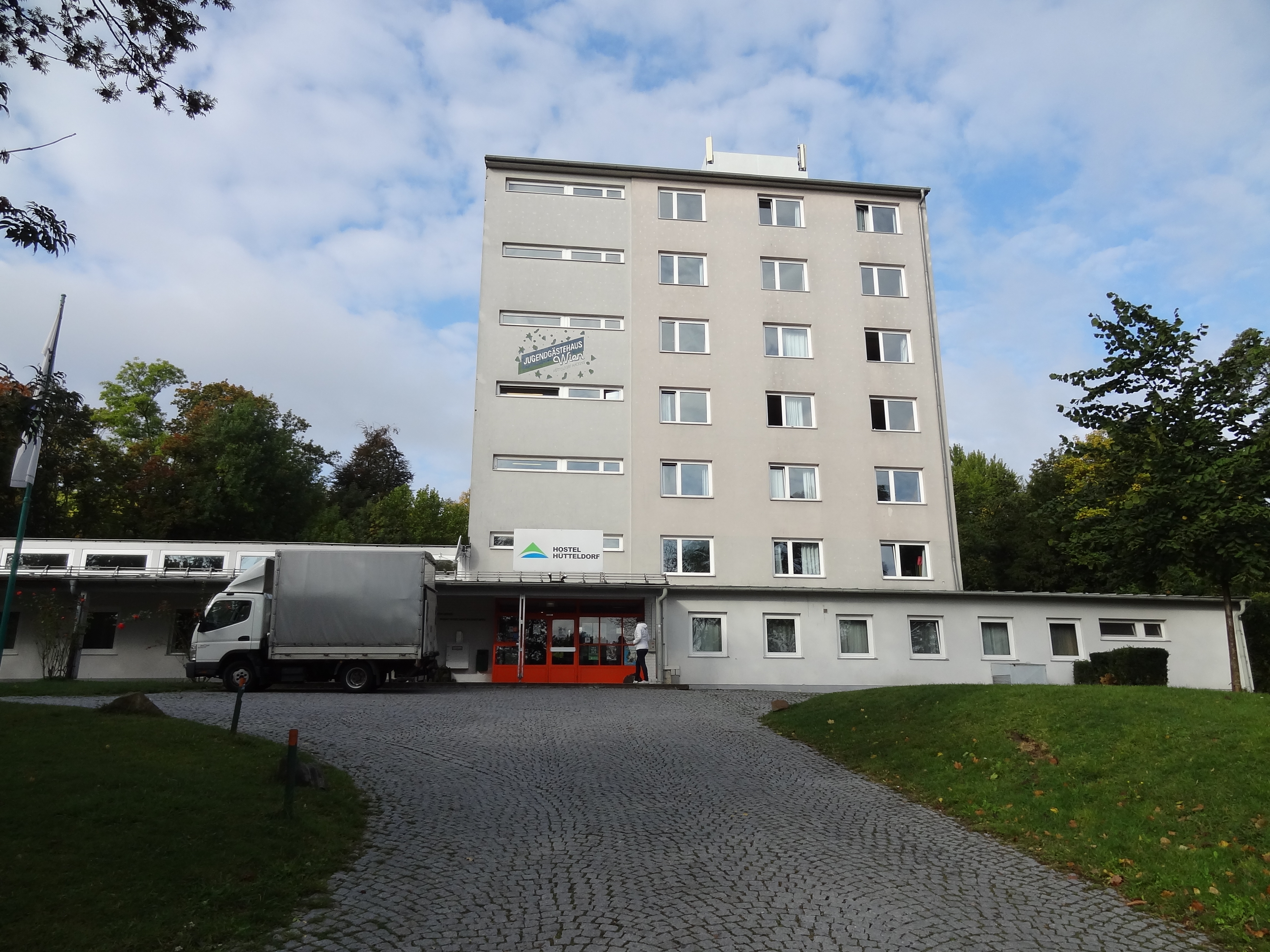
Hostel Hütteldorf


For €60 per person, we could get round-trip tickets to one of six cities: London, Lisbon, Rome, Barcelona, Berlin, or Vienna. The only catch is that you don’t find out where you are being sent until after the transaction has been processed. A surprise trip was fine with us! We figured that we had a one out of six chance of getting our original wish (for more than €100 cheaper) and that we would gladly go to any of those cities. For €5, you could pay to exclude a city, which we had originally planned to do with London, as we will all have friends studying in nearby Cambridge next semester who we had planned on visiting anyway. With the five of us plus a Canadian friend named Helina who wanted to come along, this addition put us over the limit of my credit card, so we just had to keep London in the mix and hope for the best! It was a bit of a pain having to pay for all of our tickets together, but it was better than the alternative of everyone paying their own way and being sent to six different cities in Europe.
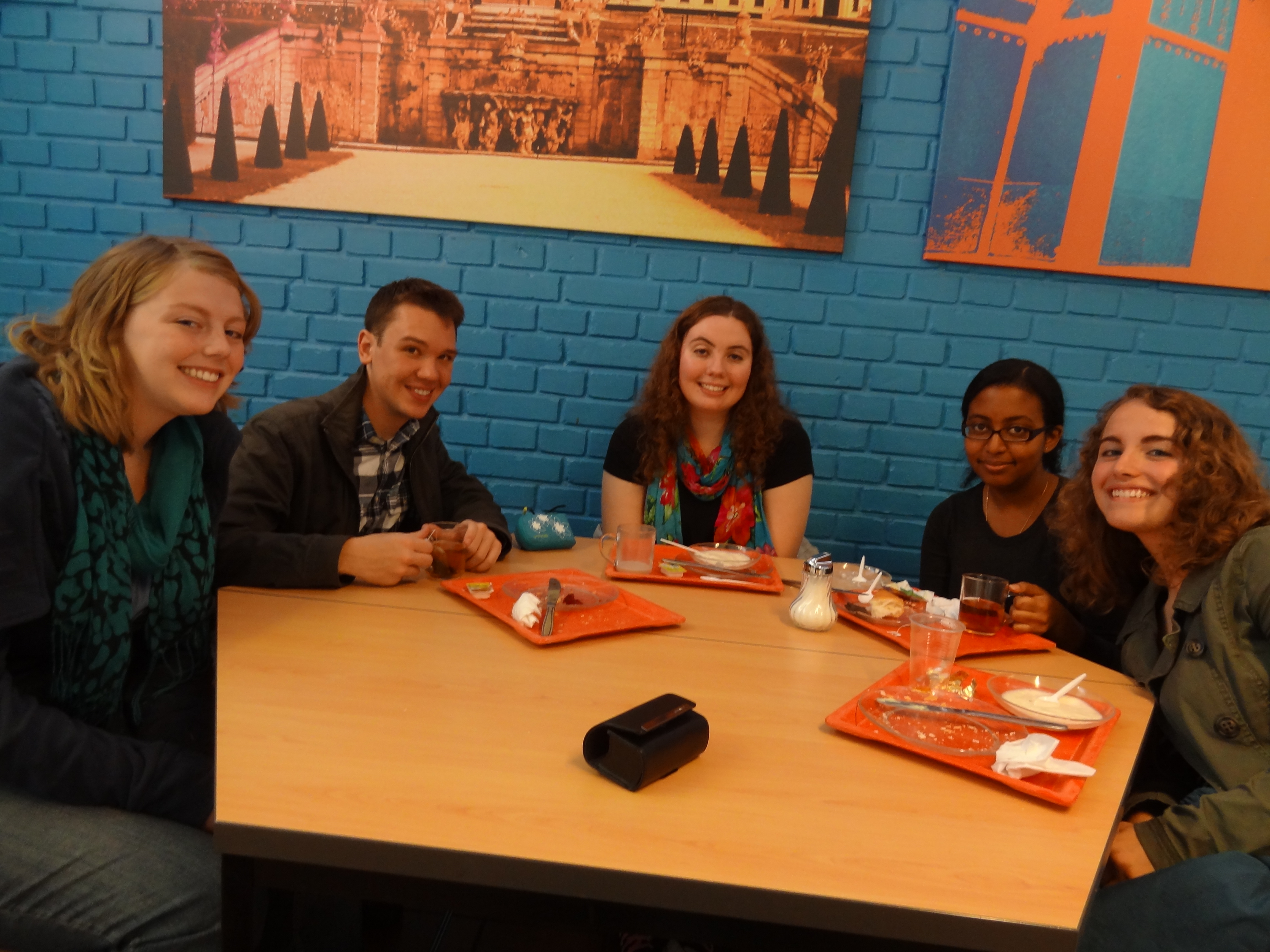
Emily, Jake, Hannah, Helina, and Rachel at breakfast! Maybe not quite awake yet...


As we excitedly clicked through the online purchasing process, we soon learned that we would be flying to Vienna, and the search for a Youth Hostel began shortly after. I used HostelWorld, whom I follow on Twitter, to search for a place to stay and I was very pleased with the result. The website had excellent reviews and information, and the hostel turned out to be perfect. It was a little further out of the city, but within 5 minutes of a subway station, where trains into the city came every 3-8 minutes. It was only a 15 minute ride, and I was extremely impressed with the public transportation system in Vienna. I don’t think we ever waited more than 5 minutes for the subway. It seemed like every time we walked up the stairs to the platform, one was just pulling in to take us wherever we wanted to go. At the hostel, we had the option of purchasing “Vienna Cards,” which allowed us to travel on any tram, bus, or train for 72 hours for €18. It also came with discounts to museums, so it was really an incredible value. Although everything in Vienna was pretty expensive, train travel compared to Germany was very cheap.
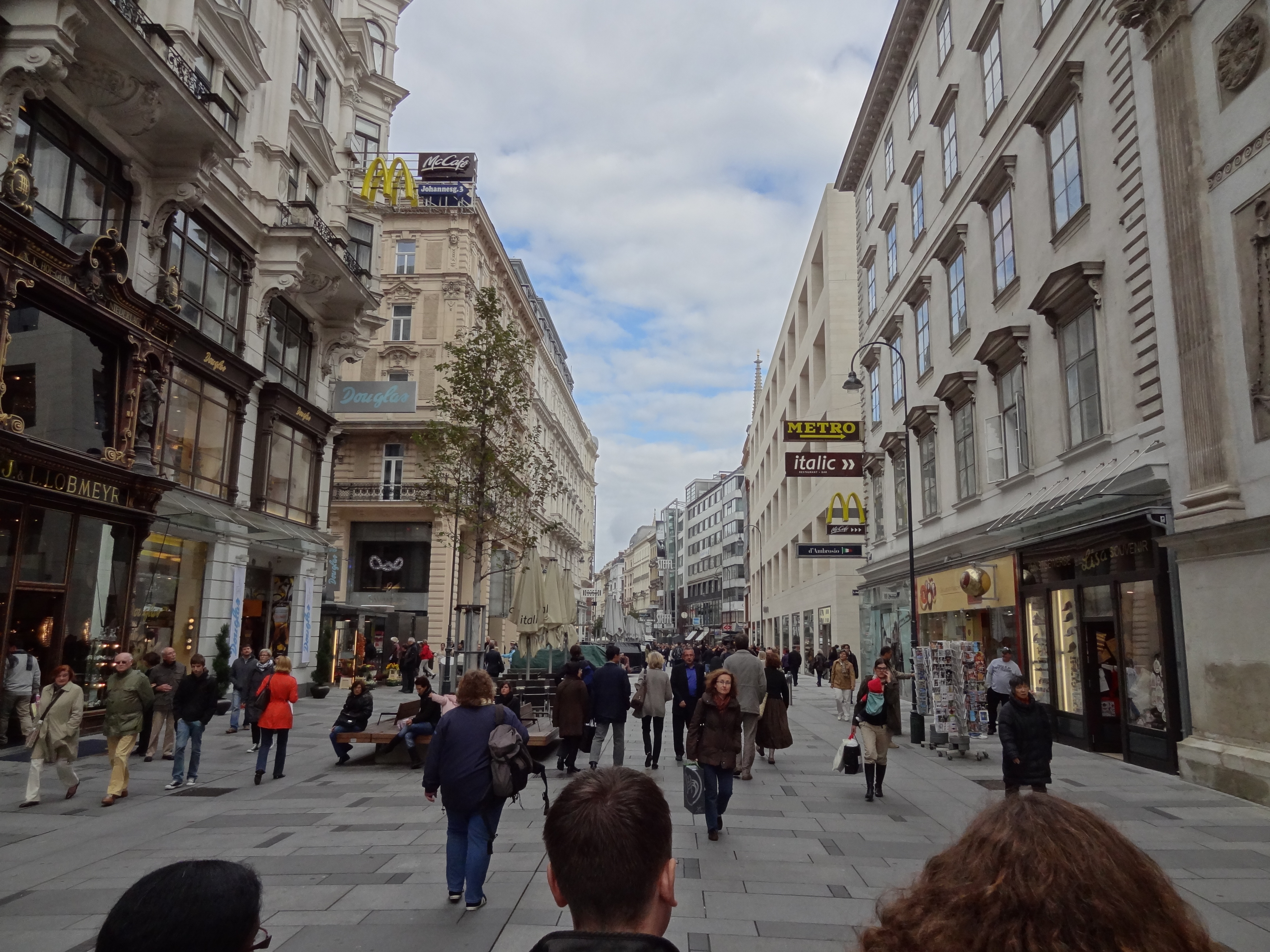
Vienna's shopping/commercial district


Our housing accommodations for the five-day trip, “Hostel Hütteldorf,” were quite comfortable. We shared a six-person room complete with a table and chairs where we sat every night to plan our next day’s activities. The hostel came with free internet access and free breakfast, which we did out best to fill up on every morning. As an added bonus, there was almost always a big bowl of apples on the front desk, from which I always grabbed a couple for snacks or to pack in my lunch for the next day. When you’re a poor college student traveling through another country, it’s amazing how a bowl of free apples can seem like a luxury… In any case, we had really good luck with the hostel, and would gladly go back or recommend it to anyone.


We arrived in Vienna around 8:00 PM on October 12th, and checked into our hostel after an excellent dinner at a Viennese restaurant that Jake knew of, from having been there a few short weeks before.


We accomplished so incredibly much over five days that I hope I’ll be able to describe the first half of the trip with enough detail! Jake will be doing a post soon on the second half.
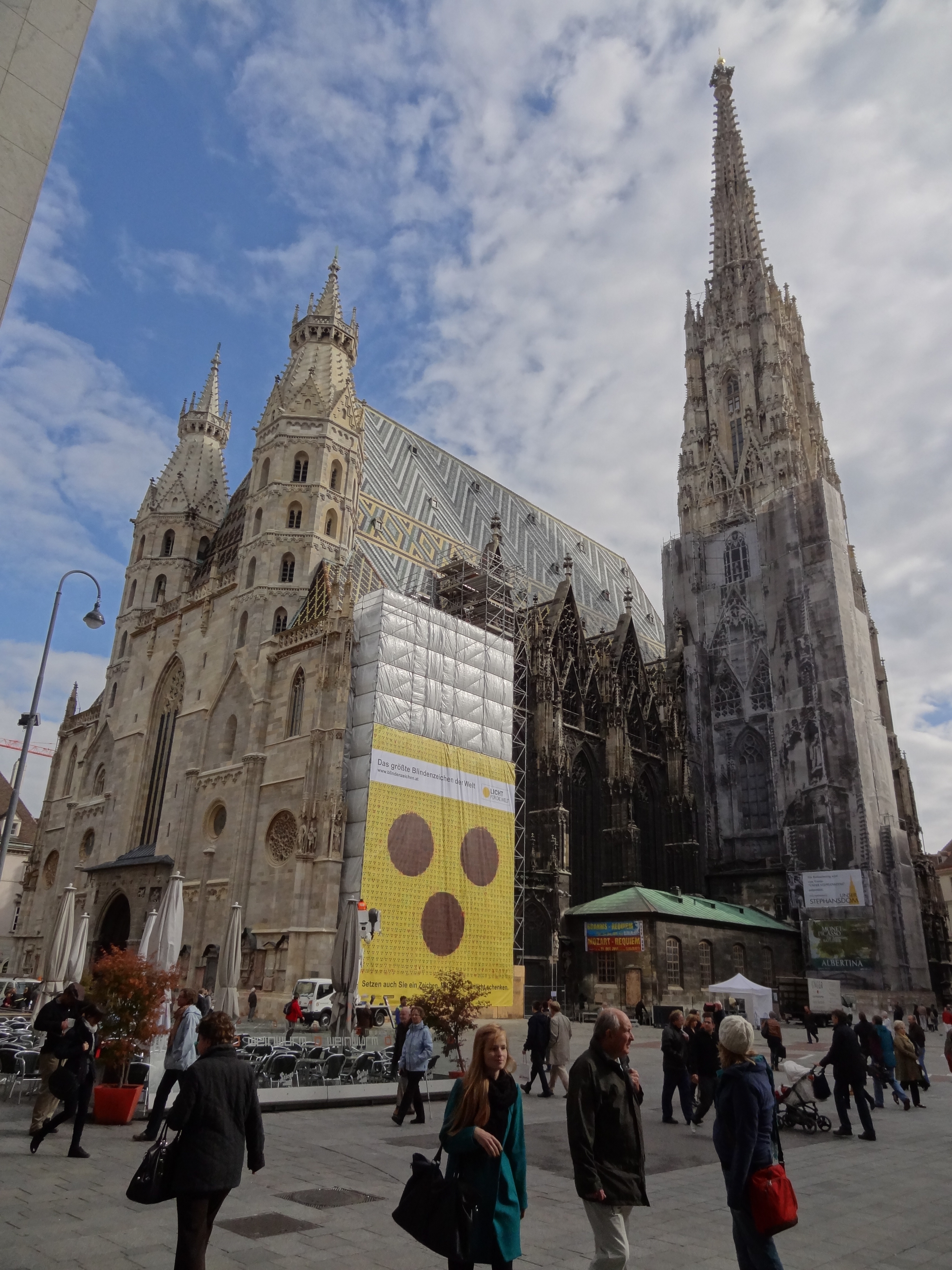
 

The Stephansdom


On Thursday, we woke up in time to catch breakfast, which was put away promptly each day at 9:00, and took the subway into the city. We checked out the Karlsplatz train station, built in the Jugendstil style of architecture, (as recommended by Professor DeMaris) before visiting a few churches, and making our way through the shopping district, and the Altstadt (Old City.) We also purchased tickets for a musical that we saw later that night, as well as tickets for an opera that we saw on Friday night. The Musical was called, “Ich war noch niemals in New York” (“I have never been to New York,” or “I have not yet been to New York,”) and it is fairly popular here in Europe right now. It is based on the songs of Austrian composer Udo Jürgens, and although you could tell the plot was written to include the music, it was nonetheless enjoyable. The songs were great and well-performed, and the story was light and funny. The opera for which we bought tickets was Mozart’s “Die Zauberflöte” (The Magic Flute) and it was excellent!
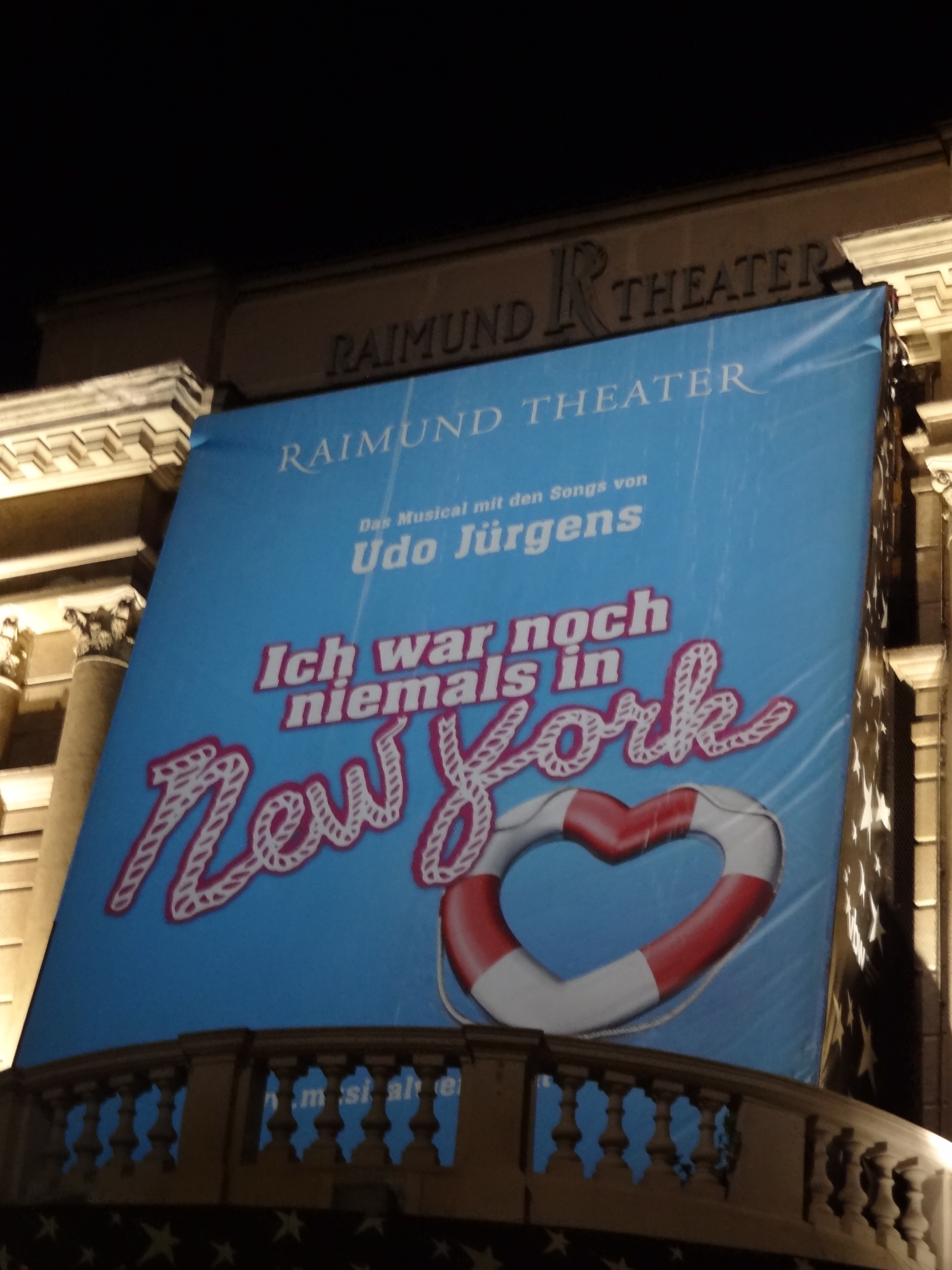
Ich war noch niemals in New York!


While we were walking through the city, we saw a bunch of police officers near the Opera house. They asked us all to wait on the street, and although we didn’t understand why, we of course complied. A few minutes later, a motorcade of police motorcycles and Mercedes-Benzes bearing Saudi Arabian flags drove by, as we all watched curiously. Later, we learned that they had just come from a ceremony in which a Saudi-backed religious center in Vienna was officially opened. In Saudi Arabia, the only legal religion is Islam. The idea behind the religious center in Vienna is that by funding a council of Muslims, Christians, Jews, Buddhists, and Hindus to engage others in inter-religious dialogue, the Saudis can also learn how to slowly begin to integrate other religions into their country as well. I think it’s an interesting concept.


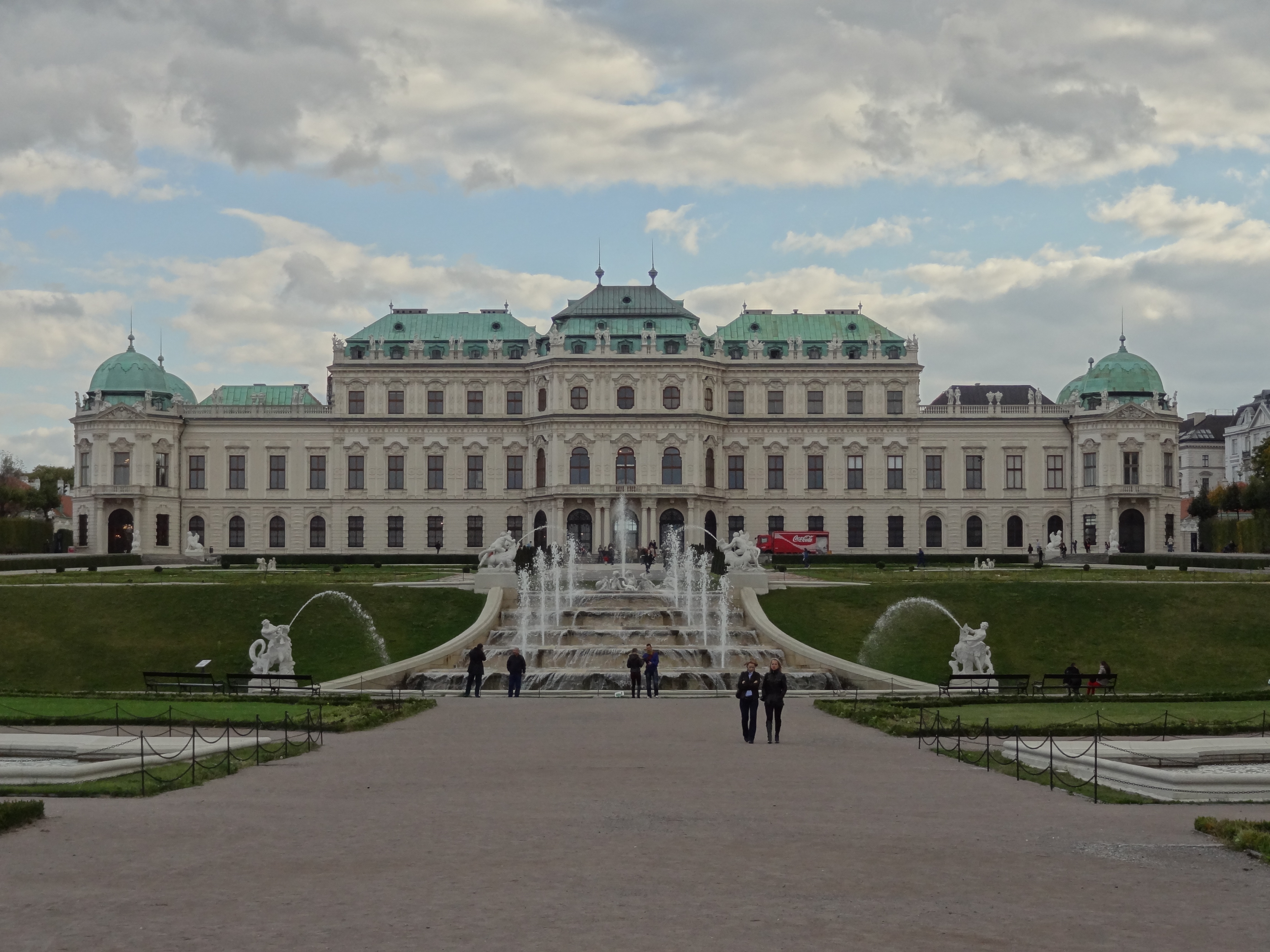
Anyway, we also visited an art museum called “Belvedere,” which took up all of Thursday afternoon. The museum wasn’t obscenely giant like the Chicago art institute, but it was big enough to tire you out after a couple hours of taking it all in. It was great to see so many works of Egon Schiele and Gustav Klimt, whom we spent a lot of time discussing in German 220. The museum was located inside of an old palace and the grounds as well as the building itself were absolutely stunning.
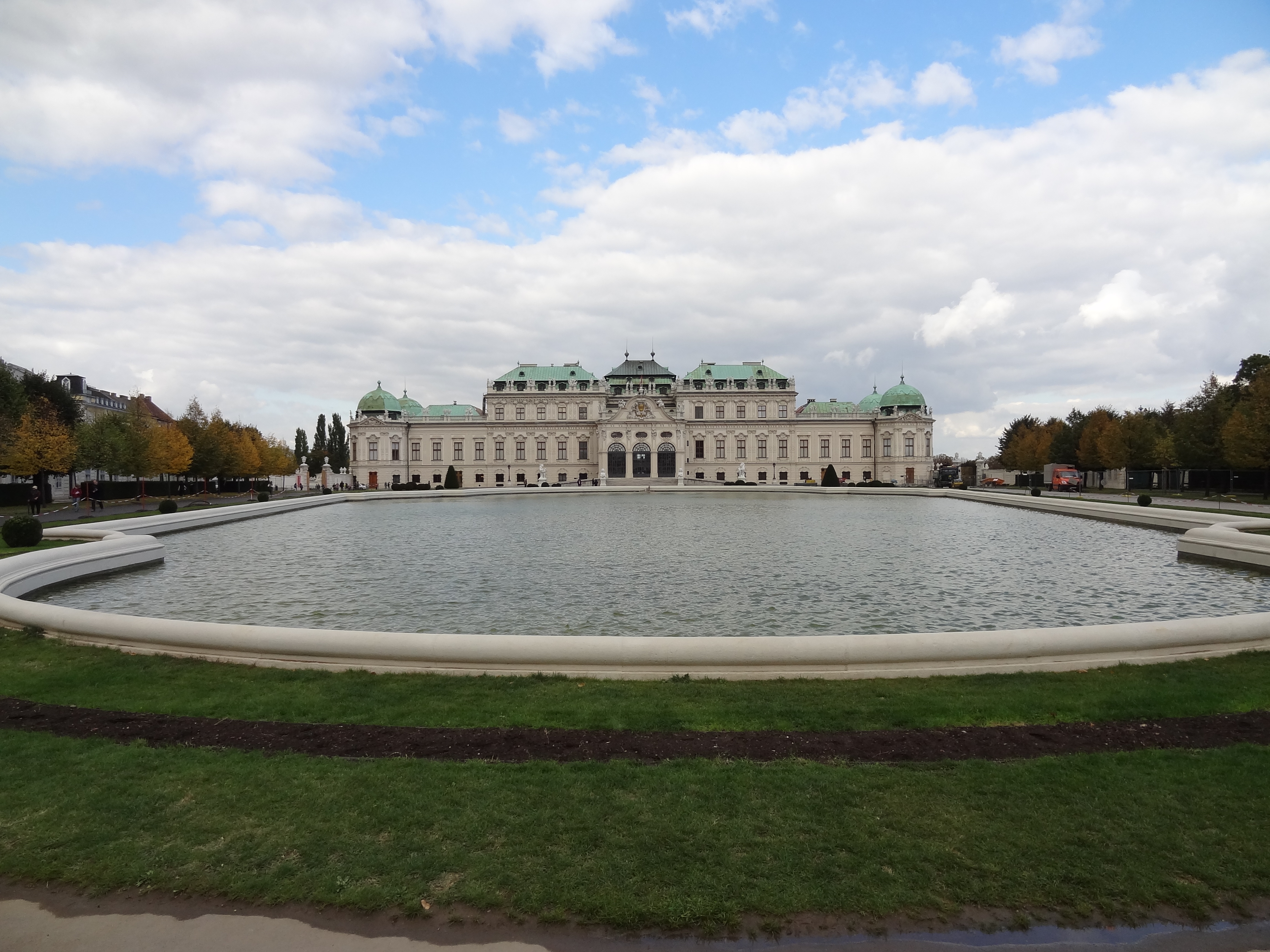
 

Belvedere
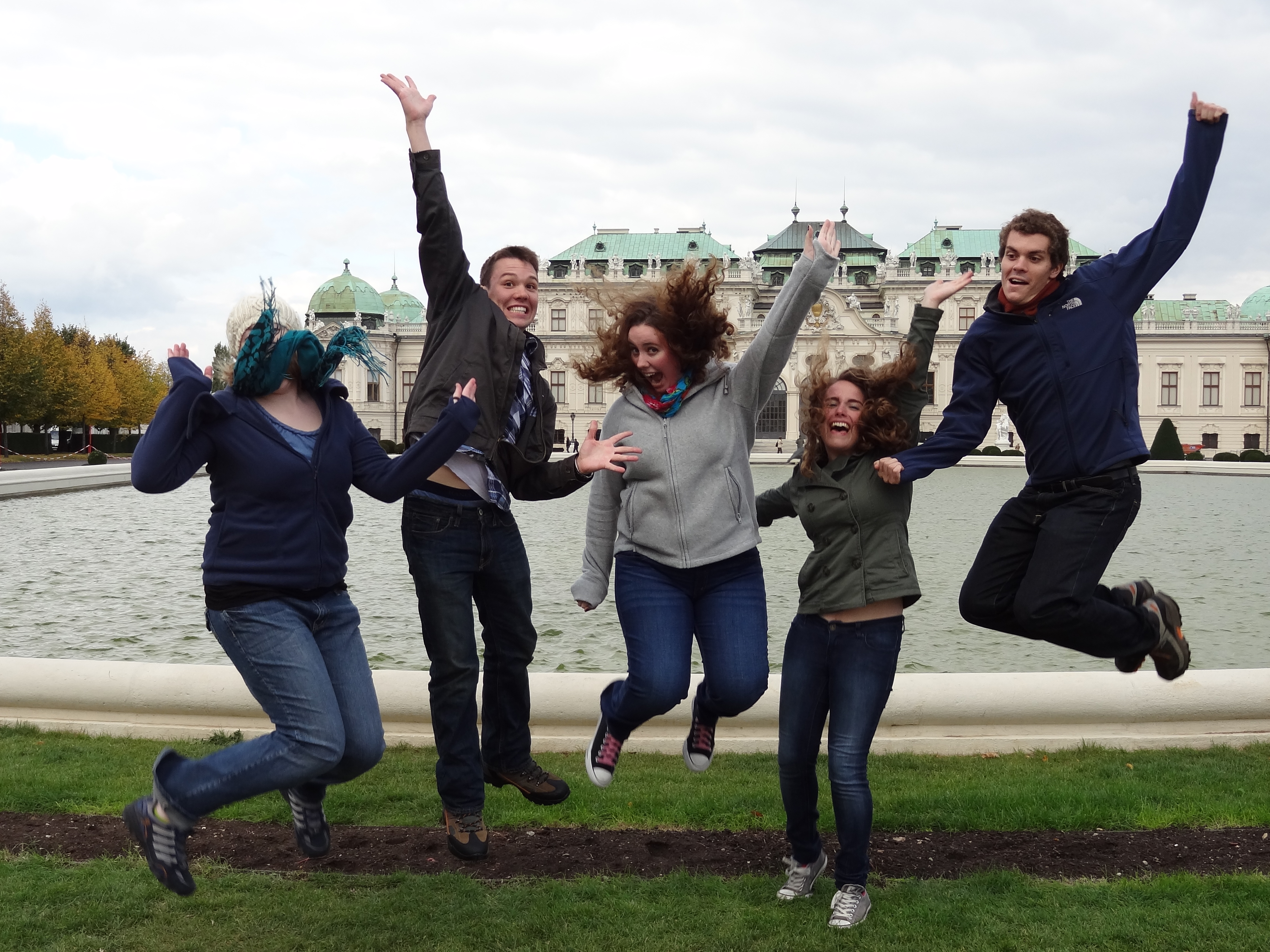
Emily, Jake, Hannah, Rachel and Me in front of Belvedere
Belvedere from the front


On Friday, we did a little shopping (I bought a new coat!) and later explored the altstadt a little more, this time going inside of the Stephansdom (a giant church in the city center) as well as visiting Mozart’s house. We decided not to take a tour of Mozart’s house in the interest of time, but we did poke around inside just for a bit. Afterwards, we took the tram down the historic “Ringstraße” (Ring Street) to the Austrian Parliament building. Where the “Ringstraße” currently stands there once stood a wall that surrounded the city of Vienna. As the city expanded, there simply wasn’t enough space inside the wall, so it was torn down, as the need for protection had also grown weaker over the years. At Parliament, we took a fifty-minute tour of the building and the various chambers, and learned a little about how the Austrian government functions. The tour was given in German as well as English, so although we understood nearly everything, it was nice to have the English in case there were technical government terms that we didn’t get the first time around in German. The Austrian Parliament was heavily damaged during World War II, but has since been restored to its original likeness. It’s a beautiful building! While we were touring one of the open reception lobby-type areas, tables were being set up for some sort of a formal state dinner that was to occur the following night.
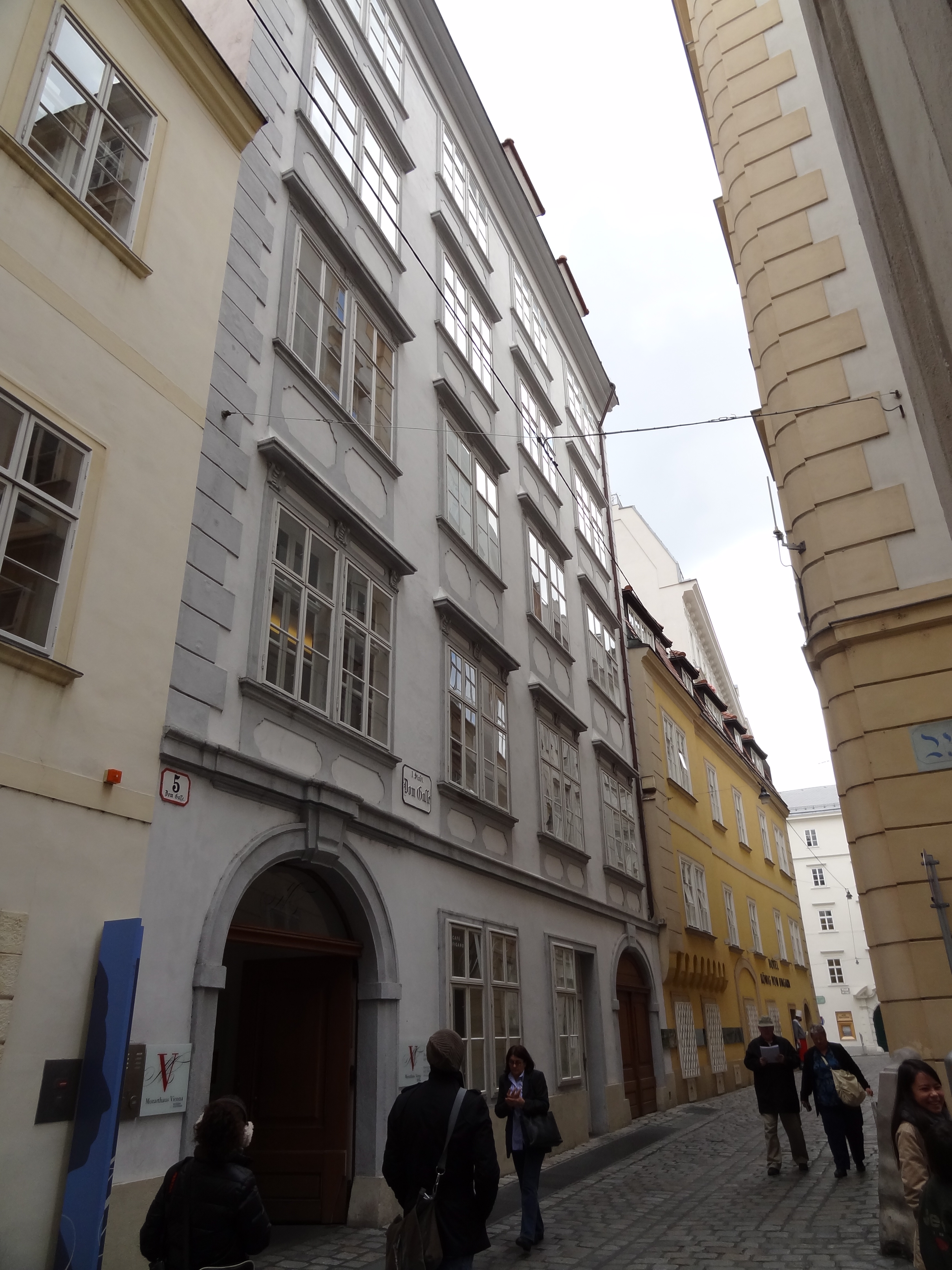
 

Mozart's house!
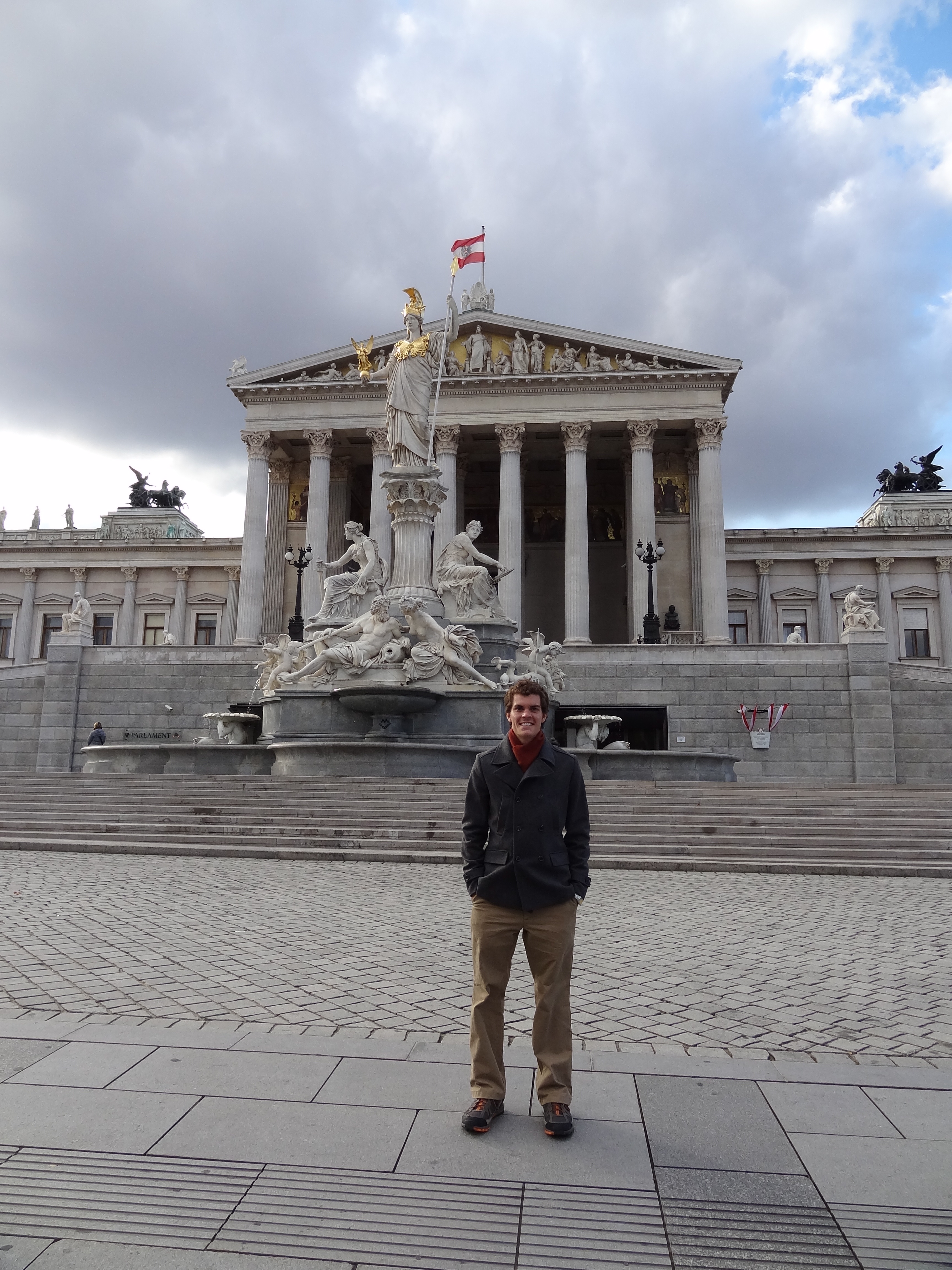
Me in front of the Austrian Parliament
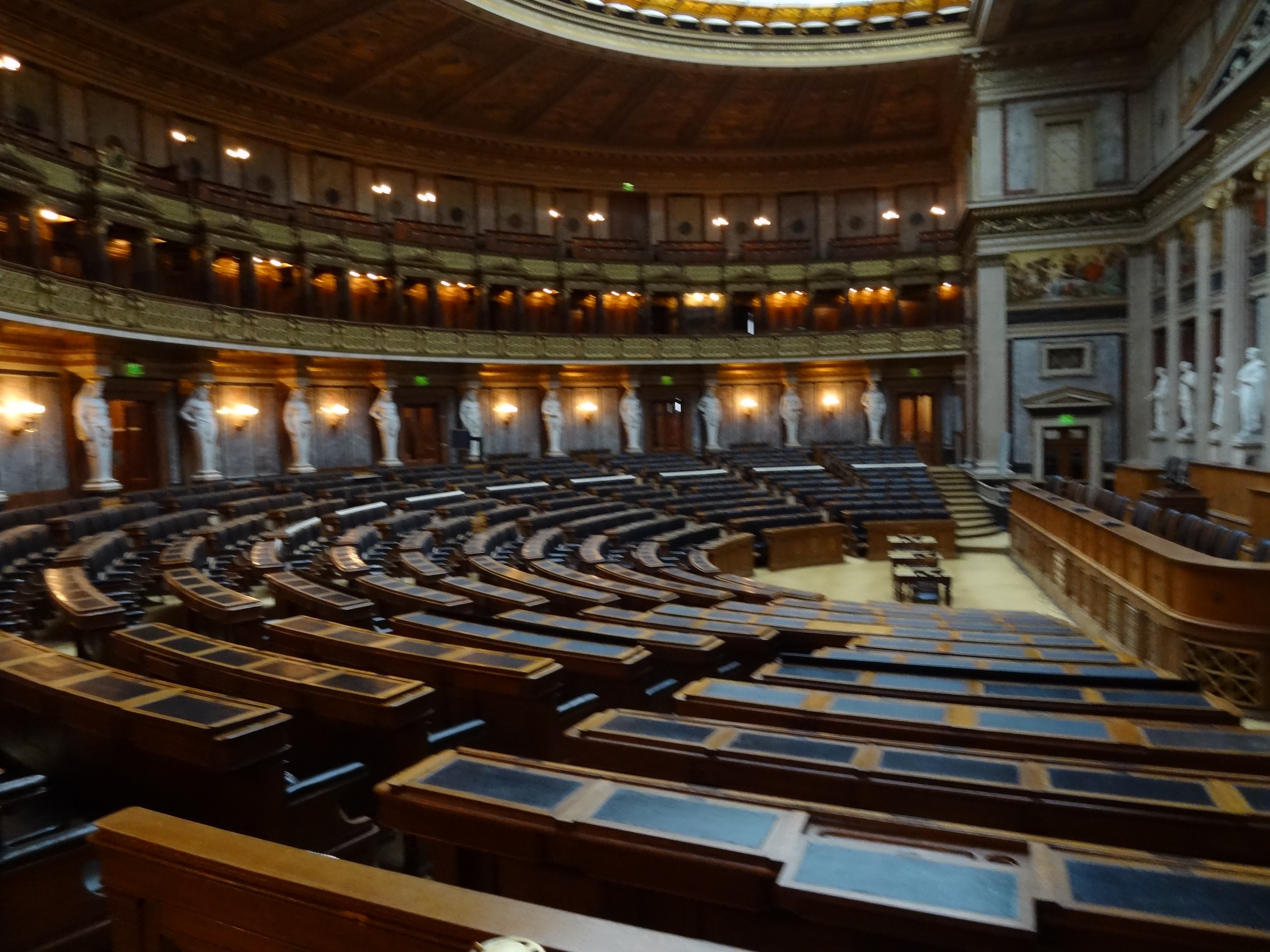
Assembly chamber - Austrian Parliament


On Saturday, Rachel, I, and our Canadian friend Helina visited the Esperanto Museum at the Austrian National Library. Esperanto is a planned language that was invented during the early 1900’s, and this museum, housed entirely in one room, is the only one of its kind. The idea behind Esperanto was that it could serve as a new international language that was very easy to learn and understand. It is a combination of many European languages (specifically Romance Languages) and it is the most successful planned language ever created. Its founder, Ludwig Zamenhof, grew up in a town in present-day Poland where the languages of Polish, German, Yiddish, Russian, and Belarusian were spoken among the many immigrants living there. His goal was to devise a language to bridge the language barriers among the various ethnic groups in his town. The museum was very interesting, and I’m almost positive it’s the only place in the world where you can choose to read or hear the exhibits in either German, English, or Esperanto.


That’s all for now! Check out my pictures at: https://picasaweb.google.com/117445044945979223598

Thanks for reading!

Bis Dann!
Catch up part 2: Weekend excursion and field trips to Stuttgart!

Okay, now that I am back from my five-day trip to Vienna (blog to come!) I can finally continue to play blog entry catch up.

On Friday September 30th, I traveled to northern Hessen (a centrally-located state in Germany) to visit some friends for the long weekend, as Monday, October 3rd is a national holiday in Germany (Day of German Reunification.) As a high school student, I had the opportunity to travel to both Germany and northern Italy with my German class during the spring of my junior year in 2008. Since then, I have remained good friends with my host family (the Stübers).

I began my travels with the train from Tübingen to Stuttgart, and then by car with a perfect stranger from Stuttgart to Fulda, from which point I continued with the train to Eschwege. In Germany, there is a website called “Mitfahrgelegenheit” (literally, “Opportunity to ride along”) where people can post trips they are making by car, and how much space they have for others to ride along and split the cost of gas. It is somewhat similar to the “Rideshare” board back at VU, and in other ways it is essentially glorified hitchhiking. It is, however, significantly cheaper than taking the train, and although I had my qualms about it at first, it turned out to be a very nice way to travel. There were three of us riding along plus the driver, so it was a very cramped ride in the back seat of a tiny BMW, but everyone was very nice and it was an excellent opportunity to practice my German as well. In the United States, I think many people would see the concept of “Mitfahrgelegenheit” as dangerous, or untrustworthy. In Germany, where the conservation of resources and money is a high cultural priority, it is seen as a way to be less wasteful and to save time and money. Before picking up the other two passengers, I talked for awhile with the driver about Mitfahrgelegenheit in respect to the culture of Germany, and why many Americans would be weary about trusting someone they didn’t know to drive them somewhere. He told me an interesting story about an American friend of his, who was under the impression that Germany was a dangerous place because people were not allowed to carry guns and defend themselves if necessary. We both had a good laugh about that one…

Anyway, the weekend of September 30th was an especially eventful one in the Stübers little town near Eschwege, because it happened to be the weekend of their annual “Kirmes” festival. Jonas, my high school exchange partner, was one of the event organizers this year, so both he and his family were kept very busy putting on the festival.

Every night there was a different themed dance party in a giant beer tent, and during the day there were parades, bumper cars, carnival-type games, and other festivities. I arrived late on Friday – shortly before midnight – but after unpacking all of my things, I was dropped off at the tent where we proceeded to partake in the Kirmes revelry until 4:30 AM. It took almost eight hours to get from Tübingen to Eschwege, mostly due to an obscenely long traffic jam on the Autobahn, so I was already exhausted at midnight. Needless to say, but 4:30 I was quite ready for bed.

The disco parties every night where pretty similar, with the exception of the music, which changed. Friday night was a mix of everything, Saturday night was more traditional German music, and Sunday night featured a live band playing “Oldies” music from both Germany and the United States, among other countries. I was introduced to so many people I could barely keep up with what was happening as I tried to dance along to music I had never heard before. As someone who does not speak German as a native language, it is enough of a mental workout for me to understand everything that’s going on in normal conversation. The music was so loud that most of the time I could barely hear well enough to struggle through the task of comprehending what was being said to me, so I did a lot of nodding and smiling. It’s amazing what you can tell just by a person’s facial expressions, even if you can’t hear or understand them.

The thing that shocked everyone I was introduced to most was not that an American had come to attend a beerfest in a town of 700 people, but that I could not actually drink the beer; I’m gluten intolerant. Many people after meeting me and talking with me for awhile would abruptly interrupt the conversation to ask if I would like a drink. And not just any drink, but a beer. Before they would disappear into the enormous crowd, I would have to explain that although I would love something to drink, that I was allergic to wheat and couldn’t drink beer. “You can’t drink beer?!?” they would ask. “Then what can you drink?” At first, I didn’t know myself what was on the menu, so I would just say, “I’m not sure… What other things do they serve here?” After a few long minutes of thought, my friend Daisy answered, “Whiskey cola!” So, from that point onward, I was brought many whiskey colas. It was as if some mad bartender kept mixing them up just for me, and sending them out to the dance floor on a long conveyor belt, from which everyone then grabbed a drink to offer to the Stübers’ American friend. At one point I had three whiskey colas to finish…

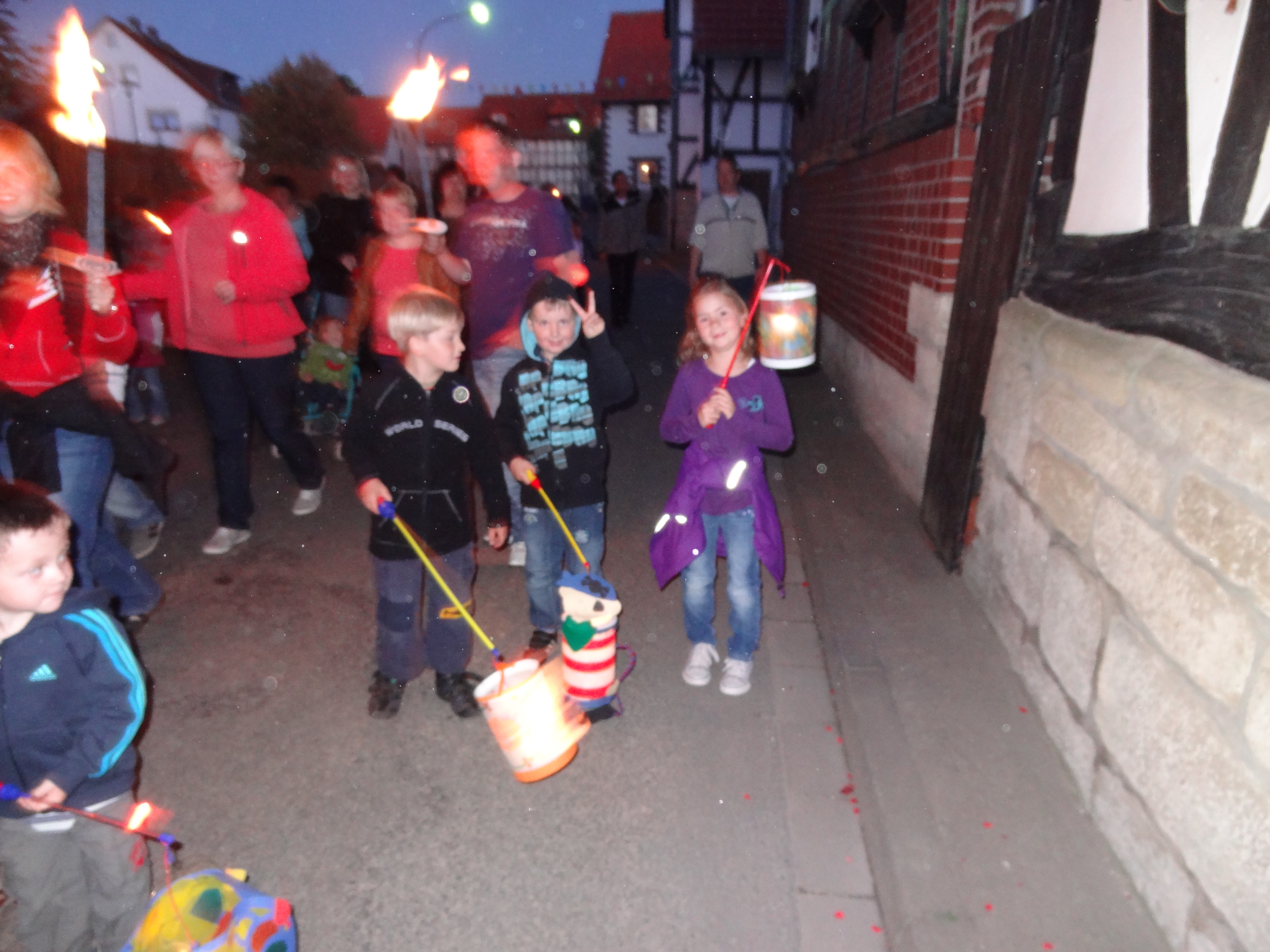
A blurry picture of kids with lanterns in the Fackelumzug

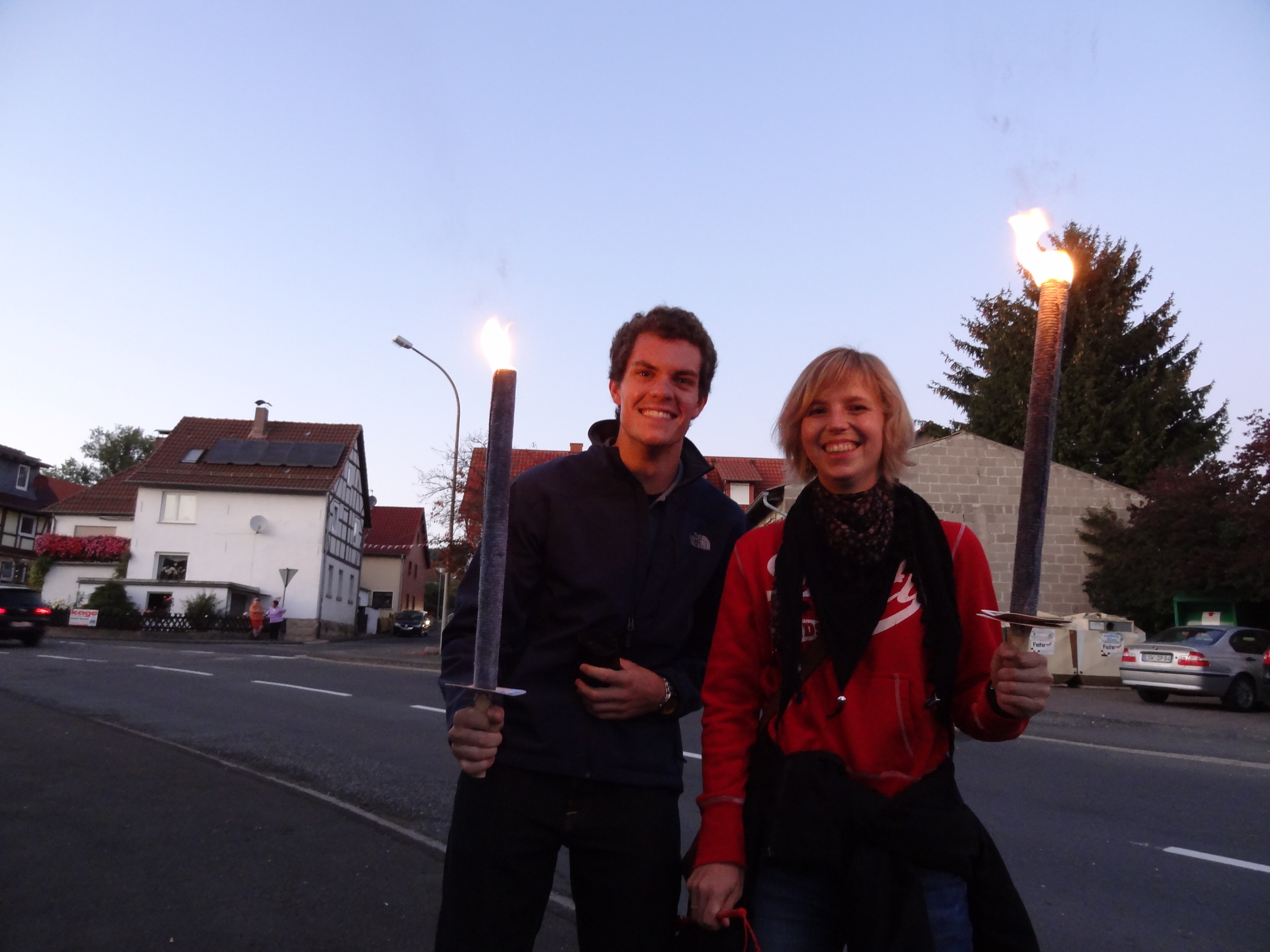
The Kirmes festivities also included two parades, both of which I was asked to participate in. The first parade was a Torch Parade, or, “Fackelumzug.” All the adults carried torches (with giant, dangerous, blazing flames) and the kids all carried battery-operated lanterns to prevent the town from burning to the ground. Daisy and Jonas’ seven-year-old sister could barely contain her excitement for the entire day leading up to the torch parade – she was so excited to walk through the town with me and to carry her lantern. I am quite certain that I was introduced to every child in the entire town as, “Zach, mein Freund aus Amerika!” (Zach, my friend from America.)

My friend Daisy and I in the Fackelumzug

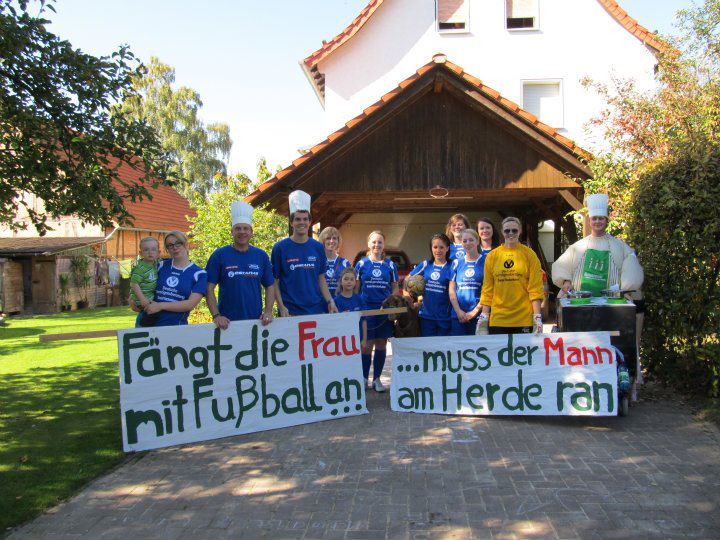
My second Kirmes parade experience was without a giant torch, but I did get to wear a chef hat and carry a banner! My friend Daisy plays on a women’s soccer team comprised of two neighboring towns, and a couple of the players from her team got together to walk in the parade. The coach dressed up like a chef, and I helped carry one of two banners with phrases that fit the cooking theme. Daisy’s little sister took on the role of throwing candy to the children watching the parade from the sidewalk. I found this to be a little funny, because the streets were so narrow that “throwing” the candy really wasn’t necessary as it is in parades back home. All she had to do was drop it on the ground next to the curb, or maybe toss it just a little bit.

Me with Daisy’s soccer team before the parade

After sleeping in a little bit on Monday, I was back to the train station to make the long trip back to Tübingen via train and Mitfahrgelegenheit. All in all, my weekend with the Stübers / at the Kirmes festival was a lot of fun, and I really enjoyed comparing their “small town festival” to those back home. There were more similarities that I would have imagined.

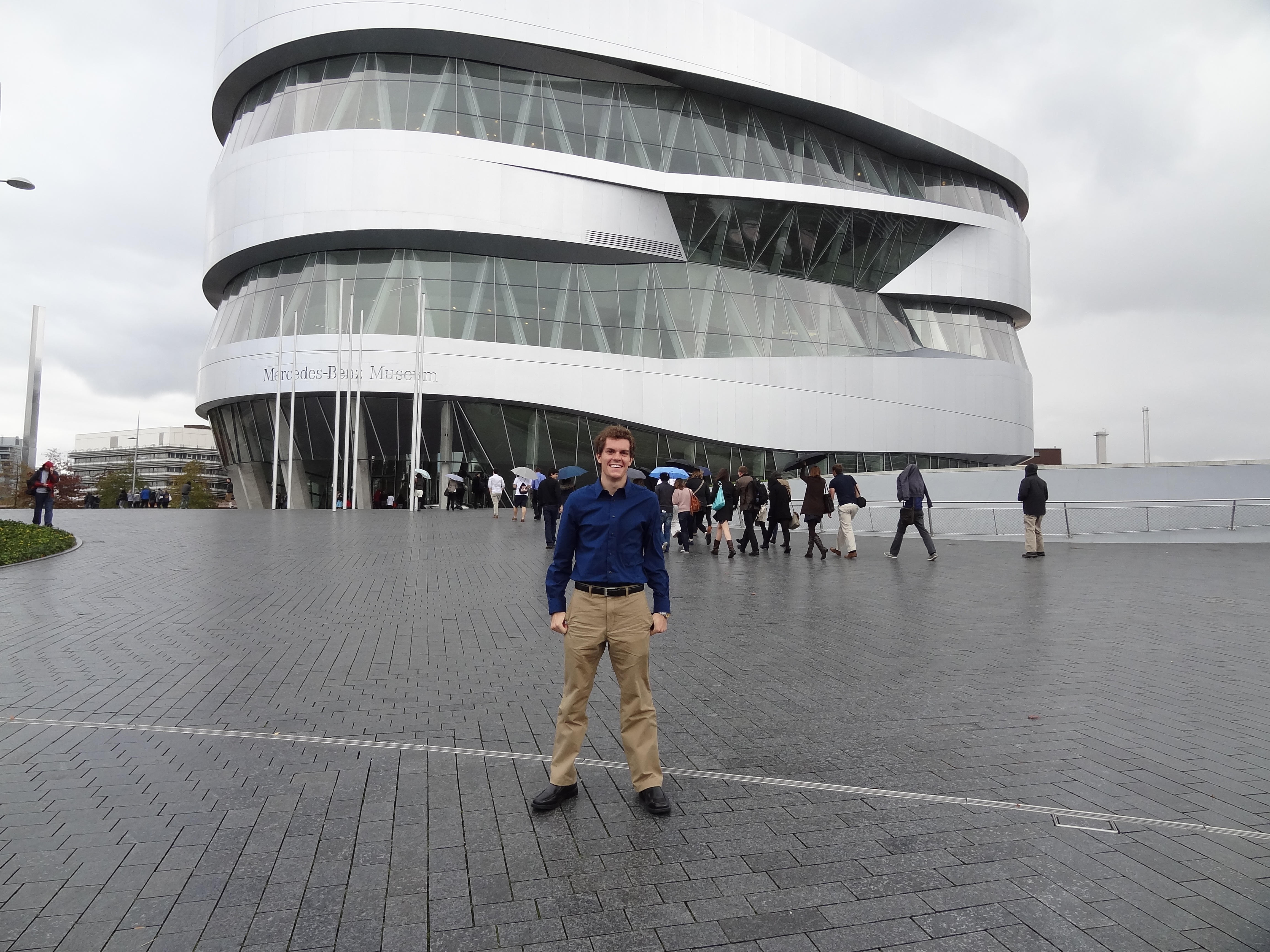
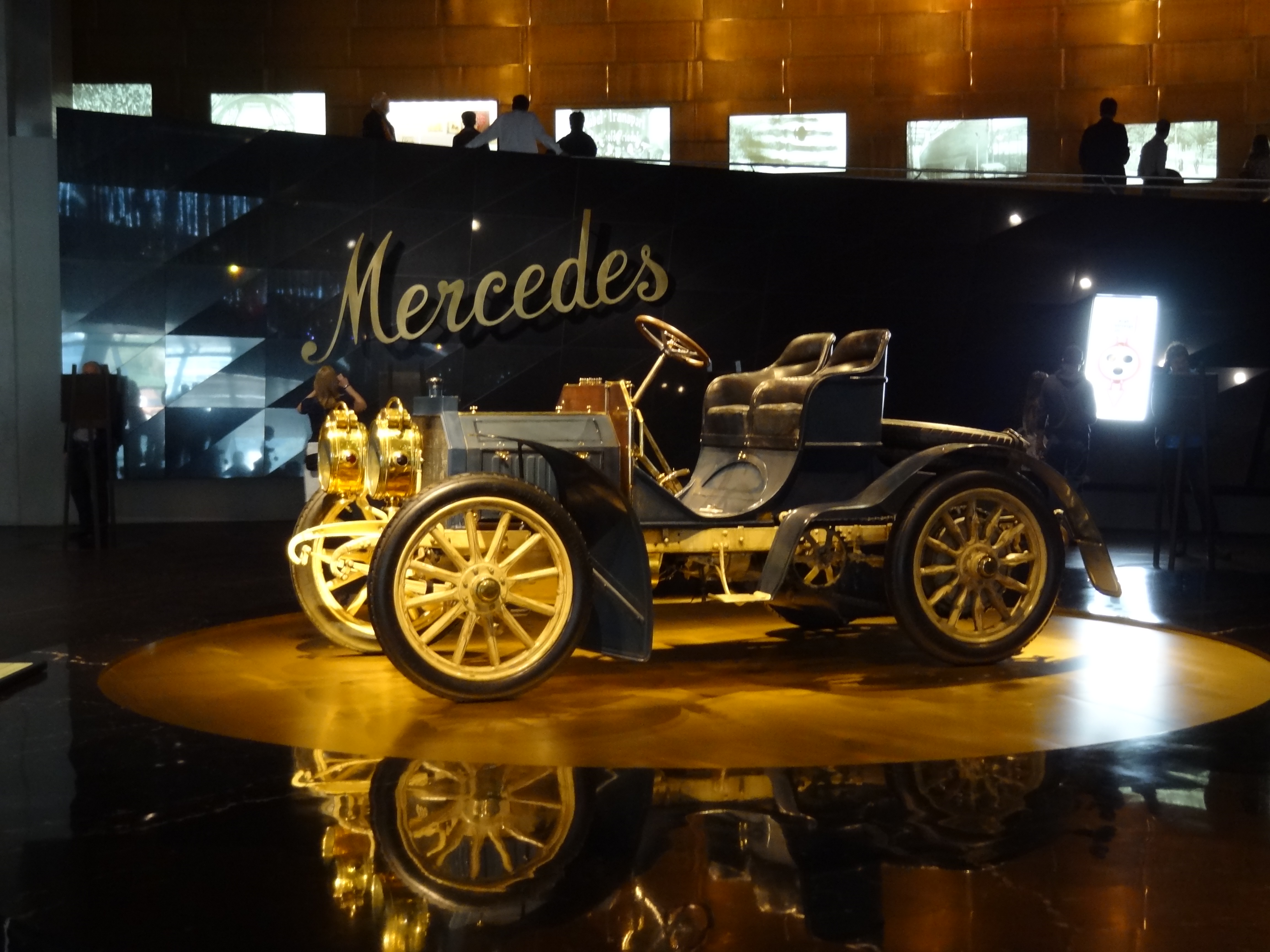
Mercedes-Benz Museum

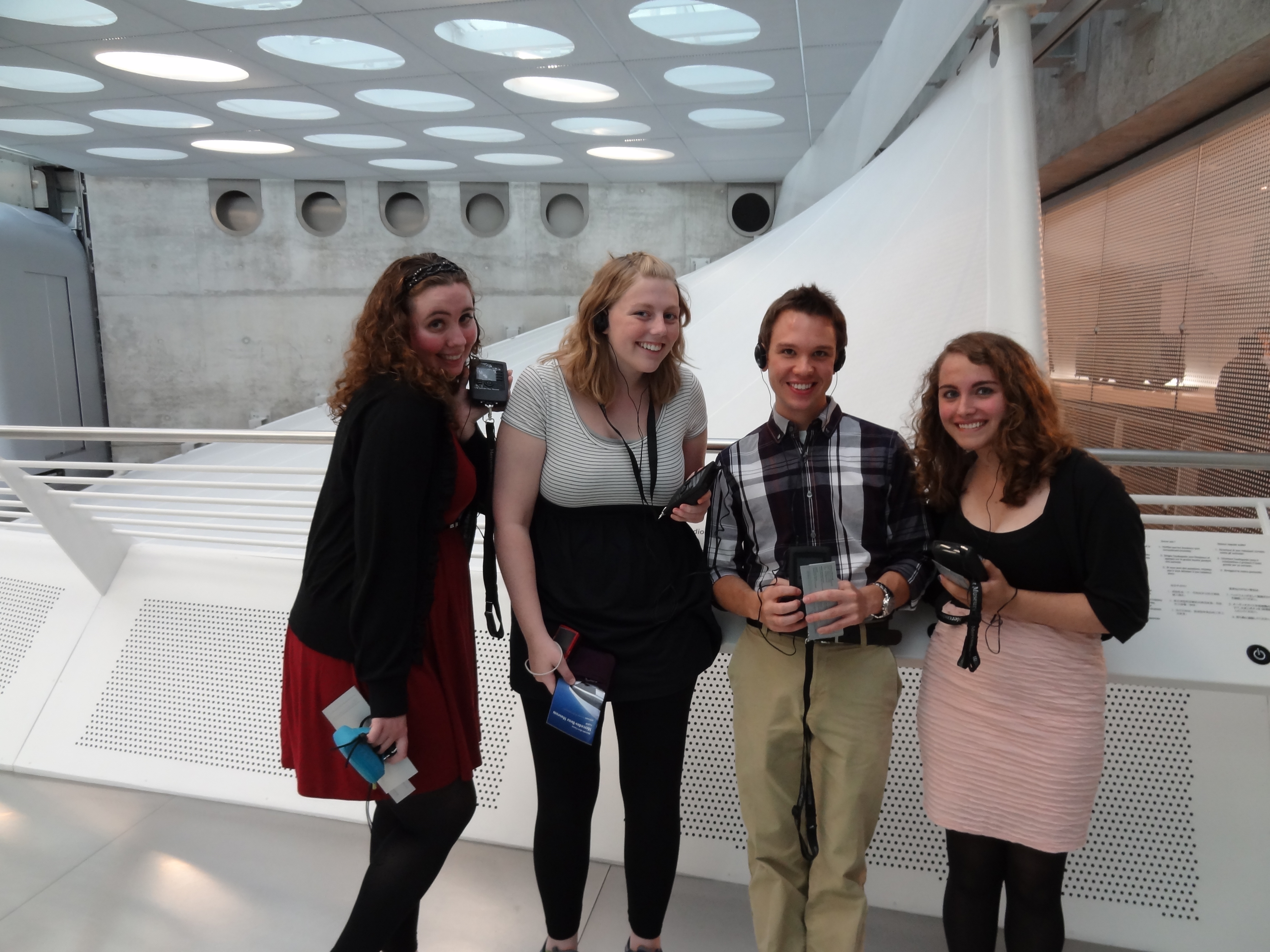
Since I was caught up on my blogging, I have also been on two field trips to nearby Stuttgart, the capital of Baden-Württemberg. The first time was with my German course, and consisted of seeing the Mercedes-Benz museum, and then watching an Opera – La Traviata. The Mercedes-Benz Museum was excellent, and as a car enthusiast, I enjoyed myself very much. Even for those who aren’t all that car-crazy, I still think it would be a really fun museum to visit. For example, there is a “Room of Celebrities” exhibit that features Princess Diana’s Mercedes-Benz sports car as well as a Popemobile. The architecture of the building is great, both exterior and interior. Once inside, everyone receives an audio guide, and is taken to the top floor via elevator, where you arrive in a room with just a model of a horse in the middle to represent the age before cars were invented. Shortly after comes the exhibit about the first cars ever invented. After this point, the museum splits into two downward intertwining spiral directions – one featuring more technical exhibits, and the other featuring more historical exhibits. I made sure I saw both sides before descending to the floor below! Although I’m not a big opera fan, La Traviata was interesting to see and hear. (I was actually able to see Die Zauberflöte in Vienna a few days ago, which was really cool, so maybe my opinion on Operas has changed? More to come on that soon! At any rate, La Traviata wasn’t my favorite.)

Me in front of the Mercedes-Benz Museum

Hannah, Emily, Jake and Rachel with their audio guides – Mercedes-Benz Museum

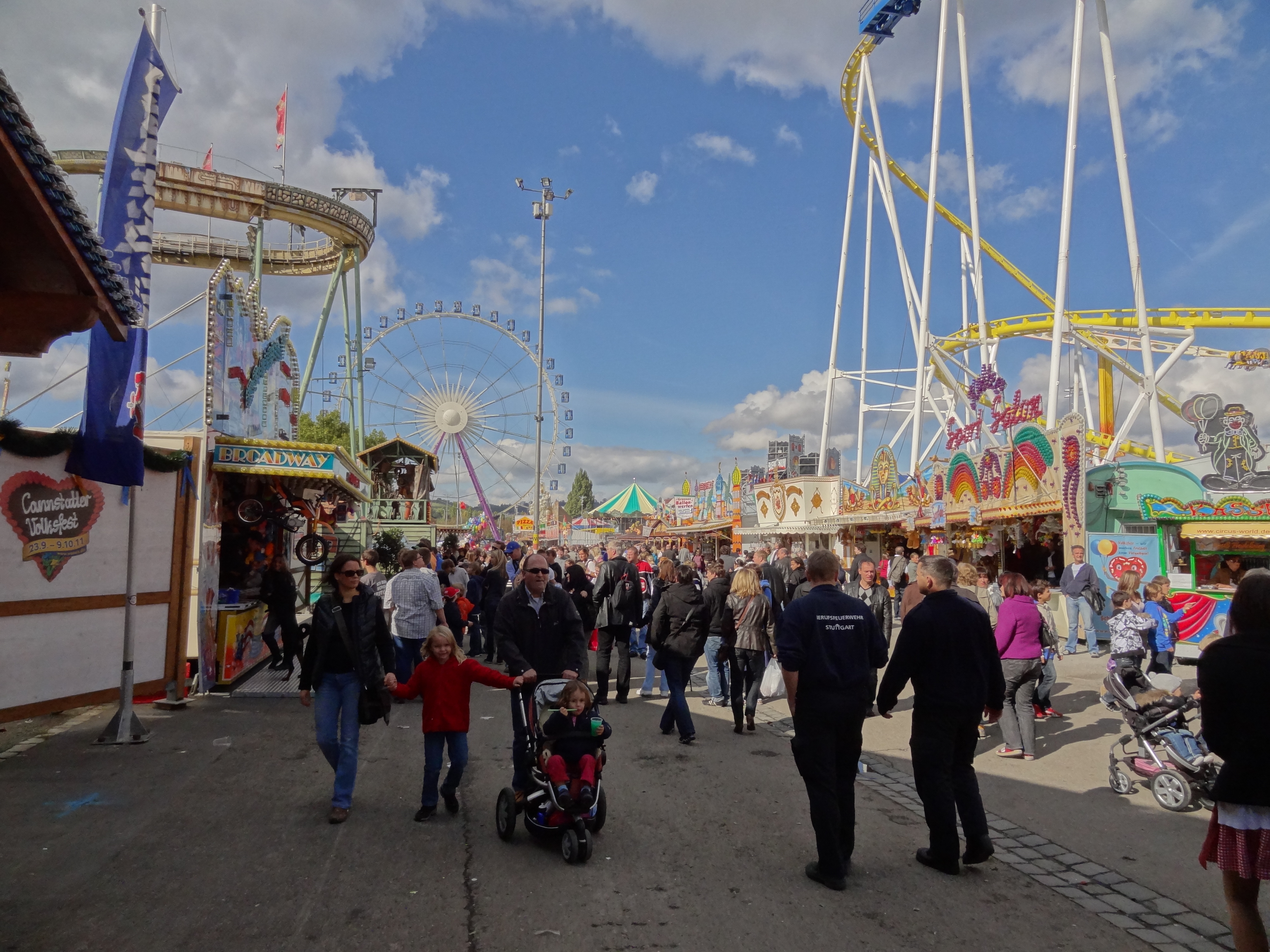
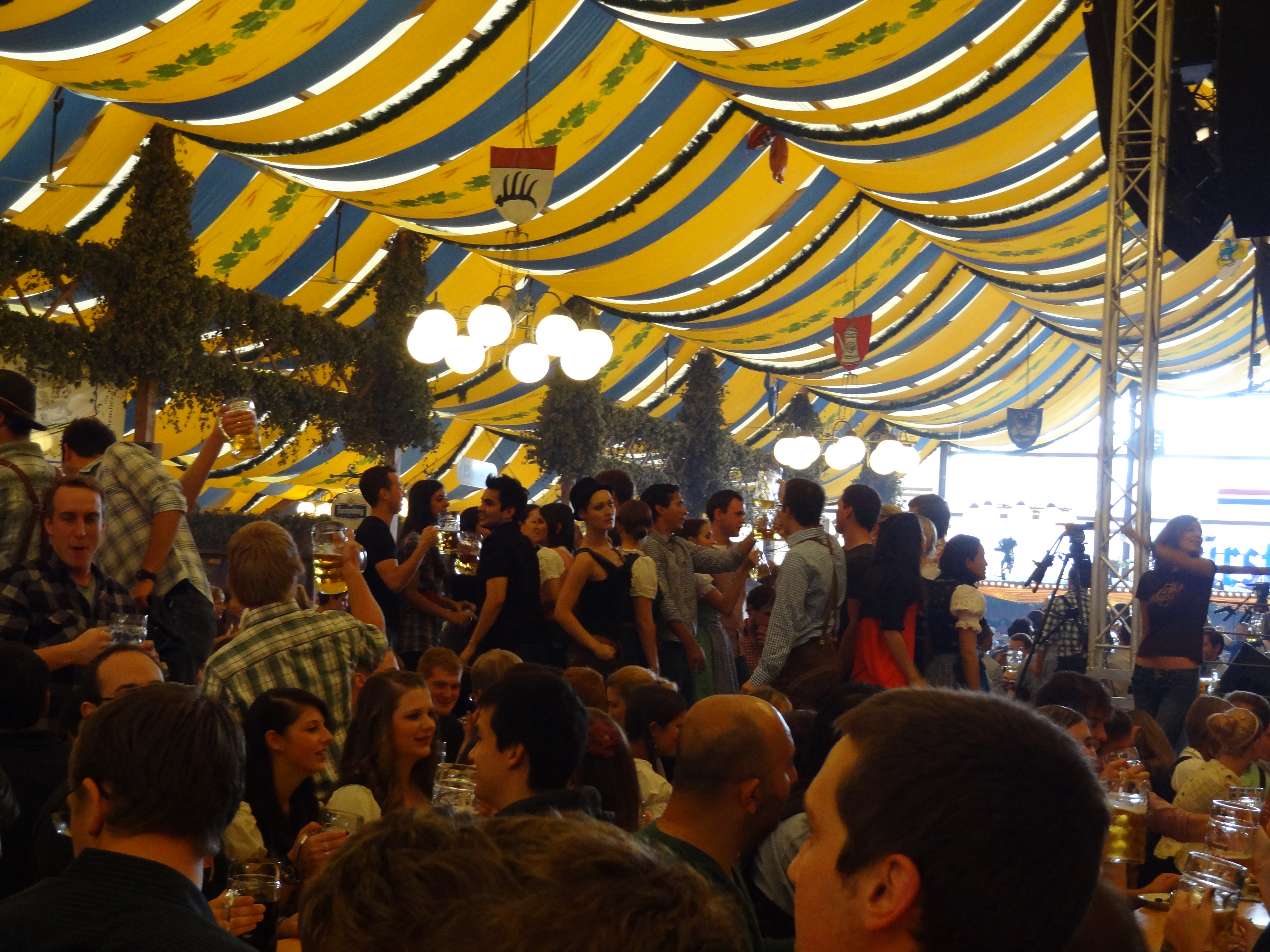
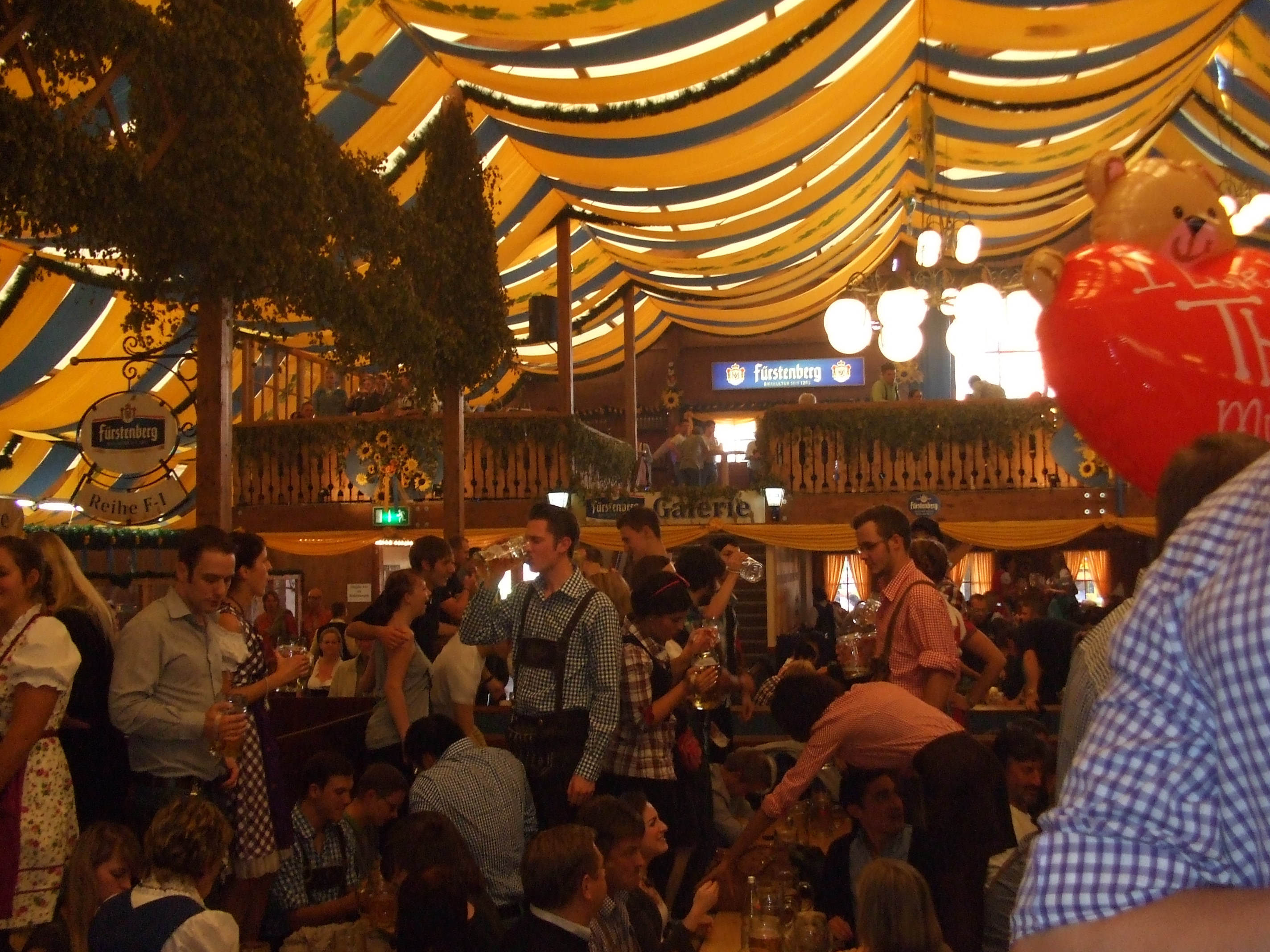
The second field trip to Stuttgart was to visit the Canstatter Wasen – the world’s second largest “Beerfest” after Oktoberfest in Munich. The Canstatter Wasen is not as well known because unlike Oktoberfest, it’s not a tourist destination. I was completely blown away by how large it was. The only thing I could compare it to would be the Wisconsin Sate Fair – complete with rides, roller coaters, carnival games, stores, and giant beer “tents.” Valpo’s connections with nearby Reutlingen University enabled us Tübingen students to get tickets to go along, as obtaining seats in the giant portable buildings they call “tents” can be difficult. Seeing the beerfest was an interesting experience, but it is not one that I need to repeat. Everyone from Valpo was given one coupon for food, and two coupons for beer – each coupon was redeemable for 1 “Mass” of beer, a giant mug filled with nearly two liters of beer. Because I can’t drink beer, standing on a table dancing among thousands of people holding giant mugs filled with two liters of beer while singing, dancing, spilling on you, blocking every imaginable exit, and being completely obnoxious wasn’t exactly enjoyable for me. I am sure that if I were also able to drink a two-liter mug of beer that my experiences would have been much different! All of the beer drinkers loved it. I however, had to pay almost €10 for carbonated apple juice. I would also like to point out that contrary to common belief, the German’s don’t actually walk around in public wearing lederhosen. Except for at beerfests, which are lederhosen extravaganzas. (The lederhosen-wearing, giant beer-drinking stereotype of Germans is largely untrue most every part of the year, except for beerfests such as the Canstatter Wasen.)

The Canstatter Wasen

A whole lot of crazy. And this was just the very beginning…

That’s all for this blog post! I’ll try to get my Vienna experiences up as soon as possible!

Bis Dann

Ketchup

What did the mommy tomato say to the baby tomato when he fell behind? …Ketchup! So since I haven’t posted in a while, I thought I’d play a little “ketchup” here. Like catch up, get it? I make myself laugh sometimes. So anyway. On a more serious note. Two weeks ago we left on a week-and-a-half-long adventure to Luther- and Bach-land for our Luther and Bach course. See, this is why studying abroad is amazing. Because “class” consists of traveling and seeing the stuff you read about in real life. It’s kinda awesome.

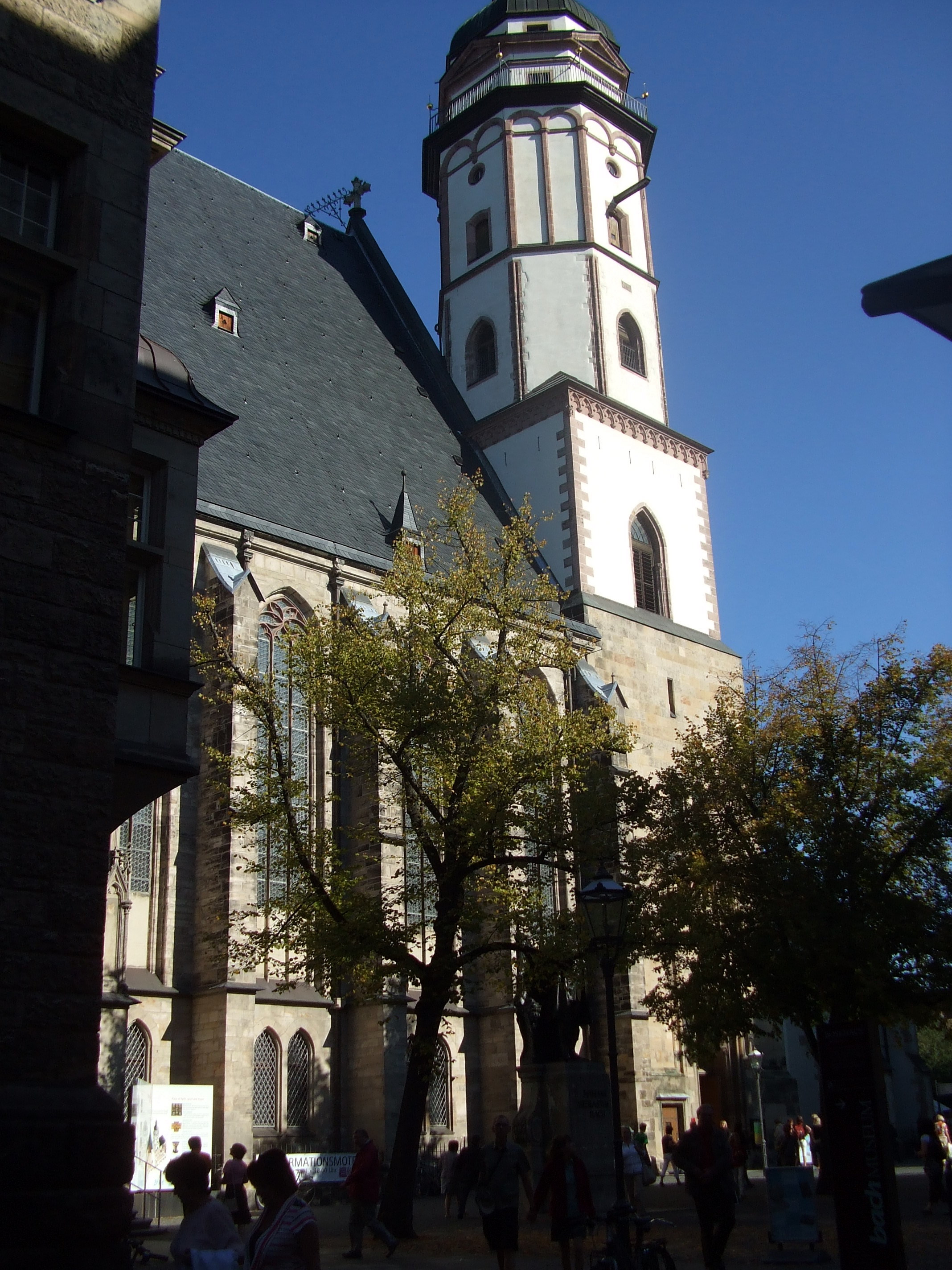
St. Thomas Church

Anyway, our first stop was Leipzig for the weekend. While there, we took a tour of the Stadtmitte (I’m gonna keep using this word in my posts. It’s literally “city middle,” and it means the old part of the city that’s now a pedestrian zone, usually with an old church or two, cobblestone streets and sidewalks, and lots and lots of outside restaurants and shops and pidgeons). So on this tour of Leipzig’s Stadtmitte, we got to see the churches that Bach worked at, and Goethe’s favorite restaurant, which hosted a legendary barrel ride by Faust (the person, before Goethe wrote about it), among other things. While in Leipzig, we also visited the Bach museum. The highlight of this part, however, was hearing the Thomanerchor (the young boy’s choir for the St. Thomas Church, where Bach did a lot of his stuff) sing the Bach cantata that we studied in class the week before. Pretty cool stuff.

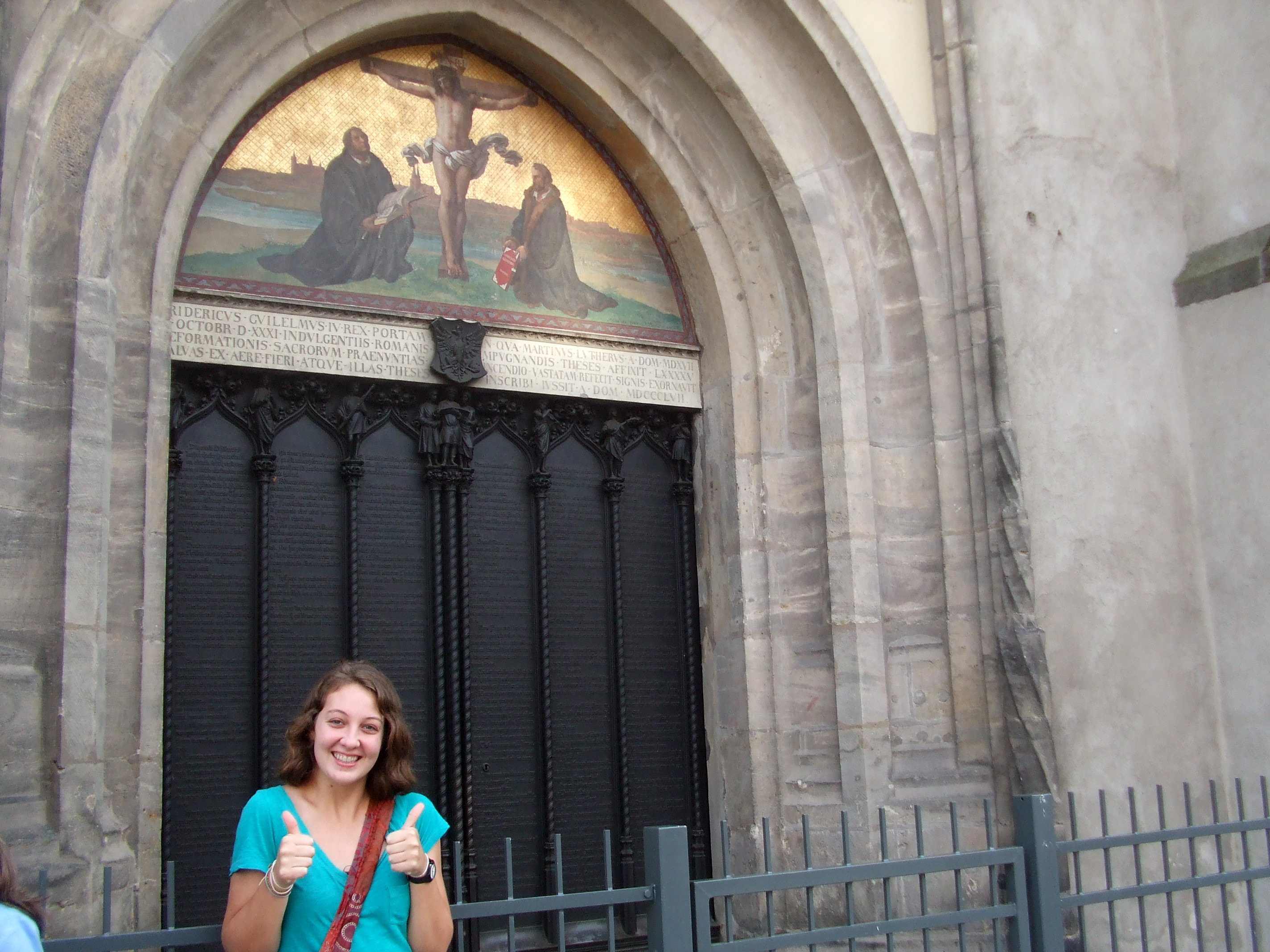
In front of the 95-theses door!

Our next stop was Wittenberg, the famous Luther city. This was my favorite part of the trip, since I’m such a big Luther geek. But he’s awesome. Anyway, we took a tour of this city too. We got to see the Luther museum in the Luther house, which had THE LUTHER BIBLE. Like, THE ORIGINAL ONE THAT HE TRANSLATED. It was amazing. And then of course we got to see the church where he nailed the 95 theses to the door. Even though the door burned down in a fire, it was still the same place, still super cool. And we even got to see the church where he did his pastor work. The church is now considered the Mother of the Reformation. So yeah, Wittenberg was amazing. Especially for a Lutheran/Luther geek like me.

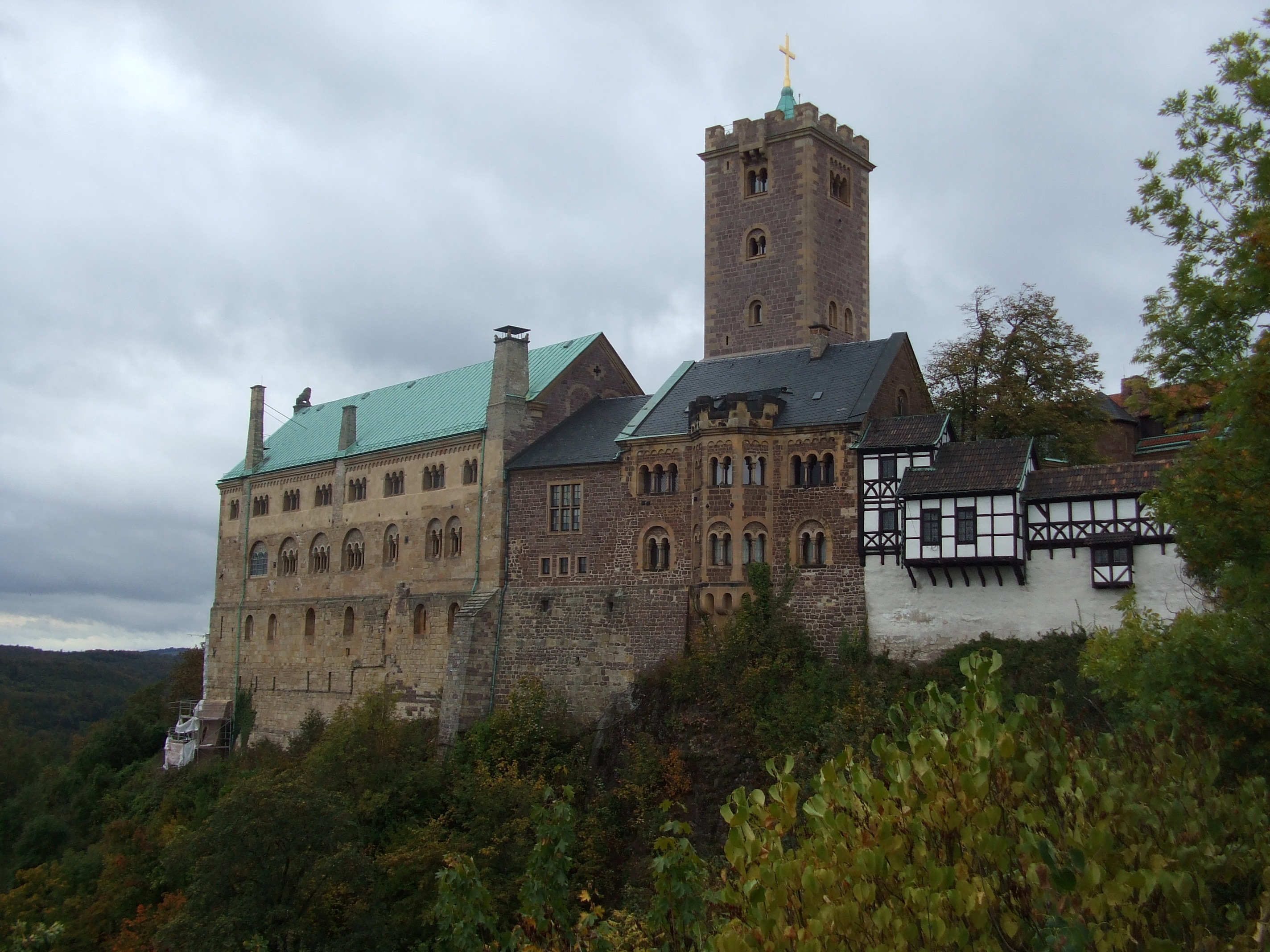
Wartburg Castle

The next day we stopped in Erfurt and took a tour of the city. (Yes, again. They did get a little old..) This one wasn’t too interesting. Although we did get to see the monastery where Luther spent some time. There were also some beautiful churches. And our guide pointed out where the Pope had stood only two weeks previously, which was kinda cool. But then the next day was cooler, in Eisenach. Yeah, we never stayed long in one place.. But anyway, Eisenach had Bach’s childhood home and a bunch of instruments of the time. And a great music room where you could sit and listen to Bach’s compositions for hours. This town also has Wartburg castle, which we visited in the afternoon. This is the castle where Luther spent ten months when he was hiding from the authorities who wanted to kill him. So we got to see his room where he translated the Bible. Which was also really cool.

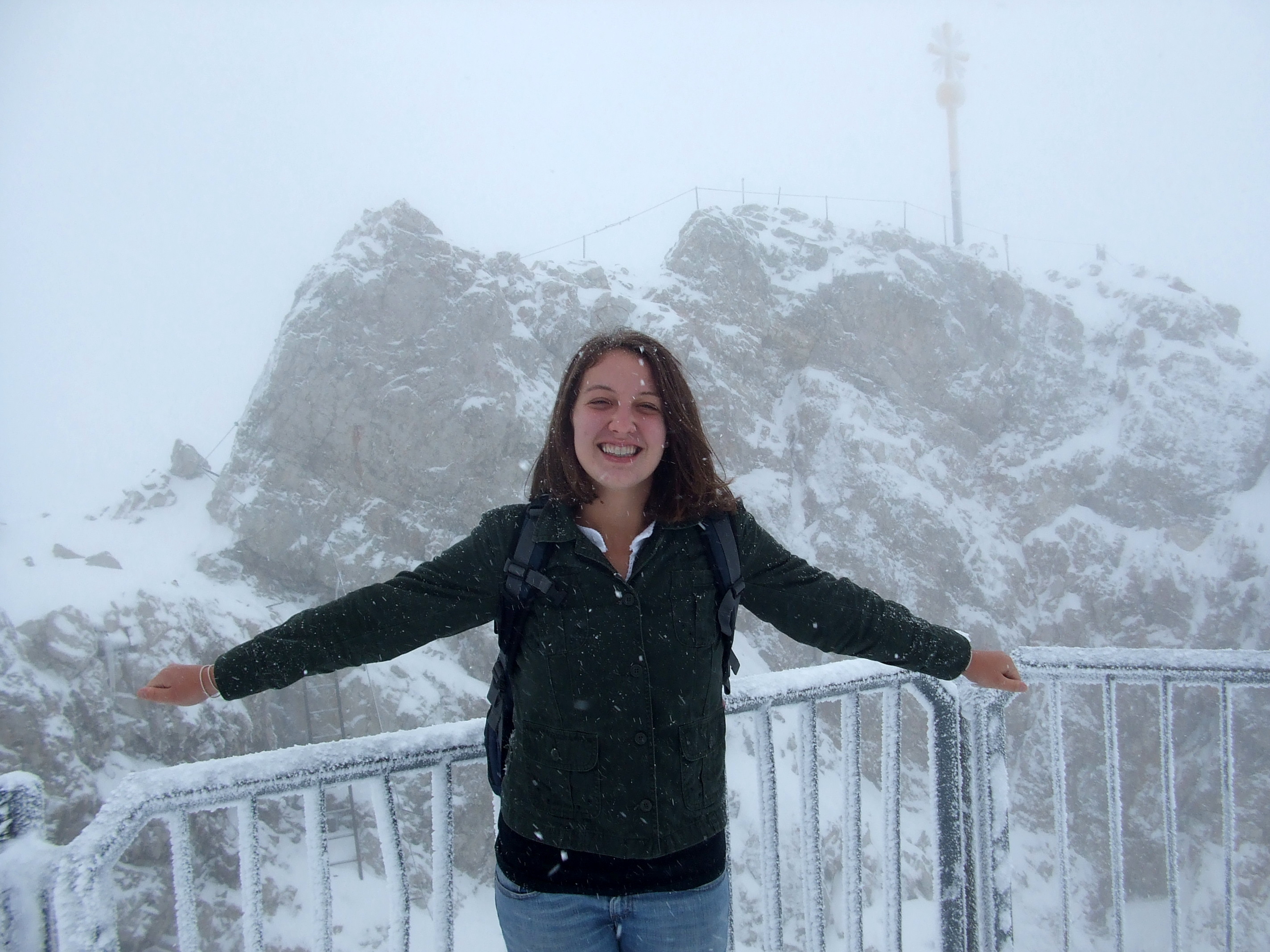
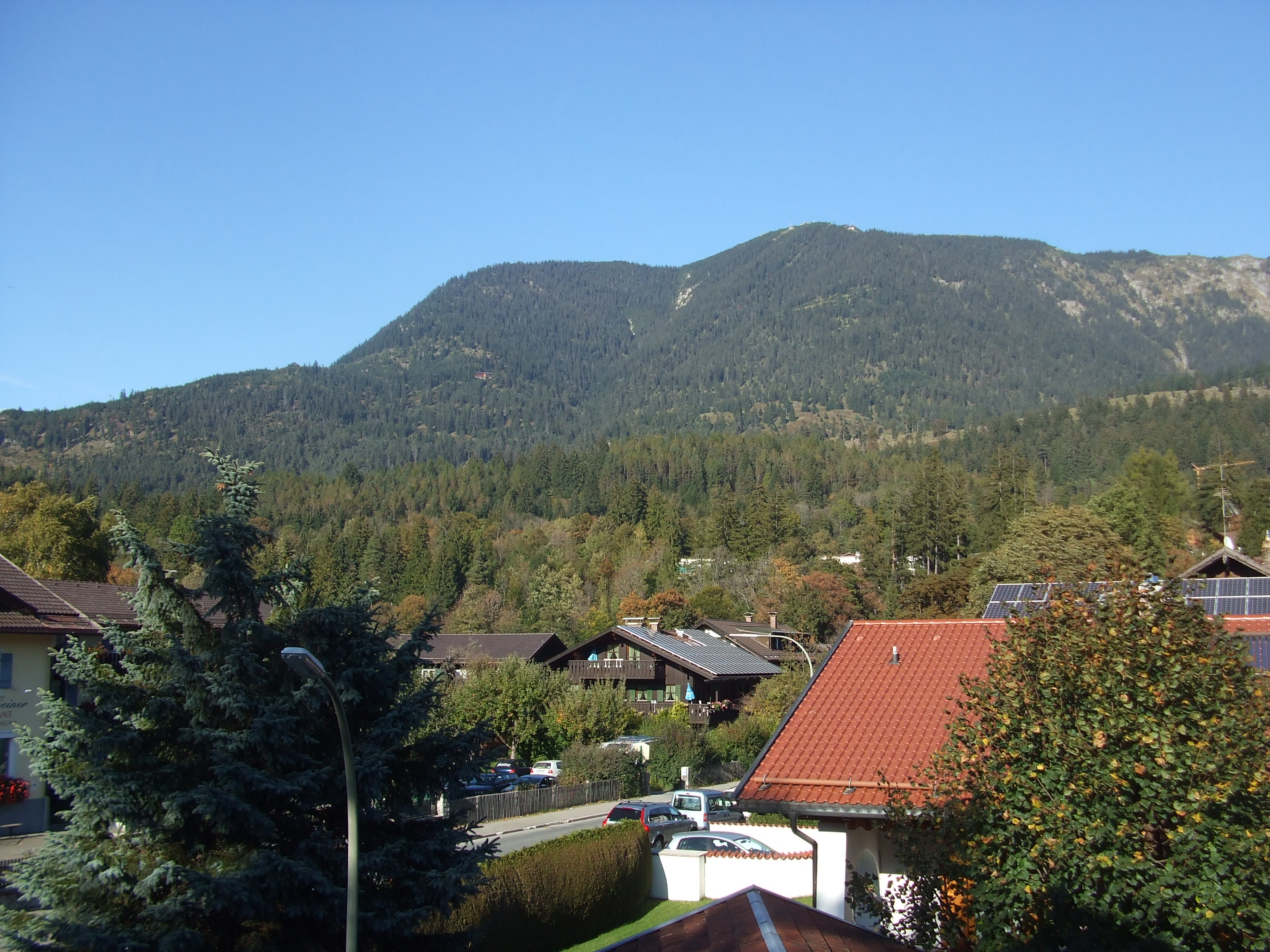
But then we had a few days off until we had to be back in Reutlingen. So a few of us decided to head to southern Bavaria to see the Alps. They were incredible. And it was just beautiful. So I’m gonna attach a few pics.. It really was absolutely beautiful. And the town we were in, Garmisch-Partenkirchen, hosted the Winter Olympics not too long ago, so the ski jump and ice rink are still operating. We wanted to go skating in the olympic skating rink, but ran out of time.. Because we were on the highest peak in Germany!!! In a snowstorm 🙂 Which was actually a little sad, because apparently the view is absolutely incredible. But we could only see maybe 100 feet away. If that. But still, we were in a snowstorm. And then got to play on a glacier. Not bad for a day’s work.

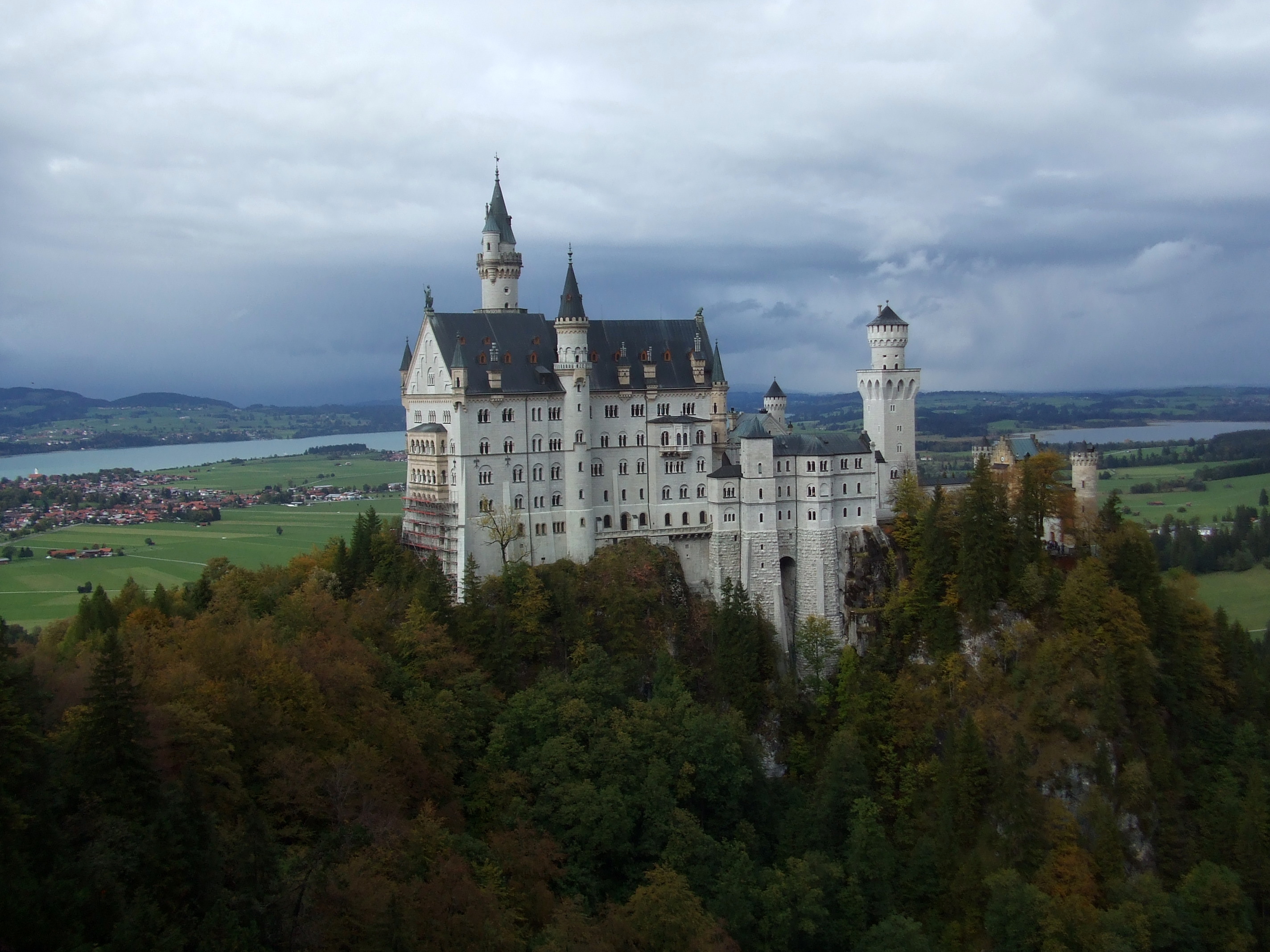
Neuschwanstein

Snowstorm! And at the highest point!

View from our hostel... What??

On the way home on Saturday, we went to Neuschwanstein, the famous Cinderella castle. I had been here before, but was still amazed at how cool the inside and outside was. Surrounded by mountains and with a brilliant blue lake, but the inside had a grotto. (Literally, he had a cave installed in the castle. We called it his Batcave. Although Batman probably had a better car.) It’s hard to choose which one was better.

So we got back Saturday night to Reutlingen. And the next day we had Oktoberfest! Well, technically the Cannstatter Volksfest, since it’s not the one in Munich. But the one in Stuttgart is the second-biggest one, and apparently a lot less touristy. So, more authentic. And it was. Authentic, and amazing. Guys wearing lederhosen and those German dresses on girls. Complete with huge glasses of beer. One Mass = one liter of beer. And being part of the Reutlingen University group, we got two free Mass, and dinner. Pretty sweet deal. Germans are so uptight most of the time, that this is their one excuse to go crazy. And go crazy they do. Carnival rides (even roller coasters), massive beer tents (which aren’t tents really, but more like gigantic wooden structures they construct just for this event), cool market shops, and lots and lots of German sausages.

Awesome people.

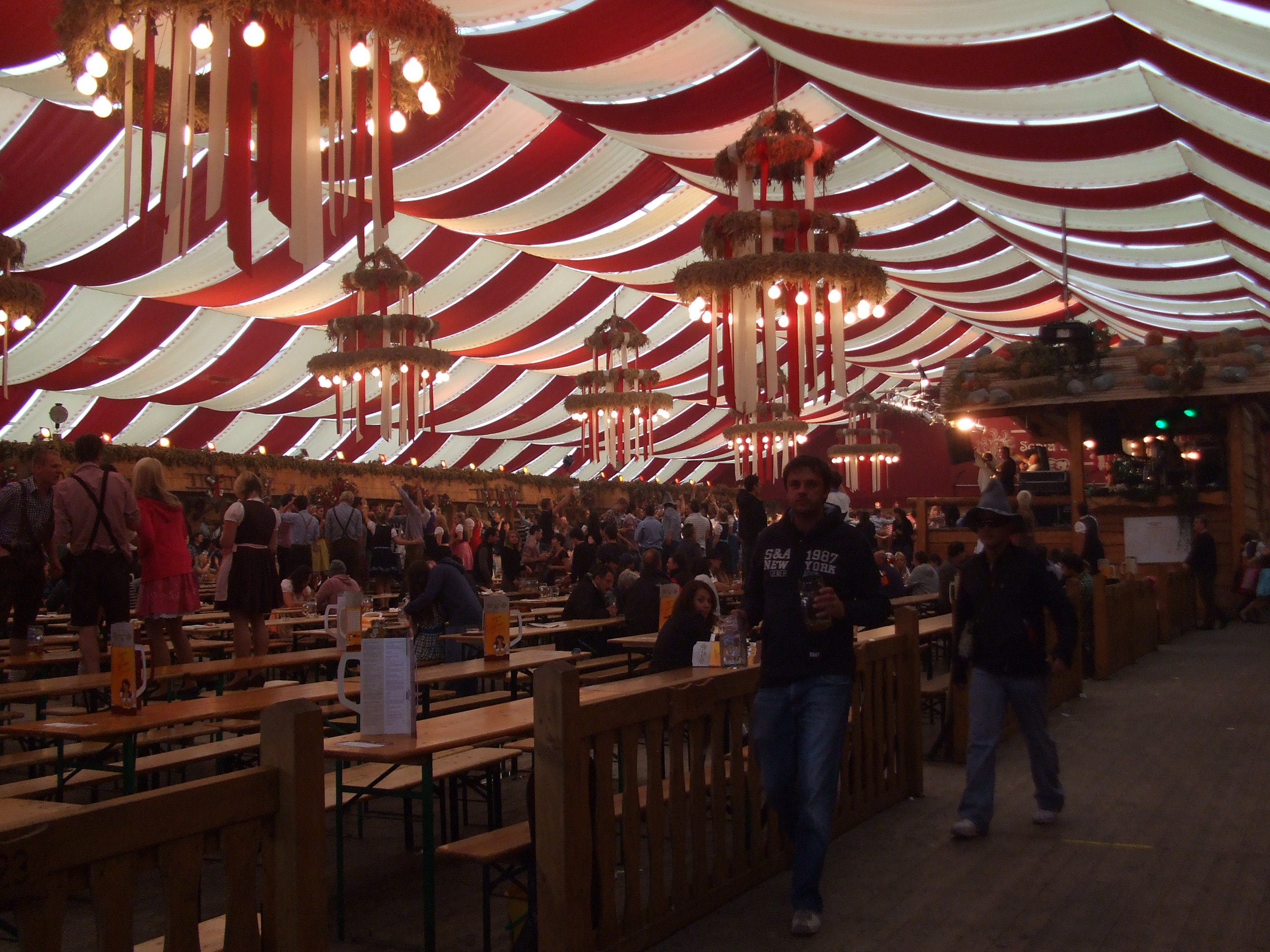
One of the beer tents before people got there

So that’s pretty much what I’ve been up to for the past two weeks. That and “normal” class. Been pretty busy. Obviously. So I’ll write more soon!

Catch up blog Part 1 of 2! Hiking to Würmlingen / Bodensee Class Trip

As of last Friday, our five-week intensive German course is finished. Now that I’m done studying everything there is to know about German grammar, I finally have some time to catch up on my blogging – but unfortunately not too much, because I’m leaving for Vienna in eight hours!

It’s been awhile since my last post, but I’ll try my best to write a little bit about some of the things I’ve done over the past few weeks! Because of how many things I want to write about (and the fact that it is 5 AM and I haven’t gone to sleep yet) this will have to be part one of two “catch up” entries, but part two will have to wait until I am back from Vienna!

September 18th – Trek to Würmlingen
As I mentioned in my last blog, the five of us Valpo Tübingen students became hopelessly lost in the woods on the way to visit the Brixners – longtime friends and professors of Valparaiso University. As of earlier this year, the Brixners retired from their jobs as professors at the VU Reutlingen program, and they were awarded with honorary doctorates from President Heckler at the graduation commencement in May. They absolutely love Valpo students, and even though they no longer work with them on a daily basis, they invited us to their house for dinner.

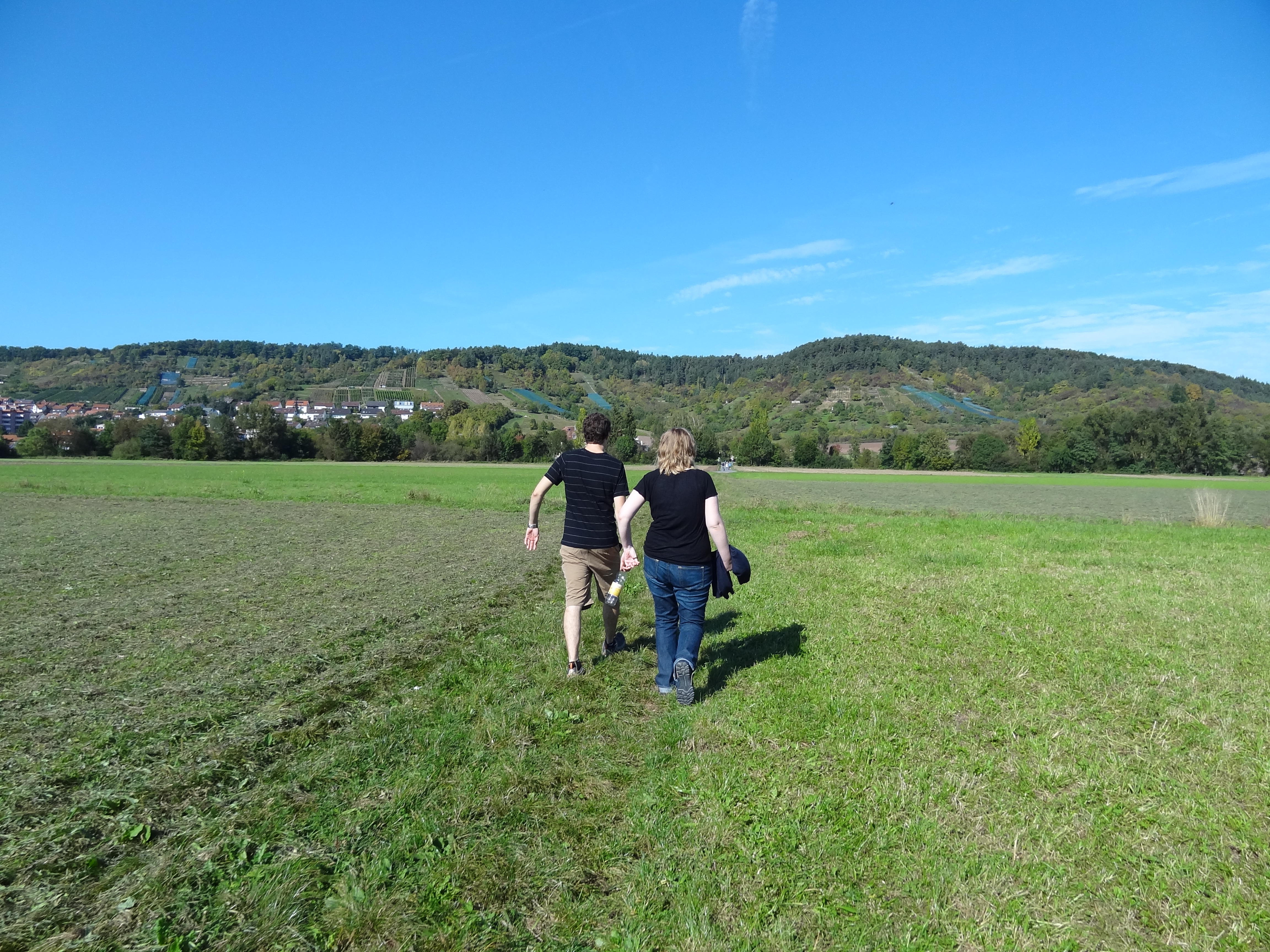
Emily and I in the middle of a field. (Dancing to entertain ourselves. We were so bored and lost.)

Mr. and Mrs. Brixner live in a town called Würmlingen – which although only a few minutes by car, is about a 1.5 hour hike through the forest from Tübingen. According to the Brixners, it is tradition that when students are invited to their house for dinner that they hike from Tübingen, along a path that originates near the castle. We were told by many that the path was clearly marked, and that finding our way would be absolutely no problem. In reality, it was anything but clearly marked! We had even read three sets of directions before setting out for Würmlingen.

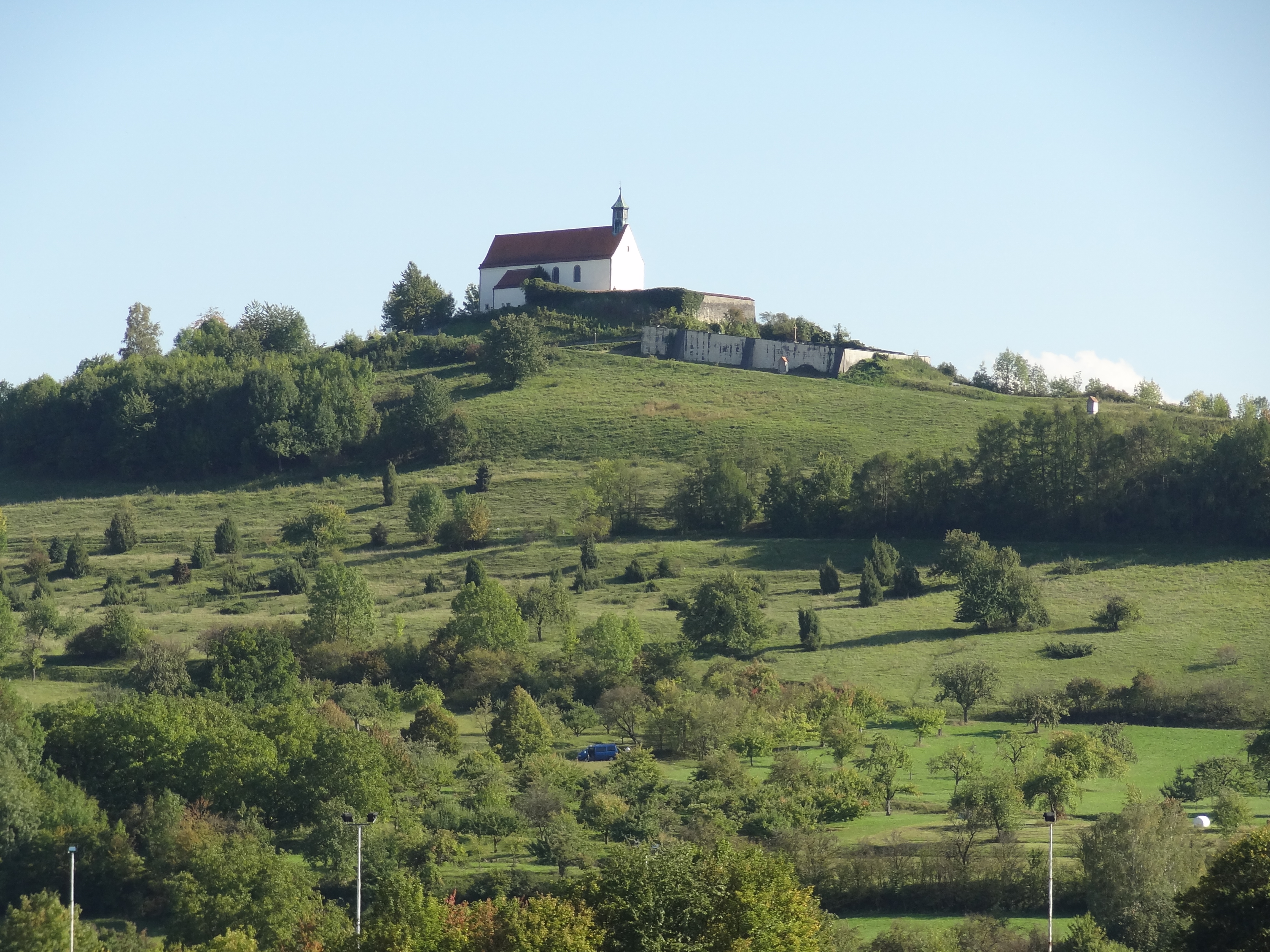
The church we should have walked past. Zoomed in from a very far distance.

The path began as a concrete road, which turned into a concrete path, which became a gravel path, and eventually a dirt trail through the forest, splitting off into a multitude of unmarked forks every few minutes along the way. We were pretty successful with guessing which fork to take initially, until we made a small mistake. Luckily, we came across a woman hiking through the forest, who directed us back to the right path, and told us which signs to follow. We weren’t that far astray, so five minutes later, and we were back on the right track.

We continued onward for awhile before coming to a point where the trail split into three paths. A sign that read “Würmlingen” hung indecisively and unhelpfully between two of the paths, and after much discussion and some disagreement, we decided to take the path to the right. It was wrong, and added an extra hour and a half to our trip. So rather than visiting a picturesque, well-known chapel on top of a mountain shortly before arriving at the Brixners’ house, we took a much more pastoral route. Instead, we saw horse farms, streams, empty fields, towns, and an unfamiliar train station before realizing that we had arrived in the wrong place.

After walking about 45 minutes along the side of a road connecting the towns, we finally ended up in a neighborhood where sweet Mrs. Brixner was pacing the sidewalks in search of the five lost Americans for whom she had spent the day cooking. It was a little embarrassing, but they were happy to see and feed us nonetheless! After touring their house and garden and being entertained by Mr. Brixner’s stories, we were served the best German meal I’ve ever had – consisting of potato salad, meat, salad, and ice cream cake.

September 28th – Class trip to the lake of Constance
On September 28th our entire Deutsch Kompakt Kurs (German Compact Course) took a trip to the “Bodensee” (Lake of Constance) and the city of “Konstanz.” The Bodensee is one of the largest lakes in Europe, as well as one of southern Germany’s largest sources of drinking water.

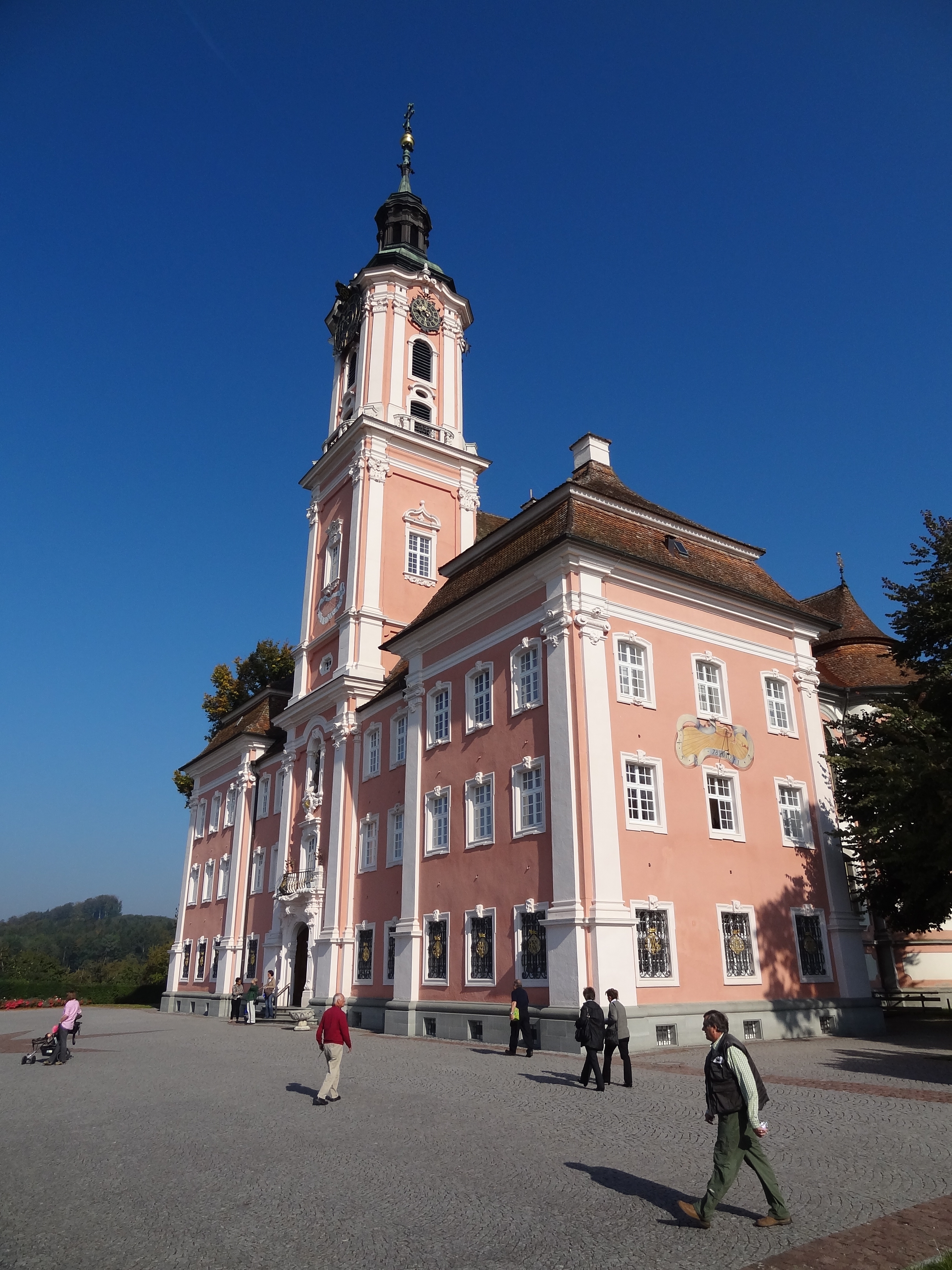
Rococo Church Exterior

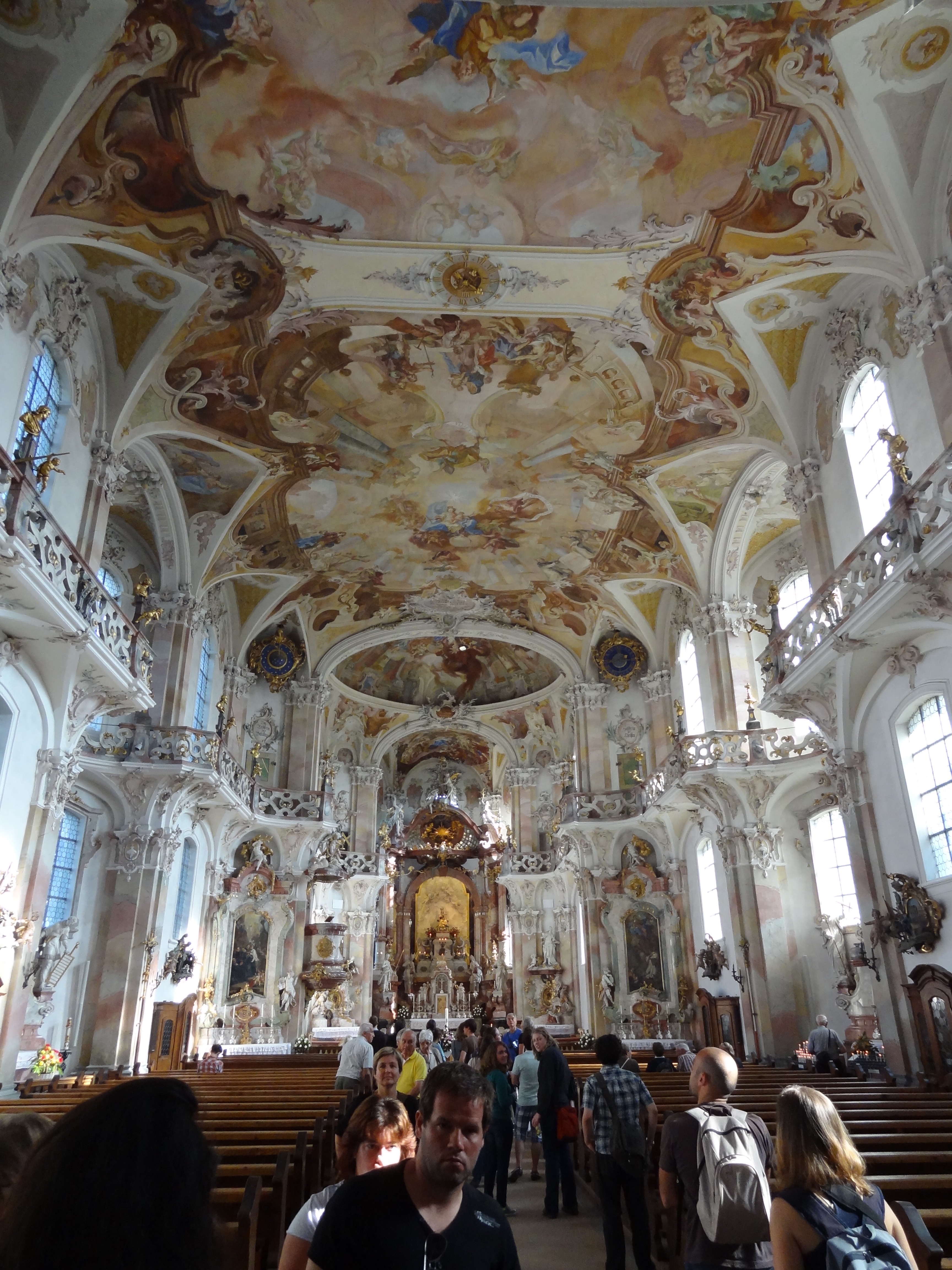
We began our tour with a stop at a Rococo-style Church close to Konstanz, right next to the water. The exterior, although beautiful, wasn’t particularly “churchy” looking, but the inside was absolutely stunning. Some people don’t like the Rococo style due to the complete sensory-overload decorations that adorn every centimeter of the interior, but I found it fascinating. Absolutely everywhere you could lay eyes upon was in some way decorative. Sitting through a long sermon during a church service there would be no problem – there’s so much to look at!

Complete sensory overload! Rococo church interior

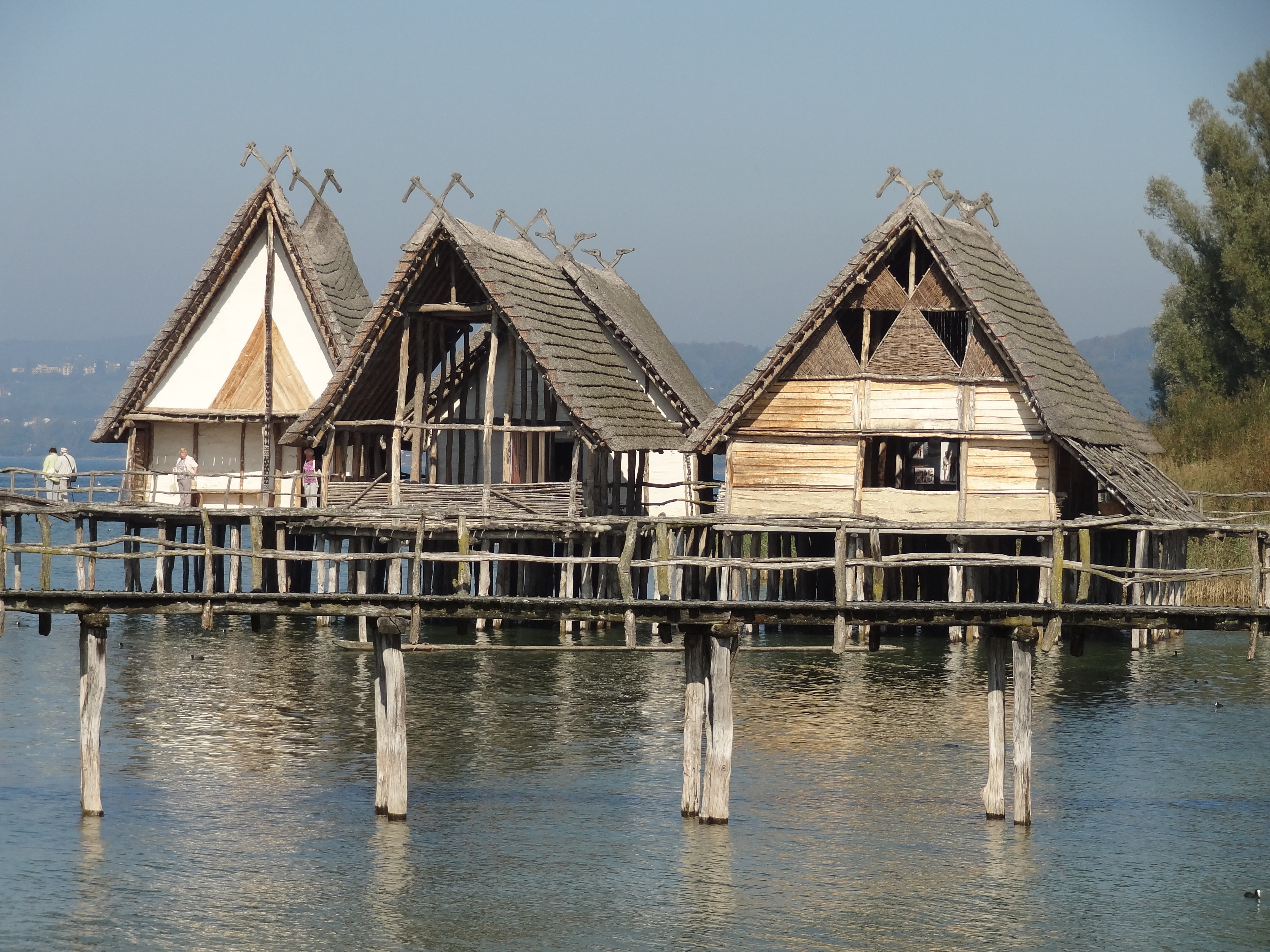
From the Rococo church we hiked along the lake for about 30 minutes until we reached the “Pfahlbau Museum.” Here we learned about the Bronze and Stone Age settlements that were discovered dating back to 850 BC. Because the forest was so extremely thick, an entire village of wooden, thatched-roofed houses was built directly over the water on stilts. Some of the original buildings remain and some are recreations, but it was still very interesting to see and learn about. The tour guide was slightly difficult to understand at times, but I think I took most of the important details away from the experience.

Remnants of the ancient settlement on the Bodensee at the “Pfahlbau Museum.”

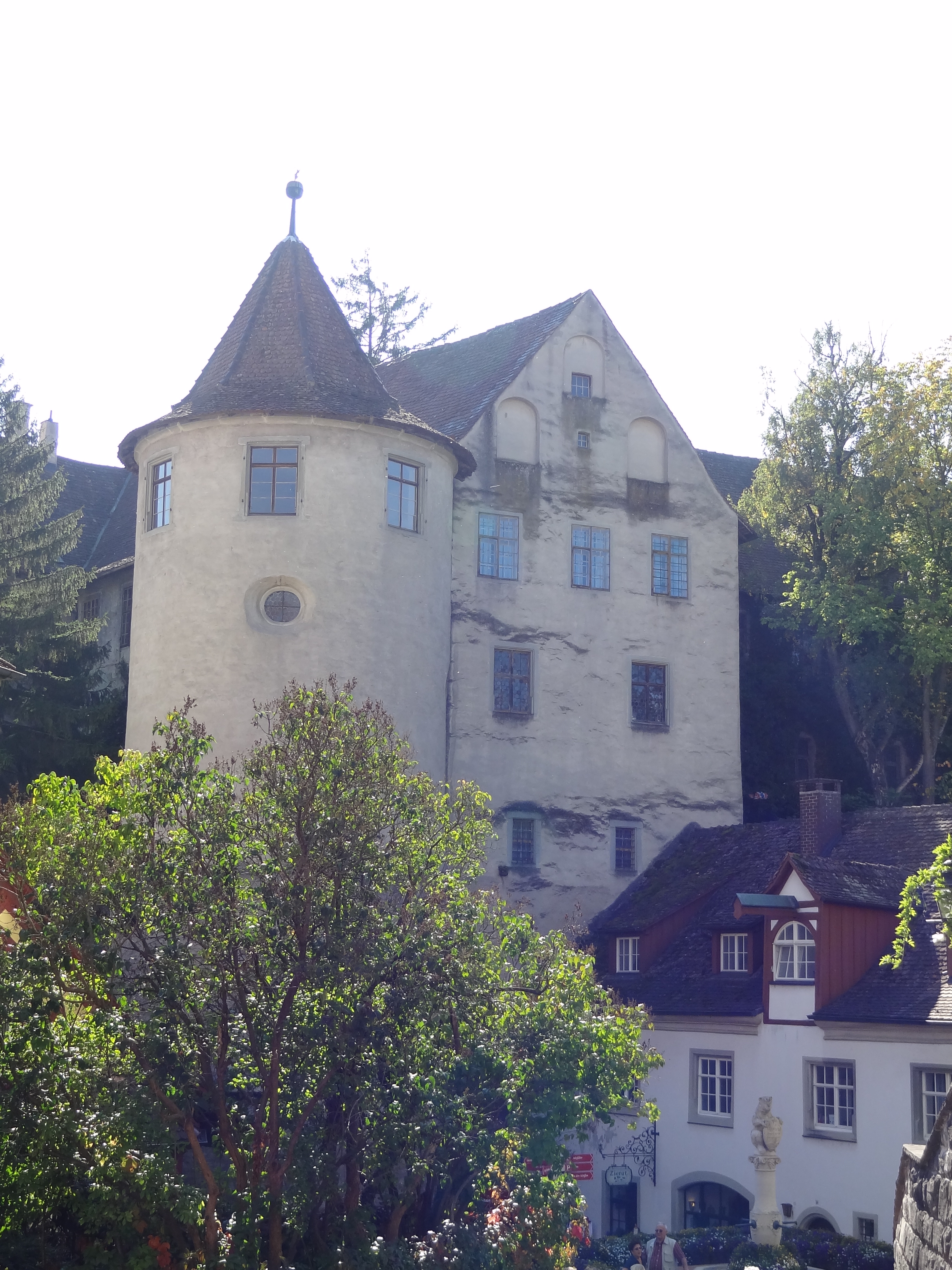
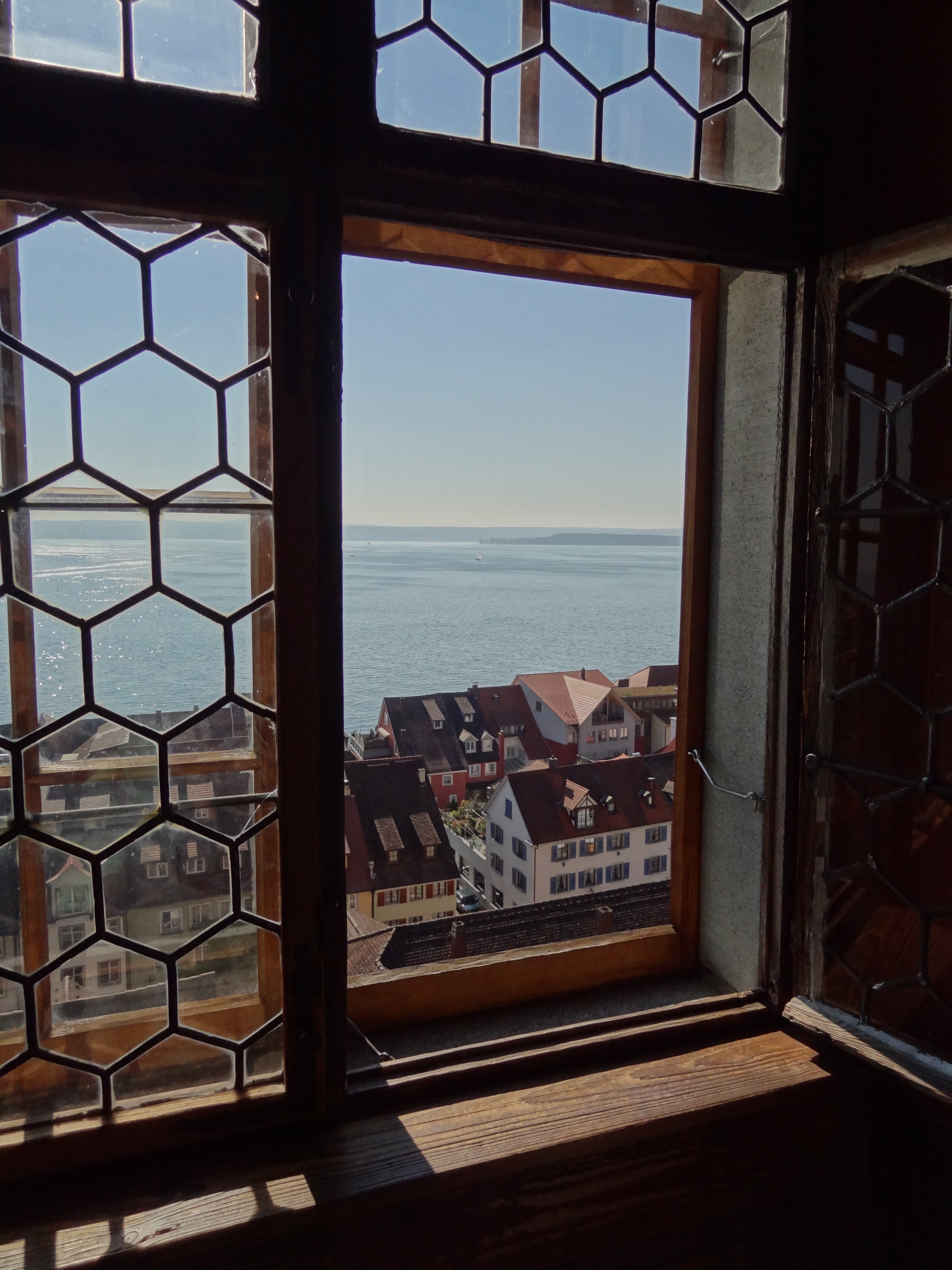
The next stop was a tour of Meersburg Castle, which happens to be the oldest currently-inhabited castle in Europe. The lakeside castle was a very important location during the reformation, but it is perhaps better known as the home of German Poetess, Annette von Droste-Hülshoff.

Part of the Castle Exterior


Looking out the castle window! Bedroom of the famous German poetess!

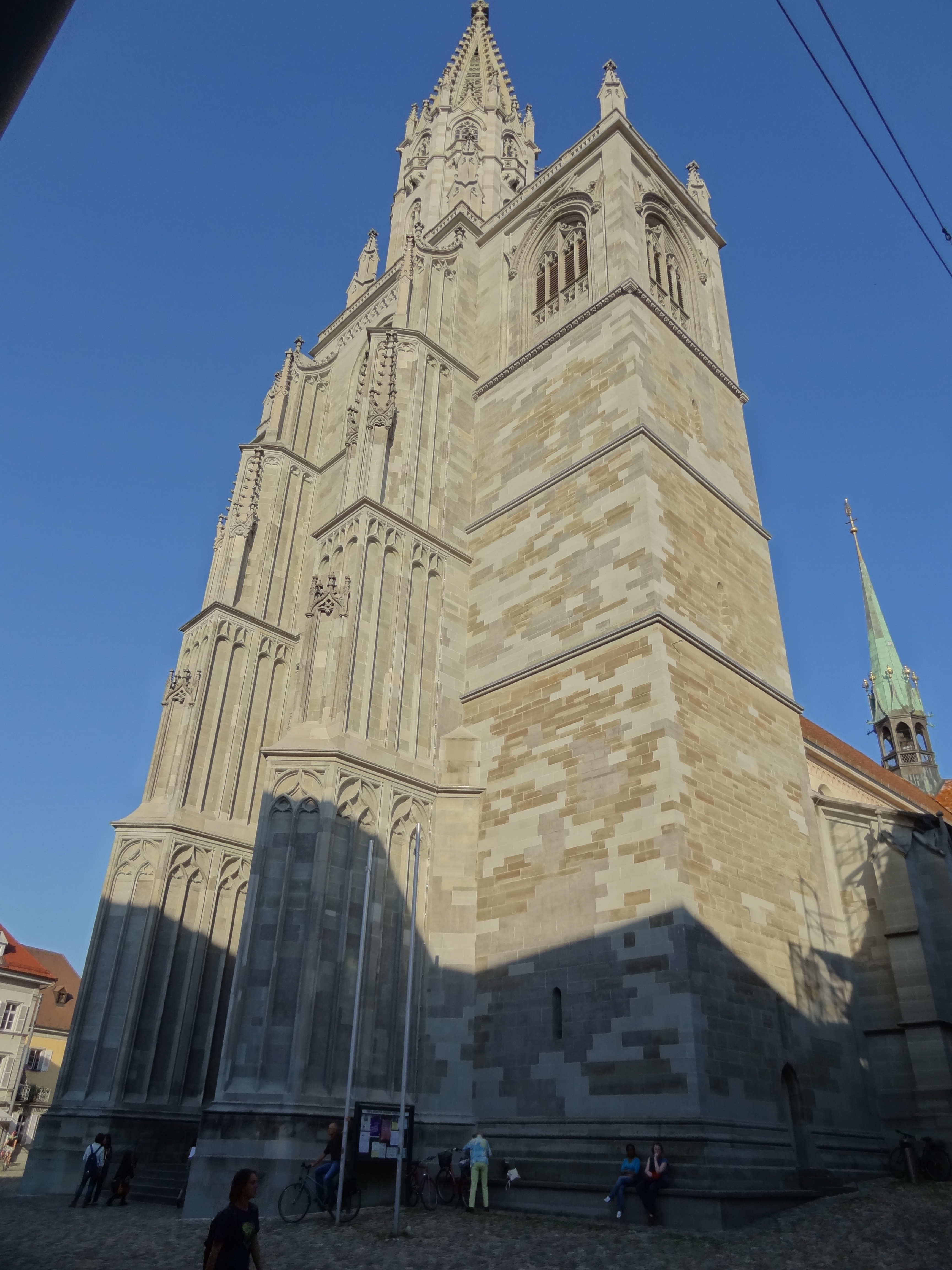
We ended our day with a ferry-ride to the city of Konstanz, where we were given the chance to explore the city before joining for dinner at a Turkish restaurant. Some people in the course took advantage of the free time and crossed the border into Switzerland, but I decided to stay in Konstanz and see some of the sights, landmarks, and churches in the city itself.

Yet another giant, old, beautiful, European church! Konstanz.


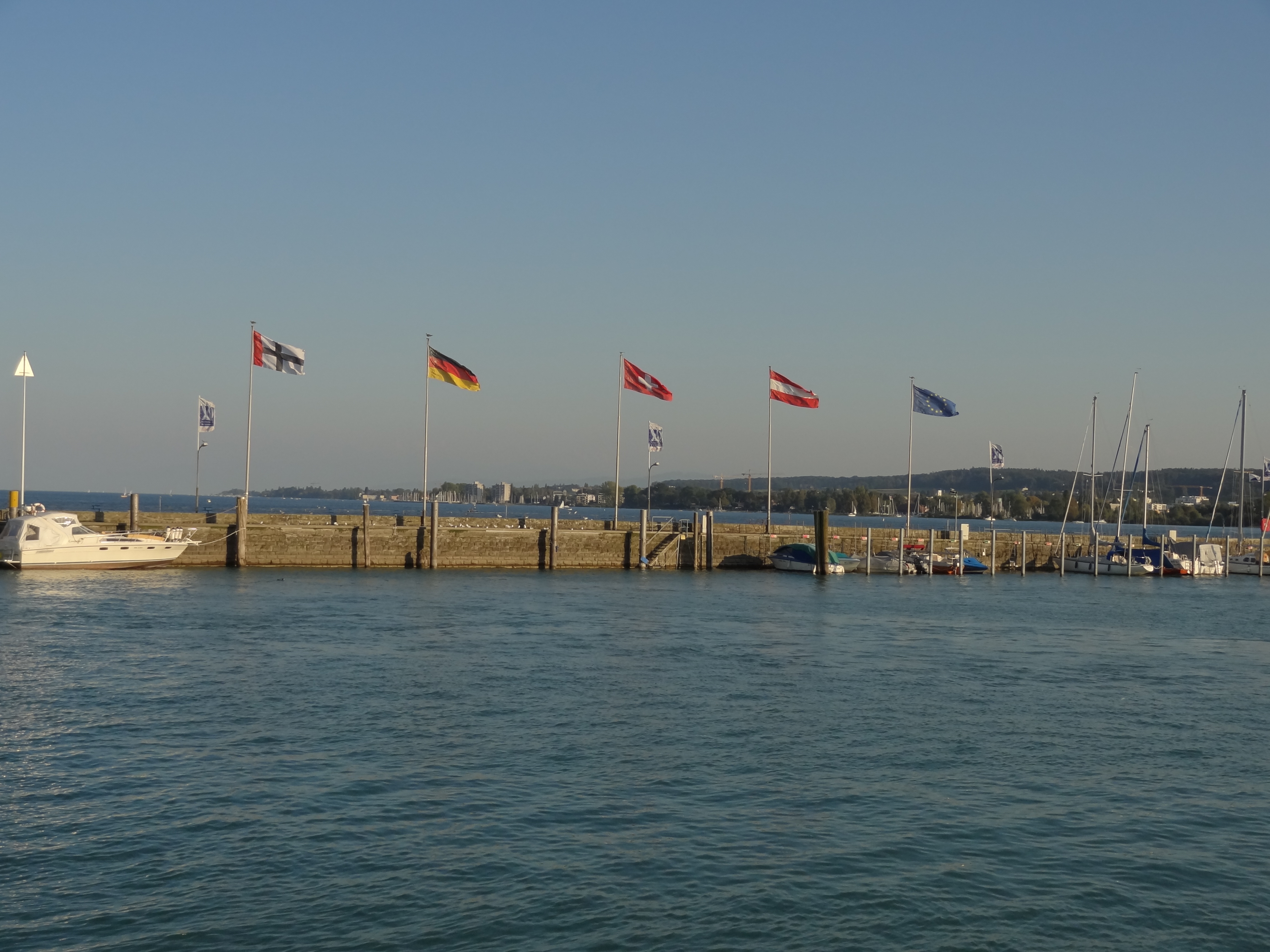
The Bodensee, and flags of the states and countries that border it

That’s all for now! I’m off to bed so I can wake up in a few hours, shove some clothes in a backpack, and be out the door en route to the airport.

Bis dann!
 

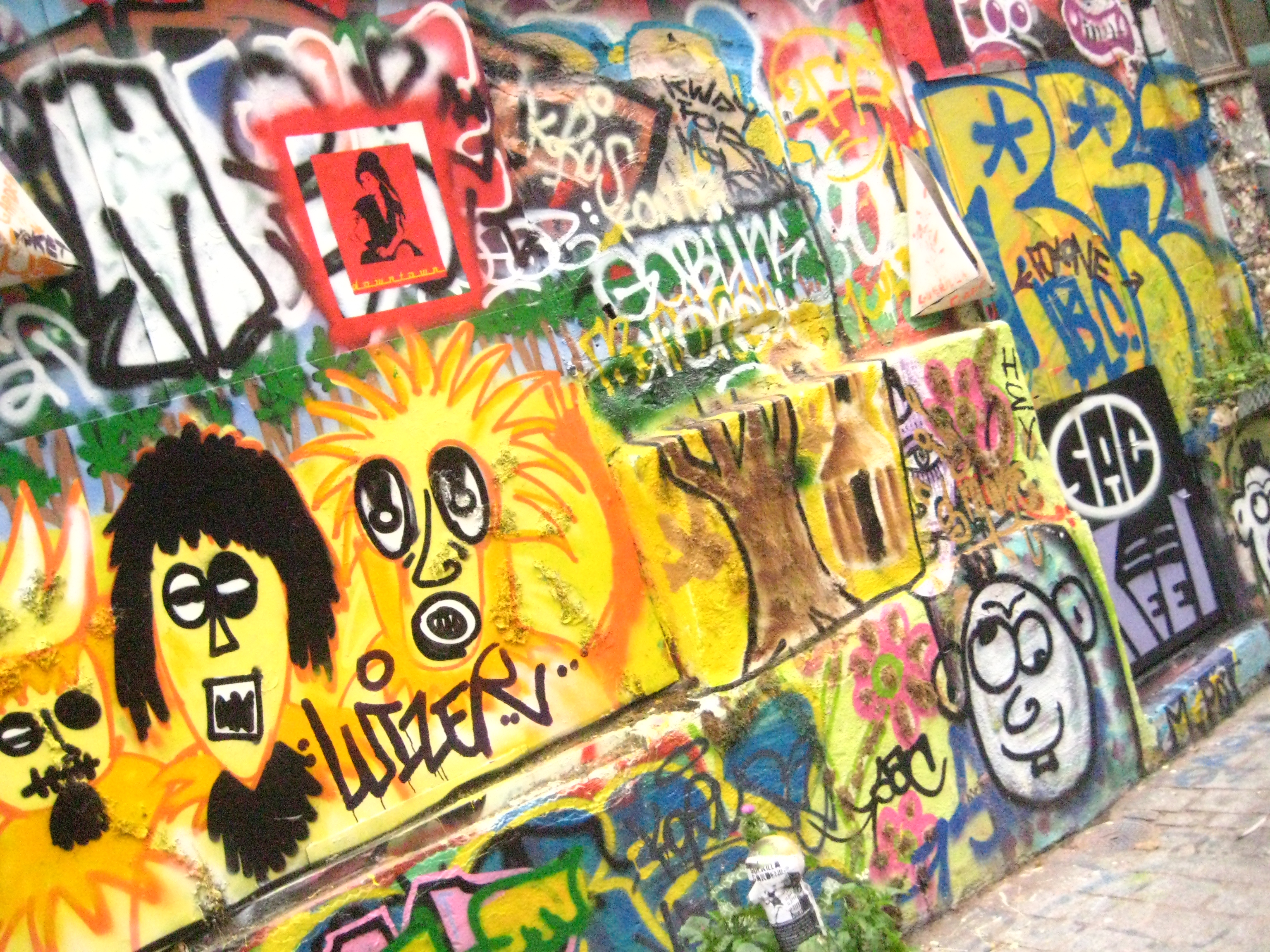
Street art!

Translation: One learns more in one white night than in a whole year of sleep. All-nighter, anyone?

Coming from a fairly urban background, I’d like to think that I’ve seen my fair share of graffiti in my twenty-one years of existence. In the States (well I can mostly speak about my home base, Chicago), street-art is often gang related and while always colorful and interesting to look at, disappointingly homogenous.

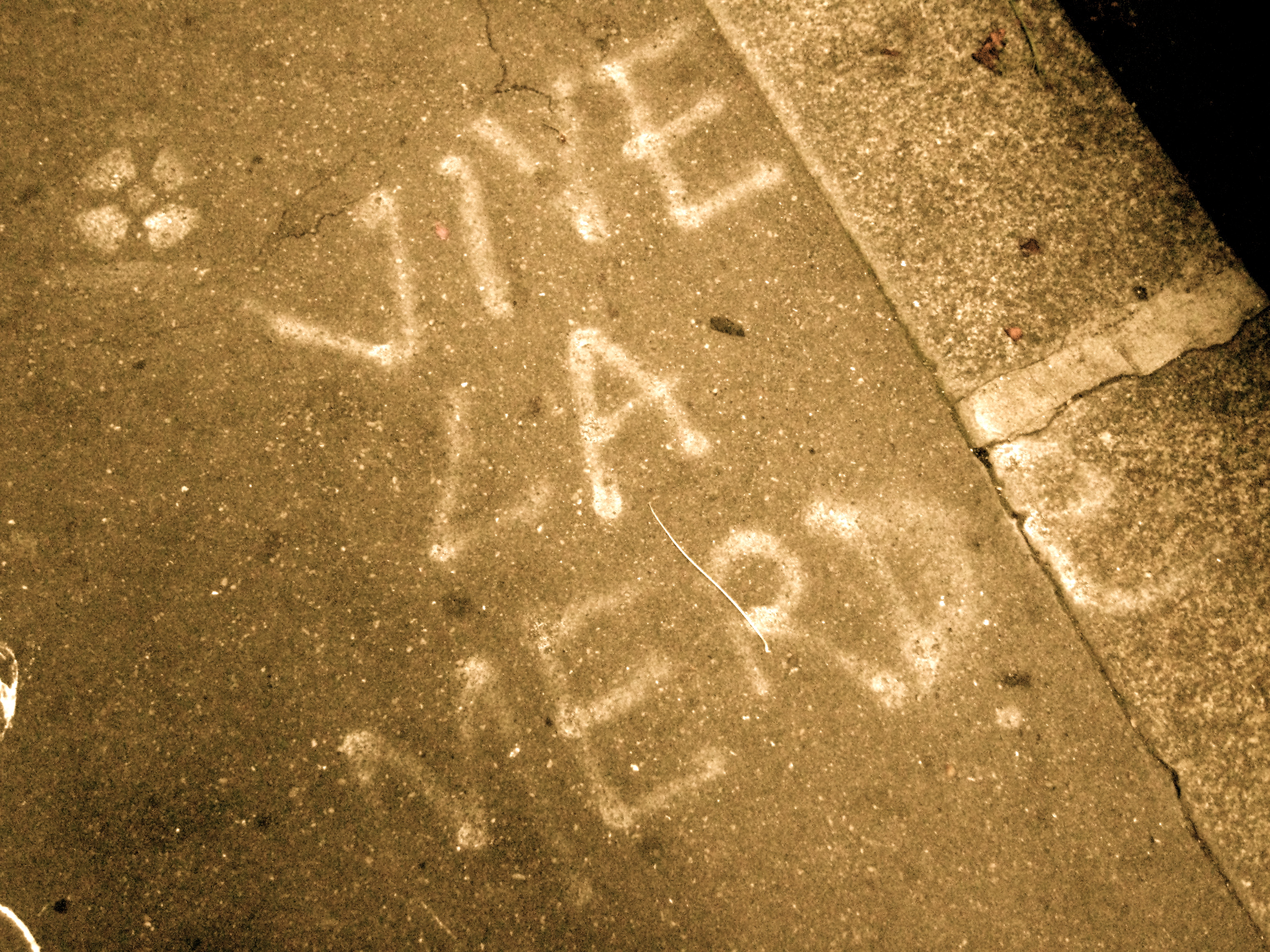
Saw this on a sidewalk not too far from where I live. What does it mean? well, long live the sh*t, essentially. Instead of seeing this as negative, I’m taking it as a cheeky nod to the copious amounts of dog excrement on the street.

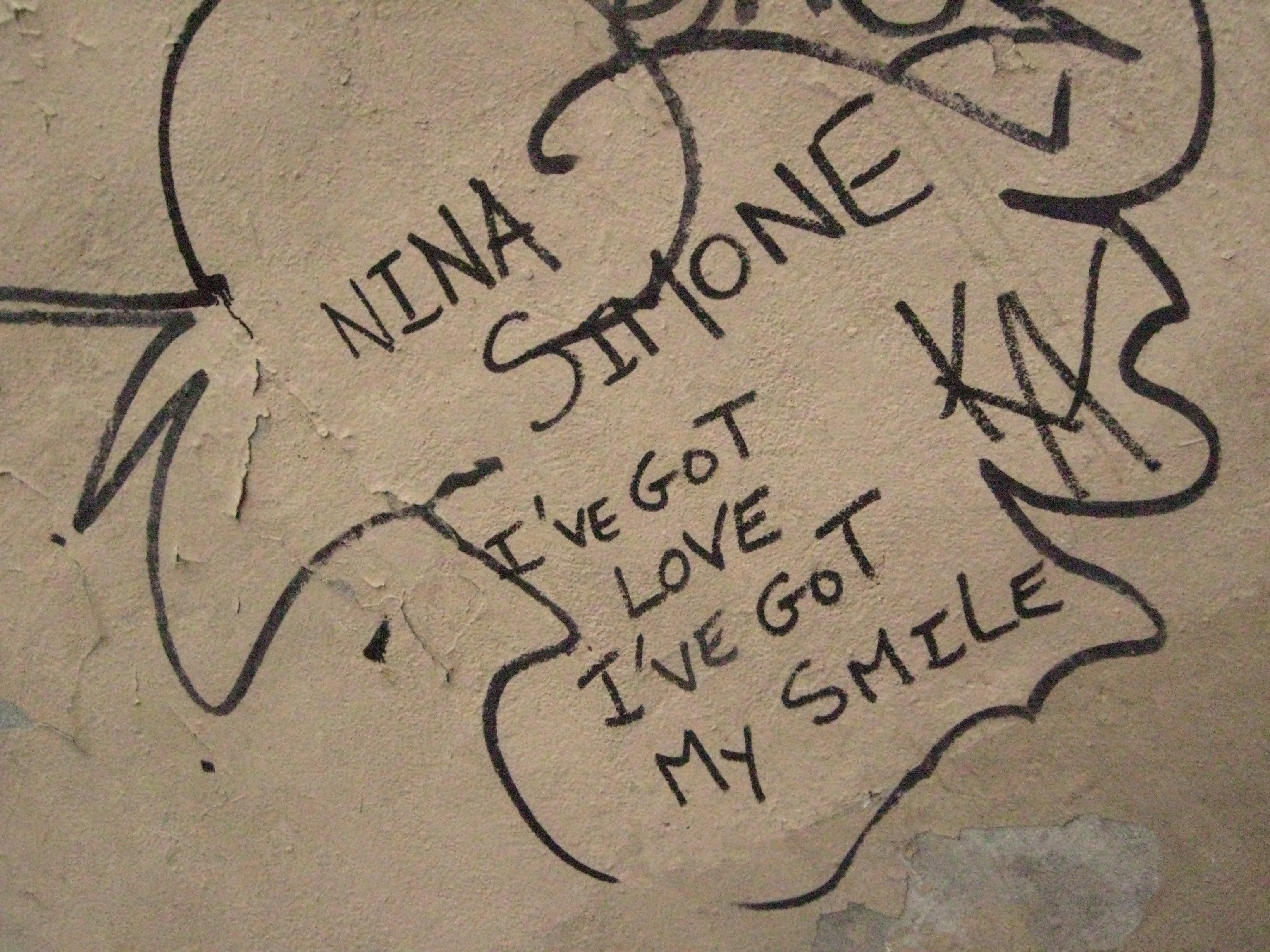
Thus, whenever I find myself in a new place, I always make it a point to scope out any  specimens of uh, self-expression that are a bit different–more creative, more humorous, more uplifting. I’m happy to report that, in Paris, I’ve found just that. All but one of the photos posted here were taken in the 20th arrondissement of Paris, which is home to both the Pere Lachaise cemetery (home to Jim Morrison and Oscar Wilde) and happens to be the birthplace of famous Parisian chanteuse Edith Piaf (as immortalized in the movie La Vie en Rose). More about the 20th later, back to its street art! While some may argue that these are nothing more than examples of spray-painted concrete (and indeed that’s what they are!), I’d like to think that there’s more to them than meets the eye!

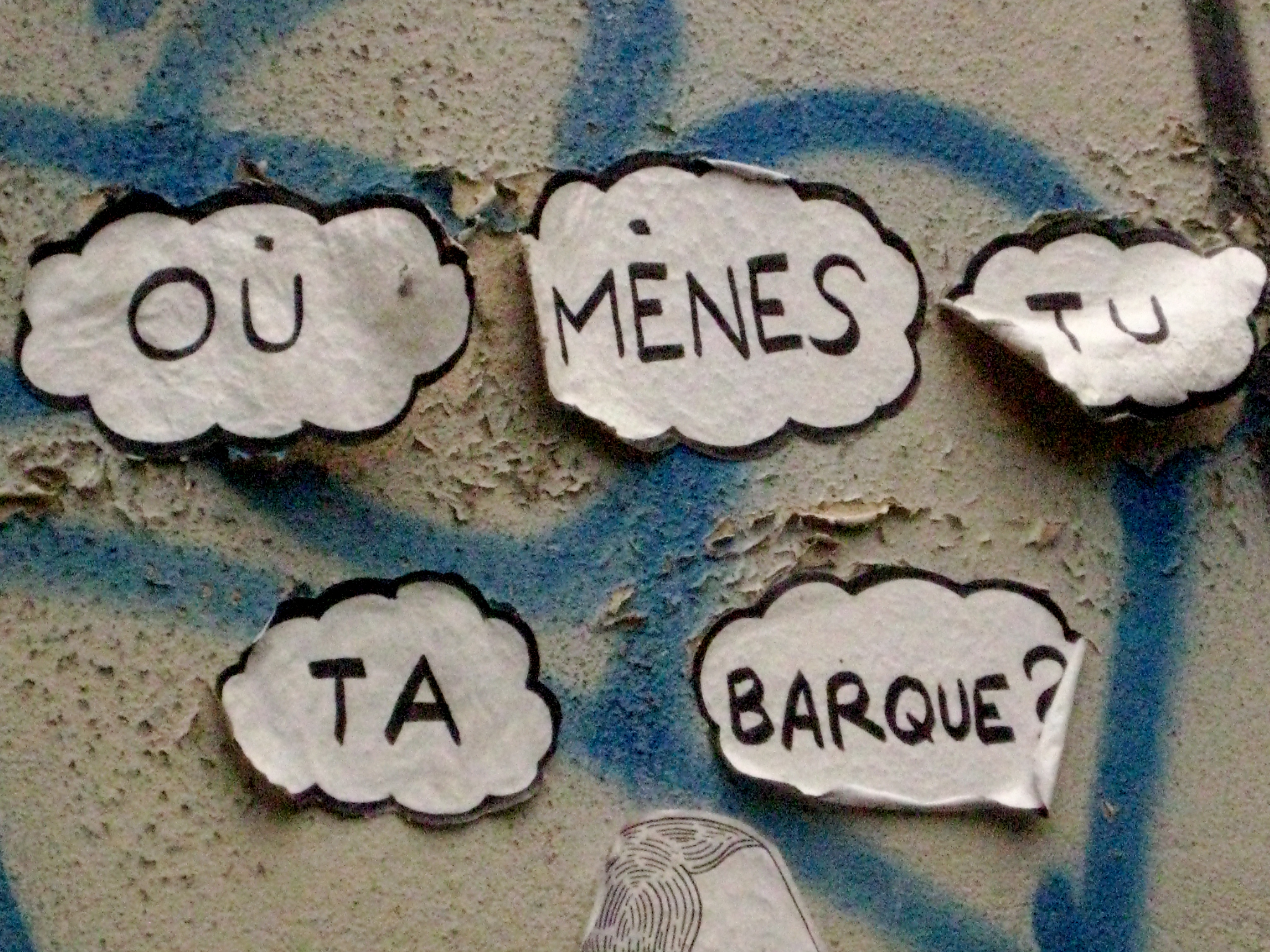
Translation: Where will you guide your boat?

Graffiti, above all, offers information about the most important part of any city–its inhabitants! You don’t have to look far to get a general sense of the thoughts and feelings and above all, SPIRIT of the people that live around you. Public defacement of property or not, street art adds a little bit of grit and character to places that might otherwise be a little mundane or even a little too pristine. In the same way that some people plant flowers to brighten up a space, others create public art (call it what you like!) to make other people smile, laugh, and most importantly, THINK. A mon avis, (in my opinion), the world’s urban playgrounds would be boring without it! If you’re interested in seeing more, check out my Picasa album https://picasaweb.google.com/114721777633407213084/Franceypants. Ciao for now!

This was taken in the 20th arrondissement of Paris, called Belleville (Beautiful city). While I have yet to encounter a Parisian who considers this the most beautiful part of the city, it is definitely one of the most diverse and interesting.


TOO FRENCH???

My first weeks in France, I had this reoccurring (and curious) thought: that

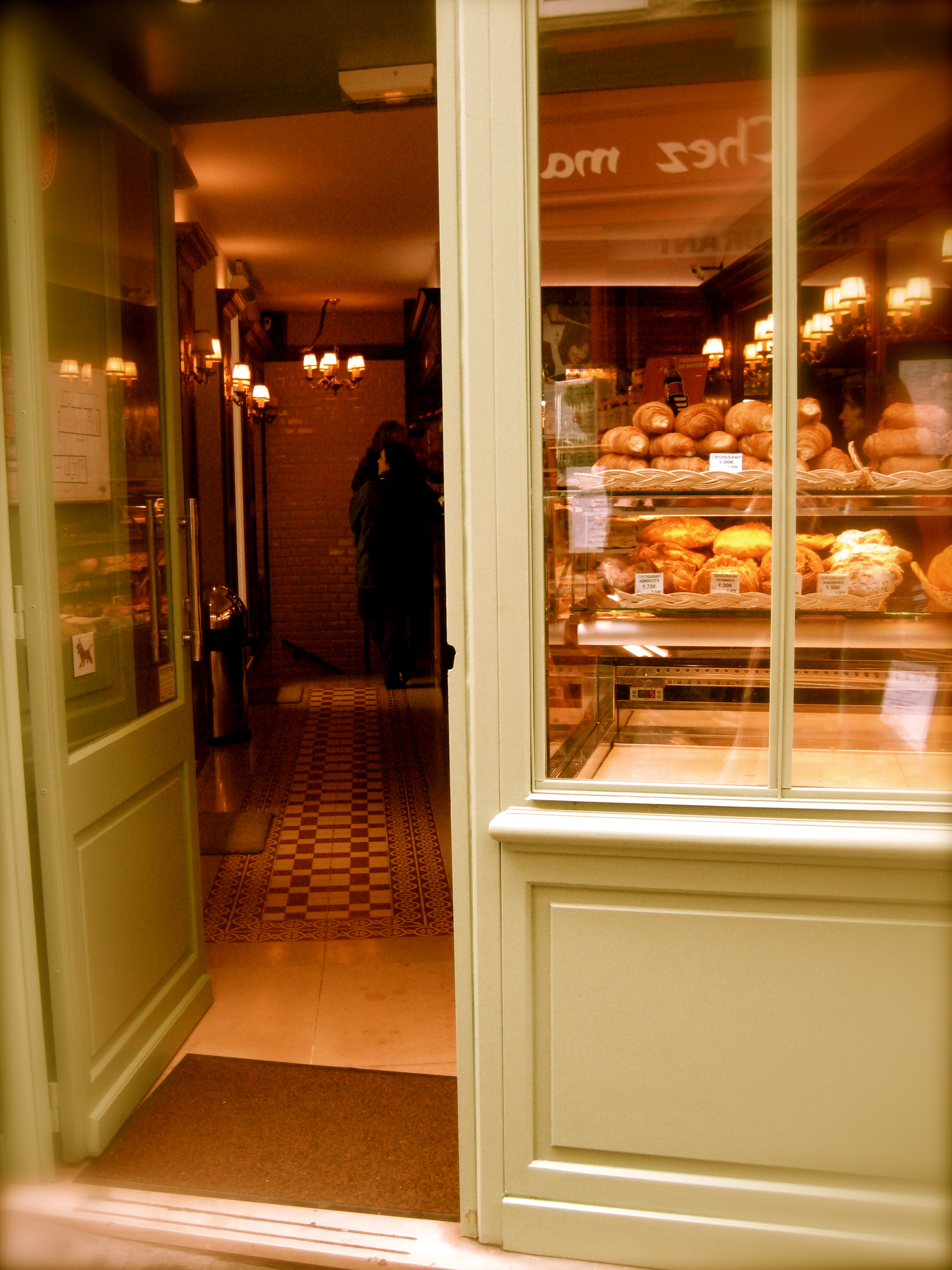
Une boulangerie. In Paris, you can find one of these babies about every 10 feet.

somehow all the Parisians I saw in my daily comings and goings were TOO French. French to the point that they must have been acting. The more I observed, the more I was convinced that all these cigarette smoking, baguette buying, and small-dog toting people existed only to reinforce all the stereotypes that exist about French people. It had to be a farce! Un petit spectacle du théatre! And I am here to tell you that it is anything but. It’s life à la française! In Paris, daily living is art. Everything from self-presentation to meal preparation is a delicate process which requires much time and attention to details.  And the thing about the French is that they don’t apologize for their Frenchness, which is interesting to me, an American in Paris, who, for better or worse, is constantly apologizing for the supposed shortcomings or “unculturedness” of her home country. Having been here a little over a month, I’ve since decided to “laisse tomber” the apologies and instead take full advantage of my current (if unofficial) position as American ambassador to France and soak up as much Frenchness as possible,  and if in doing so, I happen to leave a little USA behind, so be it.

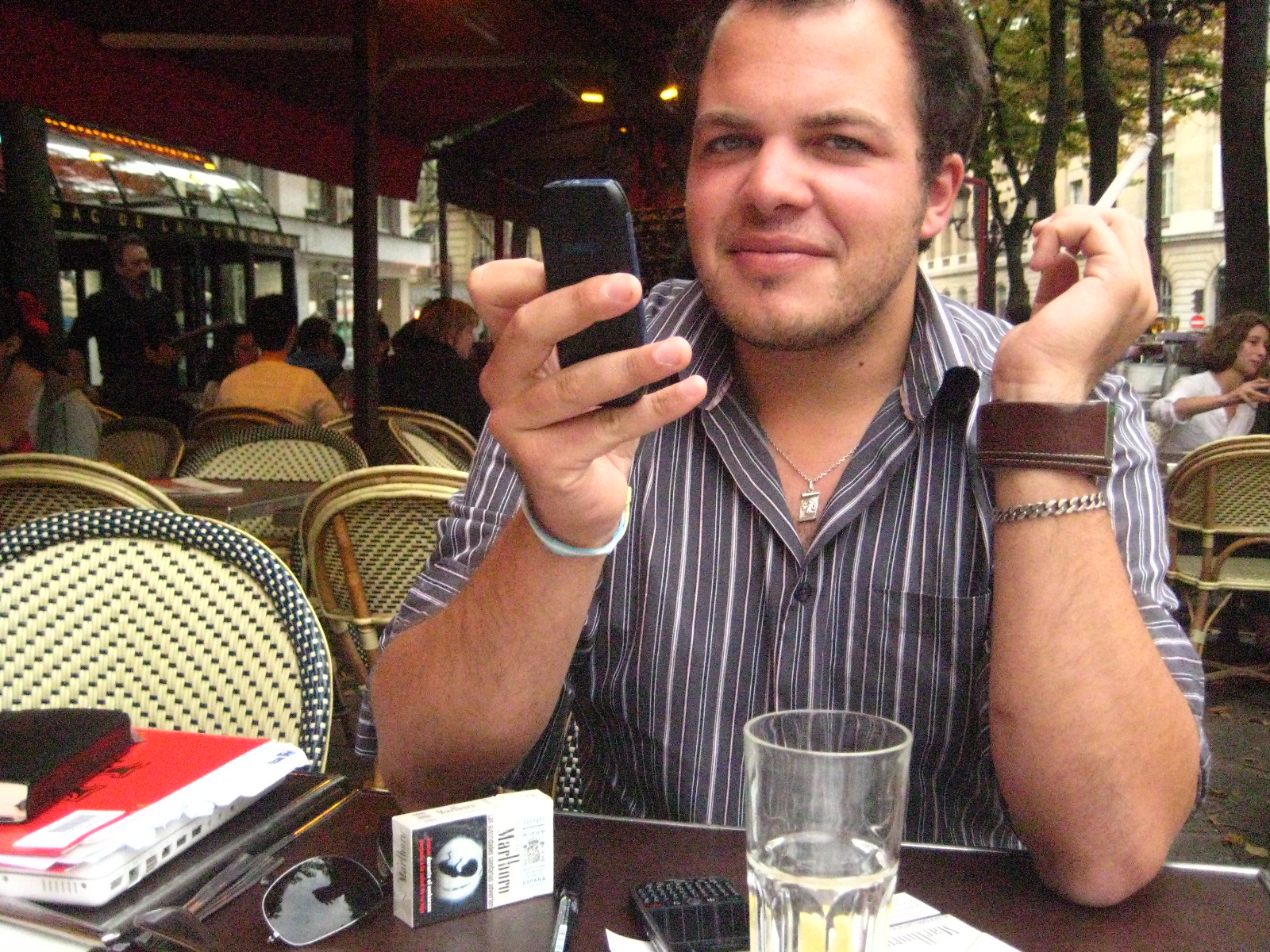
For my smoking specimen, I've chosen mon ami Mathieu Brandisi, who was, interestingly enough a French exchange student at Valpo 2009-2010.


Où j’habite ! (and other gentle reminders that I’m not in the US)

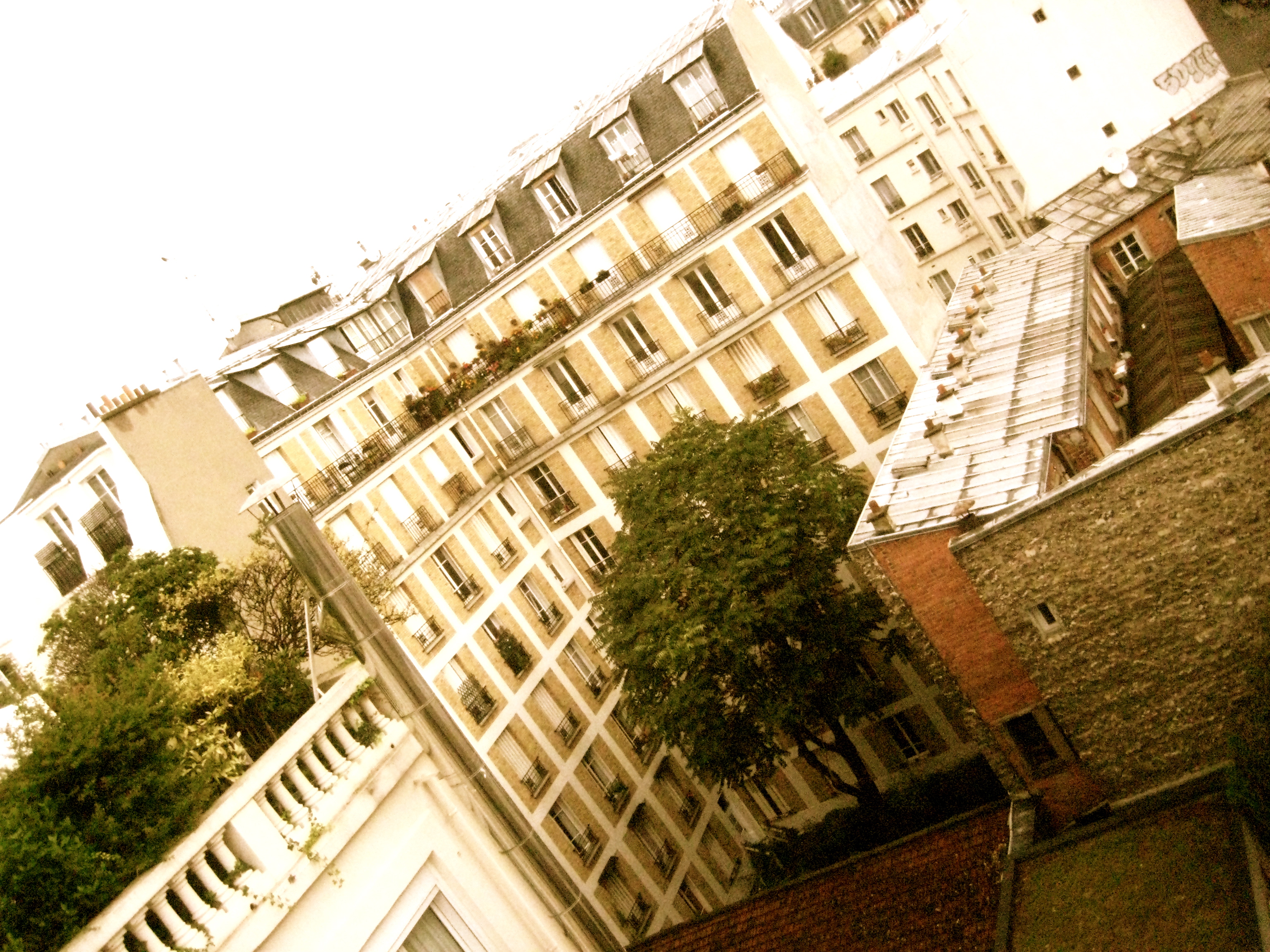
Quite excellently, my homestay assignment is in the 18th “arrondissement” (=French term for the districts in which the city is divided) of Paris which is called Montmartre. Home not only to the famous Sacre Coeur cathedral but also the vampy Moulin Rouge cabaret, Montmartre is generally regarded as the sort of artist’s quarter of Paris. But we’ll get back to that later! Right now, I want to give you about more of an idea about the building in which I live! When you think of Parisian architecture, you undoubtedly picture ancient and ornate apartment buildings with intricate iron balconies and flowering windowsills. And in doing so, you would be spot on! (Here, see for yourself! http://maps.google.fr/)

The view from my bedroom window! Typical Parisian landscape!

ANYWAYS  i live on the 6th floor of a wonderfully old brick immeuble (apartment building!) with two wonderfully hospitable host parents. The apartment is small for our standards, but for Paris, it’s just about right! It’s quaint and intimate and I have a little upstairs loft to myself. These little upstairs fixtures are remnants of post 1860s additions to buildings (Haussmann! http://en.wikipedia.org/wiki/Haussmann%27s_renovation_of_Paris) to create more housing in the city. Thus, back in the day, my little space would have been used as servant quarters! But today it’s perfect space for housing exchange students like myself! Have a look!
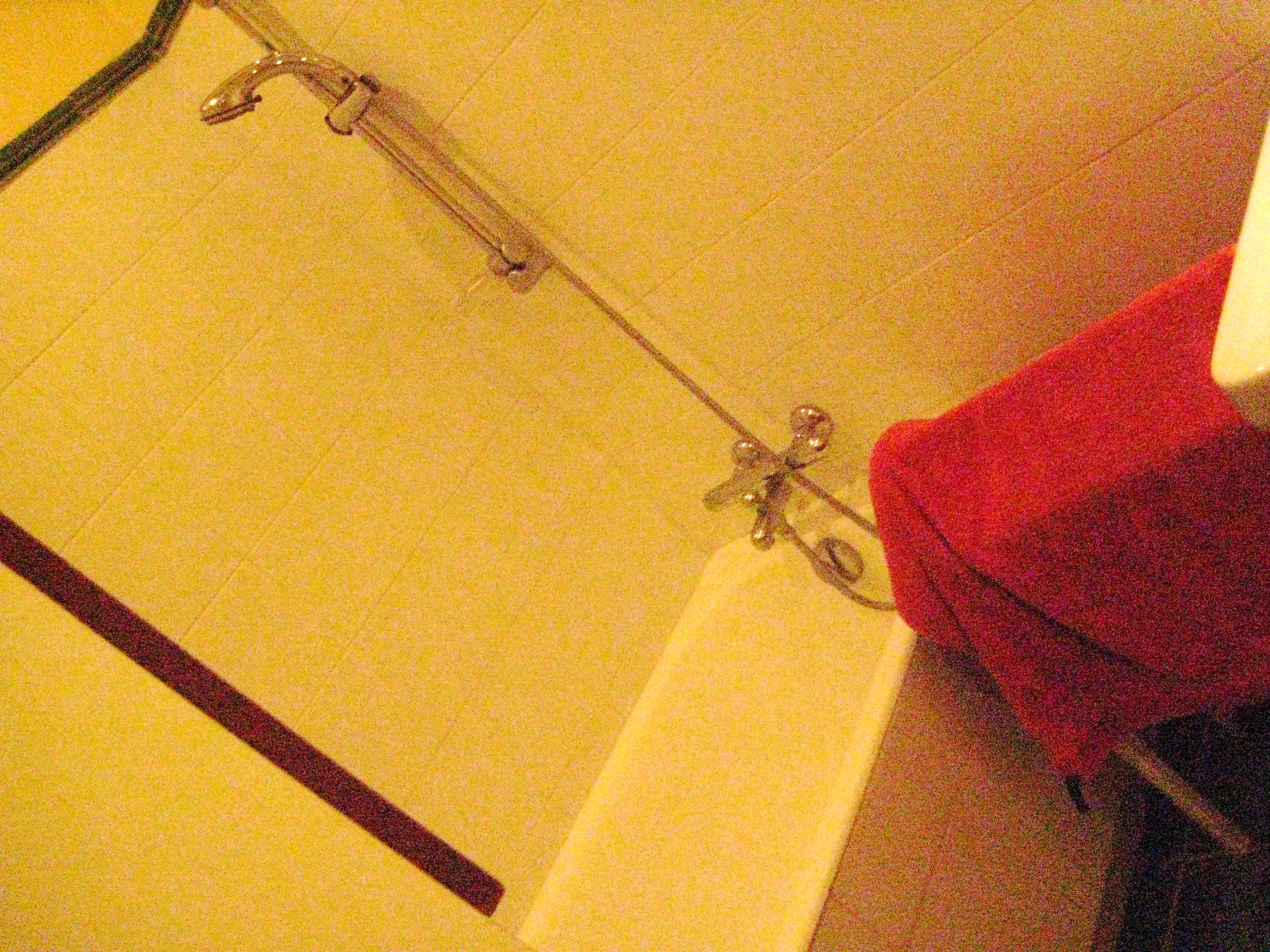
La baignoire (bathtub!) Note the lack of shower curtain!
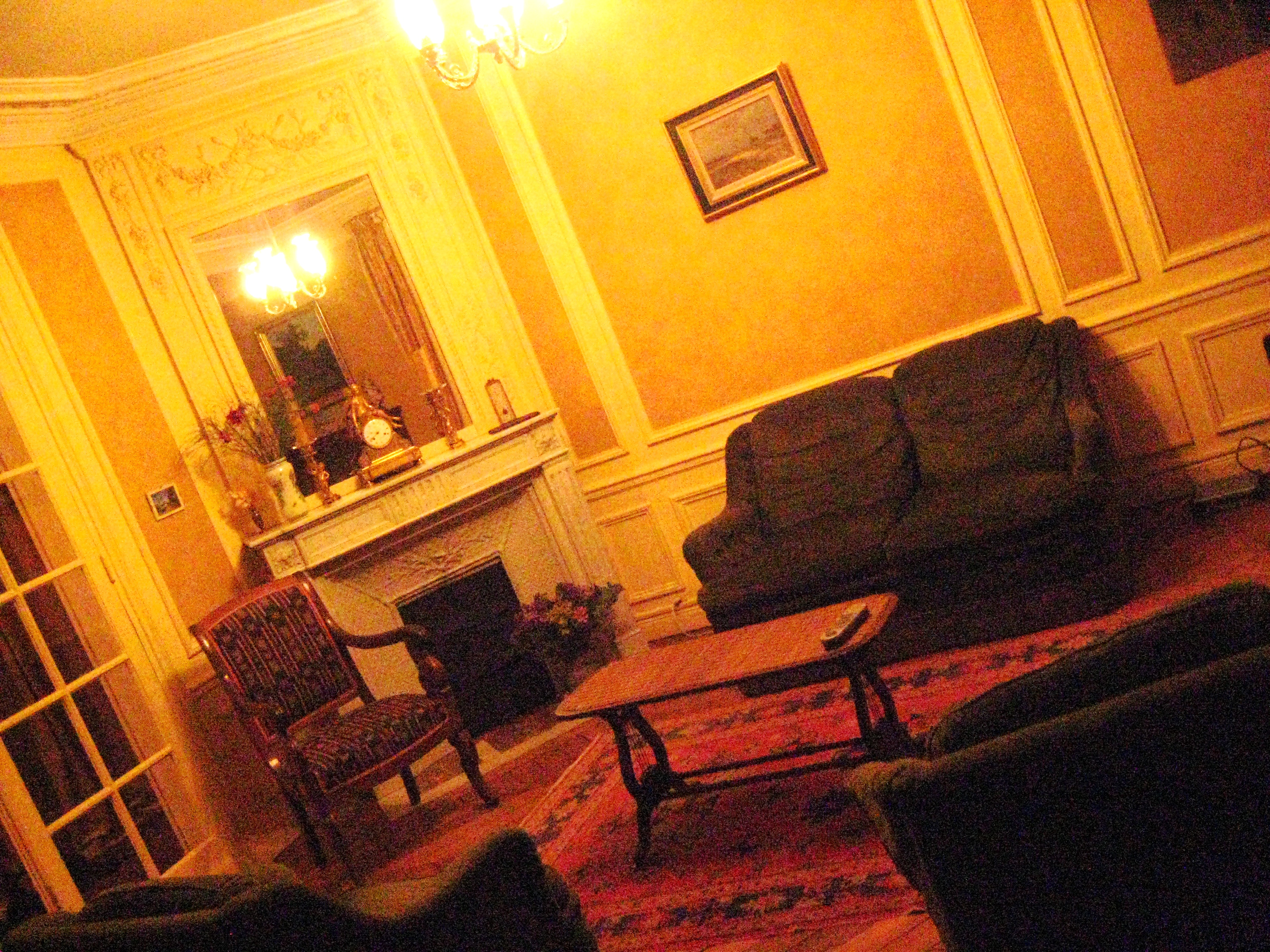
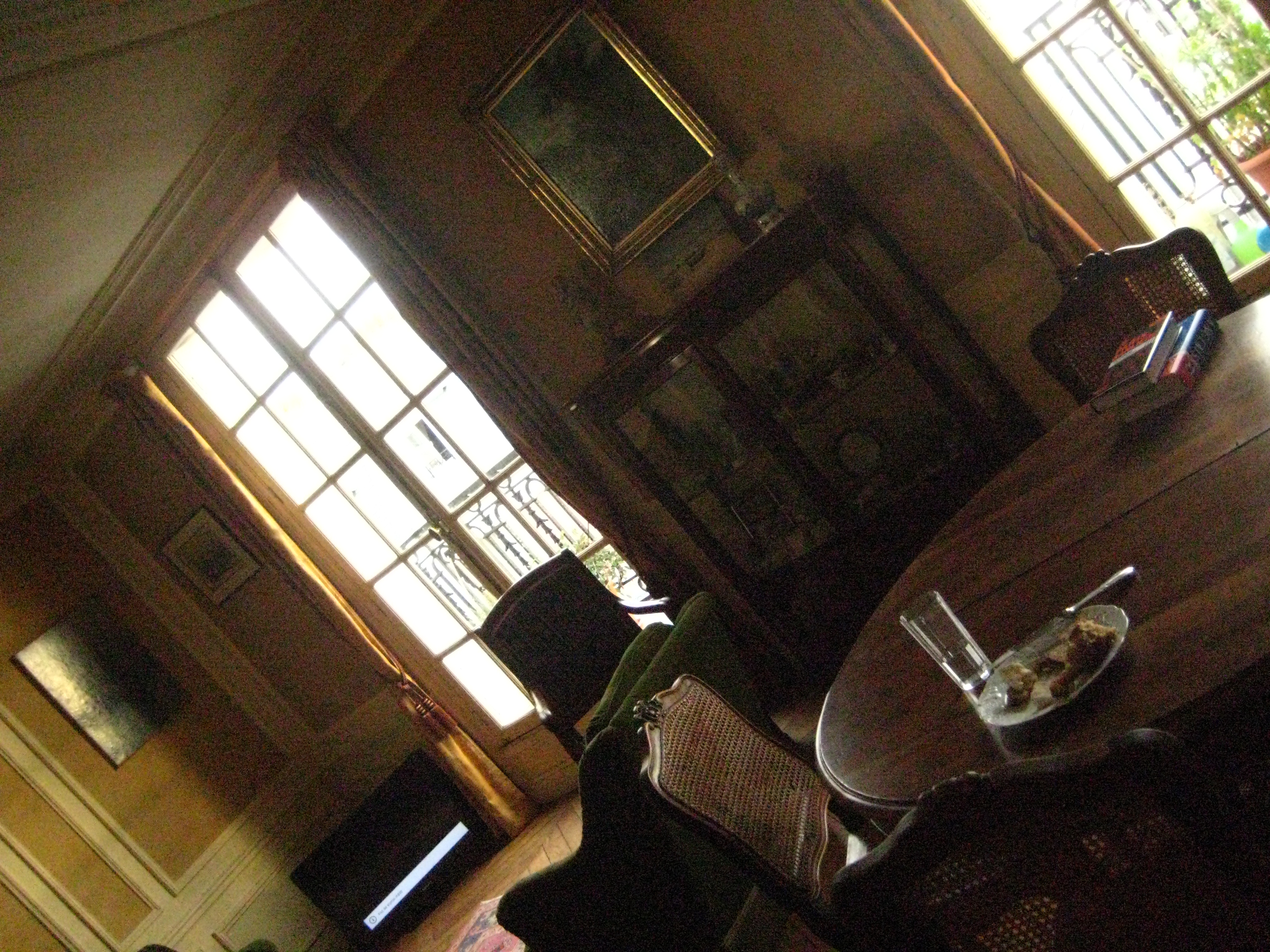
The beautiful little parlor area! I suppose our equivalent of a living room!
The view from the dining room table!

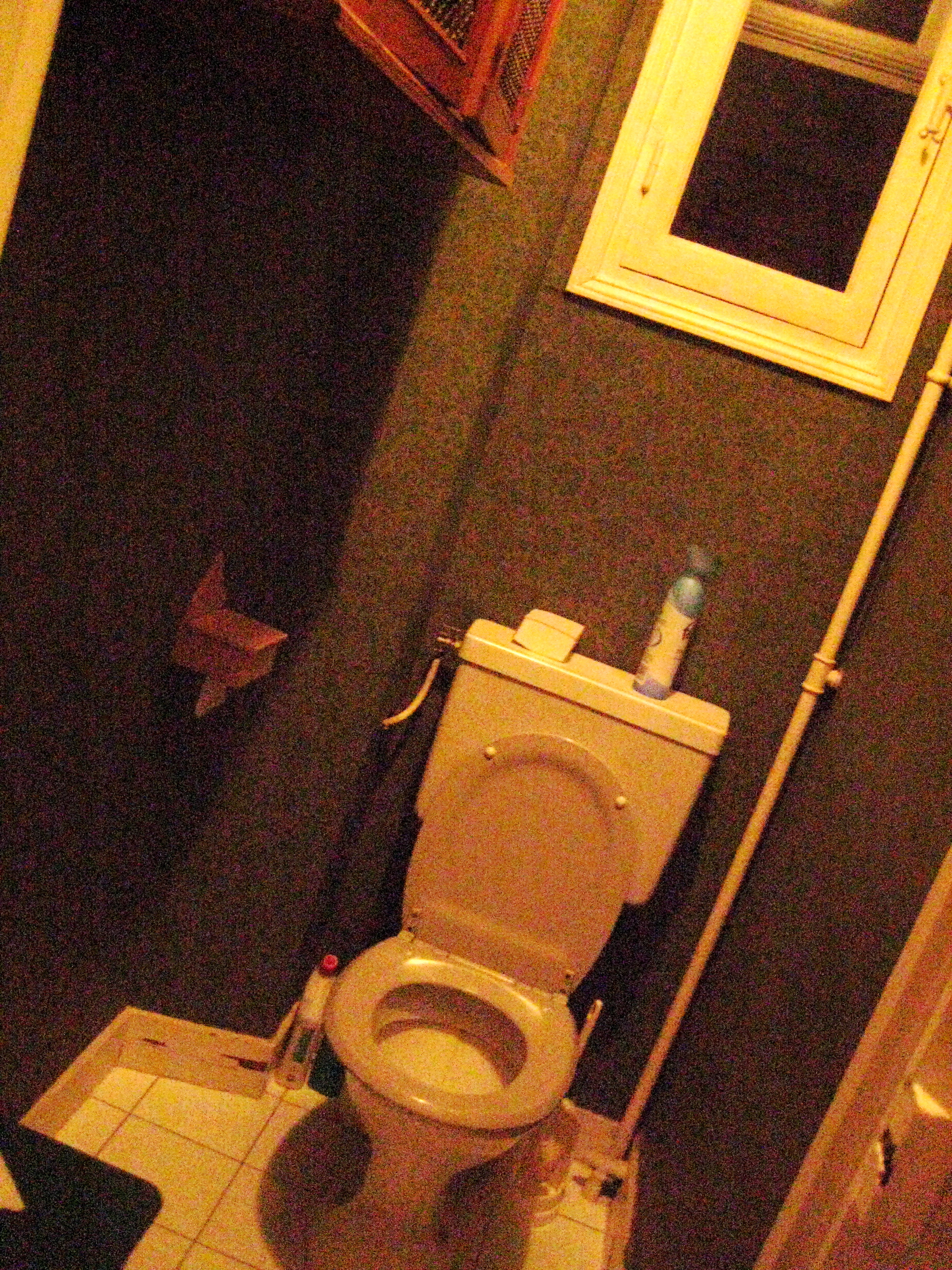
European specialty: le WC (water closet, gotta keep that toilet separate! it's both a matter of sanitation and space!)

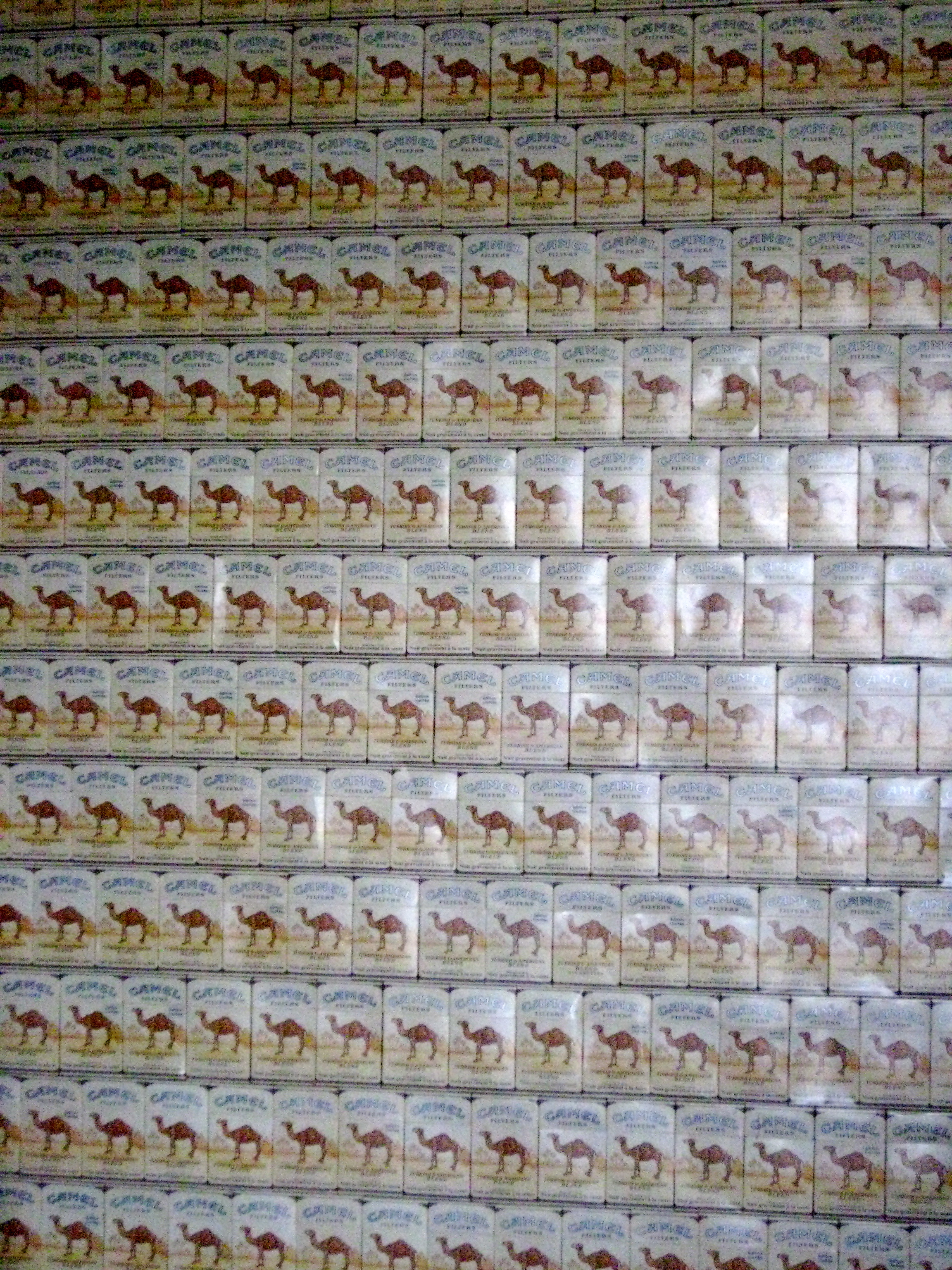
My whole back wall is covered in empty Camel packs. What can I say? The French love their cigarettes!

Volksfest in Stuttgart

So it’s officially October here in Germany. And what does that mean? Oh yeah, Oktoberfest, of course!

Oktoberfest in Munich, Germany is probably the most famous, but there are Bierfests all over the country. After consulting with some German friends, we learned that making the trip to Munich might not be worth it. It was purportedly quite the experience, but very touristy, there’s nowhere left to spend the night, and everything is really expensive.

Instead, everyone suggested that we make a point to go to the Cannstatter Volksfest – Stuttgart’s version of “Oktoberfest” and the second largest Bierfest in the world.  They told us that there weren’t very many tourists, and it was probably the most authentic experience we could have.

On Saturday we decided to take the train into Stuttgart do a little shopping and then meet up with some other people from our German course at the fairgrounds.

We ate lunch at a café that serves traditional schwabisch food, just to complete the experience. Unfortunately we had terrible service.  Because customers here are expected to tip much less, there isn’t as much pressure for “service with a smile.”

Eventually we made our way to the Cannstatter Wasen – the grounds where the Volksfest is held. It was huge! There were rides and tents and food and toys and games and anything else you could dream of!

Canstatter Wasen

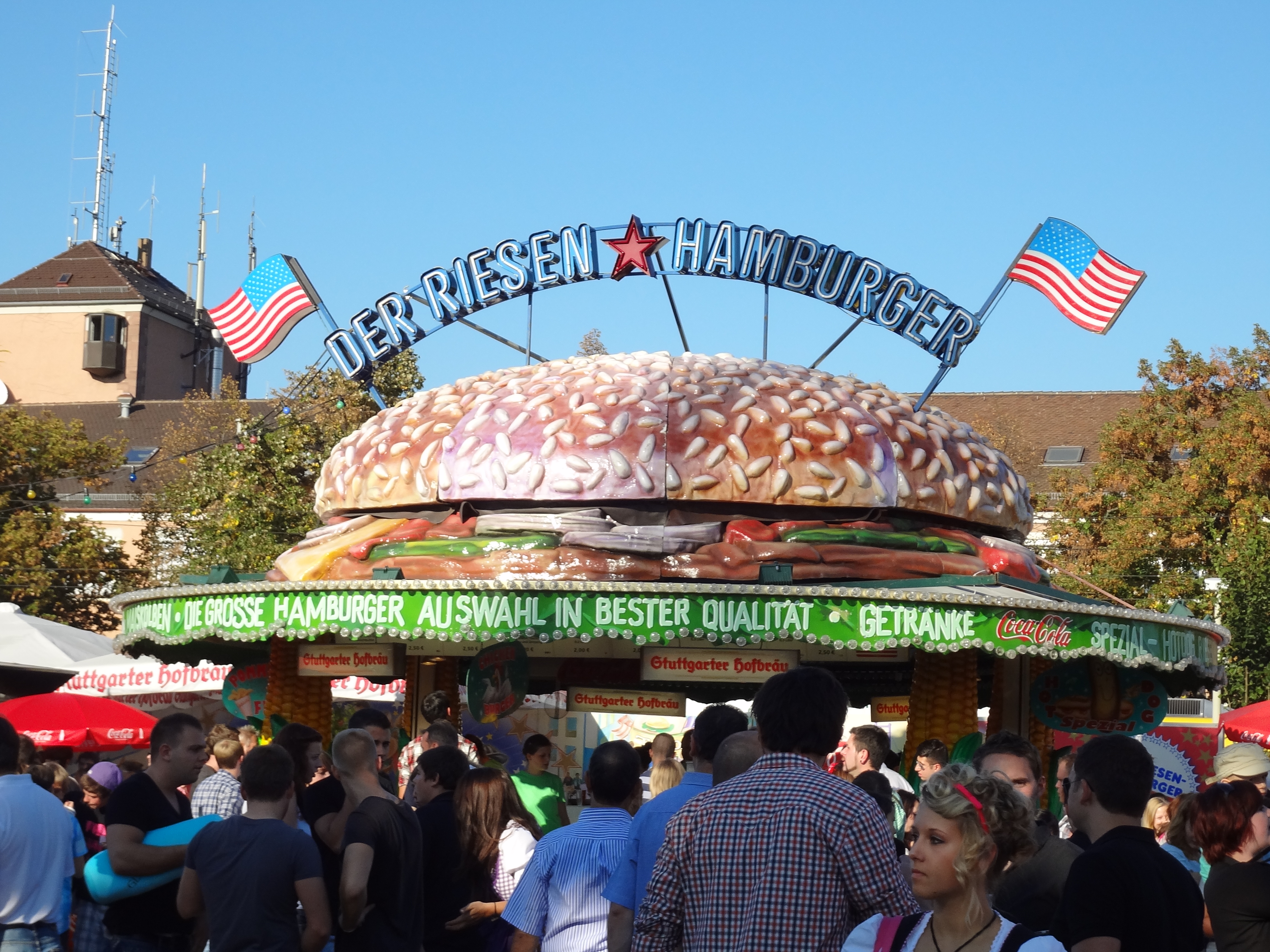
American Burgers! - "The Giant Hamburger"

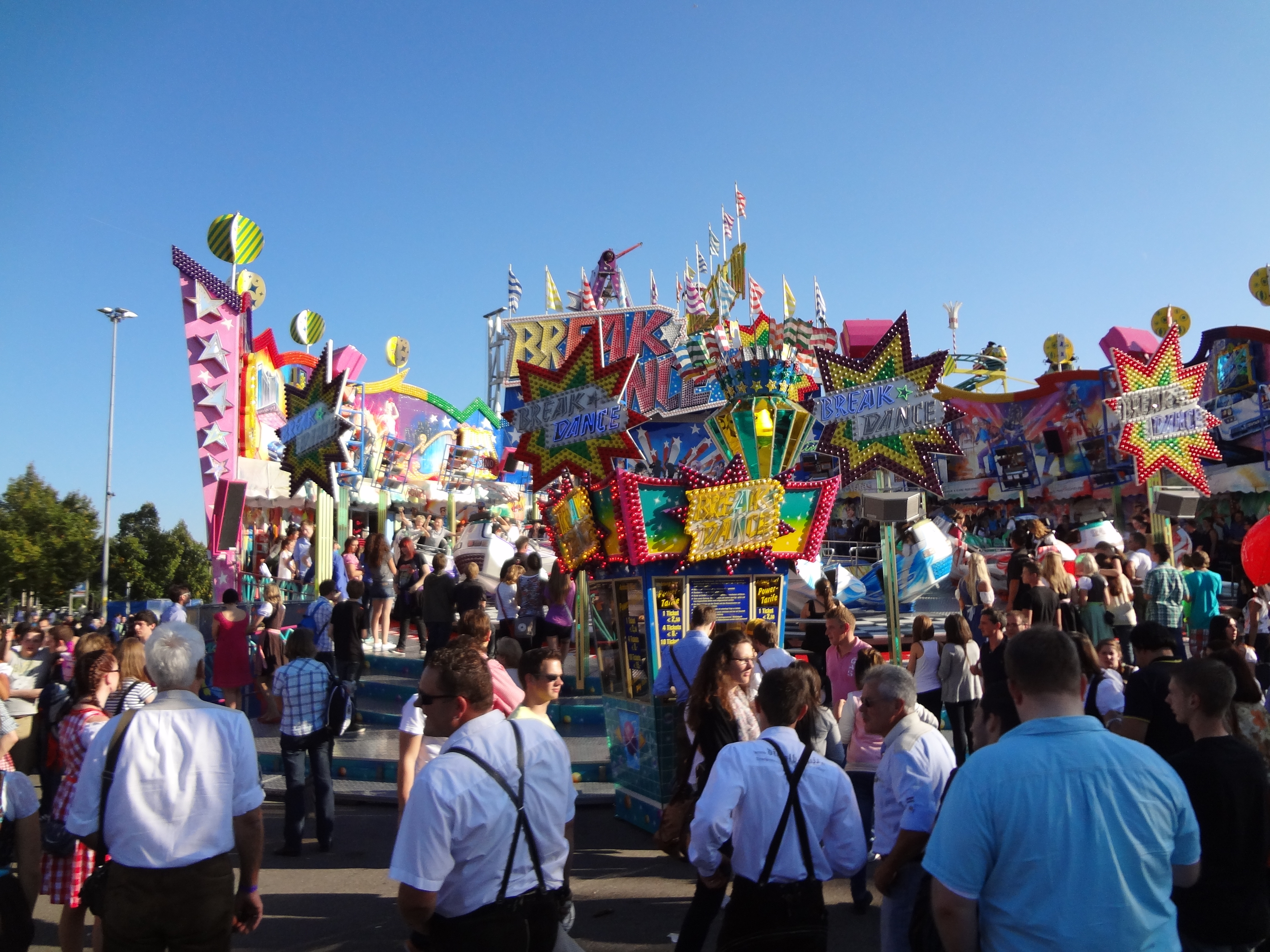
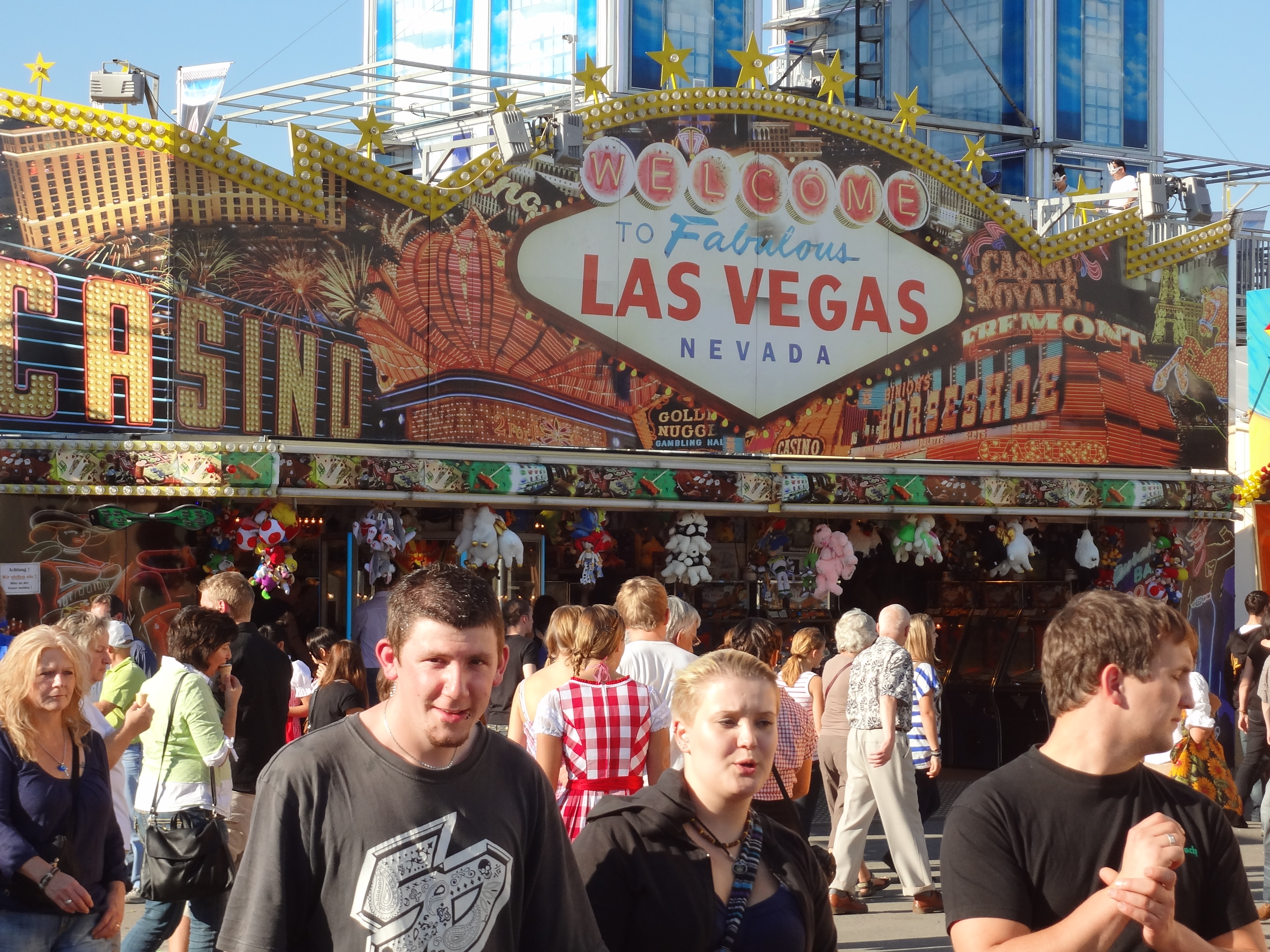
Las Vegas!

Behind all the typical “carnival rides” they had giant beer tents that seat thousands of people. But these aren’t just like temporary cheap-o tents. These are like hardcore buildings they take up and down every year. And everything inside is done up to nines. It was surreal!

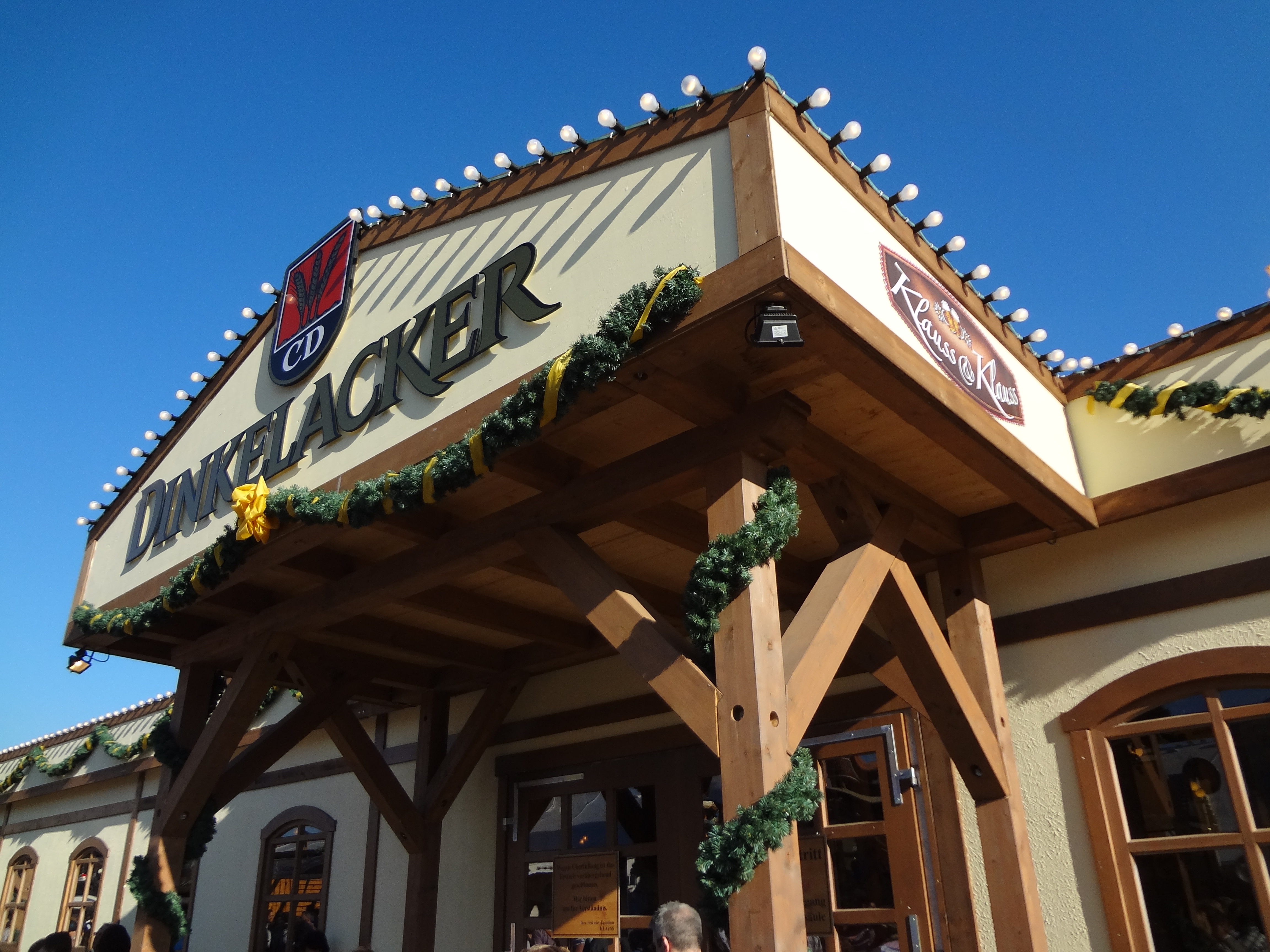
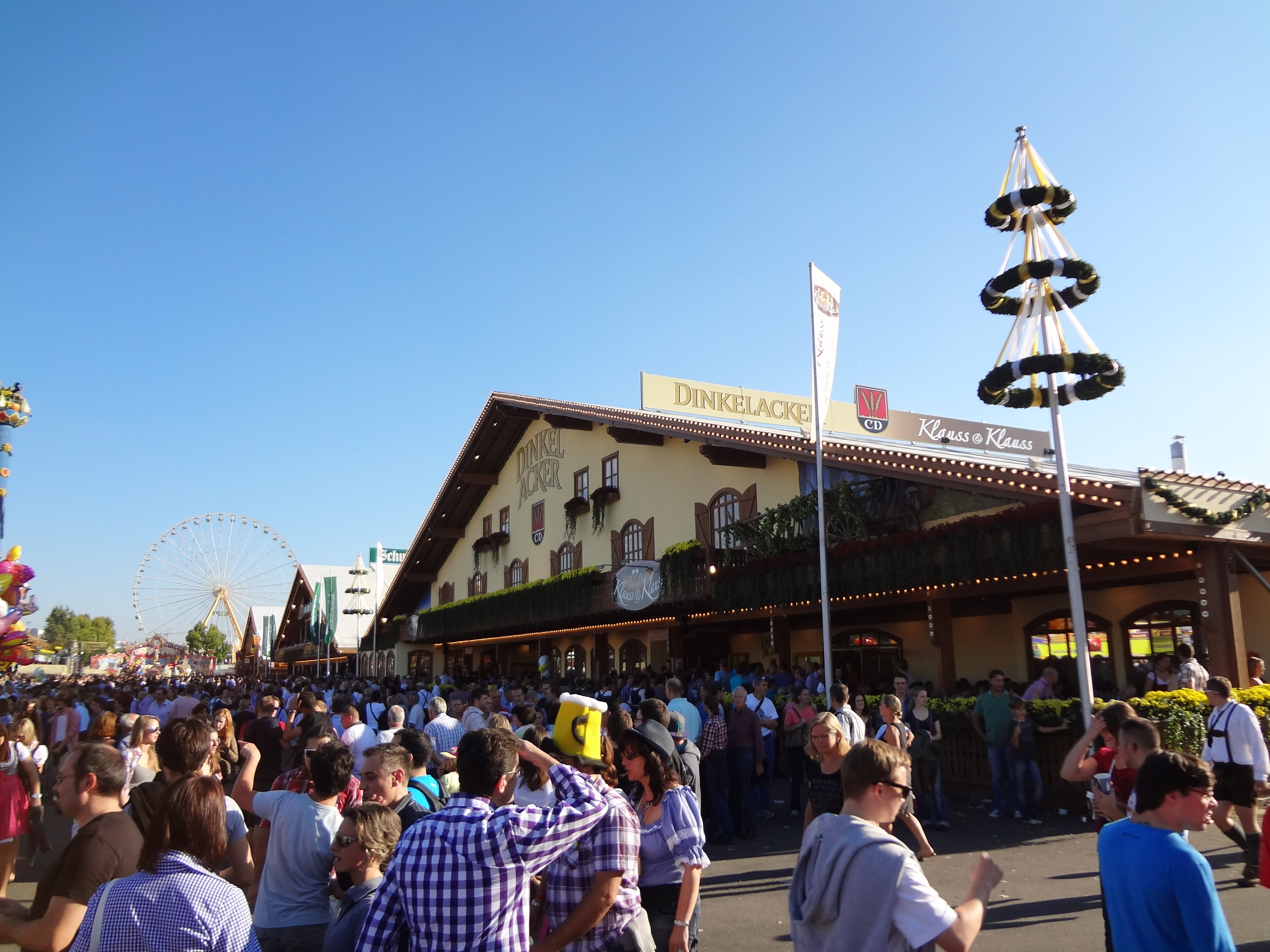
Dinkel Acker


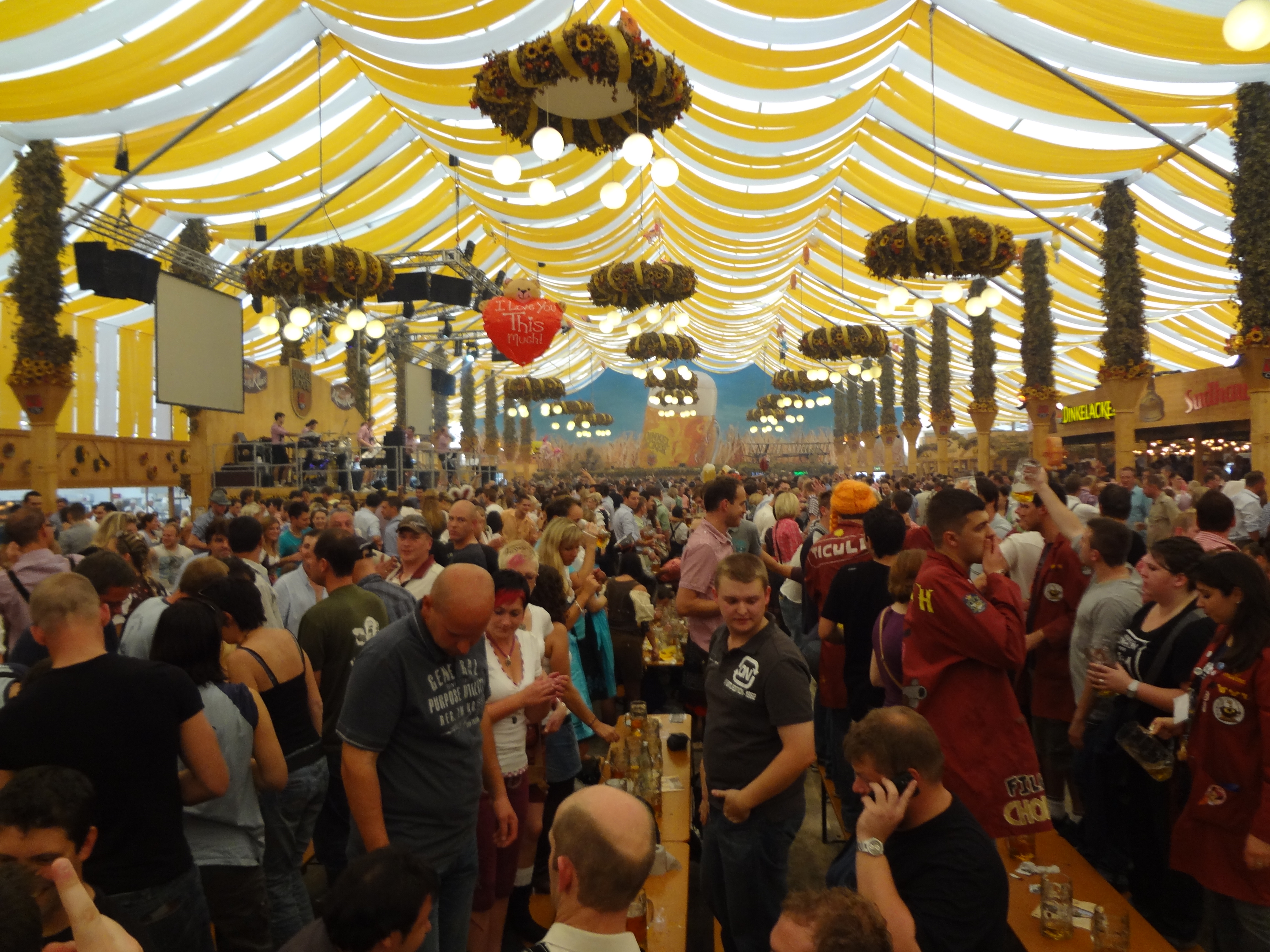
The tent we were in

At first we had some difficulties meeting up with our friends from the course because it was so huge! We tried calling and texting but the German cell phone network kept crashing. That’s how many people there were at this Bierfest. The cell phones didn’t work. How crazy is that!?

Eventually we met up and sat with a bunch of German students. Because the Germans are pretty serious about their Bier consumption, they were pretty friendly.

Inside the tent

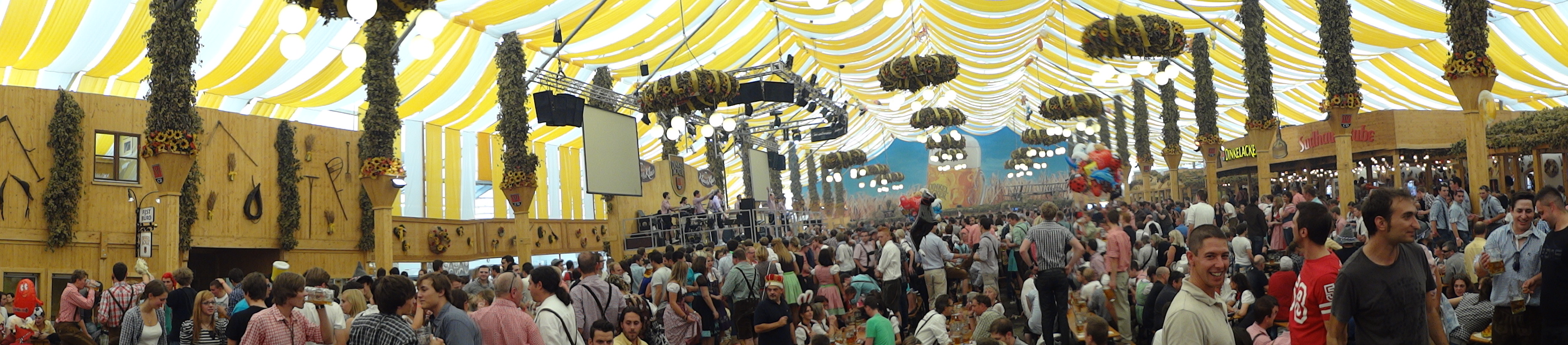
Panorama

We turned out to be one of the main attractions of the evening, with all the Germans taking turns teaching us all the traditional drinking songs. They showed us how to stand up and dance on the tables, as well as how to “properly” hold a Maß (1 Liter) of Bier.

The whole festival really reminded me of the smaller Galas or Fairs held in America around the Fourth of July. It was really an experience and I met some more German friends in the process!


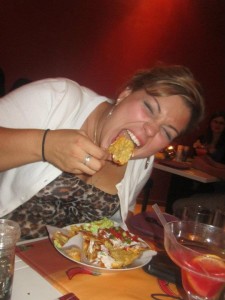
Not all Rainbows and Butterflies…

So I think when people read about going abroad, everything seems amazing. And believe me it is… but there are some things that can be really frustrating. Here are the things that have been really difficult thus far:

  1. LANGUAGE! So I think if you study abroad in a country that has one universal language this might not be as big of an issue. However, in Southern Africa there are numerous languages. In South Africa there are eleven official languages and in Namibia there are nine recognized languages. It has been so difficult to talk to people here because while I know some phrases in certain languages, there is no guarantee that they will understand what I’m saying. Needless to say it has been a huge frustration of mine.

    Eating out in Namibia

  2. FOOD! Ok so this also might not be something that upsets some people, but I have so many food allergies it is ridiculous! At first, the food here was really good; they made me lots of rice, beans and gluten free pasta. However, that is all that I have eaten now for 2 months. I am so sick of rice and beans I do not think that I can ever eat it again. I think going abroad is hard for people with any type of food restriction. On my trip we have vegetarians, peanut allergies, lactose intolerance, and gluten allergies. I know that each person has experienced aggravation with eating food here. But with all of that aside there is a food here called pap. It is one of the greatest things ever! I think I could eat it every day
  3. AFRICAN TIME! I was raised on the mentality that if you’re early you are on time and if you are on time then you’re late. The  idea of punctuality does not exist here in Africa. The locals have constantly called their concept of time “African time” They  get to places when they get there and they complete tasks when they decide to complete them. It has been something that has  been very difficult for me to adapt to because I am used to being so leisurely with my time. But I think that it is a part of my  lifestyle that I could eventually learn to change. When I was in South Africa, I was walking with one of my host sisters and I  told her that I was not used to walking so slow, because in Chicago it is so fast paced. In response she said to me, “Why would  you want to rush to a destination? The fun part is getting there. The place you’re going to will always be there, so take your time getting there.” I really love that idea, and while this slower paced life has been difficult for me, I can see it being in my future.

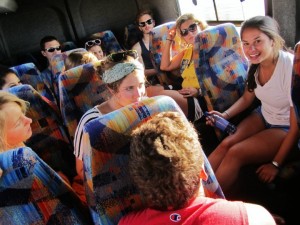
    Waiting on the bus

  1. 4. LIFE BACK IN THE STATES! This has probably been the hardest thing for me to deal with. Being here in Namibia, I have felt torn between two lives, the one here in Windhoek and my life back in the states. It can be really difficult to balance the two of them because you want to experience as much as possible here, but at the same time you want to stay connected with family and friends back home. It has been so hard when family or friends tell me about things going on at home that I want to be there for. Now I know being in Africa is probably a lot cooler than most of the things going on back in the US, but it is still a struggle to find a happy medium between contact with loved ones and truly enjoying your time abroad.

Out with some friends.

Like I said before, I am in love with Namibia and most days I find it hard to imagine leaving this place to go back home. But that doesn’t mean that everything about your abroad experience is going to be perfect. You just have to look at the positives and in my case that means being in the beautiful, warm country of Namibia and getting to see a glimpse into a world outside my own.


Click! Here I come!

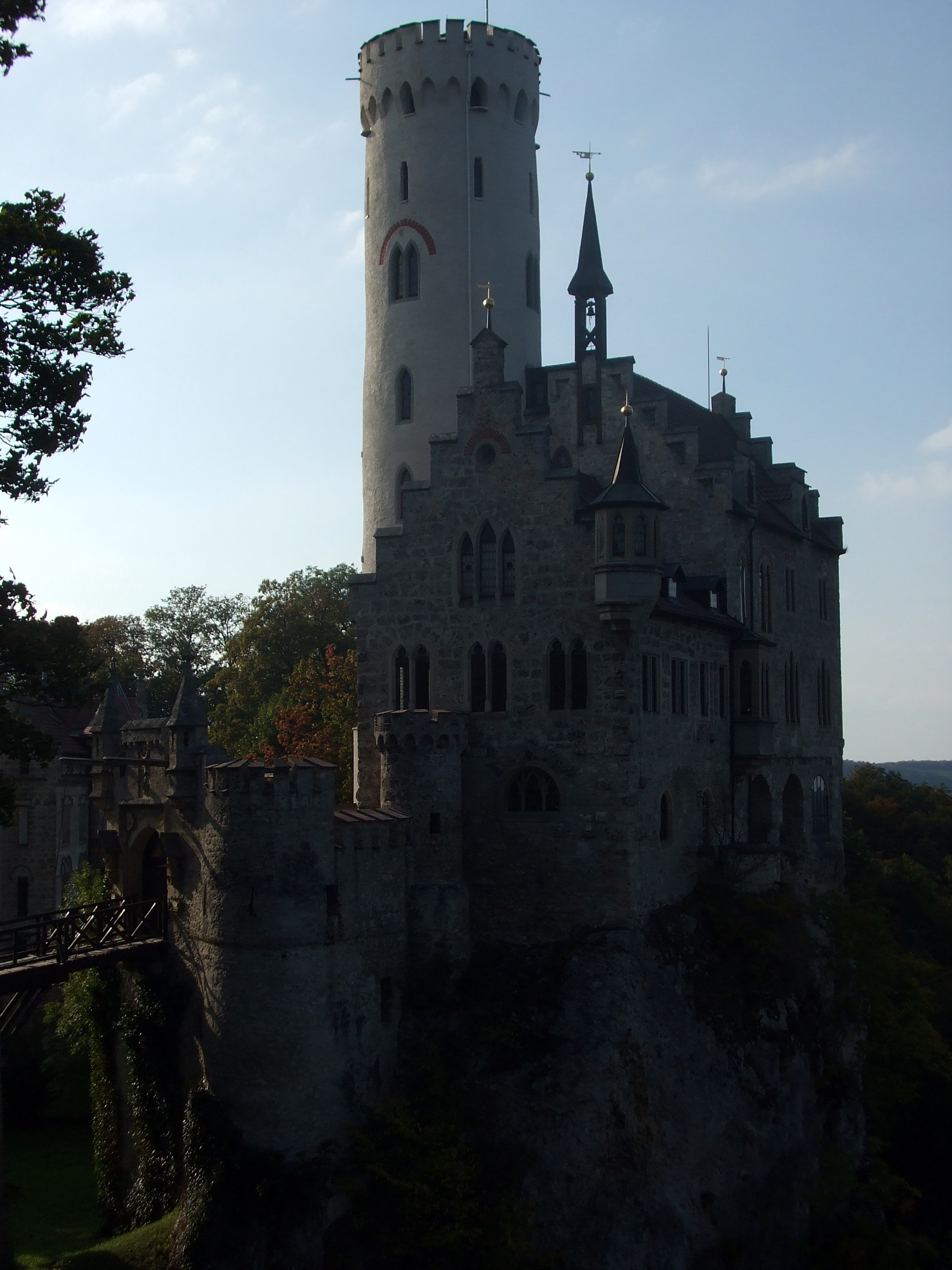
Lichtenstein

Last weekend was the weekend of palaces, castles, and fortresses for me. It’s been one of my favorite parts of traveling so far, being able to see all the cool sights and beautiful nature of Germany. On Friday, our class ended at noon, so we decided to spend the afternoon at Lichtenstein Castle, only a short bus ride and a steep hike away. Lichtenstein Castle, not country. And in no way related to Heath Ledger as Sir Ulrich von Lichtenstein. Sadly. But the hike was incredibly beautiful, like walking through a Tolkein novel, with moss-covered rocks and castle ruins on the way up. The castle itself was also beautiful. It was built only a few hundred years ago, and was based on the description of a castle in a book. Even though it was fairly small, it still held all the awesomeness of a castle. Really, they’re pretty dang cool.

When we got back to Reutlingen that night, I decided that I really wanted to go somewhere over the weekend, because we have German Rail passes that expire next week. Since it was the night before I needed a hostel, reservations were hard to find online, and I tried several cities before finding one that would work. The first one I found was in Würzburg, a town in northern Bavaria, so without really knowing what the town had to offer, I decided to go for it! And then after reading about the town and being there, I’ve decided that randomly picking a city on a hostel website can turn out to be an amazing weekend. Even if you do have to go by yourself because the rest of your group is lazy.

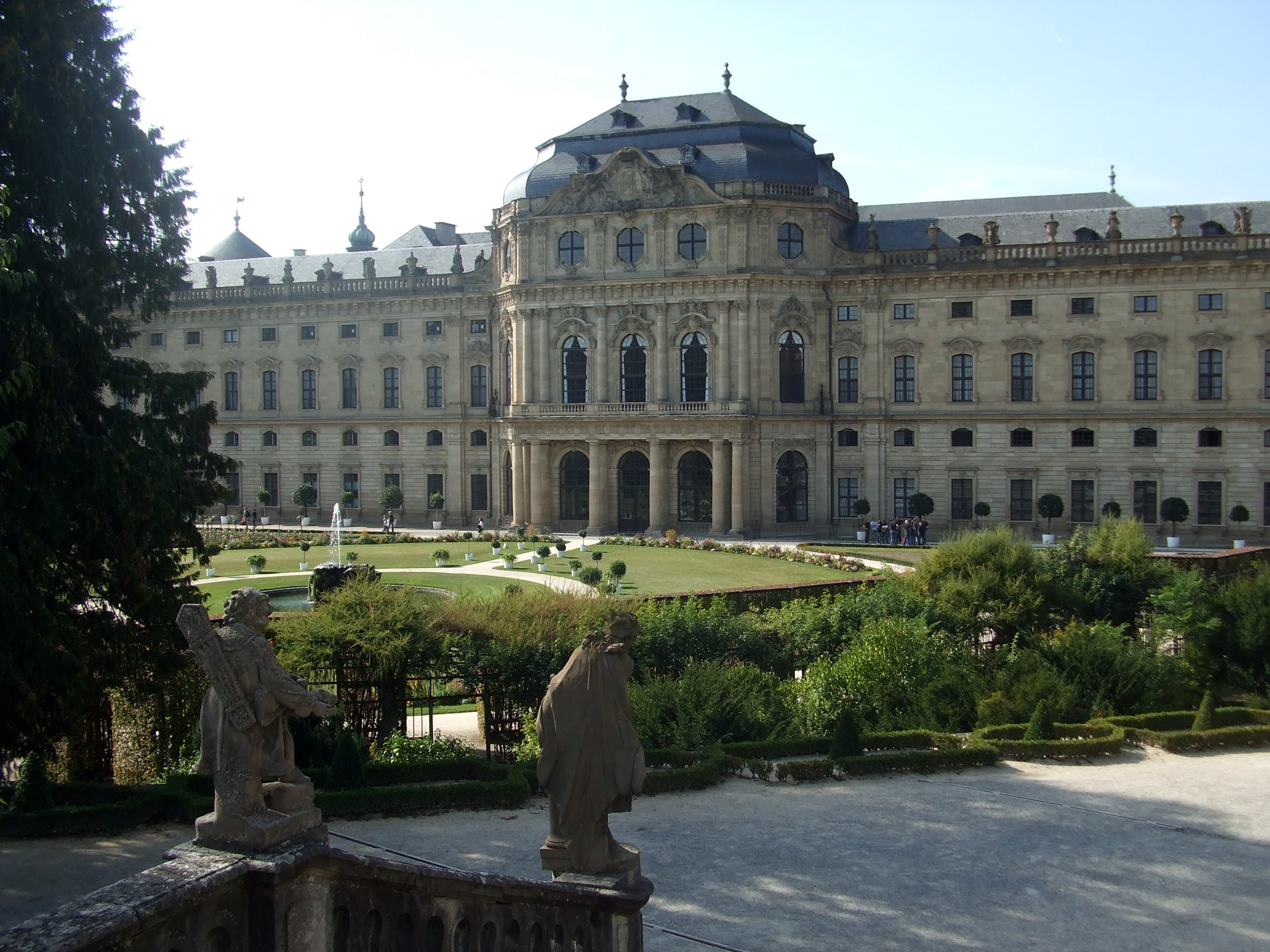
Residenz

After wandering the city for a bit, I headed to the Würzburg Residenz, the palace constructed for two prince-bishops and finished in the early 18th century. The largest fresco in the world is located there, and actually is pretty funny. It depicts the four “continents” of the world, with Europe as the most modernized, and the Americas as this backwards place. Each nation had its own symbolic creature, and I found it amusing that the American scene depicted a native American woman riding an alligator. Pretty interesting stuff right there. But it was also a beautiful palace inside and out. It even had the typical palace mirror room, a room made entirely of mirrors with paint and embellishings on them.

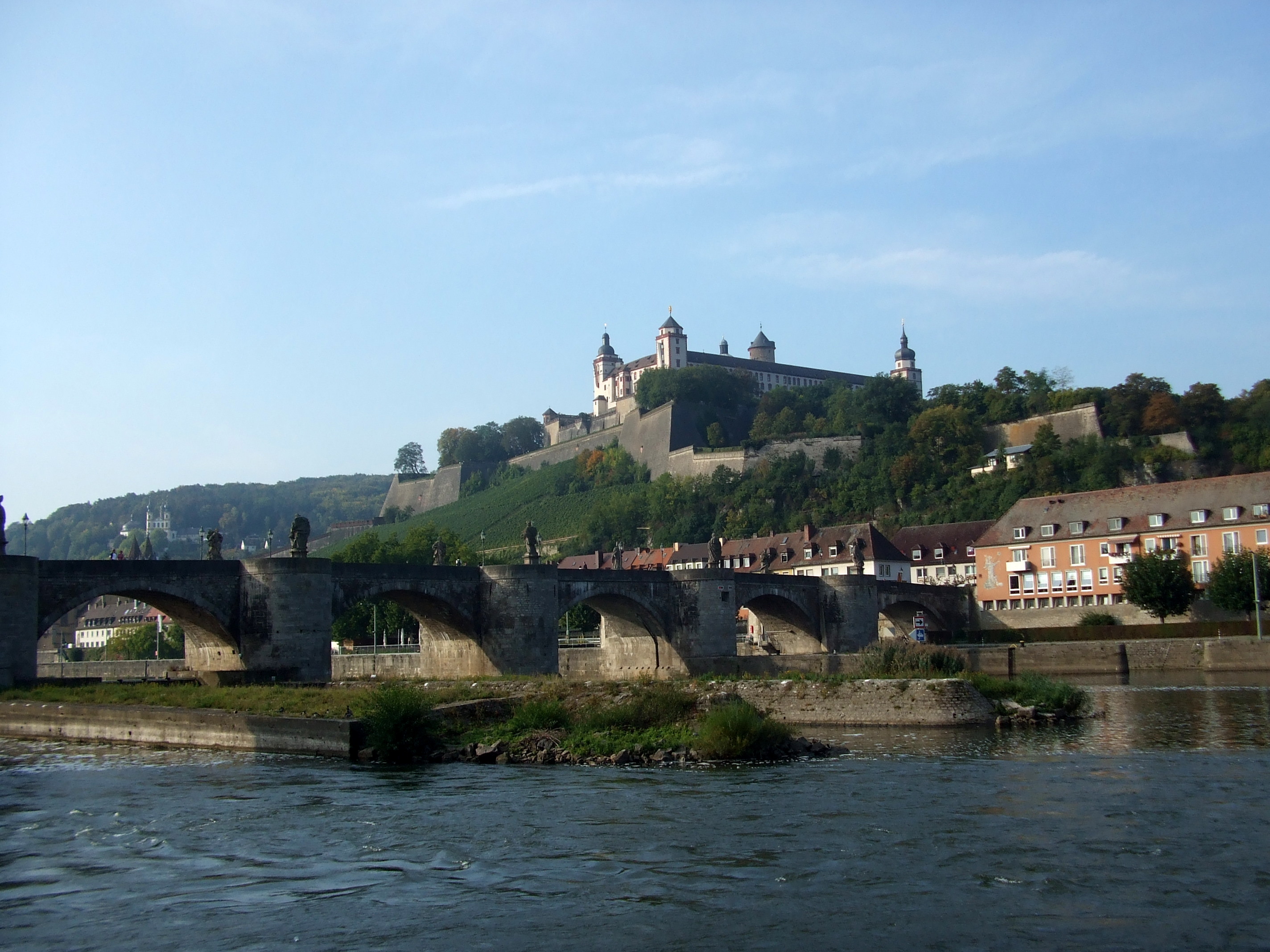
I also hiked up a hill covered in vineyards for wine to the old Fortress Marienberg. I didn’t take a tour, so I didn’t get inside the buildings of the fortress, but even being on the grounds and in the courtyards was impressive. It gave a full view over the river Main and the downtown area of Würzburg. I also got to see the outsides of beautiful churches downtown and relax on a really old bridge over the river that had huge statues of religious figures.

The old bridge, the Main river, and Fortress Marienberg

By then it was getting dark, so I tried to find my hostel. Try being a key word. The map online definitely led me to the middle of a park. Across the river from where the hostel is. I have no idea how that one worked out. But eventually I got directions and made it safe and sound. And the benefit of traveling alone kicked in when I met another American study abroad student, because we felt a little safer walking around town and comparing our experiences so far and drinking wine with at least a hundred others on the old bridge. I think that’s one of the best parts really, getting to meet people from all over the world, or who are studying all over the world (this girl was in Luxembourg).

The next day I headed out to stop at Dachau to see the concentration camp before getting into Reutlingen. But since that didn’t have the same exciting emotions as the rest of my weekend, I’ll save it for another post. Moral of this story: travel wherever chance takes you, because you’ll never know what and who you’re missing out on if you don’t!

« Older posts Newer posts »

© 2026 Valpo Voyager

Theme by Anders NorenUp ↑