Valpo Voyager

Student Stories from Around the World

Page 43 of 125

Chicago-Los Angeles-Tahiti-New Zealand

20 hour layover in Tahiti

It’s time to say goodbye, but I think goodbyes are sad and I’d much rather say hello; hello to a new adventure. January 27th was the first day of our adventure. As we said our goodbyes, Alex and I looked at each other and smiled, knowing that this is going to be an unforgettable trip.  Though we knew the trip there may be long, we were going to make the most out of the journey. Our first flight was to LAX, which was about 4 hours with a 3 hour layover. Our next flight, from LAX to Tahiti,  was an 8 hour flight followed by a long 20 hour layover. We landed in Tahiti at about 6 am and had to fly out at 2 am the following day. We  figured that if we just walked, we would find something to do; there was only one main road on the island that circled the perimeter and at the very least we could walk toward the water and snorkel.

IMG_6151

One of Alex’s Pictures of the Tahiti sunset


After about 20 minutes of walking and no success, we started to doubt our decision … just before we were about to turn around, we saw what looked like a beautiful hotel and figured it would be worth checking out. Here we met Roland, the director of the marina there, who was one of few who actually spoke English. Roland was the most helpful person we met that day. He made a few phone calls to see what our best option was and he said since all the tours were booked due to a cruise that just docked, our best option was to rent a car and tour ourselves. He personally drove us to the rental location and set us all up. It was his selflessness that allowed us to experience the best of Tahiti. It is people like him that we are excited to meet during our journey. Throughout the day, we drove down the entire West coast of  the island, went snorkeling and were able to relax at the  Intercontinental Resort. Unfortunately the videos were cut short Rolandbecause of the GoPro dying; nevertheless, we had an amazing time..It was definitely the best layover we could have asked for.


The ideal packing list

Bring underwear and socks, and clothes that match the climate and cultural attitudes of wherever you’re going. This should go without saying. But beyond that, packing can be a somewhat stressful part of traveling, both for the simple weekend trips as well as for the whole semester. Some unnecessary things may sound like they could be useful, while other useful items may not occupy the foremost position in your mind. In this post, I will seek to differentiate between the useful and useless, as well as to provide some reasoning behind my assessments.

WARNING: Having only participated in the Reutlingen program, this entry is decidedly catered to my experiences in Germany.  The most important thing is to know both yourself and where you’re going, and to pack accordingly.


First, let’s start with the unnecessary items.

I think it’s a priority to point out that you don’t need to set up your US phone with international roaming. Furthermore, I’ll argue that you shouldn’t try to do this at all. Never mind that it can be expensive, but it also doesn’t help you contact anybody with a German phone number. If you have roaming, and you want to call one of your german friends, then your friend will also be charged extra to answer your call, and that’s no fun for anybody. Instead of using your same phone number, just get a phone when you get there. If you don’t mind secondhand phones, there should be plenty of options in the cage in the director’s basement. If you do mind, go to the store and get a €5 pay-as-you-go phone and a SIM card. I’ve been very satisfied with my service from Vodafone with the CallYa Talk&Text plan. It a per-use charge instead of monthly, and has very good rates for calling to and from [as far as I can tell] anywhere in the EU.

For the other things that one might use a smartphone, I’ll still argue that you don’t need to be able to access a cell network 100% of the time, if at all. Apple Maps can be accessed without wifi or a mobile signal, so navigation is no reason to pay the extra money. If you load the map ahead of time, then you’ll be able to see [approximately] where in the world you are without having to be connected. There are also offline map app options, such as Here, which could be worth investigating. Wifi (called WLAN in Germany) is also very prevalent, so you’re well connected when you need to be. If you find yourself on Facebook often, and think that you need to be able to access that whenever you want, roaming won’t help you, but rather enable you. You have a problem, so a bit of a Facebook break might actually be good for you.


You don’t need to bring blankets, pillows, or any other linens – these are provided by the program. Furthermore, you probably don’t need to bring your own toothpaste, deodorant, and toiletries. These can be purchased, or if you’re lucky, possibly even found for free in the director’s storage cage. Perhaps bring small quantities of these things to get you into the first few weeks, but beyond that, everything you would ever need can be bought at the store.


You don’t really need to bring your own paper, notebooks, or school supplies. All of these things are inexpensive, and can be bought in stores upon your arrival. If you’re not pressed for space or weight in your luggage, you may include these things, but they aren’t strictly necessary.

German paper is kind of funny – it looks like what we might call graph paper in the US. As an engineer, I use it’s green-tinted cousin regularly for everything, so I don’t mind it, but if you really want only horizontal lines on your paper, perhaps you should bring some of that.


Unless using a dictionary is absolutely necessary for your studies, you really don’t need to bring one. They’re heavy and take up an enormous amount of luggage space. Instead, consider a healthily cautious blend of dict.leo.org, wiktionary.org, and translate.google.com as a good source of translations and definitions. I urge caution here, because sometimes online translators can be faulty. However, if you approach them with a sense of skepticism, always looking out for errors, they can be useful. Plus, the internet doesn’t weigh anything or take up any space, leaving plenty of room in your luggage for all the other things you’d need.
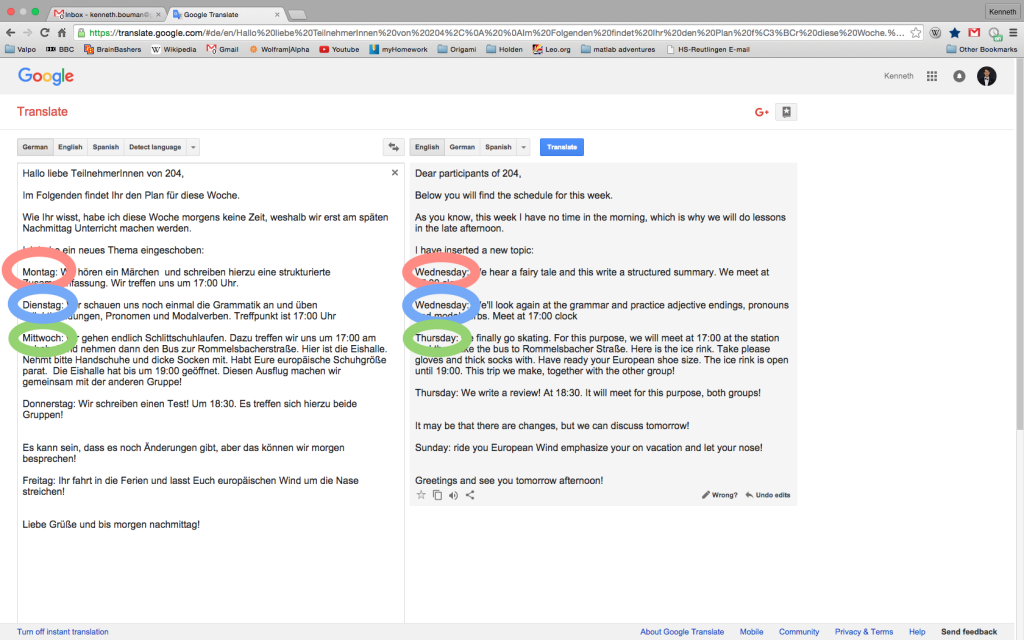
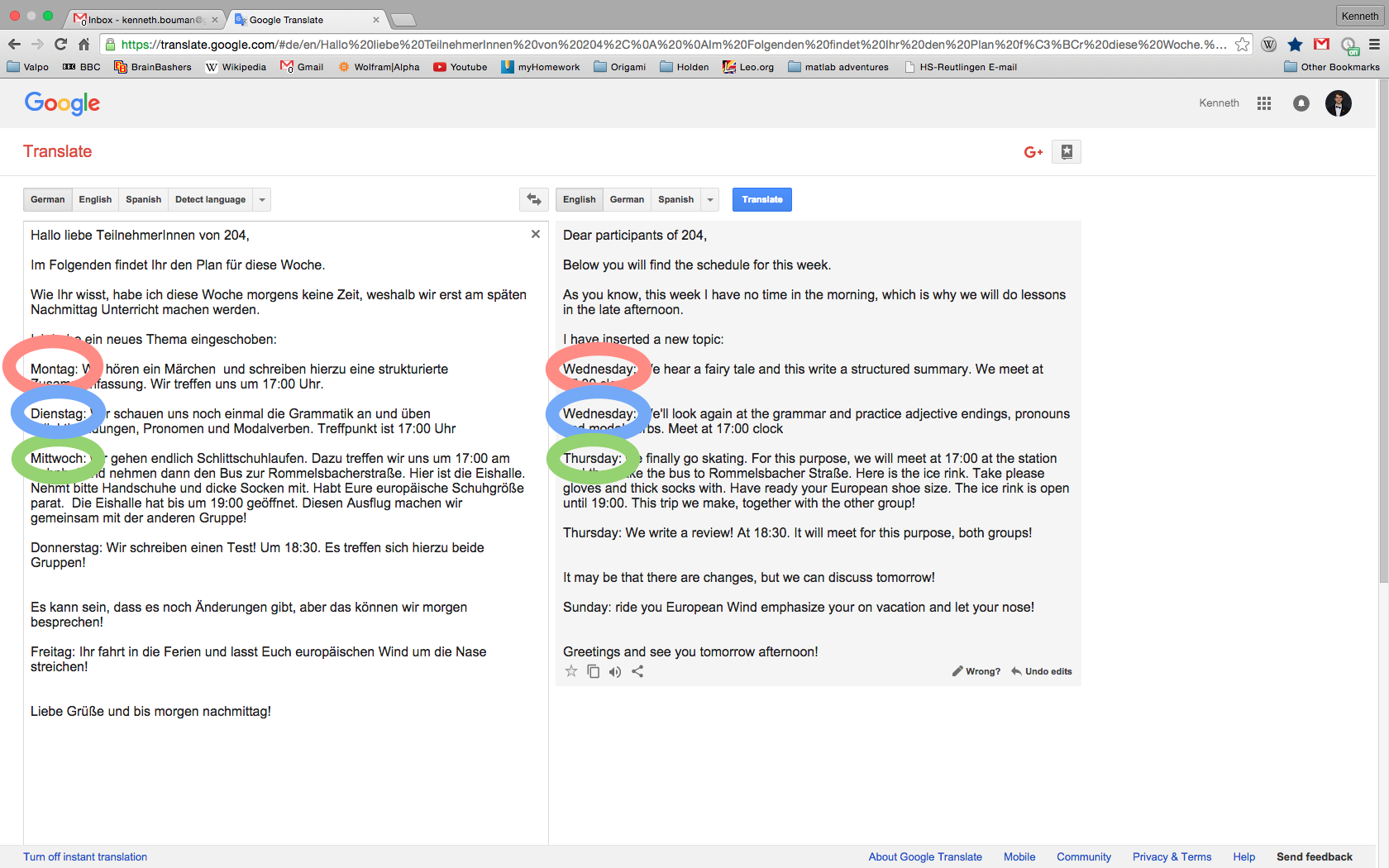
An extreme example of why it pays to be careful with online translation software

An extreme example of why it pays to be careful with online translation software. For those who don’t speak German, Montag = Monday, Dienstag = Tuesday, Mittwoch = Mid week = Wednesday, Donnerstag = Thursday.


Now let’s talk about some absolutely useful things to have. Hopefully I shouldn’t need to mention passports, power adapters, and a camera. Rather, some of these things are less-than-obvious.

You absolutely must bring a carry on-sized backpack (or suitcase, but I prefer a backpack) that can hold a week’s worth of clothes and supplies in it. During the fall semester, people were scrambling to borrow such backpacks for our two-week break. This was astounding to me, since I figured that everybody would already have such a backpack. You may have good luck finding such luggage in a outdoor or sporting goods store. You might also consider asking your parents or looking around your basement or garage. Though my main bag was purchased new last summer, I also brought another smaller “basement backpack” that came to Reutlingen in 1985 with my mother. This was my bag for day trips, including to the classroom.


Have a train pass. I had one from October to January. Sure, they’re expensive (over $1000 for 3 months, less for 2 months), but so long as you make an effort to use it, it pays for itself relatively quickly. Plus the convenience of being able to get on (nearly) any train and go (nearly) anywhere in the continent is truly unparalleled. Now that mine has expired, I’m sorely missing it. I’m even debating purchasing another, but we’ll have to see. At any rate, you owe yourself the opportunity to travel like this, so buy one.


Also get the Naldo Semester Ticket. You’ll do this in the first week in Reutlingen, so don’t need to pack it before you leave, but it’s useful enough that it merits being mentioned. It’s good for busses in Reutlingen, as well as busses and trains in the immediate region. Check out this map to see where it can take you.

As an additional note on the Naldo, if you want to save on train tickets to Stuttgart, buy them from Metzingen as your starting location instead of Reutlingen. Your Naldo pass can get you to Metzingen for free, so when you select it as your starting location instead of Reutlingen, you save €2.10 each way. Paying €10.20 instead of €12.30 may not seem like much of a savings, but it adds up quickly.

If you’re looking for an even cheaper (though slower) way to get to Stuttgart take the X3 bus to the Stuttgart Airport, and then the S-Bahn the rest of the way into town. This should cost you less that €5 each way.


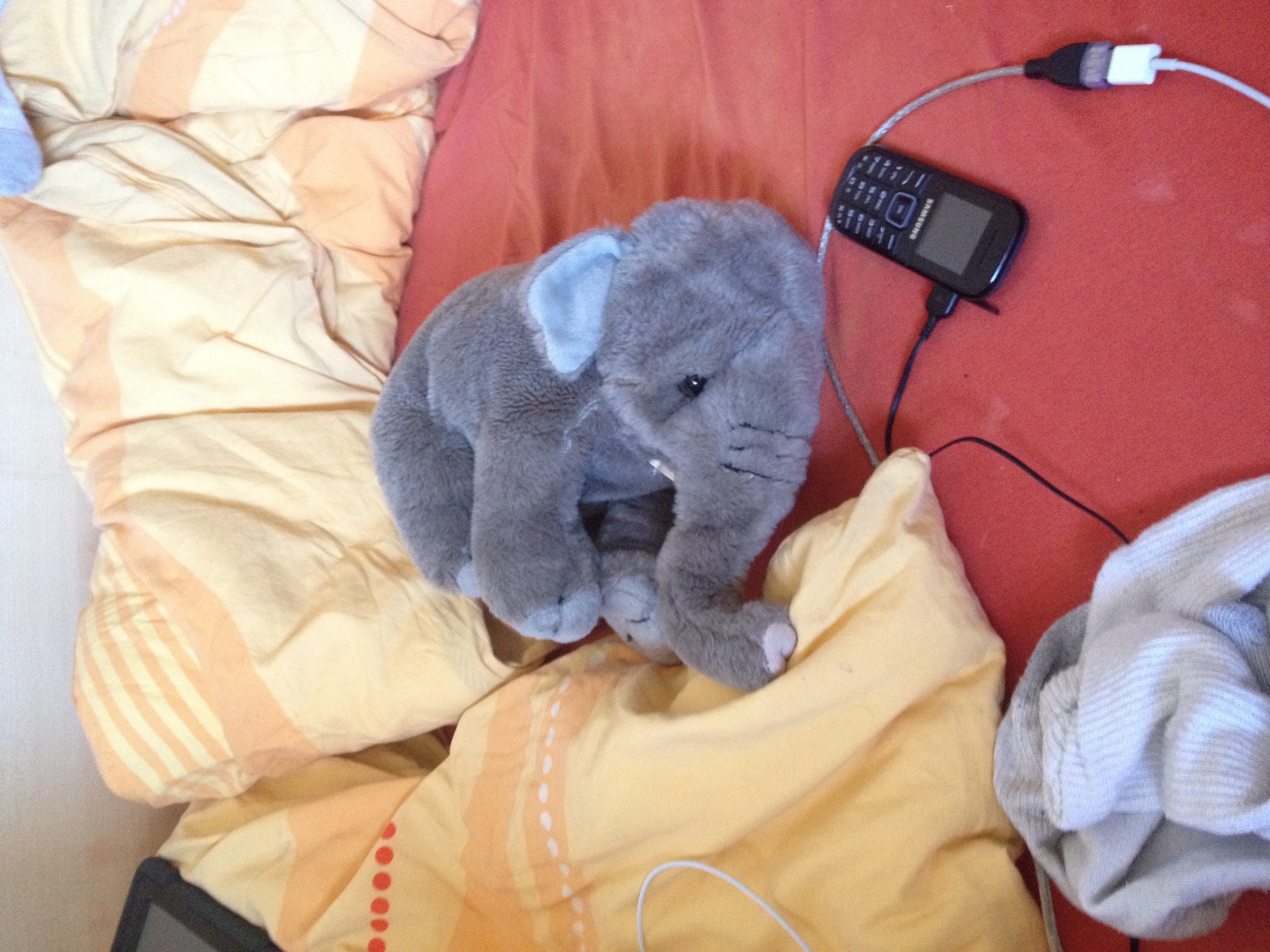
Bring something that reminds you of home. I have one half of a set of two stuffed elephant toys, the other of which is with my fiancée Rachel back in the US. This elephant goes everywhere with me – within reason, of course. I don’t take it to class, but it has accompanied me on all of my big adventures.
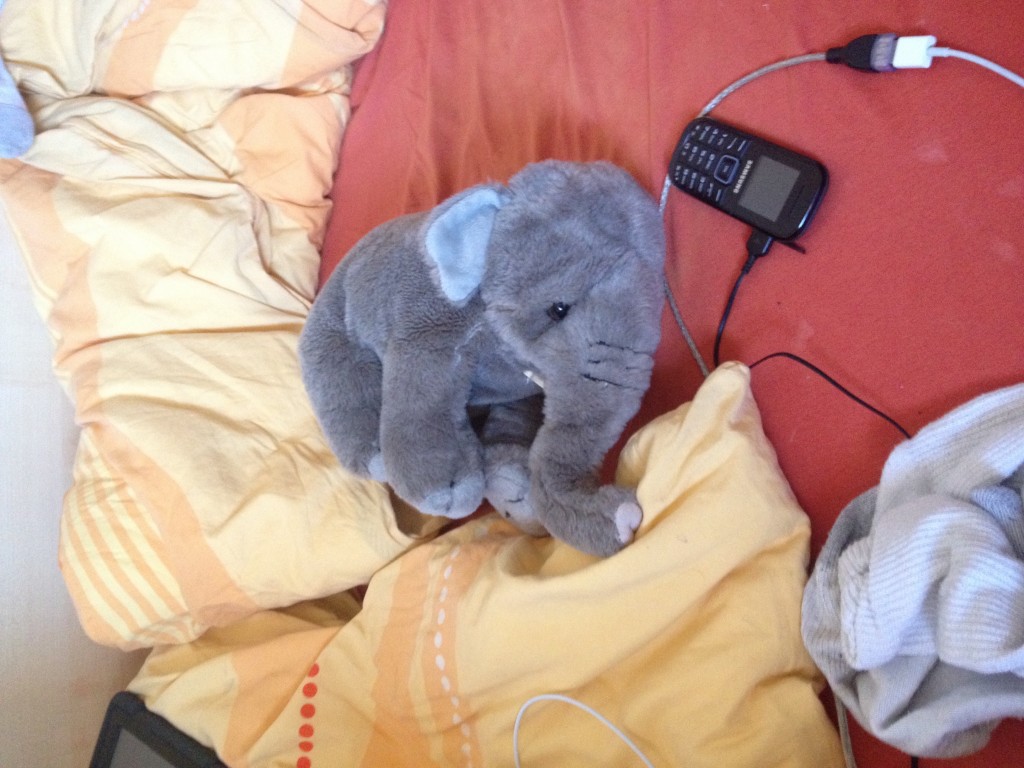
Though the socks and the phone aren't particularly special to me, I use them almost as often as the elephant. Peanut, by the way, is it's name. Of course it has a name. Because I'm grown up, I now get to decide what that means. If you're reading this, that statement applies to you too.

Though the socks and the phone aren’t particularly special to me, I use them almost as often as the elephant. Peanut, by the way, is it’s name. Of course it has a name. Because I’m grown up, I now get to decide what that means. If you’re reading this, that statement applies to you too.

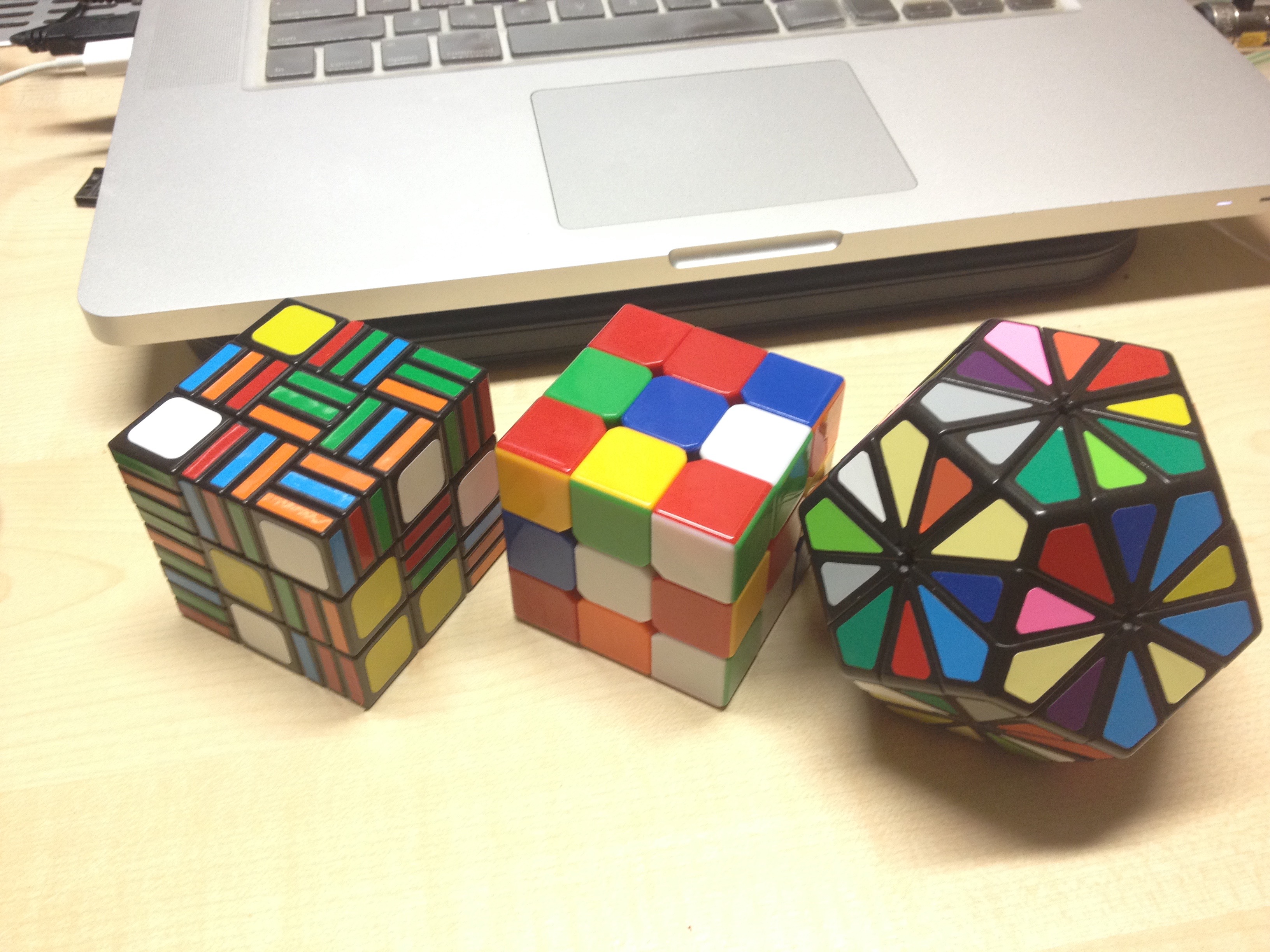
If you have easily portable hobbies, bring a few of them. I regularly play with mechanical puzzles (think Rubik’s cube), but figured that I’d be able to manage without one. This was a mistake. By the time Winter Break came around, I had purchased one online, had another brought from home, and received a third for Christmas that had been purchased at a Christmas market. Now, I’m doing much better.
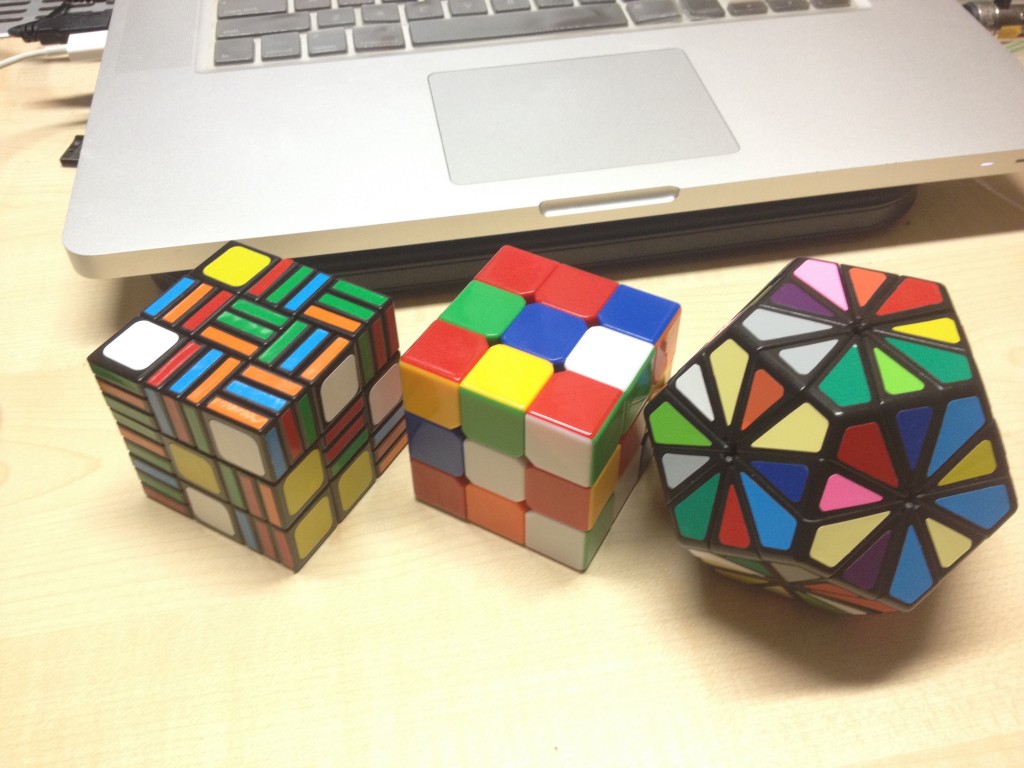
From left to right: Purchased online; brought from home (thanks, Rachel!); Christmas present (thanks again, Rachel) from the Ulmer Weihnachtsmarkt.

From left to right: Purchased online; brought from home (thanks, Rachel!); Christmas present (thanks again, Rachel) from the Ulmer Weihnachtsmarkt.


Bring recipes, or have them in your head, or be able to find them online. Macaroni and cheese is a popular one among non-USAmericans. Brownies are also a bit of an USA phenomenon. Be prepared to share these with your floor mates.


I figured I’d be fine without a sewing kit, which turned out to be a foolish thing to figure. Now, I have one, and can highly recommend that you have one as well.


A laundry bag, or a plastic garbage bag in which you can store and transport laundry. Thicker works better, obviously. It’s also fairly useful to have spare bags, e.g. for dirty shoes, wet towels, or smelly laundry. This can help to keep your luggage clean. I promise I’m not your mother.


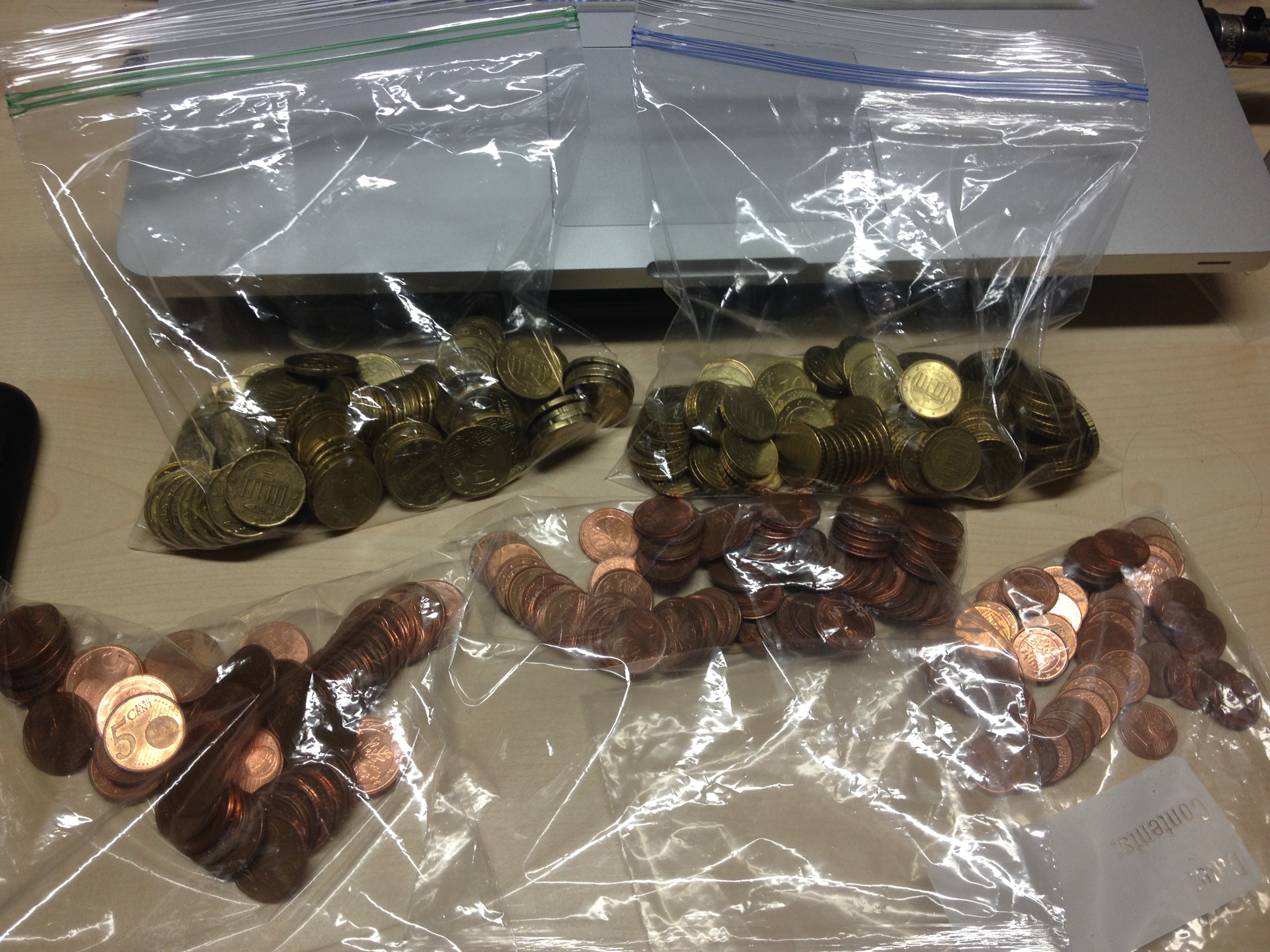
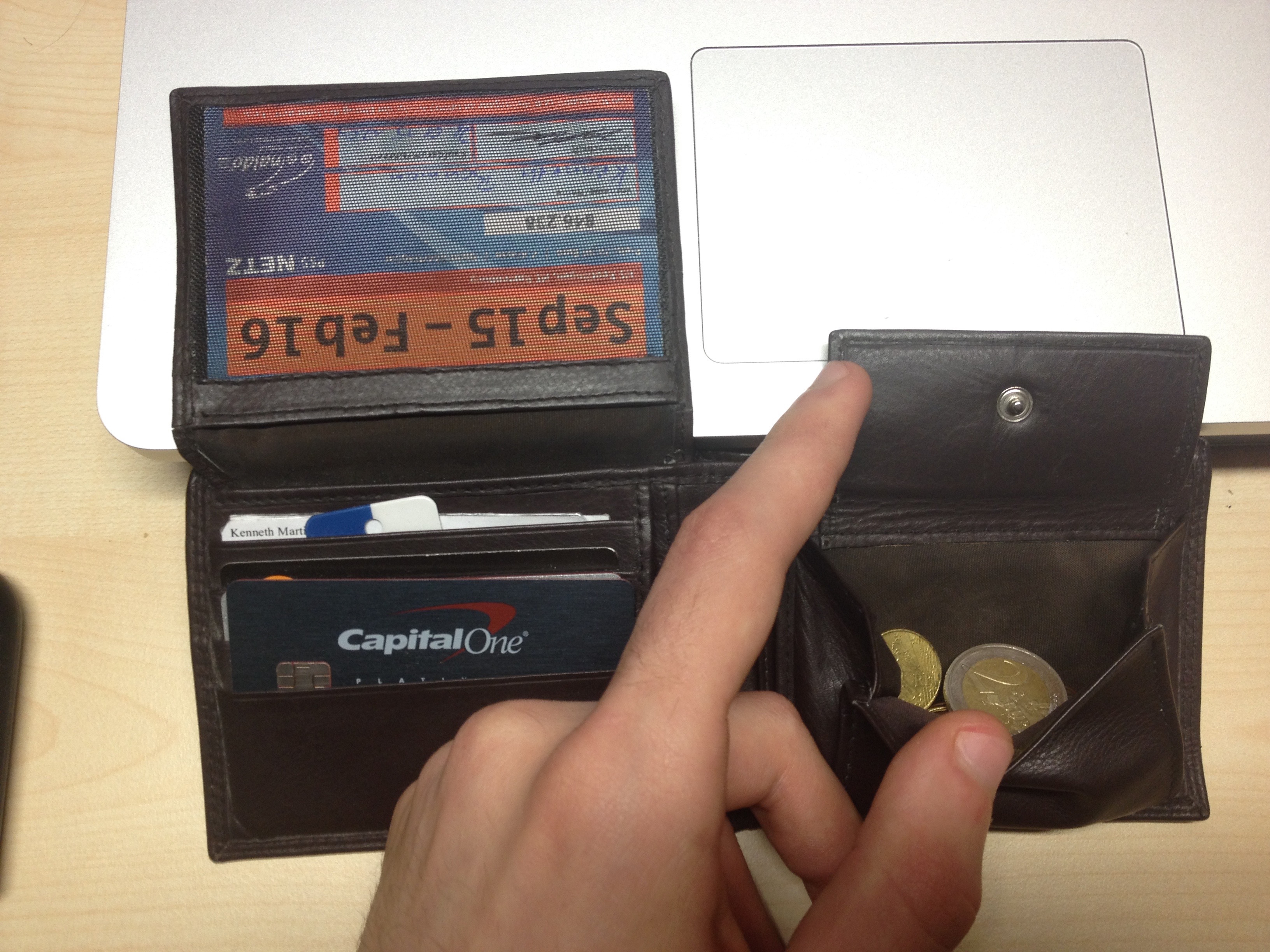
Finally, it’s ABSOLUTELY BENEFICIAL to have a good system to organize small change. This is often referred to as a wallet. Make sure it has a little button or zipper pocket for coins. Also, make sure that you use these coins over the course of the semester. In the fall, a classmate had a drawer full of nearly €40 in small change, and needed to get rid of it at the end of the semester. Since I was staying (still am!), I bought it all off of him at the bargain price of €30. Though I’ve been using them as diligently as possible, I still have a long way to go. However, even if they are going slowly, the wallet is still far superior to the failed organization system that is the classmate’s drawer.
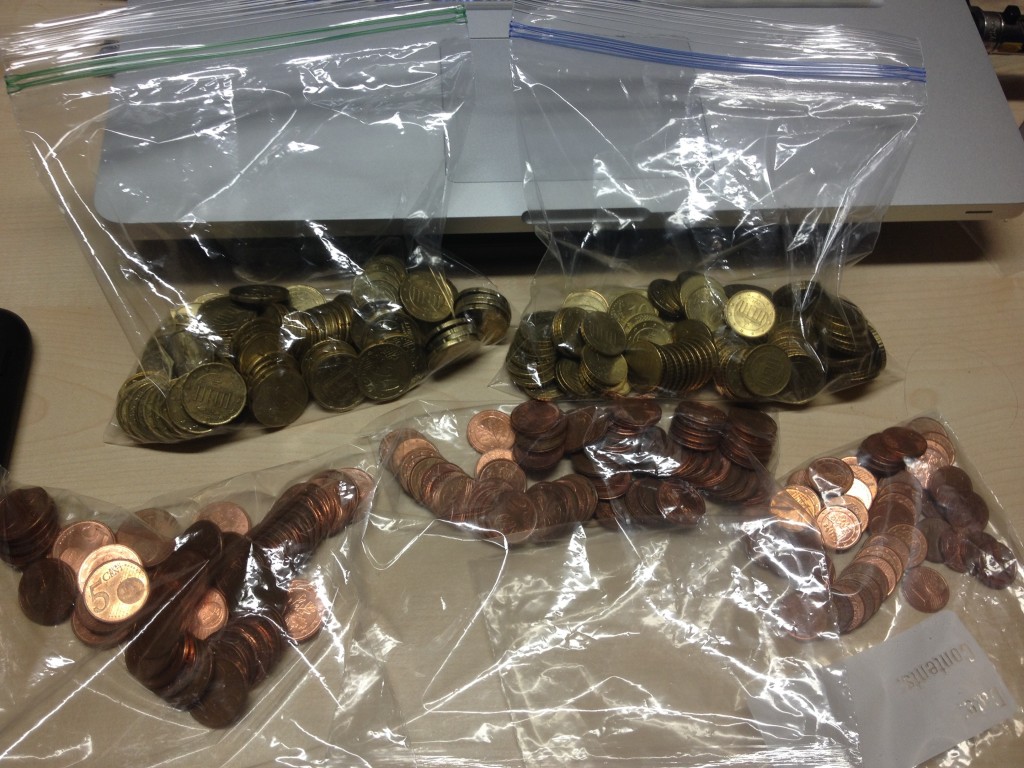
This is more than a month into the €40 in 0.20-, 0.10-, 0.05-, 0.02-, and 0.01-cent pieces given to me by my classmate. I'm doing pretty well on the small ones, but the big ones still have a long way to go. Don't travel in such a way that your money becomes organized like this by the people whom you give it to as you leave.
This is more than a month into the €40 in 0.20-, 0.10-, 0.05-, 0.02-, and 0.01-cent pieces given to me by my classmate. I’m doing pretty well on the small ones, but the big ones still have a long way to go. Don’t travel in such a way that your money becomes organized like this by the people whom you give it to as you leave.

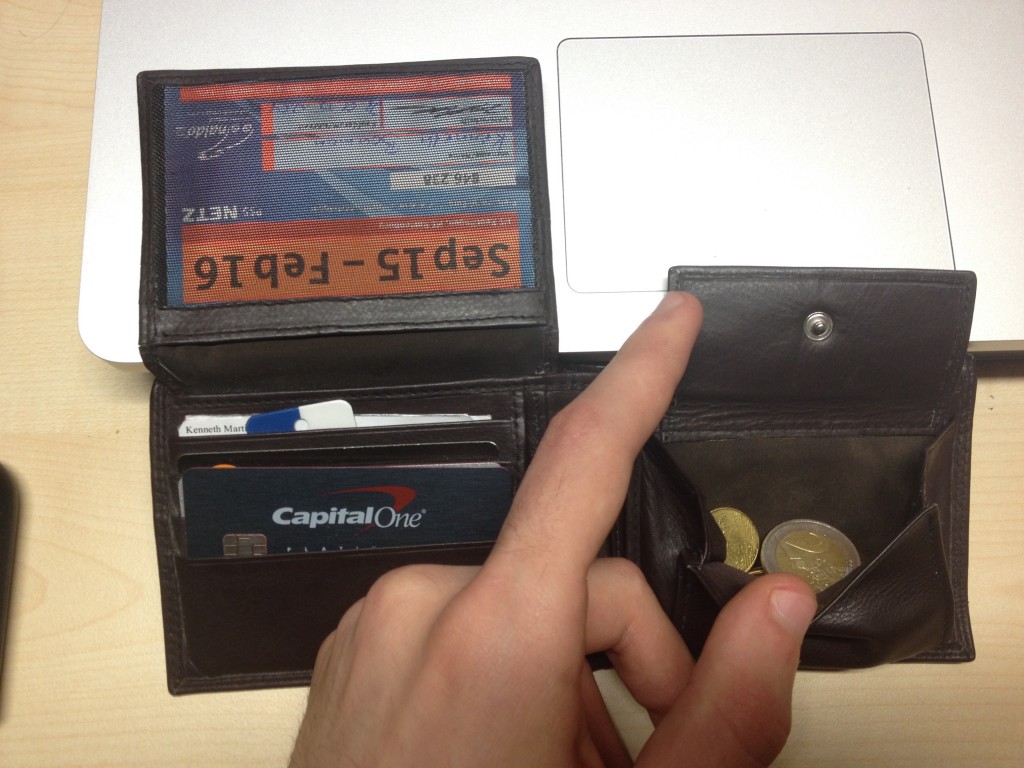
This shows one of several "correct" ways to manage small change. You can also see what the aforementioned Naldo semester pass looks like.

This shows a wallet with a button pouch – one of several acceptable ways to manage your small change from day to day. You can also see the aforementioned Naldo semester pass.


This isn’t something that you can bring, but you’ll certainly be unprepared for a semester abroad if you come without the desire to have new experiences and go new places. No matter how welcomed you are, you will not feel like you’re at home. This is the way it’s supposed to be. It will be uncomfortable. There will be things that you won’t be able to understand or do, simply because you’re not at home. You may even experience debilitating homesickness. However, it will also be fulfilling, and eye-opening. You will not return as the same person you were when you left. And this is just the way it should be. Whatever you bring with you, come with the expectation that you will change, the knowledge that it will be uncomfortable, and the guarantee that it will be okay no matter what.

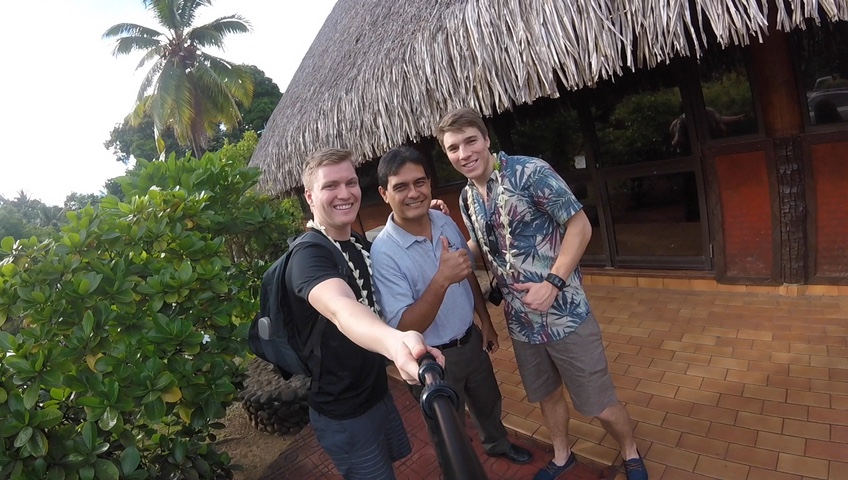
Culture Shock in Costa Rica

“Culture shock” is one of those big, scary terms that people throw around whenever they talk about going to a foreign country. They make it sound like the second you get off the plane, you will get hit in the face with so many new things you won’t even know how to function. Before the study abroad students left for our various adventures, the Valpo study abroad staff prepped us extensively for dealing with this phenomenon, but no amount of advice could have really prepared me for one of the strangest and most disorienting weeks of my life.

Saying that culture shock includes not being able to function because of all the changes is a bit extreme, but when I arrived in Costa Rica with five other Valpo students,  I definitely felt like I was instantly hit with a completely new way of life (not to mention a new language). Here are some things I’ve learned in my first week in Heredia, Costa Rica:


  1. It’s HOT. This might go without saying, but when you go from a Midwest winter to a Central American summer, it’s a really big shock to your body. Staying hydrated is essential, and it often feels like you have to constantly drink water. After a couple days, though, we all have been enjoying the warm weather and sunshine!

IMG_2458

Our whole group enjoying the sunshine on a trip to San Jose (the capital city) with our director, Heidi.  This was taken in front of one of many colorful murals found in the city.

  1. Stay clean. Contrary to what some people from the United States might believe, Costa Rica is actually a fairly rich country, and its people pride themselves on their exceptional healthcare and cleanliness. Since it’s so hot all the time, people are always making sure they stay clean and fresh, sometimes even taking two showers a day. My host mom keeps her house especially spotless. She is very particular about certain things—like me making my bed and opening the curtains in the morning. It’s also important to always wear shoes in the house!  Going barefoot is seen as bad hygiene.
  1. Ticos. Costa Ricans have acquired the nickname “Ticos,” and they often have their own way of speaking. They like to add “-ita” and “-illa” to the ends of their words (my host mom does this all the time!), so even if you’ve studied Spanish before you have to pay close attention! A few other phrases we have learned are “Que chiva!” to say something is cool, “Que maje” to say “hey dude!” and the classic “pura vida” to say that life is good!
  1. Addresses are different. Typically, the streets don’t have names and the houses don’t have numbers, so in order to find out where something is you have to use landmarks. However, Ticos are very friendly and willing to help you get where you need to go; just ask!
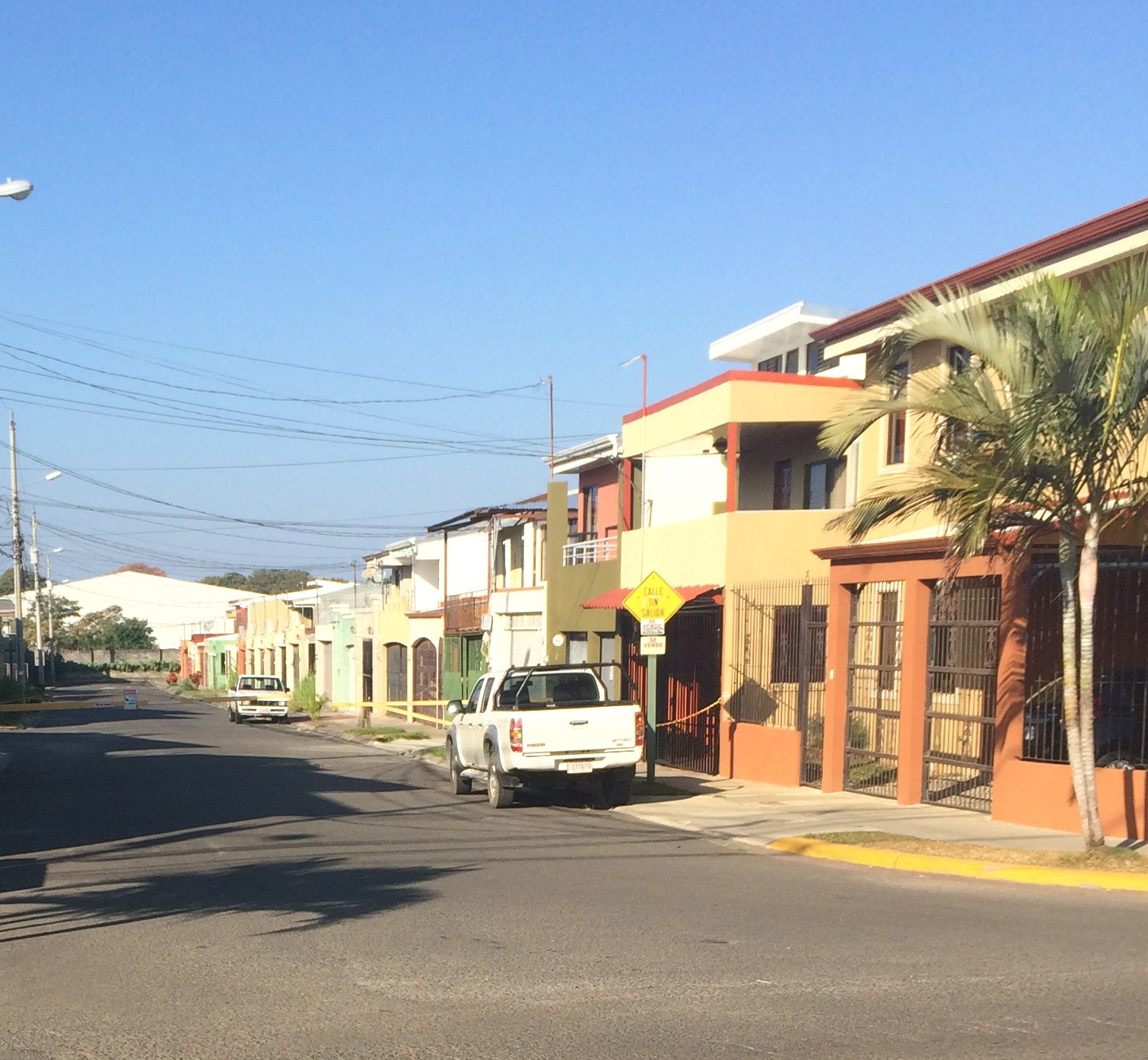
  1. All the houses have bars on the front of them. No one really knows why.

Case in point:

IMG_2448

(this is a street in my neighborhood, Santa Rosa)

  1. If you look different, people will stare. I was warned about this in advance, but it is still a pretty strange feeling to have nearly everyone turn their heads when I walk by. When I was walking home from school one day, I saw a group of children riding their bikes, and every single face was a gaping stare. For a quite average looking blond-haired, blue-eyed girl from the Midwest, this is a very new thing for me!
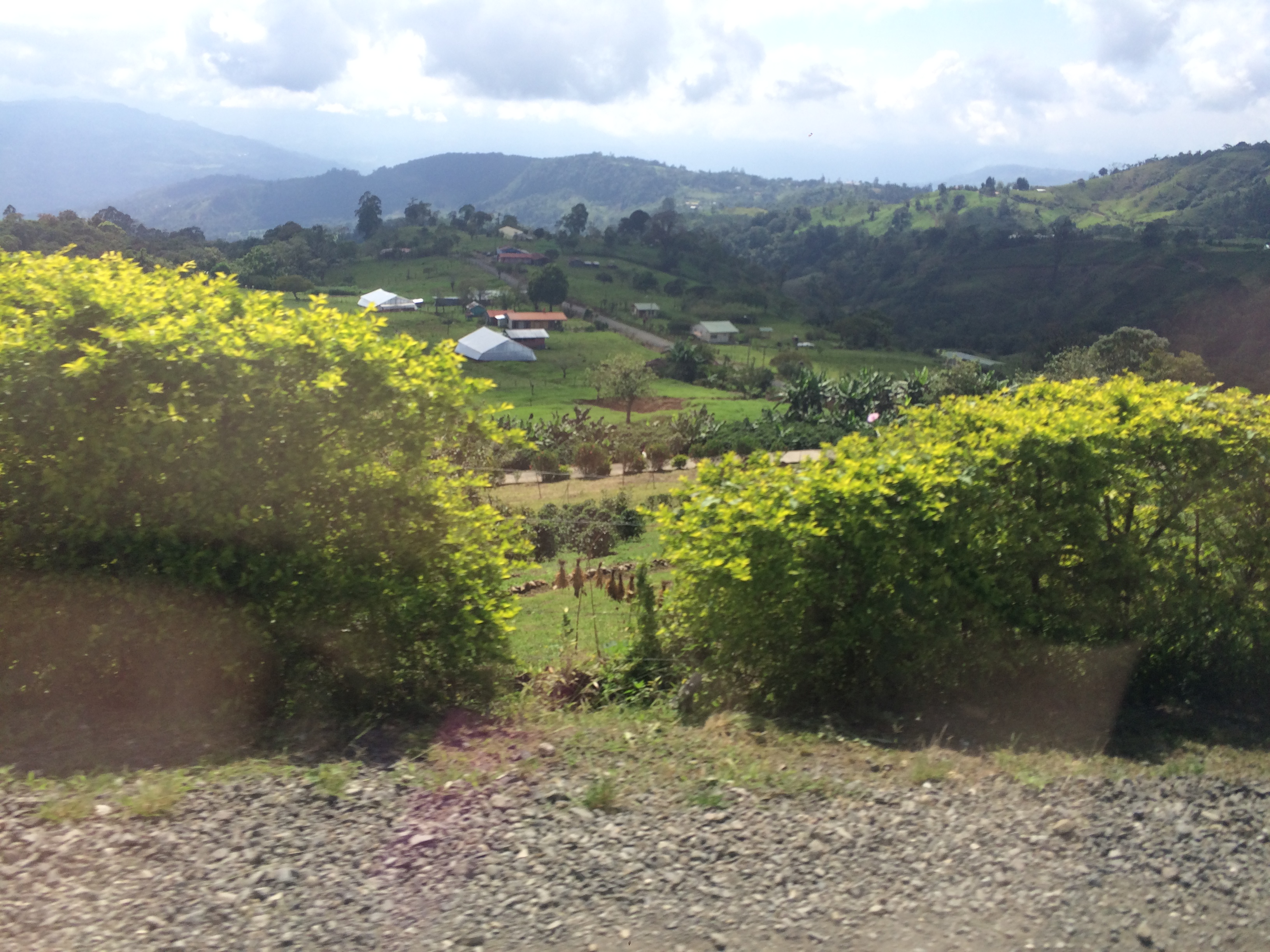
  1. It’s beautiful. In every direction, mountains are on the horizon. The houses are brightly colored. The food is delicious, and our host families never fail to offer us copious amounts of it. Coffee every morning is a must. The women buy fresh fruits and vegetables at the local market (La Feria), and then many make fresh fruit drinks with it (my host mom has made me a variety already!). So far, every day has been bright and sunny. Spanish music is nearly always playing in the background at my house. Our host families have taught us how to dance. Miscommunication with our host families is frustrating, but it leads to some hilarious stories. We’ve only been here for a week, but our Spanish has already improved.

IMG_2416

The butterfly garden at el Museo Nacional (National Museum)


IMG_2468


Our trip to Guayabo National Monument in the mountains


Although I’ve been out of the country before, I have never experienced culture shock to the extent that I have here. Maybe it’s the language. Maybe it’s the time frame. Maybe it’s the country. Whatever it is, I know deep down that I’m learning. I’m learning in a completely different way than I could at a classroom at Valpo. I keep reminding myself to be patient and take things one day at a time. Because here in Costa Rica, every day is a new adventure. Pura vida.

Hola desde España!

Well, I made it. I didn’t think that the day would ever come.

There are so many things that I could write about my first impression of Granada, however, my first few nights here…jetlag. Any advice that I could give is do NOT sleep when you get here; try to stay on their schedule. I was up all night long because I had slept a few hours as soon as I had arrived. Let me tell you though that Granada has a crazy nightlife. They are up all hours of the night mostly on weekends though. It is mostly a student city so you’ll see a lot of college students out in the streets.

It has been a great first week here in Granada. I got lost in the city a few times (the best way to get to know a city by the way) and made some great new friends! On the first day here to get to Granada I had to take a tiny plane where there wasn’t much room to move around. As soon as I arrived in Granada, I took the airport bus to the City Center and managed to find my hotel without losing any of  my luggage. That was an adventure all in itself.

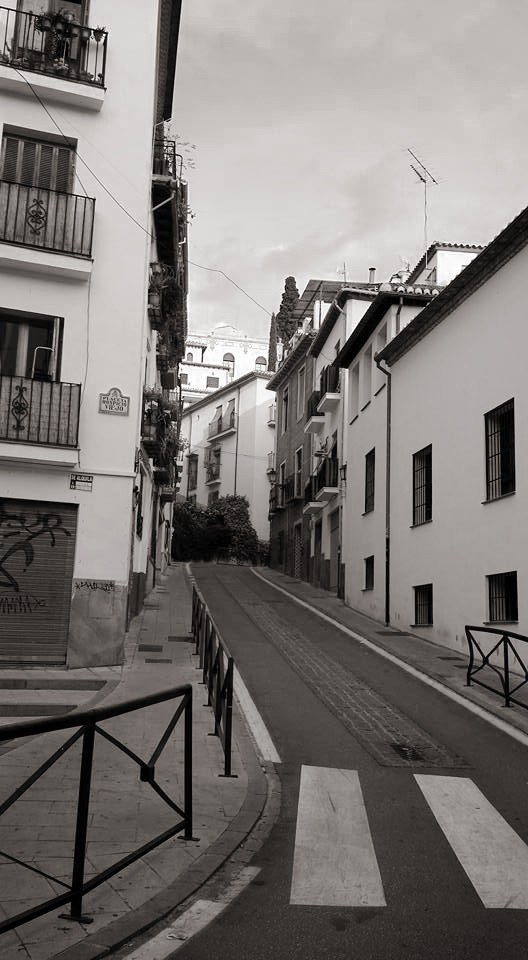
I’m from Chicago. One reason I absolutely love Granada so far is that it’s small enough to get around, yet big enough to get lost in. Of course, that might also be because of the winding streets that don’t make much sense. Compared to Chicago, the streets of Granada are like a maze.

This is one of the larger streets in Granada. You can safely walk on the sidewalk without being cramped up against four other people.

This is one of the larger streets in Granada. You can safely walk on the sidewalk without being cramped up against four other people.


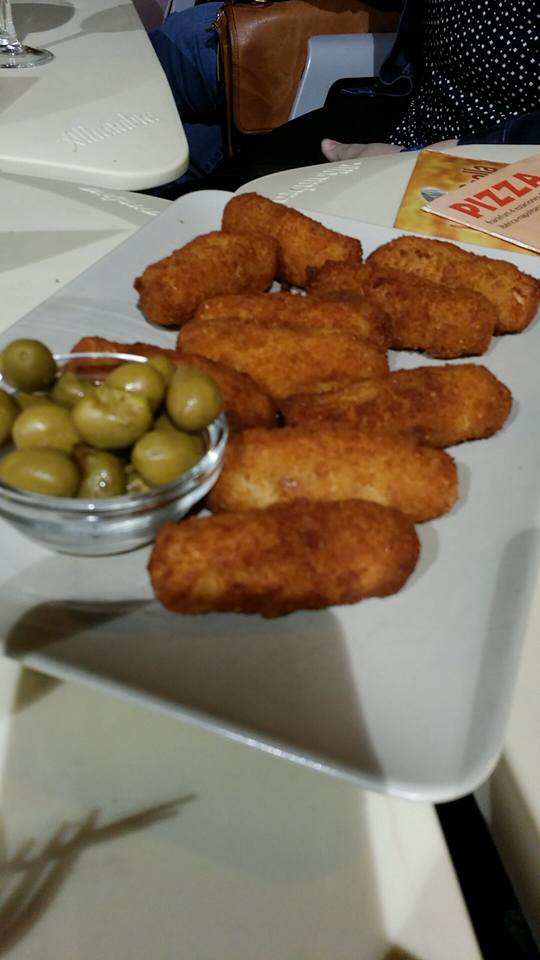
My favorite part of Granada is, of course, the food! Here everyone goes out for tapas. Tapas are like appetizers that are served with your drink. Mostly all the tapas involve some type of bread, but they are delicious. The best part? They’re free with your drink.

These are some tapas and they are called "croquetas". They are basically like a fishstick.

These are some tapas and they are called “croquetas”. They are basically like a fishstick.


It’s been a little crazy finally getting used to the Spanish schedule, but I am getting there. That’s all I have for now. Hasta luego!

That’s all folks!

There are really no words that can express how I feel about studying abroad.

It is truly an experience like no other.mmexport1449441646404

I was essentially taken out of my comfort zone, placed in a new environment and was allowed to flourish.

I have met so many people, and blessed with so many opportunities to travel to places I could
have only dreamed about.

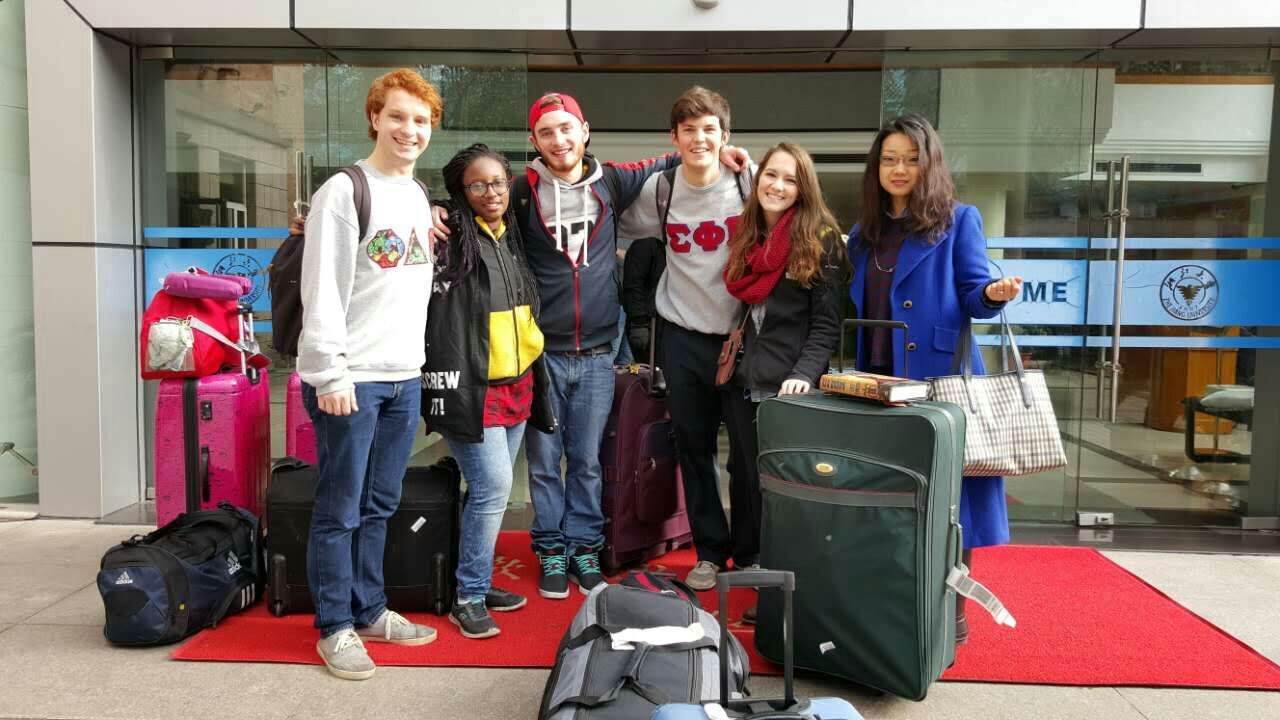
My semester at Zhejiang University, has truly been an experience.

It, in a nutshell, taught me many things about myself.

I was able to meet and talk with people from around the globe, literally, and in that I could understand how everyone’s cultures are not only different but also the commonalities we all share as human beings.

Although
mmexport1448096338271 this time was short, I have made good friends that I will stay in contact with, long after I leave China.

I did not have the opportunity to go to every place I wanted to, but the experiences and the people I met there will no doubt be apart of me for the rest of my life.

Thank You Chinammexport1449044315744

Student Spotlight: Emily Davis

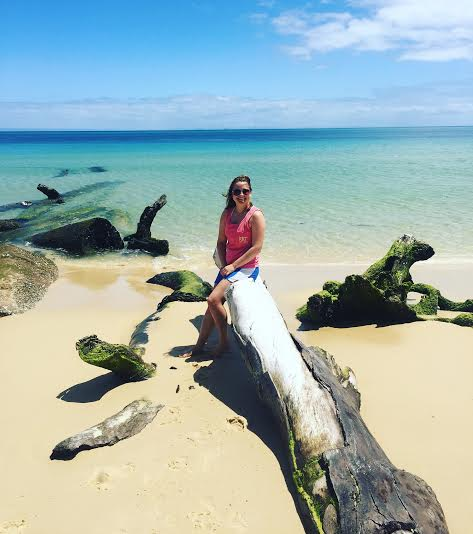
Emily is currently in Australia! In her picture, she is at the Moreton Island!12316301_10156295366890615_6718628537361451629_n
Emily is now studying at Bond University and her favorite class is Criminal Deviance. Emily says this about the class, ” My professor is an adjunct professor, so he has lots of stories and is very familiar with crime on the Gold Coast. It’s an interesting class from seeing differences and similarities in crime and deviance from the USA to Australia.”
Favorite Experiences: My favorite experiences here so far have been getting my scuba certification, sand boarding, holding a koala, and snorkeling around sunken ships.
Tip: Australia is such a big country, you will have plenty of opportunities for anything you are interested in.
Fun Fact: Blake Lively is currently shooting a movie in Australia and is rumored to be staying only about five minutes from the University I am staying at!

Looks like you are having fun, Emily! Hope you continue to have wonderful adventures!

Student Spotlight: Izzy Gonzales

Izzy is currently studying abroad at our study center in Cambridge England!

12119009_10156258023070615_6659471209191411941_nPictured is Izzy on the island of Burano off Venice, Italy.

Izzy’s favorite class is British History with Professor Murphy. “He’s hilarious and makes the topic so fascinating. It’s cool getting to relate what we discuss in class to what we see and do when exploring England on our own.”

“I can’t say that I have a specific favorite experience, but just being able to travel Europe and fall in love with several cities has been the most amazing experience in itself. Cambridge is beyond beautiful and it’s great being only a 45 minute train ride away from London! Though it may be it’s own little island off of Central Europe, England has everything you could want: hiking the mountains in the Lake District, the nightlife in Liverpool, the beachside town of Brighton, the historical sights of London, and the little town of Cambridge that will definitely become your second home. This has definitely been an adventure of a lifetime.”

Izzy, we are so glad you are having such a wonderful time! Enjoy your last month in Cambridge!

Chocolate, Chocolate, and More Chocolate

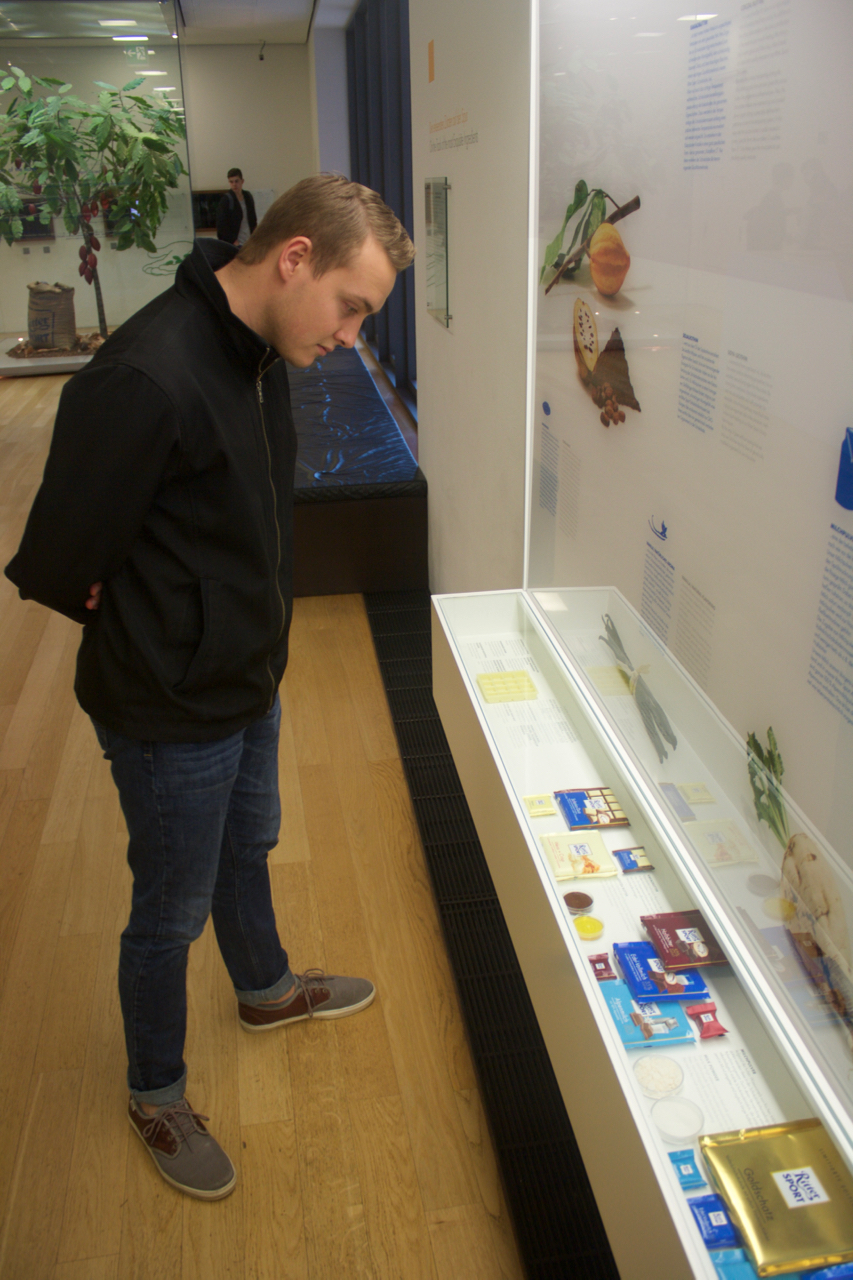
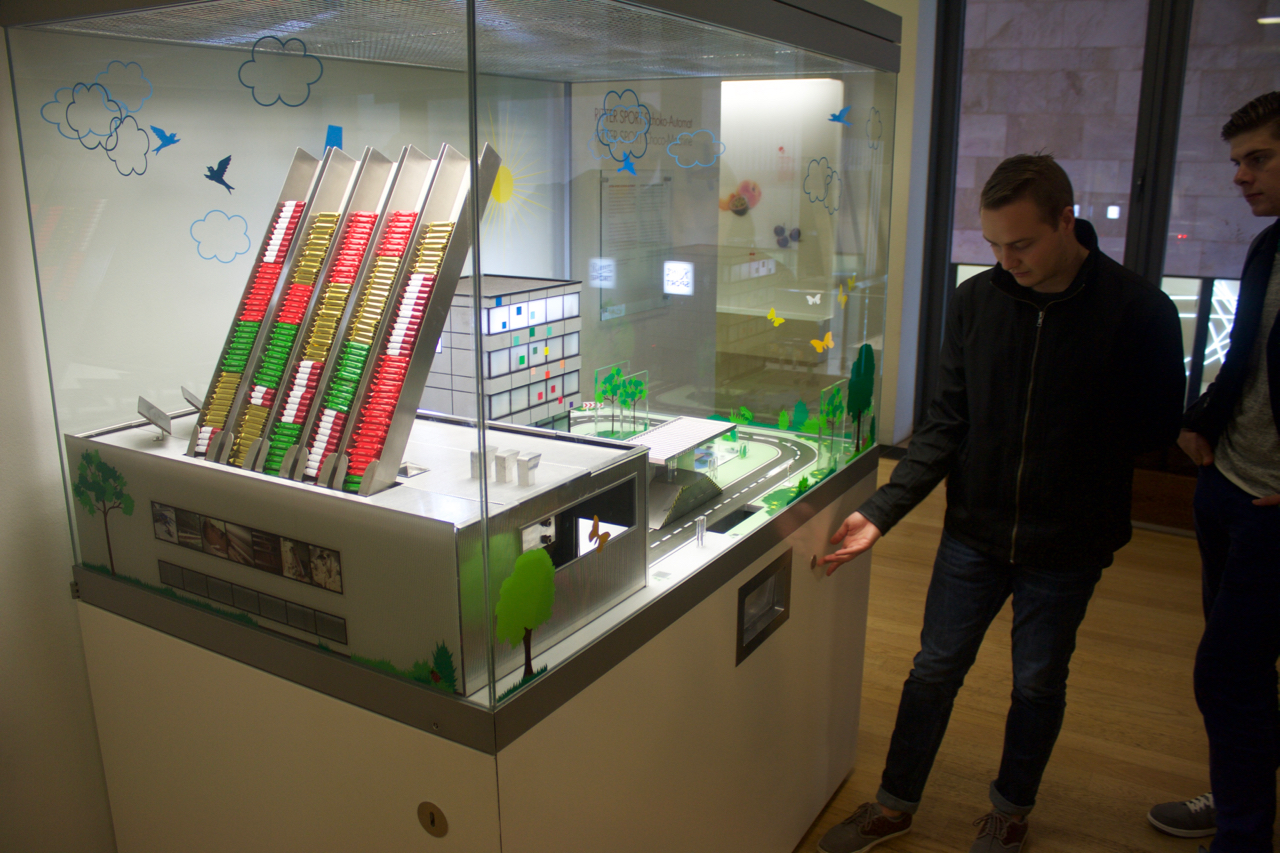
This past week was relatively low-key, as the semester is starting to come to an end. Friday afternoon Reid, Ryan, Kelsey, and I all went to the Ritter Sport chocolate factory that’s about 45 minutes away from campus. Kelsey and I probably bought the most, I personally got 11 chocolate bars to use as souvenirs for people back home! There was also a chocolate fest going on in Tübingen this past week that several of us visited. Sunday I visited some Christmas markets in Cologne while seeing a friend who lives there for a last time this semester, which was a great time! It’s hard to believe we’re down to almost just a week left here!

Reid and Ryan being excited about the cacao exhibit.

Reid and Ryan being excited about the cacao exhibit.

Ryan reading about Ritter Sport chocolate.

Ryan reading about Ritter Sport chocolate.

Ryan getting his free piece of chocolate!

Ryan getting his free piece of chocolate!

Student Spotlight: Caitlyn Alario

Caitlyn is a Classics major studying in Athens, Greece! In her picture, she and her friend, Sarojini, are above the city of Meteora. Known for its monasteries built on the top of and sides of the cliffs! So far, Caitlyn has been able to travel a lot of Greece, and has told us some great things about her time studying there!

Her favorite class has been “The Culture of Modern Greece”.12219407_10156236635395615_1670763307492693247_n

Advice for students thinking of studying in Greece: “My tip for someone thinking about studying abroad in Athens would be to consider traveling more within Greece while they’re here, as opposed to using it as a platform to go to a bunch of different countries. While flights within Europe are very cheap and there are so many other places to see, Greece is a very geographically and socially diverse country, and each island and region has something unique to offer. Almost every weekend I’ve been here I’ve gone somewhere different within Greece, and every time I’ve been blown away by how different it was from where I’d been before. I haven’t left Greece yet and I have no regrets about that.”

Fun Fact: “My fun fact about Athens is that there are local cats and dogs all over the city! While to foreigners they may seem like strays, in Athens they say there are no strays because everyone chips in to take care of them. It’s a really cool phenomenon to witness, because there every morning the little old ladies set out food for the cats, and different people will give food to the dogs throughout the day. It has also really solidified my belief that dogs are man’s best friend. If you’re walking in a large group, there’s a very good chance that a stray dog will come and walk with you and try to protect you from any strangers it may perceive as threatening. It’s so sweet! So that’s been something very unique that I’ve enjoyed.”

Thank you, Caitlyn, for sharing so much about your time abroad! We all hope you continue having fun and learn much while abroad!


The Food/La Comida

Image (5)

One of the best things about living with a host family while abroad is that you can experience traditional meals all the time. Actually, this really depends on your particular host family and I have been very lucky as my host mom loves to cook. I have enjoyed many Spanish dishes thanks to her and have even learned a little bit of cooking also.

When I told people I was going to study abroad in Spain, there were a few comments like “I hope you like tacos!” Let me tell you that Spain does not have Mexican food. Yes, Spain obviously speaks Spanish, but just because the language is the same in Latin America does not mean the food is the same. I have not had a single taco while I’ve been here simply because tacos are not Spanish. Since Spain is almost surrounded by the sea (except for France to the north and Portugal to the west), the Spanish eat a lot of seafood.

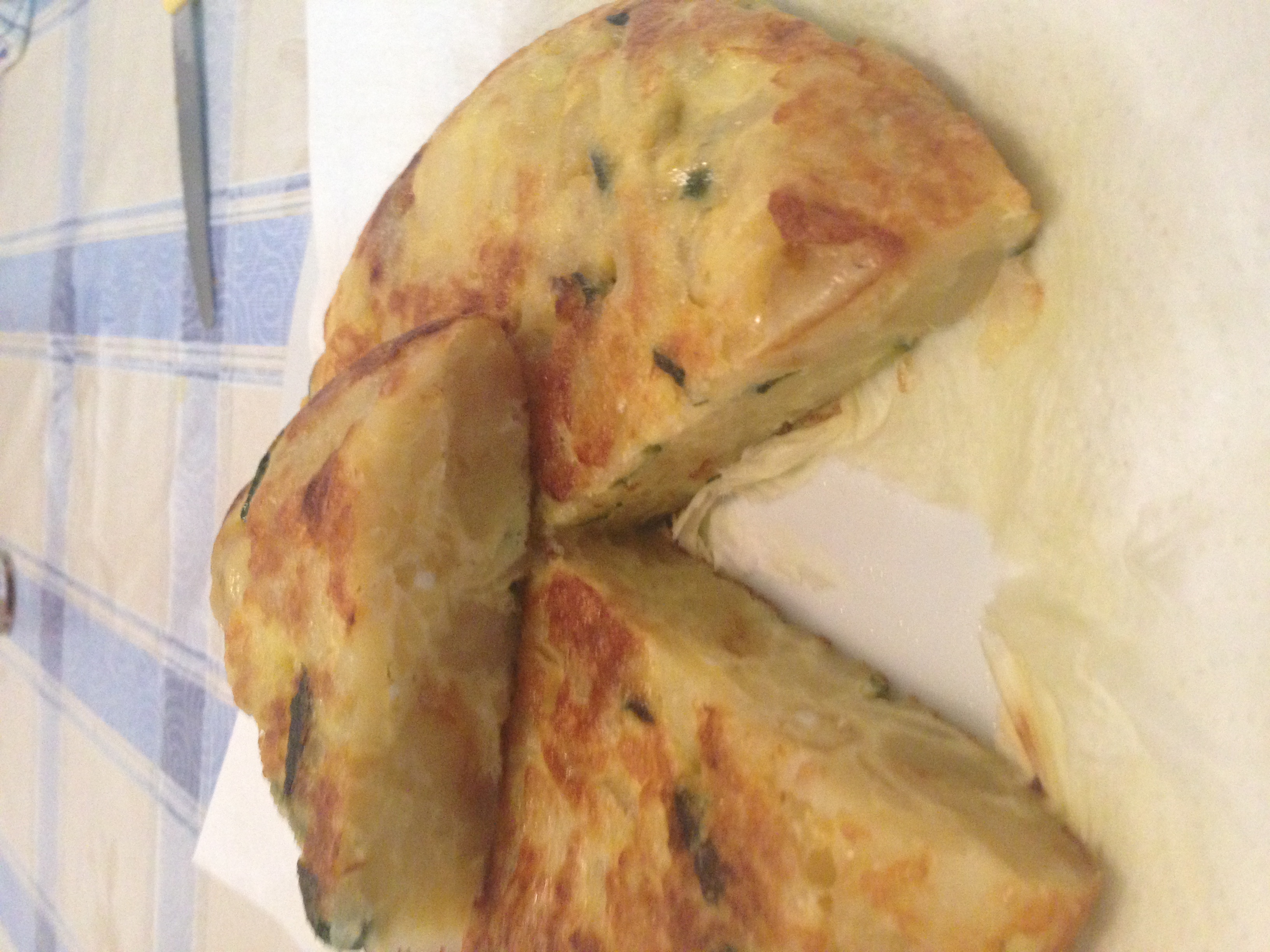
I have had tortilla de patatas and paella plenty of times because these are Spain’s two most famous dishes. Tortillas de patatas are definitely not the tortillas you are thinking about. Tortilla de patatas is sort of like an omelette. It is a mixture of eggs, thinly sliced potatoes, and sometimes onions. First the potatoes and onions are fried in a pan, and then the eggs are added to the mix and it all gets fried again. Some people also like to add spinach, zucchini, or other vegetables. It can be eaten warm or cold, in a sandwich or without. This is definitely one of my favorite dishes and it’s not hard to make!

IMG_7307

Tortilla de patatas

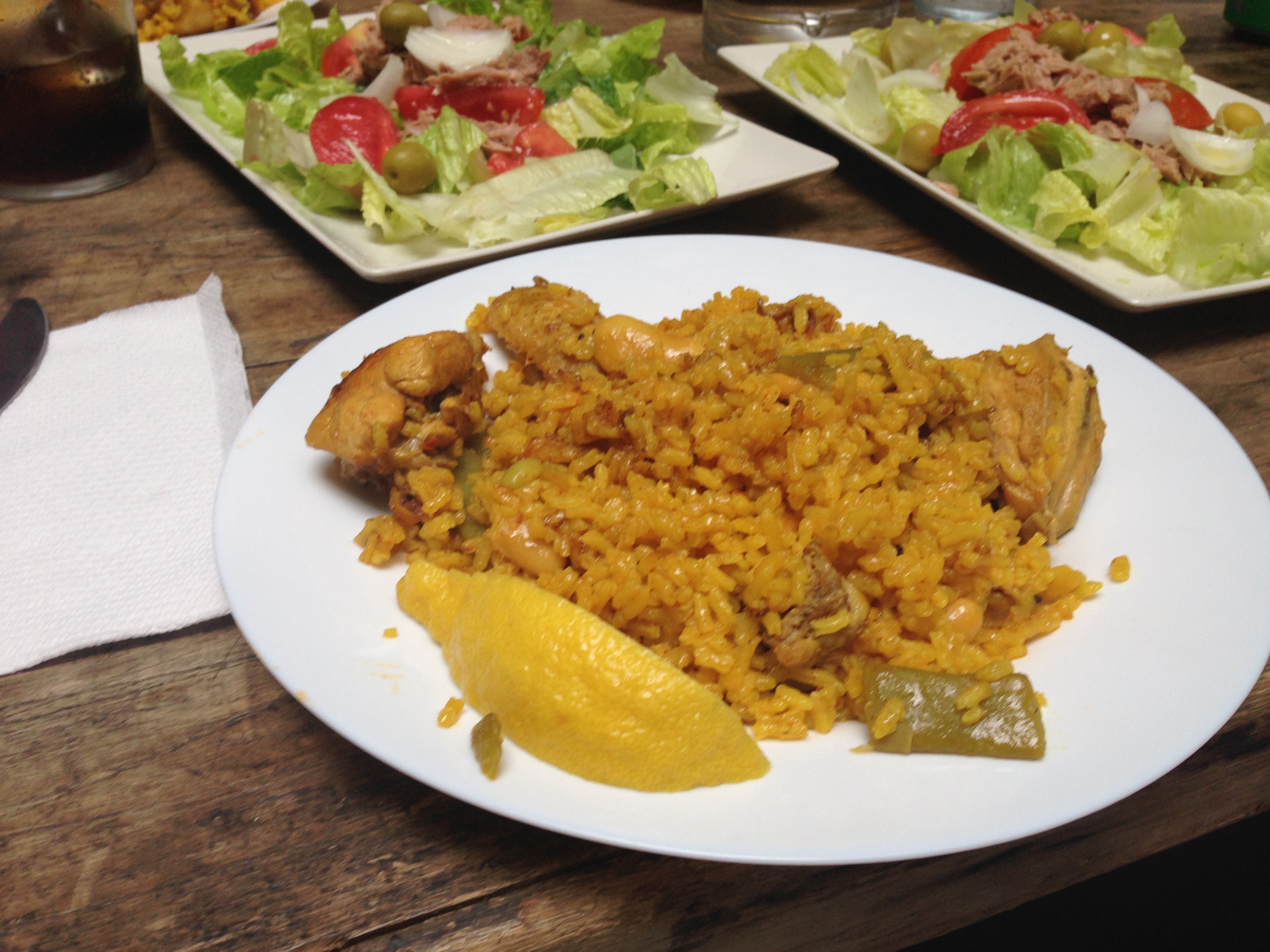
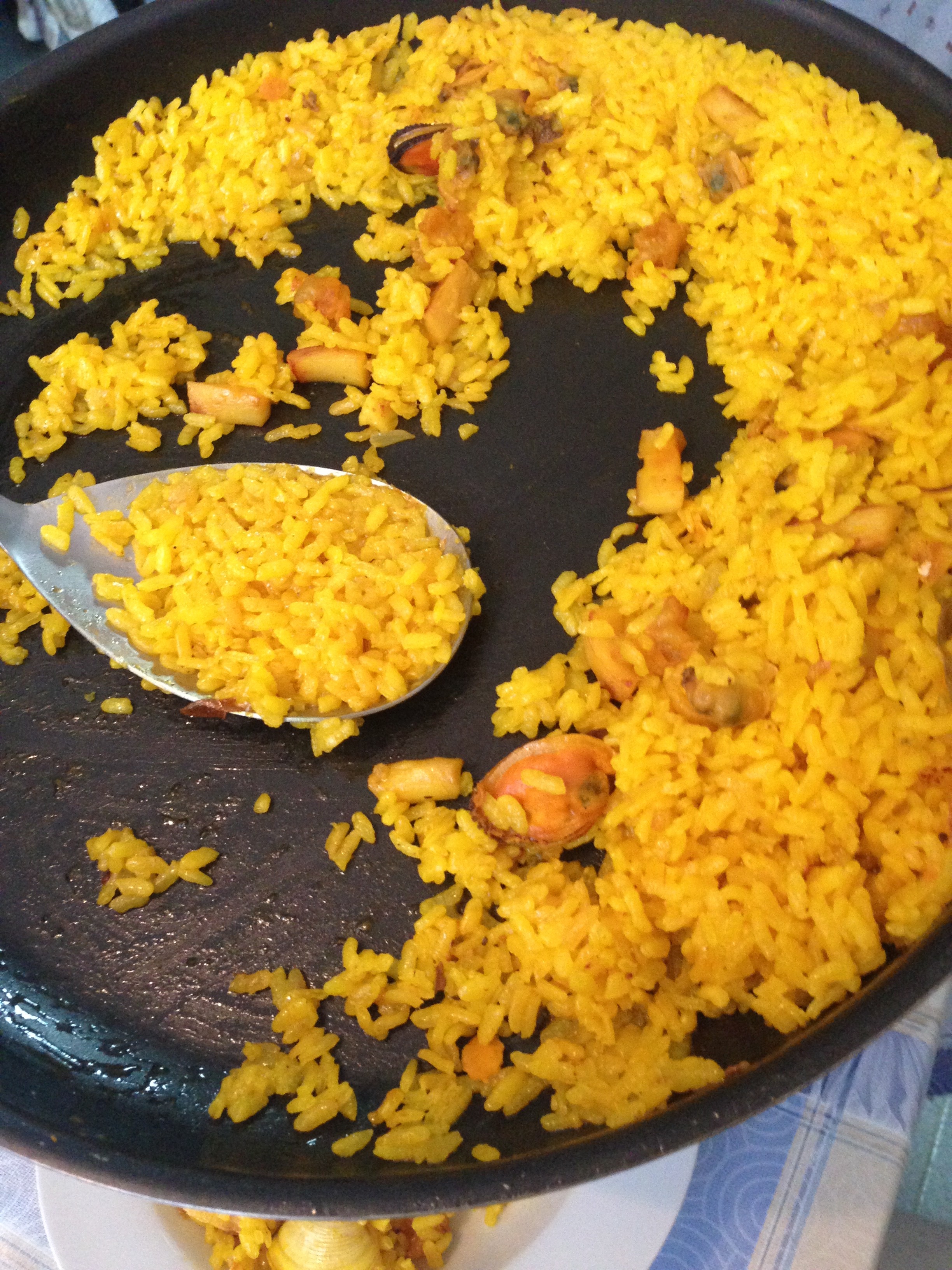
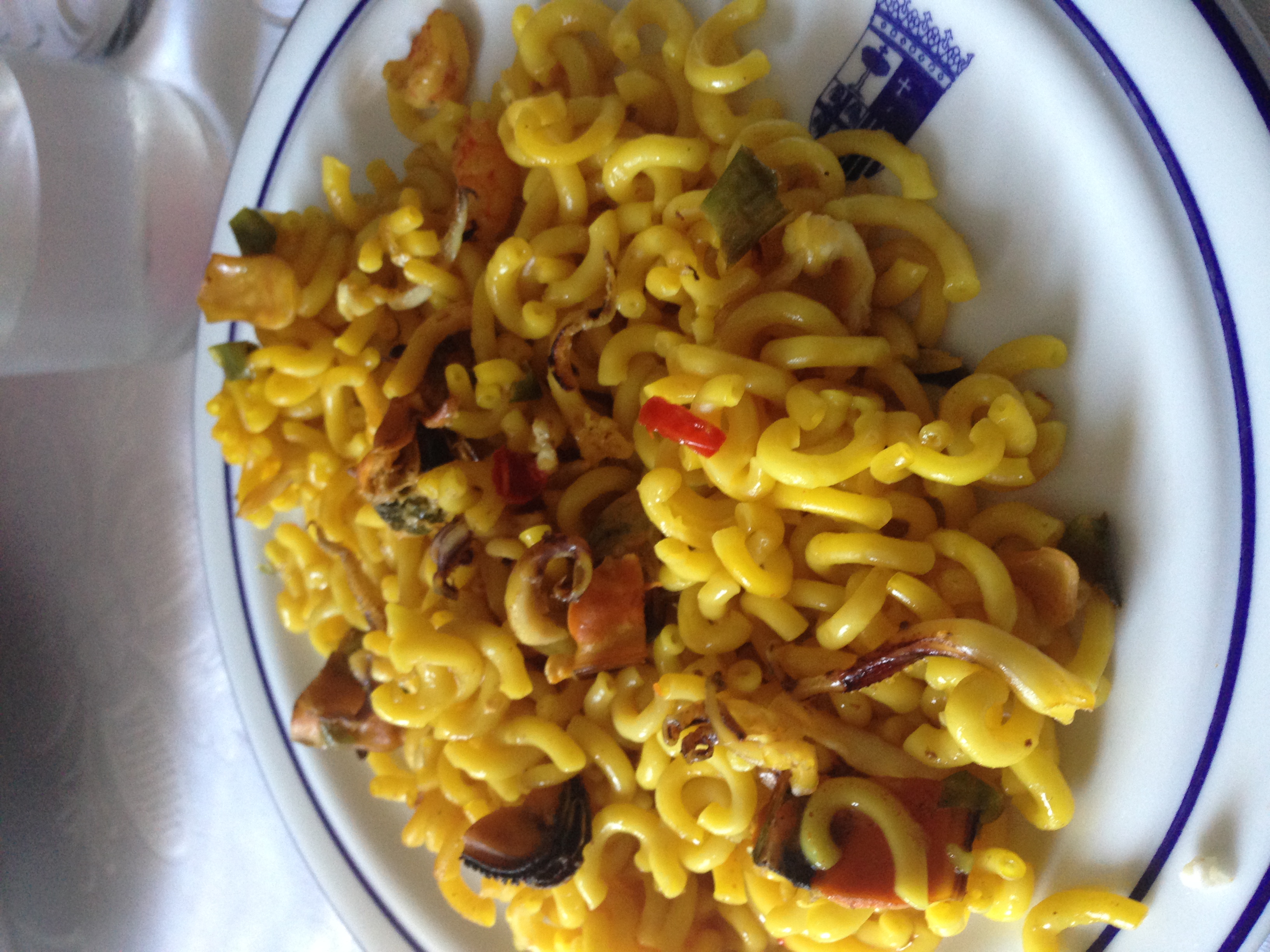
The other most famous Spanish dish is paella. I describe this dish as sort of like a stir fry, but with a different taste. It has short grain rice, is yellow, and is cooked with saffron. The traditional form of this dish has vegetables and seafood, but there are so many different variations of paella that almost anything goes. Valencia is the home to paella and Valencian paella has rabbit and chicken in it. I did try this paella when visiting Valencia, and it really is great. There are over a hundred types of paella as each region, family, and restaurant has their own special recipe. Paella is often served with a lemon to squeeze over the rice. Traditionally, paella is a Sunday meal that families share together. My host mom does often make this on Sundays which I am extremely thankful for. Fideos is just like paella, but it is with tiny noodles instead of rice.

IMG_7916

Valencian Paella

IMG_7244

Paella

IMG_8347

Fideos


One of the most famous desserts in Spain would have to be churros with chocolate. Yes, my host mom even makes the chocolate for this also! I have only bought this delicacy one time but I’ve had it multiple times as she likes to make it when it’s really cold out. The churros part is basically fried dough with sugar and the chocolate is melted, rich goodness that can be enjoyed either hot or cold.

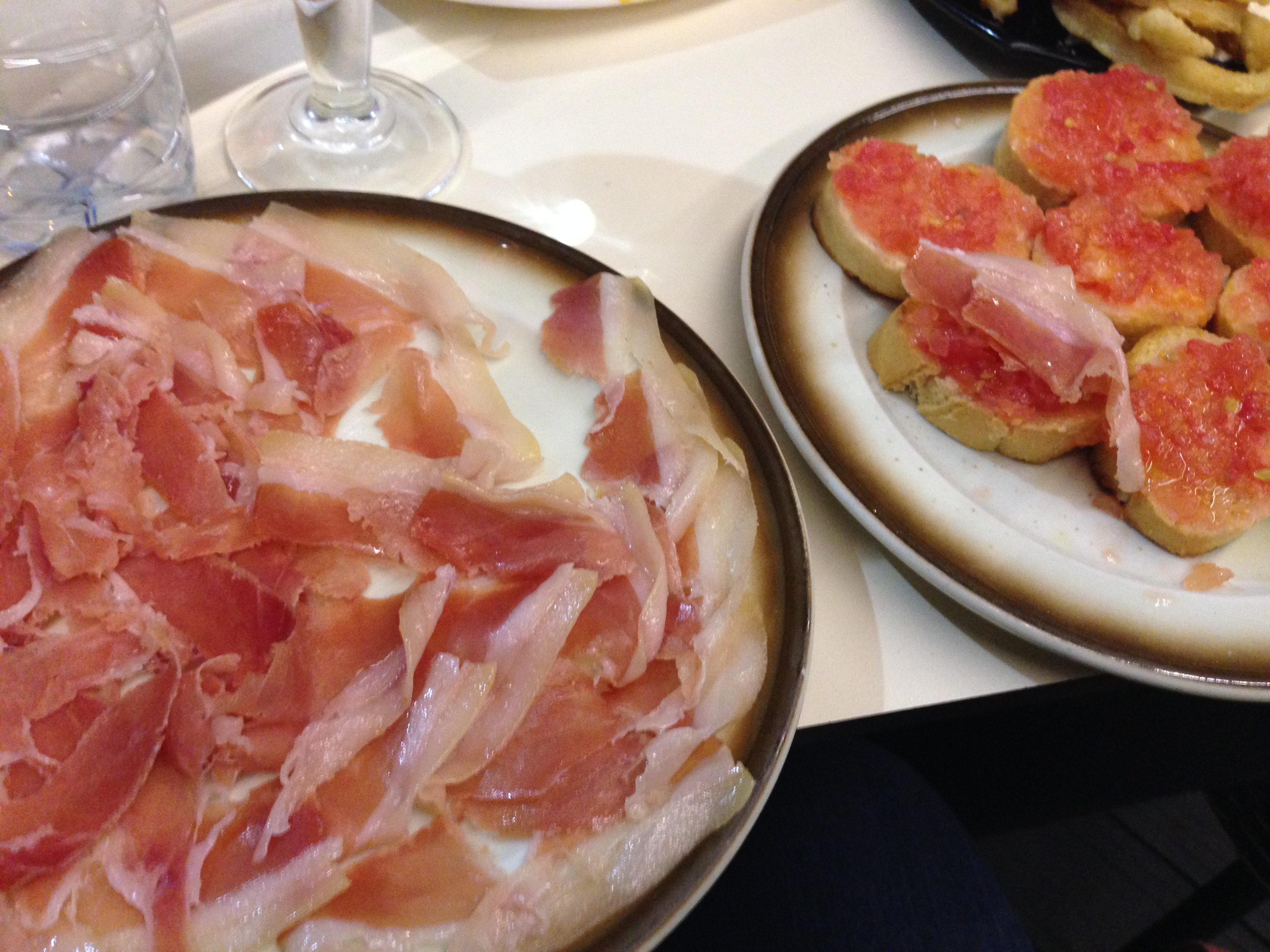
The ham in Spain is almost a way of life. Jamón ibérico (referring to the Iberian Peninsula which is Spain and Portugal) is very famous and rightfully so. This ham has so much more flavor than any ham I’ve had in the US. In my opinion, the best way to savor this ham is with tomato and bread. My host mom usually crushes fresh tomatoes, spreads it on fresh bread, and add slices of this delicious ham. Back home, ham is not my favorite meat, so when I came here, I had no idea that I would like ham as much as I do now.

IMG_9681

Jamón ibérico with bread and crushed tomatoes

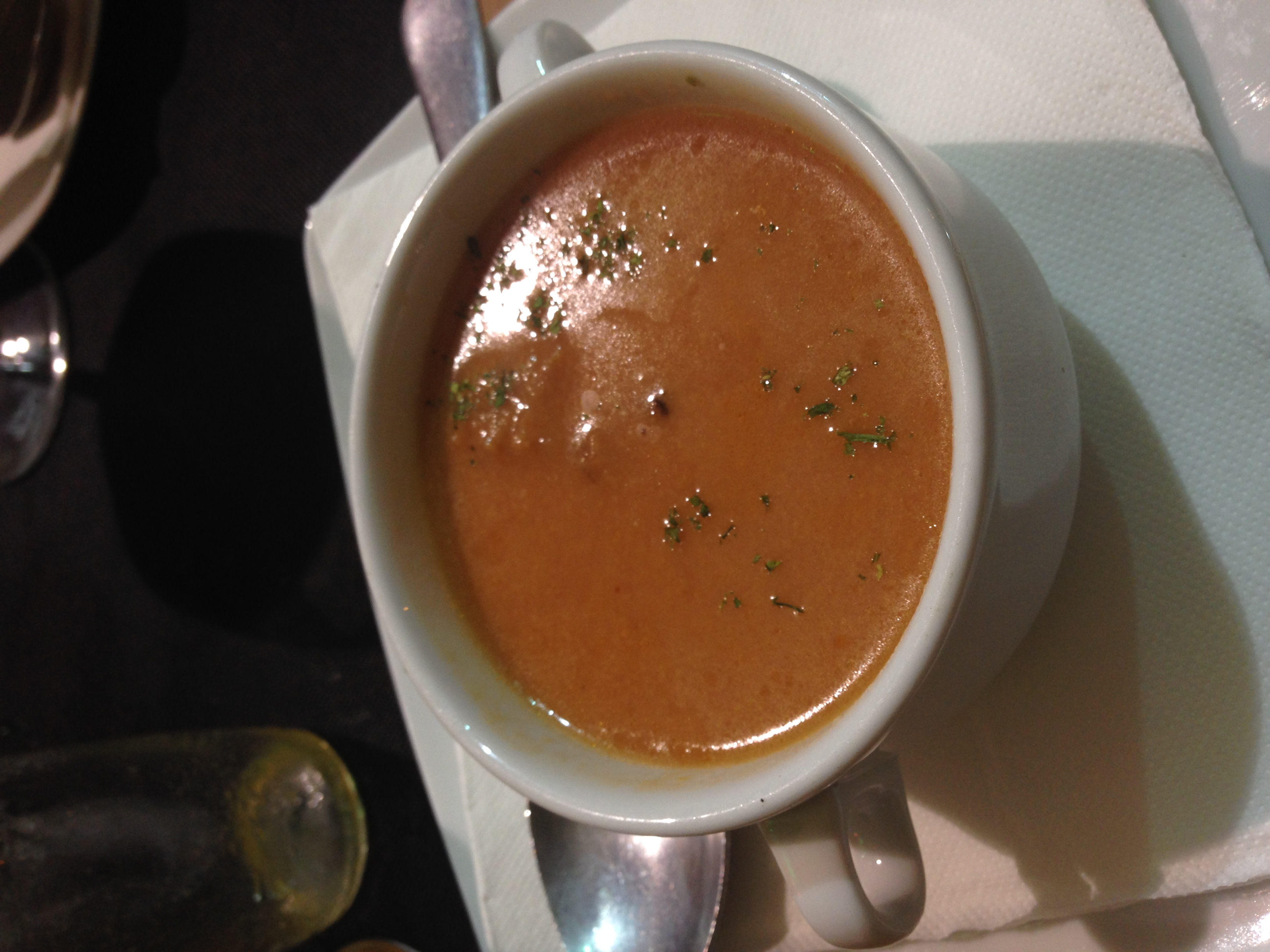
Gazpacho is a tomato soup that is served cold. It’s very popular in the summertime because it’s refreshing, but getting past having cold soup was a little hard for me. Garlic and cucumber are also included along with other various vegetables. It’s not bad, but it’s not my favorite.

IMG_7729

Gazpacho

Cocido madrileño is Madrid’s famous dish which is enjoyed by others all around Spain. It is a stew with garbanzo beans, sausage, ham, chicken, and vegetables. Like paella, there are variations, but this stew is great on a cold day.

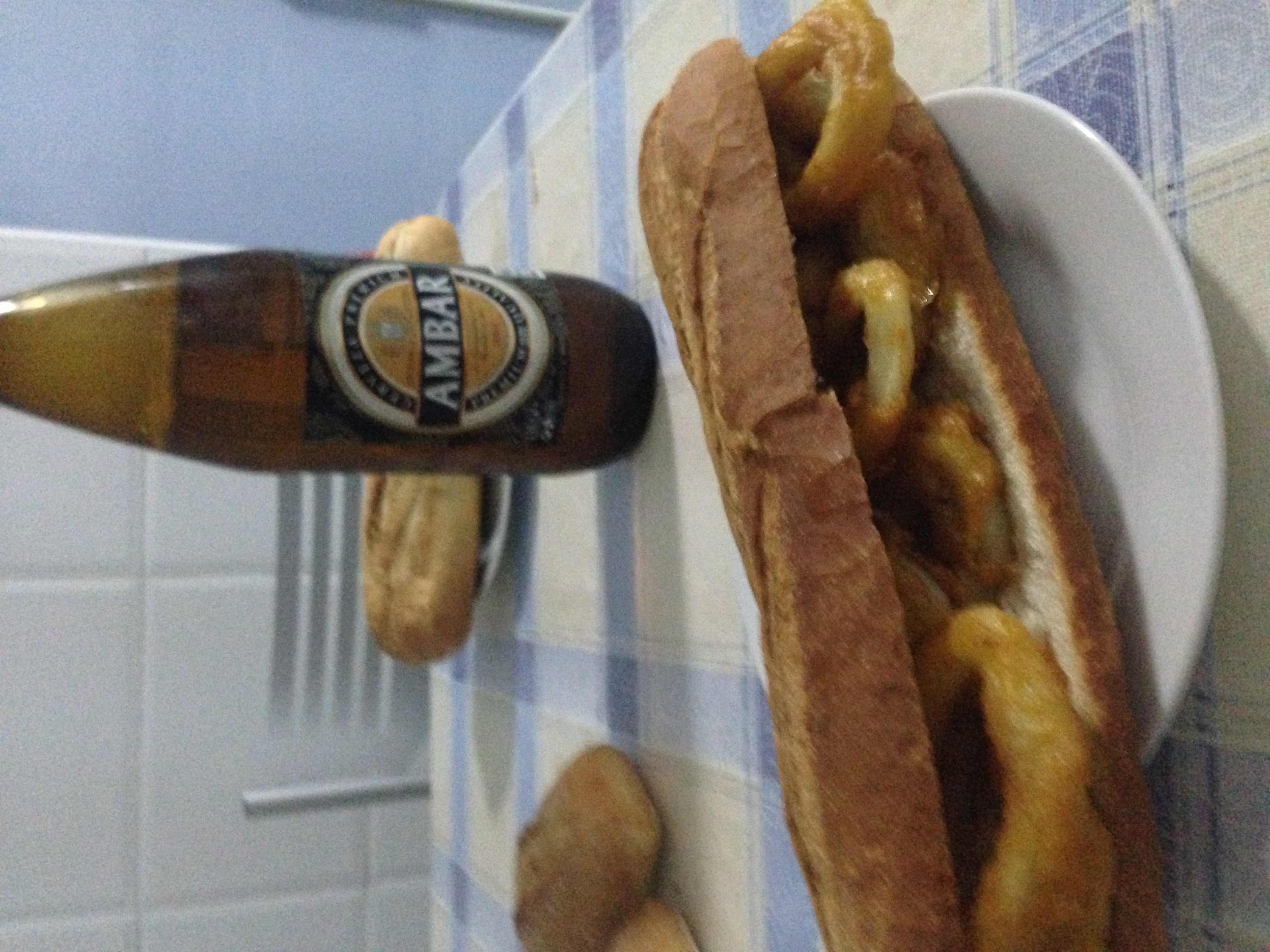
Finally, the calamari sandwich is also surprisingly popular. In Madrid, there were plenty of restaurants with the calamari sandwich and beer special. It is just fried calamari on bread. Some people like to add mayonnaise so it’s not so dry. It really does not seem like this sandwich would be good, but it actually is. Usually it is accompanied with beer.

IMG_0343

A calamari sandwich with Ambar, the beer of Zaragoza

« Older posts Newer posts »

© 2026 Valpo Voyager

Theme by Anders Noren — Up ↑