Valpo Voyager

Student Stories from Around the World

Page 89 of 125

South Africa Belongs to All Those Who Live In It

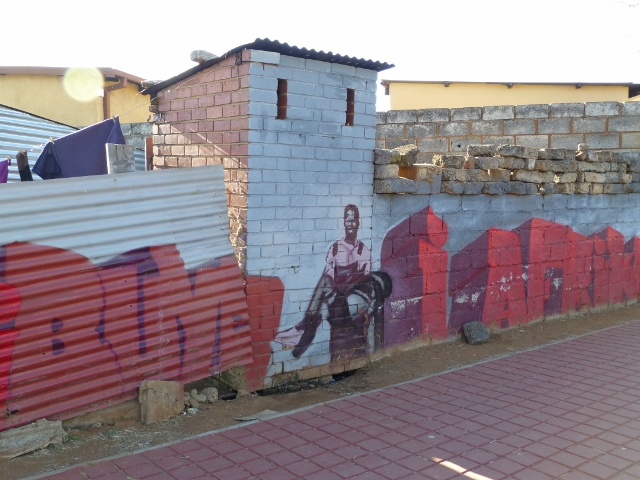
We continued our tour through a part of Soweto, called Kliptown, one of the oldest parts of the formerly black township.  I felt a little uncomfortable “touring” here, like an intruder. People were welcoming and politely smiled, but as we entered their township, we heard a man yell stop exposing us.   We were unsure whether the man had issue with us or our tour guide, but this made me uneasy.  As we walked through the village, I felt like we were treating the people there as if they were in a museum, even if unintentionally. I was invading their privacy and homes, without getting to know them. I kept wondering how I would feel if the tables were turned.

We (including myself) justified this by saying we are trying to educate ourselves and exposure is necessary to advocate for people in poor situations, but I’m unsure how much good has come from this exposure.  After all the failed efforts the people in Kliptown have been victim to, I expected a little animosity toward tourists like myself. Nevertheless, we walked through and gawked at their poverty. My group has the best intentions (I truly believe), so my criticism may seem harsh, but I think we need to think deeper about how we try to educate ourselves. Staring at people doesn’t provide you an understanding, it emphasizes a stereotype, but I look forward to digging a little deeper on this trip.

In this town, our tour guide explained to us the many things that these people need and the disappointments from the government. Non-governmental groups have offered some hope for change, but many of my classmates wondered if the requests of the residents were unrealistic.  Their problems might be more easily solved if they were willing to move from their community, but their resistance caused complications.  On one hand, I thought these people shouldn’t have to move after being forced there in the first place, but also grappled with the fact that that may be the only viable solution. Being that our guide was a member of the community, he could only offer his perspective about this issue.  At times his arguments were circular, perhaps because this issue struck him emotionally.  We found this somewhat confusing and frustrating, so later on we got clarification and heard from a man that I can refer to only as brilliant.

Dale McKinley is an economist that works partially in academia. He was enthusiastic, articulate, and could simplify concepts so that we could wrap our heads around them. He emphasized the need to build societies through the lowest classes, investing in communities like Kliptown. This was the only way to redistribute the huge accumulation of wealth found in the majorly white cities of Pretoria and Northern Johannesburg. Though he admitted there was so “silver bullet” to fixing South Africa’s economy, he did suggest that in order to shrink economic disparities the government needed oppose further privatization.

Our discussion of privatizing water companies sent my mind reeling. He made the very good point that water is being taken from where many of these people live and then resold to them through private French companies. They provide no other benefit or maintenance to the community and so the people feel they are deserved free water.  I realized that in the United States we expect things like these. If you have a well, you don’t pay for the water that you use and if someone took that water and offered to sell it back to you that would be outrageous. However, when living in a town you pay for sewage to be disposed of, water to be cleaned, and facilities to be kept up. We don’t object to paying for those services and Dale emphasized that if the people of Kliptown were receiving similar treatment they would be willing to pay also.
He then talked about the relationship between government and large business owners. He mentioned things like the rate that water is sold to people in communities like Kliptown is almost 6 times what is sold to the government. So while people in government may complain about the financial responsibility of providing water to people who are dying in these communities, the government is receiving a discounted rate.

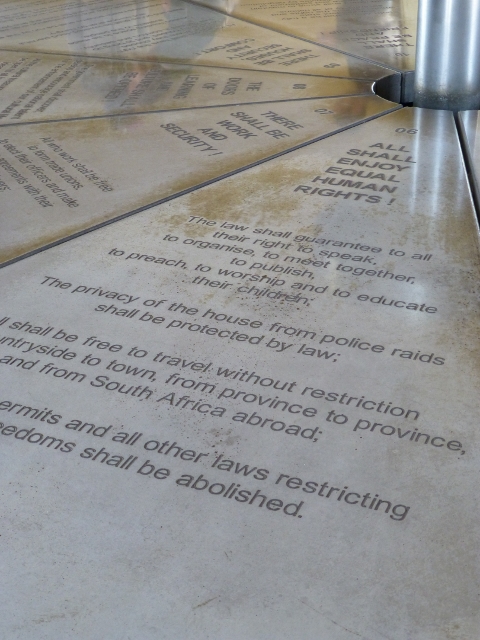
Ironically, located directly across the street from this impoverished neighborhood was a monument in dedication to the Freedom Charter, a document that encompasses the core values of the’ new’ South Africa.  It addressed the rights of all people emphasizing equality among race, gender, and class.  It even states: “The mineral wealth beneath the soil, the banks and the monopoly industry shall be transferred to the ownership of the people as a whole”
Thus far on the Cambridge life!

It’s hard to believe that our C-90 group has already been here at Cambridge, England for over a month. Wow, time flies!

So far during this month, we have gone on 2 big group trips to London, and the Lake District. Both of these trips were splendid and of course, I took a lot of pictures 🙂

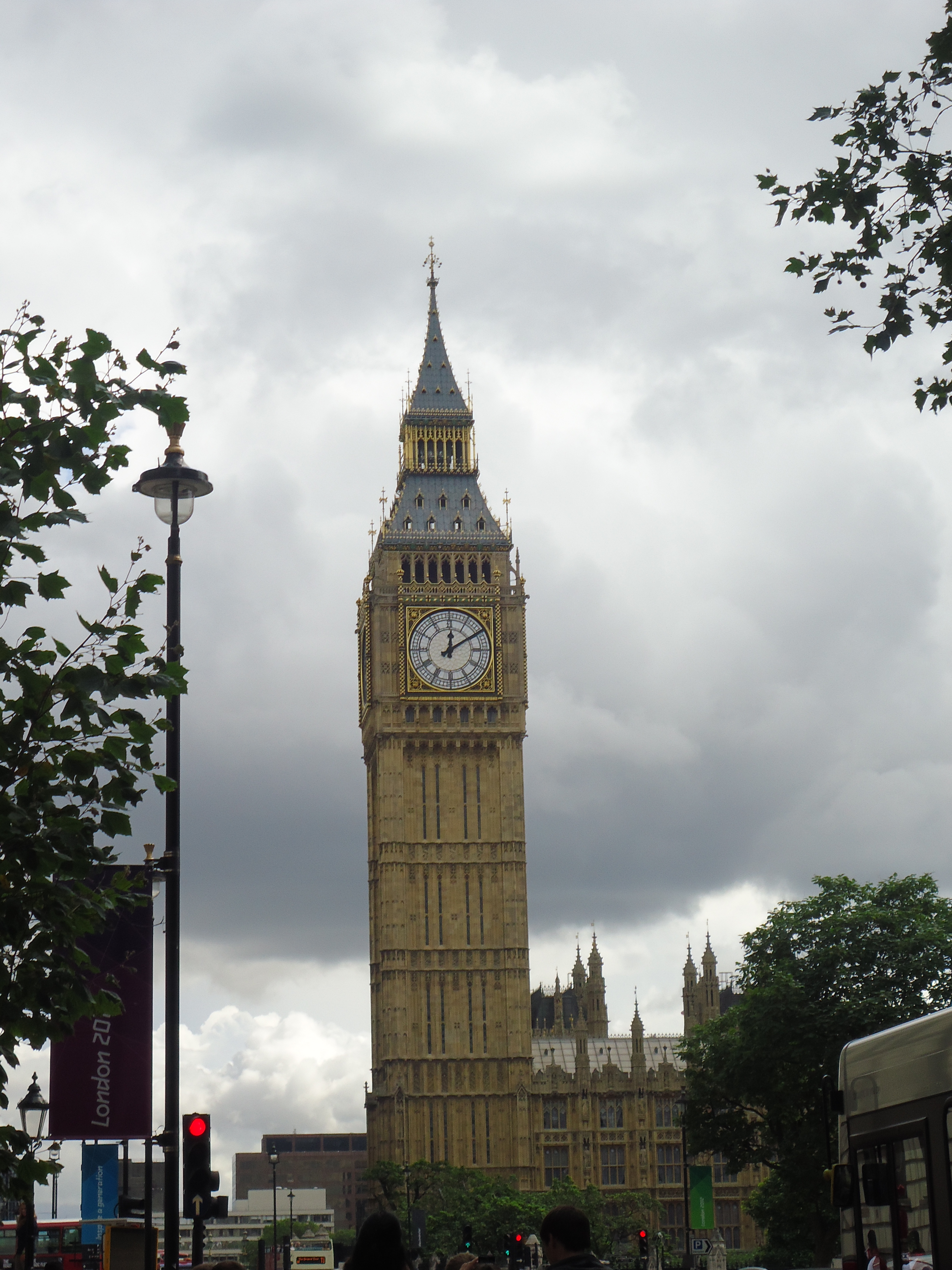
London was really all an awe. The only negative impression that I got was that there were SO many people there. Everywhere you go, there’s people, people, and more people! That got a little tiring. But what can you say, it’s London! Other than that, it was really neat seeing landmarks that I have only seen on TV before. We saw the London bridge, the London eye, and – the main entree – the Big Ben. The Big Ben really impressed me because there were so many delicate details throughout the building that you can’t really catch from looking at a picture. We spent a total of 2 and a half days there but it wasn’t enough and I know that I definitely want to go visit there again sometime this semester!

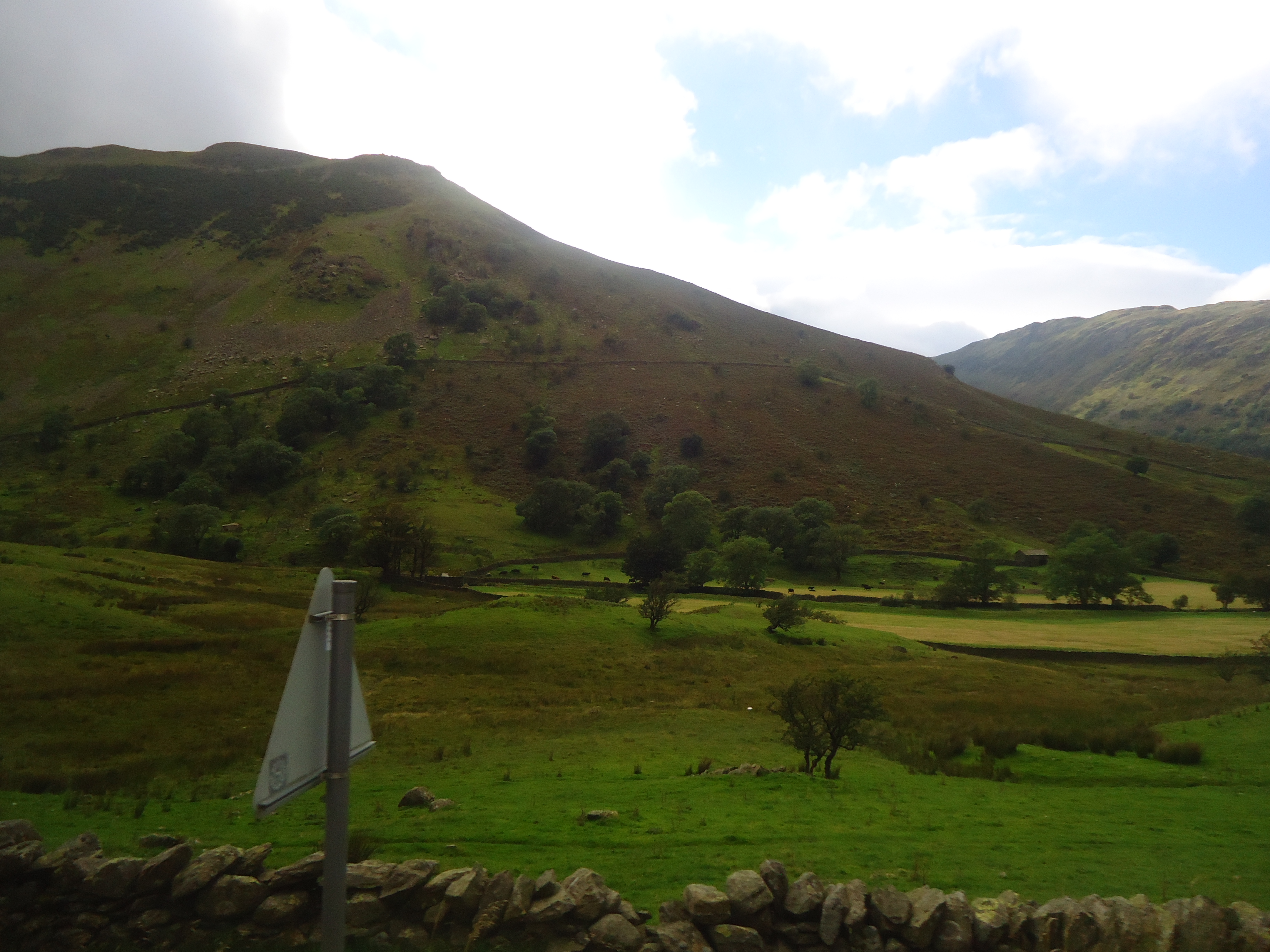
Our second trip to the Lake District was probably my favorite out of the two. I have actually never heard of it before so it was almost like a blind date, waking up from a coach bus after a 3 hour drive. As soon as I got off the bus though, I knew this weekend was going to be a blast. I saw mountains beyond mountains, with absolutely no flat lands. We hiked on the first and second days and they were quite an adventure. A lot of us were determined to become friends with the hundreds of sheep we saw, and we all were happy to be taking in vast amounts of super fresh air. On the third day we went to see the Chatsworth House, home to a duke and duchess, and the house was so big! It was also absolutely beautiful.

So those 2 trips were we’re definitely a blast. And in 2 days I’m headed to my first own trip outside the country – Italy! I cannot wait for Italy since its always been a place where I have wanted to go to. Let’s see how romantic this country is!

First Day in Jo’burg

For our first few days in Johannesburg, South Africa it remained really cold!  My roommate and I resorted to huddling near a hot place in our room at night and in the morning, but during the day it wasn’t so bad and we were kept busy with speakers, tours, and group discussions.

We started with a lecture from a man named Molefi Mataboge on the liberation struggle in South Africa. He gave us a timeline and a good foundation to start with but also shared his personal testimony—particularly his struggle to overcome his anger and learn to speak. He then accompanied us on a visit to a township called Soweto (standing for South Western Township) and he explained that townships were created to push blacks out of the cities and into these settlements to be kept away from the Whites and Afrikaaners (descendants of Dutch immigrants) and their occupations. Soweto is the largest of these townships and it has been the site of intense uprisings. It is also the home to leaders Nelson Mandela and Desmond Tutu, but faces devastating economic hardships, astonishing rates of crime, and inadequate education. Molefi was patient and humorous as he answered questioned after question from us. He is incredibly knowledgeable and shared his passion for education with us. I felt honored to have learned so much from him in just a few short days.

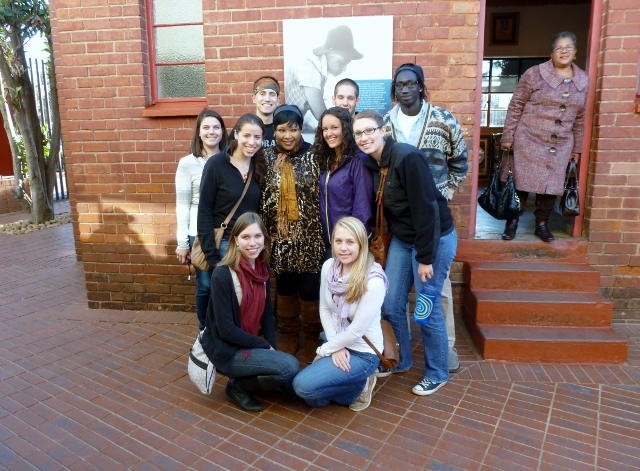
We visited the house of Nelson Mandela and coincidentally were in a tour group with his daughter and grandson. Though a little ‘star-struck’ some of my group members managed to ask for a picture and struck up a conversation with his grandson.

Then we visited The Hector Pieterson Museum, dedicated to a passionate young student who marched among his classmates to stop the forced teaching of all subjects in Afrikaans in their schools. Here is a little background that I had learned and that was shared by Hector Pieterson’s sister, Atoinette Sithole (who we were lucky enough to hear speak): Afrikaans is a derivative of the Dutch language. The language of the people who brutally pushed blacks into townships, made them prisoners to the apartheid, and the people who are responsible for many deaths of blacks. In other words, the language of these students’ oppressors. Many of the teachers could not effectively teach in this language and this law would only further benefit Afrikaaners and marginalize black students. This was the last straw for the unfairly treated students. After long planning, hidden from parents, they organized a march, but were met with police force who opened fire on students. Hector Pieterson, a 13 year old boy, was the first to be reported dead and the image captured of him being carried alongside his confused and horrified sister has been an iconic symbol of the liberation struggle. Atoinette does not view her brother as a hero or matyr, but appreciates the museum as it gave her an opportunity to cope and comfort that he did not die in vain.

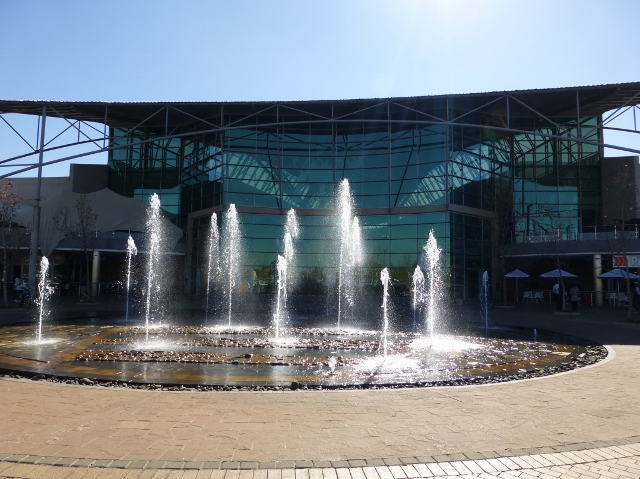
Finally, we visited the Maponya mall, named after the man that owns it and adorned with an elephant (the symbol of his tribe). He owns other car dealerships and ensures that they all stay in Soweto. We had lunch here at a South African chain called Nando’s, which had Portugese chicken and mealie (grilled corn).

This was just our first day!


Sunset, Sunrise, Soccer & Skype

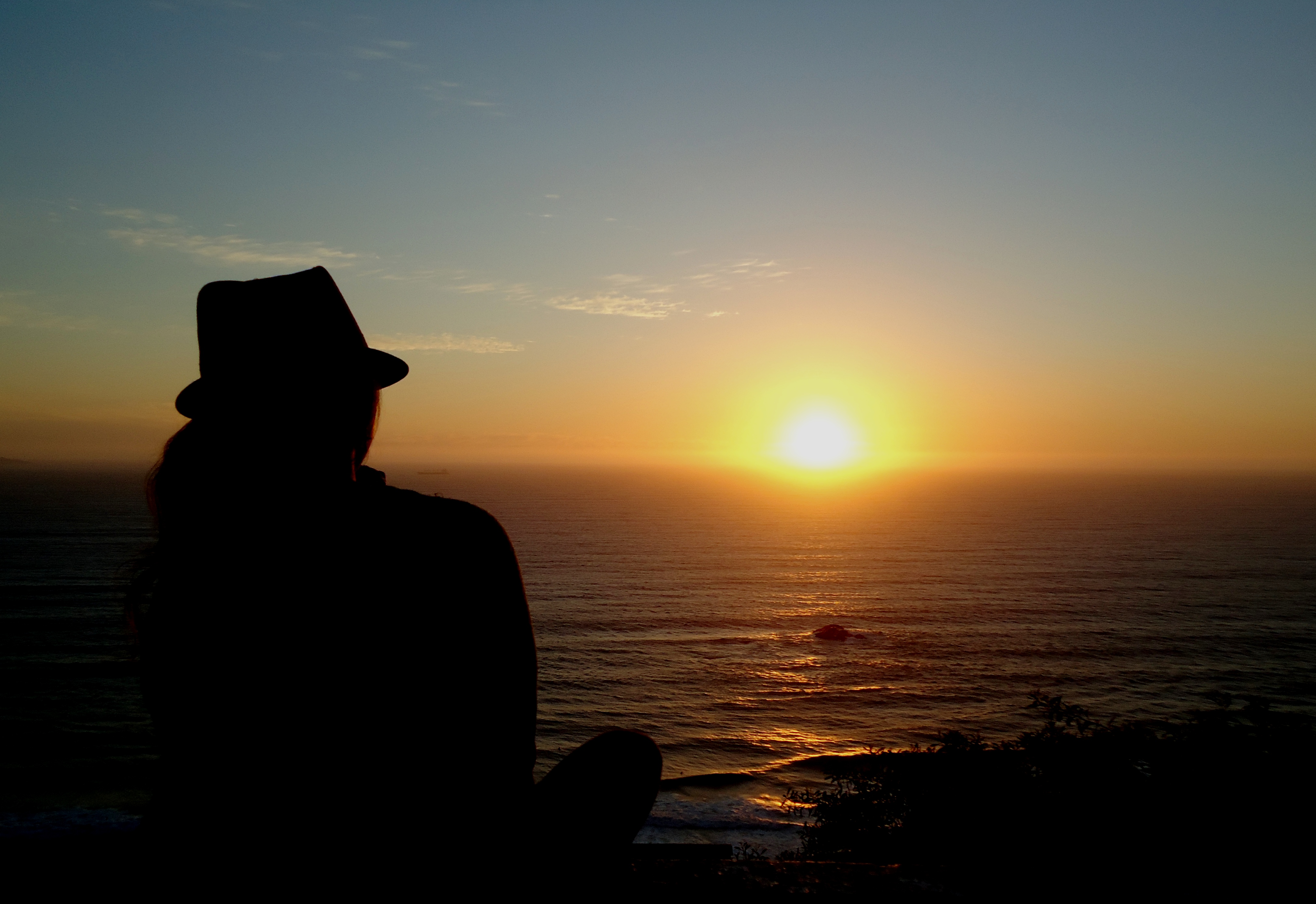
On Saturday, my friend Andrea and I went to Reñaca to go hang out at another friend’s (Agustin) apartment. On the bus, we weren’t sure which stop to get off at, so we asked the bus driver to let us know where the end of “Ositos” was…he didn’t. He was kind of rude, and so when we asked how far away we were from the stop, he said we had just passed it. So we got off at the next possible stop and asked directions. Luckily, we were only a couple blocks off so we walked on the downward slope of the hill (almost everywhere is a hill here). When we passed all of the tall buildings, we could finally see the ocean on this beautiful, clear, sunny, perfect day. It was breath-taking. I still can’t get over how incredible the ocean is here; indescribable! Agustin’s apartment is located on the side of this hill facing the sea. You could see the curve of the coast, all the hills, the picturesque beaches and I even saw seals surfing! (I think I might ask them to teach me…I want to learn.) We stayed out on his balcony all afternoon until the sunset; nothing compares to an ocean sunset.


Pure serenity.

The next two days were solidly dedicated to a paper in one of my classes at Rodelillo, where I take my classes completely in Spanish with other Chileans. It said it could not exceed 11 pages…which meant there was a lot of material to cover. I spent the next two precious, ideal/ days of warm sun and clear skies inside working on this paper that I could have been doing over my week long break. Such are the typical mistakes of a college student. I do believe I’ll take advantage of my ability to make these mistakes now and learn from them later. At least it’s done and over with now.

mi equipo, mi familia; my team, my family

Tuesday, my UVM team and I went against another university, DUOC, and absolutely dominated. I didn’t get in this game it being the first one of the season, but it was incredible watching them play. I suppose I’m an aspiring bench warmer wanting to play with the reigning regional champions of Chile: challenge accepted.

That night, I had the Skype meeting with the Valparaiso University International Office which was awesome to be able to talk about Chile straight from Chile. I followed the questions that Julie Maddox gave me and talked a little bit about each point…okay, a lot. To be honest, I just couldn’t stop talking about how much I love it here and how everyone should come here. Got a bit carried away I suppose…but I do believe that’s a good sign 😉

Burnt some cookies with Andrea on Wednesday; used our creativity to make some cool shapes like a cat that looked like Pikachu and Charlie the Unicorn and, to finish off our dough, a snowman (the carrot nose burnt…) They didn’t taste so bad with a little honey. My host brother, Axel, loved them, so that’s a good sign. I’m not a complete failure in the kitchen, but I’m not so great.

Then yesterday went a little something like this: woke up late, went for a jog, found the post office (finally), went to my meeting with the orchestral director, soccer training, went home, got ready, birthday party for a Mexican amiga here, danced at the casino club.

I’d say, I’ve had a decent past few days. Loving my life here.


A cup of tea a day keeps the doctor away

Yuck, I know. Who wants to think about being sick and whatnot when you’re studying abroad in a new country? But this is something that I have found really needs to be addressed- as we are a month into our program, and literally everyone in our group is sick.  Most people have a cough, but I have a rather annoying cold that won’t go away. It’s 82 degrees outside today and I walked around with a thick jacket on. Brrr.

I was actually the first one out of our group (from now on addressed as H-23 [the 23rd group to go to Hangzhou]) to get sick, getting a fever only two weeks after we had arrived! In Hangzhou, it rains a lot. It was raining on the day that I went to meet the senior editor of an English-language magazine that I am interning for- and I got caught in the rain while waiting for the bus. And a few hours later, I got a fever. I had a fever for about two days, but on the second day, I only ate fruit and took two vitamins. Throw in lots of sleep, and I was feeling much better the next day.

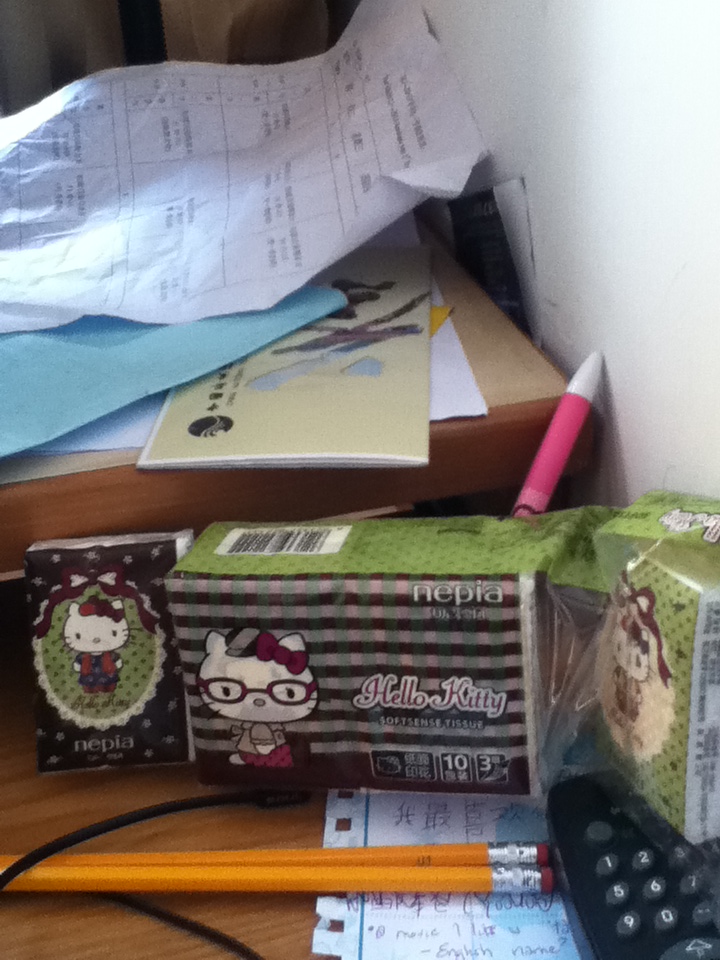
In the past few years, I did not get sick very often since I got into the habit of watching what I eat and exercising. However since arriving to China, admittedly I have not been eating enough fruit or working out as much as I usually do. I think that has made my body weaker or more vulnerable to any illnesses. The main lesson of today’s post is: no matter where you are, it is still important to take care of your body and your health. Make sure you are getting the proper nutrition. (and if you are planning to travel abroad, bring medicine just in case. I made the mistake of thinking, “Oh I never get sick in the US, so it won’t happen in China either! I’ll just bring some advil, nothing else.” Biiiiig mistake on my part. Now, I am sick again. It’s not as bad as the fever, though it is slightly more painful because I have to use the tissues here in China- ouch. I bought a pack of Hello Kitty tissues because they were Hello Kitty and adorable. But these tissues are deceiving- though they’re cute, they are rough as sandpaper. Where’s kleenex when you need it?

Adorable, but dangerous to your nose

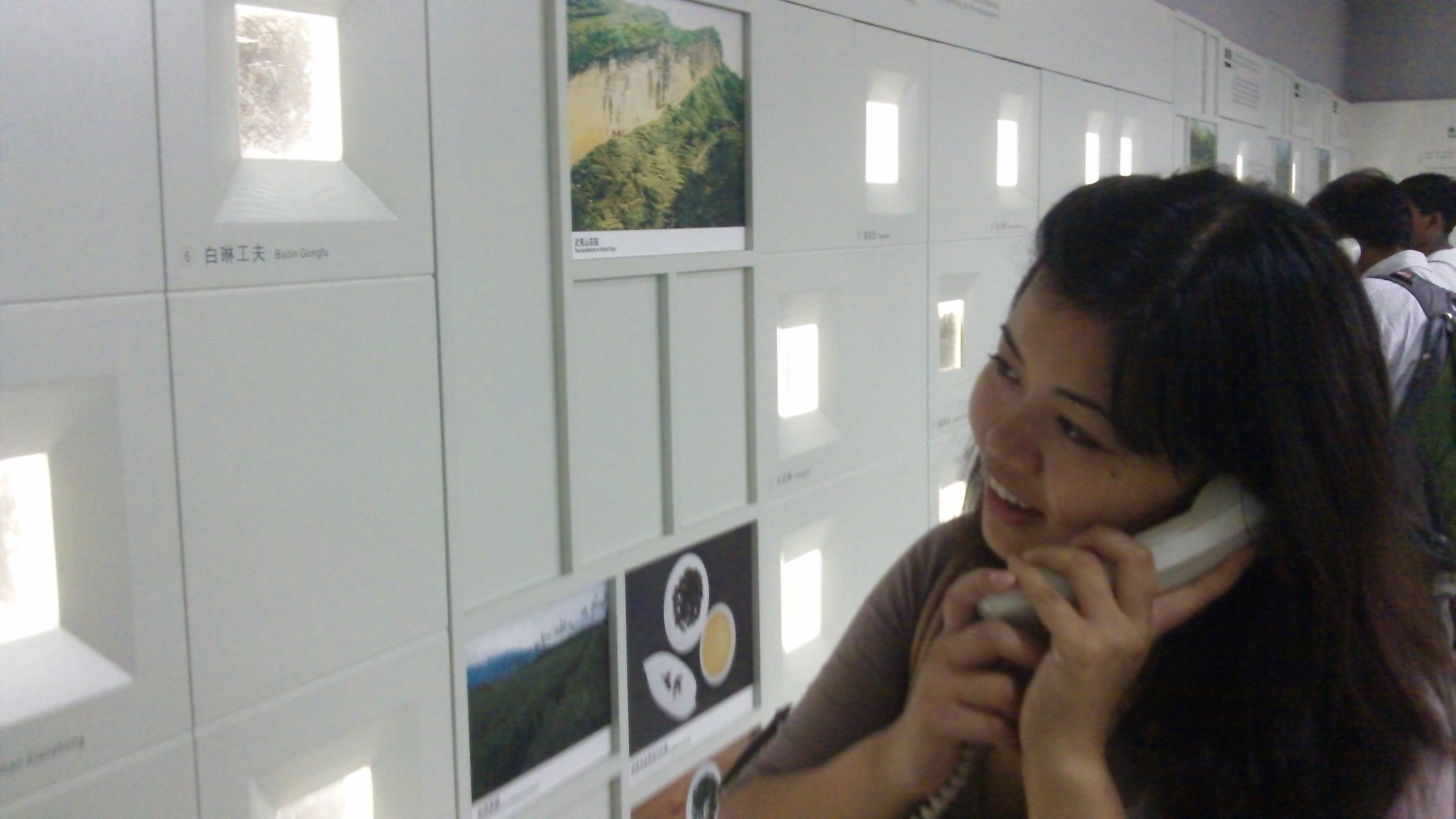
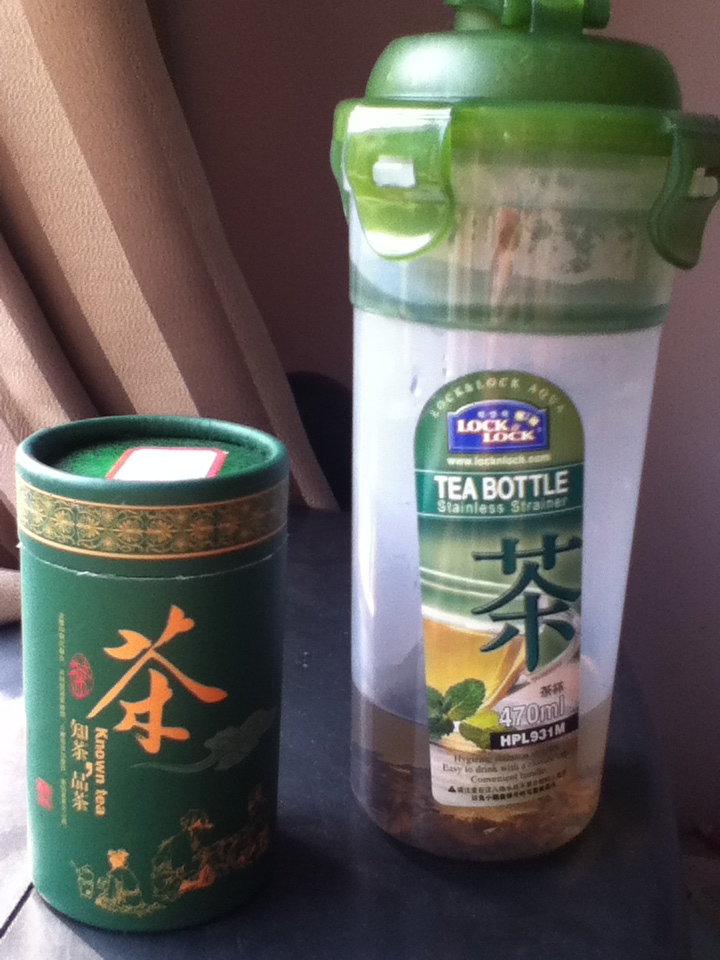
However something that has been really helping with my cold is drinking lots of tea. I went to a tea museum about a week ago and bought premium lychee-black tea, which is delicious! The tea museum was actually one of my favorite things that we have visited so far. At first I was slightly apprehensive: I love tea, but I wasn’t sure just how interesting this museum could possibly be. But it turns out there is a lot of interesting facts they have there! You really get a glimpse of just how important tea is to the Chinese culture. The museum itself was beautiful- it was very modern and spread out over a garden. So you had to walk through the garden to see different exhibits. For example, one of the rooms was filled with different kinds of tea displayed behind hundreds of small windows, and about 6 different phones placed around the room. You pick up a phone, press the number that corresponds with the number on the window of the tea you want to learn about and it will tell you (in English or Chinese, your choice) about that particular kind of tea.

The “phone room”

What kind of tea do you like to drink? This panel explores more into different types of tea and their benefits

Tea is BIG here in China, so for an avid tea drinker like myself, it is paradise to see so many tea shops! And if you haven’t tried tea or think you don’t like it- give it a shot if you ever come to China. There are so many different types of teas here that you might find one that you love. I’ve seen two people in H-23 go from “Tea is gross” to “Give me another cup!”. My personal favorite is 冰绿茶,iced green tea.  It’s delicious, and its great for your health.

On that note, I am off to go refill my tea bottle with some more hot water before I settle down and start studying. Talk to you soon!

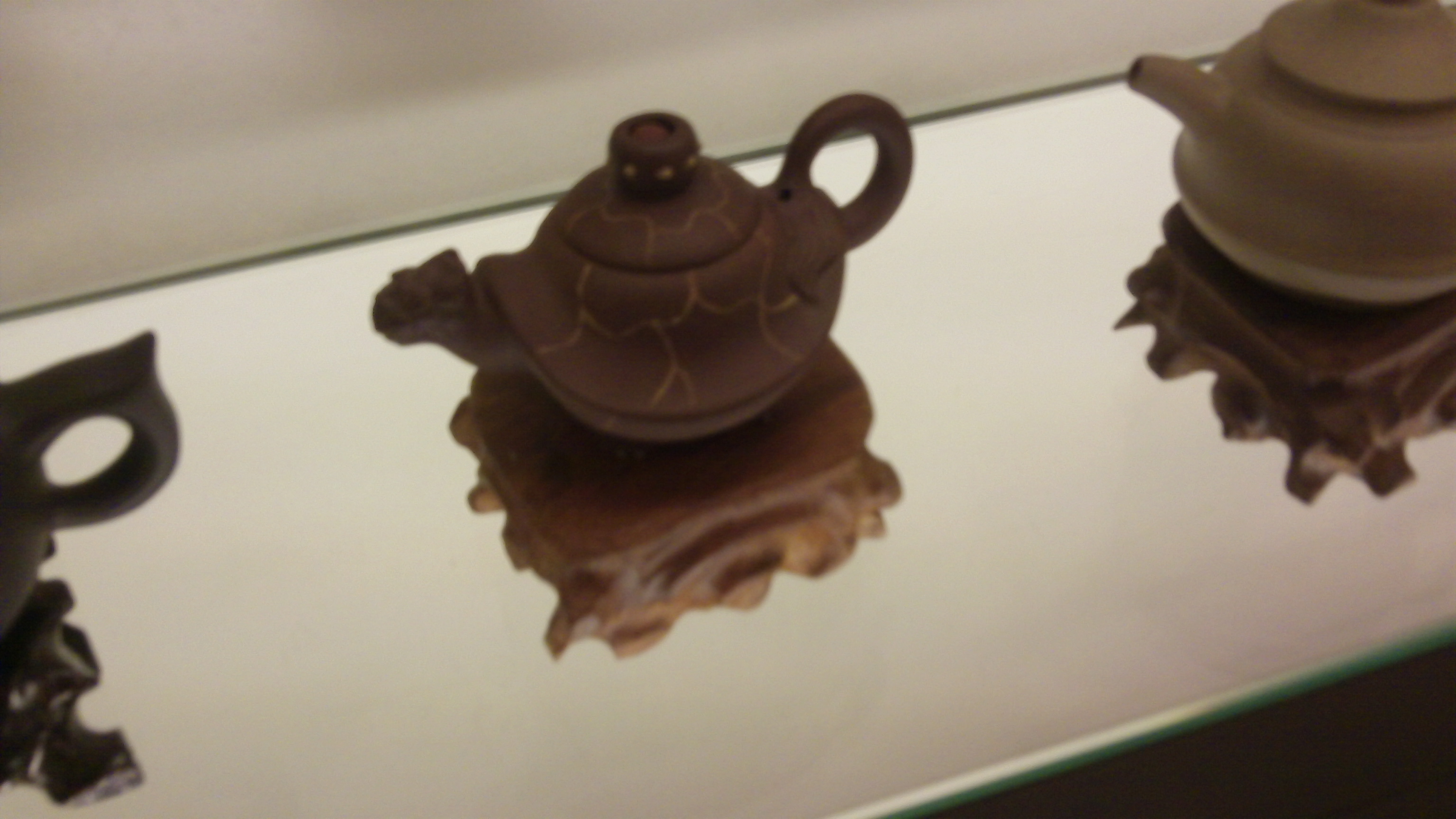
The container of lychee-black tea and my tea bottle

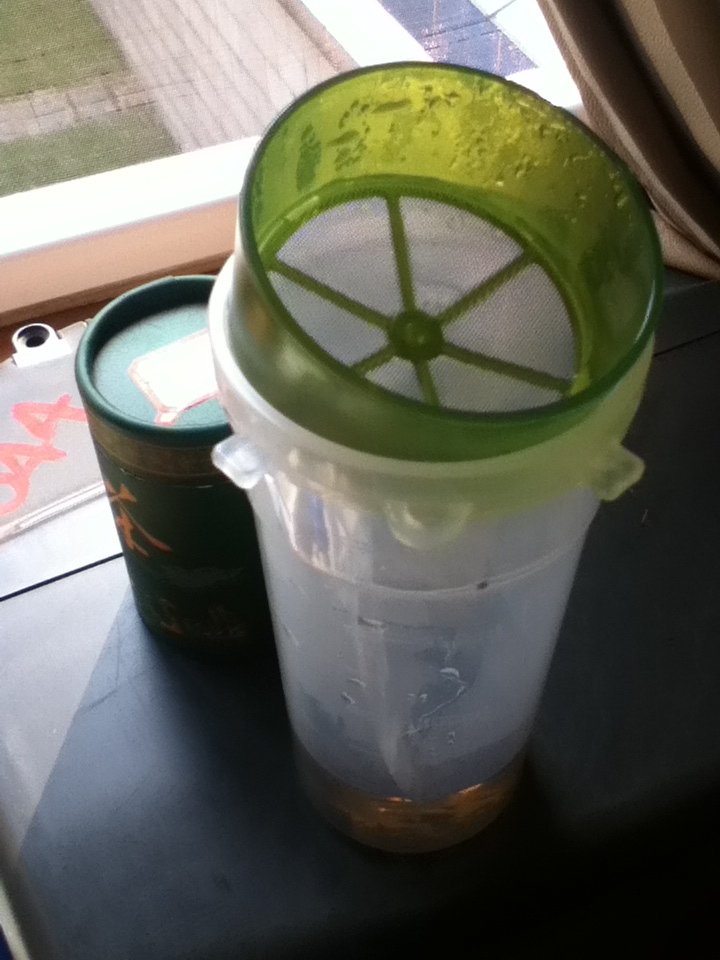
There is a strainer in the bottle to prevent you from drinking the tea dregs

Snow in South Africa?

Hi everyone!  For my first couple blog posts, I am going to go back an update you on what we’ve been up to for the past six weeks in Southern Africa.  We’ve gone to so many interesting places and learned so many things that I couldn’t leave it out.  I hope you enjoy and I hope these get your mind going!

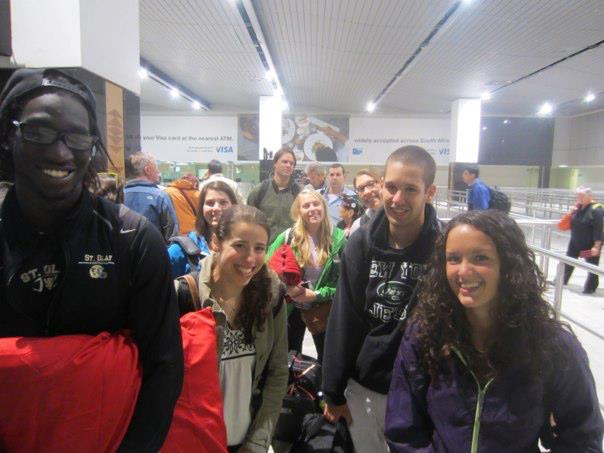
Let’s start from the very beginning with the seventeen hour flight we had to take to get to Johannesburg, South Africa.  It was actually more enjoyable than expected.  Between the company of the people in our group, the entertainment system on the plane, and the constant flow of food, I kept busy (the time that I was awake).  Before I knew it I was lugging off all my luggage into the incredible airport of Johannesburg.

We were greeted by Janessa, our resident advisor, and Nespect a professor and guide for Augsburg College’s Center for Global Education.  It was a group effort to make it out of the airport and I must say I was the weak link.  (When they recommend you pack light, you should listen).  But, we finally made it outside and were hit with a surprisingly cold air.  It was still winter in South Africa and just days before we arrived it had been snowing!

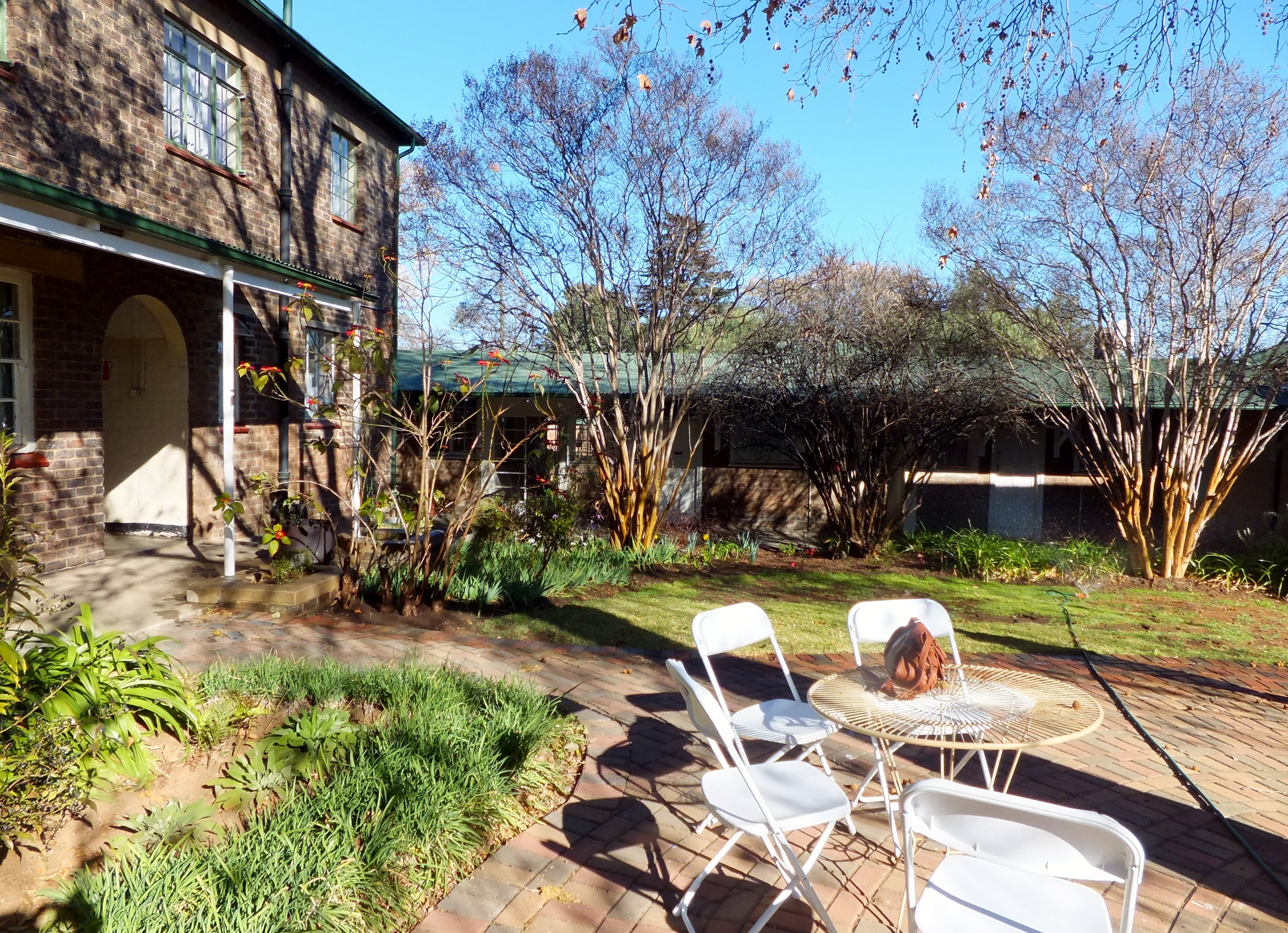
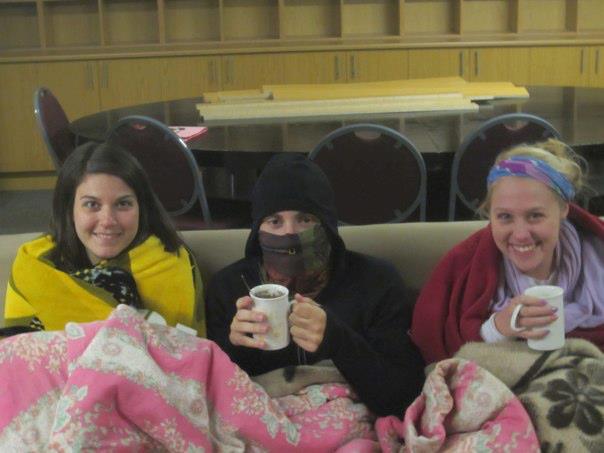
We piled into the vans and headed to St. Peters Place—our home for the next week, an old brick building with dorm style rooms, a center court yard, library, and dining area.  It was really cute, but had no heat.  That night, we settled in wearing several pairs of socks, huddled together under blankets and clinging to cups of hot tea.  Not at all what I expected , but an extremely intense game of “mafia” helped keep our minds off the cold and I was happy to find that our group felt very natural and we seemed to “click” immediately.


“Nous avons une bonne nouvelle pour toi”

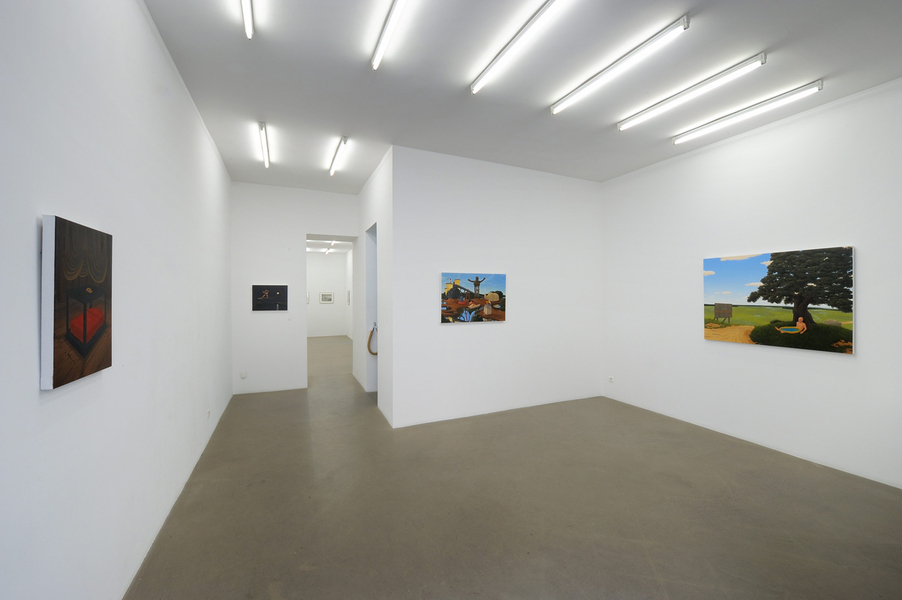
So begins an email I received from EUSA, the organization that organizes the internship aspect of our program. The internship is in fact the focal point of the Paris program, the first half of the semester spent learning skills and vocabulary necessary to be effective in the French workplace, the second half- in doing the internship. Today I had my first internship interview, with a contemporary art gallery in Marais. But what exactly happens leading up to this point?

EUSA starts early in the year (last semester for me) sending out questionnaires and asking for a draft of a CV so that they can begin researching internships for the students. The first week we arrive in Paris, we have scheduled interviews with EUSA to help further pinpoint specific interests and discuss the work in different sectors. It’s kind of exciting and nerve-racking at the same time, just thinking about the opportunities that are opened to you. What sector is good for me- fashion, galleries, non-profit, history, publicity, public health? By the time you walk out of the interview, you and your advisor have narrowed the choices down to three sectors, which may not seem at first obvious, but are meant to provide the most interactive and valuable work experience while abroad. I was placed in the gallery, journalism, and marketing sectors, though my advisor assured me a position with a contemporary art gallery considering my interests in modern culture, contemporary art, and working with my hands.

The next step is to await an interview. EUSA does the research- finding and contacting businesses (entreprises)- and eventually, you receive an email, as my title suggests, offering you an interview. Now the real work begins- you begin to research the company, you go over your responses to any number of questions the employer might ask and . . . you plan your own questions (because surely you want to make sure the position/company will fit you just as much as the interviewer wants to see if you will fit the company/position). Yet, no matter how much research or preparation you do, you’ll still never be quite prepared for the interview.

If you think interviewing for a job in America is nerve-racking, try interviewing in another language! This is not to say you are set up to fail, these interviews simply provide a unique challenge in that you never know what exactly is going to happen (or how well you’ll understand what the employer is saying!). It’s exciting, and following with my initial goal for this program, it is a great personal challenge.

So see what you can accomplish, and be confidant in your abilities. Your whole life has been a learning experience, so utilize the tools you’ve gained, perhaps unwittingly, to – as I was prompted to do- convaincre l’entretien (an interesting mix of conquer and convince, one must truly show their stuff during the interview). Now here’s to hoping I did just that.

Galerie Eric Mircher


Into the Foray

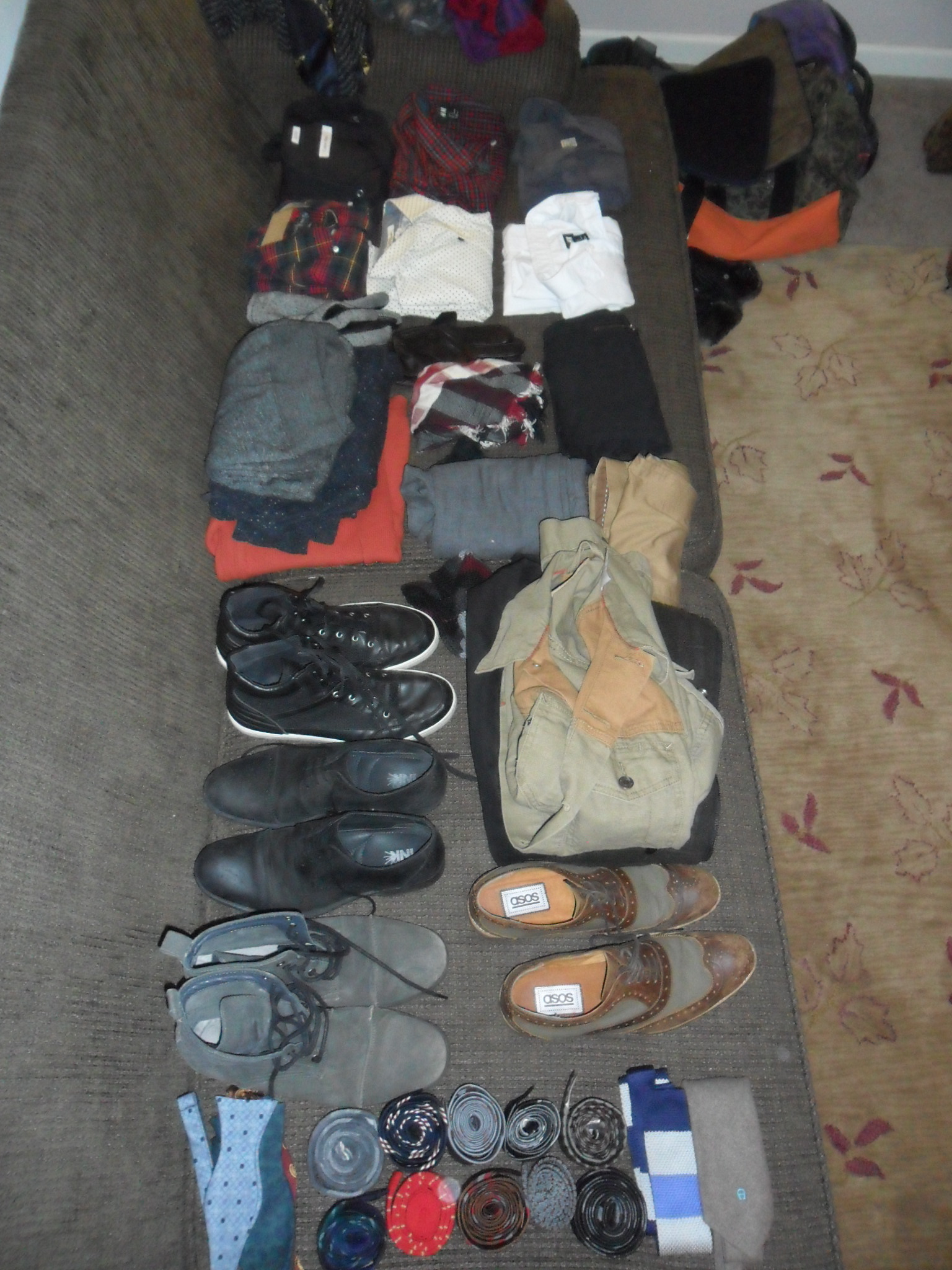
Little questions strike me, for instance; Paisley? Knit? Polka-dot? How many of my dozens of ties will I NEED? Well, really the answer is likely one or two, but this little dilemma is representative of the  wider debacle that presents itself in preparing for 4 months studying abroad.

My name is Gregory Maher, and I will soon depart for the city of lights, oui, c’est Paris! Yes, France shall be my home for a semester, and my program, Paris Internship, is coordinated through Boston University. In France I will take classes with professors from local universities for the first half of the semester to prepare me for the second half, ze internship. My placement I know not, BUT I’m interning in Paris, so how could I lose? Well, back to the present . . .

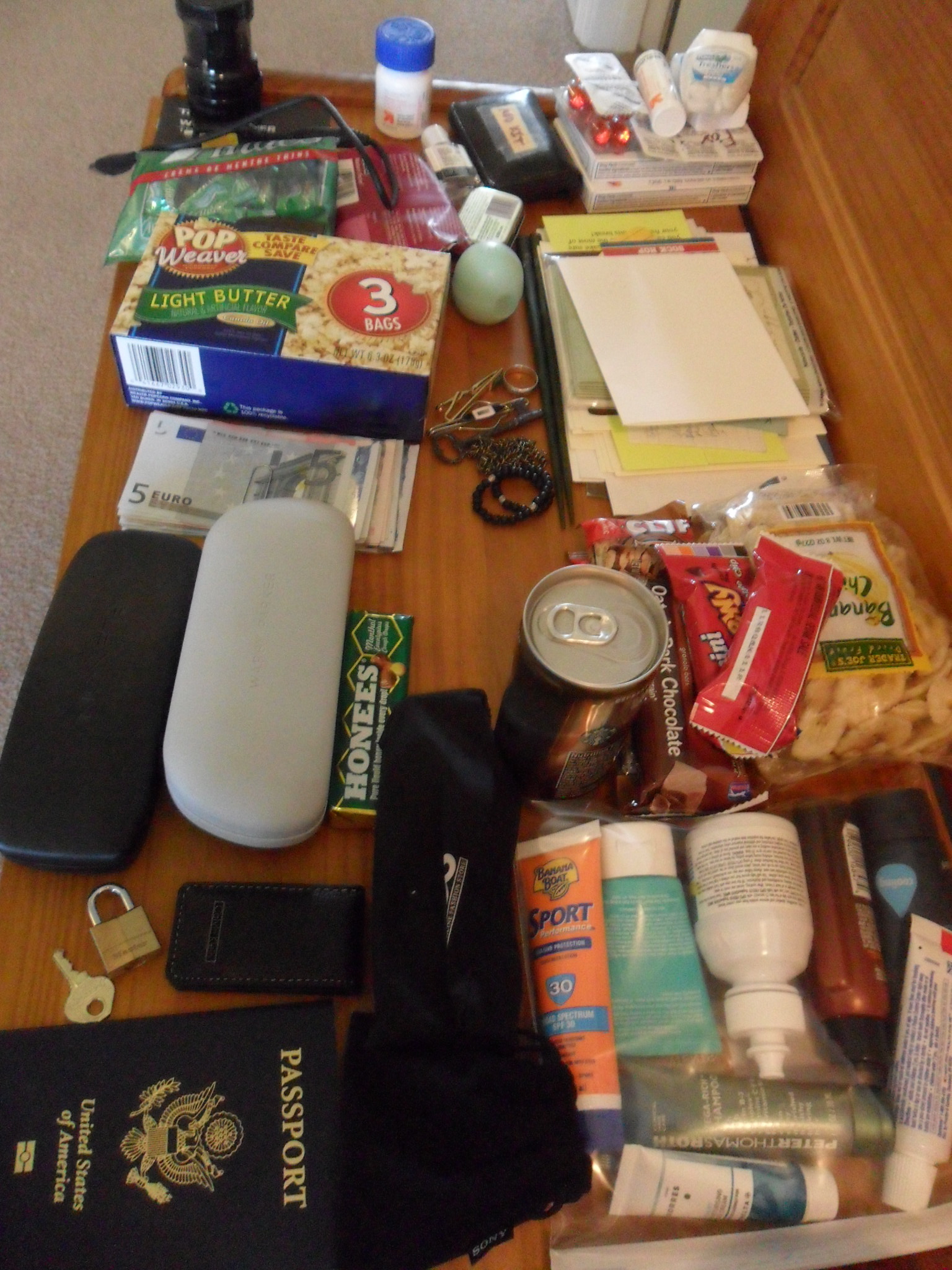
. . .  I am in the midst of preparing my bags for departure, which means I’m making numerous piles of stuff that I “need,” only a portion of which I can actually take. Oh lordy, how’m I to fit my life in these few bags for a whole semester??

As I’m attempting to reserve a shuttle from the airport to my host family’s apartment, my mother tries to convince me I need a passport wallet to wear around my neck at ALL times, while I’m still pondering that eternal question . . . what could Indiana offer that my host family could ever desire as a welcoming gift? Oh well, amidst the tying up of all my loose ends in America, I’ve surely knotted a few in the chaos of preparation. Among the lessons I learned through this process is this:

Truly, it is so easy to get lost in the momentary stresses of packing and preparation- to worry over my ability to revive French vocab long-buried in the recesses of my mind, to wonder if I’ll really be glad I’ve gone when all of my friends and those I hold dear to me are miles and miles away, across the ocean and horizon. I really just have to slow myself down and truly realize the incredible opportunity I’ve been afforded. I smile as I pack away the last of my things, thinking of the new experiences and people I will encounter, and the chance to truly come face-to-face with zis place called Paris. Au Revoir les États-Unis! À Paris!

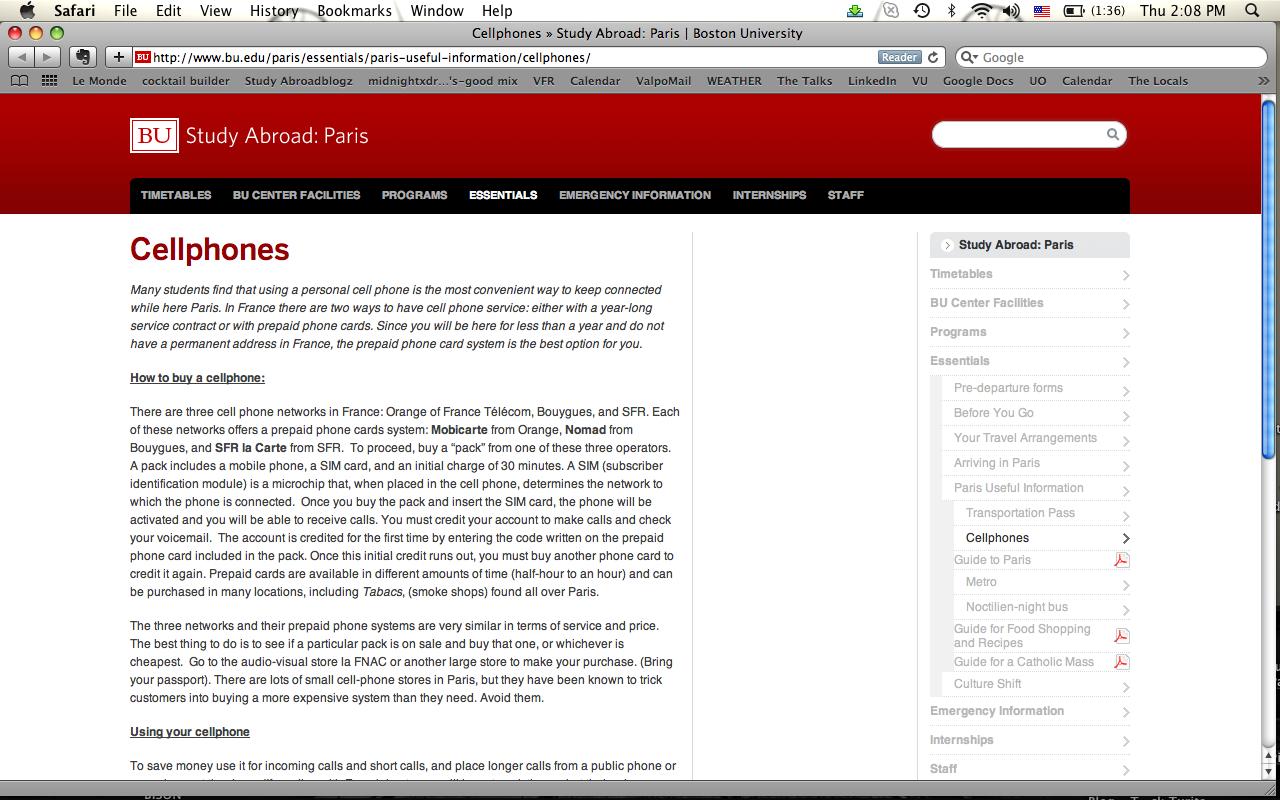
Do your research: the Boston University website for the Paris Internship program actually contains practical day-to-day info (seems obvious after the fact) from obtaining cell phones in Paris to the location of the closest chocolate shops. And yet I did not discover this until perusing the site a week before my departure. Know that there are resources available to you for every question your (at this point, probably neurotic) mind can come up with. How else might I learn that public restrooms may in fact contain a doorman to assist me in my toileting process!

Días de Patria

This may or may not be one of the longer posts I’m going to have on this blog, but if it helps, there are a lot of pictures too :)

Here we go!

Singing/Chanting about Chile at Ston

It all started last Wednesday night, a big night to go out here in Chile. A big group of us went to a bar called Ston and started celebrating los días de patria (patriotic days) early. We enjoyed a drink called terremoto(earthquake) and is a mix of wines, grenadine, and ice cream. It’s delicious, and there are tons of different flavors!

Students in traditional Chilean gear

The next day, Thursday, we had a celebration with the other international students at the UVM Rodelillo campus. There was plenty of food and dancing, specifically the cueca, Chile’s national traditional dance. They even had a contest for those international students who attended cueca classes (which I unfortunately couldn’t attend due to soccer training). It was very fun to watch! Especially with all the missteps ;) but they all did very well. Then they had a game after that anyone could participate in where you had to (without any hands) eat a sweet in a shallow plate of water, find another in a pile of flour, and finally bite an apple. I got 2nd…of 3. Silver medal!
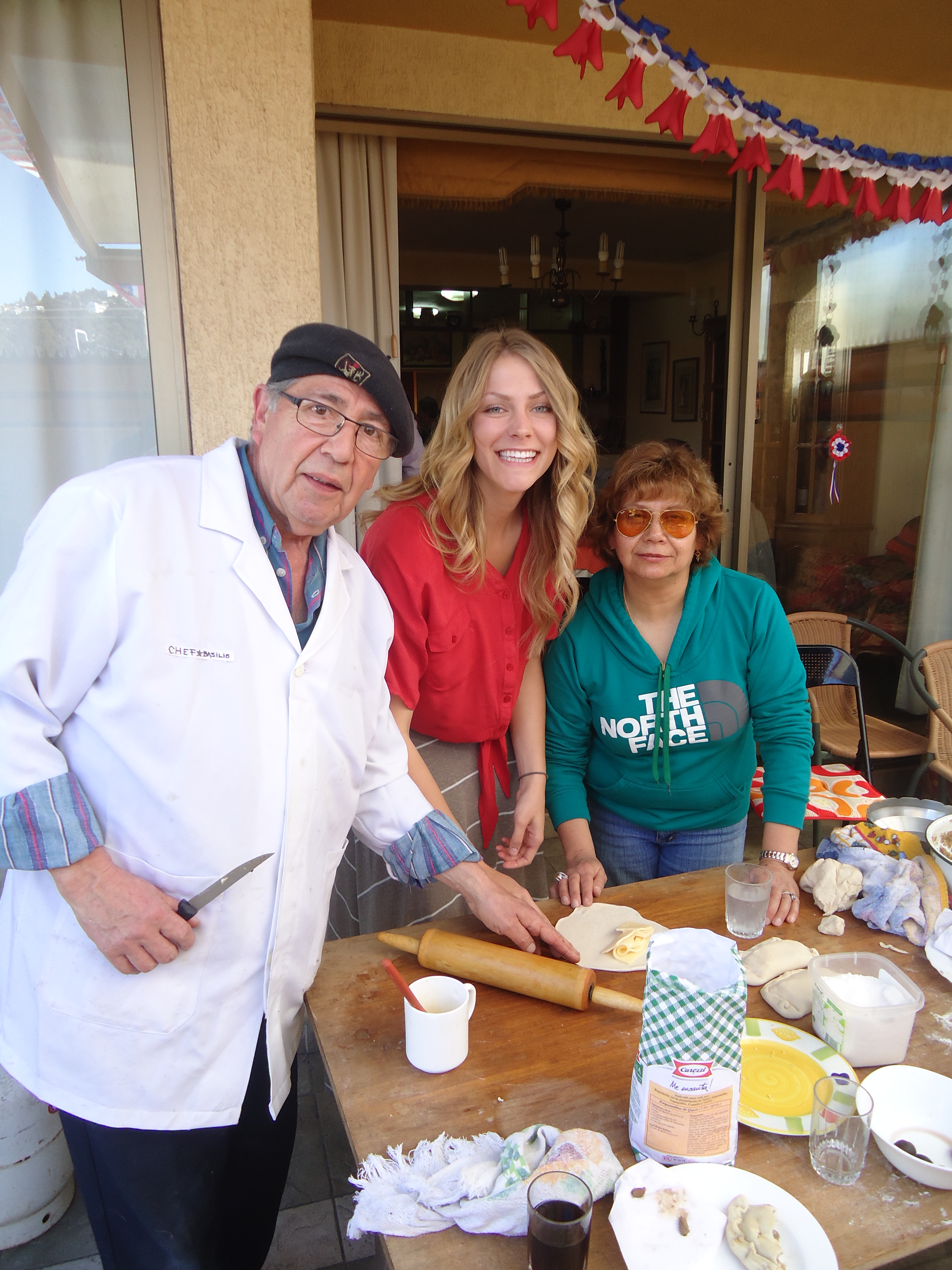
On Friday, my friend Olivia and I decided that we should study…but we made brownie sundaes instead. Little did we know, that as we were making the ever delicious dessert for la once Basilio, a friend of Olivia’s family, was making panqueques con manjar! It was a very sweetonce to say the least.

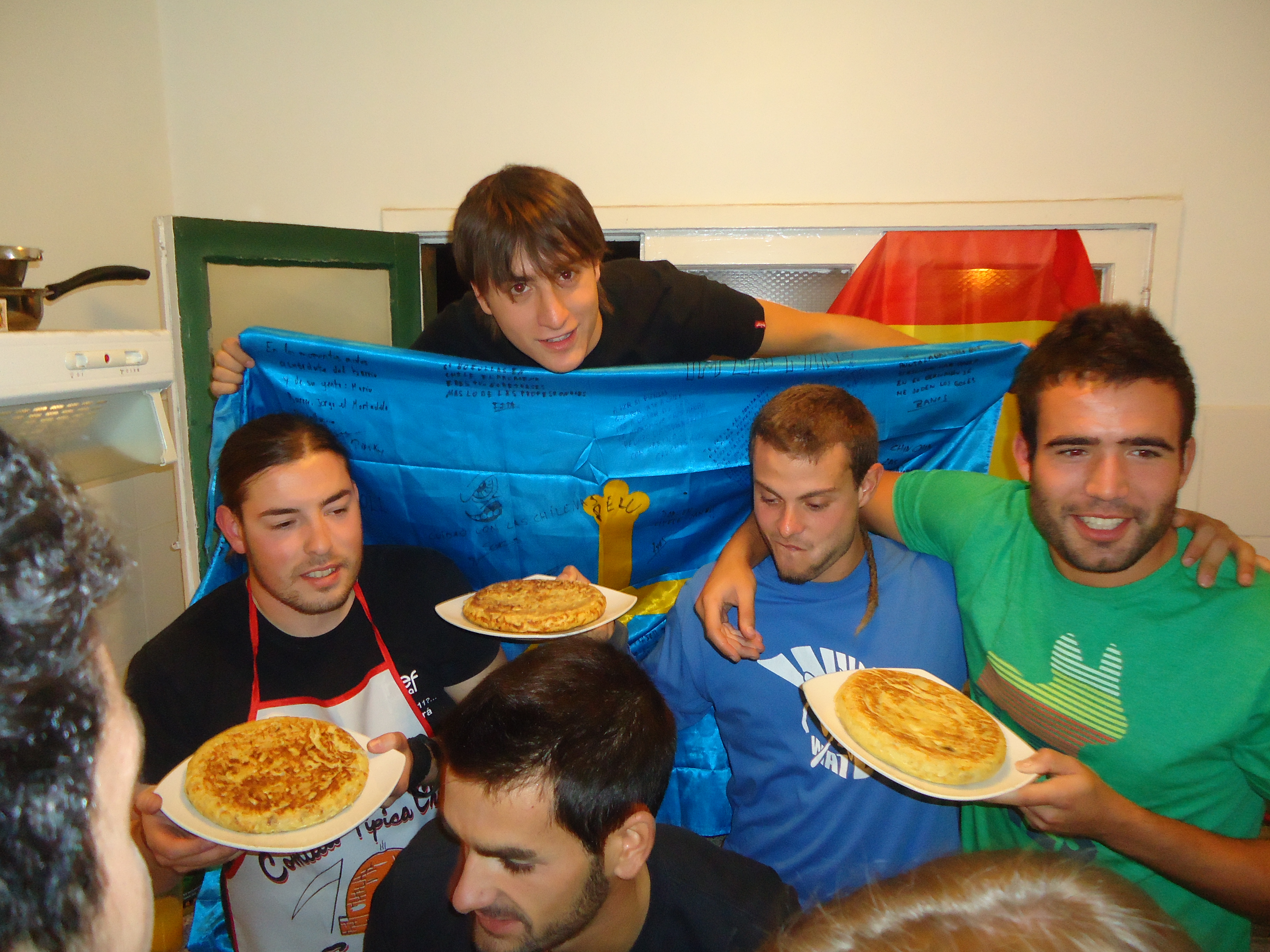
Spaniards with their tortilla española

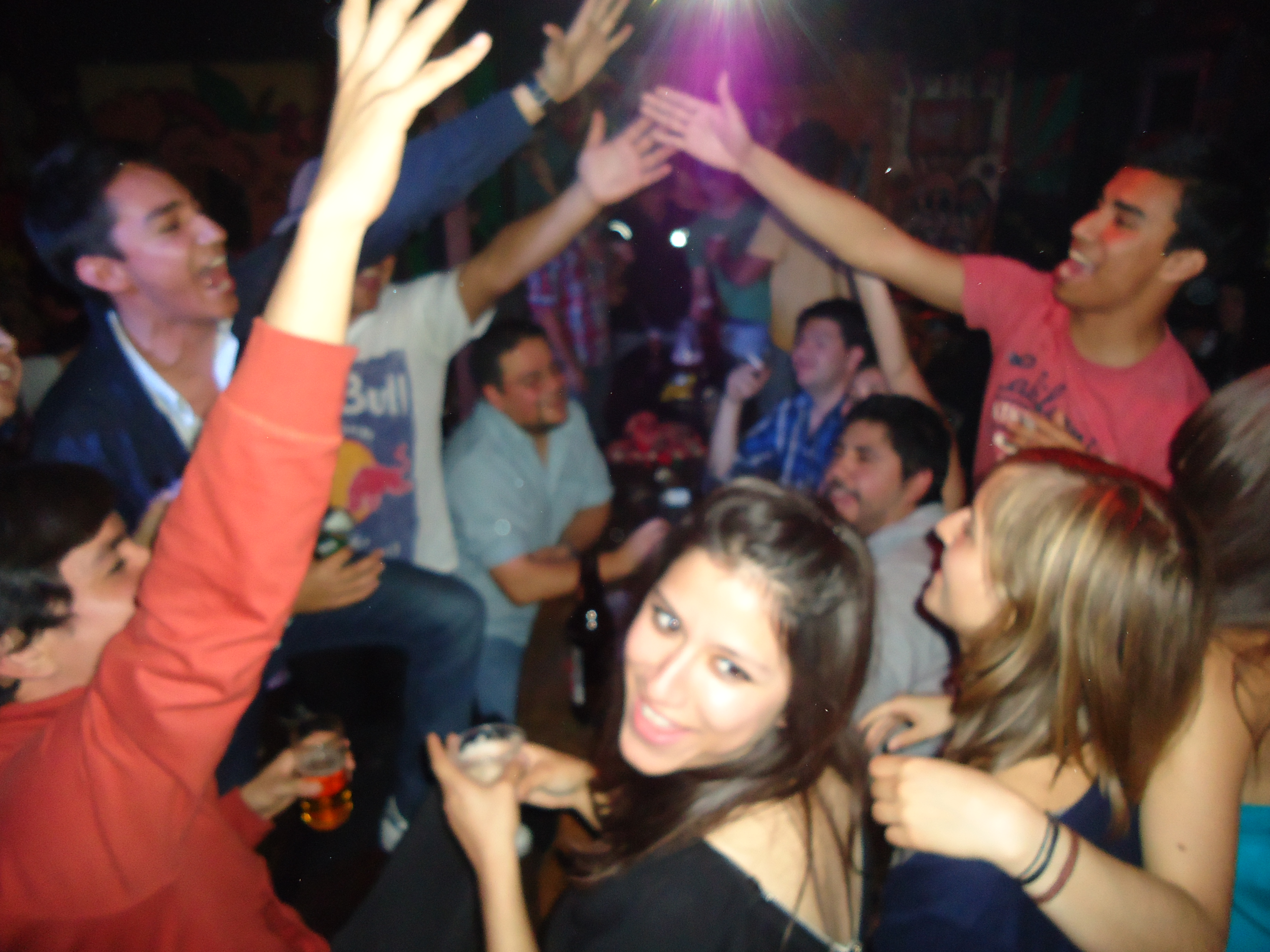
Later that night, we went over to an apartment where the Spaniards had a dinner with tortilla española (an omelete with onions and potatoes) and bread with Spanish ham & tomato (I don’t know if that one had a particular name)We ended up going to Sala Murano and getting our groove on for the rest of the night. Because I had a friend who worked there, we all got in for free, which made the night even better (because who doesn’t like saving money). We made it even more patriotic with our friend Mauricio who painted some of our faces with the Chilean flag.

Olivia with her host mom & Basilio making empanadas

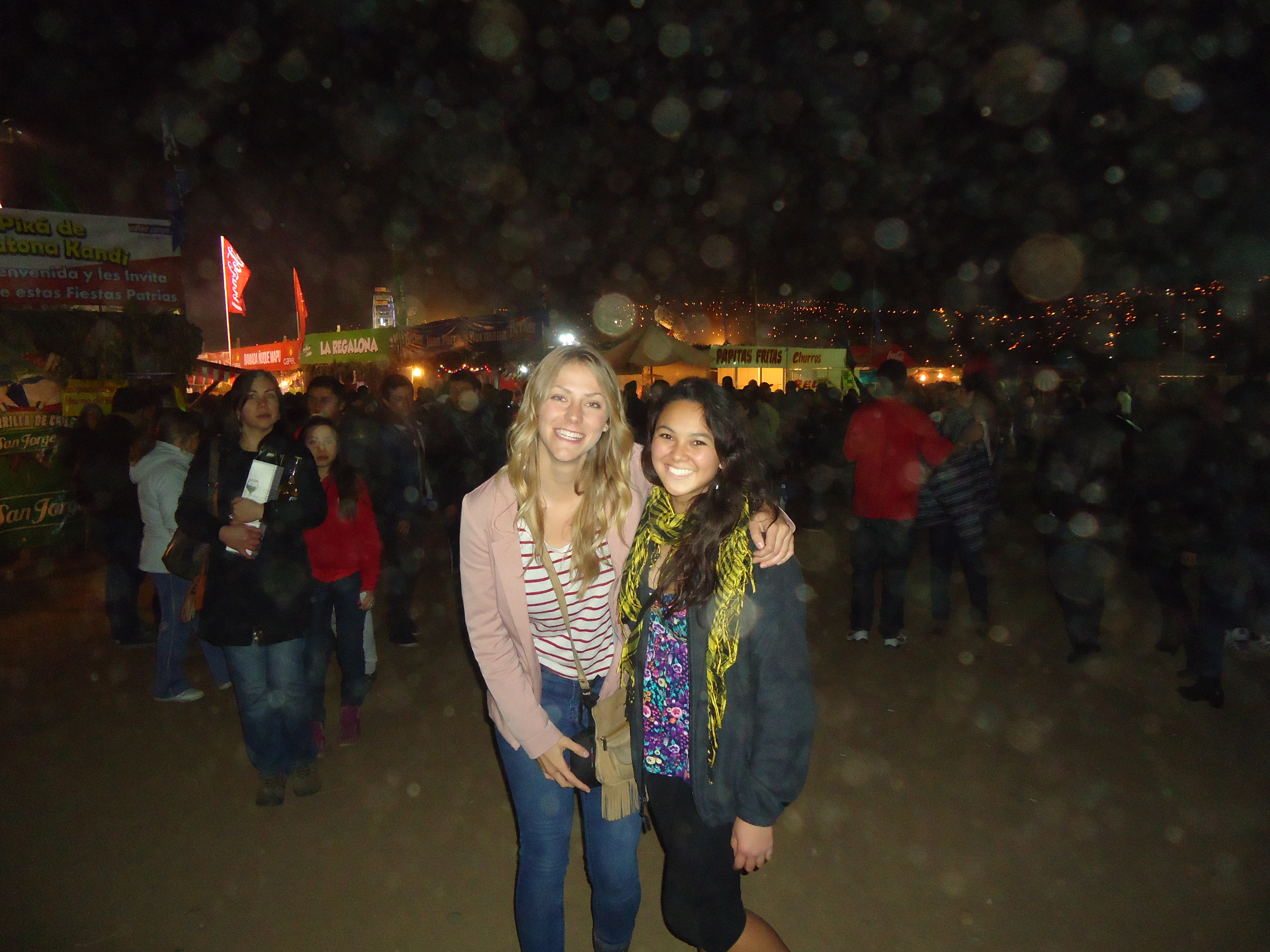
Saturday, Olivia’s family invited me to a BBQ where we madeempanadas de pino from scratch with Basilio again. Later that night we went with Olivia’s host brother to watch fireworks at the beach where I heard the Chilean national anthem for the first time. They continued to play traditional patriotic songs as everyone around us hummed or sang along as fireworks continued to shoot up over the water. After the beautiful display, we went to the fonda (a fair/get together) at Sporting, the horse race track. On the walk over, I even met some people from Minnesota! I told them what part I was from and we actually had some friends in common. It’s crazy how small of a world this really is. When we arrived, the place was filled with rows upon rows of vendors selling food and drink. They had even set up places to sit or dance!

At the fonda at Sporting

There were soooo many people, so we decided to sit down at a small set-up bar and enjoy a jar of terremoto. When we were about to leave, we lost Olivia’s host brother and his friends and neither of us had anymore credits on our phone to call him…so we decided to just go home. Olivia walked me to where the collectivos were and I experienced one for the first time. I learned a valuable lesson:collectivos and taxis are not the same thing. But I had a great conversation with the driver, and he helped me get to where I needed to be.

Sunday I spent with my host family at home, where they had a giant asado (BBQ) with all of the family. I finally met Claudio’s son (Francisco) and daughter (Carolina), and Vivi’s sisters were there too (Jaqui & Carolina). Caro (Claudio’s daughter) also brought her adorable puppy who was all ready for Independence day and dressed in traditional Chilean gear. We had tons of meat, salad, cola de mono(monkey tail; milk, coffee, and a Chilean liquor), pisco (Chilean liquor),and chica (a slightly carbonated alcoholic juice).

Big family lunch!

I learned plenty more Chilean slang words from Francisco (who may be the most Chilean guy I’ve met so far). We sat for hours exchanging stories, teaching/learning more about Chile, and consuming more food and drink than thought to be humanly possible. It was one course after another after another after another of the lunch, then the coffee & the palete cleanser (mote con huesillo), and then more coffee and Chilean desserts. All together it had to be at least 6 hours, if not more, and I loved every minute of it.

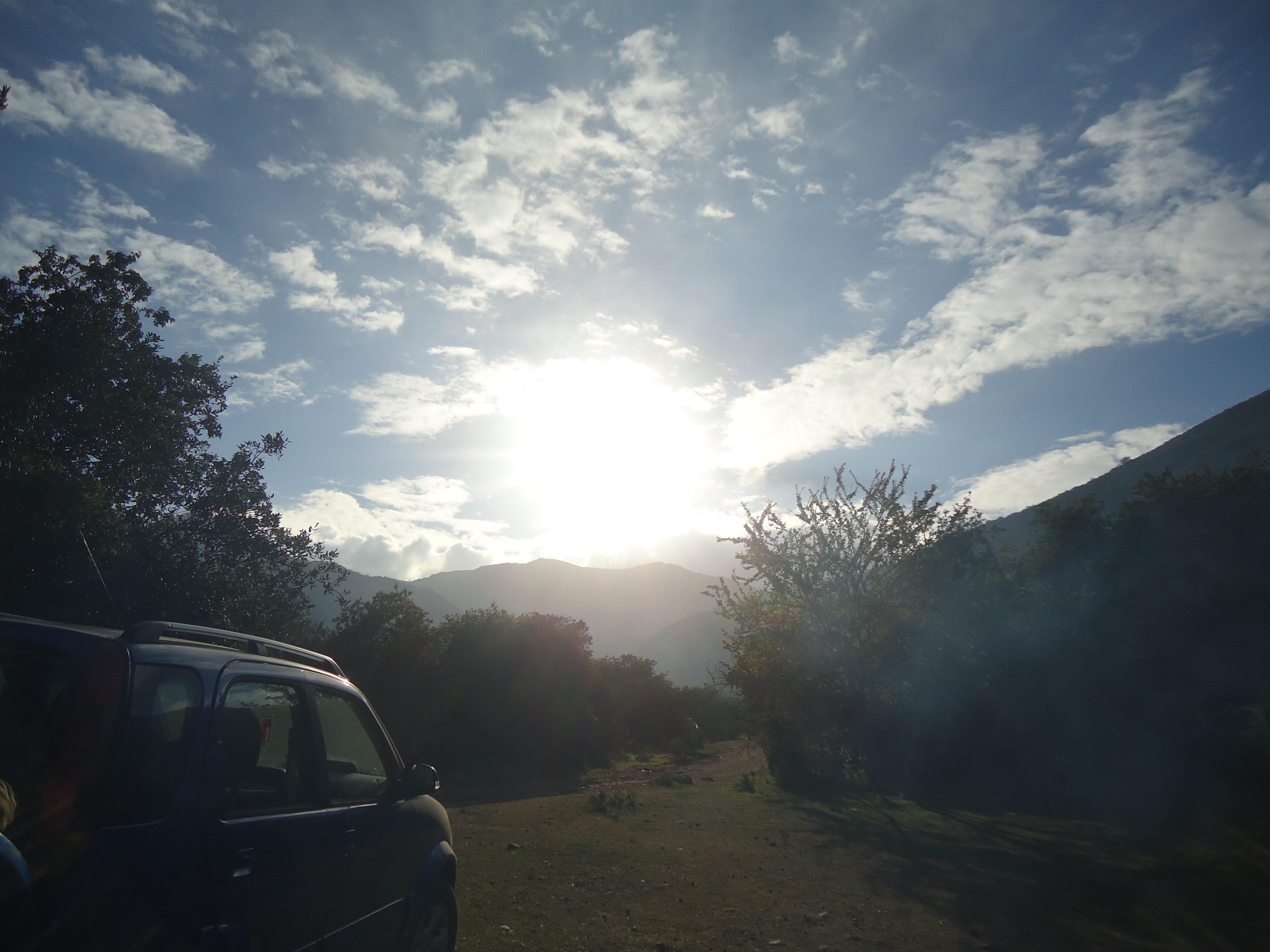
Monday, I left Viña and traveled to La Calera where my other family lives, and we left for Palos Quemados to camp which was only about 30 minutes away. It was absolutely stunning. We were set in between the hills. Everywhere you went you could smell asados and cooked meat. Our crew had plenty of meat and the traditional Chilean salad: onions, tomatoes, and cilantro. We relaxed and danced a bit with our radio and I learned more about Universidad Católica (a soccer team of which I am now a fan). I can now recite a few of their chants :) Then I cuddled up in our tent


Palos Quemados

The next morning, aTuesday, and the official Independence day of Chile. I woke up to the beautiful landscape and clear skies. We had a little bit of bread toasted over the fire for breakfast and some tea. Then interspersed naps with lunch and more naps; successful laziness. It wasn’t until I saw some people playing soccer in the campsites next door that I gained a sudden spurt of energy. We asked if we could play and got a game going. It was cloudy at this point and little mists of rain cooled us off as we continued to get muddier from the futbolito (little soccer game). Then we had to start packing everything up and get going, and of course at this point it was clear and perfect outside…figures. We got back to La Calera and gathered with the cousins to go to Oscar’s apartment to watch the Universidad Católica game against Tolima (Columbia) in the Southamerican cup. They didn’t do so well in that game, but they still did well enough to move on to the octo-finals! YAY! We then went to a fonda which consisted of a ton of people, really expensive drinks, and a live band. They didn’t even have terremoto…but at least we got to dance.

Wednesday rolled around and I left La Calera and enjoyed a quiet lunch with my host family where, for the first time, everyone was present! We had empanadas, salad with onion, pepper and eggplant, and for dessert, banana with honey. Then I enjoyed a relaxed night with some friends playing UNO at their apartment.

And now it’s Thursday where I’m about to go to the beach with my Columbian friend, Andrea, and enjoy the sunset on the beach.

I’ll update you soon!

American Pride

First off, I would like to share this quote that my Cine teacher shared with me about studying/traveling abroad:

You can’t go home again.

                                    -Thomas Wolf

It’s implicating that once you leave your reality of what is home and the culture that is familiar, you can never really go home and experience it the same way you had before. This quote seems to be a central point in today’s post; I’ve never felt so patriotic.

On Friday I went out with one of my Mexican friends and her roommates and her roommate’s friends. One of the friends of the roommate was named Clara. She seemed congenial at first, but then she asked me where I was from. When I told her the USA, her face immediately changed. The rest of the night whenever I was conversing with the others, she would say to them, “She doesn’t know what you’re saying” and then shoot me a look of mockery like I didn’t know what she just said either. I felt stupid and embarrassed at first, but then stopped caring because let’s be real: who cares. I’ve encountered a few of them, these “Clara types” who stereotype all Americans to be idiots, but the best way to deal with them is ignore them. I’m still learning to language. This I think is sometimes the mentality/impatience we might have with people who aren’t fluent in English. Take it from someone who’s experienced the other side: give ‘em a break! And never feel embarrassed about where you come from.

This Saturday I went out with some Spainards, a Chilean, and Andrea (& with the exception of Andrea, none of whom speak or barely understand English). I love experiencing these differences in cultures, differences in people, and even difference in language. We were all speaking Spanish but there were distinct differences and slang and dialect. It’s so cool listening to them all speak and hear their accents and have them all mix together into one language. I suppose that might be the same as someone from Chicago, Texas, California, New York, and Minnesota having a conversation all in one room. Just never thought about it that way before…

I know that I’m trying to use Spanish all of the time, but there are a lot of students in my classes who have been asking me for help with English. I actually visited a second year English class a couple weeks ago. It was so interesting. The teacher had a British accent, and they were talking about advice and suggestions. She emphasized a lot on the difference between the two which to me, never really seemed that important. There were so many little things about English that never really occurred to me in terms of grammar. At the end of class she asked me to give suggestions to those who were interested in studying in the United States. It was cool to be able to share a little bit about different parts of the US and give suggestions. I felt really proud to be able to talk about my country.

In one of my classes, we deal with globalization and cultural events and such, and one of the topics that’s hit on a lot is 9/11 (which I just realized is tomorrow). The last class they directly asked me about it, and I remember exactly where I was. I didn’t understand a lot because I was pretty young at that time, but I shared a little about what I remember with the class and then it started to become difficult to say anything at all. I started to become a little emotional and speechless. I never had felt so strongly towards my country than at that moment.

It’s easy to get carried away with all the other cultures and find faults with your own, which admittedly I was doing. However, now I’m learning that the more I get to know other cultures, the more I can appreciate and expand thoughts about my own. I can honestly say that I am certainly very blessed and very proud to be an American. I finally truly understood this allegiance we learned since we were young:

I felt this to be relevant especially with voting coming up and tomorrow being the remembrance of one of the most impacting, disastrous moments of our time: September 11th, 2001. My thoughts and prayers go out to all those who were effected by this traumatic event in our history, and also to everyone who will be voting this year (which everyone who is able should).

Sending some American love from the other hemisphere.

« Older posts Newer posts »

© 2026 Valpo Voyager

Theme by Anders NorenUp ↑